The Diver by Samsun Knight

This novel of existential questions features a grieving, perhaps unhinged widow and the paralegal hired to investigate her, who team up in increasingly bizarre efforts to reconcile their lives.

Samsun Knight’s first novel, The Diver, opens with a brief, dramatic scene: “A scuba diver is on a deepwater dive with her husband, one hundred thirty feet below.” They are exploring a shipwreck from the 1800s when their oxygen tank pressure gauges fail. The diver survives, and her husband does not.

Knight presents this brief section in a third-person perspective that provides details of the dive; the rest of the novel features the first-person voice of a young man named Peter. Peter works as a paralegal at an ethically questionable law firm that specializes in intimidation services on behalf of wealthy clients; the diver’s sister-in-law hires them. In this way Peter comes into contact with Marta, the widowed diver. He wants to help her, and he may love her. He also has his own baggage and history of loss, a “sinkhole of family.” Peter’s plot line is a series of mishaps and grotesque, often darkly comic episodes; readers are privy to his first-person narration and can understand his messy life. Marta’s more enigmatic story is, likewise, filled with grim absurdity. The Diver is further peopled with unfeeling art-school classmates, a mother on the verge of breakdown, a profoundly disturbing fortune-teller, and two goons who share a first name. Knight combines psychological suspense with outrageous catastrophes and a bit of a ghost story.

Knight follows Marta by following Peter; she is the novel’s ostensible protagonist, but it is Peter’s minutiae on display. The two characters are drawn together by their misery and their openness to possibility. They speak in disjointed sentences but, Peter thinks, mostly understand one another: “That sense of broken compartments, of trying and failing to fit Marta’s actions into the boxes I’d established for her, had graduated into a full collapse of anxiety.” The price of their odd alliance, however, may be higher than either one realizes.

The story plays with format and includes interspersed snippets of interview transcripts, tarot cards, diagrams, an art-mag essay about Freud’s concept of unheimlich, and more. The overall result is a little off-kilter and occasionally grisly. (Some readers will struggle with scenes involving animal cruelty.) As an examination of the dark sides of relationships, it is disturbing and always imaginative. Marta, for one, resorts to increasingly weird experiments with the occult in her quest to bring her husband back.

How far would a person go for love, grief, hope, or fear? This disquieting novel pushes these questions beyond expected boundaries in its inquiry into terrible, life-changing wrongs. Dealing in mysticism, love, anguish, and unpardonable crimes, The Diver is not a novel for the faint of heart, but it is rewarding in its surprises.


This review originally ran in the September 28, 2023 issue of Shelf Awareness for the Book Trade. To subscribe, click here.


Rating: 6 bunnies.

Search History by Amy Taylor

This wise debut novel explores modern dating themes and pitfalls in on- and offline realms.

Search History, Amy Taylor’s first novel, focuses on Ana, a woman in her late 20s who is navigating the dating world, both online and in real life, following a significant breakup. Ana’s ups and downs center mainly on the new relationship she begins with Evan, a man with a past. But a variety of experiences in her own and other women characters’ romantic lives are more alarming than encouraging when it comes to the modern dating landscape.

After the end of a four-year relationship, Ana starts over by moving from Perth to Melbourne and beginning a new job. Her friends are astonished when she meets Evan at a bar, rather than online. “Have you found him online yet?” a work friend asks anxiously. When Ana replies that she has, her friend sighs with “genuine relief.” Evan seems perfect–perhaps its own red flag–but Ana has found his ex-girlfriend online, too, and rapidly begins an obsession with that other woman’s online presence, a preoccupation that threatens to overshadow her real-life relationship with Evan. Meanwhile, the men Ana and other women encounter via dating apps or in person showcase a variety of tendencies, ranging from troubling to outright threatening. And Ana struggles as well to connect with each of her parents: her passive-aggressive mother back in Perth, who is giving Ana the silent treatment, and her “belligerently optimistic” father in Bali, where he exclaims a lot (in rare phone calls) over breath work and intimacy coaching.

Search History is concerned with relationships, (mis)communication, and fear. Ana is frightened of the strange man running behind her in the dark, of the man taking the drunk woman home from the party, of sending Evan a text that will scare him away. And in its central theme, the novel questions the usefulness of an online dating persona. Ana notes Evan’s eye color from a picture online: “It was a piece of information I should have learned the first time I saw his eyes catch sunlight, not through a screen.” Is she better off Googling her next potential lover? Is that research necessary for her safety? Or should she allow him “to reveal himself to me piece by piece in real life, unburdened by my preconceived assumptions”? Which version of Evan–and of Ana–is the real one?

With its expert pacing, Search History offers frank handling of sexuality and desire, and unvarnished descriptions of sexual violence and harassment (which may be triggering for some readers). Ana is self-aware and funny, lonely and self-questioning. Her first-person narration is stark, vulnerable, and approachable. Taylor presents a clever and often harrowing examination of 21st-century dating.


This review originally ran in the September 25, 2023 issue of Shelf Awareness for the Book Trade. To subscribe, click here.


Rating: 7 ellipses.

In the Pines: A Lynching, A Lie, A Reckoning by Grace Elizabeth Hale

A historian with personal connections to its players expertly researches a specific lynching case in this razor-sharp report.

In the Pines: A Lynching, a Lie, a Reckoning is a story with personal significance for Grace Elizabeth Hale (Making Whiteness), who tackles some of the greatest race-relations demons–historical and continuing–in the United States. In this thoroughly researched account, Hale investigates the 1947 murder of a man named Versie Johnson in rural Jefferson Davis County, Miss. The author’s beloved grandfather served as sheriff at the time, and her mother originally offered this tale as one of righteous heroism: her white grandfather stood up to a mob and refused to release his Black prisoner, who was somehow nevertheless removed to the woods where he died. But Hale learns that her grandfather’s involvement was neither innocent nor heroic.

In her thoughtful narrative, Hale places the death of Versie Johnson in layers of context. She works to find personal information about Johnson, with limited results: one theme of her book is the lack of recorded facts about people judged inconsequential by the record-keepers. She struggles to reconcile very different accounts of Johnson’s alleged crime (rape of a white woman). She studies the history of lynching in the United States, by its various definitions; the history of Jeff Davis County and Mississippi; and a handful of similar cases in nearby counties before 1947. By the end, she reconstructs a passable version of events: possibilities about the life of Versie Johnson and an estimation of her grandfather’s decision-making on the night he was among the group that drove his prisoner from the town’s jail out to the field where a crowd of white locals witnessed Johnson’s murder.

A historian of American culture, Hale began her research for this book as she finished a doctoral dissertation on southern segregation, Jim Crow, lynching, and white supremacy. She brings this expertise to a subject about which much information has been lost. “Family trees, genealogies filled with relatives’ names and the dates when they were born and died, depend on archives. And official repositories of documents in turn depend on a society’s ideas about who matters.” Research skills and informed guesses (always clearly indicated) do, however, yield a story. “The past does not have to be ancient to be made of splinters and silence,” Hale writes, and what she reveals is important for a national reckoning as well as Hale’s personal one.

In the Pines is elevated by lovely writing: “Family trees are metaphors. They share with pines both a basic structure and a tendency to flourish only when conditions are right.” It is also marked by incisive thinking about race in history and in the present. Hale’s work is a significant contribution to that larger conversation.


This review originally ran in the September 18, 2023 issue of Shelf Awareness for the Book Trade. To subscribe, click here.


Rating: 7 unrecorded details.

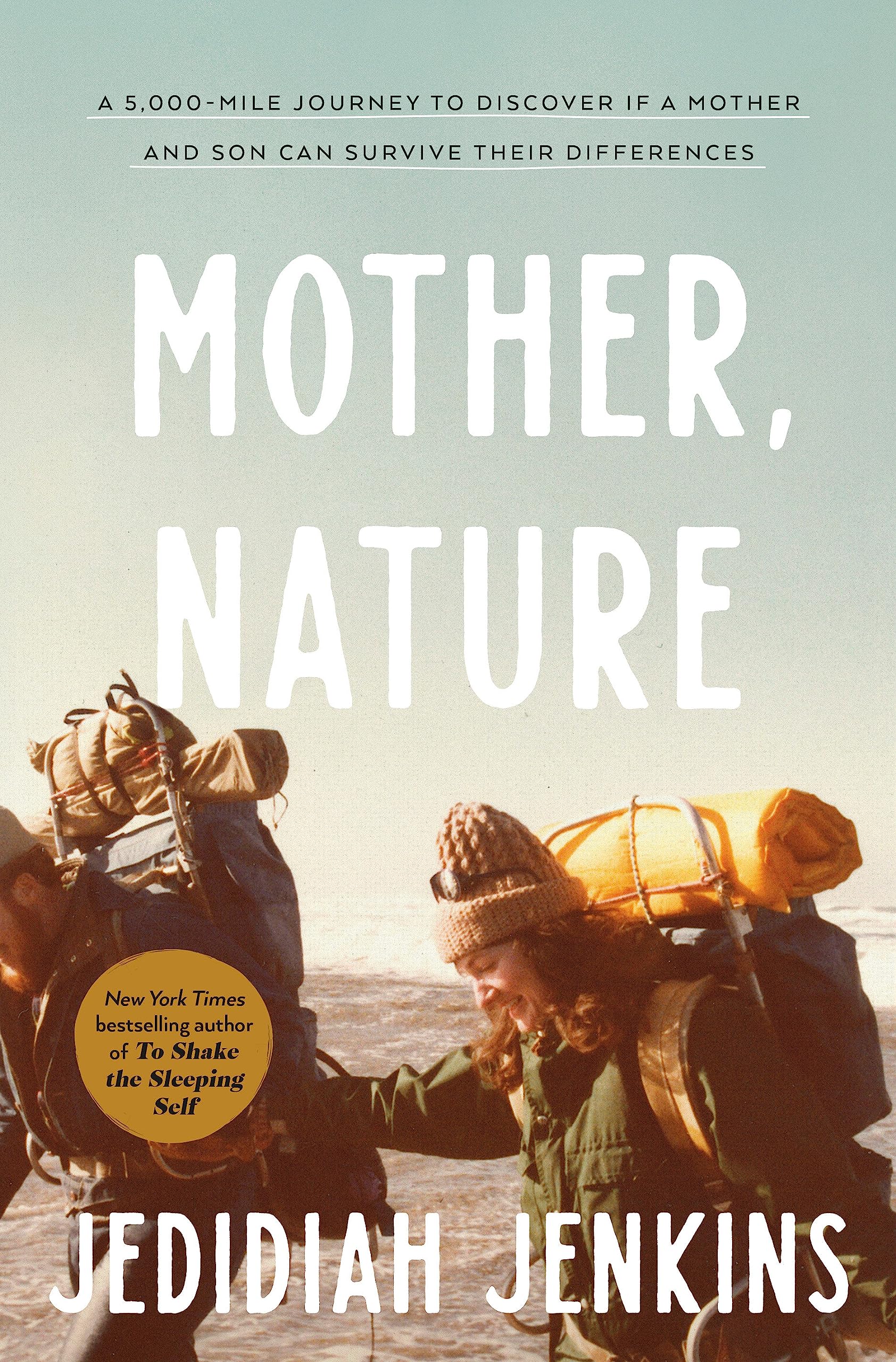
Mother, Nature: A 5,000-Mile Journey to Discover if a Mother and Son Can Survive Their Differences by Jedidiah Jenkins

A loving but troubled mother-son relationship takes center stage during a great American road trip in this reflective memoir about family.

In Mother, Nature: A 5,000-Mile Journey to Discover if a Mother and Son Can Survive Their Differences, Jedidiah Jenkins (Like Streams to the Ocean) presents both a literal and psychological voyage–and an investigation into family and tolerance.

Jenkins, nearing his 40th year, is troubled by his relationship with his mother: loving but fractured by her inability to accept his identity as a gay man. In November 2021, following the Covid lockdown, he undertakes a trip with her that he hopes will help them address their disagreements. The same journey will allow reconsideration of an aspect of her life that Jenkins paid little attention to. In the 1970s, his parents, Peter and Barbara Jenkins, walked across the United States, as famously documented in a series of books (including A Walk Across America and The Walk West) and National Geographic articles. As mother and son retrace those steps by car, Jedidiah wishes to learn more about his mother and her worldview; see the countryside and strengthen their relationship; and perhaps, finally, bring her to terms with his identity.

In driving from Tennessee to New Orleans and cross-country to the Oregon coast, Jedidiah (who lives in Los Angeles) and Barbara (whose best friends come from her Nashville Bible study group) struggle with what to listen to in the car–she likes Glenn Beck, and he likes NPR–what to eat, how to pray. Eventually, they will discuss the question that’s been weighing on the son’s mind: “Would you come to my wedding if I married a man?” Barbara’s conservative political and religious beliefs pose an obstacle to the love and acceptance that he craves from her. Their attempt to bridge such a divide feels relevant in polarizing times; the challenges faced by this loving but fundamentally diverging mother and son may resonate with many families.

Jenkins’s prose is unadorned, but his reflections are elemental ones about family and the static and changing aspects of relationships: “a mother’s influence is difficult to excise. It is not like the scorching sun. You cannot shade yourself from it. It is more enveloping and inescapable, like the air you need to survive.” By the memoir’s end, much is unresolved about the lives still in motion, but Jenkins has found his own peace, and learned a bit about the landscapes of his home country and his family background. Mother, Nature, a loving ode, suggests that the questions will continue to present themselves and that the journey toward discovery is worthwhile.


This review originally ran in the September 11, 2023 issue of Shelf Awareness for the Book Trade. To subscribe, click here.


Rating: 6 baby elephants.

Among the Bros: A Fraternity Crime Story by Max Marshall

This investigative narrative of fraternity members turned drug dealers–and worse–exposes unsavory aspects of college life.

Among the Bros: A Fraternity Crime Story is Max Marshall’s investigation into the series of arrests and criminal charges related to fraternities at the College of Charleston in South Carolina and the individuals involved. A press conference during the College of Charleston’s 2016 summer break caught the attention of Marshall, a journalist, recent college graduate, and fraternity member himself. Mug shot photos showed five fraternity members and three friends. “They looked like guys who put in time at the gym, and maybe at the beach, and definitely at the putting green,” Marshall writes. These eight young men were accused of selling a variety of controlled substances, including Xanax, which, as police chief Greg Mullen put it, seemed to be “a drug of choice right now.” According to authorities, this case was also related to the recent murder of another fraternity member. Intrigued, Marshall follows the story of those eight arrests and the changing cultural identity of Greek organizations in the United States.

Among the Bros focuses on Mikey Schmidt, a Kappa Alpha, to whom Marshall spoke via a series of contraband cell phones as Mikey served 10 years without parole. Age 21 at the time of his arrest, Mikey is one of the flashiest characters in the story Marshall unearths, and he receives the most serious sentence of the group. He and his best friend, Rob Liljeberg III (also a Kappa Alpha), form the backbone of Marshall’s reporting. They put human faces on an investigation into the intersection of Greek life, drug dealing, and criminal activity by a particularly privileged and overwhelmingly white male demographic.

Over the course of four years, Marshall consulted police files, court transcripts, and other documents, and conducted more than 180 interviews with 124 sources. The narrative he presents is sad, deeply disquieting, and often sordid. The fraternity members he interviews all deny using date-rape drugs but allow that others around them do. He meets with one fraternity alumnus who describes mixing gin, Mountain Dew, Xanax, and cocaine–and then tries to sell Marshall his financial planning service. “When I asked an SAE [Sigma Alpha Epsilon] what his friends did the weekend after the Mother Emmanuel killings, he said, ‘Things just aren’t going to stop…. As insensitive as it sounds, it’s still Friday.'” The portrait these anecdotes paint is not flattering, but Marshall remains compassionate, sympathizing with the pull of belonging, and the promise of like-minded friends.

Among the Bros finishes without moral lessons or final conclusions, instead aiming to clearly report events that will disturb most readers. Combining excellent journalism and deftly paced storytelling, this chilling tale lifts a veil on a decadent and troubling lifestyle.


This review originally ran in the September 8, 2023 issue of Shelf Awareness for the Book Trade. To subscribe, click here.


Rating: 7 brand names I had to look up.

Julia by Sandra Newman

This feminist retelling of Orwell’s 1984 brings the original’s philosophies, wit, and horror to modern readers with a strikingly reinvented protagonist.

Julia returns the timelessly relevant world of 1984 to readers’ attentions with a female protagonist more clever and feeling, and perhaps more cynical, than George Orwell’s Winston Smith ever was.

Sandra Newman’s retelling matches closely Orwell’s familiar and disquieting original. Big Brother is the leader of the nation of Oceania, at war with Eastasia (or was it Eurasia?). Telescreens squawking nonstop propaganda constantly observe every move of the Citizens of Airstrip One, formerly London. Where Orwell offered Julia as colleague, lover, and co-conspirator to his antihero, Winston Smith, here Julia Worthing gets a backstory.

She grew up in Semi-Autonomous Zone 5, previously Kent; had her first affair with a Party member at the age of 14; and won a Hero of the Socialist Family badge for denouncing her mother (a more complex story than it immediately sounds). As an adult, Julia works in the Ministry of Truth’s Fiction Department as a mechanic, repairing and maintaining the machines that design plots for the mind-controlling entertainment of the masses. “She was perpetually fascinated by the plot machinery,” Newman writes, but “about the books that were the end result, she knew little and cared less.”

Julia lives a straightforward, self-serving life, outwardly obedient to Party regulations and a member of the Junior Anti-Sex League, but is secretly involved in a number of minor sexual affairs, trading in black-market goods for the simple pleasures of real chocolate. Though fond of Winston in some ways, she has no illusions about the possibilities their narrow world allows them and lives mostly at peace within her limits. Newman’s version does not differ from Orwell’s in these particulars, but it does expand Julia considerably, and appealingly, as a character increasingly wrestling with not only the contradictions between lived experience and the Party’s narrative but also questions of right and wrong. “Anything was possible when one was never told the truth.”

Newman (The Country of Ice Cream Star) offers a tragic and harrowing story in lovely, evocative prose, revealing all the ugliness and beautiful possibility of a world hopelessly scarred by hate and manipulation and yet, somehow, still capable of hope. Julia is double-, triple-, and quadruple-crossed: “All was false. It was known to be false, but everyone lied about the lies, until no one knew where the lies began and ended.” Electrically memorable, Julia is as startling and incendiary as 1984 ever was, with dark humor and pathos commenting on perennially timely questions.


This review originally ran in the August 31, 2023 issue of Shelf Awareness for the Book Trade. To subscribe, click here.


Rating: 7 questions.

Silent City by Sarah Davis-Goff

In this darkly atmospheric novel set in a futuristic Dublin, a young woman fights for justice in an oppressive society ruled by fear during a zombie-like apocalypse.

Sarah Davis-Goff’s Silent City centers on a young woman faced with impossible choices in a post-apocalyptic version of Dublin. “To me, banshees are heroes. I saw images of banshees growing up at home on the island, women dressed in black, warriors. The ones who fight the skrake. HERE TO PROTECT, the grimy posters said.” Orpen was raised by her two mothers on an island devoid of other humans and, crucially, of skrake: monsters that bite, infect, and kill. The skrake “takes up your body and uses it like a puppet. Fast, vicious, strong, with long sharp teeth, the skrake is like a child’s bad dream.” Following the death of her mothers, Orpen ventures into a world she knows nothing about. She is bent on survival in this terrifying landscape of zombie-like beasts.

In the dystopian city that was once Dublin, she becomes a banshee, a member of the entirely female troops of paramilitary security forces ostensibly meant to protect, but actually used by “management” (entirely male, sinister, self-serving) to forage for supplies and keep other lowly citizens in check. Wallers work night and day, repairing and rebuilding the city’s walls against the skrake; the roles of farmers and breeders are equally humble. Banshees work in pairs: Orpen has found a surreal closeness and loyalty with her partner: “I never saw a woman who wasn’t sometimes beautiful, but Agata always is.”

The zombie apocalypse represents a possibly overdone subgenre, but Davis-Goff (Last Ones Left Alive) takes her readers into fresh territory here. Orpen’s struggles are not merely survivalist; raised with only two human companions and little context for other relationships, she must learn to chart new loyalties, friendships, and partnerships against existential questions of right and wrong. The city claims to provide protection and sustenance but, in fact, uses the banshees to commit atrocities and to exercise control over a subdued population, frightened into total silence lest they excite the skrake. Orpen and the women she serves alongside–all guilty of cruelties under orders–must balance loyalty against justice. “Those who can still feel for another, we feel it. I have to believe we do. I have to believe there are enough of us to change the world.”

Silent City is grim but hopeful, tackling questions of risk, trust, courage, morality, and sacrifice. Davis-Goff’s prose is stark but lovely. A strong feminist voice, austere circumstances, and a resolute sense of integrity make this dystopia memorable and inspiring.


This review originally ran in the August 25, 2023 issue of Shelf Awareness for the Book Trade. To subscribe, click here.


Rating: 7 dreams.

Mudflowers by Aley Waterman

In this reflective debut, young artists in Toronto form a love triangle with both transcendent and painful results for all.

Aley Waterman’s sensitive first novel, Mudflowers, follows a young woman exploring intimacy, biological and built families, and art. A love triangle twists and reshapes itself, with both trauma and revelation. “I wanted so badly to love in a good way,” says Sophie, the protagonist and narrator, 27 years old and a Newfoundland native who recently moved to Toronto, where she lives with a misogynistic writer and her best friend since childhood. He is a beautiful man named Alex who is also her on-and-off lover. Sophie sees Maggie reading her poetry at an event and is immediately swept away. Maggie is talented and enigmatic, “with big eyes full of wide highways.” The two become close friends and, sometimes, lovers.

Sophie creates glass mosaics for wealthy patrons, Maggie writes, and Alex works on indie films. They are young artists scraping together livings in a big city, taking drugs amid art events and the bar scene. They slide frankly and openly in and out of sexual relationships. Sophie obsesses over her mother’s death. Alex’s mother left when he was 12, their parallel losses an unspoken understanding. The addition of Maggie to their close relationship, forming a trio, acts as a magnetic force that both imbalances and strengthens the bond. Secrets surface, and the balance shifts again.

Mudflowers follows Sophie to an artist colony at a castle in France and eventually home to Newfoundland. Place is important to this thoughtful protagonist, who is given to contorted philosophic musings. Newfoundland is “the only place I had been to where there is enough space and isolation and distance from the world for people to really be themselves without even thinking about what that meant.” Earlier, she notes that “in cities so many lives are wildly proximate to each other, just divided by a wall here or a door there, but each wall determined some sort of fate, keeping us organized and away from one another.” She wonders: “What if the people who should be most important in life were just separated by a wall, and what if that wall meant those people never met!” Sophie has met the people most important to her, but keeping them together will be another feat.

Sophie’s physical travels are dwarfed by the scale of her cerebral and emotional movements, as she tortuously navigates desire and fear. She is preoccupied with art, how to love, and purposeful attention. “[W]as it how beauty was directed or how it was received that was most important?” she ponders. “How are you supposed to be a real person when you’re also supposed to be the woman inside of someone else’s mind?” She also often considers mothers and their absences: “Maybe we all need more mothers than we have,” she thinks. “Maybe we all need as many mothers as we can get.” Mudflowers is thought-provoking, expansive, and raw.


This review originally ran in the August 22, 2023 issue of Shelf Awareness for the Book Trade. To subscribe, click here.


Rating: 7 birds.

The Last Language by Jennifer duBois

A Harvard-trained linguist enters into an intimate relationship with a nonverbal man in this riveting riddle of a novel.

The Last Language by Jennifer duBois (A Partial History of Lost Causes; Cartwheel; The Spectators) is an utterly compelling puzzle of linguistics, perspective, and some version of love. Angela is 27 years old when her husband dies suddenly; she is four months pregnant (a pregnancy she will lose, “because of the stress, possibly”) and has a four-year-old daughter. Just months later, she is kicked out of her Ph.D. program in linguistics at Harvard, following a nasty exchange with her “intellectual rival and personal archnemesis.” With her daughter, Angela moves in with her mother and takes a low-paying job running an experimental therapy for “facilitated communication” to help nonspeaking patients with motor impairments. This questionable opportunity will have profound consequences. Readers gradually become aware that Angela is writing her first-person narrative while incarcerated. She tells of her love affair with a young man who can communicate only through Angela herself. Or, if readers do not believe her account, she has taken egregious advantage of a seriously disabled man.

Angela’s background in linguistics gives her a complex, many-layered perspective on Sam O’Keefe’s ability to communicate and even to think: “if thinking was language, the linguistic determinist would argue, then there was nothing to discover within people who didn’t have it already.” Despite early reservations, she is quickly taken with Sam’s sardonic humor, the life behind his startling eyes, his wit and intelligence–at least according to her account. Angela is very smart and has a thoroughly expert grasp of languages and linguistic theory; she knows what this looks like, but she knows her love for Sam, and his for her, is real. Readers must decide for themselves. This question is at the deeply intriguing heart of The Last Language. Is Angela a deluded predator or among the most misunderstood lovers of all time? DuBois’s choice to give readers only her perspective on this story is critical to the contortions of this gripping psychological drama.

Angela is ardent. She makes poor decisions, but her love is pure. She sprinkles her narrative with linguistic trivia and philosophic musings: she anticipates the arguments of the prosecution in her case and those of the linguistic scholars who would say “a person cannot conceive of what he cannot name.” She writes to Sam, who will never read her account: “In a very real sense, there was no you.” Together, she and Sam read Nabokov: Pale Fire rather than Lolita, but the parallels present themselves. Backed by Angela’s academic scholarship and the philosophy of what constitutes humanity, The Last Language is a smart intellectual riddle and a mystery with the highest of stakes. Readers will find it unforgettable.


This review originally ran in the August 14, 2023 issue of Shelf Awareness for the Book Trade. To subscribe, click here.


Rating: 8 angles.

A Fine Line: Searching for Balance Among Mountains by Graham Zimmerman

Alpine climber Graham Zimmerman’s memoir, dense with lessons learned and offered, recounts how he sought balance between his sport and the other elements of life.

Graham Zimmerman felt strongly about climbing from his earliest experiences growing up in the Pacific Northwest, and by age 25 was an avid and accomplished international alpinist with his dreams focused on nothing else. But injury, loss, climate change, and a yearning for connection have forced him to consider how to combine his love for alpine ascents with social and environmental pursuits. A Fine Line: Searching for Balance Among Mountains is his thoughtful story of climbing communities in broader context, and his philosophies for a life well lived.

Not yet 40 at its writing, Zimmerman acknowledges “this is not a complete work,” calling his book “a signpost along the way.” It is still dense with lessons learned and offered, however. At just over 200 pages, A Fine Line reads quickly, many of its action sequences adrenaline-filled as Zimmerman recounts climbs with varying levels of success. It is also a neatly organized memoir, with the tensions between climbing and everything else appearing early. Following a major award, he experiences a significant fall, injury, and lengthy recovery, emphasizing the dangerous nature of his passion and his financial insecurity. The women he attempts to date react poorly to months-long absences on risky expeditions. Frequently climbing at high altitudes amid shrinking glaciers also alerts Zimmerman (trained in geology and glaciology) to the impacts of human-caused climate change. And the young alpinist wrestles with loss, as numerous fellow climbers–his friends–die in the mountains. A mentor cites what he calls the “100-year plan”: to make decisions that will set one up to live to be 100. “I was 26 and only occasionally thought about turning 30, let alone ticking over into triple digits,” Zimmerman reflects. “Do I have a death wish…? No, just a case of severe myopia.” This plan, and meeting the fellow athlete whom he would marry, reset the narrator’s views on risk. Over time he comes to focus on being not just a better climber, but a smarter, safer one: “It hadn’t been more time in the mountains that had set me up for success; rather, it was a stable relationship and being surrounded by positive influences.”

As its subtitle forecasts, A Fine Line is about finding balance between an extreme sport in remote natural settings and “actual life in the lower regions.” As a crafted work of memoir, the book mirrors that achievement with its own balance between gorgeously written adrenaline rushes and philosophic reflections about intentional living, healthy relationships, athletic ambition, and service to human communities and the natural world. Obviously for fans of extreme outdoor sports, Zimmerman’s debut is also recommended for readers seeking wisdom and balance in any pursuit.


This review originally ran in the August 4, 2023 issue of Shelf Awareness for the Book Trade. To subscribe, click here.


Rating: 7 pitches.