Gone with the Wind part 4 (ch. 31-47)


Gone with the Wind by Margaret Mitchell

Follow the Great Gone with the Wind Readalong at The Heroine’s Bookshelf. Today we discuss part 4. [Edit: tomorrow the discussion will continue at the HB blog. Please check back!]
Part 4 of Gone With the Wind brings more troubles Scarlett’s way. Good old Will – whom we couldn’t have lived without – brings her the latest bad news: the new powers of the South are trying to take Tara from the O’Haras by taxing them beyond their means. That is, former overseers, Yankees, carpetbaggers, and the social class that Scarlett used to turn her nose up at. Scarlett is visited by the Slattery girl who she feels killed her mother (Emmie Slattery had typhoid, and Ellen went to nurse her, caught it, and died); her new (former overseer) husband intends to buy Tara. This is one of the greater threats that Scarlett has encountered to date. As Gerald, her Irish father, predicted, Scarlett is finally learning to value the land as much he did.

In her distress, Scarlett runs to Ashley’s side, and begs him to run away with her. She again forces a confession of love from him, and a passionate kiss, but again he balks at leaving Melanie and baby Beau. He’s not brave enough to go with her, and/or, he’s too honorable. My personal reaction is impatience with the concept of honor and bravery over practicality; but this is not conceptual honor we’re talking about here. Ashley has a very real wife and baby who very truly need him, and his love for Scarlett is irrelevant. If he didn’t have the desire (or courage) to marry her in the first place, well, it’s too late now. I think he’s right about that, even though he is sort of pathetically spineless. Sorry, all of you who think Ashley is dreamy; I have trouble respecting his wishy-washiness. At least he knows it, though…

Scarlett’s next move, in desperation, is to dress herself up and throw herself at Rhett Butler’s feet. It’s a ploy that almost works, even though she has to play it in the jailhouse, as Rhett has been arrested for stealing the Confederate treasury. But he rejects her, and she grasps at a straw: her younger sister’s lifelong suitor, Frank Kennedy, is powerless under her charms and marries her when she bats an eye. He turns out to have less money than she expected, though (I’m reminded of Moll Flanders…), and she turns an entrepreneurial hand.

If you’ve been following along at all, it won’t surprise you that Scarlett turns out to be a damn fine businesswoman. She can be ruthless with her competition, dishonest, manipulative, and not shy to use her “charms” to attract business; she has a good head for numbers, and coldly acts in the best interests of those numbers. She’s cleaning up, but also struggling with labor issues. Freed slaves? Irishmen? Prison convicts? All the while, Frank is steaming at home over his wife’s headstrong behavior, which brings disrespect upon him in those oh-so-respectable circles Atlanta society is struggling to rebuild. Scarlett has another baby. Her father dies. She is sending money to Tara, now that she’s doing well, and she has succeeded in saving the farm… Will marries Suellen, even though it was Carreen that he loved, all to save the farm. But oh, the irony, that she’s saved Tara only to be kept away from it by her work in Atlanta.

After Gerald’s death, Scarlett connives to bring Ashley to Atlanta, to work for her. Melanie enters Scarlett’s social circle again, and they live in tense harmony in two houses back-to-back. Rhett Butler turns back up, and he and Scarlett play their usual game: Butler lent Scarlett money after he got out of jail (not even requiring that she prostitute herself, how generous) and now points out that she has broken the conditions of the loan by employing and therefore “helping” Ashley. There is some question about where Frank goes late at night.

And now comes the crescendo. Part 4 builds to one horrifying sequence of events. Scarlett has taken to traveling alone, at night, through the bad part of town, and one night is attacked by two men (one black, one white) who try to rape her. Big Sam (remember him? the head field hand from Tara) rescues her. The men back home, meaning Ashley and Frank, take off and leave Scarlett with Melanie, which she takes as an affront. But it turns out the truth is worse: they are secretly members of the Ku Klux Klan, and have set out to kill her attackers. The Yankee soldiers interrogate the women looking for the Klansmen, and Rhett is the hero of the day: he constructs an elaborate scene of fiction in which the men have been out at a whorehouse all night long. They have killed Scarlett’s attackers, and they get away with it (although at the price of publicly declaring the whoring, which is disrespectful to the wives, Melanie included). But Frank has been killed.

This is where I begin to be really conflicted. On the one hand: Scarlett has been attacked. Two men try to rape her. Her tribal menfolk set out to avenge this attack. I’m emotionally behind them at this point, even though it’s outside the realm of law-and-justice which I do believe in. This part doesn’t read as particularly racist; the two attackers represent both races and apparently receive an equal fate, based on being rapists, not being black or white. But, this is the KKK doing the work. Emotionally, as a reader who’s come to love and cheer for (even in my moments of exasperation) Melanie, Ashley, Scarlett, and Rhett, I’m pleased when they get away with murder, literally. But wait! The Ku Klux Klan killing people in the middle of the night, without benefit of trial, and getting away with it? This is most certainly NOT something that I stand behind.

I think I see what Mitchell is doing here. She has painted these upstanding, moral, white Southern gentlemen, who feel the need to go out and protect their women from rape and abuse. Again, this is easy to get behind. But then she sort of gently blurs these positive portrayals in with the Klan. And I know very different things about the Klan, and I don’t get behind them. This is some kind of propaganda. Shame on you, MM, for making me sympathize. Midnight lynchings = bad.

Here’s another difficult concept from the same passage: Scarlett blames herself, and the town mostly seems to blame Scarlett, for Frank’s death. She was out late at night, alone, in the bad part of town, and she was the victim of an attempted rape, thereby forcing him to go out shooting strangers in the dark, which not surprisingly got him killed. She killed him! She asked for it, and she got what she asked for! And then he died! Her fault!

UGH! The concept of a women ever “asking for” rape or attack is disgusting, and I hope no intelligent person subscribes to it (although I fear that some people still do). And no less, Atlanta’s theory supposes that not only did Scarlett bring rape upon herself, but that she left Frank no choice but to go out on midnight rides for justice, thereby putting himself in harm’s way. I don’t think this follows any better than the asking-for-it theory. Scarlett didn’t want Frank out running after rapists in the dark; we can see very clearly that what she wants most is for him to stay home and comfort her, and make her feel safe with his presence.

So, I had some difficulties with this sequence. I look forward to your responses, too.

But, okay, to get back to the story: the newly widowed Scarlett finally receives the proposition that I, for one, have been waiting for for oh, almost 800 pages. Rhett Butler is in the right position to catch her between husbands (as he says), and they come to an agreement: love is not necessarily present, but they can live happily together, and Scarlett will keep Tara and want for nothing. She will have as big a diamond ring as she pleases. All of this does come true; but, what’s this? Rhett seems to regret his ruling against love as part of the equation. I am holding out hope for some real honest-to-goodness romance at some point in this book…

But as part 4 closes, there’s another question hanging in the air, too. We’ve met Belle Watling a few times, and she’s a decidedly sympathetic character. The madam whose house cleared Ashley et al of murder, and who donated money anonymously to help the Confederate soldiers during the war, and who apparently is supported in part by Rhett Butler, has a child away at school somewhere: a son. And Rhett tells Scarlett he has a child away at school in New Orleans: his ward. Now, I see the foreshadowing. These two children are one, but who is the father of Rhett’s ward in New Orleans?

Part 4 ends with Rhett and Scarlett honeymooning in that very place, so I expect to find out soon. I hope for happiness, prosperity, a quiet settling down. I hope for love and romance, and an answer to my questions about the boy. I feel pretty certain I won’t get them all, though; this book is far too much about heartache and reality to give me all these happy endings. What’s next for Scarlett?

And how did YOU react to the Klan? And come on, y’all, a woman never “asks for” rape.

Gone with the Wind part 3 (ch. 17-30)

Follow the Great Gone with the Wind Readalong at The Heroine’s Bookshelf. Today we discuss part 3.

I’m quite late on this one, as noted before vacation – I hadn’t actually read this part before we set out, so it’s posting after my return. Ho-hum. I should be on track for the last two readings: part 4 on Sept. 26, and part 5 on Oct. 17. For now, you can go check out the discussion of part 3 at the Heroine’s Bookshelf, here. As as aside, Erin at HB is doing a fabulous job of leading these discussions! Not only does she summarize chapters, but she also gives us links for further reading on any number of historical facets of this amazing book.

So. I’m still just devouring GWTW; it’s an epic with momentum, emotional impact, and plenty to think about. It’s entertaining, heart-wrenching, and instructive.

These fourteen chapters are fast-paced and stomach-churning. Scarlett is living in Atlanta as the Civil War really ramps up; casualties increase, and the fervently loyal Southerners begin to face the fact that they can’t win this war. Social niceties that Scarlett (and Melly, and Pitty, and everyone) thought could be relied upon fall apart. Scarlett ends up undertaking some incredible challenges, simply out of necessity: she safely delivers Melanie’s (and Ashley’s) baby, and then grits her teeth and grinds her way home through dangerous, contested territory towards Tara. She enlists Rhett Butler’s help in doing this, but he abandons her – near Tara, but not close enough for safety.

When she gets home, she learns that her beloved mother has died, her two sisters are ill and no more tolerable to her than ever, her father Gerald is no longer a rock but rendered a pathetic simpleton by his wife’s death. Everything falls on Scarlett’s shoulders and, again, necessity births greater strength and skill than she would have thought possible.

I never liked Scarlett, in the sense that I would have wanted to be her best friend; but I always respected her, greatly in fact. Conniving, manipulative, and nasty? Yes. But determined? Oh, yes. And now I respect her more than ever; she’s really pulled it together. She’s my kind of woman, in a way: she doesn’t waste too much time whining, not when it really comes down to it. She rolls up her sleeves, picks her own cotton, earns blisters and calluses and loses weight and saves the farm, when her sisters are ready to roll over and die rather than stand up straight. I respect her immensely.

But I’m also concerned for the vision that Scarlett, and everyone around her, has of some reborn Southland. It’s just not going to happen. (Says I, with the benefit of lots of hindsight!) It’s never going to be the same again. And then Ashley comes home… finally… and Scarlett is still wasting her time pining over him. Just like the reincarnated South she dreams of, her perfect life with Ashley is impossible. I’m frustrated at her slowing down her own progress by mooning over impossibilities.

In response to some of Erin’s discussion points:

The descriptions of war are grotesque and well-done; I can really see and feel and smell the horrors. But I guess I failed to be entirely shocked, if only because this is the reputation of the Civil War in our time. Perhaps Mitchell’s contemporary audience was less clear on this point? I think we all learned in school at least about the idea of the Civil War as awful. But she certainly evokes it viscerally here.

Prissy is a deplorable character – as is Mammy, I must add. I have little patience with the way these slaves are depicted. It’s so obviously stereotyping, using set parts, simplifying these black slave who were – hello!! – real people, like every other population on earth made up of smart, dumb, hard-working, lazy, creative, dull, kind and evil people. My greatest difficulty with this book so far is in the portrayals of the slaves. Does Prissy drive me crazy? Yes. And there’s every chance that somewhere, one specific slave girl had all these characteristics that Prissy does; but it’s just too easy to paint them all with the same brush, and that I do not buy. Mammy’s relief and pride at still belonging to a good family is disgusting, coming from Mitchell’s pen. Pork’s pridefulness on being a “house n*gger” is offensive, to my modern eyes.

Rhett Butler… oh, my. I was at least as disappointed as Scarlett when he proposed, not marriage, but prostitution! (And I wonder if she would really have turned him down, as she planned to, if it had in fact been the former?) I think he’s rather wonderful, and I also think that he and Scarlett are two peas in a pod; she’s self-delusive if she doesn’t see how alike they are. It’s funny, because what she hates in him is what carries her through her own life, too.

The momentum of this section of the book is amazing. I couldn’t put it down. Can’t wait to discuss part 4 with everyone! But some of the portrayals of the south, and of the slaves, are getting a little uncomfortable. What’s next?

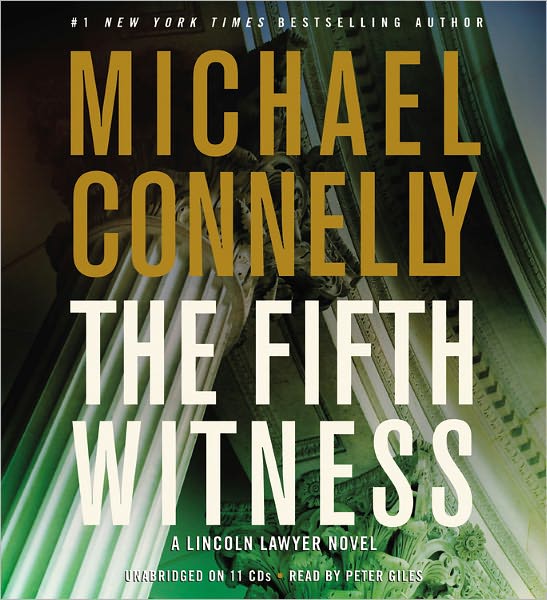
The Fifth Witness by Michael Connelly (audio)

Finally got around to Michael Connelly’s latest via audiobook. This was a good way to fit it into my somewhat busy print-reading schedule (I’m working on two clunksters, Newspaper Titan and Don Quixote), but there was a drawback: I had a real problem with this narrator, and I fear that it effected my reception of the whole book, sadly. Peter Giles’ narration was so heavy and serious it weighed down the story and its potential humor.

Quick synopsis: Attorney Mickey Haller has picked up home foreclosure cases (civil) to fill out his business. But he returns to his roots as a criminal defense attorney when one of his home foreclosure clients, Lisa Trammel, is accused of the murder of a big-time banker involved in foreclosing on her home. There may even be mob involvement: is Lisa being set up?

I’m afraid my disappointment extended to Connelly as well as narrator Giles. I didn’t like how this one felt very didactic. Early on I was offended by lots of Mickey explaining things to his 14-year-old daughter, where the very awkward dialog was obviously just a mechanism to explain things to me, the reader (listener). And that daughter, by the way, seemed awfully juvenile for 14. Almost shades of Sophie’s World, shudder, which I despised. There was a didactic feel to most of the novel, in fact; Haller went out of his way in dialog to explain courtroom procedures, to his client, yes, but also to his staff, who should well know this stuff by now. His client, Lisa, is an unsympathetic character. She was meant to be unlikeable, so I guess I should give Connelly credit for the fact that she drove me nuts. But I’m not sure it was necessary that she be quite so bleating. It’s one thing to successfully pull off an unlikeable character, and another to make me cringe every time she appears.

I did like the little joke whereby Mickey is asked if perhaps Matt McConaughey wouldn’t do well playing him in a movie; but that brings me to another beef with this narrator. McConaughey’s smooth, suave, slightly fast-talking portrayal in The Lincoln Lawyer was very true to Mickey Haller’s persona on the page; whereas this audio narrator has him EM. PHA. SIZING. EVERY. WORD. in an aggressive and abrasive way that I find offputting and inaccurate. Isn’t Mickey Haller’s charm, and effectiveness as a lawyer, wrapped up in his ability to be, well, charming? Likeable? This grunting character in the audiobook doesn’t sound like the Mickey I know from his last three book appearances. It makes me wonder how much control Connelly has over these creative productions of his work – ideally, lots, and maybe that’s why Giles is the third narrator I’ve encountered in, count ’em, three Connelly audiobooks. Mr. Connelly, if you’re reading this (ha), I vote against Giles. It was all I could do to finish this book on audio. I wanted to switch over to print but oh, woe, little reading time and prior commitments.

Things did pick up considerably when we finally got into the courtroom. Haller, and Connelly, both shine in this setting, and my enjoyment of the story and the drama and the action and the dialog all increased when the trial began. I felt that the pace really ramped up; instead of feeling exasperated, I really looked forward to the next installment. But even here, Connelly’s not up to his own standards. Some of the dialog was still contrived, and there were at least two instances were Haller expressed (in his first-person narration to me, the reader) that he didn’t know how to handle a new and surprising incident. These struck me as relatively commonplace courtroom events, though, and his confusion didn’t ring true for me. I mean, I almost knew how to handle things (at least in fiction-land) from my reading in this genre. Haller’s sudden ineptitude – when his character is supposedly so slick and expert – didn’t work for me. These were minor moments, but they drew my attention because they didn’t fit.

I’m mulling over this reading (listening) experience now, wondering how things took such a poor turn for me. I have always been really excited about Connelly’s Bosch novels, and not much less so, all the rest of his work: the standalone The Scarecrow, the first Haller book The Lincoln Lawyer, etc. From his first novel on (and I have now read them ALL), I’ve enjoyed everything I’ve read. How sad and concerning, then, that this latest, The Fifth Witness, is my least favorite so far!

The courtroom drama did work. Some new characters were introduced who might hold some promise, namely Haller’s new assistant counsel, Jennifer “Bullocks” Aronson. And the big revelation at the end? Well, the jury is out (ha) on this so far. I like the future and the new directions it opens up for Haller, and for Maggie McFierce. I think I’m on board with the overarching change of heart it indicates. I am relatively sure I’m on board with the idea that this is a natural progression for Haller. But I’m not completely sold on any of these arguments; and I think the reason I’m not completely sold is that Connelly didn’t sell it. This was not his strongest work.

I hope very much for more to come, soon, and better, and maybe with Bosch, rather than or in addition to Haller? Bosch is my favorite. I realize Haller’s the new star, what with The Lincoln Lawyer movie making such a big splash. It was a good movie – entertaining and well-done and perhaps most important to me, fairly faithful to the book. But I hope Connelly isn’t letting this success dictate his work.

I’m sorry to have to write anything less than glowing about my guy Connelly, but I call ’em like I see ’em. I give The Fifth Witness a “meh” and hope for more, better, soon.

Gone with the Wind part 2 (ch. 8-16)

Follow the Great Gone with the Wind Readalong at The Heroine’s Bookshelf. Today we discuss part 2.

I continue to be very impressed. Mitchell is positively painterly in her descriptions of people and places. I love the people, and the clothing, the best. I’m not usually all that interested in clothes but the finery of Atlanta’s Civil War era society scene is awfully colorful, elaborate, and foreign to me. This second part of the book has closed in a little bit, I feel, to relatively few characters: Scarlett, Melanie, Miss Pittypat, and Rhett Butler being the features. Scarlett continues to be a character who is not likeable, exactly (I wouldn’t want to be her friend; not that she’d want to be mine!), but is fascinating and I have to say sympathetic – in the sense that I sympathize with her frustrations, even her desire for simplicity, joy, pleasure, attention. She’s human; I understand her. Melanie is less human because she’s so innocent and trusting; it almost stretches one’s credulity, although I guess Southern ladies were trained to be just that, so maybe it’s historically accurate. Miss Pittypat is definitely a caricature, but a well-formed one.

Captain Rhett Butler I find intriguing. I never did understand Scarlett’s passion for Ashley; he seems to be a pretty face and a romantic ideal, and little else. Pardon me for parroting Gerald, but they’re certainly not suited for one another. Rhett, though, should be just up Scarlett’s alley. He’s got spunk and attitude, not to mention he’s also handsome (several mentions of how BIG he is, too) and has plenty of money. Maybe they’re too much alike, with too much irreverence. Certainly he’s not ready to pay her the kind of attention, flattery, compliments, and silliness that she wants. But I find the prospect of Rhett for Scarlett to be much more exciting than the prospect of Ashley.

We’ve moved a little bit away from the slave characters, too, although we did get a brief sketch of “Uncle” Peter and his control over the household. My memory of Mammy dims, but I’m still bothered by a feeling that she (and many of the slaves depicted as loyal and content in their lot) are painted with a political perspective we no longer find appropriate.

Gone with the Wind continues to be a feat: of beautiful, evocative, fine writing and literary descriptions; of character sketches; of historical fiction with all the details; and of suspenseful drama that keeps me turning the pages. I have lots of other reading to do, so I’m putting this one down til the next readalong date (we discuss part 3 on Sept. 5), but with great difficulty! I am grateful that this readalong finally got me reading this classic. Its fine reputation is deserving.

As usual, don’t forget to stop by The Heroine’s Bookshelf for discussion of part 2, and please do join us if you can!

Gone with the Wind part 1 (ch. 1-7)

Oh my. Am I ever glad that I have finally begun to read this book! I shouldn’t have waited so long. It IS a chunkster, and I AM busy right now. But what a book.

How did I get here?

The Great Gone with the Wind Readalong is hosted by The Heroine’s Bookshelf blog. This is what finally prompted me to read a book that’s been on my list for years. Thank you so much, Heroine.

Where am I coming from?

I feel like this is weird, but I have never read this book, never seen the movie, and had only the slightest and vaguest idea what it was about. All this, and I am a Southerner (to the extent that a Houstonian is a Southerner… that’s a different post). In my mind, this book is a little bit crossed with The Glass Menagerie. I don’t know why. I read the latter, in high school, although I do not seem to have a lasting impression of it. I think I did admire it; I remember the glass menagerie itself; I remember the suitors and my frustration with the mother. But there are some blurry lines between the one masterpiece of Southern-set fiction which I have never read, and the one I have. By the end of this readalong I certainly expect to have that cleared up!

What’s the drill?

Erin of The Heroine’s Bookshelf is hosting this readalong that involves 5 discussion dates, by which we will all have read 5 sections of the book. I am doing my best to pace myself so that the section in question is still fresh when the discussion comes along. So, we can all hop over there to join in a discussion, which I certainly will. But! I have my thoughts to share with you here, too.

What do I think so far?

This is an extraordinary work, just in the sense of evocative description, Mitchell’s ability to place me firmly in the time-and-place. At the end of the first page, I was hooked and admiring. She chooses very unique adverbs that draw my attention and let me see what she sees. The twins’ “long legs, booted to the knee and thick with saddle muscles, [were] crossed negligently.” Crossed negligently? She could have spent a paragraph trying to tell me what she has shown with that one adverb. “They were as much alike as two bolls of cotton.” Or earlier, Scarlett’s “green eyes in the carefully sweet face were turbulent, willful, lusty with life, distinctly at variance with her decorous demeanor,” because “her true self was poorly concealed.” I already feel like I know a great deal about all 3 of these characters – with no dialogue – and all this on page one! I’m all the way in.

As promised (threatened?) by Erin, I was indeed tempted to just rush past this first section and keep going. I’ve decided to stick with the schedule, though, which allows me to read other books in between. Part one was delightful, and able to stand alone, at least for a bit. I got to know Scarlett, appreciated her odd and not completely likeable personality and traits. This is a good stopping point, as a chapter of her life ends; part two will clearly begin the next. I look forward to it.

Please be sure to stop by the hosted readalong discussion, too.

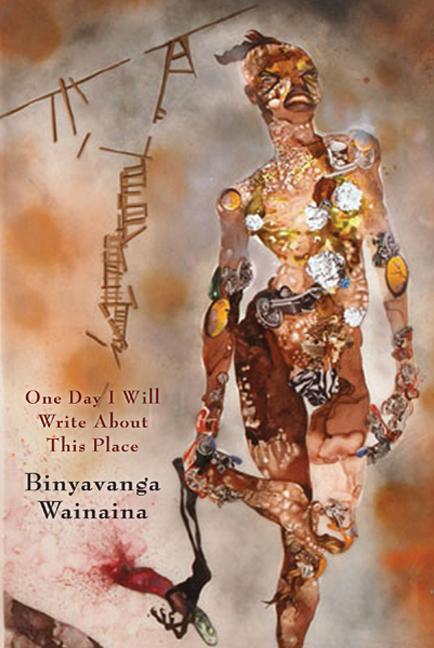
One Day I Will Write About This Place by Binyavanga Wainaina

Binyavanga Wainaina’s memoir, with details of various African backgrounds and his sensitive artist’s perspective, paints a poignant and lively picture.

Wainaina’s memoir of his life in Africa begins with his childhood in Kenya, follows him through university in South Africa, to a family reunion in Uganda, and on to his travels throughout Kenya, to land him finally in New York State as a writer and professor. His tale, however, is far from simply a recounting of one man’s life. At its heart, the book is the story of an artist, his struggles as a child to adjust to his view of the world and his discovery of writing as an outlet. His perspective as a child verges on the fantastical as he confuses colors with shapes and objects with sounds. The lyrical, imaginative writing throughout the book reflects this unusual vision. Wainaina paints pictures with words; his writing is reflective and playful and worth lingering over. Music, too, plays a role–almost as another character–as he describes his intense reactions to the music of Kenya, of Africa and of the world.

Another worthwhile aspect of this book is its intelligent and informed study of the politics of the African continent and the diversity of Kenyan perceptions. Wainaina tells of the battle between tribalism and a united Kenya, and the richness of linguistic and cultural perspectives there. Politics, however, is never the main subject; it is merely a background to his personal story. The Africa evoked is captivating and will be exotic and new to many readers.

Wainaina’s memoir is by turns funny, sad, hopeful and occasionally cynical, but always engaging. Fanciful abstractions of his environment and instructive tales of African politics combine to give us a fascinating vision of his world.


This review originally ran in the July 22, 2011 issue of Shelf Awareness for Readers. To subscribe, click here, and you’ll receive two issues per week of book reviews and other bookish fun!

Two for Texas by James Lee Burke

Another good one from James Lee Burke; and such a quick read, too.

Son Holland and Hugh Allison escape together from a prison in Louisiana in an opportunistic and unplanned series of events that includes killing a prison guard. With Son struggling to recover from a gunshot wound, they flee into Texas, where the Mexican army is skirmishing with General Sam Houston’s troops, and various Indian tribes make up a plurality of fighting factions. It’s a lawless land, whose chaos does help Son and Hugh stay lost, but the brother of the murdered prison guard is on their trail. The older, more experienced Hugh (a friend of James Bowie) acts as a big-brother figure to the younger Son, who’s had his share of violence and hard times but retains some innocence and some righteous virtue, both for better and for worse. The two pick up an Indian woman, Sana, along the way, who will turn out to be an ally.

Son and Hugh decide to join Houston’s army as a defense against being recaptured and thrown in prison. Even if the tortures of their earlier incarceration weren’t unbearable enough, a return would mean certain slow, painful death. They catch up with Houston and spend several fateful months in the General’s camp, and are there during the battle at the Alamo, as well as Houston’s final defeat of Santa Ana’s Mexican army at San Jacinto.

My little paperback copy of this novel does not include any notes from Burke to tell me how much of this story is fiction. I surmise that Son and Hugh are entirely fictional characters. Certainly, the battles at the Alamo and San Jacinto are a part of history, as are the many big names Burke drops: Houston, Austin, Fannin, Milam, Bowie, Crockett, and more. But I think the story of these two men is Burke’s creation.

I enjoyed this quick read. At only 148 pages, it took me about a day in my free moments. It offers Burke’s usual fine descriptive writing, and I thought both of the main characters were well drawn: they had personality; they felt real; I was invested in their personal outcomes. The battle scenes and the rough edges on the soldiers, Houston’s ragtag troops, and the outlaw character of Texas at the time were all visceral and (in my embarrassingly limited knowledge) true to history.

An easy read with poignant characters and a good, readable (if cursory) history of the Texas Revolution, in Burke’s usual fine writing style.

[If you’re concerned: there is some blood-and-guts in the battle scenes, to be sure (how could there not be?) but it’s fairly conservative.]

The Devil in the White City by Erik Larson

THIS is how I like my nonfiction! See, Castaneda? Like this! I can’t exactly explain the difference. There’s just something very narrative, conversational, interesting about this. Similarly, Dethroning the King, Janet Malcolm, Annie Londonderry, etc. It’s not sensationalist; it’s just exciting. Written like a thriller or like a work of fiction, but no less serious a work of nonfiction for it. How to explain? Let me quote a very average paragraph for you, from page 27:

Each man recognized and respected the other’s skills. The resultant harmony was reflected in the operation of their office, which, according to one historian, functioned with the mechanical precision of a “slaughterhouse,” an apt allusion, given Burnham’s close professional and personal association with the stockyards. But Burham also created an office culture that anticipated that of businesses that would not appear for another century. He installed a gym. During lunch hour employees played handball. Burnham gave fencing lessons. Root played impromptu recitals on a rented piano. “The office was full of a rush of work,” Starrett said, “but the spirit of the place was delightfully free and easy and human in comparison with other offices I had worked in.”

See, that second sentence is long and convoluted and uses biggish words, but it flows and communicates; it doesn’t impede communication, and what it certainly doesn’t do is brag.

All right, rant aside, this is an excellent book! I started it Friday night and finished it Sunday afternoon. Not to repeat the back-of-the-book blurbs, but this work of nonfiction absolutely reads like a thriller; it’s difficult to put down. Very enjoyable. After years (literally) on my TBR shelves, I picked it up because I had such a groove going, after Annie Londonderry and Clara and Mr. Tiffany, two books set in the same era with overlapping locations – Annie in New York, Boston, and Chicago as well as all around the world, and Clara in New York, with the Chicago World Fair playing a role as well. I enjoyed both of these books so much, and especially the extra immersion in time-and-place I got by reading them back-to-back, that I wanted to go straight into The Devil and the White City next. And I’m so glad I did.

The story is this: Daniel H. Burnham, along with a huge cast of other talents and characters and against all odds, pulled together the World’s Columbian Exposition of 1893, better known to us as the Chicago World Fair. Concurrently, a man named Herman Webster Mudgett but known by his most-used alias, Dr. H.H. Holmes, murdered an unknown number of people, at least 27 but estimated as high as 200, in Chicago on the very edge of the fair grounds. Larson tells the story of the fair, of the serial murders, and of a larger time-and-place from the points of view of these two men, mostly, with side journeys into several other lives.

The World’s Fair is a character unto itself, as is the city of Chicago. Larson gives us the styles and morals of the time, and helps us to understand how it was that dozens of people, mostly young women experiencing a freedom unknown to their parents’ generation, could disappear into Holmes’ grasp. We see the wonder and beauty and ambition and angst of those who worked to produce the landmark event that was the White City, as the fair was known. We see the everyday struggles that allowed Holmes to methodically go about his evil pleasures.

Larson walks a fine line in trying to enter the heads of historical figures, especially the elusive Holmes, and still call his book nonfiction; but he’s got me convinced. He points out that everything in quotation marks is attributable, and defends the two murder scenes he chooses to portray with the evidence available to him in his research. In fact, as an aside, I enjoyed his “Notes and Sources,” and the brief story of his research there. He even mentions, in some cases, in which library or rare book room he found a particular elusive source. Further, also from Notes and Sources, page 395-6:

I do not employ researchers, nor did I conduct any primary research using the Internet. I need physical contact with my sources, and there’s only one way to get it. To me every trip to a library or archive is like a small detective story.

I know all of us booklovers (and librarians) enjoy that.

This is an engaging, riveting read. The historical value is vast. I’m always amazed by how the pieces of our history fit together. Am I the only one? I feel like there are so many names, personalities, and events in our history, but we learn them as individual bits; it’s always a little thrill when they come together in ways I don’t expect. For example, reading that Elias Disney worked as a carpenter and furniture-maker in the building of the fair, and went home to tell his sons, including little Walt, stories of the “magical realm beside the lake.” Isn’t that a charming little anecdote? Several of these connections are left in suspense, too; if your history is a bit weak in the right places, as mine was, you get these happy little surprises. I like that.

I found this book captivating, and I recommend it as a pleasurable read that may sneak some learning in on you. I invite readers of thrillers and evocative nonfiction to enter this fantastic, glittering, magical, and deadly – and true – world.

South Texas Tales by Patricia Cisneros Young

South Texas Tales: Stories My Father Told Me by Patricia Cisneros Young is a slim volume of short stories, taken in part from the stories the author grew up with. It’s a quick and easy read, and an enjoyable one.

These simple and simply told stories read almost like fables; they reminded me of the Coyote Native American stories I read as a child. These stories aren’t just for children, though. The writing style is sparse and straightforward, but these vignettes evoke a time and a place.

Issues addressed include race and racism, marriage and spousal abuse, religion and faith, and even suicide; many stories are about family, love, or the value of hard work. But all of these themes are understated. The stories are quietly powerful but always unpretentious. I enjoyed the minimalist, unfussy style very much; it’s rather palate-cleansing. There’s nothing fancy here, but the stories have value despite being… spare.

Just to give you a quick sampling:

Shibboleth is a story about the Masons acting ruthlessly for their own benefit, and feeling the wrath of the community in turn. The characters are drawn quickly and in broad strokes but it’s enough to feel the pride of the Hinojosas, and to respect Don Manuel’s speaking out, even if it’s too late.

Blood Moon Lullaby is heartbreaking but, I fear, all too true and common a tale.

The Courtship of Red Collins is a bit clumsy but also an awfully realistic-feeling portrayal of small town society and racism, with a surprising turn at the end. Unrealistic? Perhaps. But in that these tales read like fables, I can appreciate the moral.

A Good Day for Dying is a wise choice to finish the collection, because I found it to be the most powerful story of them all. I appreciated Don Sebastian and would like to sit under the mesquite tree with him, myself. It begins:

The old man was tired. Life had given him his fair share of trials and woes and now Sebastian, after surveying his vast estate, decided that the time had come for him to die. The bed that he crept out of had been imported from Paris and brought out to his ranch by mule train. It had been a surprise gift for Sara, the woman who had shared it with him for forty-eight years. He missed her warmth.

These unadorned, down-to-earth stories were remarkably powerful, and I think them a fine accomplishment for such a modest little book. I’m glad I stumbled across them.

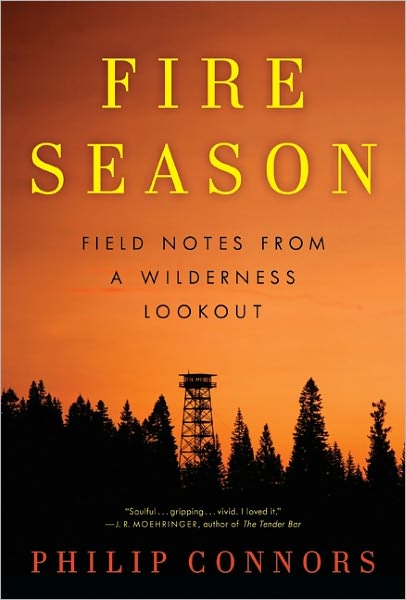
Fire Season by Philip Connors


EDIT: You might also want to check out my father’s review, and friend Tassava’s, of same.


This is an amazing book. The first sentences immediately grabbed me. Connors works summers in a teeny, tiny tower room way up in the sky in the Gila National Forest in New Mexico, as a fire lookout. His job is to spot smoke and call it in for control or “management” of the fires. But his “field notes” tell so much more than the story of his career as a lookout. This is the story of his time alone in the Gila, and of the visitors he receives and the visits he pays back to town; it’s the story of his and his dog Alice’s interactions with nature. It’s the story of fire and smoke and the Forest Service’s management of fire. It’s a history of fire, of the Forest Service, of the Gila, of so very many aspects of our nation’s history, and the natural history of the southwest. Connors discusses the varied reactions the government has had to fire: the policy of fire suppression, consistently and in every case, versus the concept of “controlled” or “prescribed” burns, and the ongoing debates. He contemplates society, its benefits and our occasional desire to escape it. He discusses his unique model of marriage, in which he spends some five months a year living alone and mostly out of touch. He also relates ecological issues like fire as a natural control mechanism, erosion, and the preferences of flora and fauna. And more.

I found Fire Season astounding and important. There’s a zen-like balance in it. Connors is a rather balanced man, in that he still craves human contact; he’s not an entirely back-to-the-wild isolationist, nor does he fail to appreciate cold beer and a variety of media. But he achieves a special and rare state of commune with nature, too. His writing, for me, parallels this balance. He can wax philosophical, crafting lyrical, beautiful odes and hymns of reverence to nature, fire, and life; but he never gets overly wordy, tempering the poetry with (still beautifully written) narrative history.

Connors tells so many little stories I would love to pull out of this book and share as vignettes. For example, the story of Apache Chief Victorio’s last stand (that lasted over a year) in the vicinity of the lookout tower where Connors is stationed:

That September day in 1879, on the headwaters of Ghost Creek, marks a peculiar moment in America’s westward march: black soldiers, most of them former slaves or the sons of slaves, commanded by white officers, guided by Navajo scouts, hunting down Apaches to make the region safe for Anglo and Hispanic miners and ranchers. The melting pot set to boil.

Or the history of the smokejumpers, which I didn’t know before – the parachuting firefighters who pre-date paratroopers and taught them their trade. Or the tale of the Electric Cowboy. Or the story of the little fawn. I cried, mostly because I empathized. Really, it could be read as a series of anecdotes; but the whole is greater than the sum of its parts. The larger story is important, too. I even glimpsed traces of the training I’ve received in trail-building and (more broadly) land management.

The history, the lore, the anecdotes, the author’s relationship with nature, his relationship with his wife, the landscape of the Gila, the details about local species of bird, fish, and game… there are so many gems in this thoughtful, loving, lovely book. I am not doing it justice. It’s a very special book and I strongly recommend this to everyone, no matter who you are. But I especially recommend it if you are… a nature lover, a hiker, a dog lover, a government bureaucrat, a pyromaniac, an environmentalist, a city dweller, a romantic, a firefighter, a skydiver, a cribbage player, a whiskey drinker, a writer, a loner, a philosopher, a historian, a student, or a teacher. This book goes on The List.