Claire DeWitt and the City of the Dead by Sara Gran (audio)

The “City of the Dead” is New Orleans during & after Hurricane Katrina, and that’s what drew me to this mystery. That’s the whole sum total of my knowledge of Sara Gran’s book when I began it, and that was enough. I love New Orleans and I think my favorite mysteries are those with a strong sense of place, a well-developed sense of location as a pivotal part of the story – stories that couldn’t happen anywhere but where they do. (I’m thinking of Harry Bosch’s Los Angeles, Tana French’s Ireland, Lisa Gardner’s Boston, James Lee Burke’s New Iberia.) And even as far away as Houston – not so far, especially considering all the Katrina-displaced New Orleanians who now live here – the idea of Katrina is evocative and powerful. So the idea of a mystery set in Katrina’s New Orleans was enough to sell me. Of course, that wouldn’t necessarily make the book good… I’ll give Sara Gran herself credit for doing that.

This was a great, and entertaining read (listen). It’s part mystery and part study of New Orleans, and large part mystical magical musings – but perhaps that last is necessary of a study of New Orleans, with myth, legend, Mardi Gras Indians intruding upon the mystery. Our private investigator, Claire DeWitt, bends the classic hard-drinking, silent-loner-type PI to fit into New Orleans’s unique culture: she uses hard drugs and channels her detective hero, Jacques Silette (author of Détection, her bible of detective skills) as well as her mentor, the late Constance, former apprentice to Silette himself. Claire is sort of secondarily hunting her childhood friend and former fellow junior detective, Tracy, who disappeared so many years ago.

So what is the mystery? Claire comes down to NO from California when she’s hired by Leon, who wants to know what happened to his uncle, Vic Willing. Vic disappeared during Katrina, never to be seen again. I’m not sure we ever really settled why this indicates foul play, as lots of people got “lost” in Katrina, but it’s accepted throughout the story that something sinister must have befallen him, and I’m okay with getting on that train. Vic was a successful local DA, and fed birds from his apartment. And there the clues seem to end. Claire quickly gets herself entangled with some local delinquent youngsters, and has various adventures involving gunplay and drugs. Despite her hard exterior, she’s a bit of a softie towards these young men who’ve been dealt “a bad hand,” but she doesn’t let it show much. The mystery of Vic’s disappearance is not the star of this book. Its eventual wrap-up is a bit simplistic; as a strict, standalone mystery it might not impress. But that’s not what this book is about. Rather, several other threads steal the spotlight: Claire’s relationship with Andray and Terell; her relationship with her late mentor Constance; and the mystery (unresolved – maybe that’s another book?) of Tracy’s childhood disappearance, not to mention the interest (the framing element, if you will) of Claire’s nontraditional methods of detection, including throwing the I Ching and analyzing dreams and drug-induced hallucinations. Claire’s approach to mysteries in general is mystical.

There are also some decidedly funny moments; I giggled out loud several times (which will always make people look at me funny). Claire’s voice is wry and cynical, and she speaks in metaphors and self-deprecates. She’s prickly but altogether someone I’d like to know. In conclusion, while Claire has certain qualities in common with your traditional loner-drunken-detective archetype (which, by the way, is not a criticism!), she has plenty of unique quirks that make her very interesting to know. The mystery here is only a backdrop for the drama of New Orleans to play against. Claire DeWitt and the City of the Dead includes a number of characters I’d like to know better, and while it has a satisfactory and complete ending, it does leave the door open for a sequel. Sara Gran! I want it! Recommended.


Rating: 7 grumpy detectives.

final review: The Likeness by Tana French (audio)


Well, I don’t suppose I have much more to say about this one than I already did in my early review, other than to assure you that the positive feelings persisted! Tana French kept me guessing til the end, and she had me deeply invested in her characters. The final denouement was satisfying. Cassie felt real to me; all the characters felt real to me. I was sorry it was over, and especially sorry that I’ve now read all three of French’s novels. This is in my opinion her best. I hope there are more to come – and I hope Heather O’Neill narrates them.

I ended up feeling that The Likeness is really very reminiscent of Rebecca in some aspects: the house as a character, as a force, with a personality and motivations all its own, with a history that intrudes upon the lives of the present residents even when they’re unaware of that history… and more (avoiding spoilers). Further, the mood and tone of this book share a slightly spooky atmosphere, a sense of foreboding, a feeling of something unknown looking over one’s shoulder, with Rebecca. But it’s not derivative. No, The Likeness is a fresh, new piece of work, with accomplishments all its own. I would love to hear Tana French’s explanation of the role she feels Rebecca plays in this novel, though.

I’ve been asked if I think it’s necessary to read In the Woods first. That’s French’s first novel, and introduces some of the characters we meet here. I don’t think it’s all at necessary. (Full disclosure: I’m a fan of reading series out of order.) I read In the Woods about 2 years ago, and don’t really remember it at all. Those characters that transfer over into this book are in very different circumstances now, and their histories are explained enough that I felt comfortable. That said, there is much reference to “that big thing that happened that changed everything,” and “that thing” is not explicated at all. I wasn’t bothered by it; some readers may feel motivated to go read the first book to answer their questions. I didn’t find it necessary. If that’s the kind of thing that bothers you, by all means go read In the Woods first. I found The Likeness far superior, but to each her own; maybe you’ll feel the opposite. I guess my main point here is that while these two books share characters, they are not serial in the sense that the action of the first book is built upon in the second. They can confidently stand alone.

This book is amazing and I found it unique. (Simon has drawn a comparison to Tess Gerritsen’s Body Double. I may have to go find that one.) Beyond that, I refer you back to my earlier post (link at top of this one) in which I rave. The ravings stand.


Rating: 9 questions of identity.

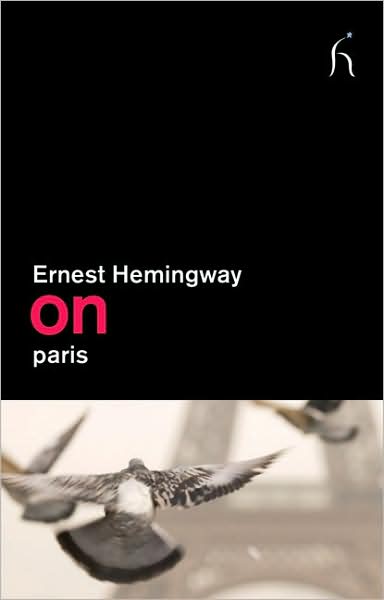
On Paris by Ernest Hemingway

On Paris is a collection of Hemingway’s dispatches for The Toronto Star from Paris when he was a young man, living with his first wife Hadley and hoping to become a successful novelist one day. It is brief, almost just a pamphlet at 70 pages; a person could easily sit down and read it in one setting (as I did, with a nap in the middle, with a puppy in my lap and rain on the roof, ah). The articles, intended for newspaper readers, are very short. Sometimes they are fairly well anchored in “news” but more often they are humorous musings on culture – the French versus the American or Canadian – including food & drink, legal niceties, Parisian manners, the nightlife scenes in various cities around the globe compared, even ladies’ hats. Unlike what I think of as “serious” newspaper reporting today, there is a tongue-in-cheek tone in almost every article. Rarely does he play it straight, which makes this book so fun.

I began to list the funniest highlights, but that is clearly a waste of my time. These are all funny short pieces and perhaps most importantly, I was pleased to note that Hemingway’s “voice” is present even in these early examples of his writing. He is droll. He pens deceptively simple one-liners with deadpan delivery; there is a one-count pause for his audience to get the joke. He makes observations that are incisive and sometimes frivolous. While not his mature work, and not fiction for which he is best known, I found this a very enjoyable little nibble of Hemingway, and I recommend it.

My parents brought me this book as a gift from Paris, as a contribution to the shrine that I was then completing. I can’t remember, but I think they got it at Shakespeare & Co.; I know they went there; Mom, can you confirm or deny? And of course there are other Hemingway “On” books: Hemingway On Writing, On War, On Fishing, On Hunting… but I still have By-Line: Ernest Hemingway too, to serve my need for excerpts of his journalism.

Have you read any Hemingway and what do you think of him?

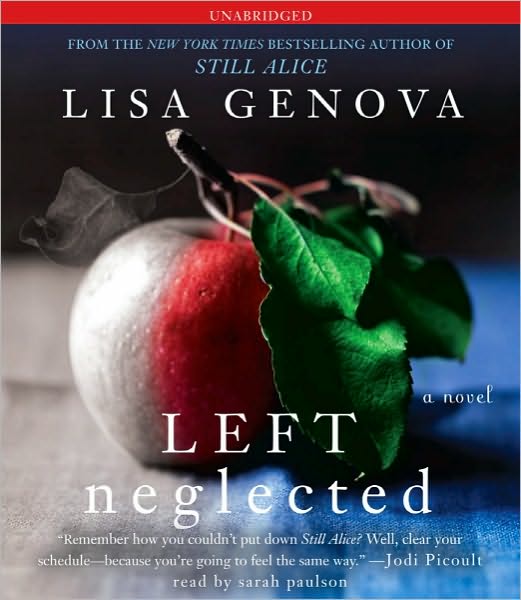
Left Neglected by Lisa Genova (audio)

Left Neglected evoked strong reactions from me, which I think is always a recommendation.

Sarah Nickerson is in her late 30’s, happily married to Bob, with three children (Charlie, Lucy and Linus), and a successful career in a male-dominated hectic corporate world of 80-hour work weeks. She is accustomed to using every odd moment to send emails, make phone calls, or read up on work; she would be lost without her nanny Abby; a slight traffic delay costs her the chance to read to her daughter before bed. In other words, she likes her life, but it’s jam-packed-full with no room for error.

The error comes one rainy day on the freeway; a traffic accident leaves Sarah with a unique sort of brain injury called “left neglect.” She’s missing the left side of her consciousness of the world. She can’t find or use her left arm, her left hand, her left leg; she can’t see things or people on the left side of the room, her dinner plate, her world. She can’t conceive of left. Sarah wakes up in a hospital and has to laboriously relearn everything. Juggling international corporate intrigue with a staff of 1000’s is no longer her primary concern; she can’t even dress herself.

Sometimes post-accident Sarah’s whining and frustration with her condition annoyed me, and sometimes pre-accident Sarah irritated me with her material and work-related priorities. But overall, she was definitely a sympathetic character; and if I was sometimes mad at her, that only made our relationship stronger in the end. As in a real friendship, we had our ups and downs, and our bond increased through those trials.

I sometimes felt that Genova tried to maximize the angst. Sarah’s flashbacks to the childhood death of her brother Nate, and its repercussions for her present-day relationship with her mother, might have been pushing the psych-drama angle a little bit. But overall, it worked.

I was reminded of another book, My Stroke of Insight by Jill Bolte Taylor. I read that one pre-blog so no review here, but it touched me very deeply. Taylor’s book is nonfiction, and deals with a different brain injury; but the two are similar in that they describe a brain injury from the patient’s perspective, along with the recovery. I suffered a brain injury in a bicycle accident in 2007, and while I was lucky to suffer less severe injury than either of these protagonists, I still found myself identifying. My own recovery was fascinating to me and made me think about things I’d never considered before; when I read My Stroke of Insight a year or so later, it helped me look at my own experience and learn from it. Left Neglected held a similar self-referential interest for me. (To go even further out on a limb: I’m now doing physical therapy following my knee surgery, and trying to get back to mountain bike racing. The connection is vague and yet I can’t help but compare my frustrations to the fictional Sarah’s. Again, my injury is very minor by comparison. But the cycle of optimism and pessimism, frustration and success, crosses over.) All of this means that when Sarah gets annoying – failing to recognize how lucky she’s been; refusing to work hard with her therapists; wanting to give up and cry – I’m annoyed, and yet I understand, too.

The massive change in the way Sarah views her world – and not just in terms of right and left – may seem ambitious, even unrealistic, to some readers. This might be said too of Taylor’s change in philosophy in My Stroke of Insight. But in both cases it rang very true for me. I felt that I had traveled so far with the protagonists, both fictional and non, that I was right there with them at the end of their stories. Is my outlook unique? Possibly, but I doubt it. I think we’ve probably all had some life-changing experience (hopefully less painful than the ones detailed here) that allows us to get inside Sarah Nickerson’s head a little bit.

Maybe it’s odd that I’m drawing such a strong parallel between two books that are really rather different, but they both affected me strongly. In the end I give Left Neglected very high marks, and I’m interested in Genova’s earlier novel, Still Alice. For those who are curious, she does have credibility in this subject matter: she has a PhD in neuroscience. Check it out. And if/when you have/do, please let me know if this book touches you as it’s touched me. Here’s to being thankful for our health!

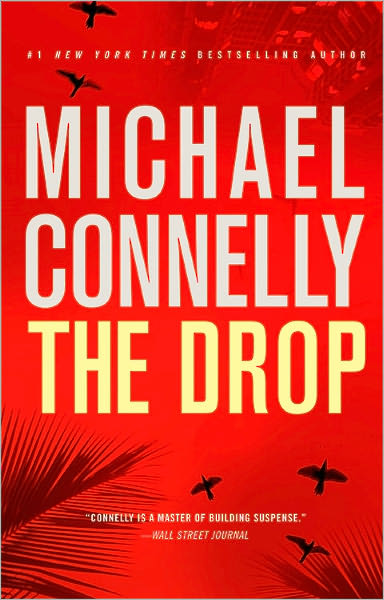
The Drop by Michael Connelly

The latest suspenseful, dark, yet hopeful mystery starring the indomitable Harry Bosch.


In The Drop, Michael Connelly’s long-running protagonist, Det. Harry Bosch, faces end-of-career issues in the Los Angeles police department’s Open/Unsolved Unit. In one day, he gets two hits: a DNA match on a 21-year-old murder-rape case and an unexpected fresh body. The son of Councilman Irvin Irving–Bosch’s nemesis from previous novels in the 17-book series–has jumped or been dropped from his hotel balcony, and Irving inexplicably requests Bosch as investigator. It looks to be a case of “high jingo”–political complications threatening the quest for truth and justice to which Bosch is so committed.

As the Irving case gains momentum, the politics threaten to engulf an old friend and colleague, and Bosch may have no one left that he can trust. Meanwhile, logic contradicts fact as the blood found on the victim of the unsolved murder-rape belongs to a man who was eight years old at the time of the crime. Even Bosch’s new partner seems to be working against him. Worst of all, he begins to doubt his own abilities: is Bosch too old for the job?

Fans of Connelly’s series will exult in another round of Bosch-versus-the-world (and the LAPD); he exhibits all his old charms and skills, as well as tenderness towards his teenage daughter (who develops in her own right as a character). New readers will follow the action perfectly; The Drop can confidently stand alone. The evocation of the Los Angeles setting is lovely as usual, and the action’s crescendo hits all the right notes. Don’t take your eyes off Connelly yet–Bosch is ready to fight another round.


This review originally ran in the December 13, 2011 issue of Shelf Awareness for Readers. To subscribe, click here, and you’ll receive two issues per week of book reviews and other bookish fun!


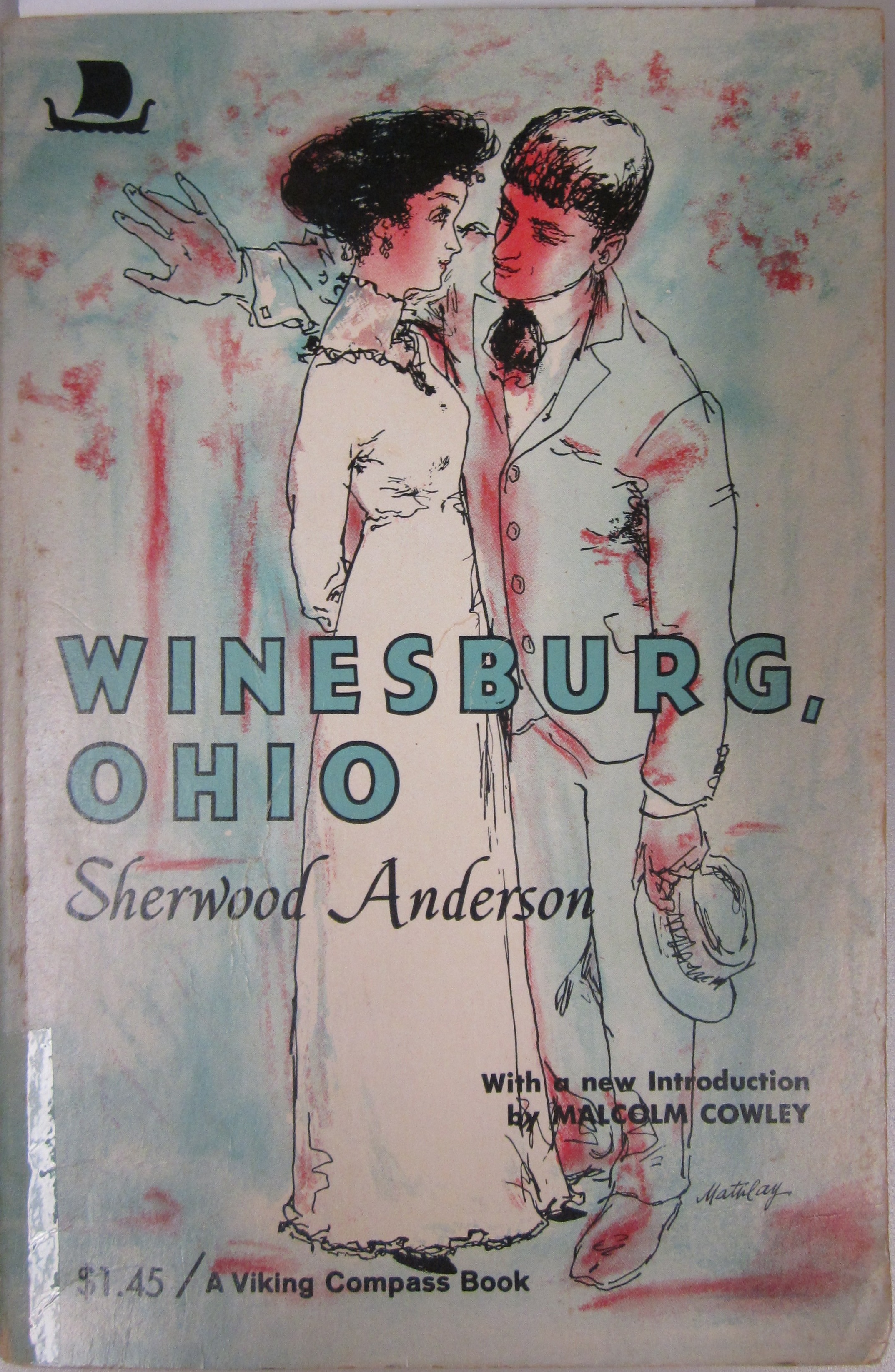
Winesburg, Ohio by Sherwood Anderson

Winesburg, Ohio is a collection of short stories that is more than the sum of its parts; the short stories are connected, all being set in the fictional town of Winesburg and concerning overlapping characters. We are most interested in George Willard, a town native who we most often see as a young man working as a reporter at the town paper (or, “the” reporter). Several of the stories give us Willard’s experiences (always in third person), but a number of them concern other inhabitants of the town. These men and women usually have some small personal tragedy that has thrown off the rhythm or intentions of their lives.

The work as a whole has a very quiet, contemplative tone and mood. Very little of great import goes on; but simple, sad lives are carried out, and hearts are broken quietly. It is moving. Anderson excels at bringing a character to life for a brief moment; and then he moves on.

I came to this book through Hemingway’s recommendation (and was finally motivated to get it off the bookshelf for the Where Are You Reading? Challenge‘s Ohio requirement). It has been a little while since I’ve read a biography of Hemingway so I’m a little rusty on the details, but I recall that Anderson played a role in his early writing career – encouraged him to write, gave him tips, maybe recommended him for publication. I think he pushed Hem to move to Paris as a youngster, which he did with his first wife Hadley, with results that I think we can safely say influenced his career as a writer. Anderson definitely influenced his style; I got this out of Malcolm Cowley’s excellent introduction, but it’s readily evident even without that clue. The same short, simple sentences that say so much with so few words are recognizable in Anderson’s stories; see my book beginnings post, or:

The Presbyterian Church held itself somewhat aloof from the other churches of Winesburg. It was larger and more imposing and its minister was better paid. He even had a carriage of his own and on summer evenings sometimes drove about town with his wife. Through Main Street and up and down Buckeye Street he went, bowing gravely to the people, while his wife, afire with secret pride, looked at him out of the corners of her eyes and worried lest the horse become frightened and run away.

This quotation comes from “The Strength of God,” one of my favorite stories.

As character sketches, these short stories are outstanding. As a whole, though, this book failed to grasp me the way I’d hoped – certainly it failed to grasp me the way Hemingway does. While I saw Papa on these pages, unmistakably, I was also constantly reminded of Sinclair Lewis’s Main Street, another quiet, subdued story about everyday, small-town life and its quiet tragedies. Perhaps it is the repetition of that phrase, “Main Street,” that got me, but I kept seeing Lewis’s work in this one, and frankly Main Street is a more memorable book. Like happens to me sometime when I fail to deeply appreciate one of the “classics” (ahem The Picture of Dorian Gray), I worry that it’s me, not the book, that I’ve missed something beautiful that would be obvious to someone with just a little higher IQ. I have to shrug this off, though. This collection does have value; I don’t want to give an impression otherwise, it just might not be *my* ideal cup. Almost every story builds a character who is real and often sympathetic. The tone is unique and if nothing else, the view into small-town life of a certain era is fairly unique. We can’t all love the same books, and life is more colorful for it.

Gone with the Wind part 5 (ch. 48-63)

Follow the Great Gone with the Wind Readalong at The Heroine’s Bookshelf. Today we discuss part 5.
So first off, head’s up: this post contains spoilers. I imagine there are still folks out there who have never read OR seen Gone With the Wind (I hadn’t!) and if that’s you, I recommend you go away (she says very sweetly) so that you can enjoy the surprises that I enjoyed as I discovered this book for the first time. Fellow discussers and readers-along, welcome.

Oh, Scarlett. Sigh. This was a painful section to read because of all the missed opportunities for happiness that she and Rhett bungled in their respective pride. It was clear to me throughout that they had tender feelings for one another, but they’re both so proud, and Scarlett is so thick, that they don’t get it together in time. For me, that was the tragedy of part 5 – yes, eclipsing even deaths.

So in this section, Scarlett and Rhett are married, and Scarlett achieves relative contentment; she finally has money and security, and has some fun with her new unscrupulous friends. Her relationship with Rhett is only partially stable, and she’s bothered by his odd attitude and the fact that she has still failed to control him, but she pushes these thoughts away. Melanie continues to be a rock, several times solidifying her role as supporter and true friend to Scarlett, who learns to grudgingly appreciate her, at least most of the time. Scarlett’s lust for Ashley seems to cool, but she’s so accustomed to pining for him that she continues to do so even as his polish fades. The birth of Bonnie sets Rhett off in a whole new direction in life; it’s odd to see him so doting and blind to the spoiled child he’s creating, but of course it’s also endearing to see his love for his daughter.

What did you think of Melanie not believing in Scarlett and Ashley’s unfaithfulness? Is she showing again her admirable strength, or is she a fool for her naivete and blindness? I do feel a hint of the latter; but on the whole I agree with Rhett and (as far as I can tell) Mitchell, that she behaves heroically. Once she decides that a person is her beloved friend and deserving of her support, this woman holds on, doesn’t she? I think Scarlett respects her, too, somewhere deep down. I really liked the maturity that finally came out as a result of the “hair shirt of shame”:

With one of the few adult emotions Scarlett had ever had, she realized that to unburden her own tortured heart would be the purest selfishness. She would be ridding herself of her burden and laying it on the heart of an innocent and trusting person. She owed Melanie a debt for her championship and that debt could only be paid with silence.

Finally, here’s Scarlett showing some personal growth! And no great surprise that it comes through Melanie.

I marveled a bit at a society so deeply concerned with gossip that apparently no one thought to say… “Look, Melanie, I don’t care if Ashley boinked Scarlett or not. I like you and I like India and I’m just going to be neutral on the bedroom concerns; is that okay?” I feel like Melanie might have been open to that kind of frank dismissal of her private business; really that might be her first preference: to have people consider her marriage a private matter and butt out. This is a modern angle, I guess, but as a modern woman it’s the first reaction that comes to my mind, if I were an outer-circle acquaintance of the parties involved.

The end-of-book tragedies that destroy Scarlett’s world all over again fell a little short for me. Bonnie was gorgeously cute, but also spoiled and obnoxious. She wasn’t developed much beyond her role as Rhett’s plaything, his doll, and at best, his new lease on life; I was excited for him in that last aspect, but as a character Bonnie didn’t hold great value for me. I think I felt her death coming on, and when it happened it didn’t move me as deeply as I think it was supposed to. Scarlett grieves, but again not profoundly; she’s never cared that much for her children, and if Bonnie was her most loved, that still wasn’t saying much. Her love was heavily tainted with jealousy, too. I felt that Bonnie’s death was a plot device: things had to fall apart again, and she was the object on which all of Rhett’s energies had focused, and around which Scarlett’s world had begun to revolve, so she fell. But it struck me as a clinical move made by Mitchell, rather than the wrenching death of a child that might have twisted my heart. It fell flat.

Melanie’s death, now, got to me much more – Melanie having been such a strong character who I’d come to love and admire. Although she had her flaws right til the end, too: a blind love for Ashley in all his flaws and a refusal to see Scarlett’s duplicity, which was part of her virtue but also earns some disrespect. It was heart-wrenching that she died, yes. But Scarlett immediately then began her triple revelations, and I lost patience. She loves Melanie! Melanie was a real friend! Ashley is boring! Rhett is a) wonderful, b) just like Scarlett, c) loves her and d) gasp, she loves him too! The reader, of course, knew all these things 100’s of pages ago, so her dramatic realizations and emotional flailings just exasperated me. It’s a shame, really, because this book had me firmly in its grasp for the bulk of it. But in the end I think I lost patience.

I spent the book rooting for Scarlett. I identified with her in her worst moments, and refused to pass judgment. But she let me down by not meeting reality when she most needed to, and for coming around when it was just too late, and then for being so dramatic about it at the end. Rhett became more and more sympathetic, admirable, and crush-worthy as the book went on; but he, too, failed to step up when it most mattered. While I accept his argument that Scarlett valued what she didn’t have, I think he was a bit late in letting her see his love; I think he might have won her with a little tenderness. But maybe he was right and her “love” for Ashley needed to run its course. The ending was certainly tragic – two people destined to be together missing one another like ships in the night. But it may have gone on just a bit too long to hold my interest.

On another note – what do you make of that night that Scarlett and Rhett shared in chapter 54? I know that it is understood as a rape scene by some, but I’m not sure I buy it, for this reason: she enjoyed it, and women don’t enjoy being raped. Clearly it was rough and passionate and she wasn’t sure what to make of it; but she enjoyed it, both in the moment and in thinking about it again the next morning. She blushes, thinking that a “lady” doesn’t enjoy such things (i.e. rough sex). But I think rape is a stretch. What do you think? It seemed like the stark honesty of that night, if nothing else, offered the couple one of those chances to share their feelings for one another and seek happiness, but of course they missed the chance when he dashed off the next morning.

So to wrap up here: I loved this book very much. It’s a page-turner. It has heroes, villains, real human characters, war, love, death, and perseverance. It had me completely wrapped up in its pages – I sat by the pool in Key West and trembled with Scarlett and Melanie on that bumpy ride out of Atlanta with the world burning around us. A hell of a great book, although with some real issues regarding racial sensitivity. But the ending fell a little short for me; the tragedies felt a little manufactured, Scarlett’s pain was a little protracted and tiresome, and I was disappointed that her tortured romance with Rhett didn’t have the least final redemption. I thought we’d earned some, but clearly I was wrong. On the other hand, I did appreciate the note of hope or at least the note of uncertainty it ends with. Where is Scarlett headed next?

Finally, thank you so much Erin for finally getting me to open these pages. It was well worth it. Thanks also to my fellow readers-along; it’s been fun to have someone to share with and to see our different reactions. I’m betting some of you found the ending much more satisfying than I did, and I look forward to hearing your reasons.

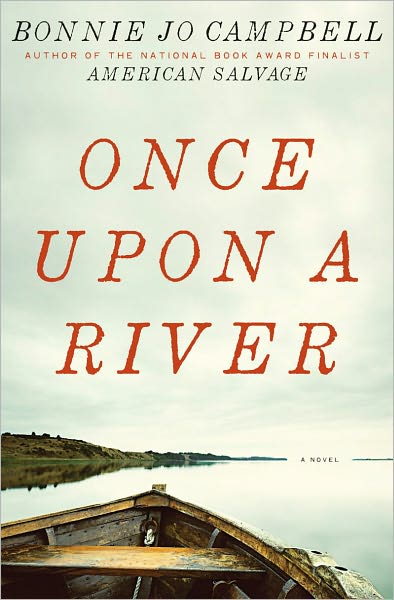
Once Upon a River by Bonnie Jo Campbell

Once Upon a River is a beautiful book. The story is not joyful, let me say that right off. But it’s beautifully wrought, and in fact, when I finished it and stepped back and viewed it as a whole, I decided that the story has a certain beauty, too. A sad beauty, but a beauty that’s true to life.

This is the story of Margo. She grows up in a little town on the Stark River in Michigan, hunting, fishing, and living and breathing the river. She is close to her grandfather, and lives in the outdoors; school and social situations are difficult for her. She’s a very skilled outdoorswoman, and an especially good shot; Annie Oakley is her hero. Bad things happen. Margo’s mother leaves, and as her situation further deteriorates, she takes off upstream in the boat her grandfather gave her to look for her mother. Margo lives off the land and the river, mostly. She makes a few alliances but they all fall apart. People and relationships are not as reliable as the river and the outdoor world in which she feels safe and comfortable. More bad things happen. She grows up some, learns about people, and learns more about the natural world. She moves upstream and downstream, learns how to survive with her hands, a few tools, and her skills, along the lines again of Annie Oakley (she will eventually own two biographies, among her few prized possessions).

This story is painful in more than a few spots. Plenty of bad things happen, including several rapes and quite a bit of death. There’s no shortage of young people having sex, to which your reactions may vary. (Consensual? In itself a “bad thing”?) You will cringe. But like many books that are both sad and realistic, the cringing might be worth it. Margo’s story actually looks skyward, hopefully, at the end. She finds and makes some good things, too.

Campbell has full grasp of metaphor. The river flows on, and Margo learns its rhythms, and how to assert herself while following its current. She finds the river to be a more constant (if not predictable) force than human nature. Campbell has full grasp of language, too; she writes beautifully, lyrically, symbolically. In the end it’s a gorgeous book and I recommend it wholeheartedly. So, to recap: bad things happen, but beautifully. It’s a book about life.

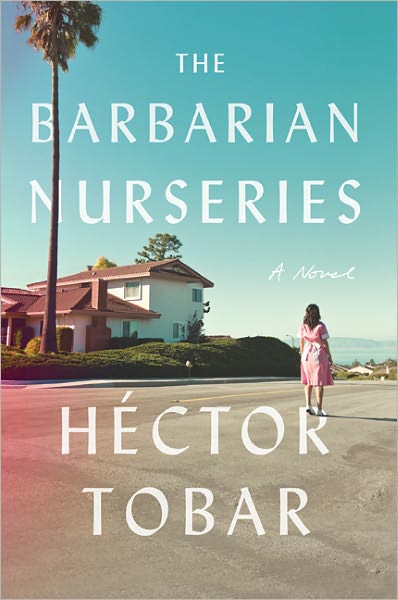
The Barbarian Nurseries by Héctor Tobar

A deceptively quiet story, with swift currents running deep beneath its surface, considers the fate of an unprepared Mexican housekeeper in Orange County left to care for her employers’ young children.

Pulitzer Prize-winning journalist Héctor Tobar‘s second novel tackles the ambitious goal of characterizing Southern California’s multicultural schizophrenia and achieves it admirably.

Araceli is quietly comfortable in her role as housemaid to the Torres-Thompson household in Orange County, one of three Mexican domestics; but when the gardener and nanny are suddenly dismissed, she is puzzled to find herself expected to care of three children she considers strangers. Worse, she wakes up one morning to find both her employers gone with their baby–leaving her alone in the house with two young boys. In desperation, she sets off with them on a daunting trek through diverse and unfamiliar Los Angeles to try to find their estranged paternal grandfather.

Tobar creates an intriguing juxtaposition of cultures, as the Torres-Thompson children are thrust into a huge, unfamiliar, multiethnic city. Most observations are from Araceli’s perplexed, amused, lyrically bilingual perspective. At other times, we look through the boys’ eyes, with all the wonder of the new, including evidence of poverty they’ve never before encountered. The older boy (age 11), in particular, has a unique way of clinically interpreting new experiences through books he’s read, imbuing the world with fantasy. The adventure with the boys is a comedy of errors–Araceli becomes suddenly famous as a symbol of racial politics, and her fate depends upon forces outside her control.

The Barbarian Nurseries is a beautifully written, contemplative and thought-provoking view into Southern California’s diversity and contradictions, as well as a fascinating and well-presented story.


This review originally ran in the September 27, 2011 issue of Shelf Awareness for Readers. To subscribe, click here, and you’ll receive two issues per week of book reviews and other bookish fun!


Y’all! One of the best books I’ve read this year! Rush out there and get it!!

Great Gone With the Wind Readalong, part 4

Just a reminder, folks: today Part 4 of our Readalong is up for discussion at The Heroine’s Bookshelf. Please do stop by!