The Queen City Detective Agency by Snowden Wright

A disgruntled PI and a plot as wildly complicated as the history of the American South itself combine in this spectacular, darkly funny mystery.

Snowden Wright (American Pop; Play Pretty Blues) immerses his readers in a gritty, troubled small-town Mississippi with The Queen City Detective Agency, and introduces an indomitable protagonist.

It’s the 1980s and the country is about to reinaugurate Ronald Reagan when a small-time felon called Turnip does “a Greg Louganis off the roof” of the county courthouse in Meridian, Miss. Turnip was implicated in the murder, allegedly by hire, of a successful local real estate developer, and rumored to be involved with a mythical criminal syndicate called the Dixie Mafia that may or may not actually exist. Turnip’s suspicious death (by rooftop dive, or was it by poison?) and the murder he may or may not have helped arrange wind up entangled with cockfighting rings, domestic violence, child brides, centuries-old institutional racism and class discrimination, and much more.

Enter Clementine Baldwin (that’s Clem or Ms. Baldwin to you) of Queen City Detective Agency in Meridian, a decaying railroad town that was once the second-largest in the state. “Clem loathed this place and its vitiated nostalgia, redolent of an era when that idiot Atticus Finch thought he could win a rigged game, when you needed a tool to open a can of beer…. At least the beer cans had gotten better.” A disillusioned former cop, Clem is also a Black woman in a city, state, and nation that respects neither. She’d rather just be called a private investigator than a lady PI. For her second-in-command, she went looking for a prop: “completely useless in most circumstances, but, in hers, as handy as locking hubs on a muddy day. In other words, the prop had to be a white man. The guy needed to have hominy for gray matter….” But instead she found Dixon Hicks, “whose name said it all,” a prop who turned out to be a good partner and even a good friend.

Clem is a quintessential hard-boiled detective with entirely legitimate beefs with the world around her. She drinks too much, but who wouldn’t? Partnered with the genuinely, surprisingly good Dixon, she is a smart, courageous, flawed heroine, with plenty of dark humor and a storied past. Wright’s prose is clever and delightfully funny even while handling serious social ills. The Queen City Detective Agency is a remarkable work of Southern noir, featuring crackpot characters both silly and sinister, a longstanding history of greed and white privilege, and an unforgettable private investigator. Readers will be anxious for more featuring Ms. Baldwin.


This review originally ran in the June 14, 2024 issue of Shelf Awareness for the Book Trade. To subscribe, click here.


Rating: 8 rocks.

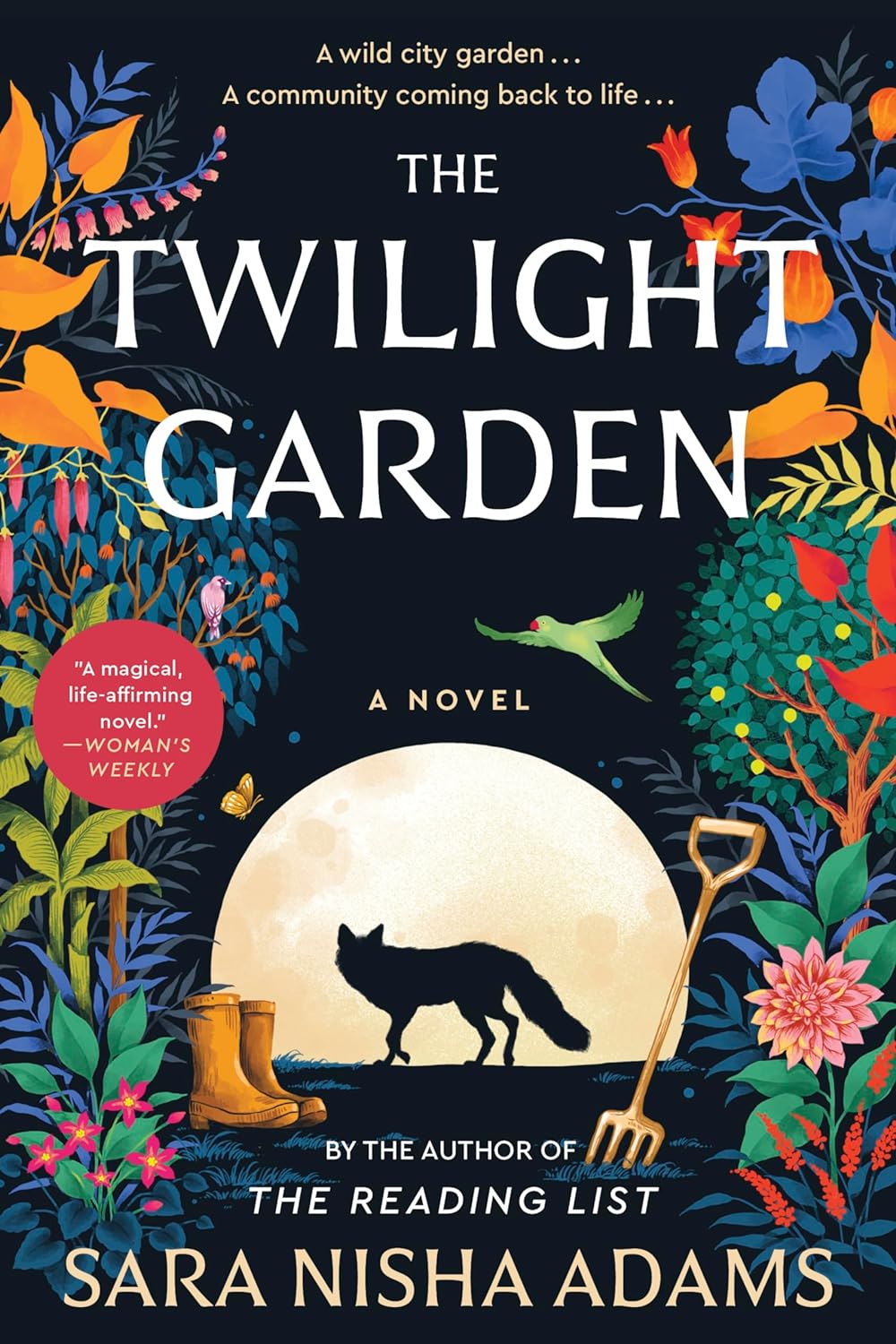
The Twilight Garden by Sara Nisha Adams

From the author of The Reading List comes a pleasingly similar, sweet novel of unexpected connections. In a shared garden in London, two sets of neighbors in two timelines (2018-19 and the 1970s and 80s) navigate conflict, build community, share love and struggles, and grow flowers, food, and strong bonds. It’s an optimistic story, which I perhaps don’t get enough of in my life.

I’m thinking of both this and Adams’ first novel as sort of meet-cute, enemies-to-friends stories, with rom-com sweetness but where the relationships that form are not romantic. Rather, neighbors and community members come together, across diversity in age, gender, sexuality, and race, and form deep and meaningful friendships and built families, caring for each other in profound but not romantic ways. There are romances among the cast of characters, but not in the relationships whose trajectory defines the novel. I’m thinking of these as non-romantic love stories, a genre I’ve not thought about before but am trying to define here.

We first meet two neighbors in contemporary London. Winston is a young Indian immigrant who has lived in his rental home for some years with his partner, Lewis, although their relationship seems to be drawing to a close. He’s lonely, disconnected, and a bit depressed, although his work in a nearby convenience store offers a wholesome and healthy dose of community connection. “He was always chatting to customers in the shop, but when it came to the neighbors on his road, he barely knew faces, let alone names.”

Bernice has just moved in next door, newly divorced, with her ten-year-old son Seb. She is white, well-off, privileged, uptight. Because chapters alternate between their perspectives, the reader knows that each is suffering their own private pains, but to one another, Winston and Bernice are each the nightmare neighbor. Their conflict centers around a shared garden, which Winston has treated as a private sanctuary and Bernice views as a death trap for her son. This garden, now in disrepair, transports readers back to the earlier timeline and two additional protagonists.

Maya first moved in (to what is now Winston’s home) with her husband Prem when they were newly arrived from India. They were soon joined by a daughter, Hiral. Next door (in what is now Bernice and Seb’s home) an older woman named Alma lived in the house she’d been raised in. Initially prickly, and permanently ornery, Alma becomes a dear friend to Maya’s family, a relationship that began in the garden. Alma is a very serious gardener and a bit of a control freak, but Maya encourages her to accept help from their community, and they wind up very much a neighborhood hub for food, fellowship, work, mutual support. In Winston and Bernice’s time, mysterious missives inspire the feuding neighbors to attempt reawakening the rich shared garden of years past, and the bonds of community come, slowly, along with it.

This story is deeply sweet, perhaps approaching what my mother would call ‘precious,’ but never getting there. There are no bad guys, although there are some bad behaviors; instead, these are humans who suffer and sometimes handle it poorly, but feel badly about it and try harder next time. The loves (familial, friendly, and romantic) are real and deep. I cried several times. It felt wholesome and good. There is tremendous diversity here in several senses, and closeness is possible across all those lines when humans reach out and make efforts, or when there is real need. It’s a lovely, hopeful version of the world, and I’m here for more of it.


Rating: 9 banana leaves.

The Rent Collectors: Exploitation, Murder, and Redemption in Immigrant LA by Jesse Katz

Street gangs and street vendors in L.A.’s MacArthur Park, a pair of botched murders, and a number of criminal trials shed light on social ills in this sensitive study.

Jesse Katz (The Opposite Field), longtime Los Angeles journalist, tackles a true story featuring a daunting number of characters and spanning years and tragedies in The Rent Collectors: Exploitation, Murder, and Redemption in Immigrant LA. With admirable clarity and compassion, Katz unravels a complex narrative that has no easy answers.

In the MacArthur Park neighborhood of L.A. in 2007, a teenaged gang member under orders fired five shots at a street vendor, in retaliation for the vendor refusing to pay “rent” to the gang. The intended victim was badly wounded by four bullets; the fifth bullet struck and killed a nearby 23-day-old infant. The shooter, Giovanni Macedo, was in turn the victim of a botched murder attempt at the hands of fellow members of his gang, the Columbia Lil Cycos, as punishment for his error. Giovanni eventually testified and helped put many gang members behind bars, receiving a sentence of 51 years for his crimes.

Katz’s thorough account details Giovanni’s personal and family history; the history of MacArthur Park; the cultural and economic predicament of L.A.’s immigrant street vendors; the background of the Columbia Lil Cycos, the larger 18th Street alliance, and the Mexican Mafia; the lives of Giovanni’s victims; and California’s law enforcement, judicial, and prison systems. It’s a sprawling story, but riveting and propulsive in this telling. The Rent Collectors deftly probes systemic ills. A large population of undocumented immigrant street vendors is squeezed between L.A. enforcement and street gangs: “MacArthur Park strained under the exigencies of that shadow population, a virtually permanent subclass left to invent its own opportunities, to improvise its own survival.”

Giovanni’s family background leaves him with a shortage of options and a desperate desire to belong to something bigger than himself. Immigration, legal, and prison systems fail, frustratingly often, to reward behaviors society deems “good” or to address adequately the “bad.” Giovanni is the protagonist of this story, drawing near a parole hearing at the time of this book’s publication; Katz portrays him with sensitivity and an eye to the complexities that led to his crimes. Giovanni is an imperfect symbol of redemption, but Katz shows that the marginalized teen was at the mercy of inexorable and deeply problematic societal forces. Abstaining from painting heroes or villains, Katz offers instead a plethora of thoughtful, nuanced profiles and a zoomed-out view of immigrant L.A., its street vendors, its gangs, and its intricacies. The result is relentless, multi-faceted, and incisive.


This review originally ran in the May 10, 2024 issue of Shelf Awareness for the Book Trade. To subscribe, click here.


Rating: 7 pairs of earrings.

Cactus Country: A Boyhood Memoir by Zoë Bossiere

This hard-edged, incisive memoir of gender-fluidity in a desert trailer park offers an essential perspective.

Memoirist Zoë Bossiere writes, “I see a lone, barefooted boy with short blond hair walking along the road in Cactus Country… looking for something despite feeling uncertain it could ever be found.” At age 11, Bossiere moved with their parents to a trailer park on the outskirts of Tucson, Ariz. Before leaving Virginia, Zoë gets a short haircut “like a boy’s.” “I’d thought I might need to go by a new name to pass as a boy in Tucson. But it quickly became apparent I was the only Zoë most people I encountered had ever met… so I kept it.” Cactus Country: A Boyhood Memoir tells of living as a boy in the desert, struggling with gender, class, and a shortage of options for self-expression, and eventually taking a great leap in leaving for a wider world.

Although Bossiere’s father introduced them as a daughter, they were on the whole able to make a fresh start in Cactus Country, inhabiting a long-held dream of boyhood. The version of masculinity they found in the desert is characterized by stoicism, camaraderie, and violence, as they learned from the trailer park’s revolving cast of boys and men how to perform toughness through acts of cruelty and self-defense. Especially as their body entered puberty, Bossiere struggled with gender expression in a world where they never encountered the concept of transgender, and the only queer role model they met insisted on a gender binary and harbored suspicions about bisexuality. Bossiere for a spell accepted the feminine identity assigned by the outside world, without settling into a self-identity that felt right. After a troubled childhood and young adulthood, it was by studying creative writing that they eventually saw a way out of the Tucson area and into new spaces, geographic and otherwise, including the concept of genderfluidity.

Cactus Country is a wise and wonderfully crafted memoir, treating its characters and subjects with compassion in the face of assaults, addictions, dysfunction, and violence. The desert and Bossiere’s experiences there are stark and severe but also include earnest attempts at connection. They must leave Cactus Country to grow and to find their truest self, but it’s only by returning in memory that their journey begins to feel whole. After a childhood as harsh as the desert sun, they write tenderly about place and a past “where broken boys with sunburned faces could be beautiful, kings worthy of inheriting the place they called their home. A place where a Cactus Country boy would always be a Cactus Country boy.”

Gorgeously written, thoughtful, and tough, this memoir of gender and a hardscrabble coming-of-age in the American Southwest excels at nuance.


This review originally ran in the March 19, 2024 issue of Shelf Awareness for the Book Trade. To subscribe, click here.


Rating: 7 paloverde beetles.

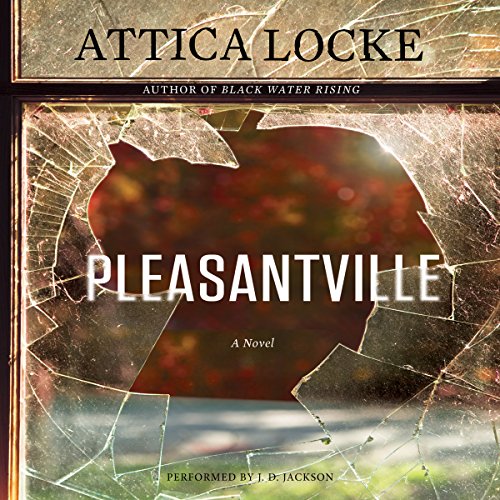
Pleasantville by Attica Locke (audio)

Attica Locke is a very strong mystery writer. I was utterly absorbed by her characters, who felt perfectly real to me, such that I worried about them when I stepped away from the book. It’s a fully-fledged world. I will say that I was a good reader for this one, too, because it’s set in my hometown of Houston, and Locke’s Houston is extremely detailed and true to the original. I loved this aspect of it as much as any other, and that won’t be quite such a nostalgic, moving experience for just any reader; but the strong sense of place and that level of detail will certainly work for anyone who appreciates those strengths.

The plot of Pleasantville is quite complex, again quite detailed, and operates at the intersection of crime, criminal and civil law, and politics, in a particular milieu. This is both a great strength and a potential liability: it asks of the reader a fair degree of attention. If you bring that to this book, you will be amply rewarded. I am still a bit reeling from it, and my admiration of Locke is solidified.

It’s 1996, and a hotly contested mayoral election in Houston is expected to hinge – as they often or always do – on the neighborhood of Pleasantville, an early-established haven for middle-class African Americans 50 years earlier and a continuing close-knit community. Then a teenaged girl disappears off the streets of Pleasantville on election night, and the criminal case clashes strangely with the political drama, and both threaten to swallow whole the man we meet on the first pages: lawyer Jay Porter, whose office has just been burglarized. Porter is still reeling from the loss of his wife to cancer a year earlier. His teenaged daughter and grade-school son are struggling in their own ways. His law practice is on its final legs. He specializes in class-action suits handling issues of environmental racism, like one at work in Pleasantville; he does not want a criminal defense case, but the most powerful players in Pleasantville have other ideas.

There are so many compelling characters in this story that my head almost spins, but it’s all woven together incredibly well, keeping me both engaged and on track (if I put in a bit of effort myself – and I’m happy to). I’m very much still thinking about Jay Porter and hoping his daughter Ellie comes through okay; I can’t wait to get more from Locke. Whew.


Rating: 8 blocks.

Trace: Memory, History, Race, and the American Landscape by Lauret Savoy

It felt right to follow the outstanding Soil with Trace, which my father recommended some years ago. I wondered if this might be one of the books Dungy was looking for. It’s not in fact “radically domestic” enough, I think, to fill the void Dungy located–she did so well to write the book she wanted to see in the world. But Trace has its own special offerings that are equally rare and needed.

I am inclined to read this as a collection of closely linked essays, rather than chapters in a memoir or nonfiction monograph. It combines human history, natural history, studies on race, memoir, and nature writing; it ranges across the United States but always interrogates from a personal perspective what it means to be a non-white American in the natural world. [The author is Black and Native American.] Savoy is a gifted and lyric writer, to boot, investigating literal landscapes as well as figurative ones, keeping metaphor handy. I loved her consideration of the book’s title, which is a word that recurs.

The landscapes she travels and studies include the Grand Canyon’s Point Sublime; the Canadian Rockies; Oklahoma’s “Indian Territory”; a Wisconsin island; Washington, D.C.; Arizona’s border with Mexico, and more. She interacts with a wide range of literary voices, including Victor Frankl, Aldo Leopold, Homer, Thoreau, and Louise Erdrich. The front cover offers a New York Magazine reference to John McPhee meeting James Baldwin in Savoy’s voice; I was reminded of Eula Biss in how she pulls seemingly disparate threads together (those places and voices) to make exactly the point she needs to make. It’s impressive, precise, gorgeously written, and smart. She’s a professor of environmental studies and geology, well equipped for this exploration. A few of the ideas that really resonated with me I’ve collected here:

If the health of the land is its capacity for self-renewal, then the health of the human family could, in part, be an intergenerational capacity for locating ourselves within many inheritances: as citizens of the land, of nations even within a nation, and of Earth. Democracy lies within ever widening communities.

How a society remembers can’t be separated from how it wants to be remembered or from what it wishes it was–that is, if we believe stories of ancestors reflect who we are and how we came to be. The past is remembered and told by desire.

There’s a lot here that I’m still thinking about.


Rating: 7 chickadees.

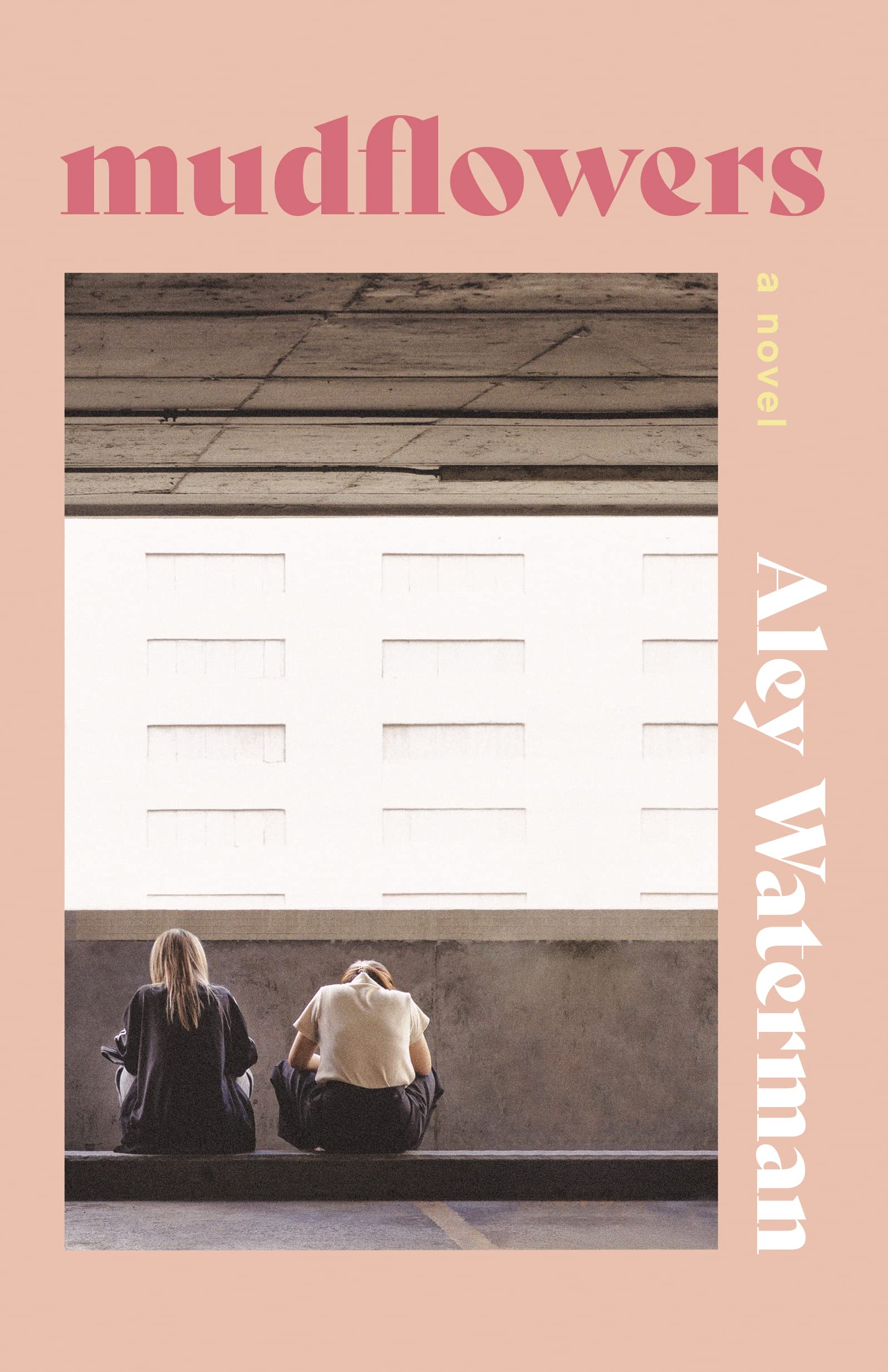
Mudflowers by Aley Waterman

In this reflective debut, young artists in Toronto form a love triangle with both transcendent and painful results for all.

Aley Waterman’s sensitive first novel, Mudflowers, follows a young woman exploring intimacy, biological and built families, and art. A love triangle twists and reshapes itself, with both trauma and revelation. “I wanted so badly to love in a good way,” says Sophie, the protagonist and narrator, 27 years old and a Newfoundland native who recently moved to Toronto, where she lives with a misogynistic writer and her best friend since childhood. He is a beautiful man named Alex who is also her on-and-off lover. Sophie sees Maggie reading her poetry at an event and is immediately swept away. Maggie is talented and enigmatic, “with big eyes full of wide highways.” The two become close friends and, sometimes, lovers.

Sophie creates glass mosaics for wealthy patrons, Maggie writes, and Alex works on indie films. They are young artists scraping together livings in a big city, taking drugs amid art events and the bar scene. They slide frankly and openly in and out of sexual relationships. Sophie obsesses over her mother’s death. Alex’s mother left when he was 12, their parallel losses an unspoken understanding. The addition of Maggie to their close relationship, forming a trio, acts as a magnetic force that both imbalances and strengthens the bond. Secrets surface, and the balance shifts again.

Mudflowers follows Sophie to an artist colony at a castle in France and eventually home to Newfoundland. Place is important to this thoughtful protagonist, who is given to contorted philosophic musings. Newfoundland is “the only place I had been to where there is enough space and isolation and distance from the world for people to really be themselves without even thinking about what that meant.” Earlier, she notes that “in cities so many lives are wildly proximate to each other, just divided by a wall here or a door there, but each wall determined some sort of fate, keeping us organized and away from one another.” She wonders: “What if the people who should be most important in life were just separated by a wall, and what if that wall meant those people never met!” Sophie has met the people most important to her, but keeping them together will be another feat.

Sophie’s physical travels are dwarfed by the scale of her cerebral and emotional movements, as she tortuously navigates desire and fear. She is preoccupied with art, how to love, and purposeful attention. “[W]as it how beauty was directed or how it was received that was most important?” she ponders. “How are you supposed to be a real person when you’re also supposed to be the woman inside of someone else’s mind?” She also often considers mothers and their absences: “Maybe we all need more mothers than we have,” she thinks. “Maybe we all need as many mothers as we can get.” Mudflowers is thought-provoking, expansive, and raw.


This review originally ran in the August 22, 2023 issue of Shelf Awareness for the Book Trade. To subscribe, click here.


Rating: 7 birds.

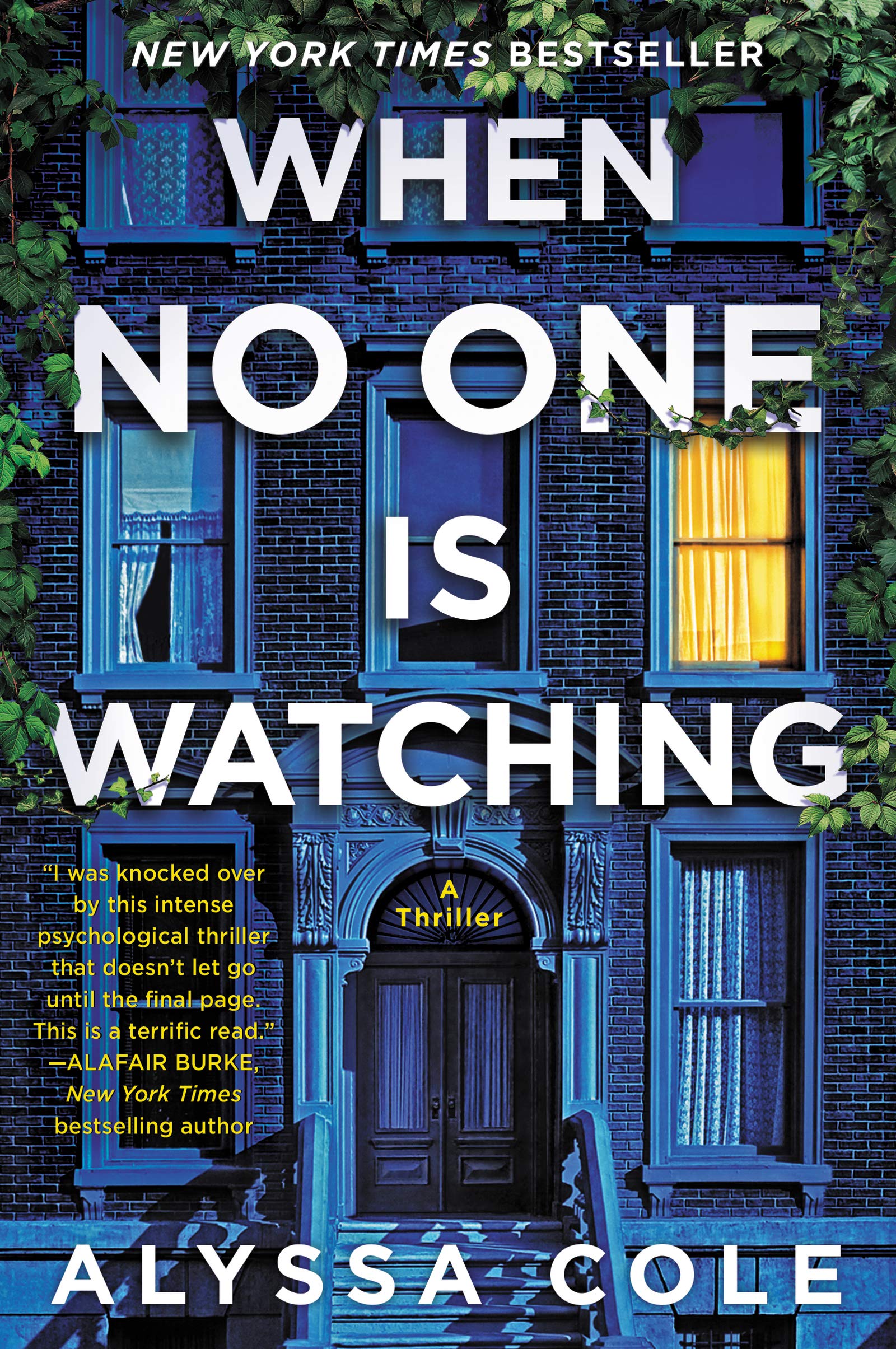
When No One Is Watching by Alyssa Cole

While it takes its time getting to the ‘thriller’ part, this novel does pack a punch once the thrills begin. Told in two points of view, a romance builds alongside the terror.

Following a nasty divorce, Sydney has recently moved from Seattle back home to the fictional Gifford Place neighborhood in Brooklyn, NY. Her mother’s health has taken a turn for the worse, and it is a relief anyway to return to her childhood home, a handsome brownstone building where Sydney’s lifelong best friend Drea also lives in an apartment. The neighborhood is changing quickly, though: gentrification is coming hard for Gifford Place, a traditionally Black neighborhood, and neighbors Sydney’s known all her life are disappearing right and left, along with the businesses she frequents, and being replaced by white residents. The book opens with a brownstone tour emphasizing only the neighborhood’s distant white history, which Sydney interrupts to interject a truer version, before leaving frustrated for comfort food at her favorite bodega. The tour guide’s snotty advice that Sydney should start her own tour gets her thinking, though.

With the annual block party approaching, Sydney works on her research for the tour. Meanwhile, a new white resident, Theo, struggles in a failing relationship with his absolutely toxic racist girlfriend Kim. She is one of several of Sydney’s new white neighbors who move well beyond micro- into macro-aggressions and overt racism, while hapless Theo appears to be having the first eye-opening of his life all at once. I’m leery of this device. Theo volunteers to be Sydney’s assistant in tour research, offering us a rather too obvious didactic opportunity: Sydney explains history to Theo who also, on his own, researches patterns of white flight, redlining, real estate scams, and the reaches of slavery beyond Confederate borders. Gasp, northern bankers benefit from cotton planting too! This is a bit transparent for my tastes. Where has Theo been hiding all these years that he’s so ready for his awakening but has just never been exposed to truth before? [I thought it was a good detail, on the other hand, that Theo is white but also comes from poverty and crime. I felt this offered a subtler and therefore perhaps more clever avenue to explore why poor white people, though facing certain disadvantages, still experience an absence of the obstacles that face Black people of any socioeconomic background.] There are however some fun moments, like when they come up with a safe word (‘Howdy Doody’ – Theo’s idea) for when he gets into his “little white feelings.”

This is the weakest part of the novel, for its didactic feel and slower pacing. Then we move into a quickening of the dangers. Theo and Sydney uncover the dirt, historical and contemporary, the widespread conspiracy to take over Gifford Park for great profits and throw longtime residents out on their asses or to an undisclosed location. Banks, hospitals, real estate agencies, medical research facilities, tech scams and plain intimidation–is it a conspiracy theory if it’s all true? Where have Gifford Park’s disappeared residents been going, anyway? Why would Mr. Perkins take off in the final days before the big block party? Sydney’s past traumas make it difficult to trust her new friend, who is admittedly slow to some punches. (It is funny, if also sad, when he figures it out: “Not being able to call the police when you need help really sucks, I’m learning.”) Once the action shifts into gear, When No One Is Watching rockets along. Horror, fight scenes, sex, drama, and relevant social issues: it’s haunting but also fun. If a few plot threads get dropped along the way, so be it.

Possibly Cole got a bit ambitious with the combination of capital-I Issues and thriller intrigue. It was rough in spots. But she also accomplished a lot, and kept me engaged (if occasionally a little impatient), and I’d encourage more efforts like this one.


Rating: 7 loosies.

The World We Make by N.K. Jemisin

It’s been nearly three years since I read The City We Became, and I wish I’d spent a few minutes reviewing that one first. I still felt close to the avatars of New York’s boroughs, but New York himself (he goes by Neek, as in NYC if you pronounce the Y like ‘ee’) felt less familiar, and I’d lost track of some of the rules of Jemisin’s carefully constructed world. For slightly better results, you might want to keep book 1 a little handier than I did here, but it was still a hell of a ride.

Highlights include the personalities themselves, their relationships, and the final action scene(s). I remembered loving Manny (Manhattan), Brooklyn and Bronco (the Bronx); I feel like we get to know Padmini (Queens) better here, and I really enjoyed that. I applaud Jemisin’s work with Aislyn, the bigoted Karen-in-training avatar for Staten Island; she is unlikeable but complicated enough that the reader grudgingly sympathizes, which is a feat (and an exercise in patience and empathy that some might have excused the author for not engaging in). These avatars have had time since the last book’s action to settle in to relationships among themselves in ways that are pleasing; the characters were strong to begin with but they perform best when they play off each other (true of all characters, probably). Then there are the avatars of other cities around the world: I imagine it must have been so fun to build characters for places like London, Tokyo, Istanbul, Paris, Budapest, Kinshasa, and Amsterdam… because this novel ends up in a massive showdown. In its course, we (and our avatars) learn more about the rules of the world of living cities and their great Enemy. The threat, as threats do, grows larger and then imminent, and a major brawl ensues. This series was originally billed as a trilogy, and actually I still thought it so at book’s end; it was only in Jemisin’s acknowledgments that I learned we’re done here. I do think the ending allows room for more if she finds her energies refilled, but I understand the effects of the pandemic and Trump’s evil on her intended storytelling, and (not that she needed my permission) I can grant her this ending, too.

Three years ago, when I read The City We Became, Jemisin was new to me. Now I return to this series having since read every novel Jemisin has ever written.* With this perspective, the Great Cities duology feels both familiar and very different from her other work. This one is set in the most recognizable of her fictional worlds, closest to our own real one. The characters are modern, urban, fresh and real-world-adjacent, while the characters in her other outstanding works are realistic but recognizably otherworldly. I don’t think I have a preference, but it’s a different effect. I guess for readers more reluctant to venture into proper sci fi/fantasy, this urban version might feel friendlier.


*I have not yet read How Long ’til Black Future Month?, her short story collection, which I erroneously thought comprised works by other authors that she’d collected and edited. I would have gotten around to that eventually. But it is in fact all her own work, which means I need to get there soon.


I love the action and attitude of these living cities, and Jemisin is an important figure in my lifetime of reading. Can’t wait for more – whatever she does.


Rating: 8 sticky toffee puddings.

Maximum Shelf: All the Sinners Bleed by S. A. Cosby

Maximum Shelf is the weekly Shelf Awareness feature focusing on an upcoming title we love and believe will be a great handselling opportunity for booksellers everywhere. The features are written by our editors and reviewers and the publisher has helped support the issue.

This review was published by Shelf Awareness on February 13, 2023.


From S.A. Cosby, author of Blacktop Wasteland and Razorblade Tears, All the Sinners Bleed is a lushly dark mystery set in fictional Charon County in Southeastern Virginia and starring a Black sheriff in a town that’s not at all sure it’s ready for one. Recently elected Sheriff Titus Crown is out to right some wrongs from the inside: police corruption, racism and profiling, law enforcers living above the law. He’s also dodging a few traumas of his own. Having come home to Charon County means he gets to live with and help his aging father, but it also means he’s reminded of his beloved late mother. His brother lives in town but rarely comes around. Titus has a local girlfriend who’s very sweet and good for him, but sort of unremarkable; he has a sense he should love her more. He’s haunted by the events that ended his FBI career in Indiana. Running a small staff of deputies in a small Southern town has its own challenges, mostly manageable ones; he hopes to redeem himself in this way from wrongs only hinted at.

But then there’s a call about an active gunman at the high school in town. In minutes, Titus is looking at a popular teacher of decades shot to death in his classroom, and a young Black man killed by deputies while the school–and via their cell phone videos, the entire Internet–watched. Before Latrell Macdonald died, “with a wolf’s snout in his left hand and cradling a .30-30 like a newborn in the crook of his right arm,” he spoke of crimes that make Titus’s blood run cold. The ensuing investigation will crack Charon County wide open, and challenge to the core Titus’s plans to clean up his hometown and make amends for things that happened in Indiana.

Titus is no investigative slouch. “His instructors at the Academy had their own version of String Theory. The way they explained it, there were invisible strings that vibrated unseen in the liminal spaces between sunrise and secrets, between rumor, shadows, and lies. Strings that pulled all this together. All you had to do was find the seam and unravel it. Or rip it apart.” His years with the Bureau and training under his friend and mentor there give him an edge on profiling and pursuing an enemy who seems determined to toy with him. He finds the remains of badly tortured and murdered Black boys and girls; as he investigates, the body count only rises. An old girlfriend from his FBI years appears, asking to interview him for her crime podcast; his father pleads with him to come back to church. The Sons of the Confederacy are planning a march at the upcoming Fall Fest, and a strange story surfaces about a reclusive fire-and-brimstone snake-handling preacher. Increasingly distressed at his inability to keep his county safe, Titus is plagued by memories and the present evil attacking his home. On less and less sleep, he doggedly puts in work. “He went over a few other emails, reviewed the gas expense reports, checked the arrest log from last night, updated the Sheriff department’s social media page…. It felt strange to attend to the mundane and the profane at the same time but that was a defining aspect of the job.”

All the Sinners Bleed is noir with a particular American Southern twist. Place figures heavily. “The soil of Charon County, like most towns and counties in the South, was sown with generations of tears…. Blood and tears. Violence and mayhem. Love and hate. These were the rocks upon which the South was built.” Cosby deals in timely themes: returning home and reckoning with old wounds and crimes; the unsavory histories of the places we love; the legacies of Confederate statues, of slavery and racism; the darkness within all of us, even those playing the good guys; the role of police and policing. His prose is gruff, poetic but stark: “The clouds gathered like young men on a corner getting ready for a fight.” Titus has a code like that of Michael Connelly’s Detective Harry Bosch: “Either we all matter or no one matters. Everyone deserves to have someone speak for them.” He believes that something hard and mean dwells in every heart–and in a few, true evil. What has beset Charon County is not supernatural. It is merely the wages of sin (as his churchgoing neighbors might say), or the county’s bloody past coming back around. There is something of the lone gunslinger–damaged but virtuous–in Titus Crown, who stands against the worst elements of human nature. Like Cosby’s previous novels, All the Sinners Bleed is often grim, but it lands on a surprisingly hopeful, even joyful ending.

For fans of gritty, dark mysteries with an interest in the very real and contemporary demons of United States culture and history, Cosby’s work offers a sinister but satisfying voyage into the best and worst of returning home and starting fresh.


Rating: 7 sheep.

Come back Monday for my interview with Cosby.