The Unraveling of Mercy Louis by Keija Parssinen

A lovely, thoughtful, disquieting story of the effects of small-town pressures on a remarkable young woman.

unraveling

Keija Parssinen’s (The Ruins of Us) The Unraveling of Mercy Louis depicts a young woman’s coming-of-age in small town peopled by complex, conflicted, ultimately sympathetic characters.

Port Sabine is a refinery town on the Texas Gulf Coast, depressed and parochial, built around oil, secrets and religion. Mercy Louis lives with her grandmother Maw Maw, a radical evangelical who prophesies the end of the world will come in Mercy’s senior year. A basketball prodigy, Mercy needs this senior year to show the scouts that she’s worth the investment, so she can go to college if Maw Maw is wrong. A discovery in a dumpster throws the town into upheaval and witch-hunting, even as Mercy begins to explore the secrets of her own past as well as the possibilities of her future.

The cast of characters includes Mercy’s best friend, Annie, riotously rebellious and rich; Mercy’s mother, absent until a mysterious letter arrives; and Illa, the manager of the basketball team and a hopeful sports photographer with troubles of her own, fixated upon Mercy in her camera’s lens. A new boy in Mercy’s life–the first–threatens to upturn her delicate balance: obedience to Maw Maw and the church, and the poetry she makes on the basketball court.

Although this is clearly Mercy’s story, many of these characters captivate and capture the imagination; Parssinen’s gift is in rendering the essences of both people and place. The Unraveling is suspenseful and disturbing, compassionate and tender, a thought-provoking experience for anyone who’s ever been young and wondered about the past, and the future.


This review originally ran in the March 20, 2015 issue of Shelf Awareness for Readers. To subscribe, click here, and you’ll receive two issues per week of book reviews and other bookish fun!


Rating: 8 points.

movie: Muscle Shoals (2013)

muscle shoalsFollowing up on The Secret to a Happy Ending that we watched the other night, I finally found the time to watch this 2013 documentary, too. I’ve been hearing about it for the last two years and knew I needed to see it, and now I’m passing it on: go see this film now.

Muscle Shoals is about the town in Alabama of the same name, a small place, a backwater, where some of the greatest American music ever has been recorded. It’s full of beautiful cinematography portraying the natural beauty of the place, and full of impressive musicians talking about the special magic made there. The list of contributors is formidable: Gregg Allman, Clarence Carter, Jimmy Cliff, Aretha Franklin, Rick Hall, David Hood (Patterson Hood’s dad), Mick Jagger, Alicia Keys, Ed King, Spooner Oldham, Keith Richards, Wilson Pickett, Percy Sledge, Candi Staton… and that’s a who’s who of who is in the movie, not who recorded there. That list is longer and more impressive. There are also video footage and audio tracks from back when history was being made at FAME Studio and later at Muscle Shoals Sound. The whole thing is guaranteed to give you goosebumps. You can view clips here; but really, you want to go find the whole thing.

The morning after, I ran out to my local record store and bought albums by Etta James, Wilson Pickett, the Allman Brothers, and Lynyrd Skynyrd. What will you buy?


Rating: 9 tragedies in Rick Hall’s life, whew.

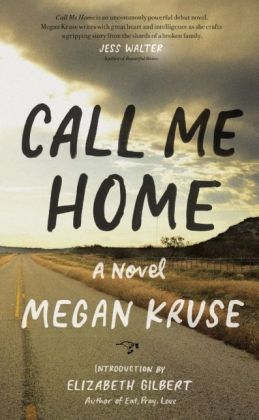
Call Me Home by Megan Kruse

A family story, in multiple voices, of pain and love and the journey to safety.

call me home

In her debut novel Call Me Home, Megan Kruse undertakes sprawling topics including guilt, sex, domestic violence and the complicated love of siblings, parents, children and lovers, in settings across the United States. These ambitious themes and clearly wrought characters are gorgeously rendered in feeling prose.

Amy moved from small-town Texas to small-town Washington state as an 18-year-old newlywed, before he began to beat her. The action of Call Me Home begins years later, alternatingly told in the third-person perspectives of Amy and her son Jackson, and first person by Jackson’s little sister Lydia. Amy tries to leave with her children, repeatedly, but to permanently escape her abusive husband she has to choose just one child to save. Eighteen-year-old Jackson finds himself on the streets of Portland, Oregon before taking work on a construction crew in Idaho. Amy and Lydia hide out at a shelter in New Mexico, then find their way to Amy’s hometown, where 13-year-old Lydia meets her grandmother for the first time. Flashbacks throughout the narrative also portray Amy’s marriage and abuse and the children’s early lives.

Call Me Home offers lovely descriptions of natural settings in Washington, Idaho and Texas, but central are the powerful themes and ugly realities of domestic violence, Jackson’s challenges as a gay teen navigating unfamiliar streets and country, and the shared and unique traumas of Amy, Lydia and Jackson. Kruse’s evocative, often lyrical language serves her subjects well, so that what results is not unleavened pain but painful beauty, even hope.


This review originally ran in the March 10, 2015 issue of Shelf Awareness for Readers. To subscribe, click here, and you’ll receive two issues per week of book reviews and other bookish fun!


Rating: 8 garbage bags.

A Greater Ireland: The Land League and Transatlantic Nationalism in Gilded Age America by Ely M. Janis

Scholarly examinations of a political movement delve into the nature of the Irish American identity.

greater ireland

A Greater Ireland: The Land League and Transatlantic Nationalism in Gilded Age America, by Ely M. Janis, is a concise, meticulously researched examination of one specific thread in a shared Irish and Irish American history: the Irish National Land League of the 1880s. This organization spanned the globe, uniting citizens of both Ireland and the United States in pursuing Irish land reform and self-rule, and had lasting repercussions for Irish American identity and political involvement.

…Click here to read the full review.


This review was published on February 27, 2015 by ForeWord Reviews.

IMG_4538


My rating: 3 speaking appearances, for tedious readability.

God Loves Haiti by Dimitry Elias Léger

An inspired and nuanced portrayal of politics and love, with a backdrop of natural disaster.

haiti
Dimitry Elias Léger’s debut novel, God Loves Haiti, takes place in the days just before, during and after the devastating earthquake that struck Port-au-Prince in 2010. Those 35 seconds, coupled with the mayhem and aftershocks that followed, killed hundreds of thousands, but among the survivors are a politically important old man, a vibrant younger one and the woman who has recently chosen between them but still struggles with her choice. Natasha is an artist, deeply passionate about her painting, though she’s also passionate about the poet Dante, her religion and the politics and business that engross her husband and her boyfriend. All three have different relationships to the colorful Haitian community, which is epically short on resources for everyday life, let alone a disaster of these proportions. All three choose and experience different paths after the quake hits.

Asking big questions is part of Léger’s charm, but although subjects like love, religion, sin, redemption and national identity and value seem particularly weighty against this backdrop of human suffering, the novel has thoroughly winning comic moments, too. The narrative jumps around in time to visit each member of the love triangle before and after the earthquake, and to track each character’s development. The atmosphere Léger evokes manages simultaneously to be heartrendingly realistic and dreamlike: the survivors of tragedy and disturbing pain naturally operate with heightened and distorted perceptions. The irregular chronology, quick pacing and lyrical prose combine for an artistic success that is both surprising and satisfying.


This review originally ran in the January 6, 2015 issue of Shelf Awareness for Readers. To subscribe, click here, and you’ll receive two issues per week of book reviews and other bookish fun!


Rating: 7 aerial views.

The World of Raymond Chandler: In His Own Words, edited by Barry Day

This collection of Raymond Chandler’s reflections and witticisms, edited into themed chapters, will equally satisfy his fans and readers unfamiliar with the noir master.

chandler

Though born in Chicago in 1888, Raymond Chandler was raised in England, so when he returned to the United States at age 24 he felt rather foreign. He had to study and learn what he called the “American” language, but conquered it in writing The Big Sleep, Farewell, My Lovely, The Long Goodbye and many short stories in the noir style–a style he helped perfect. He created the famous Philip Marlowe (an archetypal hard-boiled private investigator who has trouble with the ladies) and wrote screenplays for Double Indemnity, The Blue Dahlia and Strangers on a Train. When he died in 1959, he left a variety of written works behind, and many are respected as classics today. In The World of Raymond Chandler, editor Barry Day (The Noël Coward Reader) compiles Chandler’s published and epistolary writing to form a picture of the man behind Marlowe.

The voice of this book is as much Day’s as his subject’s. Rather than a memoir by Chandler or, as the subtitle might suggest, a narrative told in his words, this is a collection of quotations. Beginning with an excellent brief introduction, Day sketches the major events and publications in Chandler’s life, largely avoiding a standard biography. Selecting from letters and articles, but more often from Chandler’s fiction, Day patches these fragments together with commentary into chapters on themes or common topics of Chandler’s work: cops, dames, Los Angeles, Hollywood. We see Chandler invent the strong sense of place that helps define such writers as Michael Connelly and James Lee Burke today. Day makes the argument fairly successfully that Marlowe’s voice represents Chandler’s, particularly in their later years, as both softened (but not, Chandler insists, mellowed) until Marlowe in The Long Goodbye was “as hollow as the spaces between the stars.”

Chandler fans will be tickled by a great many pithy aphorisms that both describe and exemplify his distinctive style. “To justify… certain experiments in dramatic dialogue… I have to have plot and situation; but fundamentally I care almost nothing about either.” About his preference for small casts, he wrote, “If more than two people were on scene I couldn’t keep one of them alive. A crowded canvas just bewilders me.” And what Day calls the master’s “ground rules” (Chandler labeled them “Casual Notes on the Mystery Novel”) are treasures, including “The mystery must elude a reasonably intelligent reader” and (sadly) “The perfect mystery cannot be written.” At the end of this admiring collection, Day’s reader is left wondering if Chandler came closest.


This review originally ran in the December 2, 2014 issue of Shelf Awareness for the Book Trade. To subscribe, click here.


Rating: 5 disconnected quotations.

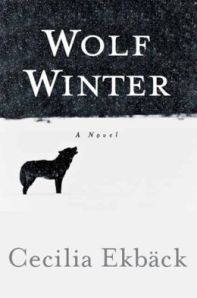
Maximum Shelf: Wolf Winter by Cecilia Ekbäck

Maximum Shelf is the weekly Shelf Awareness feature focusing on an upcoming title we love and believe will be a great handselling opportunity for booksellers everywhere. The features are written by our editors and reviewers and the publisher has helped support the issue.

This review was published by Shelf Awareness on November 25, 2014.

wolf winter
“It’s the kind of winter that will remind us we are mortal. Mortal and alone.”

In 1717, the Swedish Laplands are home to indigenous nomadic Laplanders and a mere sprinkling of Christian settlers. A new family has just arrived, fleeing an enigmatic unpleasantness in their native Finland, to take over a vacant homestead on the shoulder of beautiful but harsh Blackåsen Mountain. Frederika is 14, Dorotea six; their mother, Maija, is strong and resourceful, while their father, Paavo, is so crippled by vaguely defined fears that he seems to disappear even in the ever-present light of summer. In the opening pages of Cecilia Ekbäck’s debut novel, Wolf Winter, the girls discover a dead body on the mountain: a man, with his torso torn open. Maija rushes to the scene and is told by other settlers he was killed by wolves, or a bear. But the cut is long and clean, nothing has fed upon the corpse, and she wonders. She picks up a small item off the ground nearby.

The settlers do not live close to one another; it requires a purposeful hike to visit with a neighbor. Nonetheless, there is a priest in the village–a place generally vacant, where the settlers gather for Christmas and several weeks after, as required by the King–under whose purview a murder might fall. Just as Maija feels compelled to investigate the death of a man she never knew, the priest has his own orders, and his own secrets as well.

In the autumn, as the days in this far northern land shorten, Paavo leaves to find work far away. Maija capably runs her remaining household, and frustrates her neighbors, who feel that a woman should not speak at meetings. Frederika is haunted by the dead man she and her sister found. She begins to discover certain strengths, or powers, taught by her great-grandmother. Is she being haunted, or is she calling the dead? Frederika seeks guidance from the Laplanders, who used to commune with the spirits, but they have been (nominally) converted to Christianity by the Swedish king. And the priest remains a figure of mystery: Why investigate the death on Blackåsen Mountain? What is he hiding? While always told in third person, the perspective shifts subtly, between that of Maija, Frederika and the priest.

As winter falls, there is a palpable feeling of danger on the mountain and in the scattered, tenuous community. Paavo does not write home, the cold intensifies, food is scarce. Maija feels a continuing urge to solve the mystery of the murdered man on Blackåsen, which makes her no friends, and the priest clearly has motives of his own. War looms in the background, frostbite in the foreground. Maija cannot be sure which of the Swedish settlers she might be able to trust; each time she turns to a new acquaintance, she receives a cold shoulder or an alarming intuition. Even her daughter Frederika feels unreachably distant in their tiny, draughty house. Both Frederika and Maija attempt alliances with the nomadic Laplanders who move through their lives, but each gets less than she’d hoped. And Dorotea, seemingly too small to engage in adult machinations, is in danger from the obvious as well as the most surprising and sinister of threats.

Wolf Winter‘s scope is enormous. Maija struggles to keep her family afloat; struggles for autonomy and reason in a community ruled by secrets, fear and corruption; and seeks a voice as a woman in her own fate. Several levels of organization push and pull against one another: the household, the loose network of homesteads, the village which is only inhabited in darkest winter, the church and state, the King’s decrees and the wars he engages in–all will eventually supply tension in a story set on a sparsely populated and apparently cursed mountain.

Ekbäck imbues her tale with a sense of foreboding from the very start, and her austere writing matches the landscape: occasionally colorful but often in muted shades of gray, stark, cold and unforgiving. The range of topics touched upon–women’s place in society, isolation and community, political corruption, family, the power of superstition and fear–is daunting, but Ekbäck never attempts too much. Instead, the questions her characters ask themselves do the work of the novel’s examinations. Frederika struggles with her ability to see things that others do not; Maija resists such a possibility, to keep a grip on her family’s survival; and the priest strains to maintain the appearance of well-being.

The strengths of Wolf Winter clearly begin in its atmosphere, masterfully chilling with its literal weather–particularly a deadly snowstorm–as well as the isolation and withdrawal practiced by almost every character. Ekbäck’s pacing is expert as well, tension building as the snow rises and the settlers gather together. The characters’ secrets are many, and are revealed slowly throughout, up to the final pages. Even the characters more sparingly described are engaging; the central characters are deeply, thoroughly captivating. In the end, multiple faceted mysteries add to the allure of a debut novel that is both frigidly unnerving and wise, and ultimately satisfying in its resolution.


Rating: 7 toes.

Come back Wednesday for my interview with Ekbäck.

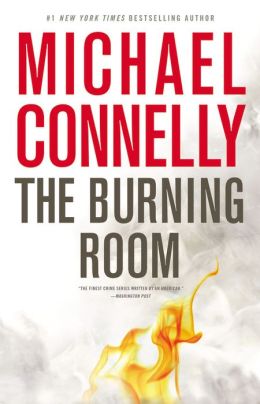
The Burning Room by Michael Connelly

Harry Bosch delves into a cold case–which might be his last–with an appealing new partner.

burning room

Michael Connelly’s 27th novel, The Burning Room, features the return of the much-loved, authority-averse LAPD Detective Harry Bosch, now in his final year with the Open-Unsolved Unit. As the senior detective in the unit, he has been paired with the youngest, freshest rookie: Lucia Soto, or “Lucky Lucy,” who has survived gunfights to become a Los Angeles hero but has zero experience solving homicides, fresh or cold. Their first case together is an apparently random 10-year-old shooting, whose victim has only recently died of his wound–unusually, a cold case with a warm body. Bosch’s concerns about his partner’s abilities are laid to rest quickly as he observes her work, but the case is increasingly fraught with political intrigue (and, as his fans know, politics are an especially difficult arena for Bosch). Complicating matters is an older cold case with personal ties for Soto. The latter connection is somewhat improbable, perhaps, but thrilling nonetheless.

Bosch is everything his fans have loved for decades: grouchy yet soft-hearted, an outstanding detective who can’t seem to get along with his superiors and a fine mentor to his new partner. Detective Soto is an intriguing new character in her own right, with a storied past that begs for further exploration. The satisfying, shocking denouement leaves Bosch’s future–and the continuation of the series–in question, although surely Connelly (The Gods of Guilt) will not disappoint the detective’s many fans just yet.


This review originally ran in the November 7, 2014 issue of Shelf Awareness for Readers. To subscribe, click here, and you’ll receive two issues per week of book reviews and other bookish fun!


Rating: 7 paper clips.

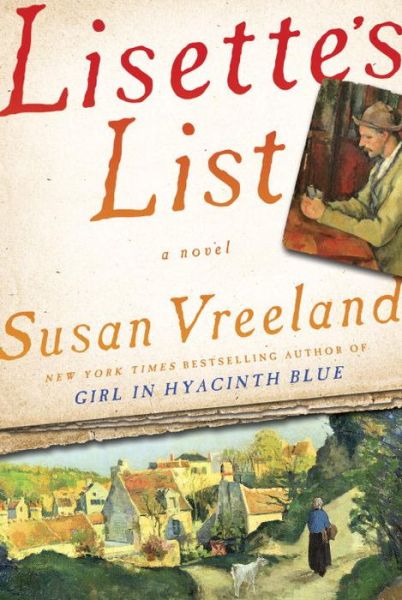
Lisette’s List by Susan Vreeland

Like Vreeland’s previous novels about women in history and art, Lisette’s List is heartfelt, loving and lovely, and asks difficult questions beautifully.

lisette

In Lisette’s List, Susan Vreeland (Clara and Mr. Tiffany; Girl in Hyacinth Blue) lovingly portrays Impressionist, Post-Impressionist and Modernist French art by way of a modest fictional character in Provence.

In 1937, newlyweds Andre and Lisette Roux move from France’s vibrant capital to the pastoral southeastern town of Roussillon to care for his grandfather, Pascal, who has written that he is dying. A passionate Parisian, Lisette is at first miserable in the backwater town, and infuriated when Pascal turns out to be healthier than he let on: he simply wanted their company, and to share what he remembers about the famous French artists he has known.

But Lisette is as fervent about art as she is about Paris, and Andre has trained in his grandfather’s trade of carving fine frames for fine paintings. She is captivated by Pascal’s collection of seven paintings: by Cézanne and Pissarro, and one possibly by Picasso. As a miner in the nearby ochre mines and later a pigment salesman, Pascal made the most of his access to these men, and now shares his recollections with the rapt Lisette–as well as his wisdom about life and love.

By the time Pascal eventually dies, Lisette has made a home of sorts in Roussillon; her love for the paintings further compels her to stay in Provence when Andre hides them (for fear of their destruction or seizure by German troops), not telling even Lisette where they’re stowed. Andre then enlists to fight for France, and Lisette is left alone, waiting for both the safe return of her husband and a reunion with the artwork.

Over the next decade and more, Lisette keeps a list of “Lisette’s Hungers and Vows.” Inspired by Pascal and his paintings, Andre’s love and the quiet strength and beauty of the Provençal surroundings, she pledges to “learn what makes a painting great,” “learn how to be self-sufficient” and “love without reservation.” She meets Marc Chagall and his wife, Bella, who are hiding in a nearby town. Upon receiving a gift painted specially for her by Chagall, she begins her own art collection and narrative. But war necessarily brings tragedy as well as new beginnings. Lisette will experience love and loss, joy and deep pain; learn animal husbandry as well as art history; and parse the moral questions raised under Vichy French rule, as the years go by. She finds new friends, undertakes small favors and large sacrifices, all in times of war and recovery, amid the paintings she loves so. Readers will likely rush through the lovely Lisette’s List, only to be bereaved when the final stroke is painted and the portrait is complete.


This review originally ran in the August 4, 2014 issue of Shelf Awareness for the Book Trade. To subscribe, click here.


Rating: 8 pieces of marzipan.

Land of Love and Drowning by Tiphanie Yanique

Ghosts, curses, blessings, loves, births, deaths and family in a lush Caribbean setting.

land

Tiphanie Yanique (How to Escape from a Leper Colony) constructs a wide and magical world spanning three generations on the island of St. Thomas in Land of Love and Drowning. In the early 1900s, as the Danish Virgin Islands are poised to transfer to U.S. rule, Owen Arthur Bradshaw divides his love between his wife, Antoinette, who is beautiful but a reluctant mother; his daughter Eeona, still more lovely and also inveterately jealous; and Rebekah, an obeah (sorceress) married to another man. Antoinette gives Owen one more daughter, Annette, just as Rebekah gives him a son, Jacob Esau. The three children grow up relating to one another in unusual ways. War and American influence broaden their world somewhat, and the forces of nature and island magic both influence and are influenced by the disparate forces that are Eeona, Annette and Jacob Esau.

The story begins with Owen Arthur and his women, then follows his children’s and his grandchildren’s lives. Perspective shifts among the voices of the three children, but Annette, who grows up to be a historian, speaks the loudest. Her island patois persists even as Eeona nags her to “use proper English.” As she writes, “is just a story I telling, but put it in your glass and drink it.”

The compelling history of the U.S. Virgin Islands as told through this family’s intimacies is multiethnic, colorful and vital. Yanique’s diverse characters become doctors, architects, teachers, parents, lovers and fighters; their collective story is haunting and exquisite, told with grace, vibrancy and magic.


This review originally ran in the July 18, 2014 issue of Shelf Awareness for Readers. To subscribe, click here, and you’ll receive two issues per week of book reviews and other bookish fun!


Rating: 7 red dresses.