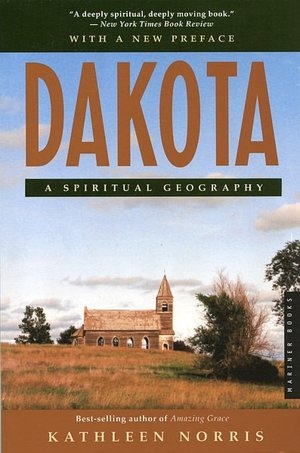
Teaser Tuesdays: Dakota: A Spiritual Geography by Kathleen Norris

Teaser Tuesdays is a weekly bookish meme, hosted by MizB of Should Be Reading.

dakotaWarning: rave review coming. Dakota is an amazing feat of essays exploring ethics, community, a sense of place and belonging and the meaning of home, geography, the unique features of the western Dakotas, and yes, spirituality (a subject usually sure to turn me away). This teaser post is just that, a preview of what I love about this book. For example,

The word ‘geography’ derives from the Greek words for earth and writing, and writing about Dakota has been my means of understanding that inheritance and reclaiming what is holy in it.

or, quoting Benedictine monk Terrence Kardong,

We have become as indigenous as the cottonwood trees… If you take us somewhere else, we lose our character, our history – maybe our soul.

I would love to share the entire 16 pages of “Where I Am,” which include the factoid that

the absolutely temperature range record for the Western Hemisphere [was] set in 1936 when a town in western North Dakota registered temperatures from 60 degrees below zero to 121 above within the same year.

or “Rain,” a single-page poetry-in-prose listing of the types of rain experienced there. Mind-blowing, right?

I am very impressed, and hope you’ll go looking for your copy of Dakota, too. My review is coming.

The Liars’ Club by Mary Karr

Following on The Kiss, I came to The Liars’ Club intrigued to see how the masters do this work. I have a special interest in memoirs about one’s parents, because I want to write one. And Mary Karr is credited with being one of those, during the “memoir craze” of the 1990’s, who got it right (rather than “just” being sensational). (Yes, Angela’s Ashes is coming up, too.)

Mary Karr grew up in a small Texas oil town she calls Leechfield, on the Louisiana border. Her mother was driving through town between husbands when she got a flat tire, and met the tall, bar-brawling oil man who would become Karr’s father. As a child, the author is devoted to her father and enjoys hanging out at the Legion with the beer drinkers; she is dismayed by her maternal grandmother’s coming to stay with the family as she dies of cancer. Her mother has a nervous breakdown and is institutionalized briefly before moving her two daughters to Colorado and divorcing their father, but the family will reunite in Leechfield once more.

“The Liars’ Club” refers to the beer drinking veterans who hang out at the American Legion bar, playing dominoes and pool, drinking and telling stories. It is only one of the worlds perfectly painted by Karr’s descriptive prose, as well as crab boils, neighborhood gossips, binge-drinking horrors, death threats, jellyfish attacks, bonfires and sexual abuse. I like that she uses sensory details in a way that doesn’t feel forced (a laundry list of inputs) but does give the setting immediacy: the sights and smells of an oil refinery, for instance, are unforgettable.

I love the way in which Karr is a character in her own story. She occasionally refers to what others’ memories assert (in contrast to her own) or adds a detail learned later through her research, but overwhelmingly, the perspective is that of little Mary Marlene, a girl who is spunky, prone to fistfights, and none too bright (she’s so modest), but devoted to her family. She reminded me very much of Haven Kimmel’s young self in A Girl Named Zippy – whose sequel, She Got Up Off the Couch, is perhaps my favorite memoir-of-parent to date. I had to remind myself from time to time that this wasn’t Zippy talking.

Evocative prose, easy-reading descriptive writing, and an eye for both detail and pathos make this a special memoir. But what makes it outstanding is a balance between the horrific and the hilarious, that Karr can tell painful stories with vigor and make me smile or giggle one page later. A well-written, exciting and entertaining, heartfelt memoir it absolutely is, and as a reader, I highly recommend it for pleasurable reading. As a writer, I’d like to pull it apart and see how it works, because the result is powerful and apparently effortless, but I bet it has strong bones. Luckily, there’s this book coming out…


Rating: 8 plastic-wrapped dress shirts.

Teaser Tuesdays: The Liars’ Club by Mary Karr

Teaser Tuesdays is a weekly bookish meme, hosted by MizB of Should Be Reading.

I am loving Mary Karr’s well-regarded memoir about growing up in small-town East Texas. She is amazing in many regards, on which more to come soon; but today I want to talk about describing place. I have a special fascination with a “sense of place” in the books I read, whether they are fictional descriptions of real places (James Lee Burke and Michael Connelly, on Louisiana and Los Angeles respectively) or made-up places (Stephen King’s Dark Tower series, or du Maurier’s Manderley), or nonfiction.

liar's clubAs an example of the latter, I think this paragraph-and-a-half near the beginning of The Liars’ Club is as good as it gets.

If Daddy’s past was more intricate to me than my own present, Mother’s was as blank as the West Texas desert she came from. She was born into the Dust Bowl, a vast flat landscape peppered with windmills and occasional cotton ranches. Instead of a kitty for a pet, she had a horny toad. She didn’t see rain fall, she said, for the first decade of her life. The sky stayed rock-white and far away.

About all she later found to worship in Leechfield was the thunderstorms, where were frequent and heavy. The whole town sat at a semitropical latitude just spitting distance from the Gulf. It sat in a swamp, three feet below sea level at its highest point, and was crawled through by two rivers. Any hole you dug, no matter how shallow, magically filled up with brackish water. Even the wide ditches that ran in front of the houses, where I later learned that sidewalks ought to be, were not enough to keep the marsh from burbling up.

This is an astounding piece of writing. So much is communicated, and much of it we take in without even noticing. On the surface, we see that Mother is from West Texas, where it is dry, and East Texas, where the author grew up, is much wetter. But just below that surface, we get a time-frame (implied by the Dust Bowl reference), and a visual cue from “rock-white”: rocks aren’t white everywhere, but now we have a blinding tone for the “blank” West Texas desert. I love that Leechfield is “spitting distance” from the Gulf of Mexico: another reference to wetness; and “was crawled through” by two rivers? That’s a passive voice usage to compete with Hemingway’s famous one that I keep referring to. I like what is implied by that last line: Karr didn’t know about sidewalks til she left town. Not to mention the onomatopoeic effect of burbling…

Creative Nonfiction magazine has a special issue coming out on the theme of Weather. If they get to publish any passages remotely as communicative and deceptively simple as this one, I think they’ll be glad.

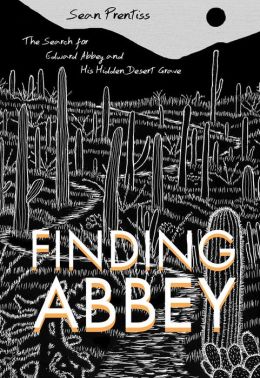
Finding Abbey: The Search for Edward Abbey and His Hidden Desert Grave by Sean Prentiss

A journey to find a famous grave and an exploration of the meanings of environment and home.

finding abbey

After the death of environmental writer Edward Abbey (The Monkey Wrench Gang; Desert Solitaire), four of his friends took his body to the desert near Albuquerque, N.Mex., and illegally buried him in a hidden location. For decades since, the mystery of his final resting place has tantalized Abbey’s fans and followers. Writer Sean Prentiss set out to track down his hero, as related in the thoughtful Finding Abbey: The Search for Edward Abbey and His Hidden Desert Grave.

Prentiss calls on Abbey’s close friends Jack Loeffler, Ken Sleight, David Peterson and Doug Peacock, several of whom inspired characters in Abbey’s fiction. He visits locations that Abbey called home over decades of peripatetic soul-searching. Prentiss does his own exploring, too. Though newly settled in the Midwest for a university job, Prentiss feels enticed by Abbey’s desert Southwest, a region he has also lived and traveled in. As much as he seeks a literal gravesite, or communion with a complicated man, Prentiss equally seeks a home for himself.

Prentiss questions whether he really wants to find the object of his search. “Answers don’t solve questions. Only searching does.” His tone is wondering, and his quest is both personal (where will Prentiss call home?) and universal (what does a sense of place mean to anyone?). His goal might be disrespectful, considering the continued efforts of the Abbey camp to keep the grave’s location a secret, but Prentiss navigates this potential difficulty with sensitivity. While it offers no revelations, Finding Abbey is philosophical, poetic, a creative biography and a loving, evocative celebration of a controversial life.


This review originally ran in the May 15, 2015 issue of Shelf Awareness for Readers. To subscribe, click here, and you’ll receive two issues per week of book reviews and other bookish fun!


Rating: 7 cans of beer.

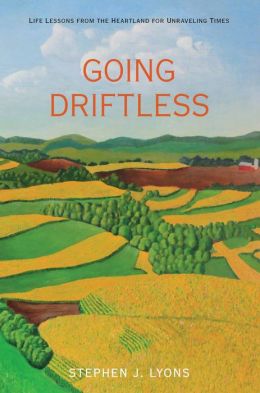
Going Driftless: Life Lessons from the Heartland for Unraveling Times by Stephen J. Lyons

An admiring profile of the successful, low-impact communities in a little-known region of the Midwest.

driftless

Stephen J. Lyons (A View from the Inland Northwest) muses on a remarkable region of the U.S. in Going Driftless: Life Lessons from the Heartland for Unraveling Times. “The Driftless” spans a small area of southwest Wisconsin, northwest Illinois, northeast Iowa and southeast Minnesota. A distinctly unglaciated history defines certain geographic parts, and a network of streams provides variant topography. In these pages, Lyons explores that landscape and the cultural experimentation born there.

The remote hills and valleys of the Driftless are uncharacteristic of the Midwest, and these steeper slopes have sheltered alternative lifestyles for decades, from the back-to-the-landers who arrived in the 1970s to naturalists, traditional and organic farmers, artists, musicians and other singular souls living there today. Over several years, Lyons visits various Driftless communities, chatting with their leaders as well as others encountered by chance. He surveys farming and dairy cooperatives, families living off the grid, small business owners, food co-ops, a Zen monastery and successful planned communities. For example, Lyons outlines the history of Seed Savers Exchange, located near Decorah, Iowa, which curates a collection of more than 20,000 seed varietals from around the world in the public domain. The region attracts those interested in getting back to basics, hoping to build communities.

Going Driftless comprises a series of sketches of people, places and organizations, and steers clear of judgment or conclusion in favor of quiet contemplation. Lyons gently suggests near the book’s end that these unobtrusive lifestyles have something to offer in unstable times.


This review originally ran in the May 12, 2015 issue of Shelf Awareness for Readers. To subscribe, click here, and you’ll receive two issues per week of book reviews and other bookish fun!


Rating: 7 apples.

Inside the O’Briens by Lisa Genova

Family dynamics after a diagnosis of Huntington’s disease, exquisitely portrayed with poignancy and tenderness.

inside

In her fourth novel, Inside the O’Briens, Lisa Genova (Still Alice) introduces a traditional Irish Catholic family who have to cope with a neurological disease.

Over several years, Joe O’Brien, a proud, hardworking Boston cop, has been increasingly irritable and quick to anger, and has trouble concentrating on his paperwork. He starts stumbling and dropping things; there are murmurs of drink or drugs. When they finally see a doctor, the O’Briens learn about Huntington’s disease, an inherited neurodegenerative disease that over the course of 10 to 20 years will rob Joe of his ability to move, speak and eat on his own. It’s been causing his short temper and confusion. And there’s a 50-50 chance that each of his children has it.

Each of these young adults has a decision to make: they can be tested for the gene marker that predicts Huntington’s or they can live with uncertainty. The eldest has been trying to conceive; a baby would be at risk, too.

Sympathetic, absorbing, multifaceted characters compel the reader’s compassion. While Genova’s background in neuroscience allows her to portray medical issues accurately, the heart of the O’Briens’ story is human: how each member of the family copes with the news of Joe’s pending mortality; whether each child chooses to be tested; how knowing or not knowing guides how they live their lives. Their insular Irish Catholic community is likewise evoked with sensitivity and precision.

Poignant and painful, warm and redemptive, Inside the O’Briens displays Genova’s established strengths in bringing neuroscience to the lay reader, and portraying the power of love.


This review originally ran in the April 14, 2015 issue of Shelf Awareness for Readers. To subscribe, click here, and you’ll receive two issues per week of book reviews and other bookish fun!


Rating: 8 sippy cups.

Martin Marten by Brian Doyle

A lyrical ode to all the inhabitants of the world, fun-loving and deathly serious as nature.

marten

Fourteen-year-old Dave is one of the protagonists of Brian Doyle’s Martin Marten. He lives with his delightful, precocious six-year-old sister Maria and his wise, funny parents in a cabin on an Oregon mountain. Dave prefers to call the mountain Wy’east, which is the name given it by the people who lived there for thousands of years, rather than Hood, “which is what some guy from another country called it.”

Also in his adolescence on Wy’east in the same season that Dave enters high school and tries out for the cross-country team is Martin, who likewise is exploring his world, venturing farther from home and contemplating separation from his mother, and who will discover the females of his species around the same time that Dave does. A marten is a small, brownish mustelid with a diverse diet and a large territory, and Martin is as individual an example of his species as Dave is of his.

Doyle (Mink River) follows the coming-of-age of these two young males, and to varying degrees examines the lives and struggles of other inhabitants of Wy’east. These include the woman who runs the general store, Dave’s family and his best friend Moon, a schoolteacher and the dog who adopts him, a massive elk, an elderly bear and a retired horse, and each of their stories is deep and rich with humor and wisdom. The result is a lushly textured, loving, sensitive and whimsical symposium of trees, insects, birds and beasts.


This review originally ran in the April 14, 2015 issue of Shelf Awareness for Readers. To subscribe, click here, and you’ll receive two issues per week of book reviews and other bookish fun!


Rating: 10 tomatoes.

Teaser Tuesdays: Going Driftless by Stephen J. Lyons

Teaser Tuesdays is a weekly bookish meme, hosted by MizB of Should Be Reading.

driftless

I love that there is always something new to learn. In today’s read, I learned about a unique Midwestern region called “the Driftless” that I was unaware of. And how about this rather profound quotation from a local resident.

I ask him if, after forty years in the same place, anything still surprises him.

“Constantly. For one thing, you’re kind of surprised when trees you planted die of old age.”

Stay tuned.

This quotation comes from an uncorrected advance proof and is subject to change.

Pegasus Descending by James Lee Burke

“Was it you or Purcel who said most of the world’s ills could be corrected with a three-day open season on people?”

“It was Ernest Hemingway.”

“I’ve got to read more of him.”

pegasusOn a recent vacation, I ran out of reading material (!!) and took the opportunity to visit the local Half Price Books. I was happy to indulge in an old favorite, James Lee Burke, and also to read something I picked out all by myself.

Pegasus Descending is not one of the more recent Dave Robicheaux novels, although it’s not one of the first, either, which surprised me. It reads like quintessential, vintage James Lee Burke, and vintage JLB means excellent JLB: I enjoyed it very much.

To place this one in the series for Burke fans: Robicheaux is married to Molly the former nun in this installment, and working as a detective for the New Iberia (Louisiana) PD, where his boss is the androgynous, likeable Helen Soileau. Clete Purcel comes into play, too, and unsurprisingly falls for a dangerous woman (what else is new). The novel starts with a flashback to Robicheaux’s hard drinking days, when he watched a good friend’s murder and was too drunk to stop it. Flash forward again, and that man’s daughter enters Robicheaux’s jurisdiction and tries to pass marked bills to a casino. He feels obliged to help her if he can, out of respect for his dead friend. At the same time, a young woman shows up dead – by murder? suicide? – to whose family Robicheaux also feels some responsibility. Against the advice of his superiors and wife (again, what else is new), he insists upon pressing the buttons of a few dangerous, powerful, criminal men around town, and the bodies continue to mount.

Burke’s favorite themes are all present: difficulties with alcohol and authority; the sensations of the air off the bayou and the local cooking and culture; the imperfections that lie deep within our psyches; race relations; and the question of pure evil. Also family dynamics and love and battered, bruised redemption. I love this guy.


Rating: 7 three-legged raccoons.

A View From the Bridge by Arthur Miller

view-bridgeAnother tragic dramatic masterpiece from Arthur Miller. I read Death of a Salesman and The Crucible in school; I am hoping to see this one produced onstage soon, so I picked up A View From the Bridge, and it was as great as the others.

Eddie lives in an Italian neighborhood of New York City with his wife Beatrice and Beatrice’s orphaned niece Catherine (Katie). Beatrice’s cousins are coming over illegally from an impoverished town in Italy, to work on the docks and raise money to send back home. The elder, Marco, has a wife and three children to support. The younger, Rodolpho, catches the eye of the teenaged Catherine, who Eddie loves perhaps more than is appropriate. There are oblique references to Eddie and Beatrice’s sex life having suffered lately, and also to Rodolpho being a bit effeminate for Eddie’s tastes. Financial and sexual tensions arise and the ending is not happy.

The building tension in this unassuming domestic setting reminds me of Tennessee Williams and The Glass Menagerie, a play I should read again someday. The working-class frustrations of Eddie, a longshoreman, feel familiar to me from other Miller plays. Themes include the concept of “rats”, or those who tell tales; loyalty and secret-keeping; and the machismo of the docks, not to mention obsessive love. The View From the Bridge is a powerful, emotionally moving classic tragedy, and I can’t wait to see it on the stage.


Rating: 8 coffees.