Teaser Tuesdays: Life and Death in the Andes by Kim MacQuarrie

Teaser Tuesdays is a weekly bookish meme, hosted by MizB of Should Be Reading.

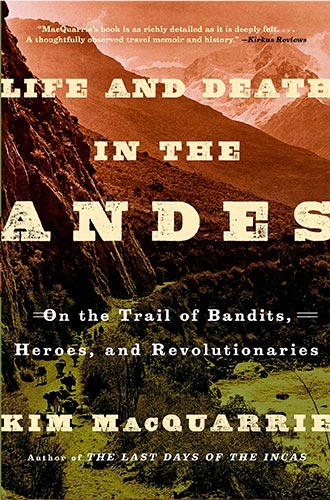
I am loving Life and Death in the Andes. It’s a moderately fat book at nearly 400 pages, but never less than captivating in all its various stories. Stay tuned for my review to come in December.

andes

Today’s teaser is, of course, related to a sense of place.

“It is the fate of every voyager,” Darwin wrote later in his autobiography, “[that] when he has just discovered what object in any place is more particularly worthy of his attention, to be hurried from it.” Right now, however, Darwin was so upset he could hardly eat.

Why was Darwin so upset? It wasn’t seasickness, although his early days on the Beagle were beset by that complaint. No, he was dismayed to discover after the fact that he wasn’t such a professional naturalist, after all. Do pick up this engaging history to learn more!

This quotation comes from an uncorrected advance proof and is subject to change.

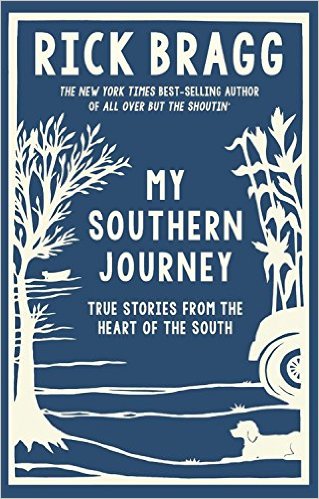
My Southern Journey: True Stories from the Heart of the South by Rick Bragg

Extraordinary, brief, true stories of the Deep South that are funny, haunting and redolent.

my southern journey

My Southern Journey: True Stories from the Heart of the South showcases the singular voice, humor and perspective of Pulitzer Prize-winner Rick Bragg (All Over but the Shoutin’), in short, entertaining stories. As he introduces it, “this book is a collection of Southern stories, but it is not a litany of pig pickins and frat parties and cutthroat beauty contests.” Rather, these are fervent, funny, heartfelt memories of places and cultures that need remembering.

Bragg shares his experience of the Deep South, from his family home in northern Alabama to Florida, Louisiana and the Alabama coast. Readers quickly become acquainted (or reacquainted) with his large and lively family, as Bragg brings immediacy and intimacy to his setting and cast of characters. His mouthwatering descriptions of the food of his homeland–centered on various forms of pork but with a heavy emphasis on Gulf Coast seafood as well–are flavorful and evocative. He occasionally claims that “I can’t write well enough to tell you how good it was,” a risky writerly trick that Bragg easily pulls off. He considers the red dirt of northeastern Alabama as both physical and symbolic. Bragg’s tone is self-effacing and often hilarious, which belies his ability to approach serious issues, like his treatment of overfishing and the Deepwater oil spill.

In exploring family, a sense of place or home, and the distinctive details of Southern food and culture, Bragg exhibits an exquisitely nuanced, clever voice, partly disguised by a down-home accent. Readers will laugh, and cry, and yearn to head South.


This review originally ran in the September 25, 2015 issue of Shelf Awareness for Readers. To subscribe, click here, and you’ll receive two issues per week of book reviews and other bookish fun!


Rating: 9 paper bags of cracklin’s.

book beginnings on Friday: Dispatches from Pluto by Richard Grant

Thanks to Rose City Reader for hosting this meme. To participate, share the first line or two of the book you are currently reading and, if you feel so moved, let us know what your first impressions were based on that first line.

dispatches from pluto

The subtitle, “Lost and Found in the Mississippi Delta,” is what got me. And then there are the first lines:

I was living in New York City when I decided to buy an old plantation house in the Mississippi Delta. It was out in the cotton fields and cypress swamps of Holmes County, the poorest county in America’s poorest state.

Got me: I’m intrigued. The Deep South is an increasingly appealing and intriguing place to me, filled with contradictions and complications. Tell me more!

This quotation comes from an uncorrected advance proof and is subject to change.

All Over But the Shoutin’ by Rick Bragg

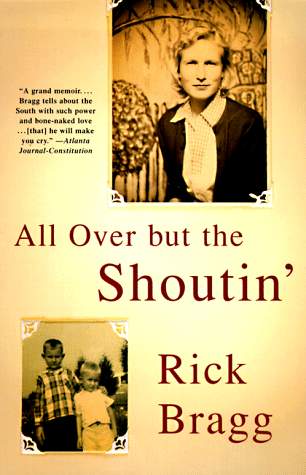
all overRick Bragg’s first book is a memoir of his own life, his upbringing and the road to a successful journalism career with the New York Times, complete even with a Pulitzer. It’s also the story of his family: his father, almost completely absent from Bragg’s life and from the book; his mother, the driving force of grace and hard work and love; his brothers; his people from poor rural Alabama. It’s a beautiful book, humbly honest, piercingly devoted to Momma, and redolent with smells and tastes and sights and sounds. As a way of honoring those he wants to remember and honor – centrally his mother – I think it’s devastatingly effective. It’s also a fine piece of writing, triumphantly fine, and a fascinating story.

People are often driven, with a book like this that is so securely rooted in such a unique place, to make statements about whether it could have been born of any other place. Me, I don’t feel up for that argument. But if Bragg’s skill had come out of Pennsylvania, he would at least have written a very different book.

I loved learning about and learning to love the place Bragg is from – northeastern Alabama – and I appreciate his understanding of nuance, of complicated feelings, of the possibility for both ugly legacies and beautiful virtues coming from the same place.

I found it interesting, and it kept his story from being unrelievedly gorgeous or unrelievedly painful, in a book so filled with “living and dying and that fragile, shivering place in between,” that he is able simultaneously to show that he has lived a charmed life. This was a new concept to me, of such good and ill luck coming in the same breath. For instance, when Bragg became national correspondent in the South, to the New York Times:

It was a marriage so perfect, in my mind’s eye, that I was almost surprised when I got a cold, or stubbed my toe, or got a parking ticket, because such things do not belong in dreams.

Momma used to drag her middle son, who she called Ricky, up and down the rows of cotton on her sack as she picked. He increased the weight of the load she bore, but she loved him, and his brothers, and she did for them as best she could, and this is the story, among other things, of Bragg doing his best by her in return. It’s a deeply sweet story, and although sometimes gruffly told, he never takes that tone when writing about her.

Bragg’s father, on the other hand, was an alcoholic abuser who left his family defenseless repeatedly and apparently without compunction. He was also a traumatized war veteran who on his deathbed gave his son a touching gift and a story. I said earlier that he’s mostly absent throughout, but his shadow is there.

I can’t do this book justice. It’s too good. Go see for yourself.


Rating: 10 assumptions tested.

more on Rick Bragg

I am struggling to respond to the book I just finished, so I wrote a letter instead.


Mr. Rick Bragg,

I make a very small living as a book reviewer these days, but reading your books I am no kind of book reviewer, because I don’t know how to write about what you do when you write about your life.

Of course I believe that the best books for us find us at the right times, and yours have found me at the time when they can hit me the hardest. I am having a crisis of identity and place, having moved from my hometown of 32 1/2 years in Texas to a small town on the Canadian border of Washington state, which I have found largely unworkable. Your writing about places I have never lived and know only a little or not at all – Miami, New Orleans, rural Alabama – makes me feel homesick. Your writing about being a displaced Southerner at Harvard, or in New York City, resonates with me, although I am not the same as you. I’m from a big city – the fourth largest in the country – and have moved to a small one; but your displacements feels familiar all the same.

You are, of course, one of the finest writers about food that I’ve encountered. At the risk of offending, I will say I don’t eat pork, because I don’t like pork; but your descriptions of cracklin’s (etc.) still make me wish I were there and not here.

I am not one of those “who went to speech school to get rid of their accents,” in part because I don’t have much of an accent, being from a city, but what I have I will keep – although I was at one point one of those, as you observe, who fear “they sound slow, or at least unsophisticated, to outsiders.” When I interviewed for a big-time academic job in the North, I worried about saying y’all. I shouldn’t have. I don’t apologize, any more.

Houston is many things, big and diverse, containing multitudes, and that is my single favorite thing about the place; this also means that Houston can be a bit schizophrenic, even self-loathing. You write that Atlanta “tears down its history with wrecking balls, and builds something bland and homogenized in its place.” Houston has done too much of that, although it’s done lots of other things with its history, as well.

This wasn’t supposed to be about me, but that’s the work your writing does. I see a lot of myself and my own experience, even where I see all sorts of adventures that are unknown to me. That’s a piece of work, in itself.

You’ve made a big difference to me. Keep up the good work. I wish you and yours all the best; you feel like friends to me now.

Thank you.

Julia


Tomorrow I’ll try again to write a book review.

Last Ragged Breath by Julia Keller

last ragged breathThis is the fourth novel in Julia Keller’s detective series starring Bell Elkins, a lawyer with a high-powered degree who has returned to small-town West Virginia to work as a prosecutor there. I tried to read (or actually, listen to) the first, A Killing in the Hills, and found the characters a bit flat. In a nutshell, Last Ragged Breath was very enjoyable, but did not entirely solve that problem.

The Buffalo Creek Flood of 1972 is a true historical event in West Virginia history, in which a coal mining company’s irresponsibility and disregard for human life led to more than 100 deaths. In this novel, a childhood survivor of that tragedy, Royce Dillard, is now a grown man, a recluse living alone in the woods with a number of rescue dogs. A tourism development company looking to build a resort in the nearby hills has been bothering him to sell a small parcel of land; when the chief botherer turns up murdered on Royce’s land, he is arrested for the crime. Although the forensic evidence is overwhelming, something about this case doesn’t sit right with prosecutor Bell Elkins. Meanwhile, she struggles with sideplots: her best friend the sheriff has just retired, and she’s not done being angry and grieved about it; she is learning to work with his replacement; and a potential love interest offers distractions.

Bell Elkins is noted as a well-developed character by many, inspiring complimentary blurbs from the likes of Michael Connelly. Sadly, I continued to feel that a few aspects of her personality felt predictable. The teenaged daughter who bothered me so much in the first novel is now mostly removed, although I recognized the same awkward dialog between the two of them when she reappeared. Other characters (like the new sheriff, and the owner of the resort-building company) also felt just a bit too typed from time to time, and scenes sometimes get a bit overwrought. This is my only complaint with the book, though, and it is a minor one (and perhaps my sense of it was heightened by that earlier experience). Overall, the story is compelling, and carries significant momentum: I was happy to spend a day and a half doing almost nothing other than finishing the book. Its comments on corporate responsibility and the complexities of coal mining’s regional legacy were well done. The people of Acker’s Gap mostly recognize that coal is dirty, and mining is dirty work; but they also need work, and see that there’s nothing to fill the hole it would leave. Nothing is simple.

An intricate plot, neatly paced suspense, and yes, likeable (if not perfectly realized) characters make for not only an enjoyable and entertaining read, but one accompanied by commentary on our real world. I’ve made my peace with the Bell Elkins series. And stay tuned for my upcoming interview with the very gracious Julia Keller.


Rating: 6 kibbles.

book beginnings on Friday: Red Dirt Women: At Home on the Oklahoma Plains by Susan Kates

Thanks to Rose City Reader for hosting this meme. To participate, share the first line or two of the book you are currently reading and, if you feel so moved, let us know what your first impressions were based on that first line.

red dirt women

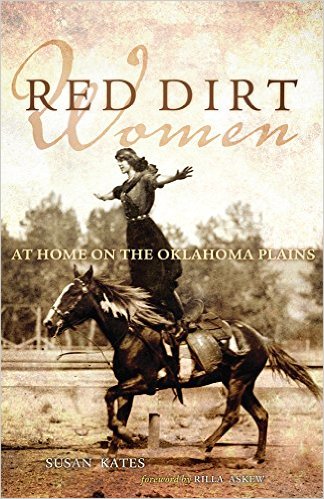
My first review for Concho River Review is of this slim collection of stories about Oklahoma’s diverse and powerful women. It is a fine and auspicious beginning book, and in that spirit, today’s book beginning:

In her chronicle of life in Kenya – one of the great grasslands of the world – Isak Dinesen explains that it is impossible to live any place for a time and remain unaltered by one’s surroundings. “It does not even make much difference,” she says, “whether you have more good or bad things to say of it, it draws your mind to it, by a mental law of gravitation.”

You know I am a little obsessed by a sense of place, and that is very much at the heart of this collection, as this Ohio native comes to feel at home on Oklahoma’s dusty plains. Good stuff. I am glad to be able to recommend this book to you. Happy weekend, friends.

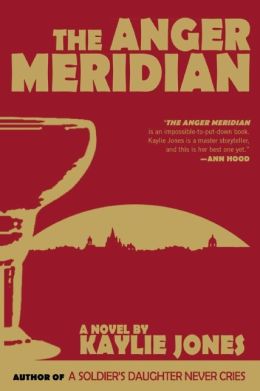
The Anger Meridian by Kaylie Jones

A newly widowed woman is forced to face her own secrets, in vibrant San Miguel de Allende.

anger meridian

Merryn is up late at night, awaiting and fearing her husband’s drunken homecoming, when she opens the door to find two policemen announcing that he has been killed in a car accident. She quickly bundles up their nine-year-old daughter, the precocious Tenney, and leaves Dallas, Tex., for her mother’s home in San Miguel de Allende, in central Mexico.

The rest of Kaylie Jones’s striking novel, The Anger Meridian, is set in San Miguel, where Merryn’s mother, Bibi, presides over an opulent home and her frightened daughter’s life. As Merryn struggles to navigate her husband’s legacy (the FBI has followed her to Mexico to investigate his business dealings) and her and Tenney’s future, she has the opportunity to confront many dishonesties, including her own. Lying is one of The Anger Meridian‘s central themes.

The tone of Jones’s writing quivers with tension from the opening page. Merryn is traumatized, anxious, grinds her teeth at night; she behaves like an abuse victim. But where does her damage come from? And whom should she–and the reader–trust? A handsome American expat doctor, a lawyer friend of the family, a local yoga teacher, the members of Bibi’s entourage and clever Tenney each offer different angles on Merryn’s life. In the end, there are several puzzles to untangle in this lovely, finely plotted novel, which highlights colorful San Miguel and the complexities of family, loyalty and honesty. The Anger Meridian is at once a suspenseful mystery and a superlatively gripping story of self-discovery.


This review originally ran as a *starred review* in the July 21, 2015 issue of Shelf Awareness for Readers. To subscribe, click here, and you’ll receive two issues per week of book reviews and other bookish fun!


Rating: 7 martinis.

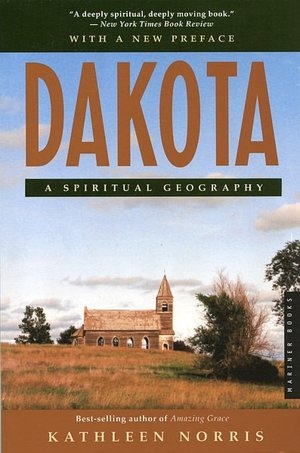
Dakota: A Spiritual Geography by Kathleen Norris

dakotaContinuing in my series of not-new-but-still-important creative nonfiction readings (see The Kiss and The Liars’ Club)… Kathleen Norris’s essay collection, Dakota, is brilliant. I see somewhat where it is dated, discussing for example economic depression and agricultural crisis – because, if anything, things are worse now. But her astute ideas and conclusions are brilliant and in many ways timeless.

You saw my teaser earlier this week, so you know I am impressed. Norris, a poet, of course writes beautifully; it’s worth reading her words for their language alone. But I was really drawn in by the ideas behind them. As her subtitle notes, she is concerned with spirituality and geography. As you might have noted by now about me, I am not attracted to spiritual musings, but I was won over by the geography (in so many senses) and the sense of place which is at the heart of this collection. And I found myself on board for a certain amount of spirituality as well.

My favorite parts of the book were those that characterize place: the physical, biological, climactic characteristics that make “Dakota,” the unique region of both western North and South Dakota that Norris calls home, as well as the cultural and human characteristics of this scarcely populated area. I love thinking about and learning what is definitive about place, in both those senses: the natural, physical, extra-human as well as the human, and the idea of their interconnectedness. (Dakota would doubtless look a little different without people – Las Vegas certainly would – but there is no possibility, I think, of people without place.)

“The Holy Use of Gossip” taught me how gossip can be a good thing, or rather, taught me to recognize as “gossip” (originating, according to the Oxford English Dictionary, from God + sibling) the talking about each other we do in my close group of friends: when we share with each other that one of us is having a bad day, has suffered a loss, needs our help. This is well-intentioned and positive sharing that I’m glad we do. “Gatsby on the Plains” explores how community can lift its members up, or cut itself off from help: Norris writes that

…disconnecting from change does not recapture the past. It loses the future.

Intermittent “Weather Reports” read like short, poetic journal entries of real, specific days, in between more formal essays. They are often not strictly reports on the weather, unless we expand our definitions of weather, which we may well be intended to do.

She writes a good bit about community, how it is formed and how it can be both good and bad for itself. Norris came (back) to Dakota as an adult: her grandparents were of that place, and when she inherited their home there, she and her husband moved in. She is both from there (because the communities knew her grandparents) and not (because she grew up elsewhere, and came in as a traveled, educated, artistic outsider), which made for some interesting challenges for her and her new neighbors. Her 2001 introduction to this edition of the 1993 book discusses her adopted community’s reaction to her work, her publicization of Dakota: in a word, there was both pride and anxiety, but the fact that she stuck around eventually earned her a more thorough local membership.

On the subject of community, I am intrigued by her repeated conflation of the desert, the plains, and even the ocean that once covered this region, with the monastery. She spends quite a few pages throughout comparing the sense of quiet, of great distances increasing mutual support, and contrasting some of the ways in which these communities work. For example, I appreciated the idea (in “Where I Am” – naturally one of my favorite essays) that the monastery is different from small plains towns in that the former has a formal text or rulebook that they agree to live by: in the case of Norris’s central example, Saint Benedict’s Rule, which guides Benedictine monasteries. The small towns often find conflict because they are not all working from one central, agreed upon set of rules or values or ethics.

As an artist, Norris finds that she benefits immensely from the immensity of space in the plains. And she’s got some great stories to tell about sharing art and poetry with her new communities.

I find that prairie people are receptive to a broad range of contemporary poetry, although they’d be unlikely to cross town to attend a poetry reading at a college, were there a college in the vicinity. Their appreciation of the poems I’ve read aloud – from a broad spectrum of contemporary American poets – has given me a new understanding of the communal role of poets, a role poets have mostly abandoned by closeting themselves in academia. Surprises await poets who venture out into the larger community.

I love this idea, that poets (and by extension, many formally educated or academic folks) have quarantined themselves with those like them, and are both failing to share what they have and – more so – failing to learn from others, by locking the doors to the ivory tower.

In a strange counterpoint to this sentiment, though, I found Norris occasionally off-puttingly snobbish about the reading of books: that more prairie people should do it, that they shouldn’t consider themselves well-educated or wise without doing it. Now, don’t get me wrong: clearly I love reading books and find a great deal of value in doing so, and I think books have a lot to offer everyone and everyone should read more. But I also think that people can be very intelligent, wise, and valuable without formal reading; I think that the same prescriptions don’t work for all of us, and I think it’s a shame if she’s found (for example) a great oral storytelling tradition and then laments the lack of book reading. It makes her sound snotty in a way that the rest of the book does not. I like her better than this.

I think it’s just a moment of weakness or misstep, though, because in fact she returns to this subject with more sensitivity in “Status: Or, Should Farmers Read Plato?”

I know as well as anyone that a lot of book learning doesn’t make a person wise (sometimes it simply legitimizes stupidity), but I can’t help but connect the fact that so many Dakotans have been denied access to their culture with the fact that they don’t trust that their own stories are worth much.

The fact of their inhibited access to their own culture and stories is perhaps the best argument for lack of book-reading as a major problem. And she goes on to contemplate what difference it makes to a pig farmer to miss out on Plato, and what Tolstoy and the Brontes can bring to a small-town waitress. I like the nuanced discussion there.

Dakota gets more and more spiritual in its subject matter as it progresses, so that I struggled more toward the end. Discussion of monastic retreats, and Norris’s relationship with the religious communities of Dakota, were often interesting to me; they are in some ways further discussion of community ideals, and I am more or less on board with the spirituality of nature, of relating to wind and sky and plant life. But occasionally there was too much God for my personal tastes. When I encounter the idea of monasteries, and other writers’ productive experiences there, I have found myself tempted sometimes to consider the same; but then I realize what I really need is to just go camping alone.

I found a lot to love and a lot to continue to consider here: about place, about inheritance, about storytelling and relating to one another, about community and about definitions of spirituality. I love Norris’s writing. Although I struggled here and there, or perhaps because I did, this beautiful and thought-provoking book will stay with me and, I think, continue to guide me.


Rating: 8 readings.

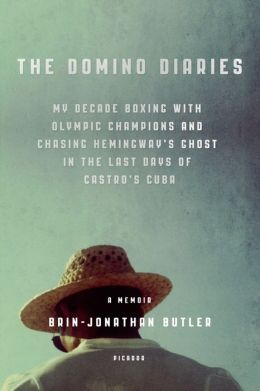
The Domino Diaries: My Decade Boxing with Olympic Champions and Chasing Hemingway’s Ghost in the Last Days of Castro’s Cuba by Brin-Jonathan Butler

An amateur boxer’s love affair with Cuba.

domino

Brin-Jonathan Butler first traveled to Cuba as a teenager, hoping “to find a boxing trainer and to meet the guy from The Old Man and the Sea.” He accomplished both goals and over the years that followed made repeated trips, seeking Cuban boxing, baseball and literary heroes, as well as the mysteries of the sequestered island. Eventually, Butler’s fixation on Cuba inspired a forthcoming documentary, Split Decision, about Cuban athletes’ difficult choices between staying and leaving. In The Domino Diaries, he confesses that the project was partly an excuse to stay, having become “homesick for a place [he] wasn’t born to.” His memoir further unravels the relationship he’s formed with this nation.

His escapades make for fine writing and include a tryst with Fidel Castro’s granddaughter and an interview with boxing legend Teófilo Stevenson that results in Butler’s being banned from Cuba. The Domino Diaries is a memoir of boxing heroes and political strife, a study of Castro’s legacies and Cuba’s “Special Period” of economic crisis, and an ode to the grace, joy and sadness of Cuban culture; it is also the personal story of Butler’s own traumas and his mother’s escape from Hungarian communist rule. These threads necessitate some meandering, but the resulting musing tone Butler employs is elegiac and quite effective. Rather than an exhaustive survey of the large and thorny topic of Cuba’s economy, politics and culture, Butler’s memoir is a rambling exploration, appealingly written in a distinctive voice and peppered with wisdoms phrased with lovely wit.


This review originally ran in the June 26, 2015 issue of Shelf Awareness for Readers. To subscribe, click here, and you’ll receive two issues per week of book reviews and other bookish fun!


Rating: 7 cigars.