Lost Antarctica: Adventures in a Disappearing Land by James McClintock

A warning about climate change wrapped in a tender package of stories about penguin chicks and fur seals.

Zoologist James McClintock has spent his career in the Antarctic, lovingly examining and meticulously documenting the wildlife, from the leopard seals and emperor penguins to the tiny sea butterflies and plankton, while recording changes in ocean conditions. Lost Antarctica collects a selection of his experiences: deep-sea diving, storms at sea, sightings of creatures large and small and other discoveries of tiny, crucial instances of evolutionary genius. Although he takes his time getting there, McClintock’s most important point is cautionary: Antarctica, he says, is an early warning for the rest of our world.

McClintock has observed climate change firsthand and can lend his firsthand knowledge to other studies that document and explain the crisis. He also addresses “the other CO2 problem”–the increasing levels of carbon dioxide in our oceans that lower the water’s pH levels. The combination of ocean acidification, rising temperatures and melting ice threatens many species and their delicate relationships with one another–and the consequences extend even further, as some organisms that live only in Antarctica have been shown to yield chemicals that can help fight cancer and influenza.

While Lost Antarctica is an alert about climate change and ocean acidification, it ends on a surprisingly hopeful note. McClintock’s message is reasoned and well documented–and his descriptions of a wondrous world of coral, starfish, sea sponges, fish, crabs, penguins and birds of prey make this important scientific message accessible to the general reader.


This review originally ran as a *starred review* in the Sept. 21, 2012 issue of Shelf Awareness for Readers. To subscribe, click here, and you’ll receive two issues per week of book reviews and other bookish fun!


Rating: 6 degrees Fahrenheit.

Einstein: His Life and Universe by Walter Isaacson (audio)

A.Word.A.Day recently sent me, among other valuable tidbits, a quotation that perfectly describes Einstein (thought I, being in the middle of his biography):

A harmless hilarity and a buoyant cheerfulness are not infrequent concomitants of genius; and we are never more deceived than when we mistake gravity for greatness, solemnity for science, and pomposity for erudition.– Charles Caleb Colton; Lacon: or Many Things in Few Words; Longmans; 1837. Quoted by A.Word.A.Day, August 31, 2012.

And here’s the poster child for that very thought: hilarity and cheerfulness (among other qualities) combined in one of the geniuses of the modern era.

Walter Isaacson is a well-respected biographer. (His other works include biographies of Kissinger, Ben Franklin, and most recently Steve Jobs.) This well-regarded biography of Einstein appears to be very well-researched and thorough, and I thought the audio narration by Edward Herrmann was well-done and well-suited.

What I liked best about this book was its characterization of Einstein, the charmingly rumpled, distracted, unique genius with the twinkling eyes and the mad wild hair who rode a bicycle. There were times I didn’t like Einstein, too: in the course of separating from and later divorcing his wife, he didn’t treat his two sons very well. It felt like he expected them to behave like little adults – or perhaps more accurately, he behaved like a child. He wasn’t entirely sweet to his wife, either, which is of course common in divorces but no less charming for that. But Isaacson’s portrayal of of Einstein’s mental style was lovely to read: how he thought in pictures, in objects in action, in “thought experiments” and not in words; the way his aversion to authority and accepted truths freed him to think such outlandish thoughts that he revolutionized science; these are the singularities that made Einstein Einstein, and that was an important lesson to take away. Also, it was fun to read the story of his life with the advantage of hindsight – that this is Einstein we’re talking about here – and see all the rejections and belittlings he underwent, and sort of chortle at the irony. (Correction of a well-known myth: Einstein did not, in fact, fail math. He did rather well. However, there was that teacher that said he would “never amount to much.” That part is true.)

I observe that my decision not to pursue a subject like theoretical physics was a very, very good decision. I can follow all sorts of things, grasp all sorts of concepts, but not this. My eyes glazed over within moments of the science-talk beginning (dangerous for driving). I positively cannot “get” Einstein, and I’m comfortable with that. But it made this book a little more difficult than I would have liked, because the book is rather science-heavy. I think there are different ways to do this job, of writing a biography of a scientific figure, or other science-based nonfiction. I think of Soundings or even The Immortal Life of Henrietta Lacks, both lovely narrative works about science and people that treated the people more heavily, and in more depth, than they did the science. The science was there, present (necessarily), and well explained, made accessible by explanation, but the people shown brighter. That worked for me. Here, in Einstein, it was Einstein himself that I was most interested in, and I liked it when his personality, his public image, his family dealings, etc. were at the forefront. Isaacson lost me entirely and quickly every time he wandered into physics and relativity. One way is not better or worse, but different; and it’s clear which style I prefer for my scientific nonfiction.

That said, the man played a starring role, and I believe Isaacson’s intention was to put in the science needed to place Einstein in context. I learned a lot about Einstein, I was entertained by his foibles and eccentricities (the not wearing of the socks! oh my), I was charmed. I was provoked to contemplate some of the troubling moments in world history that Einstein witnessed and participated in (Germany in the 1930’s, fascism, McCarthyism, the atom bomb, on and on). In a nutshell, Isaacson captures well the humanity of Einstein: his charm, his flaws, and his genius, all in one. This biography is moving, entertaining, and very informative. If you’re so inclined, you might even learn some physics from it. 🙂 I can see why Isaacson’s stock as a biographer is high, and I forgive him for baffling me here and there.


Rating: 7 quanta.

Soundings: The Story of the Remarkable Woman Who Mapped the Ocean Floor by Hali Felt

I’m so glad I picked this book up (and bought it for the library where I work). It sounded like just the sort of thing I appreciate: a biography of a little-known historical figure who made an important contribution to the world as we know it but was herself forgotten. In this case, the “remarkable woman” of the subtitle is Marie Tharp, whose meticulous study and cartography of the ocean floor established the concept of plate tectonics that science now recognizes as fact, but was at best a blasphemous and ridiculous notion before Tharp came along. Her achievements, however, were minimized by a scientific culture in which women did not belong. This biography is additionally appealing to me for its mood: author Hali Felt takes a whimsical, dreamy, almost fanciful tone at times. She describes her own attraction to Tharp’s story (born in part of Felt’s mother’s, and her own, fascination with maps) and the relationship she felt to her subject. She dreams of Tharp coming to her to explain the mysterious and unspoken parts of her life. This book is nonfiction, but it’s honest, personally related, and warm.

There is also an enigmatic love story of sorts hiding within Soundings: Tharp’s career and life were both tied to a man named Bruce Heezen. Heezen was her coworker, then her technical superior; but they shared a partnership in work, in science, in discovery, and apparently in all things. It is known that they were a couple, although they never married and the details of this side of their relationship are very few.

Felt follows Tharp from her childhood with a science-minded father she adored, through her education in English, music, geology, and mathematics, and to her first job in the oil & gas industry (oh, how familiar to this Texas girl). But she was held back: this was the 1940’s, and women in science were mostly expected to make copies, compute numbers, and brew coffee. Eventually Tharp found her way to New York, to Columbia University and the Lamont Geological Observatory. This is where she would meet and work with Heezen and quietly make history.

The science in this book is very friendly and accessible to a general reading public; the story that Felt set out to tell is more that of a woman’s life and accomplishments despite the limitations of her society, than that of tectonic plates per se. For that matter, Felt shows that it was Marie’s combined backgrounds in art as well as science that made her perfectly suited to play the role she did in history. Her meticulous re-checkings of data and attention to detail were indispensable – but so was her interest in visually representing the data available in a way that would show the general public (not just academics) what she’d discovered. So her achievement was artistic as well as scientific. Soundings does make the science side clear, but doesn’t dwell, and is never dry. Rather, Marie Tharp comes to life: she is a precocious child; an ambitious, able, frustrated student; a dedicated scientist; a life partner; an eccentric aging woman caught up in her own past, campaigning to honor and preserve the legacy of her other half.

Hali Felt was honest about the role she plays in the story she relates. She begins in her Introduction by briefly describing her own attraction to maps, and then follows a chronological format, beginning with Tharp’s childhood and following her life, and eventually her death. And then Felt returns to the story: her discovery of Marie Tharp’s existence, her interest, her decision to follow that interest, her research, her relationships with the living descendents of Tharp and Heezen’s world (the “Tharpophiles”), and in the Acknowledgements at the end, she even hints at the process by which she came to write and publish this book. I found all of these Felt-related details interesting too.

In a word, this is a lovely biography, and the style and tone of it may be my favorite part.


Rating: 9 double-checkings of data.

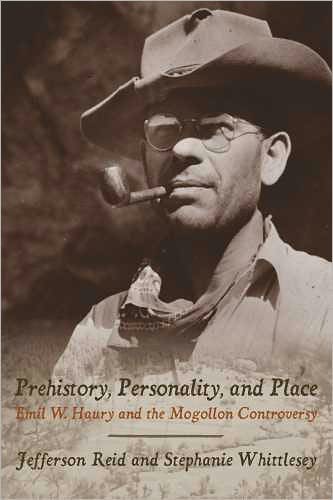
Prehistory, Personality, and Place by Jefferson Reid and Stephanie Whittlesey

I picked this book up on a recent trip to the Gila National Forest in New Mexico. We stopped by the visitor’s center for the Gila Cliff Dwellings, and it just caught my eye; what can I say? I think it was the subtitle, Emil W. Haury and the Mogollon Controversy. I casually find archaeology as intriguing as the next person does, although it’s never been a serious interest; but the idea (as expressed on the back cover) of a controversy over whether a people deserve to be recognized as unto themselves, with their own accomplishments and culture, definitely appealed to me.

First of all, I appreciated the Preface, wherein the authors explain their personal connection to Haury (a teacher and mentor), their interest in the Mongollon question, and what they intend with this book. This is not to be a biography of Haury, but his story coincides heavily with the one they will be telling. I like to hear from authors (of nonfiction, anyway) what they’re up to like this.

Reid & Whittlesey do a fine job of completing their stated task. After reading this short (~150 pages) but dense book, I feel fairly well-versed (you know, for an amateur) in the Mogollon controversy and the players involved. In a nutshell, Emil Haury was a young and gifted archeologist who, in the 1930’s, discovered artifacts in the southwest United States (Arizona and New Mexico) that did not fit into the contemporary understanding of the two cultures then known to have inhabited those parts: Anasazi and Hohokam. He postulated that he had discovered evidence of a distinct culture which he named after the mountains where he was working: Mogollon. The archeological community was immediately up in arms over a few key issues, namely, whether the Mogollon were indeed a distinct and different group, and whether they were as ancient as Haury believed. There was also some question of their eventual fate: were they assimilated into the Anasazi culture, or did they continue to exist as a morphed but still individual culture, past 1000 AD?

Haury would spend the rest of his life and career working to validate the existence, antiquity, and distinctiveness of the Mogollon, while also investigating other cultures (there is tangential reference to the apparently significant-in-its-own-right Hohokam controversy), establishing field schools, and teaching. He seems to have been a remarkable man. By the mid-1960’s, the controversy was all but entirely resolved, more or less in favor of Haury’s initial theories. There were other important players as well, of course, and we meet many of them on both sides of the controversy; but Reid & Whittlesey make an excellent argument for the strength of Haury’s personality and his academic authority playing a key role in the decades-long discussion. Which brings me back to the title of the book. This book is about the Mogollon controversy, yes, but it is also about the relationship between personality, place, and the study of archeology (or prehistory, or anthropology, or – I venture to extend the concept – the study of most social disciplines). Reid & Whittlesey demonstrate how Haury’s personality was a key player, and also how the places that formed and influenced him – his birthplace in the wide-open Kansas plains to the striking vistas of the southwest – played their own roles in the drama.

I found their arguments about personality and place convincing and appealing. The archeology, and the questions (and relatively few answers) about prehistoric peoples, were mildly interesting to me; but I was definitely more engrossed by the drama of academic minds in debate. That was the more accessible human-interest story, if you follow. I continue to have questions about that debate, in particular its partisan nature. it seemed to me that there were really two “schools” of thought, and they follow the lines of literal schools of study so remarkably that I felt sure this was not a coincidence. In other words, it struck me not as a difference of intellectual interpretations of data, but of two groups of people pitted against each other. The archeologists who had helped establish our understanding of the Anasazi were invested in keeping that culture supreme in prehistory; they resisted the idea that there may have been other players in the same (or earlier) time, like they were rooting for their own dog in the fight. It’s a shame to think that these men (they were mostly men) were inserting personal feelings and alliances into the study of science. But that’s humanity for you, I suppose. For the record, this understanding, of the personal rather than scientific nature of the controversy, is mine, and not the authors’.

I thought this was a well-executed and informative book, and I recommend it, but be aware: it’s a little dense and academic for the general audience. I understand that it was intended for the general public, and I do think it works (I had no prior expertise, certainly) but it took a little extra effort, so bear that in mind.

I’m glad I picked up a total unknown, and I enjoyed it.


For another general-audience book on antiquity & archeology, you might be interested in my review of Tutankhamen: The Search for an Egyptian King by Joyce Tyldesley.


Rating: 5 academic papers.

Teaser Tuesdays: Prehistory, Personality and Place: Emil W. Haury and the Mogollon Controversy by Jefferson Reid and Stephanie Whittlesey

Teaser Tuesdays is a weekly bookish meme, hosted by MizB of Should Be Reading. Anyone can play along! Just open your current read to a random page and share a few sentences. Be careful not to include spoilers!

I picked up this slim book on a whim, blind to its contents, but it seems to be going well! Here’s a quick what’s-it-about teaser for you:

The discoverer was Haury, surely the preeminent archaeologist of his day. The controversy was whether the Mogollon culture was a valid, distinctive cultural entity or simply a backwoods variant of the better-known Ancestral Pueblo, or Anasazi, culture.

So far, I like that the authors seem to be telling the story of the controversy (and Haury), without taking part in the debate themselves. This may change, of course.

What are you enjoying on this balmy Tuesday?

River in Ruin by Ray A. March

One American river’s well-researched journey from trickling stream to environmental disaster.


The Carmel River is barely a stream at its source, less than 40 miles long, and likely known only to the residents of its immediate surroundings. But it has a rich and telling history–from early Spanish explorers to its eventual place on the nonprofit environmental organization American Rivers’ top 10 list of Most Endangered Rivers in 1999. But the Carmel is especially important to journalist Ray March because he grew up nearby; with River in Ruin, he makes an excellent case for its story being an archetype of endangered rivers everywhere.

The paradise that is California’s Monterey Peninsula has attracted settlers since 1602, when Sebastian Vizcaino first discovered the Carmel River. Later, railroad magnates adopted the area as a site for profitable tourism, quickly followed by real estate speculators and the development of several small towns. The original Spanish mission and agriculture, followed by the later hotels, golf courses and townships all relied upon the Carmel for water, requiring the construction of dams and reservoirs and the flooding of idyllic valleys. Ecological implications abound: forest fires were exacerbated by a no-burn policy; the local steelhead population is nearly extinct. March details these and more consequences of local development while showing how the growth of the environmental movement nationwide has paralleled local awareness of the plight of the Carmel River and Monterey Peninsula. March’s treatment of the history, the politics and the personalities involved is heartfelt and personal; several times he consults diaries and includes individual stories (including his own), making the Carmel’s story resonate with his readers.


This review originally ran in the April 6, 2012 issue of Shelf Awareness for Readers. To subscribe, click here, and you’ll receive two issues per week of book reviews and other bookish fun!


Rating: 7 salmon.

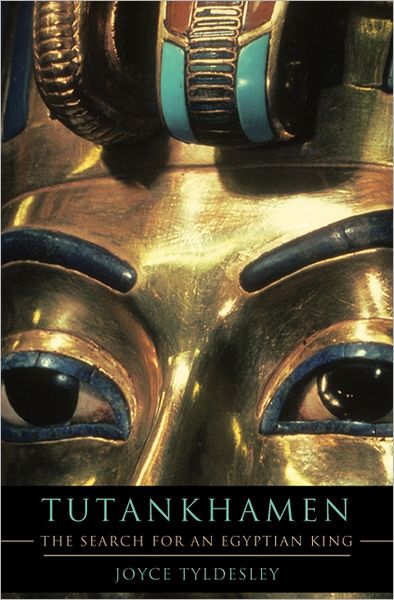
Tutankhamen: The Search for an Egyptian King by Joyce Tyldesley

A new biography of a very old figure still shrouded in mystery.


Joyce Tyldesley (Cleopatra: Last Queen of Egypt) takes on the life of King Tutankhamen, examining the many questions still surrounding his life and the archeology of his tomb, whose discovery in 1922 caused a wave of what Tyldesley calls “Tut-mania” across the Western world. As a king, Tutankhamen came to rule very young, yet managed to effect great change during his short reign–but was then removed from written records by his successors, an act with great consequence in ancient Egyptian theology. His tomb is unusual: relatively undisturbed, and as Tyldesley retraces, surrounded by mystery and myth.

The first, larger part of Tutankhamen is devoted to the archeological record and what it tells us about Tutankhamen and some of his relatives. Tyldesley discusses and critiques various theories (for example, regarding his biological parents) and acknowledges that little is known for certain. Next, she examines Tutankhamen’s legacy in our world–most notably, the rampant myths and legends about the curse on his tomb, which spread as quickly as the news of its discovery. Finally, for those interested in a clear storyline, she outlines her best approximation of Tutankhamen’s life story (while noting that it is only a well-educated theory).

Tutankhamen succeeds in making this ancient monarch accessible to the average reader. Beware of developing an appetite for Egyptology upon reading!


This review originally ran in the March 13, 2012 issue of Shelf Awareness for Readers. To subscribe, click here, and you’ll receive two issues per week of book reviews and other bookish fun!


Rating: 5 mummies.

Left Neglected by Lisa Genova (audio)

Left Neglected evoked strong reactions from me, which I think is always a recommendation.

Sarah Nickerson is in her late 30’s, happily married to Bob, with three children (Charlie, Lucy and Linus), and a successful career in a male-dominated hectic corporate world of 80-hour work weeks. She is accustomed to using every odd moment to send emails, make phone calls, or read up on work; she would be lost without her nanny Abby; a slight traffic delay costs her the chance to read to her daughter before bed. In other words, she likes her life, but it’s jam-packed-full with no room for error.

The error comes one rainy day on the freeway; a traffic accident leaves Sarah with a unique sort of brain injury called “left neglect.” She’s missing the left side of her consciousness of the world. She can’t find or use her left arm, her left hand, her left leg; she can’t see things or people on the left side of the room, her dinner plate, her world. She can’t conceive of left. Sarah wakes up in a hospital and has to laboriously relearn everything. Juggling international corporate intrigue with a staff of 1000’s is no longer her primary concern; she can’t even dress herself.

Sometimes post-accident Sarah’s whining and frustration with her condition annoyed me, and sometimes pre-accident Sarah irritated me with her material and work-related priorities. But overall, she was definitely a sympathetic character; and if I was sometimes mad at her, that only made our relationship stronger in the end. As in a real friendship, we had our ups and downs, and our bond increased through those trials.

I sometimes felt that Genova tried to maximize the angst. Sarah’s flashbacks to the childhood death of her brother Nate, and its repercussions for her present-day relationship with her mother, might have been pushing the psych-drama angle a little bit. But overall, it worked.

I was reminded of another book, My Stroke of Insight by Jill Bolte Taylor. I read that one pre-blog so no review here, but it touched me very deeply. Taylor’s book is nonfiction, and deals with a different brain injury; but the two are similar in that they describe a brain injury from the patient’s perspective, along with the recovery. I suffered a brain injury in a bicycle accident in 2007, and while I was lucky to suffer less severe injury than either of these protagonists, I still found myself identifying. My own recovery was fascinating to me and made me think about things I’d never considered before; when I read My Stroke of Insight a year or so later, it helped me look at my own experience and learn from it. Left Neglected held a similar self-referential interest for me. (To go even further out on a limb: I’m now doing physical therapy following my knee surgery, and trying to get back to mountain bike racing. The connection is vague and yet I can’t help but compare my frustrations to the fictional Sarah’s. Again, my injury is very minor by comparison. But the cycle of optimism and pessimism, frustration and success, crosses over.) All of this means that when Sarah gets annoying – failing to recognize how lucky she’s been; refusing to work hard with her therapists; wanting to give up and cry – I’m annoyed, and yet I understand, too.

The massive change in the way Sarah views her world – and not just in terms of right and left – may seem ambitious, even unrealistic, to some readers. This might be said too of Taylor’s change in philosophy in My Stroke of Insight. But in both cases it rang very true for me. I felt that I had traveled so far with the protagonists, both fictional and non, that I was right there with them at the end of their stories. Is my outlook unique? Possibly, but I doubt it. I think we’ve probably all had some life-changing experience (hopefully less painful than the ones detailed here) that allows us to get inside Sarah Nickerson’s head a little bit.

Maybe it’s odd that I’m drawing such a strong parallel between two books that are really rather different, but they both affected me strongly. In the end I give Left Neglected very high marks, and I’m interested in Genova’s earlier novel, Still Alice. For those who are curious, she does have credibility in this subject matter: she has a PhD in neuroscience. Check it out. And if/when you have/do, please let me know if this book touches you as it’s touched me. Here’s to being thankful for our health!

Teaser Tuesdays: Left Neglected by Lisa Genova

Teaser Tuesdays is a weekly bookish meme, hosted by MizB of Should Be Reading. Anyone can play along! Just open your current read to a random page and share a few sentences. Be careful not to include spoilers!

This is a smashing audiobook so far. The narrator is doing a terrific job with a terrific story; I’m riveted. Stay tuned for my review to come; I think I will be recommending Left Neglected. Here’s your teaser for the day:

Bob and I are in our master bedroom. I’m leaning against the sink, getting ready for bed. Bob is standing behind me, getting ready to drive back to Welmont. He’s also watching over my brushing, just like he did a few minutes ago with Charlie and Lucy.

Stick around, folks, I’ll be ready to review this one in just a few days. And what are you reading this week?

readalike: Henrietta Lacks and The Spirit Catches You

The Immortal Life of Henrietta Lacks, by Rebecca Skloot, and The Spirit Catches You and You Fall Down, by Anne Fadiman, read almost like partner volumes to me. These two nonfiction works share author/narrators who get involved in their subjects, spending a great deal of time with the families involved and forming personal bonds. Both Fadiman and Skloot are bothered by a sense of, if not wrongdoing, something having gone awry. The subject of both books is medicine, and the interaction of the institution of western medicine with a culture that doesn’t fully understand it. Humans are important. Ethics are involved, and there are no clear rights and wrongs – or perhaps it would be better to say it’s easy to see where we went wrong, but difficult to see what the right path would have been. Even the structure and tone of the two books are similar: to understand the subject at hand, we are often taken back a step or zoomed out, to a perspective where we can see the history or the culture’s role in a specific situation. The reader learns medicine, science, history without feeling lectured. I strongly recommend both.