Maximum Shelf: The Invention of Wings by Sue Monk Kidd

Maximum Shelf is the weekly Shelf Awareness feature focusing on an upcoming title we love and believe will be a great handselling opportunity for booksellers everywhere. The features are written by our editors and reviewers and the publisher has helped support the issue.

This review was published by Shelf Awareness on December 18, 2013.


invention of wings
The Invention of Wings opens in 1803, on Sarah Grimké’s 11th birthday. To mark the occasion, her mother gives her an unwanted birthday gift: the awkwardly beribboned 10-year-old Hetty Grimké–Sarah’s very own slave. Sarah is repulsed and tries to free Hetty that very night with a document she draws up herself, but it isn’t that easy for the child of one of Charleston, S.C.’s first families. The two girls grow into womanhood bound together but separated by the chasm of their very different circumstances.

Sue Monk Kidd, author of The Secret Life of Bees and co-author of Traveling with Pomegranates, chooses to tell this story in first person and to alternate between the voices of Hetty and Sarah–one of many masterful choices that make The Invention of Wings a remarkable read. The name “Hetty” was given by her owners; Hetty is called Handful by her mother, Charlotte, to whom she is devoted. One of the novel’s richest characters, Charlotte tells her daughter only parts of her own past: stories of Handful’s father, who never saw his daughter’s face, and of Charlotte’s own mother, who was brought to Charleston and slavery from Africa when she was a small girl. Charlotte teaches Handful to sew, to make very fine clothes and quilts. This artistry earns them both a relatively privileged place in the household and, importantly, provides a means of recording stories among slaves, for whom literacy was illegal. Charlotte sews her daughter a story quilt, appliqueing squares that tell of her life’s greatest events. This rich storytelling tradition is described in Handful’s passionate voice, which both contrasts with and matches Sarah’s, also passionate, as she experiences limitations of a different sort. An intelligent child encouraged by a father and brother to read books, she harbors dreams of becoming a barrister, which are inevitably dashed against Charleston’s expectations of a young lady. Her inclination to teach slave children to read is likewise reviled, although she succeeds in secret with Handful. Over the years, the two girls share confidences across a wary divide, but guilt and resentment present obstacles to their friendship.

When the girls are still very young, Charlotte extracts a promise from Sarah: that she will free Handful one day. This promise haunts Sarah, who will eventually journey north to escape her stifling family and the peculiar institution she despises. She meets a Quaker man, whose own peculiar religion at first repels her but comes to fascinate and draw her in; this new alliance shapes Sarah’s more independent adult life, and distances her from Handful, who necessarily remains in Charleston. Along with her indubitable younger sister, Nina, Sarah will finally become a renowned (and infamous) activist for abolition and women’s rights. Overcoming a speech impediment that is a literal portrayal of her difficulty articulating her desires, she will slowly, painfully create the independent existence she has always craved. Handful’s fate will, of course, be rather different.

The Invention of Wings is a novel based on fact: the Grimké sisters were real-life abolitionists, and are joined in the historical record by a number of other characters in this novel, including Denmark Vesey, a free black man executed for planning a slave uprising; Lucretia Mott, a Quaker activist for women’s rights and abolition; and Sarah Mapps Douglass, a free black activist and educator. Hetty Grimké, however, left tantalizingly scarce facts: she was given as a gift to Sarah, but disappears shortly thereafter from the historical record. And Charlotte is entirely Kidd’s creation, an intriguing and complex character who tempts the worst of slavery’s brutalities in her search for something better for herself and her family.

Sue Monk Kidd portrays the parallel lives of her two protagonists in sensitive and touching sketches. Readers of her earlier work will recognize strong, sympathetic characters and deft use of nuance. The heart-wrenching nature of Sarah and Handful’s stories lies in the complexity of their relationship: they tend toward friendship, but Sarah’s guilt and Handful’s natural resentment–as when Sarah claims to know how she feels–may prove too wide a gap to bridge. And slave traditions such as the story quilt add a layer of detail informed by Kidd’s extensive research, as well as an emotional depth for Handful and Charlotte.

The Invention of Wings ambitiously tackles a swath of issues, including feminism, abolition, religion, activism and relationships between races and genders. This subject matter might be heavy under another hand, but the historical record of Sarah Grimké’s remarkable life and Kidd’s strengths in narrative and in rendering relationships make for a story that is both thought-provoking and engrossing. Strong female characters, solid roots in history, and the compelling lives of two women the reader deeply cares about make The Invention of Wings a thoughtful, moving tale that ends on a hopeful note.


Rating: 7 squares.

The Invention of Wings was just chosen as Oprah’s new Book Club 2.0 pick. Kidd commented: “I’m thrilled and honored that Oprah Winfrey chose my novel as her new book club selection. After researching and writing The Invention of Wings for the past four years, I can’t tell you how exciting it is to launch the novel with Oprah’s Book Club 2.0.”

Come back tomorrow for my interview with Sue!

The Black Count by Tom Reiss

blackcountThis poor book got picked up and put down repeatedly as I dealt with other reading deadlines. It took me two and a half months to read! But I kept coming back. The Black Count came recommended by The World’s Strongest Librarian, and I bought it at Elliot Bay Books in Seattle when I got to finally meet in person my awesome editor at Shelf Awareness, Marilyn. So good vibrations unite in this read.

The “black count” is the father of Alexandre Dumas, author of The Three Musketeers and The Count of Monte Cristo. Much of Dumas’s work, it seems, was based on his father’s life and unique and outlandish experiences. I had not known that; I suspect many readers don’t. Tom Reiss’s work is a biography of Alex Dumas (the father: I will call him Dumas throughout), with an eye to the legacy expressed by the novelist (son: I will call him the novelist), and some background on the French Revolution. Napoleon figures rather heavily in Dumas’s later story and military career.

Dumas was born in Saint-Domingue, which is modern day Haiti, to a black slave mother and a white French father. His father went back and forth somewhat on Dumas’s place in the world, at one point selling his son into slavery but eventually giving him a good education, fancy clothes, and place in French society. He is a physical prodigy early on, adept at horseback riding and fencing, and his military career is illustrious from the beginning. Dumas is an ardent republican, enthusiastic about the revolution, not least because – and here I learned something I probably should have known – the French Revolution was decidedly liberal on its attitude towards black citizens, giving them near-equal or equal rights, privileges and access – at least for a time. Slavery was abolished in France, although the extent to which abolition applied to the colonies varied. And unfortunately, this egalitarianism was short-lived.

The dark-skinned soldier worked his way remarkably quickly up to general of a division, and gave admirable performances in actual hand-to-hand combat: something, then as now, that high-ranking officers often avoid. His feats are literally the stuff of legend, and those military stories are some of Reiss’s stronger moments, naturally. If history is to be believed, Dumas was absolutely worthy of the tales that his novelist son would spin. [Is history to be believed? Reiss did his own research and looked at all the ancient scraps of paper from the time; accounts tend not to vary; the case looks good. But from this historical distance, I think there must always be a question.]

Dumas married for love and had three children, the first of whom died in childhood. His star was rising when Napoleon came to power. Napoleon is the villain of this story, as he is encapsulated in the villain of The Count of Monte Cristo: he rolled back and reversed the Revolution’s racial equity advances, and considered Dumas a formidable rival, apparently because of Dumas’s great accomplishments; the latter seems to have done nothing actually wrong. Dumas is taken as a prisoner of war in Italy and has a miserable time there, which again plays into The Count of Monte Cristo. (Look for enjoyable, comical descriptions of Dumas’s highly formal correspondence with one of his jailers.) It does not appear that Napoleon is actually to blame for this period in Dumas’s life, although possibly he could have done more to get him freed sooner. Following his POW imprisonment, Dumas’s health never recovers; he loses his commission under Napoleon’s racist regime; and he dies when his youngest child, the novelist, is only four years old. The novelist’s glorified view of the father he remembers as Herculean will never be moderated.

As a historian, Reiss is perhaps a bit credulous of Dumas’s perfection. In a description of the soldier’s last hours, there is a priest called, which the novelist is careful to point out could not have been for confession, as his father had never committed even a single regrettable act in his lifetime. This seems like too extreme a statement to stand unquestioned – haven’t we all done something regrettable? …Especially those of us whose career was based on killing people? Dumas had a reputation for humane victory and protection of the defeated from looting, which is admirable. But I have a little trouble stomaching this unqualified hero-worship.

Reiss also unfortunately descends into dryness rather regularly. I several times considered giving up the book; but then I’d give it another go and eventually be mesmerized again by the narrative. He’s at his best when he lets his own story, of researching the book, creep onto the page; or lacking that, when he lets a primary source or Dumas-the-novelist pen a few lines. I should also note that my very slow, stop/start method of reading this book (almost unheard of for me) almost certainly made the story move a little more slowly and more disjointedly. I regret that, and it might have gone a little better otherwise. But I think it’s worth stating that things can get a little slow in the middle. Also, Reiss is happy to go quite a few pages without telling us who one of his characters is, and expect us to remember him. Again, better if you read it all straight through quickly. If you aren’t doing it that way, beware this small problem.

All in all, though, I did find myself motivated to finish the book, and I was rewarded. The Black Count is a good primer on the French Revolution and on Napoleon as well, and the sections that portray exploits in battle are lively. Readers looking for a great deal of insight into Dumas-the-novelist’s work will be at least a little disappointed; but I am definitely putting this book down with a renewed interest in rereading The Count of Monte Cristo, which I loved in high school.

A little dry in the middle, but a mostly-accessible history of the French Revolution and one of its forgotten heroes, with a nod to a very fine novelist who adored his father.


Rating: 5 trees of liberty.

Go Tell It on the Mountain by James Baldwin (audio)

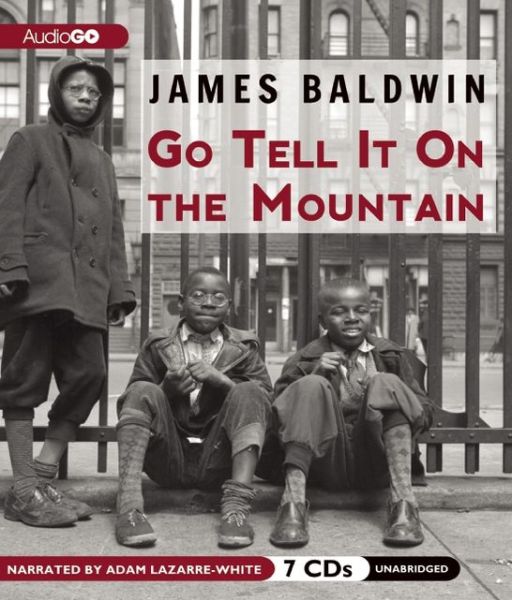
go tell itI come away with the impression that this book had a large, sweeping scope. It is on the surface the story of John Grimes, and takes place in the present over the course of just a day or three, on and around his 14th birthday. His father Gabriel is a deacon in a black church in New York City in the 1950’s, and appears very pious, but beats his wife and children; as his sins add up from there, he comes clear as a hypocrite. The story begins and ends with John and focuses on his relationship with the church or with God; the first and last lines of the book are concerned with his eternal salvation. But in between, we ramble in space and time, and get to know Gabriel in his youth in the South; John’s mother Elizabeth in her youth in the South and in New York City; Gabriel’s sister Florence, who introduced him to Elizabeth; and a surprise character I’ll leave unnamed here. As such, although John is the focus that bookends all the action, this turns out really to be the story of a family and even of a shared experience. I was glad to have the background I gained by reading The Warmth of Other Suns, because like that work of nonfiction, Go Tell It on the Mountain is the story of black Americans moving north in the mid-20th century. It’s concerned with black society’s relationship with the church, and family patterns, and race relations. And it’s for these focuses that I call it “sweeping.”

John is a likeable character in that he feels like a real boy of that age, and my heart goes out to him for the challenges he faces: an overbearing and violent father with the significant authority of the black church in Harlem behind him is no small thing, and the question of his immortal soul and eternal salvation is weighty as well. Clearly I bypassed some of the weight of the religious question, not being able to sympathize with those parts, but I did appreciate the atmospheric nature of the church and the power of that institution in John’s society and in his family life.

Baldwin’s writing is undeniably lovely. I feel a little inadequate because I’m afraid I missed some of the depth of this story, mainly in the religious vein. But what I got, I appreciated, and part of that in this case meant just letting the language flow over me. The narration by Adam Lazarre-White is powerful, dynamic, and dramatic to the right extent; the phrasing feels accurately portrayed, and the cadence of the prayers is well executed and adds a lot to the feel of the story. Full marks for audio performance, and having such a fine narrator read such beautiful words was a grand experience.


Rating: 7 calls to the alter.

Teaser Tuesdays: Go Tell It on the Mountain by James Baldwin

Teaser Tuesdays is a weekly bookish meme, hosted by MizB of Should Be Reading. The idea is to open your current read to a random page and share a few sentences. And try not to include spoilers!

go tell it

I just couldn’t pass up the opportunity to share this passage with you.

He left Fifth Avenue and walked west towards the movie houses. Here on 42nd Street it was less elegant but no less strange. He loved this street, not for the people or the shops but for the stone lions that guarded the great main building of the Public Library, a building filled with books and unimaginably vast, and which he had never yet dared to enter. He might, he knew, for he was a member of the branch in Harlem and was entitled to take books from any library in the city. But he had never gone in because the building was so big that it must be full of corridors and marble steps, in the maze of which he would be lost and never find the book he wanted. And then everyone, all the white people inside, would know that he was not used to great buildings, or to many books, and they would look at him with pity. He would enter on another day, when he had read all the books uptown, an achievement that would, he felt, lend him the poise to enter any building in the world.

Libraries; books; the intimidation of buildings, books, and the grandeur of the New York Public Library; and the power available to a young man who could read all the books uptown. Lovely, and moving.

book beginnings on Friday: Go Tell It On the Mountain by James Baldwin

Thanks to Rose City Reader for hosting this meme. To participate, share the first line or two of the book you are currently reading and, if you feel so moved, let us know what your first impressions were based on that first line.

go tell it

I had a heck of a time getting this electronic audiobook from my local public library onto my iPod, but I have succeeded and thus well earned this listen. I started off with James Baldwin’s Notes of a Native Son, which I enjoyed; but it made me want to go back to the beginning of his work, and Go Tell It On the Mountain is his most famous novel, so here we are. It begins:

Everyone had always said that John would be a preacher when he grew up, just like his father. It had been said so often that John, without ever thinking about it, had come to believe it himself.

I think these are strong starting lines. They tell us who our protagonist is; they tell us his family background, and they both name an expected fate for John, and imply that this expectation will not be fulfilled. It also bears noting that on the first page, there is also reference to John’s father fondling one of his daughters, implying that this preacher is not as virtuous as we’d expect. It’s a very casual mention, downplaying the import of this fact. To me, this says that the family doesn’t think much about it; or maybe they don’t know yet. At any rate, it’s disconcerting to have molestation treated so lightly, and I think Baldwin makes a real impact by introducing such disturbing information so off-handedly.

Please note that I have only just begun this book, so I don’t know yet if my interpretations here are correct! Stay tuned…

Ramblers: Loyola Chicago 1963: The Team that Changed the Color of College Basketball by Michael Lenehan

A dynamic, emotional study of one college basketball team’s role in the civil rights movement.

ramblers
Michael Lenehan’s Ramblers chooses one college basketball team, and one season, to illustrate a sea change in the sport–and in the United States. The Loyola Chicago team of 1963 was not the first to send black and white players out on the court together, but Lenehan makes an excellent case for the significance of this particular team’s actions at a key moment in the national struggle for civil rights. He examines their competition over the course of the season, focusing on two teams in particular: Mississippi State, whose players had to sneak out of state due to a ban on playing teams with nonwhite members, and Cincinnati, which was also an integrated team, but one with an increasingly antiquated playing style.

Relying on primary sources and interviews to study a handful of individual players, coaches and administrators, Ramblers passionately evokes the beauty of a great game in a time of great change, and works as a metaphor for changes taking place across the nation as well. Lenehan handles the game with an ease and comfort that indicate his expertise, and Ramblers combines his passion for basketball with an intimately detailed history–including a deeply moving digression into the 1962 riots at Oxford, Miss. Lenehan eventually follows each of his subjects through to the present (or the ends of their lives), giving Ramblers a feeling of completeness. Throughout, he maintains a sense of fun appropriate to a book that’s ultimately about the antics of college kids.


This review originally ran as a *starred review* in the March 19, 2013 issue of Shelf Awareness for Readers. To subscribe, click here, and you’ll receive two issues per week of book reviews and other bookish fun!


Rating: 7 fast breaks.

Speaking Truth to Power by Anita Hill, second half review

anitahillI am pleased to report that I had a different experience with the second half of this book, in all the right ways. You will recall (or, I will direct you to) my first half review of same: I thought it was a wonderful book but such a painful story that I had to put it down for a little while. Well, in a nutshell, the second half is: still painful, tragic, and true, but also uplifting, far more hopeful than I expected; and equally well-written and impressive. I wholeheartedly recommend it.

Anita Hill continues to be thoughtful and thorough – I definitely see the mind of a lawyer at work, as she discusses the what-if’s, the precedents, the niceties of the law. She is quite cerebral in her theories on society and stereotyping; far from being a simple revelation of her experiences, this is a treatise on gender & race. She examines the relationship between issues of gender and of race, and the indivisibility of feminism from the fight for racial equality, and the relationships between race and sexism. Hill is clearly an extremely intelligent women! She is also warm and loving about her family, and always seeking privacy, not eager to be a symbol or a leader. In other words, she comes firmly across as a “just regular” person, and someone I’d like to know.

Her story is also entirely convincing. It is beautifully put together and well-written: not lyrical, but methodical, structured, can I say thorough and lawyerly again? And she preaches more hope than I felt in my first-half review. However, the battle is still not over, and I still feel upset & angry that Hill’s experience reads so familiarly more than 20 years later. On that note, I’ll refer you to Jessica Valenti’s lovely speech to my local Planned Parenthood group, here. Well said, Jessica. You give me hope, too.


Rating: 9 strong women, please.

Speaking Truth to Power by Anita Hill, first half review

anitahillFor reasons I’ll discuss below, I have had to put this book down at about the halfway point, through no fault of Anita Hill’s absorbing story or lovely, clear, honest writing. This first review will be more about my emotional reactions and reason for pausing in my reading; soon I will publish my second-half-review which will be more about the book itself. Briefly, for the record, it’s a great book.

Anita Hill was a young black female lawyer from the south in the early 1980’s, when she found herself employed as an assistant to Clarence Thomas, then an aspiring government official looking for an appointment under President Bush (Senior). She was largely successful in leaving behind her unpleasant experiences in his employment as she moved onto other lines of work, teaching law back in her home state of Oklahoma, where she could be closer to her family and further from the nasty environment Thomas created for her in Washington, D.C. When Thomas was nominated to the Supreme Court in 1991, however, she reconsidered her silence on his sexual harassment, and ended up traveling to D.C. to testify at his confirmation hearing as to his behavior nearly 10 years earlier. She was excoriated for her decision and her actions; every piece of her life, her morals, her “virtue” were picked apart. This book is her attempt to set the record straight.

Most Americans know the name Anita Hill, in my (limited) survey. When I mentioned this book, a coworker spoke of having horrible, vivid dreams, set in the Senate, as the hearings went on; she sympathized with Hill’s unfortunate position. I am young enough that I don’t remember these events (I was 9 in 1991 and not paying much attention to sexual harassment and Supreme Court nominations, for which I suppose I’m glad); it’s history to me. However, the name Anita Hill did mean something to me, and it means much more now.

I am reading this book because my father raved about it and felt it was important reading for me, which I easily believed. And it’s a lovely book. But it so happens that I picked it up during a time when my personal life was in upheaval in a few ways. I don’t want to share too many personal details here (I’d rather get personal when the news is good!) but it involved my loved ones being spread around the globe dealing with various trauma, and I was distracted, worried, and depressed. And unfortunately, one of the central truths of Hill’s book, based on events in 1982 and 1991 and published in 1997, holds true today: that most women will be sexually harassed; that most will choose not to accuse their harassers; and that few harassers are sanctioned. Again, without revealing too much of my personal story, I know this firsthand. And reading about Hill’s experiences, both being harassed by Thomas, and then being harassed by her national media and political representatives, was entirely too painful to me. I felt physically sick to my stomach reading it, and I had to put it down.

I still agree with my father’s statements that this is a very good book, and that it’s an important book for me to read. I look forward to picking it back up – as I write this, personal-life issues are mostly resolved, and (thank goodness!) Husband is home here with me. Hill writes like a lawyer: she makes statements of what she knows to be true, and is careful to note where she speculates, while providing evidence to support her speculations. She speaks strongly where she is sure that she is right; and (as one would expect) she has a very sure and confident grasp of legal issues in their minutia, and is capable of making those legal details understandable to her reader. I also really enjoy her gentle, loving treatment of her family history; that background adds to her story immeasurably.

I wanted to give you this first-half-review of this book where I’ve paused in my reading of it, to note the painful emotional impact it’s had on me. Make no mistake, it’s a fine book and I will finish it and tell you more very soon. But for now, know that this story is rather excruciating.


Rating: 8 brave public statements.

Team of Rivals by Doris Kearns Goodwin (audio)

teamofrivalsMostly I read books first and then (maybe) watch the movie, later. This time I did it backwards: I recently saw the new movie Lincoln (with Daniel Day Lewis), and then began listening to this book on audio, on which the movie was based. Not that there’s any shortage of Lincoln histories out there; but this is the one Spielberg turned into film. So please forgive me if this review is a little heavy on comparisons to the movie…

Beginning with which, the movie begins on the eve of the battle to ratify the 13th amendment, but the book starts much earlier, with Lincoln struggling to get the Republican Party’s nomination for presidential candidate. We follow Lincoln through his nomination, his campaign, and the setting up of his cabinet. The title of the book, appropriately, describes its subject: not Lincoln himself so much (as in the movie), but his skillful political alignment of his rivals for the Republican nomination in his cabinet. We get to know these other characters much better in the book than we did in the movie (which was also appropriately titled. Its focus was different). As this book effectively communicates, one of Lincoln’s political strengths was in placing his rivals where their strong points could best play to his administration’s advantage, and where their animosity toward him could best be neutralized.

Just as with the movie, I worried a little about an overly patriotic, positive portrayal of Lincoln. As in the movie, he is depicted as being strongly concerned about the black man or woman’s natural right to liberty; and while this is a sentiment we applaud today, I am afraid it was not at the center of the Civil War or Lincoln’s personal priorities. In other words, it’s something we love to think about our lauded 16th president today, but it’s not entirely historically accurate. Along these lines, I noted repeatedly that Goodwin uses rather many superlatives, which decreased my confidence in her neutrality slightly.

These concerns aside, I enjoyed the story. Not only Lincoln and his wife and children, but the characters (along with their families) of Bates, Chase, and Seward are evoked, and it made this critical moment in my nation’s history come alive. It was an absolutely entertaining story to listen to; and Goodwin’s great reputation (she has a Pulitzer to her name) and the reasoned pace & structure give me confidence that this is a responsible piece of historical writing… but I still felt that there was some positive slant, as above.

The audio narration by Richard Thomas was everything it should have been. This is a fine book, very readable, which makes Lincoln’s White House history accessible and makes the story come alive. But it might not be hard-edged journalism, for what that’s worth.


Rating: 6 machinations.

book beginnings on Friday: Team of Rivals by Doris Kearns Goodwin

Thanks to Rose City Reader for hosting this meme. To participate, share the first line or two of the book you are currently reading and, if you feel so moved, let us know what your first impressions were based on that first line.

teamofrivals

After recently seeing the movie Lincoln, I have been ready to finally listen to this book, upon which the movie was based. It begins:

On May 18, 1860, the day when the Republican Party would nominate its candidate for president, Abraham Lincoln was up early. As he climbed the stairs to his plainly furnished law office on the west side of the public square in Springfield, Illinois, breakfast was being served at the 130-room Chenery House on Fourth Street.

Simple enough, yes, but I think this is an example of slipping details and impressions upon the reader in what reads like a straightforward few sentences. Picture a man who’s up early on this day: is he nervous? That would be understandable. His office is plainly furnished, and they’re serving breakfast elsewhere. He’s a man of the people rather than an aristocrat, perhaps.

I’m excited about this read. I will say that Goodwin uses rather many superlatives, so far, and there’s a danger, when someone is portrayed as being masterful, expert, the most and the best, of wearing me out a little. But I’ll wait and see. It’s easy to get excited about Abraham Lincoln, of course.

That’s my new read – and what are you reading this weekend?