movie: The Pieces I Am (2019)

Transcendent, not that I’m surprised.

This documentary of the life of Toni Morrison was released shortly before her death, which has helped it make an even bigger splash, although it was doing fine anyway. My dear friend Liz told me I needed to see it, which pushed me further (I was already interested). I was so glad to get a chance to see it locally at a micro-theatre here in Buckhannon, West Virginia.

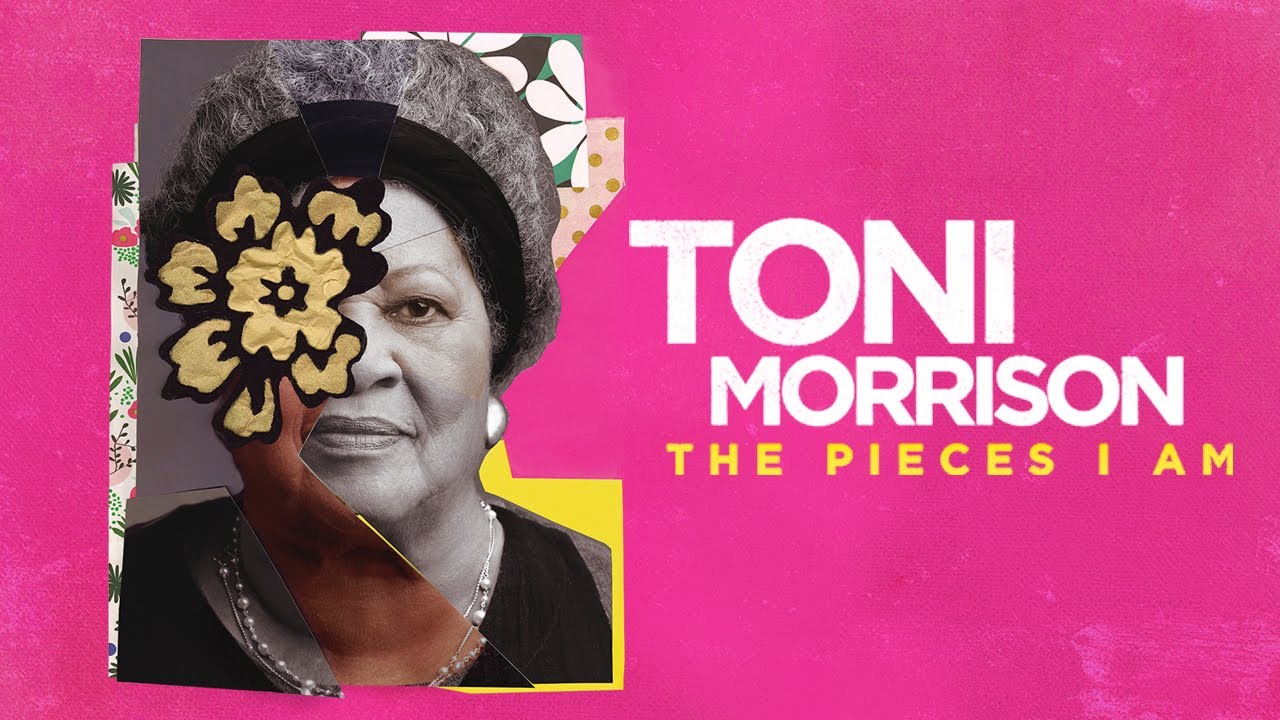
For starters, check out that image above. The collage of Toni’s face is built up in an opening sequence that shows many faces of Toni Morrison as she ages, and as a portrayal of the creative process I found it moving and thought-provoking. The rest of the movie followed suit. I loved that they mostly let Toni speak for herself. A “present” Toni sits against a blank backdrop and speaks directly into the camera throughout the film. She is dressed in black, white, and gray, highlighting her beautiful gray hair. She speaks with humor and wisdom, and as she talks, we see images and film clips from her life. Friends and contemporaries including celebrities (Angela Davis, Oprah Winfrey), other artists (Sonia Sanchez, Walter Mosley), and college professors (Farah Griffin, David Carrasco) also speak to the camera; a voiceover reads from a few articles, like nasty racist criticisms of Morrison’s early work. But mostly it is Toni’s own voice that tells of her life, from the melting-pot steel town on Lake Erie where she was raised (Lorain, Ohio) to Howard University to Cornell, to teaching, marriage and divorce, raising two boys, and her influential career as an editor at Random House… and of course writing 11 world-changing novels in 45 years, along with children’s books, short fiction, drama, nonfiction, and an introduction to The Oxford Mark Twain‘s edition of The Adventures of Huckleberry Finn that I’d love to see.

The impression of Toni Morrison that I take away from this film is an entirely take-no-shit, strong woman who we might describe as brave, but I think her own view would be that she was not so much a brave woman as just doing what needed to be done, and what was right, without thinking twice about it. Of course that is brave, but it seems to have just come so naturally to her.

It was nice to see her celebrated not only as an earth-shatteringly talented, singular artist, but also as an incisive, gifted editor, who dragged Angela Davis’s memoir out of her and put Muhammad Ali in his place during the editing of his. I enjoyed the story of her Nobel Prize and the delightful party she so enjoyed in Sweden. In short, I found a rich and rounder portrait here than I think I’d seen of Toni before now.

Although I knew it before, I feel again what a loss we suffered this year when she died, and I feel how lucky we are to have her work in the world. I’m so glad I saw this movie. Don’t miss it. There are lots of ways to watch at home, so you’ve no excuse.


Rating: 9 dolls.

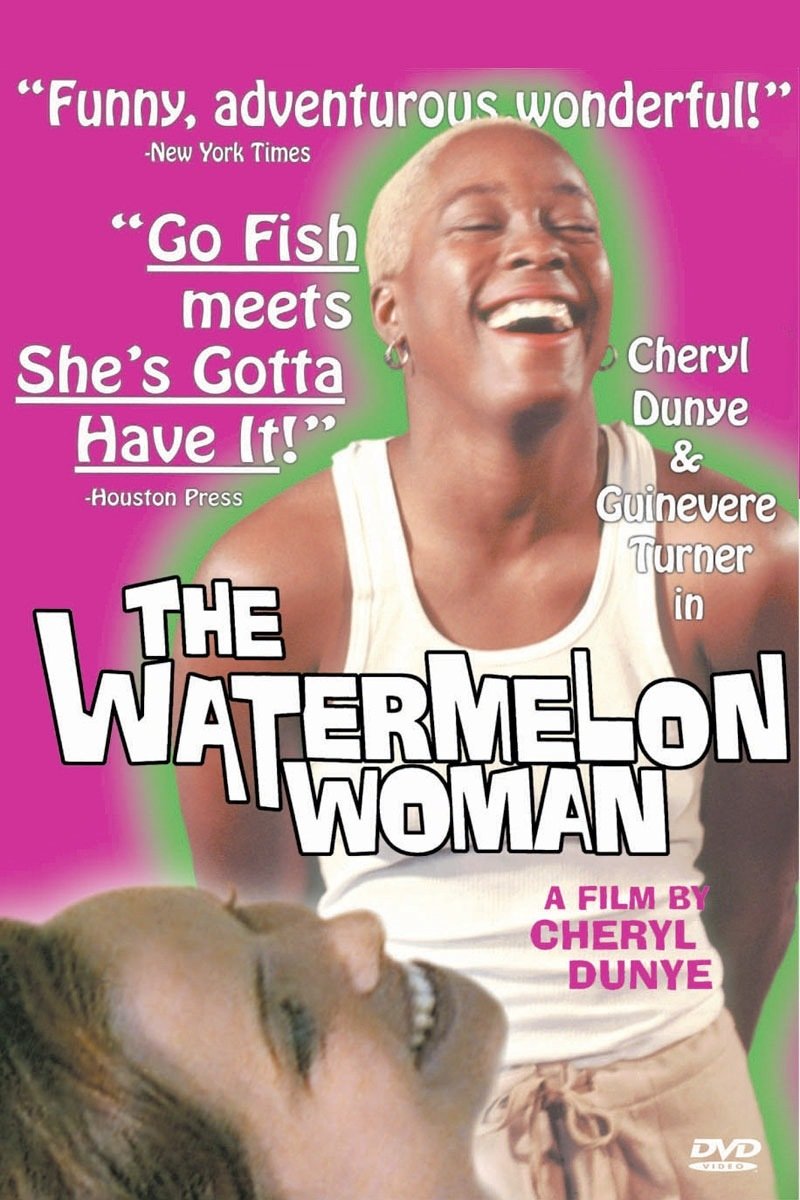
movie: The Watermelon Woman (1997)

This 1997 film is an autobiographical mock-umentary in which filmmaker Cheryl Dunye stars as “Cheryl,” more or less herself: a young Black lesbian working in a video store with her buddy Tamara, and working as well on a film project which documents her research into the identity of a historic Black female actor known in credits only as “the Watermelon Woman.” This actor played the “mammy” or kitchen/maid/”help” roles that were most of the available work for Black women of her time, the 1930s. Cheryl learns that this woman luckily lived in Philadelphia, where Cheryl also lives; she finds people who knew her; the research goes fairly well. At the same time, Cheryl meets and begins a romance with Diana – who is white, which causes friction with Tamara. Two plotlines, then: finding the Watermelon Woman, and navigating romance and relationships across race lines.

On the one hand, as some testy reviewers have pointed out, the script can be a little stilted, and the acting falters; a few lines are fumbled, and I wish they’d reshot those scenes. The research plotline, in particular, is overly simplistic: two friends drive from Philly to New York to get into a special lesbian archive (acronym C.L.I.T.) and are in and out in five minutes! The research is too easy, too quick. But, it’s all in service of a message, right? The film is all-around dated – but it’s over 20 years old, so, fair enough. Those reviewers who criticized jumpy camerawork just missed the message, though: it’s presented as hand-shot by relative amateurs, you guys. Remember Blair Witch Project?

On the other hand, this project is sweet, heartfelt, and in pursuit of the kinds of social work I’m absolutely behind. It was funny, and earnest. I kind of loved it.

Just before closing credits, the screen reads: “Sometimes you have to create your own history. The Watermelon Woman is fiction. Cheryl Dunye, 1996.” IMDB quotes her further: “The Watermelon Woman came from the real lack of any information about the lesbian and film history of African-American women. Since it wasn’t happening, I invented it.” In other words, the outlines of this story may well be true, but in the absence of even a sketchy “watermelon woman” to investigate, Dunye has allowed a fictional one to stand in for those lost to history. I dig this way of dealing with absence.

Poo-poo to the crabby critics. An imperfect but fine film.


Rating: 6 photographs.

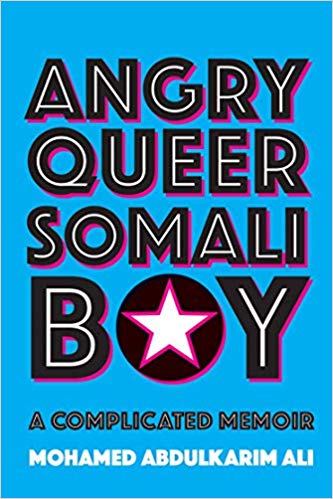
Angry Queer Somali Boy: A Complicated Memoir by Mohamed Abdulkarim Ali

An angry queer Somali boy navigates race, family and sexual discovery in a series of countries before writing this startling, incisive memoir of pain and resilience.

Mohamed Abdulkarim Ali was born in Mogadishu, Somalia, in the mid-1980s; he was stolen away from his home at age four by his father, a stranger to the young boy. With his stepmother and several new siblings, the young Ali lived for a time in the United Arab Emirates and in various cities in the Netherlands. When he was in high school, the disjointed family relocated again to Toronto, where Ali still lives, writing Angry Queer Somali Boy: A Complicated Memoir from a homeless shelter.

The traumas start early, with the national distresses of Somalia represented by Ali’s socialist grandparents and his mostly absent businessman father. “I saw him as a philistine, but he was in tune with the flow of history, unlike his parents.” Ali’s stepmother and stepsisters are violently abusive toward him and toward each other: the genital mutilation the girls endure happens off-screen but nevertheless forms a visceral, horrific scene in a chapter titled “Torn Desert Flowers.”

Ali suffers in the increasingly white countries he is moved to, as an immigrant, foreigner, African–“since the words for African and slave are interchangeable in Arabic, my schoolmates thought hurting me was their holy right.” Bullied at school, he must also deal with discovering his sexuality in an immigrant Muslim family disinclined to accept a gay son. Eventually, his coping mechanisms for these and other difficulties will include addictions to Valium and alcohol. Later, en route to an arranged marriage in Somalia that he will manage to avoid, Ali spends time in London, a place he finds “more alive” than Toronto and where museums are free.

His book is filled with suffering, but Ali avoids self-pity with his matter-of-fact reportorial style and the odd, acerbic interjection. His focus is global as well as personal, as he considers Somali history, colorism within nonwhite communities, the way one marginalized group can abuse another and observed trends in racism, homophobia and xenophobia. Among the pain are poetic, searing images, like the white teacher who hands out sugar cane to accompany a story about Barbados, “to taste the sweetness that had claimed so many black lives…. Armed with the taste of sugar cane, I made my way to the library.”

This is a memoir of raw agony and uncomfortable histories, told in a style alternately lyric and stark. Ali’s life experience has ranged widely, geographically and otherwise, and the stories he shares here are both particular and universal truths. Angry Queer Somali Boy is painful but recommended reading for anyone hoping to look directly at this world.


This review originally ran in the August 30, 2019 issue of Shelf Awareness for the Book Trade. To subscribe, click here.


Rating: 7 sticks.

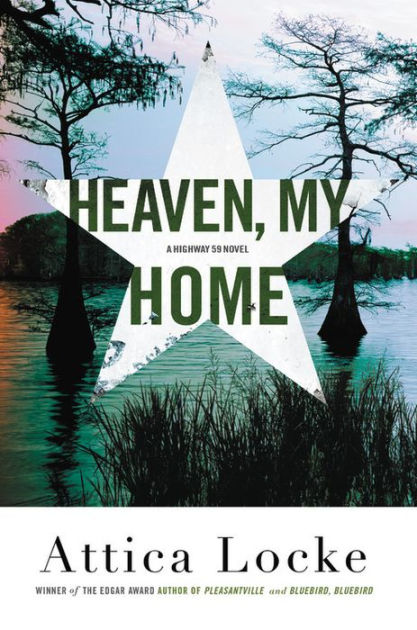
Heaven, My Home by Attica Locke

This scintillating murder mystery, set in Trump-era East Texas, with a black main cast and racial concerns, is gripping, gorgeously written and relevant.

Heaven, My Home is Attica Locke’s fifth novel, and the second starring Texas Ranger Darren Mathews (Bluebird Bluebird). In the time between Trump’s election and his inauguration, Darren has been assigned to look into the case of a missing child. In northeast Texas’s Hopetown, on Caddo Lake, Darren’s mission is not exactly to find the child, but to extract a confession–truthful or not–from a member of the Aryan Brotherhood of Texas (ABT) for the murder of another ABT member. Darren’s life is a mess: he’s only just patched things up with his wife, and his mother is low-key blackmailing him in regards to the same murder.

He’s conflicted in several ways. A nine-year-old boy is missing, and Darren should save him, but this is a nine-year-old racist-in-training, and that training is going well so far. Darren knows justice should be absolute and blind, but the ABT man he’s being asked to frame was acquitted of another murder–of a black man–that he certainly did commit. Among the recurring questions of this novel: How far should forgiveness stretch?

Heaven, My Home is a rich, complex puzzle, with layers of characters: Darren’s not-very-maternal mother, the two uncles who raised him (a law professor and a Ranger, respectively), his lawyer wife, the Rangers he associates with and those he doesn’t, his white FBI buddy who prosecutes a black man for a hate crime. And, of course, the ABT and ABT hangers-on squatting in Hopetown, historically a freedmen’s community and the last enclave of a small band of Caddo Indians. This sounds complicated, and it is, but Locke’s absorbing prose, in a third person very close to Darren, keeps the reader well abreast of all the crisscrossing loyalties and betrayals intrinsic to these East Texas woods. This is a world where white families still remember which black families “stole” themselves away. Spouses cheat; close relatives feud; Darren is a deeply good man, unsure of how to right all of history’s wrongs.

There is a warmth and intimacy to the portrayal of Darren’s many internal struggles. This is a protagonist to love and sympathize with, although he is far from perfect. Locke’s expression of very real and contemporary anxieties is nearly painfully spot-on. Her East Texas is redolent of fried hushpuppies and catfish. For Darren, “it was not his East Texas. It was zydeco where he wanted blues. It was boudin where he wanted hot links.” It is a richly expressed place, filled with racial tensions and a fear of Trump’s coming regime.

Both a fascinating, smartly plotted mystery and a pertinent picture of the contemporary United States, Heaven, My Home is refreshing, dour and thrilling all at once. Readers will be anxious for more of Ranger Darren Mathews.


This review originally ran in the September 24, 2019 issue of Shelf Awareness for the Book Trade. To subscribe, click here.


Rating: 8 fingers.

White Flights: Race, Fiction, and the American Imaginationby Jess Row

This tough, serious essay collection considers whiteness in American fiction and culture, and the inextricableness of the two, with exhortations for change.

Jess Row (Your Face in Mine) takes on ambitious material with White Flights: Race, Fiction, and the American Imagination. He points out a societal need for reparative writing, examining the role of imagination in real lives, both in “straight” fiction (novels, stories, films, plays) and, in a larger sense, “in which our collective life is a series of overlapping fictions, fantasies, dream states.” The first kind “reflects and sustains” the second, so that novels are never “just” novels, but rather serve to uphold institutions and ways of thinking that have consistently and systematically hurt nonwhite Americans. The title refers both to the real estate pattern of movement known as “white flight,” and also to flights of fancy, such as imagining that ignoring race and racism means they’ve gone away.

In seven essays, this book argues that imagination is as much part of the problem as real-world actions and prejudice. Its main concern is whiteness, in and out of fiction; when it examines specific marginalized groups, they tend to be African Americans and Native Americans. Row undertakes close readings of Marilynne Robinson, Don DeLillo, David Foster Wallace, Cormac McCarthy, Annie Dillard, Richard Ford and more: these white writers may be among his own past literary heroes, but they nonetheless come under scrutiny for the whiteness, or sheer emptiness, of the spaces they create. On the other hand, he examines James Baldwin, Toni Morrison, Chang-rae Lee, Colson Whitehead, Amiri Baraka and Ta-Nehisi Coates for the examples they offer of more inclusive fictional spaces. Row consults music and films, as well.

In challenging ways of writing–even, for white writers, the choice to write at all–Row is careful to acknowledge that, as a white man, he can merely ask questions and grope for progress, rather than offer a solution. He also mines personal material, including his childhood in the Black Hills of South Dakota, land that by treaty belongs to the Lakota and is illegally occupied by white people (like Row’s own family).

This intelligent collection is often deeply engaged in realms of philosophy and literary theory; it approaches an academic writing style. Its subject matter may be discomfiting for white readers and writers, and readers less familiar with Wittgenstein, Derrida or Edward T. Hall’s theory of proxemics will likely find this book challenging. There is something for every reader, however, in the message that fiction not only reflects but acts upon real life, and that each of us is obliged to act for justice, in reading and writing as in life.


This review originally ran in the July 2, 2019 issue of Shelf Awareness for the Book Trade. To subscribe, click here.


Rating: 6 references.

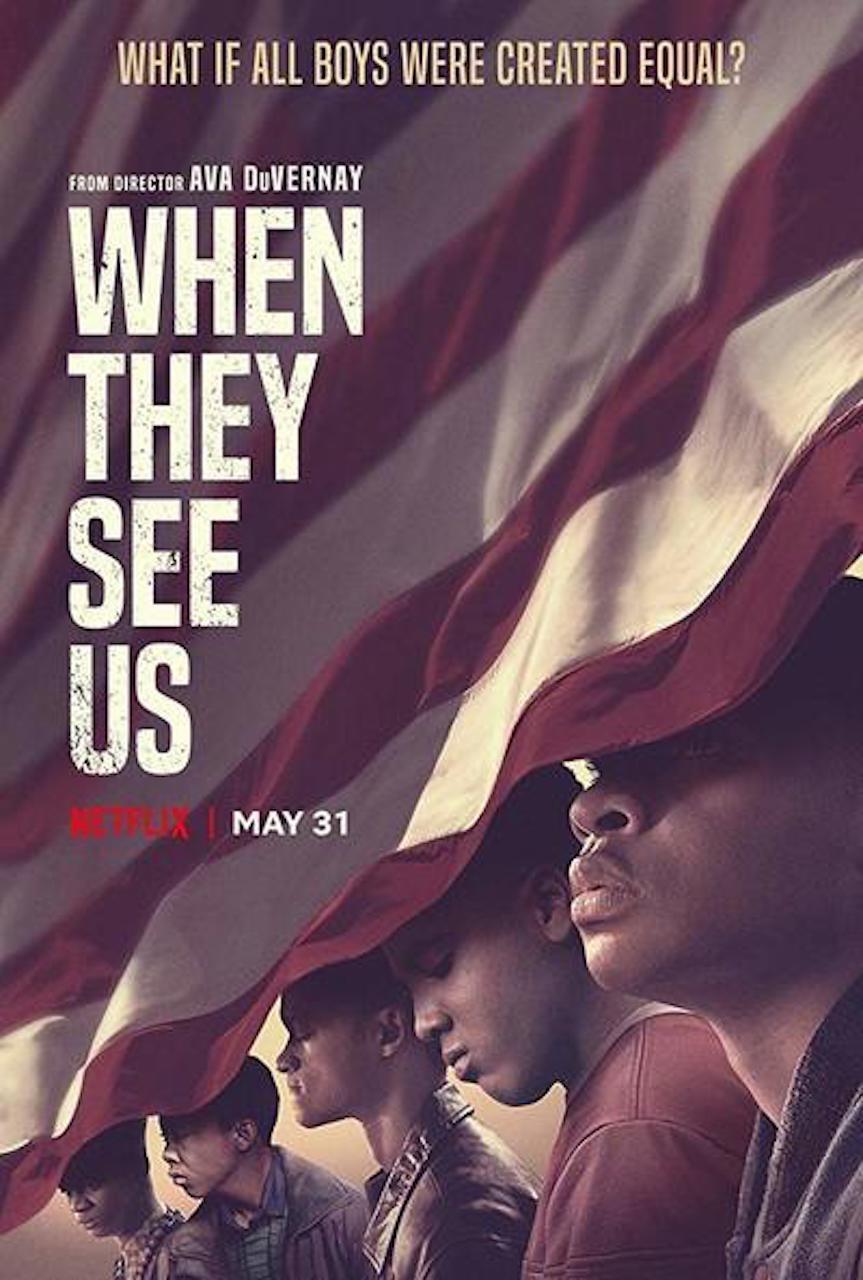
movies: When They See Us (2019) and The Central Park Five (2012)

I was keyed up for the release of When They See Us as a Netflix original miniseries at the beginning of June. (I’m treating it here as a movie, especially because “limited series” seems like such a downplay for a serious work of art and social commentary.) I viewed the four episodes in three evenings, rushing through, feeling both addicted and horrified, unable to look away. I thought I was prepared for the subject matter, but I was shocked beyond expectations.

The show handles events from 1989, when five boys (four Black, one Puerto Rican and Black) were arrested for the brutal rape and beating of a white woman jogging in Central Park. Their names are Raymond Santana, Yusef Salaam, Kevin Richardson, Antron McCray, and Korey Wise. Although there was no evidence linking them to the crime, and although their confessions were full of holes and inconsistencies and signs of police coercion, they were found guilty. The four younger boys, ages fourteen to fifteen, were sentenced to between five and ten years. Korey Wise was sixteen, and received ten to fifteen, entering adult prison directly. In 2002, another man in prison for a series of rapes, Matias Reyes, confessed to the crime, and Korey (still incarcerated) was released, and all five men’s convictions were vacated.

It’s a terribly painful story to see unfold. On the April night in 1989, we see a large group of boys running through Central Park and acting out. They push at and harass bicyclists. They beat up a man. It’s easy to see how things escalate: boys roughhousing, and then some of them take it a step too far; imagine yourself one of those boys. You’re not responsible for the actions of those you’re with; you don’t even know all of them. It turns out that the jogger was raped in the same park on the same night, beaten within an inch of her life. Three of the boys who would become known as the Central Park Five were arrested that night. The next day, police came looking for Yusef Salaam. His friend Korey was with him when they take him in, and agreed to come along, just for moral support. In an ugly-ironic twist, Korey would serve the longest sentence for this crime in which none of the Five had any involvement.

It’s unsurprising that When They See Us knocks it out of the park with Ava DuVernay as creator, co-writer and director. Under her guidance, we see the boys running through Central Park. We see them picked up by police, and interrogated without parents present for hours and hours, without bathroom breaks or food; we see them pushed around, threatened, and coached through their false confessions. We see them in court and then in prison; we see them get out and hug their families and try to put their lives back together. We see Reyes confess to the rape. I am deeply impressed by the acting performances given by both the young actors (portraying the teenaged boys) and adults. I am horrified, over and over again.

I’m glad (well, that’s a weird word) to see the story of Korey Wise’s sister given air time, too: Marci was a trans woman murdered while he was incarcerated, who we meet only through flashbacks, as he weathers solitary confinement by living in a dream world largely starring this much-loved older sister. The story of a murdered Black trans woman is unfortunately common still today, and Marci deserved this coverage. She is beautifully played by Isis King.

I was also intrigued to meet the very sympathetic (in both senses) character of Roberts, a white prison guard who goes out of his way to be kind and generous to Korey, even holding him in an embrace when he finds out about Marci’s death. Roberts does not appear to come from real life (go figure). He was a sweet departure, but his totally fiction existence feels like a final driving-home of the horror of this true story.

I find the title interesting, too. I can think of several ways to follow this phrase, from ‘when they see us, they only see one thing/they think they know us,’ to ‘when they see us, then, finally, we’ll get justice,’ in the sense that we mean when we say it feels good to be seen. The story is so clearly about racism, about the way in which these boys, these children, were handled as proxy for everything that the world feared about Black men in 1980s New York. A white woman was raped, and they came for the Central Park Five just like they came for Emmett Till. And they were just babies: that’s one of the advantages of seeing and not just reading about this story, seeing the faces of these boys and realizing how very young they were.

I think this was everything it needed to be. As a crime drama, it’s gripping and moving. As social commentary, it’s thorough in its criticisms: the cops and prosecutors demonize themselves through their actions. I wept more than once. It’s also a visually impressive piece of art – this is where I’d normally call it visually pleasing, but of course that’s the wrong adjective – it’s full of expressive images, from the wide-angle view of boys in the park to the interrogation rooms and prison cells, and expansiveness of the outdoors to a man freed. I am still recovering emotionally from this story. Well done, DuVernay and full cast.

After feeling so affected by this show, I went looking for more, which led me to the documentary covering the same events from seven years earlier. The Central Park Five did much of the same job as the Netflix series, but with original footage and the perspectives of the men looking back from years later. Necessarily, it offered a less complete view of past events, because it stuck to the footage available; we don’t see police hit or threaten or coach the boys’ confessions, obviously, but we see the taped confessions, and we see the faces of the five boys and, later, men themselves. (Antron McCray allowed the use of his voice and not his image, as an adult.)

There was not much more of the story to be gained here, then, but an advantage in seeing it come from the people actually involved. I appreciated seeing what each character looked like, in comparison to the actor(s) who played them. I enjoyed seeing period footage of New York in general, too. I think it’s probably a good documentary, but it suffers some by comparison to When They See Us, which has the obvious advantage of being able to show more – whatever DuVernay wants to depict – and more dramatically. Having the two together feels like the right final call, of course, for the viewer wanting to explore this subject matter. I’m very impressed with both.

As a final remark, I want to say that I have a friend who has come into personal contact with Linda Fairstein, the evil, racist prosecutor in this story. This friend had her own horrible experience, which upholds what we learn about Fairstein here. Friend, I am sorry again for what happened to you. We’re decades late, but I’m glad everybody’s now talking about her and holding her responsible for some of her actions. Fairstein has enjoyed a career as a crime novelist until just recently: following a social media campaign, her publisher, Dutton, a Penguin Random House imprint, has ended the relationship. Small progress.


Rating: an average 8.5 years for these two fine films.

shorts by Cather; Sandor; Wheeler; Irving; Chesnutt; Maren; and Bourne of National Geographic (and links followed, etc.)

Whew, a long one today – sorry, folks, but I’ve been reading.

Because I’m not busy enough (ha) I’ve been reading a few short prose pieces here and there. Some of the following come from the Library of America’s Story of the Week (an email you can sign up for for free, if you have tons of free time or are a glutton like me). One I found languishing in a file on my computer. The internet, and friends’ referrals, account for the rest.


Willa Cather’s “A Death in the Desert” was a Story of the Week, viewable here. I found it a moving story, but much more so with the context included, about Cather’s devotion to a composer who died young. As the Library of America points out, the fact that this story was published in three versions, each subsequently edited and shortened, makes it an excellent opportunity to study editing for length (if you were to go find all three). There’s something Victorian in the manners and fainting emotions in the story that is less compelling and relateable for me personally, though. I’m glad to have learned a bit more about Cather, but it’s not my favorite thing I’ve read this month.


Marjorie Sandor’s “Rhapsody in Green,” however, blows my mind. (This was the one found on my hard drive. Originally published by The Georgia Review and viewable here, if you sign up for a free account.) It is a very brief lyric essay about, yes, the color green. Sandor evokes so much via this color, and her search for an unachievable shade: color, we might think, is a visual element, but she uses touch, smell, and taste as well. On its face about this color she can’t find, this essay is also a glancing view of the narrator’s life story, at least in a few relationships and geographical locations. There are four references (in less than three pages) to a time “I fell in love when I shouldn’t have.” It is a brave and risky move to so emphasize an event that she never explains further. As we writing students say, this one would have been destroyed in workshop. But I love it, this level of tantalization, and her bold implication that no, we don’t need to know any more about it than that. There are also two references to “a/my friend who puts up with such eccentricities.” I love this epithet, this characterization, and in both cases – this, and the “fell in love when I shouldn’t have” – I appreciate the use of an intentional echo to good effect. Also, nothing I’ve said here begins to get at the loveliness, the lyricism and sensual intimacy, of Sandor’s writing. Do go check this one out.


Disclosure: Dave Wheeler is my editor at Shelf Awareness, and a friend.

I have done a poor job of keeping up with Dave’s work, and recently returned to see what I’d missed, particularly in his essays, which impress me so. I am gradually catching up now – you can see his published essays here (and more in other links on that page). And I love a lot of what Dave writes: I appreciate the short, dreamy, feeling quality of “Science for Boys”, and the inquiring mind exposed in “Death and Its Museum”. But I think my favorite essays of those I’ve read so far deal with art, and how Dave takes it in. “Two Men Kissing” and “Some Holy Ghost” each offers so much, and I’ve forwarded them to many friends.

Today, I am very pleased by “A Moment Spins on the Axis of You: The Fourth Dimension of Yayoi Kusama’s ‘Infinity Mirrors'”. Here Dave encounters Kasuma’s installation, in particular, and the grand scale of its claimed subject. But even more than the named artwork, he considers what it means to wait – for art, for anything – and what contribution waiting, or time, or the audience experience, may offer. I appreciate his voice: he speaks with authority about his own experiences, but with a humbleness as regards the world of art criticism; he can be playful even as we feel he is serious. And of course I recognize myself when he writes, “As a lifelong reader, I have cultivated a sharp sense of when I can quit a book without worrying that I have missed something of importance. As a wide-eyed novice to visual arts, I am less assured.” I think I feel something like the same thing when I try to see my own reactions to visual art: I don’t even know what I don’t know.

Perhaps recognizing myself in Dave is part of recognizing Dave, someone I know personally and enjoy talking to, however infrequently we get around to it. And maybe that enjoyment is inextricable from my appreciating his writing. Maybe you want to help me test this: go check out Dave’s work and let me know what you think.

Good, right?


Washington Irving’s “Rip Van Winkle”, another Story of the Week, was engaging enough in its descriptive power; I was interested in getting a better grasp on one of those legends that’s in our collective consciousness whether we’ve read it or not (I don’t believe I had). The misogyny in the treatment of Dame Van Winkle, and the cursory treatment of all the women in the story (none of whom, if memory serves, had names), rankled. I’m not sorry I took the time, but it wasn’t a highlight, or anything.


Charles W. Chesnutt’s “The Bouquet”, on the other hand, was both lovely and harrowing. (I went ahead and followed this link to a Wiley Cash article in Salon, where he argues for Chesnutt as genius, and I don’t disagree.) If you want to feel gutted by our national heritage where race is concerned – well, none of us does, but I feel it’s important we don’t look away, either – give this short story a try. It has a surface on which it can act as a sweetly sad and simple tale, but its depths are significant.


Disclosure: Mesha Maren regularly serves as guest faculty at West Virginia Wesleyan College in my alma mater MFA program. I consider her a friend.

I was deeply impressed with Mesha’s recent essay in Oxford American, titled “West Virginia in Transition”. She moved away as a young, closeted, queer woman, and upon moving back, she investigates the experiences of her counterparts: queer youth growing up twenty years later in her own hometown. She muses on the ways in which their lives are different and the ways in which they’re similar. It’s a story that’s important to me, because both queer communities and Appalachian ones are much on my mind. I’m glad topics like this are getting bandwidth. But also, as anyone who knows Mesha’s work will expect, it’s a gorgeously written story. “The way these ridges and hollows both cradle and cleave.” Beautifully done, and highly recommended.


Finally, my father sent me a link to this story from National Geographic: “Clotilda, ‘last American slave ship,’ discovered in Alabama.” Joel K. Bourne, Jr. brings us up to date on the recent confirmation that Clotilda has been identified where she was burned and scuttled in the Mississippi Delta after a voyage spurred by a wealthy white man’s bet that he could import slaves from Africa more than 50 years after such imports became illegal. In 1860, 109 men, women, and children survived the voyage into Mobile and were then sold into slavery. Part of what’s unique about this group of abducted Africans is that late date: Clotilda’s survivors lived long enough in some cases to be interviewed on film. They founded Africatown on the edge of Mobile, and their some of descendants live there today. When I passed through Mobile this spring, I missed Africatown. But, unknowing, I stayed in Meaher State Park, which is named after a wealthy white family, including the man who made the bet.

I found this article, accompanied by pictures and video, moving. I think it’s an important story to read and consider today. I also followed several links, like this one offering a list of destinations to visit for African American history and culture. I found a few of these on my travels this year; I’ve added to rest to my itinerary.


There is always something to keep our minds busy. I just feel lucky to have the time to follow these leads. What have you read lately?

movie: Anita (2014)

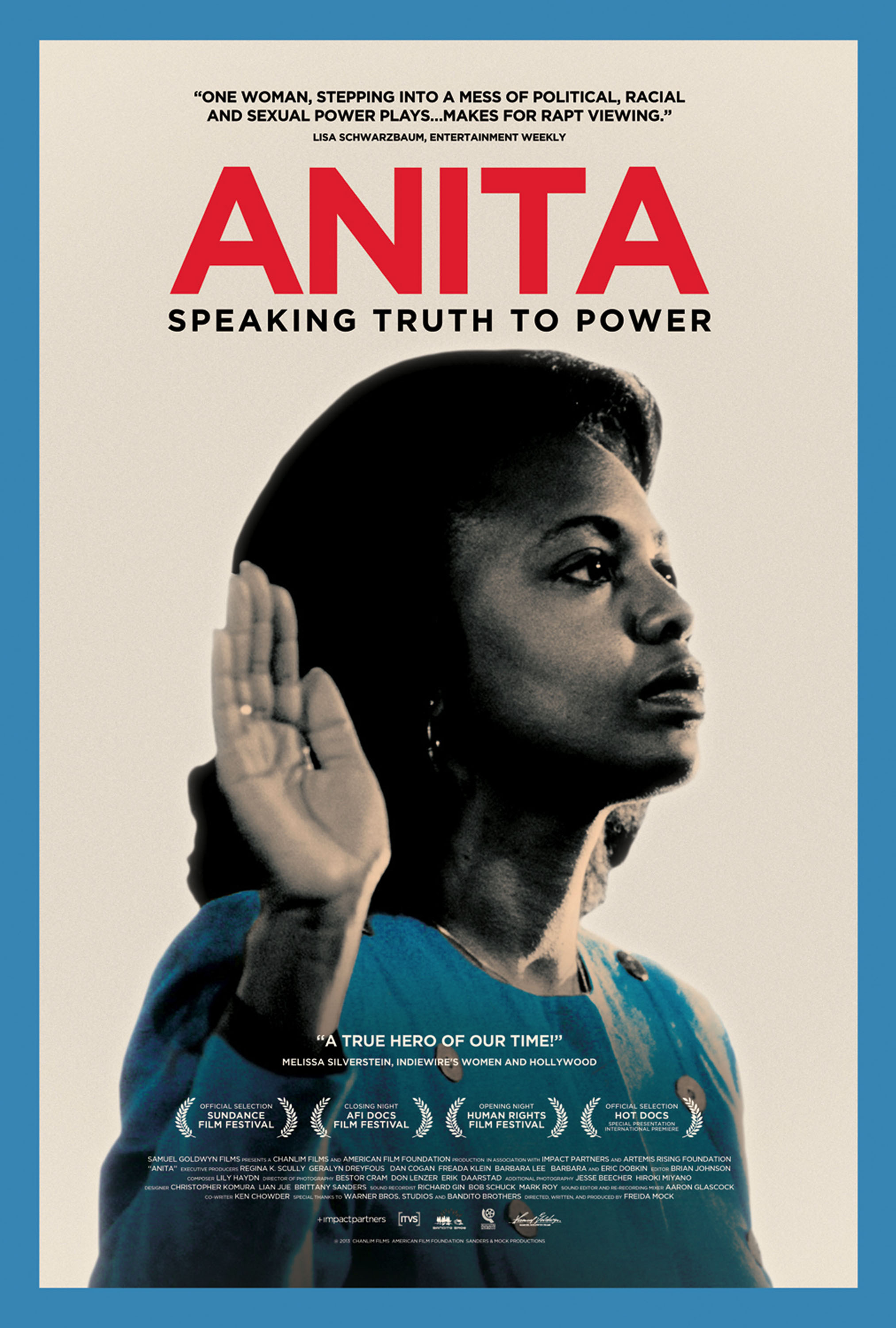
At my father’s encouragement, I spent several nights in the van watching this documentary in small pieces, as wifi connections and laptop batteries permitted. This was the right way to watch it for me, anyway, because I continue to find this difficult content. Like so many millions of women, I had a hard time seeing Dr. Christine Blasey Ford give testimony against a man who is now a Supreme Court justice, just last year. I have a hard time watching Dr. Anita Hill do the same. I have a hard time with the continuity of this story.

I’ve written about Anita’s story before, when watching Confirmation and reading Speaking Truth to Power (in two parts). Looking back at those reviews, I guess I’m feeling the way I did with that first of two book reviews: discouraged, traumatized. Of course, looking back at the email in which my father recommended I watch this, I see he saw this coming: “You could skip roughly the first half of the 77-minute film – it recounts the hearings with too many excerpts for us who have seen too much of it already.” Strangely, I guess that’s me, even though I didn’t watch the hearings in 1991.

For my father, the point of the film was was redemptive. (He saw it at a local documentary festival event.)

Once it shifts to Hill’s update on her aftermath, it becomes uplifting and fulfilling as it recounts the huge community of support that has buoyed her life, and catalyzed social change (such as it is). (I did not know anything about her move to Brandeis University in Massachusetts, where she has clearly blossomed as activist & educator.) By the end, there is emphasis on younger generations of women in particular.

The years since 2013 have not been as good, and the audience discussion with (filmmaker) Mock and two local women attorneys (one from local Western Washington University) was attentive to that and the Kavanaugh hearings. But I found the film personally necessary, because it counters the sad-end-narrative for Hill herself, which I had stuck in my head after her book, the recent reenactment film, and Kavanaugh. I’m sure Hill was knocked askew by Kavanaugh too, but now I know what a strong place she was in when that debacle arrived, and trust she is weathering it along with us all.

And those points are well taken, although I guess I needed reminding of that. I viewed the film’s final minutes – that spotlighting of the inspiring younger women saddling up – as positive but also disheartening again, especially because I watch this in 2019 and know what these young women, filmed in 2011-12, don’t know about the immediate future. I guess what I’m saying is that it’s hard for me to stay positive in the face of this ongoing story, but I don’t argue that that’s the right perspective. Hope is better. I’m trying.

To Anita Hill, for the 500th time, I take my hat off and thank you. As far as this film, I think Pops has it right: the footage from the hearings is essential stuff, but if you’re already well-versed, there’s nothing especially new there (and it’s hard to see them press her about pubic hairs and big-breasted women over and over again. Not as hard as it was for her to be pressed, though). The later stuff in the movie is new, even for those of us who have already worked through Hill’s excellent memoir and the very good movie Confirmation. And Pops is correct, it’s good to see how well she’s doing, and that’s she still doing the work.

The story is essential. Pick your version, for starters. You would not do badly if you chose to start here.


Rating: 7 times they made her repeat herself.

The Underground Railroad by Colson Whitehead

I so enjoyed seeing Colson Whitehead speak at TSU almost a year ago – it seems a little strange it’s taken me this long to get to this one!

The Underground Railroad is compelling, a story with momentum and imagination. I had forgotten that the underground railroad would turn out, in this book, as a literal railroad that runs underground: that was a fun surprise to experience. “Fun” is not precisely the right word for this book, though. It’s about slavery and the quest for freedom; there is little here that is light or fun.

The protagonist is Cora, a young enslaved woman who makes a run for it with a young man, Caesar, who she doesn’t know very well. It begins with a little prefacing history, of Cora’s grandmother and mother before her. Her mother escaped the Georgia plantation where she and Cora were born, never to be seen again. The ghost of that woman hangs over Cora’s decisions and her feelings about those around her.

Cora travels, with and without Caesar, through several states via the underground rails. We see the details of various stations on the railroad: this one beautified and furnished, this one bare, a statement about the hard work required to dig survival out of rock and earth. Cora asks, who built the railroad? And the response: “Who built anything in this country?”

Cora will continue to wonder about the hidden hands who contribute to the quest for a better life, even as that life eludes her in her travels. This is not particularly a story of redemption or of happily-ever-after. Each time Cora survives a brutal and shocking turn of events, she loses those she cares about, and cynically revises her hopes: how stupid (she thinks) she was to think it could get better. The places she gets to know along the way could be viewed as archetypes (remember from Whitehead’s talk that I heard something like this idea): the place where no Black person is suffered to live, where the streets are lined with hanging corpses; the place where life appears secure only on the surface; the place where all can contribute according to their abilities. These steps along the way are instructive. But the book does not necessarily end on a hopeful note.

There’s a bit here of something I watch out for in books like this, historical fiction featuring ordinary or marginalized people: Cora perhaps holds a bit more far-reaching wisdom of the world than someone with her life experience might be expected to have. For example, she observes slave labor replaced by cheap Irish immigrant labor, and muses that as the Irish supply runs out or goes out of fashion, another poor country will send its emigrants to form the next wave. This speculation about the poor countries of the world seems like a lot for a woman who’s lived her life on a Georgia plantation to come up with. It’s a clear temptation, especially with benefit of hindsight, to invest one’s apparently “ordinary” characters with special knowledge and wisdom.

I appreciated the range of characters. Most of the book is told from Cora’s perspective, but short interspersed chapters come from the points of view of secondary characters, including racist white ones. I imagine those chapters in particular might have been hard to right, but also interesting to write, and they enrich the book by complicating things. Not that the evil slavecatcher gets much sympathy; but hearing his inner thoughts makes him more real, more believable, and therefore more frightening. Complication, in literature, is always good.

I believe I expected this book to be magical realism, and I’m not entirely sure that’s my impression after reading it. There’s nothing here (that I noticed) that couldn’t happen in our real and non-magical world. The literal underground railroad would be a feat of engineering and supplies, but not strictly impossible. The good and bad luck (if we can call it that) Cora and others face certainly seems fantastical, but is in line with the well-documented true stories of enslaved people. That said, it was a vibrant, rich way of telling the story of slavery and struggle: one we’ve heard/read before but clearly aren’t done with. The railroad part was fascinating, nicely told. The characters were always intriguing. I think pacing may be the great feat of this book: I scarcely was able to look away once I was in it. Thank you, Colson Whitehead.


Rating: 7 stations.

movie: Confirmation (2016)

I only found out that this movie existed thanks to my current favorite podcast, Another Round, so thanks to Heben and Tracy for that! And so timely now.

I read Anita Hill’s memoir, Speaking Truth to Power, more than five years ago. It was a powerful experience: she did a beautiful job telling her story, and it’s a hell of a story to begin with. I was nine years old when Clarence Thomas’s confirmation hearings took place. I don’t remember them as something I directly experienced; my knowledge of these events comes from hearing other people (like my parents) talk about them, and from reading her book.

This movie is an excellent follow-up as well. If you’re looking for an education about what happened, I suggest Hill’s book for its level of detail. But if you’re looking to grasp the feeling, the emotional truth of this time period, the movie does a good job. Hill, Thomas, and Joe Biden are all played by actors who come remarkably close to their roles not only in physical appearance but in movements, speech patterns, and mannerisms. The feelings (on one side) of shock and concern and ill-boding about what will come of all this, and (on the other side) of indignation and impatience and real threat unlooked for, are well captured. Again, as someone who doesn’t remember viewing the confirmation hearings when they happened, I spent some time pausing this movie to pull up old video from the real events, comparing both the wording and the delivery. It’s pretty spot on.

All of which means it was hard to watch. I guess there may be people out there who question the truth of Hill’s allegations, but I can hardly imagine who they might be. Not women, for one thing, because all of us women who have lived and worked in the world know that these things happen, and we know well why a woman might not speak up when it happens, as Hill’s critics kept harping on about. It should go without saying, but: I am horrified that we are seeing these events play out again twenty-freaking-seven years later with Brett Kavanaugh. Horrified.

You can read Anita Hill’s own words on this subject in an article for the New York Times: “How to Get the Kavanaugh Hearings Right.”

Weirdly, though, I found the movie less difficult to watch than Anita Hill’s book was to read. You’d think the movie would be more visceral because of its visual and aural elements. But Hill’s writing admirably matches her speaking: calm, measured tone, far from devoid of emotion but thoughtful and thorough. Like the lawyer she is, she is careful with fact and clear about where she speculates. She relies on the strengths of her arguments and the truth. I found this careful telling even more moving than the movie.

In a nutshell? A recommendation for this movie, and an even stronger one for Hill’s book. And a sound shame-on-you for our country still struggling to treat women with respect, like as if we were real human beings, and for punishing and not believing us when we speak up. I hope someday the cases of Anita Hill and Christine Blasey Ford will cause history students to gasp in disbelief, rather than nodding their heads in recognition of the same old story.


Rating: 8 cases.