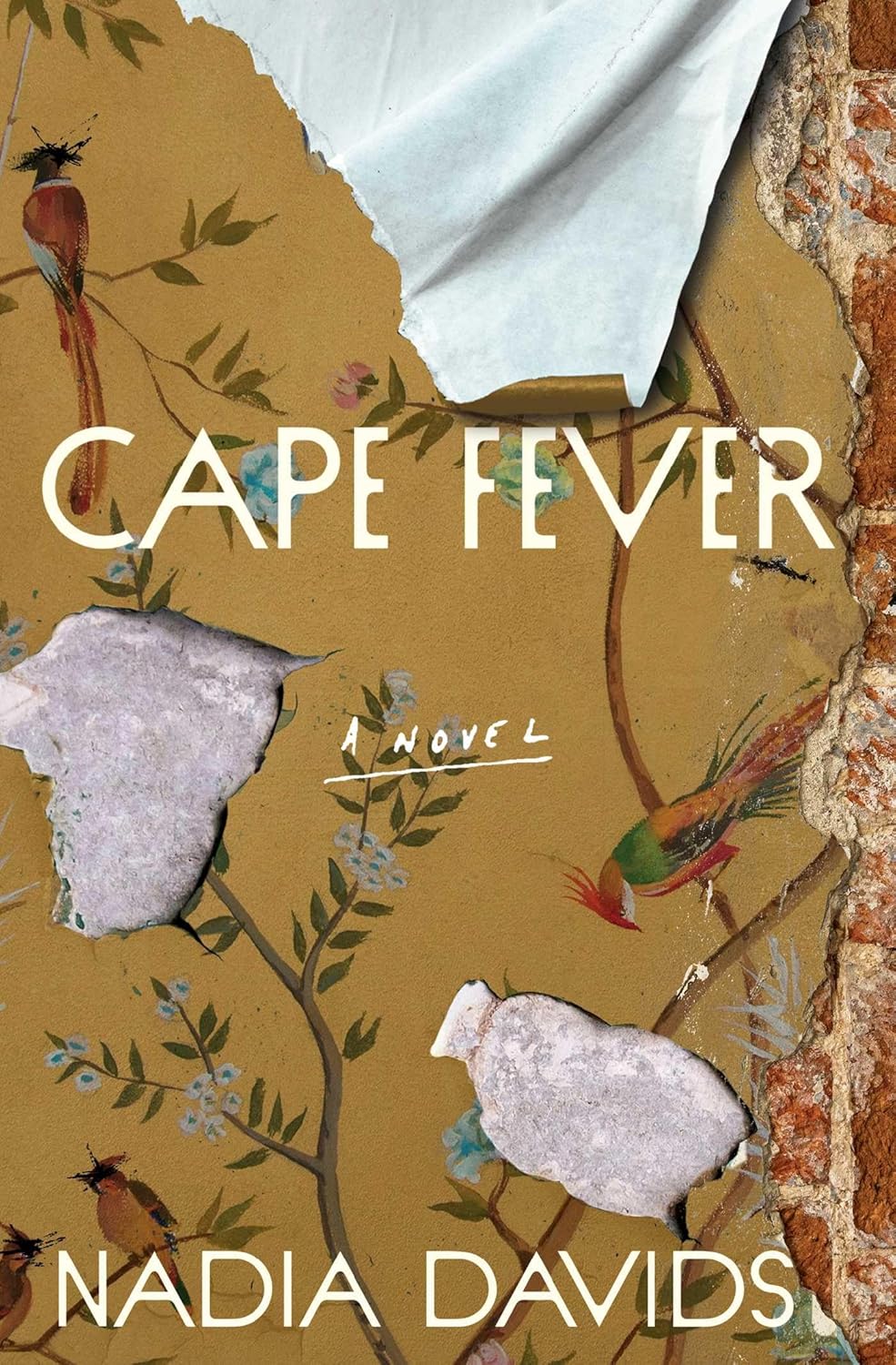
Cape Fever by Nadia Davids

A lonely colonial woman offers to write letters to the fiancé of her maid and the two become disturbingly intertwined in this evocative gothic tale of race, class, and spirits.

“I come highly recommended to Mrs. Hattingh through sentences I tell her I cannot read.” South African novelist Nadia Davids’s twisting gothic drama Cape Fever, her U.S. debut, opens by highlighting narrator Soraya’s ability to read, which she keeps from her employer. Soraya goes to work for the settler Mrs. Hattingh in 1920: hired as a combined cleaner and cook, the younger woman understands that the elder is not as wealthy as she wishes to appear. In the colonial city in which Mrs. Hattingh reigns over a large, lonely home, Soraya’s close-knit, loving family lives in the nearby Muslim quarter; Soraya is permitted by her employer to visit only rarely. Her father is an artist in religious calligraphy, creating beautiful works of prayer and devotion. The word “proclaim,” he instructs her, is “also read, recite. You see? For us, to read, to recite, is one,” and “The person is a pen. The person is paper.” Soraya’s fiancé, Nour, is an accomplished scholar who works on a farm while saving for teachers’ college.

There are moments in which Soraya feels something like fellowship with her employer, when she intuits that “every woman, rich or poor, madam or maid, dreams of escape.” But working for and living with Mrs. Hattingh, under power structures bigger than the individual, is deeply unpleasant. “She’s never understood the scale of what she wants and asks for.” Soraya retreats, in her small room, into the stories and characters that have come to her all her life: the Gray Women, as she terms the spirits that she alone can see; a seawoman with ink for blood; a woman who makes a baby out of soap. She finds Mrs. Hattingh’s house is teeming with spirits.

Mrs. Hattingh introduces a new comfort and stressor when she offers to write to Nour on Soraya’s behalf. As one woman takes the voice of the other–and intercepts the correspondence that arrives in return–their identities blur in disturbing ways. Soraya holds what she can of her own life in private and cherishes her visits to her family’s home, until even these are forbidden. In the increasingly claustrophobic manor, the tension between the two women builds, resulting in complex layers of psychological intrigue amid themes of class, race, love, grief, and haunting. In Soraya’s compelling voice, Davids blends mysticism, quiet power and resistance, and pain born of a long stretch of history in this unsettling tale of suspense. Cape Fever is beautiful, discomfiting, and moving.


This review originally ran as a *starred review* in the October 28, 2025 issue of Shelf Awareness for the Book Trade. To subscribe, click here.


Rating: 7 pickled lemons.

Harmattan Season by Tochi Onyebuchi

My first Onyebuchi is an interesting one to characterize as to genre. Harmattan Season is a PI story with some classic noir elements: protagonist Boubacar is down on his luck, a little self-sabotaging, unsure of what he’s working toward, fighting some old demons and secrets. It’s historical fiction, set in a West African nation under French colonial rule in a not-quite-modern timeline. It’s fantasy, or speculative fiction: there is magic afoot. One could argue it’s dystopian, but the colonial rule bit kind of covers that already.

Onyebuchi has a firm grasp of pacing and suspense, and Bouba is a compelling central character. He’s mixed race, or deux fois (“two times”), half French and half indigenous, and struggles with that identity: does it mean he gets part of each of two worlds? Or none of either? Does he fit in a little bit everywhere, or nowhere at all? The reader will learn slowly that his in-between status is further indicated morally by some of his past actions.

“Fortune always left whatever room I walked into, which is why I don’t leave my place much these days.” In the opening scene, Bouba is awakened in the middle of the night by banging on his front door. A woman stumbles in, holding a bleeding abdominal wound. She asks him to hide her; he does, as the police arrive next. One of them, it turns out, is an old associate of Bouba’s – you might even say a friend, or the closest thing he has. They leave. The woman has vanished. Unpaid, Bouba spend most of the rest of the novel trying to solve the mystery of the bleeding woman: who she was, what happened to her. He will uncover many layers of intrigue, wrongdoing, and attempted corrections, in spheres both political and personal.

I think a better grasp of West African history and politics would have given me a deeper understanding of some plot elements – and some linguistic background might have helped as well. There were a few unfamiliar words, some of which I got from French (like deux fois), some of which seem to belong to Onyebuchi’s fictional world (dugulenw), but some of which are not his invention (like the title’s harmattan, a dry seasonal West African wind). How many of the latter, or how many slight variations or references, did I miss? This is a good example of how reading ‘the other’ can be a bit more challenging but also why it’s important to do it. I’m just noting where I might have missed some nuance. Partly, I think, for this reason, I had a slow time getting engaged with the momentum of the plot, but we got there, and I wound up feeling involved with Bouba’s wellbeing and that of the community he gradually decided he belonged to.

I think Onyebuchi is a skilled writer with a fascinating and fresh take on genre intersections, and I’m curious about what else he’s done.


Rating: 7 apples.

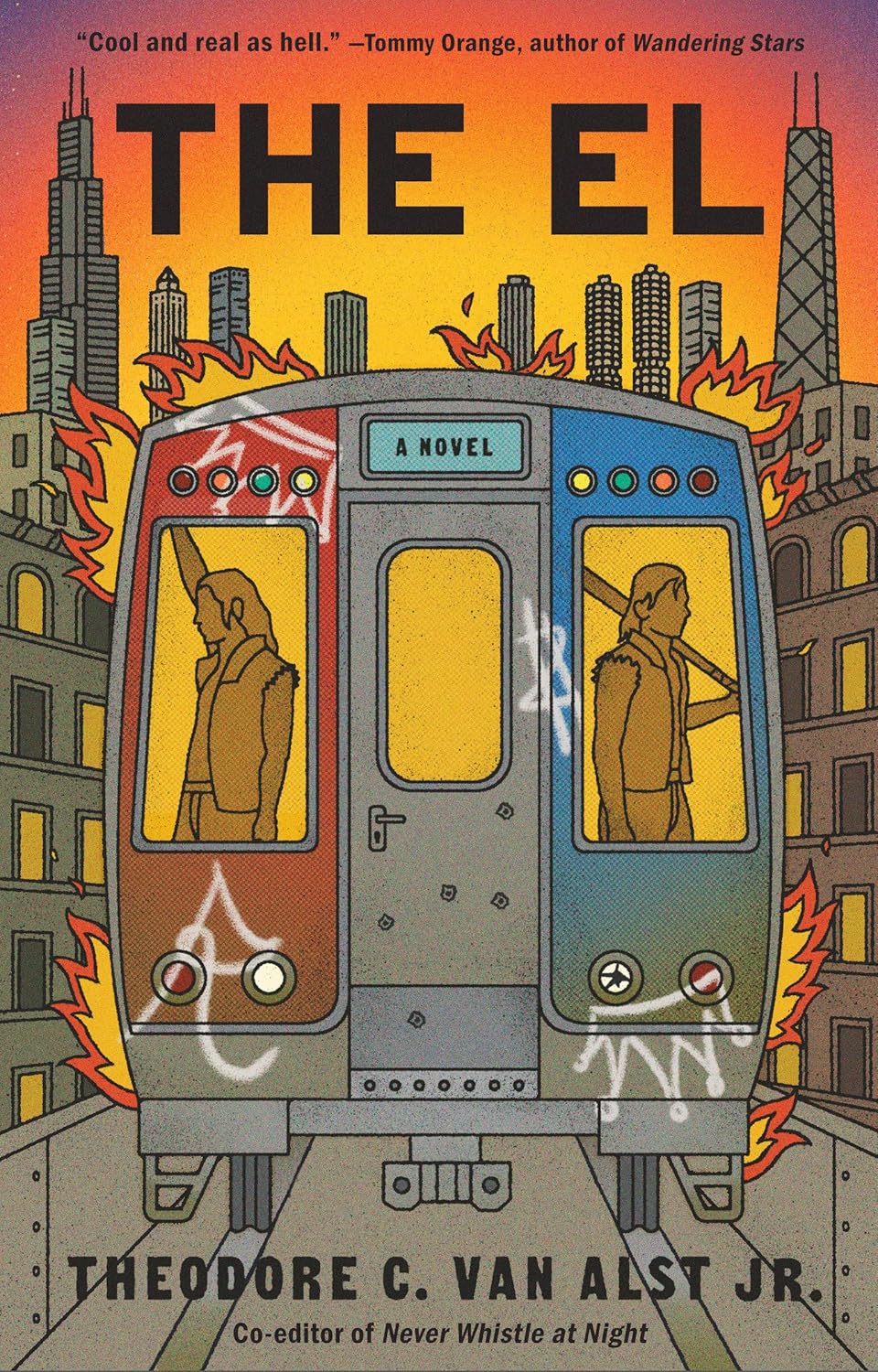
The El by Theodore C. Van Alst Jr.

Young gang members in 1979 Chicago take public transportation across the city on a single, important day in this shape-shifting, kaleidoscopic novel of big risks and dreams.

Theodore C. Van Alst Jr. (Sacred Smokes; Sacred City) offers a love letter to the city of Chicago via a single-day odyssey in The El, an expansive novel featuring young gang members on a circular journey through an urban landscape. With strong imagery, dreamlike sequences, and gritty considerations of family, love, spicy potato chips, and gun violence, this unusual story will capture and hold the imagination.

On an August day in 1979, teenaged Teddy wakes up early, eats a few buttered tortillas, and gets ready for a momentous event. He will lead 18 fellow members of the Simon City Royals across town via Chicago’s elevated train (the El) to a meeting with another “set” of the gang and many others, where a new alliance formed in prison would be applied on the outside. The new Nation will include old enemies, but Teddy is a team player. It is a day of high stakes, and while they all share trepidations, not everyone shares Teddy’s hopeful outlook. “Jesus, Coyote, Al Capone… I was sure all of us prayed to them equally.”

Teddy narrates as he sets out with his best friend, Mikey. Then the perspective switches to Mikey’s. Teddy remains the protagonist and most common narrator, but a broad variety of players cycle through, providing different angles on the potential impacts of the Nation alliance as well on as the scenes themselves: a fire on an El platform, an attempted murder, various deaths, moments of beauty. Teddy’s Native identity matters because race is a question for the new Nation, spoken of but not exactly on the official agenda. Teddy can see a character he knows to be Coyote, “walnut brown and wiry, wearing a pair of mirrored Aviators,” who “tends to hum in and out of focus.” This character, or force, plays an important role in the day.

The El is utterly intriguing at every turn, shifting pace from high-drama action scenes to contemplative minutes and hours spent rocking in rhythm with public transit and the city itself. Van Alst portrays a strong sense of both time and place as his characters grapple with race, class, and culture in a very particular big city. The novel is about cusps: of the season, the turning of the decade, the gangs’ political shifts, the move away from “skins-only” violence and toward more guns, and comings of age. Van Alst gives us tragedy as well as beauty, and a sharp, loving portrait of a place, with Teddy “riding all the way back toward the neighborhood, window wide open, warm wind howling in, and me in love with everything we could ever be.”


This review originally ran in the June 24, 2025 issue of Shelf Awareness for the Book Trade. To subscribe, click here.


Rating: 7 Jay’s Hot Stuff chips.

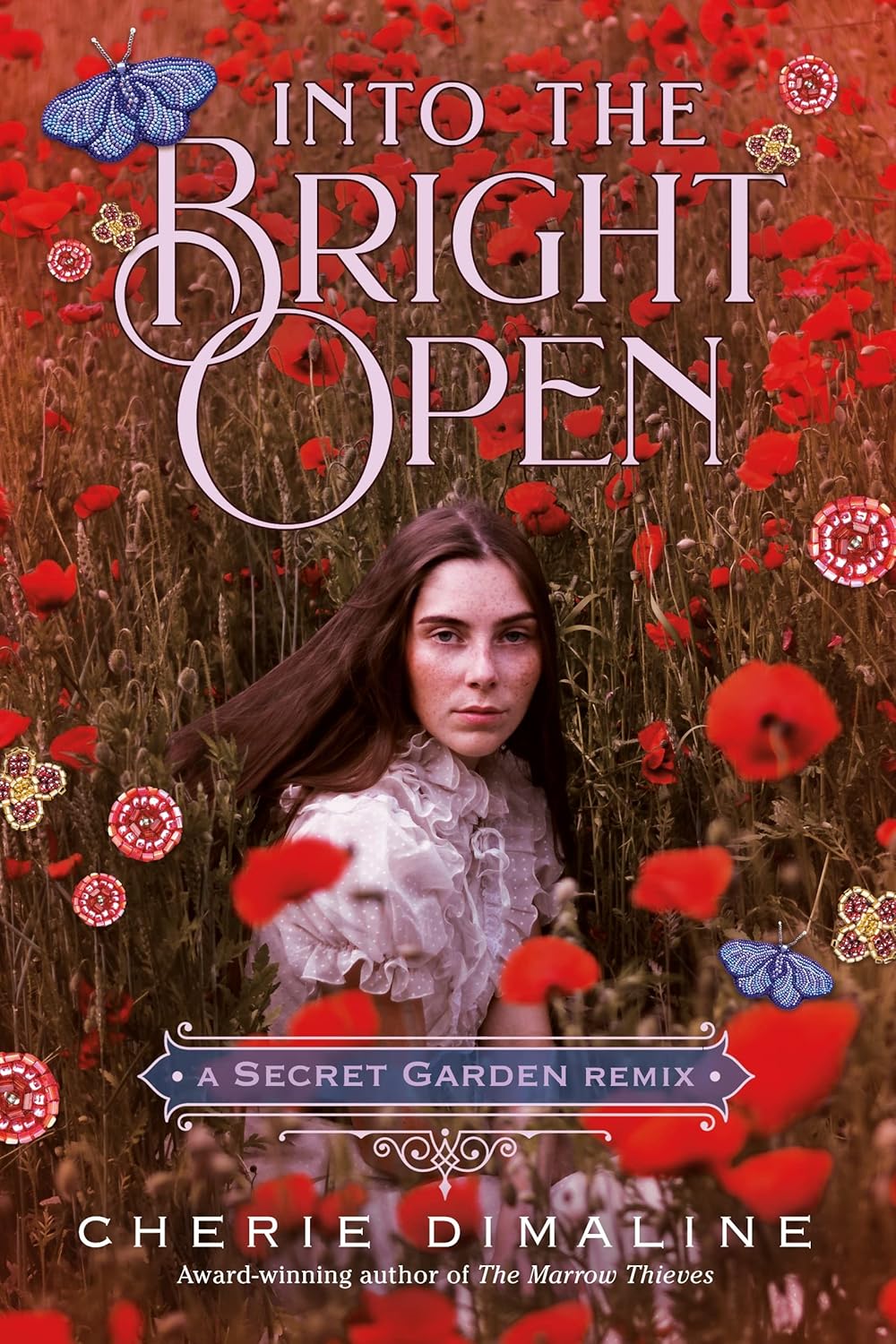
Into the Bright Open: A Secret Garden Remix by Cherie Dimaline

I stumbled into this book because I was following Cherie Dimaline (VenCo), but am glad to have discovered the “Remixed Classics” series from Square Fish, in which “authors from marginalized backgrounds reinterpret classic works through their own cultural lens.” I’m looking into a few of those, including Clash of Steel (Treasure Island), So Many Beginnings (Little Women), and Most Ardently (Pride and Prejudice). I love a daisy chain like this.

Into the Bright Open retells Frances Hodgson Burnett’s The Secret Garden, but in 1901 Ontario. Mary Craven is the unpleasant, lonely, spoiled-and-simultaneously-neglected child of a wealthy, important couple in Toronto, raised mostly by a nanny she does not like who does not like her, when her parents are killed in a car crash and she is shipped off to the Georgian Bay to live with an uncle she’s never met. He is not present when she arrives; she is greeted instead by household staff who treat her with more familiarity than she finds appropriate, but she quickly rethinks her stance as she finds them also warm, even friendly. Her uncle’s estate is grand, but by Mary’s standards, wild. Gardens border upon woods, and the ocean is an untamed thing. Native people and “half-breeds” initially offend her snobbish sensibilities, but Mary is just fifteen: young enough, and lonely enough, to change her mind. This version of Mary struck me as more introspective and more capable of self-criticism than I remember the original Mary Lennox to be. It also got me thinking: while readers are certainly accustomed to accepting flawed and imperfect protagonists, Mary Lennox might be an unusually unlikeable one. This Mary Craven, though: she definitely does unlikeable things, but with the benefit of access to her thoughts & feelings (this is told in a close third person), I find her quite sympathetic. She’s learning. She’s growing.

So. At the uncle’s house, Mary of course discovers the expected (if you know the original): the secret garden, and the secret child, a new friend for the friendless orphan girl, hidden away. There is a neighborhood friend as well, here a girl with wondrous comfort, confidence, and skills in the outdoors. There are further parallels to the original novel, but also a sinister twist.

This version, though set at the same point in history, feels more modern in its perspective, and I suspect would feel a bit more accessible to the modern young reader. I’m excited about the “Remix” series, and still excited by Dimaline.


Rating: 7 lines of poetry.

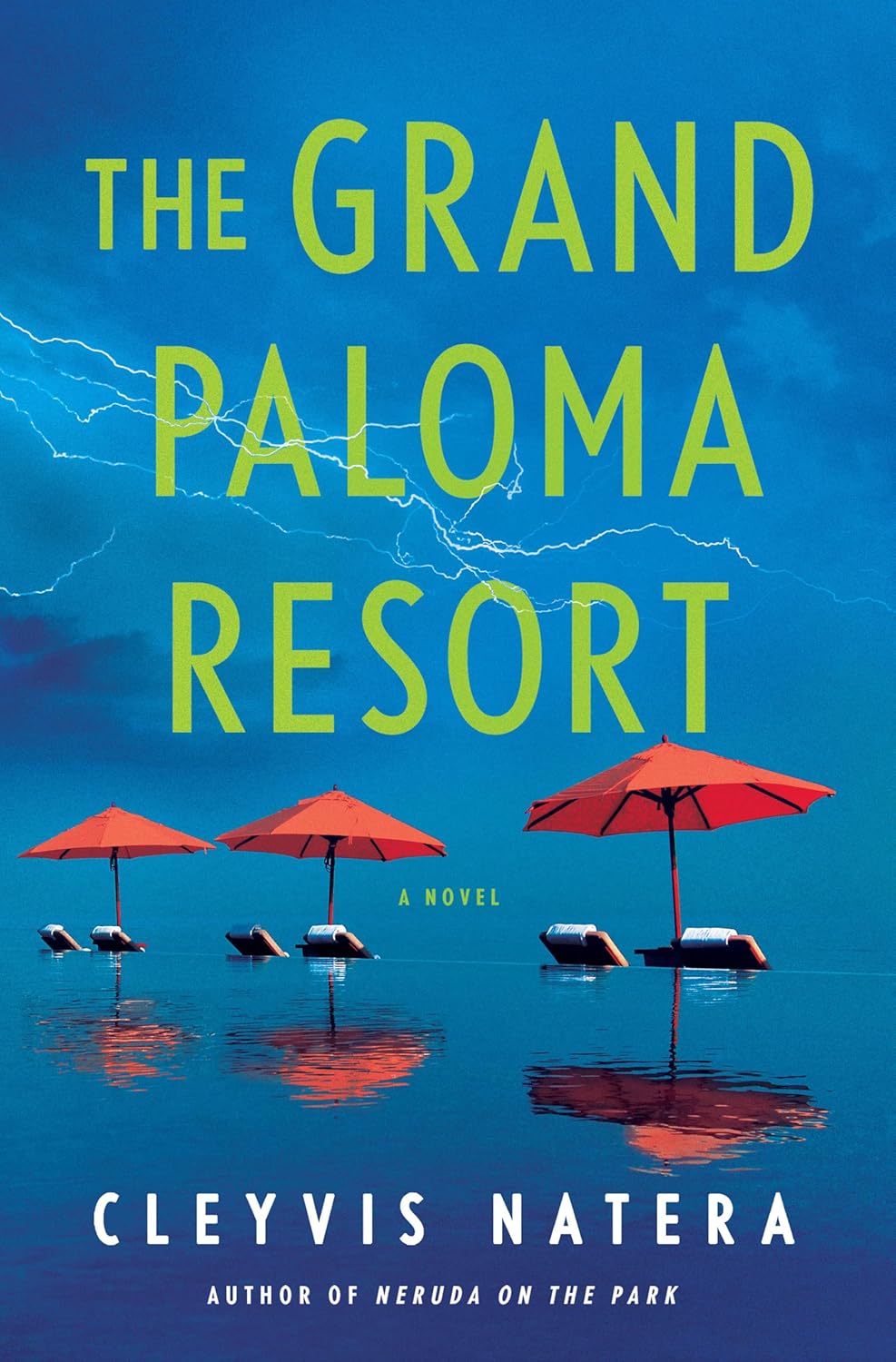
The Grand Paloma Resort by Cleyvis Natera

Missing children and a category-five hurricane converge in desperate circumstances at an exclusive luxury resort in the Dominican Republic in this heart-wrenching novel.

The Grand Paloma Resort by Cleyvis Natera (Neruda on the Park) is a novel of race, class, secrets, and striving, set within a luxury resort staffed by struggling locals amid the natural beauty of the Dominican Republic.

Sisters Laura and Elena have only each other and the Grand Paloma Resort. Laura has been her sister’s caretaker since they were 14 and four years old, when their mother died. The Grand Paloma has been Laura’s career and lifeline. Through her work, she was able to send Elena to a global academy, meant to secure the younger woman’s future. But Elena persists, in Laura’s eyes, in slacking, taking Ecstasy and partying while working as a babysitter at the resort. In the novel’s opening pages, a young child in Elena’s care–from a family of great wealth and privilege–has been badly injured. It falls to Laura, yet again, to clean up: Elena must be protected from criminal charges, and the resort from bad press.

But this time, despite Laura’s experience in saving the day, a bad situation spirals. Elena thinks she sees a way out by accepting a large sum of money from a tourist in exchange for giving him access to two young local girls. Although she initially believes the girls won’t come to harm, the crisis worsens when the children go missing. All of that–with a frightened Elena and Laura at maximum stress and frustration–coincides with an approaching category-five hurricane. A larger cast of already marginalized resort employees are endangered in a ripple effect, and Laura’s career is at risk. Over the course of seven days, it becomes increasingly clear that these various lives will never be the same.

Natera deftly splices into this narrative the history of the Dominican Republic and the plight of Haitian workers. The Dominican Republic is a beautiful paradise beset by poverty and racial stratification, emphasized all the more when locals intersect with the extraordinary wealth and power of the Grand Paloma’s guests. One of those guests sees it as “a humanitarian crisis so large, so seemingly without end, that there was little to do but look the other way.” At the heart of the novel’s conflict is the question of what each character will do to survive.

With a propulsively paced plot and heart-racingly high stakes, The Grand Paloma Resort interrogates capitalism and exploitation through a community’s concern for two little girls. The result is exhilarating, entertaining, and thought-provoking.


This review originally ran in the June 17, 2025 issue of Shelf Awareness for the Book Trade. To subscribe, click here.


Rating: 7 cocktails, obviously.

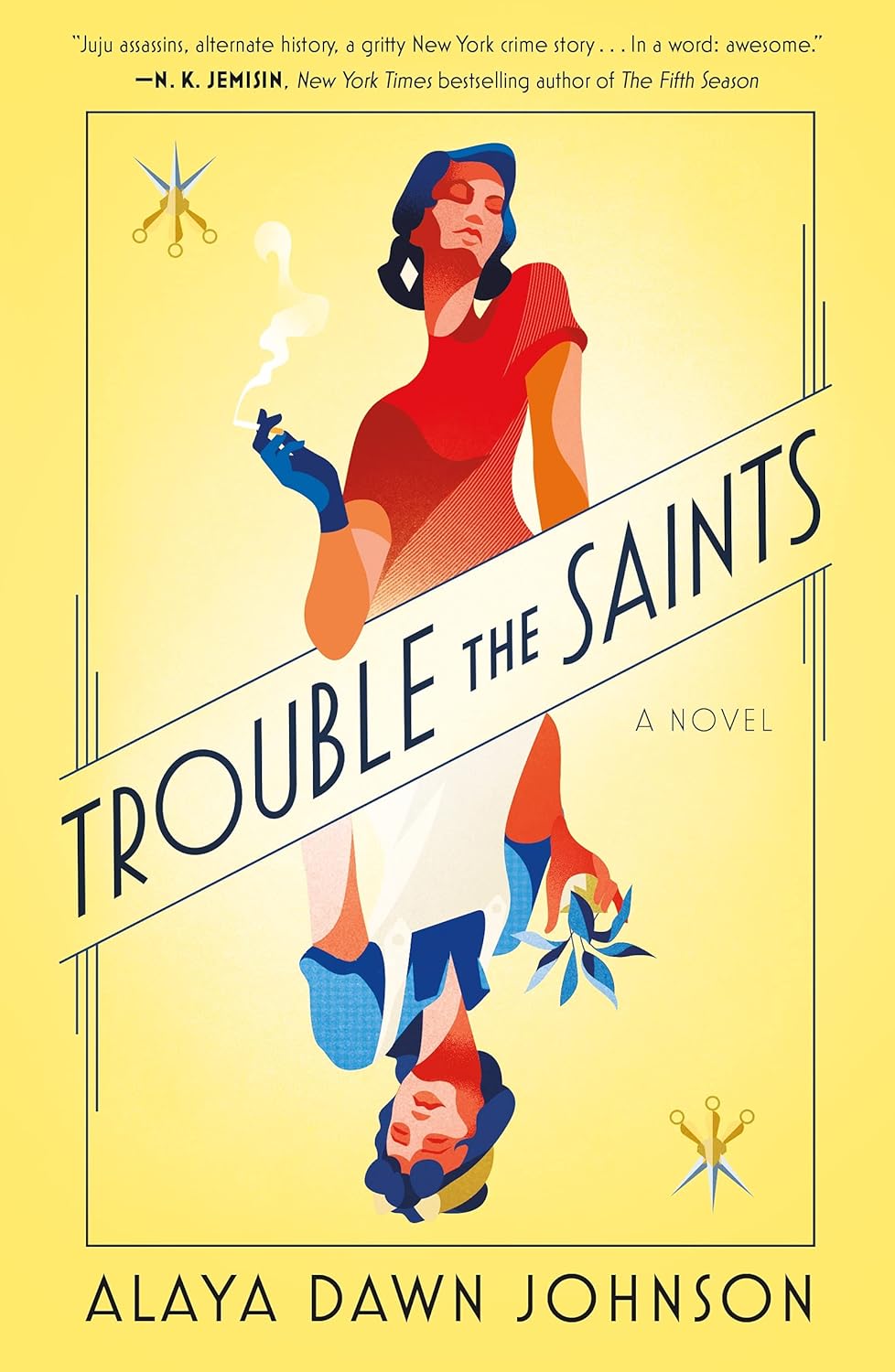
Trouble the Saints by Alaya Dawn Johnson

Trouble the Saints is bewitching, mesmerizing. It begins mid-scene, a move that is always risky but can have big rewards: the writer asks the reader to wade through a little confusion in favor of action and immediacy, trusting her to wrangle the context clues and have patience with the pace at which details and secrets unfold. It’s well done here. There are cards, and dreams, and magic hands – saints’ hands – and a violent backstory for a protagonist who is however strongly committed to her own concept of justice. The reader finds out as she does how she’s been betrayed – and by the one she loves the most.

Phyllis, or Pea or Sweet Pea to those she is close to, is a paid assassin for a Russian mobster in early 1940s New York City. She is known as Victor’s knife, or Victor’s angel – because she only agrees to kill when the victim deserves to die. She is also a ‘high yellow’ woman of color passing for white in a pretty high-stakes setting. Her years-ago lover, Dev, is a Hindu man guided by karma and reincarnation; he could not abide Pea’s work. His current partner is also one of Pea’s dearest friends, the singer/dancer/entertainment manager Tamara, who is Black enough to suffer the full weight of prejudice and discrimination when Pea can sometimes skirt it. So: violence, organized crime, race and racism and colorism, oh and Hitler’s on the rise, and also Pea’s immaculate skill with her knives is owing to her saints’ hands, which manifest in different ways for different individuals. Dev can sense threats with his. Tamara doesn’t have the hands, but she is an oracle: with her great-aunt’s cards she can read fortunes, or the future, or both – the rules are revealed slowly, to us as well as to these characters. There are others, with different backgrounds, skin tones, and degrees of magic or understanding. Danger and hauntings are everywhere, but there is also romance and the kind of connection that transcends that label.

Trouble the Saints is an astonishing book that keeps surprising, not least with its changes in perspective. These subjects range widely and never feel overambitious for the remarkable Alaya Dawn Johnson, who imbues even the gruesome with poetry. She’s a new name to me but one I’ll be looking for. It took me a day or two to recover, and I’m still thinking about love, friendship, and what we carry on with us. Whew.


Rating: 8 letters.

The Tiny Things Are Heavier by Esther Ifesinachi Okonkwo

A young Nigerian woman seeks home and belonging in a network of troubled relationships.

Esther Ifesinachi Okonkwo’s The Tiny Things Are Heavier is an expansive first novel about a woman searching for home, love, and belonging. Sommy is a Nigerian immigrant to the United States, a graduate student in literature, a sister, a daughter, a lover, a friend–but all of this leaves her still seeking a sense of identity.

Sommy left for graduate school in Iowa just weeks after her beloved brother Mezie’s suicide attempt. She feels isolated in the cold Midwest and tormented by guilt; Mezie will not take her calls. Eventually Sommy makes a few friends, and deepens and complicates her relationship with her roommate, Bayo, a fellow native of Lagos with a boisterous personality she is slow to appreciate. Then she meets Bryan, a biracial American with a Nigerian father he never knew. She struggles at first to interpret his interest: “She can’t say whether he’s flirting back. If he were a real Nigerian, she would know for sure.”

Their relationship proceeds slowly and then, after a rocky recovery from an early challenge, quickly. Sommy finds Bryan magnetic: handsome, wealthy, and a talented writer. In their second year together, they travel to Nigeria. It’s Sommy’s first time home, and the first time she’s seen or spoken with her brother since his suicide attempt. It’s Bryan’s first time in Nigeria. They search for his father, and Sommy shows Bryan her family, her neighborhood, her home. But a series of events culminating in a shocking tragedy causes Sommy to reassess her most important relationships and to call her core values into question. She is forced to consider yet again what it would mean to find a sense of belonging and home.

Okonkwo makes a wise choice to tell this story through Sommy’s compelling close third-person point of view, which portrays her as anxious and exasperated, strong-willed and intelligent, cynical and devoted. She loves her home even as she works to escape it. “If life, she thinks, its surprises, the slices of deep joy contained, its ruggedness and impliability, its contradictions, the implosion of it, the nonsense of it, were a physical place, it would be Lagos.” In returning, Sommy feels “the loss of a place for which to pine. She had gone home, and home did not feel like home.” Through Sommy’s experiences in Nigeria and in Iowa, Okonkwo asks her readers to reflect upon class, privilege, race, gender, and their interlocking power structures, as well as the importance of place to one’s sense of self. The Tiny Things Are Heavier is thought-provoking and unforgettable.


This review originally ran in the May 13, 2025 issue of Shelf Awareness for the Book Trade. To subscribe, click here.


Rating: 7 bottles.

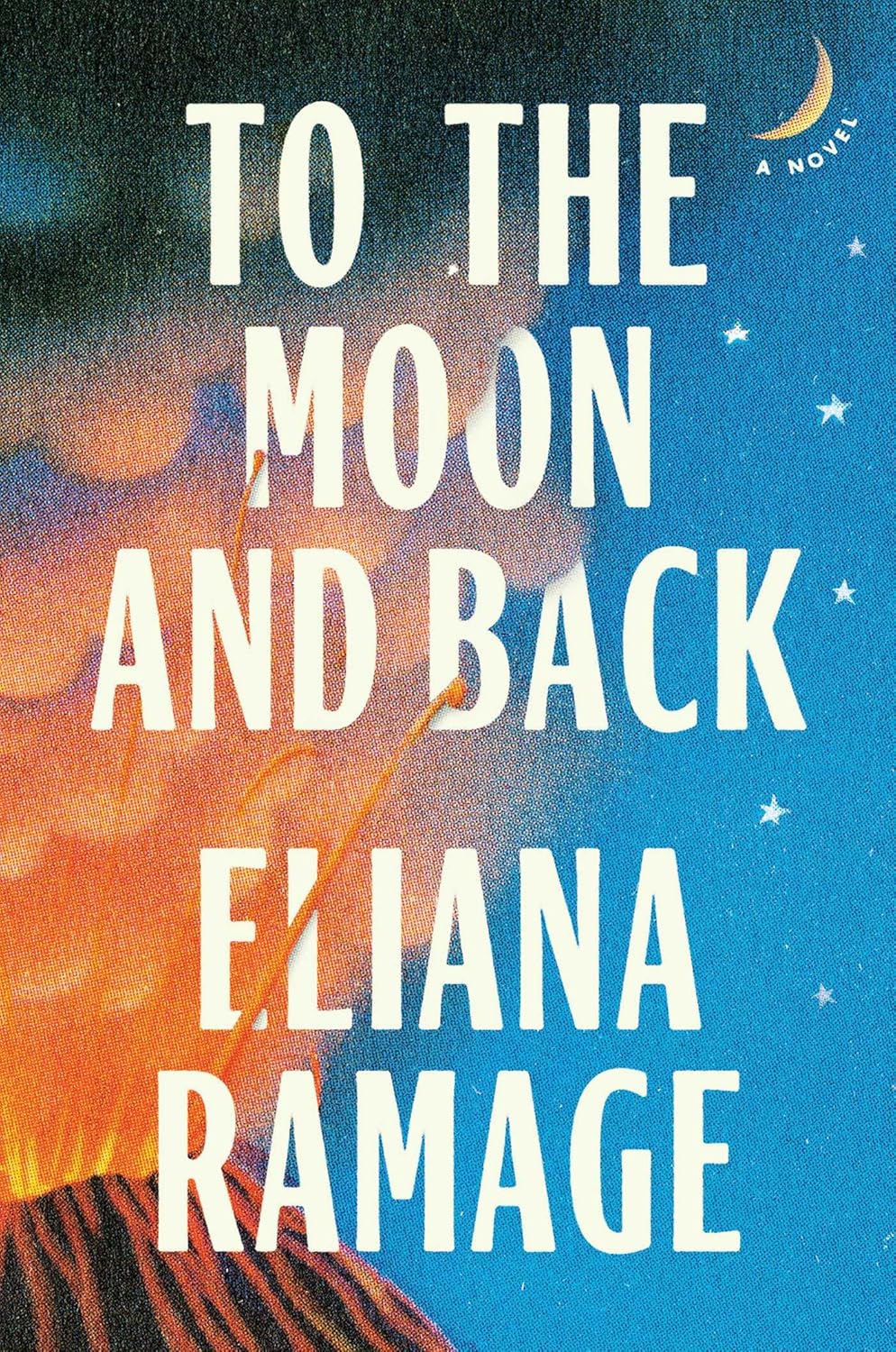
Maximum Shelf: To the Moon and Back by Eliana Ramage

Maximum Shelf is the weekly Shelf Awareness feature focusing on an upcoming title we love and believe will be a great handselling opportunity for booksellers everywhere. The features are written by our editors and reviewers and the publisher has helped support the issue.

This review was published by Shelf Awareness on March 25, 2025.


Eliana Ramage’s debut, To the Moon and Back, is a far-reaching, ever-surprising, intricate novel about identity, family, ambitions, career, romance and, yes, astronomy.

When readers meet Steph Harper, she is almost six years old. “I imagine her terrified. Our mother. Two children in the backseat. She drove like a woman followed, even after we left him at the foot of that tall hill. There was blood there, back in Texas, and tiny shards of glass still covered my sister.” Their mother, Hannah, is in flight from a vague threat–abuse, trauma–with her two little girls in tow. Precocious Steph is already developing her obsession with astronomy. Kayla is just a baby, sparkling in broken glass but unscathed by what haunts the others: “Our mother would never have Kayla’s confidence because Kayla had no memory of another self. Of another place. Of what was possible, here on earth. Maybe what was wrong with our mother was also wrong with me.”

From Texas, the fragile family resettles in the Cherokee Nation, in Tahlequah, where Hannah hopes to recover community and reclaim her heritage. Steph and Kayla learn to speak Cherokee. Steph watches the sky and fine-tunes her plans to become an astronaut: when readers meet her for the second time, she is 13 and concerned only with getting into Exeter Academy, which she hopes will put her on course for Harvard and then NASA. She studies the biographies of astronauts and the hard science she will need, with the help of a telescope gifted to her by her mother’s new boyfriend, Brett. “It had been my goal to understand the origins of earth, the universe, and everything in it by my fourteenth birthday. I was behind schedule.” This dream is what gives Steph’s life focus; she needs this to live. “I’d picture an astronaut watching me back. Some astronaut would call his daughter through mission control and she’d say tell me what you see and he’d say oh, the Northern Hemisphere, North America, and that would be true, but also true was Oklahoma, a field, a tree. A girl alone, looking up.” It is also true that the dream, which in some ways saves her, may be what keeps her from finding happiness in relationships on Earth: with her mother, her sister, or the love of her life.

Distracting her along the way are her feelings for girls, which she suspects will not be appreciated in Tahlequah: “If I could figure out the money and the applications and the getting myself to college, I decided I would be gay. Or bi, maybe? At schools like Harvard, they let you figure that out.”

As Steph moves from Tahlequah to Hollis College in rural Connecticut, a parallel character is introduced. She was named Della Owens at birth, when she was adopted by a Mormon couple in Provo, Utah. But as the center of a legal case resting upon the Indian Child Welfare Act, she became known as Baby D. Many Native Americans believe she belongs with her people. Della’s path intersects Steph’s when they find themselves at Hollis together, and they will intertwine from there, coming of age in parallel and navigating romance, Native heritage, and ambition.

For a portion of the book, Della’s first-person voice alternates chapter-by-chapter with Steph’s, which otherwise dominates. Later, these perspectives are joined by various epistolary elements: e-mails, social media posts, text messages. To the Moon and Back excels in surprise; these points of view are only one area in which Ramage takes her reader in unexpected directions, geographically and otherwise. The novel is gloriously expansive, epic, and sweeping. It covers just a couple of decades, from 1995 to 2017, although the history of previous generations certainly comes to bear on the present timeline. But like Steph herself, the story keeps reaching beyond its expected limits. It is not only a coming-of-age story, but also about a variety of Native American experiences, and about queer experiences and those intersections. It’s about lofty goals, astronomy, and yearning. Just when readers grasp the enormity of Steph’s single-minded focus on becoming an astronaut, she reaches further, to becoming a better human being. The events of Steph’s life are often sensational, but always, in Ramage’s expert storytelling, believable.

So many threads would be too much for a less skilled writer to wrangle, but these characters are developed with such steady pacing, depth, and perfect detail that they always feel natural. A plot summary with spoilers would sound, perhaps, absurd. But To the Moon and Back is anything but. It is a complex, absorbing, thought-provoking novel, compulsively readable. Steph is exceptionally eccentric, and her story is also universal, all-encompassing. Her impressive character arc comes, eventually, to wisdom and an unlikely peace: “I want to love the universe, even if I don’t know what it is. I do not have to know what it is.” Readers will be enriched for having shared these pages with her.


Rating: 9 M&Ms.

Come back Monday for my interview with Ramage.

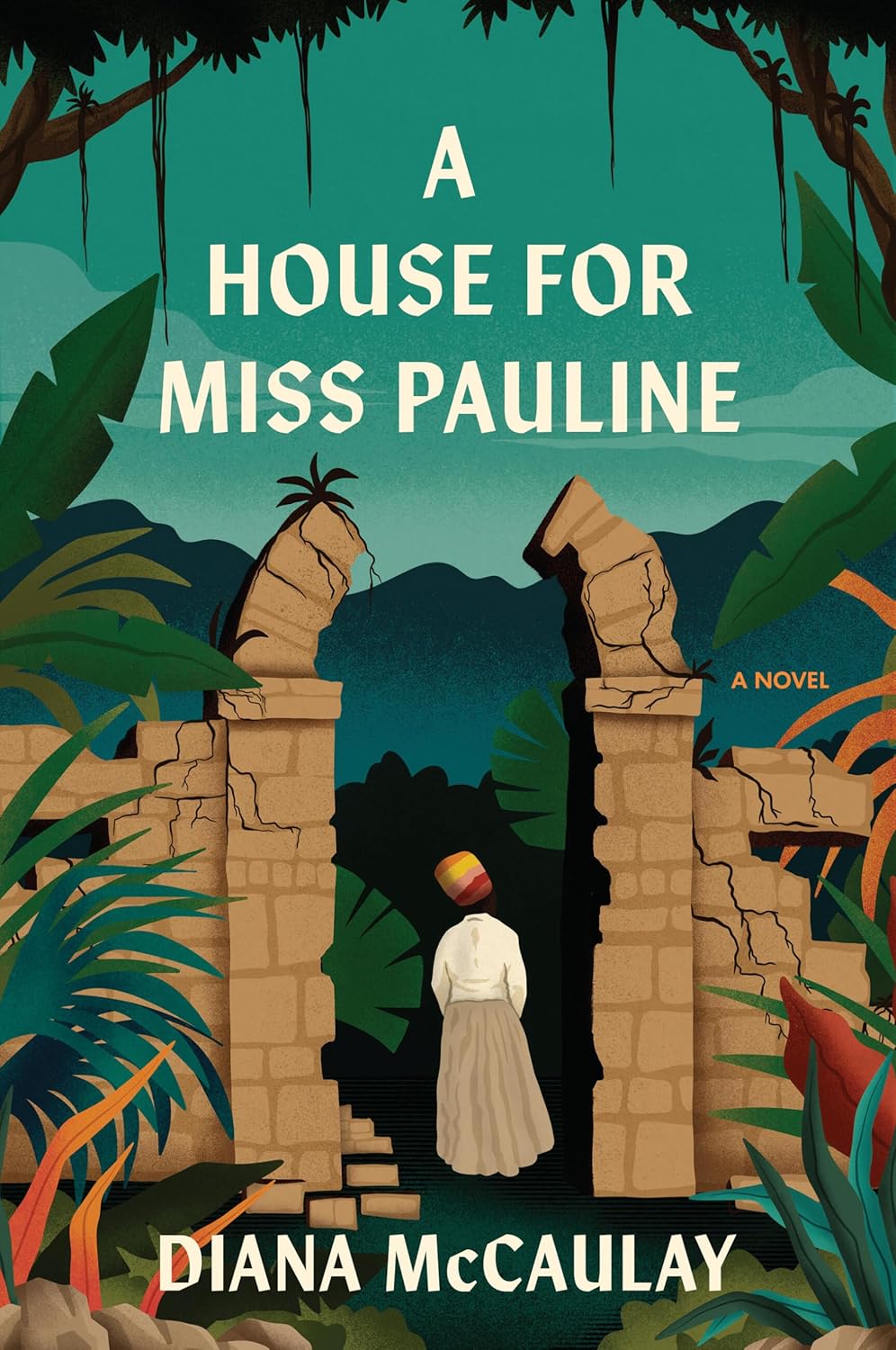
A House for Miss Pauline by Diana McCaulay

Near her 100th birthday, a rural Jamaican woman faces the good works and wrongdoings of her own life and her island’s history in this richly written novel of vivid characters and big themes.

Diana McCaulay’s sixth novel, A House for Miss Pauline, features an indomitable 99-year-old woman in rural Jamaica, trying to reconcile rights and wrongs near the end of a long life. Miss Pauline exhibits a brave honesty that endears her to readers as she wrestles with not only her own actions but centuries of wrongdoings on an island steeped in sugar and slavery. Kingston native McCaulay (Gone to Drift) evokes a rich setting through the food, climate, and other details, such as her characters’ Jamaican patwa, which brings them to vibrant life.

Miss Pauline is less than a month away from her 100th birthday when the stones of her home begin to shiver, shake, whisper, and howl to her. She has lived in the village of Mason Hall in Jamaica’s St. Mary parish all her life, having borne two children with her beloved (long-dead) partner, had many friends and lovers, and been an elder to the town. The village is built largely of stone salvaged from a plantation big house Miss Pauline once discovered and designated for reuse in building her own home and many other structures.

In this literal and symbolic rebuilding, she led her community in reclaiming what had been stolen: land, human lives, freedom. She is certain now that the stones are prompting her to reckon with her own life’s work: community building, but also the unresolved disappearance of a white man who came to Mason Hall decades ago to challenge Miss Pauline for the ownership of her land. A House for Miss Pauline is a deeply captivating story of one complicated, admirable life and the nuanced history of Jamaica. It grapples with how people are connected to place, and how that plays a role in the concept of land ownership and responsibility. “Does the cotton tree judge her for what she did? Surely it has seen worse? How to evaluate crimes, one against the other?”

Miss Pauline turns first to her granddaughter in New York, and then enlists a local teen, Lamont, for help with the mysteries of the Internet and a smartphone. Lamont, who’s alone in life, will play a role beyond research assistant for the near-centenarian, prompting consideration of what constitutes family. In her attempts to establish the future of her home and her land, Miss Pauline will also face surprises about her own history: “Maybe you have to go into the past to make the present right. Maybe the long ago is demanding something of the here and now.” Thoughtful, defiant, and just, the frightened but fierce Miss Pauline is uncowed in the face of youth and change; she’s a hero for readers of all backgrounds.


This review originally ran in the January 17, 2025 issue of Shelf Awareness for the Book Trade. To subscribe, click here.


Rating: 7 panganat.

Maximum Shelf: Old School Indian by Aaron John Curtis

Maximum Shelf is the weekly Shelf Awareness feature focusing on an upcoming title we love and believe will be a great handselling opportunity for booksellers everywhere. The features are written by our editors and reviewers and the publisher has helped support the issue.

This review was published by Shelf Awareness on November 18, 2024.


Old School Indian by Aaron John Curtis is an engrossing trip cross-country and through time with an unusual protagonist-and-narrator duo, who together explore family, culture, history, identity, health and healing, community and connection. With serious situations and heartbreaking turns, this debut novel is both thought-provoking and hilarious.

When readers meet Abraham John Jacobs (Abe), he stands half dressed in his great-uncle’s trailer on the reservation where he was born and raised. He’s 43 years old, ill with a yet-undiagnosed malady, and he’s reluctantly agreed to let Uncle Budge try a healing. “If Rheumatologist Weisberg hadn’t canceled his appointment the day before he was supposed to finally get a diagnosis, Abe would probably still be in Miami, trying to decide which Halloween parties to attend.” Budge is an aging former alcoholic with a Butthole Surfers t-shirt stretched across a big belly; his spiritualist mystique fits in between more pedestrian concerns. “Not everythin’ we’re put here to do feels great,” he points out.

Abe has flown in for this visit, or recuperation, minus his wife, Alex, with whom relations aren’t so strong at the moment. The narrator, Dominick Deer Woods (whose identity won’t be clear for some time, and who is given to direct addresses to the reader), acknowledges that “Abraham Jacobs might not sound like an ‘Indian’ name, but you’ve got the hardcore Catholic first name and the surname of what used to be the biggest landowners on Ahkwesáhsne. So if you’re in the know, then you know the name Abraham Jacobs is rez as hell, cuz.” Feisty, bold, and brimming with voice, Dominick enriches this account at every turn.

This latter-day Abe, in Ahkwesáhsne in 2016 with the yet-to-be-diagnosed autoimmune disorder, anchors the novel’s present timeline, which is interspersed with flashbacks to the story of Abe’s life up to this point. Dominick relates Abe’s childhood and teenaged years in less detail, but focuses in earnest when he leaves the rez to attend Syracuse University, where he immediately meets Alex, a larger-than-life, sparkling, Miami-born, blonde musical theater major with whom he will be permanently infatuated. With Alex, Abe moves from Syracuse to Virginia to Miami, enjoys an expansive and mostly fulfilling sex life with a multiplicity of partners of all genders, performs at open mic nights as a budding poet, and eventually marries. Alex has been a regular on the rez for Thanksgiving holidays (a high point for the Ahkwesáhsne Kanien’kehá:ka, who white folks know as Mohawk Indians, and, yes, Dominick gets the irony) for decades. But he will take his time revealing why she’s not here.

At the rez, Abe gets sicker. The lesions on his lower legs look terrible but feel okay; his joints look fine but cause him excruciating pain. His medical team back in Miami is slow with a diagnosis, but when it comes, it’s grim. His faith in Uncle Budge’s healing increases with his pain, desperation, and reluctant observation of the older man’s wisdom. Lying on the carpet to be massaged is one thing; a much harder part of the process involves Abe examining his relationship with his family and the reservation community. The situation with Alex–still at home in Miami while Abe deteriorates up north–continues to decline. Unexpected help may yet be on the way.

Dominick Deer Woods brings intriguing dimensions to this novel. He is “your proud narrator,” while Abe is “our humble protagonist.” He reviews that Abraham Jacobs is “a Native name but that doesn’t make it an Indian name. Dominick Deer Woods, though? You could light a peace pipe with it.” Dominick in these and other respects exists in contrast to Abe. Where Abe is serious, hesitant, and out of touch with Ahkwesáhsne, Dominick is hard-hitting, informed, playful, angry, and very funny. He offers an interplay, a not-quite-literal dialogue, throwing Abe into relief, helping to illustrate and define him. He also offers poetry, and one of the most electrifying descriptions of writing poetry that readers are likely ever to come across.

Abe’s life and Dominick’s smart observations of it present a nuanced investigation of family (by both blood and marriage) and several layers of identity: what it means to be Ahkwesáhsne Kanien’kehá:ka (or, if you must, Mohawk); to be from the rez, on the rez, off the rez; and to navigate American history and modern cultural tropes. Old School Indian is concerned with gaps and distances: between the reservation and Syracuse, between Syracuse and Miami, between Abe and Alex, between Abe and his family back on the rez, between Abe and Dominick. As middle-aged Abe confronts difficult truths about himself, his body, and his relationships, he will consider how he wants to move through the world in large and small ways: in poetry, in love, in health. Dominick observes about a teenaged band that plays on the reservation, “No gig… will be as well-received as this one, since the reality of them will always be chasing listeners’ memories. But they have tonight, and they play and sing like the world is ending tomorrow.” Abe may yet do the same, and he and readers will be better for it.


Rating: 8 gingham sheets.

Come back Monday for my interview with Curtis.