



Publishing by Gail Godwin

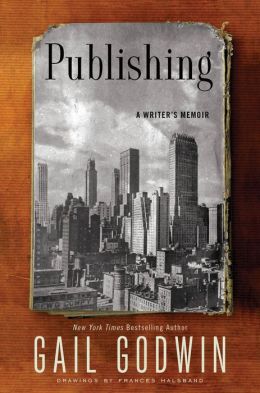
In a winning voice, novelist Gail Godwin shares her experiences in publishing, which are alternately humorous and moving.
publishing

Gail Godwin is the author of 14 novels, as well as story collections, nonfiction and memoir, now including Publishing: A Writer’s Memoir, which she calls a “meditation on publishing.” In vaguely chronological fashion, she recounts her experiences with the industry; toward the end, she reflects upon earlier times.

Godwin begins with her years as an aspiring writer. Knowing well her mother’s progress from collegiate playwright to journalist to author of magazine romance stories, she is plagued by a hunger for publication and success (which presumably come together). She writes about failed marriages, fiction workshops and teachers who were encouraging and helpful (as well as those who weren’t), rejection and, finally, the book that sold: The Perfectionists, published in 1970. Several poignant chapters cover the “dance” between an author and an editor, with vignettes of each of Godwin’s dance partners over the years, several of whom she lost to unexpected deaths.

At points, her tone becomes elegiac, but Publishing is often funny and joyful as well. In a series of anecdotes, Godwin muses on book tours (the question of funding, author escorts, how long a reading modern audiences will tolerate, the new practice of hiring facilitators to help authors along in public appearances) and the value of bad book reviews. She profiles wonderful, helpful, joy-bringing people, and though she humorously describes the less-pleasant people she has encountered, she graciously avoids naming names. These entertaining, elegant, knowing recollections are accompanied by beautifully simple and appropriate black-and-white line drawings by Godwin’s friend Frances Halsband, which subtly add to the reader’s experience.

While her accounts of writing and publishing are fascinating and amusing, Godwin’s central strength is in her utterly charming personality: wise, occasionally self-deprecating and quietly playful. As promised, Publishing is not a history of the industry nor an instructive manual for the next generation of aspiring writers. It’s simply one woman’s well-told memories, peopled by appealing characters, sketched with wit. Stories about family, travel, love and life make this a book not only for fans of memoir, or dedicated readers, writers, editors and publishers, but for anyone who has pursued a dream or appreciates those who do.


This review originally ran in the January 8, 2015 issue of Shelf Awareness for the Book Trade. To subscribe, click here, and you’ll receive two issues per week of book reviews and other bookish fun!


Rating: 7 funerals.

Teaser Tuesdays: Publishing by Gail Godwin

Teaser Tuesdays is a weekly bookish meme, hosted by MizB of Should Be Reading.

publishing

The plentifully published Gail Godwin looks back on her career in Publishing. She is charming and humorous as well as moving; and I think these lines begin to express that.

“What kind of editor would you like to work with?” was Robert Gottlieb’s first question to me in his office, and I replied rather pompously, “Well, it will have to be someone who appreciates great literature,” then burst into sobs.

and several paragraphs later,

…on that late 1970 December day, he waited out my sobs and then said kindly, in response to my Great Literature stipulation, “Well, Gail, I’m afraid that’s going to be me.”

Lest you think her, well, obnoxiously pompous, I assure you she had reasons to be crying that day. And this description of these events is, I think, sweetly funny. I do recommend her.

This quotation comes from an uncorrected advance proof and is subject to change.

from the New Republic: on books

Thanks, again, to Liz for sending this along. The New Republic‘s issue of October 21, 2013 featured a cover focus on books and publishing, with five articles included. They range from a one-page infographic to 3 pages long; no serious time commitment here, although you will have to find them. I accessed these stories through a database (Ebsco, if you’re curious) through my employer; you may have similar access through your local public library, for example. I know that on Houston Public Library’s page you can go to “research databases” and search for the publication you want (New Republic), and then you’ll need to put in your library card number to see the articles. Contact your local librarian if you want to get in and you need some help; she or he will be happy to assist. Or, there’s always the print edition, if you subscribe or know of a decent newsstand!

I found these articles interesting (obviously) and wanted to share just a few thoughts. In the order I read them (I have no idea how this relates to the print magazine):

  • “Books Don’t Want to Be Free: how publishing has escaped the cruel fate of the other culture industries” by Evan Hughes examines the fact that books have avoided the way music and movies have become open to pirating and price drops. Those industries are struggling, Hughes writes, in ways that the book publishing industry isn’t. (And don’t even get started on print magazines and newspapers…) This article is optimistic and thus refreshing. It touches on the recent price-fixing court case between a group of major publishers, and Amazon. It also speaks to pricing differences between e-books and traditional print, which is addressed in the next item:
  • “The Words Business, In Numbers,” an infographic (sort of) identifying trends in revenue (e-books vs. print), reader trends, and foreign readership. In a word, “e-books are growing the pie.”
  • “The Dastardly Defender of Letters” by Laura Bennett is an article about and interview with Andrew Wylie, “who still makes millions off highbrow.” He is an infamous agent for clients including – I shamelessly reproduce those listed in the article – Amis, Nabokov, Bellow, Rushdie, Roth, and more in that vein. He is delightfully curmudgeonly, snobbish about the lowbrow, and defending books as they should be made (says he, and I largely agree). This was the most fun piece to read. His apparent serene calm regarding the future of traditional books was heartening.
  • “I Hope They Read Books in Hell” by Norene Malone, on the other hand, touches on the opposite end of the spectrum. Malone visits with the editor, Ruby-Strauss, and agent, Leavell, of Tucker Max, author of I Hope They Serve Beer in Hell.” Max’s cache, if you didn’t know, is being 1) internet-born and 2) offensive as all get-out. Ruby-Strauss and Leavell work with others in the same vein: Snooki from Jersey Shore, that University of Maryland student who wrote that bitchy email, Shit My Dad Says (whose twittering I like, btw). It was interesting to consider that counterpoint, the lowbrow, which (it is argued) helps finance the highbrow.
  • Finally, “The Rancid Smell of Success” was written by Lionel Shriver, author of a good number of novels, most famously We Need to Talk About Kevin, which became a major motion picture. She laments the changed life of a successful novelist: from the scary, financially insecure obscurity of an undiscovered writer to the publicity-exhausted successful author – who is still financially insecure and has to immediately begin work on the next book, but can’t because of all the promotional demands of the current one. It’s a beautifully written article, and she acknowledges the problem with her complaints about the literary festival she has to attend in Bali; but she justifies her complaints, too. It’s a thoughtful piece.

On the subject of e-books versus print – and the question of the future of the traditional book (“is it dead?!” they ask hysterically) – others have said it better before me, but I’ll briefly file my position. The birth or the rise of the e-book does not signal the death of the book, any more than the birth or the rise of television sounded a death knoll for radio. Radio has changed over the decades, but we still have a recognizable semblance of what it was when the television was born. There’s room for both e- and print books in this world, and both have their uses, their pros and cons, their seasons if you will; and both have their fans. Those of us who prefer print (even if we occasionally read electronically!) will continue to buy and borrow real books. Everybody calm down, is my concise message. And please, read books – any kinda way.