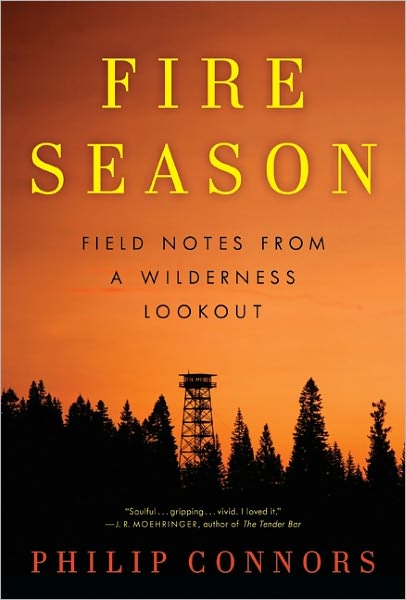
Today we’re visiting my father again, who’s traveling this summer. I put the screws on to compel him to buy a copy of Fire Season for himself to read on the road because I loved it so much (see here). I promised to buy it off him if he regretted the purchase; and I may, anyway, because I want to own a copy. Actually, though, I don’t know if it’s for sale. He did like it. I’m compiling some of his thoughts via email to share with you; they’re mostly in response to my original post (see link above) but I thought his slightly different perspective was worth sharing. Here’s Pops.
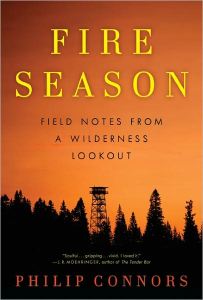
I finished Fire Season yesterday while I was camping in the finest of the rain forest valleys in Olympic NP, the Hoh river. I found it as exceptional as you said. The timing was impeccable; e.g. I was reading his passages about the magical meditative element of long walks… (or, I would say, endurance activities – you could read Bill McKibben’s Long Distance for a bit of the same; I found it wonderful, and you should know who McKibben is anyway for his potential to be one of the great environmental soothsayers of our time) …and it helped me decide a plan for my Monday walk: a full 10 hour day of wandering up and down the valley in rain and mist marveling at the magical forest – when I wasn’t daydreaming. I loved how he wove in stories of Kerouac, Edward Abbey, Chief Victorio, Alice the dog, Aldo Leopold, Cormac McCarthy, Gary Snyder (new to me) – and others. And we certainly learn about wildfires. Thanks for the tip.
So glad you liked it!! [And, incidentally, what safety precautions are you taking on 10-hour walks? Do you call Mom to let her know you’re going off on such things, and then call in when you return?]
And have you made the connection with current events? – with a massive fire burning for weeks now in eastern Arizona (the western borders of Fire Season) and today all around the Carlsbad Caverns area in NM (within the eastern horizon view of Fire Season).
Maybe not specifically those fires; but West Texas has been ravaged for months and it made my reading of the book a touch more personal. This spring race series, we raced two races in a row only to hear that the race course saw a wildfire start as we were leaving. (We promise we didn’t start these fires.) One was in Arksansas, one in central Texas. And we have a friend/teammate who tried to race in Ft. Davis, but the event was canceled due to one of the bigger fires we’ve seen; it swept across a considerable part of the state we’re used to driving and riding through. Close to home.
Did you also make the connection that we all went camping in the Gila Wilderness twice when you were 3 and 4 yrs old? (and that, because we had been there before you were born)
No, of course I don’t remember that, but very cool!
I really endorse what you said about his eclectic voice, and the many priceless vignettes he blends into his story. (I really wish I had read it with a highlighter!)
I also found him to be an endless stream of contradictions (perhaps we all are?) – he could be a sedentary slug for hours/days on end, but was also often driven to minimalist walks & overnights (an evening walk from a summit inevitably involves a serious down & UP!); he obviously functioned well in cities & bars, as well as wilderness; he became well versed in much wilderness language, yet succumbed to the elementary, pitiful, dreadful trap of the young fawn.
I cried over the fawn.
And, re: your comment about the contradictions. I am reminded of David Guterson’s The Other as well as Jon Krakauer’s Into the Wild (the first, fiction, the latter non) – both books about young men going into the wilderness, thinking they wanted to get away from it all, but also strangely and paradoxically clinging to certain odd elements of society. As the protagonists of both books came to unpleasant ends, I think perhaps Connors has found the perfectly balanced way to do it! In fact, I think I mentioned balance in my initial review. The writing in his book is balanced; and his interactions with his world are balanced. His saintly wife helps him be balanced. I daresay we all aspire to a lifestyle like this; I know I do, and I think, Pops, that you do. But then, you’re closer than most of us right now!
Based on your and my reactions, I’m guessing that readers will appreciate many different aspects of this book. You particularly noted the lessons about wildfire & forest policy, which I knew much of already. I loved the many references and new details about Kerouac, Snyder and the various personalities of the Beat generation who so influenced my 60s & 70s, and subsequent characters like Edward Abbey and Dave Foreman.
You barely mention Alice! I thought she was an elusive minor character, disappearing for times but playing a key role at many turns. Moments were familiar to Barley’s world; like her unilateral retreat to accompany Martha home from the lookout summit, and her personality change from city to wilds. Most poignant – Alice evoked my most secret lonely moments, far up a mountain trail without Barley’s companion spirit, spunk and relentless energy. “Alice is the only living being I know who will take a forty-mile walk in the woods without any need of cajoling, planning, or consulting a calendar.”
My apologies to Alice; you’re entirely right… she was a special creature and character, and a neat side-story proving (yet again) that dogs are our best friends and offer relationships unlike what we humans can offer one another. Here, I’ll treat our readers to a picture:

Hops (brown) & Ritchey (short white hair) who live with Husband and I, and my parents' Barley (scruffy white hair)
Finally: “…the movements of my limbs help my mind move too, out of its loops and grooves and onto a plane of equipoise… If I weren’t a walker I suppose I would be a television addict, a dope fiend, a social butterfly.”
Because I had to look it up, I’ll share. Equipoise: an equal distribution of weight; even balance; equilibrium.
Thank you for your musings, Pops. I hope we’re (still) encouraging folks to find this book! I think I’m ready to call this my best read of 2011 to date.
Filed under: book reviews | Tagged: creative nonfiction, fire and firefighting, memoir, nature, nonfiction, Pops | 11 Comments »









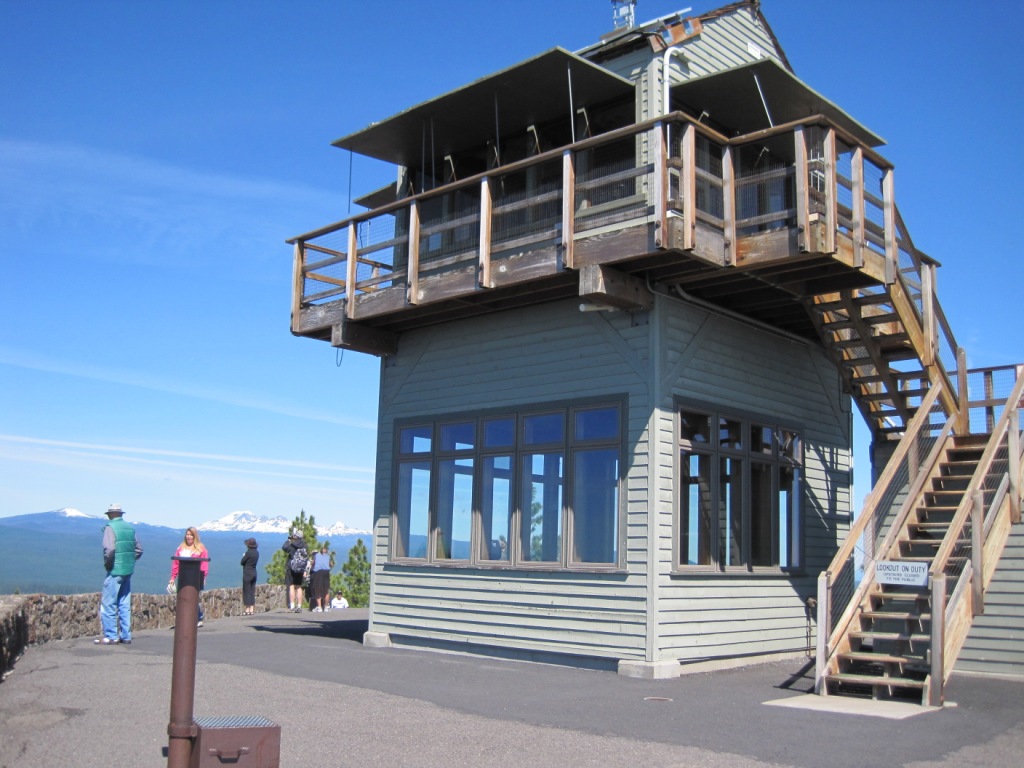

 On a related note: Pops has also been getting into Edward Abbey this summer. I’m not sure if I had a role in that or not; I did strongly (forcibly?) recommend Fire Season to him and cite Edward Abbey as a related recommendation. He may have gotten there on his own, but at any rate the two authors (Connors & Abbey) have a clear link. He actually approached Powell’s with an Edward Abbey need, and reported that, while he’s aware that Abbey is a somewhat obscure choice, they had a full shelf of it and were very happy to talk and help. He points out that this is unsurprising, for Portland and for Powell’s – should be a specialty of theirs – but no less gratifying. He bought three books, including one of Abbey’s novels. I’m not sure I even knew he wrote fiction!

 pagesofjulia