book beginnings on Friday: The Happy Atheist by PZ Myers

Thanks to Rose City Reader for hosting this meme. To participate, share the first line or two of the book you are currently reading and, if you feel so moved, let us know what your first impressions were based on that first line.

happyatheist

I am pleased to be reading blogger PZ Myers’s new book, The Happy Atheist. It begins:

On any fine morning in rural Minnesota, I can step outside the door of my home and look a few blocks to the southwest and see the Church of the Assumption of the Blessed Virgin Mary. A few blocks to the west, just out of sight behind nearby houses, lies the First Lutheran Church.

He goes on for several paragraphs naming churches, to the conclusion that in his town of 5,000 people, he has 15 churches to choose among (or not). Which immediately reminded me of an oft-cited Edward Abbey quotation, natually:

Page, Arizona, Shithead Capital of Coconino County: any town with thirteen churches and only four bars has got an incipient social problem. That town is looking for trouble.

(from A Voice Crying in the Wilderness.)

Myers doesn’t go that far – at least not in the opening paragraphs…

This quotation comes from an uncorrected advance proof and is subject to change.

book beginnings on Friday: Young Men and Fire by Norman Maclean

Thanks to Rose City Reader for hosting this meme. To participate, share the first line or two of the book you are currently reading and, if you feel so moved, let us know what your first impressions were based on that first line.

young men and fire

Following an informative and lovely Publisher’s Note, which tells us that this is a posthumous publication of an unfinished (but largely formed) work, Norman Maclean begins his book Young Men and Fire with a story about the beginning of his involvement with the Mann Gulch Fire.

It was a few days after the tenth of August, 1949, when I first saw the Mann Gulch fire and started to become, even then in part consciously, a small part of its story.

To think that while the fire was still burning, in 1949, Maclean knew he’d be tied to it forever – though he didn’t begin this book til 1976, and it was unfinished at his death in 1990 – is profound in itself.

I think I am a serious Maclean fan. Stay tuned.

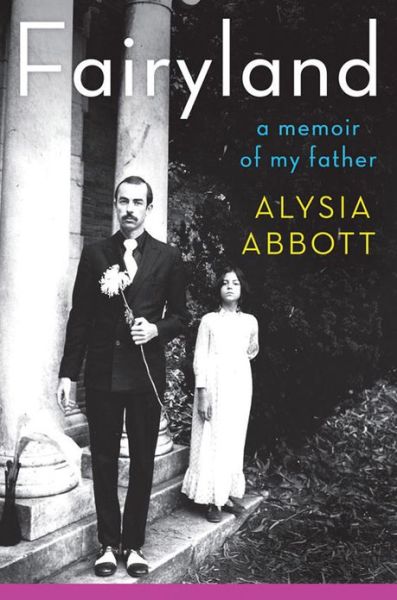
Fairyland: A Memoir of My Father by Alysia Abbott

A daughter’s tender memoir of her father’s life as a single gay man in 1970s Haight-Ashbury.

9780393082524_p0_v2_s600

When Alysia Abbott was two years old, her mother was killed in a car accident. Her father, Steve, moved her across the country to raise her alone as a gay man and single father in 1970s San Francisco–a pioneer in several senses. Alysia’s childhood and teen years took place against the backdrop of a magical Haight-Ashbury district filled with creative, adventurous people like her father (a poet and political activist), recreational drugs and minimal supervision.

Their father-daughter relationship was loving but rocky. When Steve develops AIDS and his health begins to plummet, he calls 20-year-old Alysia home from her studies in Paris and New York City to nurse him, a full-circle caretaking demand that she resents at the time.

Fairyland is foremost a daughter’s memoir of a much-loved parent. She continues to become acquainted with him through her research, most notably in reading copious notebooks filled with his poetry and journal entries. She colorfully renders an iconic epoch in San Francisco, together with the city’s gay culture and politics, and the early days of the nationwide gay rights movement. Alongside beautiful characterizations (often morphing into eulogies), Alysia paints a stark image of the AIDS epidemic and the Reagan administration’s non-response to it. As a personal story and as a portrayal of an era, Fairyland is powerful, loving, authentic, and contains Steve’s artistic legacy in its lyricism. It acknowledges Steve’s impact on Alysia–and both their shortcomings–with gratitude and grace.


This review originally ran in the June 7, 2013 issue of Shelf Awareness for Readers. To subscribe, click here, and you’ll receive two issues per week of book reviews and other bookish fun!


Rating: 9 brightly colored t-shirts.

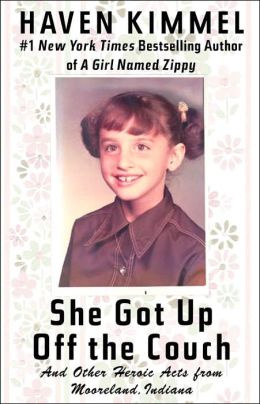
She Got Up Off the Couch by Haven Kimmel

couchHavel Kimmel aka Henrietta Krinkle, you are still my favorite.

This book follows A Girl Named Zippy, and I adore Kimmel’s explanation in her Preface: that she would definitely never write a sequel to Zippy, but that people kept on asking her if her mother ever got up off the couch; and here we are. This is an extension of that first memoir, then, with the focus being not on the girl called Zippy (Haven Kimmel herself) but on her mother, who in that first volume was a somewhat shapeless woman who mostly inhabited the couch and read a lot, talked on the phone, watched television, and didn’t worry too much about her children. This is told not unlovingly, but as fact. Zippy’s childhood is on balance awfully joyful and fun, and although a critical adult’s eye might point out lots of points of minor neglect, she clearly loves her family very much. This tone is continued in She Got Up Off the Couch. The family and each of its members is still, realistically, flawed, but lovable and well-loved. Kimmel’s brother is now mostly absent, with a family of his own; her sister marries and has two babies; her father finds work as a sheriff’s deputy (or similar job title); but her mother’s is the great change of this second memoir. This was, what, the late 1970’s I suppose, in a tiny Indiana town of a few hundred people. Zippy’s dad, Bob Jarvis, holds the keys: her mother Delonda doesn’t know how to drive. This will work as a fine metaphor (and indeed is part of the literal action), as Delonda calls a phone number on a television commercial to look into going to college. She wrangles a ride into the next town over for an entrance exam, which places her out of fully 40 hours of college credits. Under Bob’s clear disapproval – he says of the woman who takes Delonda to her test, “time was, a woman wouldn’t have gotten in a man’s marriage that way” – she persists in attending classes, studying, reading, talking to new people, and in 23 months, graduates summa cum laude – and continues on to graduate school. Eventually she earns a Master’s degree in English and becomes a high school teacher. This is all a stunning change. Along the way, to get to school and back, she learns how to drive and purchases a vehicle that is, in itself, a good joke.

She Got Up Off the Couch also follows the format of A Girl Named Zippy: chapters jump around, more as connected anecdotes than as clear narrative. Each chapter stands alone admirably as a hilarious or heartfelt – usually both – nugget of tears, joy, preadolescent confusion, and filial love. [In fact, as soon as I finish writing this review I’m off to read my favorite chapter out loud to Husband, if he’ll let me, while he smokes a brisket in the backyard. If you’re curious, it’s called “Treasure,” and is about a hippie college student hiking cross-country who camps out in the Jarvis backyard for a few days. It’s hilarious and heart-wrenching.] It’s a great structure, this anecdotal style. If I ever write my own mother’s biography, which I keep dreaming about, I have something similar in mind. Yes, there are odd characters that the reader of just one chapter would wrinkle her forehead at; but this is true of the whole book, too. Zippy has had an odd and happy life, and that’s exactly why we enjoy reading about it.

Zippy herself, naturally, also grows and changes in this book. Delonda is our star and makes the most life-changing journey. Kimmel writes in her preface, “I will never do anything half so grand or important,” and I know exactly what she means: the decision of Delonda and other women of her time who broke out of where they were told they belonged have done something for the women of my generation that we are now saved from having to do, if that makes any sense. It is something I’ve long felt about my own mother. But I was saying that Zippy continues to grow up: we see more of her engaging and eccentric friends, Rose and Julie Ann, and we meet a new friend, Jeanne Ann. And when she gets a nephew and then a niece, Zippy becomes hopelessly devoted. The blizzard that sweeps through when her niece is long overdue and panics the family is, again, funny and riveting at the same time.

I’ve now read everything that Haven Kimmel has written except for every single one of her blog posts, and that one children’s book. I hope she is getting to work right now on another book – fiction or non, more Haven Kimmel, stat.

I love it. Funny, true, humble, real.


Rating: 9 cherry-red polyester suits.

Junius and Albert’s Adventures in the Confederacy by Peter Carlson

Adventure, suspense, and a dash of romance make for a highly readable–and absolutely true–Civil War story.

junius
Peter Carlson’s Junius and Albert’s Adventures in the Confederacy opens with the capture of its titular subjects near Vicksburg in 1863, then rewinds to show how they landed in such a predicament. Albert Richardson, an enterprising journalist for the New York Tribune, had decided to travel south as an undercover correspondent, and naturally chose his best friend and fellow newspaperman Junius Browne to accompany him. The stakes were high if they were discovered–the Tribune was reviled as a liberal abolitionist paper–but the two young men were game for adventure. After their capture, they spent nearly two years in a series of Confederate prisons before escaping, half-starved and freezing, to trek overland toward Union lines in December 1864.

Despite the serious and frequently tragic nature of Albert and Junius’s story, the book’s title signals the often playful tone that Carlson (K Blows Top) employs. The descriptions of Confederate prisons like Libby, Castle Thunder and Salisbury are horrific, but there is also the occasional scene of mirth–as when prisoners put on a variety show to celebrate the 4th of July. Besides Junius and Albert, the other colorful personalities in Carlson’s history include a larger-than-life “Union pilot” skilled at guiding refugees over the mountains to freedom, and a beautiful young Southern horsewoman who rescues them during a perilous moment. With eccentric and likeable characters like these, Carlson’s history successfully masquerades as an entertaining adventure story.


This review originally ran as a *starred review* in the June 4, 2013 issue of Shelf Awareness for Readers. To subscribe, click here, and you’ll receive two issues per week of book reviews and other bookish fun!


Rating: 7 weary months.

more on Maclean from Liz

Nature, unfortunately for the organization of academia, is vexingly interdisciplinary.

Why are the activities aboard the Titanic so fascinating to us that we give no heed to the waters through which we pass, or to that iceberg on the horizon?


Last week I posted a review of Norman Maclean’s A River Runs Through It, and other stories. My coworker Liz, who more than once has directed us to some great reads, immediately found and forwarded a 1989 Past President’s Address to the Western Literature Association by a Glen A. Love. Her comment was: “After reading your review I went looking for Maclean biography and found this, I know you dislike the form but I was compelled to send it along anyway.” She’s referring to my dislike of essay collections – I know, it’s terrible, right? but I can’t get excited about collections of essays. A single essay, however, for no good reason, I am game for.

This one turned out to be very interesting. (Liz wins again.) It begins:

Describing the early rejection of the manuscript for his widely admired book A River Runs Through It, Norman Maclean recalls in his acknowledgments the cool dismissal from one New York publisher: “These stories have trees in them.”

And then it largely abandons Maclean; but never fear. It’s a great argument for the failure of Literature to address ecology; it’s a polemic, and sadly no less relevant and (to my inexpert eye) no less correct in its criticisms today, despite being 24 years old. I thrilled to read about great nature writers whom I’ve loved, and also those I haven’t yet discovered (and note the reference to Gretel Ehrlich, of whom I’d never heard until recently). She is mentioned as one of those writers who “seem to slough off their New York or L.A. skins when they confront western landscapes.” If that doesn’t remind you of Phil Connors, you haven’t been paying attention. Maclean inhabits this article mostly in that phrase, quoting a rejecting publisher: “These stories have trees in them.” Love argues that this is one of the tragedies of Maclean’s kind, and a chief failure of the literary establishment: that to write about trees will get you derisively branded with “the contemptuous epithet nature-lover.”

I muse, as I read this article, about some books I’ve read that were partly nature writings, but only as a framework through which to dissect the human condition: Mountains of Light was lovely, and awed by Yosemite, but the author was really there to exorcise the particular demon of his wife’s death; and Almost Somewhere was even more overtly a drama of young women coming of age, and the unfortunate cattiness that often accompanies them, set against the John Muir Trail. This is one of Love’s points, too: that we (as a society, not only as writers & critics) continue to fail to consider nature, or the earth, in its own right, and instead keep considering its role in human experience.

I think Phil Connors and especially Derrick Jensen would agree with Love’s assessments. So, I’m feeling more of that synchronicity that I’ve written of before: I’ve found another kindred spirit, as Anne of Green Gables might say.

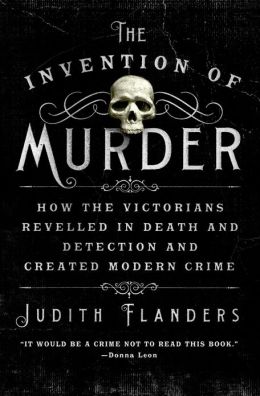
book beginnings on Friday: The Invention of Murder by Judith Flanders

Thanks to Rose City Reader for hosting this meme. To participate, share the first line or two of the book you are currently reading and, if you feel so moved, let us know what your first impressions were based on that first line.

murder

I am pleased to be reading this hefty work of history regarding the Victorians’ fascination with murder – a relative rarity in that era – and the birth of the murder mystery genre in literature (as you know, that’s my favorite genre in fiction). And I’m pleased to share with you a great, and representative, book beginning:

“Pleasant it is, no doubt, to drink tea with your sweetheart, but most disagreeable to find her bubbling in the tea-urn.” So wrote Thomas de Quincey in 1826, and indeed, it is hard to argue with him. But even more pleasant, he thought, was to read about someone else’s sweetheart bubbling in the tea urn, and that, too, is hard to argue with, for crime, especially murder, is very pleasant to think about in the abstract: it is like hearing blustery rain on the windowpane when sitting indoors.

This statement is a little disturbing, but I think inarguable, and maps out where the book is heading.

This quotation comes from an uncorrected advance proof and is subject to change.

The Solace of Open Spaces by Gretel Ehrlich

Edit: see Pops’s review here.


solaceThe observation that sticks with me most from this slim, beautiful book is: it’s interesting how poetic nature writing never grows old for me, even though in some ways Ehrlich’s work here is not particularly new. She is unique, like every one of us snowflakes – I don’t mean to call her derivative; read on – but she definitely follows in a tradition; and what I’m trying to say is, I am always ready for another literary descendant of Thoreau, Leopold and Abbey. Especially when she’s a woman and offers a little different take in that respect.

Gretel Ehrlich is decidedly special, for all that I’ve compared her to the greats that she has followed. For one thing, her writing is exquisite, like perfect drops of water with points of light shining on them. Her story is her own, too. She was a filmmaker in New York City who traveled to Wyoming in 1976 to shoot a film, and also to escape the way in which her life was falling apart: the man she loves, her business partner, had just been given only a few months to live. She hangs around sheep ranches until she becomes one of them, a sheepherder, a ranch hand, a rancher. She visits with the dying man, keeps in touch, in pain, and then he dies far away while she’s preparing to fly home to see him. So her time in Wyoming, in the wild, on the frontier, with animals and laconic men, is a time of mourning and healing, as in Mountains of Light, or somewhat as in Fire Season.

Ehrlich’s wild is not Ed Abbey’s, or Phil Connors’, or Derrick Jensen’s, or Aldo Leopold’s wild; hers is populated by humans, nonnative stock animals and plant species, and irrigation. But it is far wilder than New York City, and far wilder than most of our country then and certainly most if not all of it now. It retained a wildness, including a human wildness. I love her descriptions of the human and animal personalities she comes to know. I also love her discussion of what it is to be a cowboy (or cowgirl, of which there are also several stunning examples).

But the best part has got to be her writing. And as I’m inclined to do in such cases, I’m trying to write less myself and share more of her lovely thoughts and phrases.

Disfigurement is synonymous with the whole idea of a frontier. As soon as we lay our hands on it, the freedom we thought it represented is quickly gone.

The old conundrum. We love it; we want to save and preserve and conserve it so we can enjoy it; but every act of enjoying is a failure of preservation. If we all lived in the wild it would be gone. (Which we’re headed towards, anyway.)

True solace is finding none, which is to say, it is everywhere.

As the title indicates, Erhlich is seeking solace – in the mourning of her lost partner, but also in the need for change more generally, I think.

Because she is the granddaughter of Ralph Waldo Emerson, I imagined she possessed unusual reserves of hardiness. But she protested. “I don’t do a very good job of it,” she said modestly. “I get in these hoarding moods and get mad at myself for all the stupid things I do. Then I pick up this old kaleidoscope and give it a whirl. See, it’s impossible to keep just one thing in view. It gives way to other things and they’re all beautiful.”

Isn’t that lovely? It’s always changing, and always beautiful. (Can’t say I’m not partial to an Emerson allusion, either.)

Winter scarified me. Under each cheekbone I thought I could feel claw marks and scar tissue.

Great imagery here, about the harshness of the world out there, in a Wyoming winter.

The seasons are a Jacob’s ladder climbed by migrating elk and deer. Our ranch is one of their resting places. If I was leery about being an owner, a possessor of land, now I have to understand the ways in which the place possesses me. Mowing hayfields feels like mowing myself. I wake up mornings expecting to find my hair shorn. The pastures bend into me; the water I ushered over hard ground becomes one drink of grass. Later in the year, feeding the bales of hay we’ve put up is a regurgitative act: thrown down from a high stack on chill days they break open in front of the horses like loaves of hot bread.

Derrick Jensen would like that. Ever since I read him (and before; but especially since), I’ve been thinking about the concept of land ownership, so this struck a chord.

And finally –

Leaves are verbs that conjugate the seasons.

Could a person ask for more than this? Leaves as verbs. Gretel Ehrlich, you have won me over.


Rating: 9 cowboys.

book beginnings on Friday: The Solace of Open Spaces by Gretel Ehrlich

Thanks to Rose City Reader for hosting this meme. To participate, share the first line or two of the book you are currently reading and, if you feel so moved, let us know what your first impressions were based on that first line.

solace

Fil wins again with this outstanding and unknown (to me, and I’m pretty sure he said to him as well) little book. Gretel Ehrlich writes beautifully and I love it. She begins:

It’s May and I’ve just awakened from a nap, curled against sagebrush the way my dog taught me to sleep – sheltered from wind. A front is pulling the huge sky over me, and from the dark a hailstone has hit me on the head.

She’s writing about living in Wyoming, nearer nature than most of us do, working as a sheepherder and a ranch hand and escaping her life in New York City and a recent personal tragedy. It’s lovely. I marvel at how I can’t get enough of lyrical nature writing; and this is a woman’s story of dealing with life, to boot. I recommend it. Review to come.

As usual, thank you, Fil.

book beginnings on Friday: The Social Conquest of Earth by Edward O. Wilson, from Pops

Thanks to Rose City Reader for hosting this meme. To participate, share the first line or two of the book you are currently reading and, if you feel so moved, let us know what your first impressions were based on that first line.

wilson

Today’s book beginning comes to us courtesy of my father, who in the spirit of Derrick Jensen’s Endgame and Daniel Quinn’s Ishmael is reading The Social Conquest of Earth, by Edward O. Wilson, with whom Pops is impressed. He writes to me:

This is Harvard biologist Edward O. Wilson explaining the human condition and our impact on the world, using his background in biology (esp. evolution) as well as philosophy, psychology, neuroscience, creative arts, religion, etc. After a unique and compelling preface evoking Gauguin’s “finest work,” this is just the 2nd paragraph of the book.

Writes Wilson:

Humanity today is like a waking dreamer, caught between the fantasies of sleep and the chaos of the real world. The mind seeks but cannot find the precise place and hour. We have created a Star Wars civilization, with Stone Age emotions, medieval institutions, and god-like technology. We thrash about. We are terribly confused by the mere fact of our existence, and a danger to ourselves and the rest of life.

Like Jensen’s writing, this both rings true and terrifies at the same time. At least that’s my reaction. What’s yours?