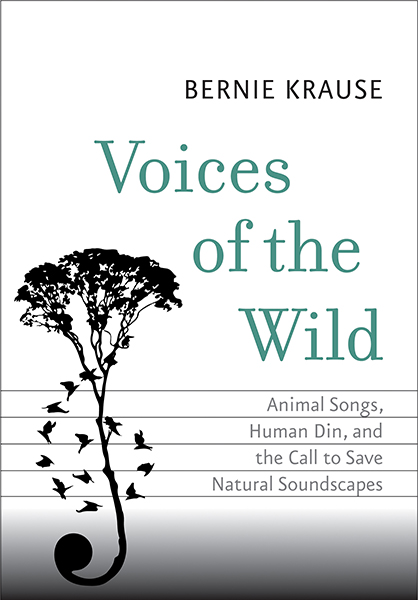
Voices of the Wild: Animal Songs, Human Din, and the Call to Save Natural Soundscapes by Bernie Krause

An engaging introduction to the science of soundscape ecology, from a pioneer of the field.

voices of the wild

With Voices of the Wild: Animal Songs, Human Din, and the Call to Save Natural Soundscapes, Bernie Krause shares his delight in the sounds of the natural world and makes an impassioned case for the importance of such acoustics.

Krause is a soundscape ecologist who’s been recording the noises of natural settings for nearly 50 years. As a pioneer in his field, he’s acquired his knowledge the hard way, beginning with the technological challenges of recording with equipment designed for indoor use, and has seen changes as the field has grown. For example, the scientific establishment’s emphasis on single-species recording is giving way to Krause’s preference for capturing an entire biome.

Voices of the Wild is designed to educate laypeople on the existence and significance of soundscapes, and how to undertake amateur recordings. Krause introduces the terms “geophony” (non-biological sounds, as of wind and water), “biophony” (non-human biological sounds, like bird- and whalesong) and “anthropophony” (human-created sounds, from speech to traffic). He makes predictions about the future of soundscape ecology, including technologies that will change the field and its impact on various disciplines, from architecture (interior soundscapes have implications on education and psychology) to biology (in which soundscapes inform our understanding of biodiversity), and many more. The field has enormous scientific and cultural relevance, for example in comparing the therapeutic value of biophonies to that of music: the former “may be more beneficial, perhaps because they are culture neutral.” Accompanied by recordings available online, Voices of the Wild offers a mildly academic but fascinating look at a little-known but potentially influential field.


This review originally ran in the September 4, 2015 issue of Shelf Awareness for Readers. To subscribe, click here, and you’ll receive two issues per week of book reviews and other bookish fun!


Rating: 6 orcas.

While Glaciers Slept: Being Human in a Time of Climate Change by M Jackson

A scientist’s personal reflections on climate change and personal loss.

while glaciers slept

“I cannot untangle in my mind the scientific study of climate change and the death of my parents.” M Jackson is a scientist, National Geographic Expert and glacier specialist, but her memoir While Glaciers Slept: Being Human in a Time of Climate Change rarely takes a scientific perspective and never claims objectivity. Rather, Jackson tells the story of losing both her parents when she was a young woman just embarking on life, and the trauma and extended grieving process that resulted.

Following a brief, lovely foreword by Bill McKibben, Jackson poetically conflates her loss with the slow and still mysterious effects of anthropogenic climate change. Her scientific background and explorations of fascinating places–Denali and Chena Hot Springs in Alaska, Zambia with the Peace Corps–inform her writing and yield striking images, as she runs on spongy Alaskan tundra or contemplates cryoconite holes atop glaciers. But it is the personal side of her narrative that allows Jackson to address society’s psychological difficulties with climate change.

Each chapter of While Glaciers Slept is a finely braided essay, considering an aspect of her parents’ lives or deaths alongside a facet of climate change’s challenges. Jackson mourns her mother with the help of Joan Didion’s writing; windmills offer possible “undulating answers” and comfort her on her drive home upon learning that her father is dying. She employs a disordered chronology that slightly disorients her reader, just as Jackson was disoriented. The effect is an evocative, lyrical work of musing and allegory rather than a scientific treatise.


This review originally ran in the September, 4, 2015 issue of Shelf Awareness for Readers. To subscribe, click here, and you’ll receive two issues per week of book reviews and other bookish fun!


Rating: 7 check marks in a dictionary.

Maximum Shelf: Home is Burning by Dan Marshall

Maximum Shelf is the weekly Shelf Awareness feature focusing on an upcoming title we love and believe will be a great handselling opportunity for booksellers everywhere. The features are written by our editors and reviewers and the publisher has helped support the issue.

This review was published by Shelf Awareness on September 2, 2015.


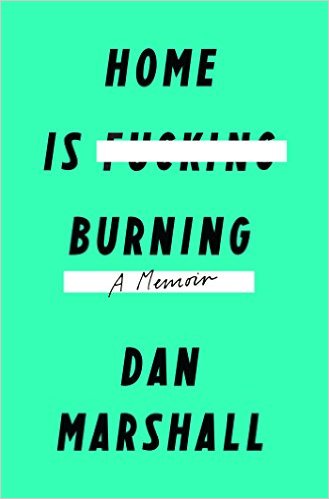
home is burningDan Marshall’s life was pretty heavy on privilege. A self-described spoiled white kid with money, he grew up in Salt Lake City and then graduated from UC Berkeley, and was busy enjoying his first real job in Los Angeles and his first real girlfriend, Abby. His family–mom, dad and four siblings–wasn’t perfect, but they were happy, loving and shared a strong if quirky sense of humor, based on fart jokes and four-letter words. His mother had had “terminal” cancer well managed for nearly 15 years. Then came the phone call, while Dan was on vacation with Abby, announcing that his capable, marathon-running father had been diagnosed with something called ALS.

ALS stands for amyotrophic lateral sclerosis, more commonly known as Lou Gehrig’s disease. It’s a terminal neurodegenerative disease that kills off motor neurons, eventually depriving the person affected of the ability to move his own limbs, eat, speak, and breathe. Dan was slow to accept the gravity of the diagnosis, but under pressure from the family, after several months, he takes a leave of absence from his job to move home at age 25 to help out around the house. Home Is Burning is his memoir of caring for two terminally ill parents at once while dealing with a houseful of rowdy siblings with problems of their own. His story is unavoidably terribly sad, but peppered with sex, drugs both prescribed and recreational, copious foul language, lots of alcohol, and deep and abiding love, the Marshall family saga is surprisingly sweet and funny as well.

Although Dan describes them as spoiled and rich, the Marshalls have had their fair share of misfortunes, from mother Debi’s cancer diagnosis and years of chemotherapy treatments to cerebral palsy and Asperger’s syndrome among the children. The eldest sibling, Tiffany, who took over some parenting duties as a teenager when Debi was sick, had become an overachiever apparently teetering at the edge of a nervous breakdown. Greg was a successful college student in Chicago, enjoying his freedom after finally coming out of the closet. Still in high school were Chelsea, a socially awkward ballerina and serious student, and Michelle, a budding alcoholic in a disturbing relationship with her soccer coach. Dan was the second child, and the last to move back to Salt Lake City for their father Bob’s remaining time, which would more likely be measured in months than years.

Dan lingered in the denial stage of the grief process. With the whole family, he’d watched Bob run his last marathon in Boston, in a time nearly twice that which he’d run to qualify. But when Dan moves home, he is dismayed to see how much his father has already deteriorated. With Tiffany living nearby but on her own, “the little girls” still in high school, and Debi inconveniently faced with her toughest round of chemo treatments yet, the bulk of Bob’s caregiving duties falls to Dan and Greg. Together they help him bathe and use the bathroom as he loses the use of his arms. They feed him through his gastrointestinal tube, and take him for walks in a wheelchair as his legs lose their strength. They hook him up periodically to his BiPAP (bilevel positive airway pressure) machine, which helps push air through his lungs. Bob chooses to delay his tracheotomy surgery–which would attach him to a respirator for the rest of his days, and quite possibly end his ability to speak–to attend his own mother’s funeral; but the ill-advised delay ends with a rush to the hospital when his breathing fails, and the procedure takes place under emergency conditions. Happily, Bob retains his speech.

For all Dan and Greg’s love and good intentions, their caregiving is sometimes alarmingly poor: Bob is dropped on the floor, his respirator tubes cracked and broken. He might be considered lucky to survive his family’s care. The household begins to fall apart: Michelle passes out in her own vomit with increasing frequency as the cats pee all over their three-story home, which has been pulled apart by construction to install an elevator and widen doorways. Dan begins drinking more heavily; Abby breaks up with him; Greg takes a full-time job, putting more pressure on Dan; Debi’s behavior grows ever more erratic, with the mental effects of her chemotherapy, her distress at losing her husband, and a new addiction to pain pills. Dan’s outlook and storytelling throughout these mounting stressors is singular. He is remarkably candid about his frustrations and resentments: he loves his father enormously, calling him his buddy, his pal, his road map through life, and describing the effortless quality time shared and advice given–but he is angry to have his own social freedoms curtailed.

The tone of Dan’s writing in this painful period, however, is astonishingly funny, loving, even lighthearted. As he moves back and forth between agony, grief and anger, he displays a fun-loving, off-color, morbid sense of humor and an almost apologetically sweet expression of love for his entire imperfect family and especially their hero, their rock, Bob. Dan interjects his narrative with fantasies in which Debi’s hair grows back, Chelsea doesn’t giggle inappropriately at looming death, Michelle doesn’t marry her soccer coach, Bob stands up and takes himself to the toilet and goes for a good long run in the mountains.

Many stories have been written about terminal illnesses, degrading deaths, and families in grief; but the loving portraits painted here of outrageous and colorful characters joking in the face of ugliness may be unique. As Bob approaches his final chapter, readers will certainly cry, but they will laugh as well. Home Is Burning is a strangely packaged gift: love and pain, death and life, sex jokes, fart jokes and plenty of booze make up an extraordinarily heartwarming love letter from “a sad dude with a big heart who really loves his dad.” In its sad ending there is unlikely joy.


Rating: 9 brimming glasses of wine.

Come back tomorrow for my interview with Marshall.

book beginnings on Friday: Dispatches from Pluto by Richard Grant

Thanks to Rose City Reader for hosting this meme. To participate, share the first line or two of the book you are currently reading and, if you feel so moved, let us know what your first impressions were based on that first line.

dispatches from pluto

The subtitle, “Lost and Found in the Mississippi Delta,” is what got me. And then there are the first lines:

I was living in New York City when I decided to buy an old plantation house in the Mississippi Delta. It was out in the cotton fields and cypress swamps of Holmes County, the poorest county in America’s poorest state.

Got me: I’m intrigued. The Deep South is an increasingly appealing and intriguing place to me, filled with contradictions and complications. Tell me more!

This quotation comes from an uncorrected advance proof and is subject to change.

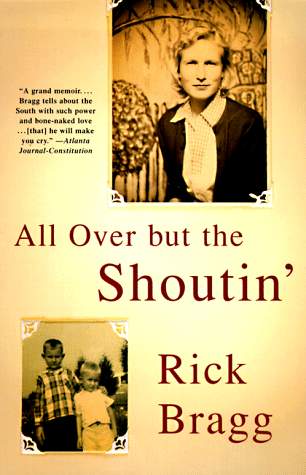
All Over But the Shoutin’ by Rick Bragg

all overRick Bragg’s first book is a memoir of his own life, his upbringing and the road to a successful journalism career with the New York Times, complete even with a Pulitzer. It’s also the story of his family: his father, almost completely absent from Bragg’s life and from the book; his mother, the driving force of grace and hard work and love; his brothers; his people from poor rural Alabama. It’s a beautiful book, humbly honest, piercingly devoted to Momma, and redolent with smells and tastes and sights and sounds. As a way of honoring those he wants to remember and honor – centrally his mother – I think it’s devastatingly effective. It’s also a fine piece of writing, triumphantly fine, and a fascinating story.

People are often driven, with a book like this that is so securely rooted in such a unique place, to make statements about whether it could have been born of any other place. Me, I don’t feel up for that argument. But if Bragg’s skill had come out of Pennsylvania, he would at least have written a very different book.

I loved learning about and learning to love the place Bragg is from – northeastern Alabama – and I appreciate his understanding of nuance, of complicated feelings, of the possibility for both ugly legacies and beautiful virtues coming from the same place.

I found it interesting, and it kept his story from being unrelievedly gorgeous or unrelievedly painful, in a book so filled with “living and dying and that fragile, shivering place in between,” that he is able simultaneously to show that he has lived a charmed life. This was a new concept to me, of such good and ill luck coming in the same breath. For instance, when Bragg became national correspondent in the South, to the New York Times:

It was a marriage so perfect, in my mind’s eye, that I was almost surprised when I got a cold, or stubbed my toe, or got a parking ticket, because such things do not belong in dreams.

Momma used to drag her middle son, who she called Ricky, up and down the rows of cotton on her sack as she picked. He increased the weight of the load she bore, but she loved him, and his brothers, and she did for them as best she could, and this is the story, among other things, of Bragg doing his best by her in return. It’s a deeply sweet story, and although sometimes gruffly told, he never takes that tone when writing about her.

Bragg’s father, on the other hand, was an alcoholic abuser who left his family defenseless repeatedly and apparently without compunction. He was also a traumatized war veteran who on his deathbed gave his son a touching gift and a story. I said earlier that he’s mostly absent throughout, but his shadow is there.

I can’t do this book justice. It’s too good. Go see for yourself.


Rating: 10 assumptions tested.

Teaser Tuesdays: All Over But the Shoutin’ by Rick Bragg

Teaser Tuesdays is a weekly bookish meme, hosted by MizB of Should Be Reading.

all over

I read the most mind-blowing book this week.

I had grown up in a house in which there were only two books, the King James Bible and the spring seed catalog. But here, in these boxes, were dozens of hardback copies of everything from Mark Twain to Sir Arthur Conan Doyle. There was a water-damaged Faulkner, and the nearly complete set of Edgar Rich Burroughs’s Tarzan. There was poetry and trash, Zane Grey’s Riders of the Purple Sage, and a paperback with two naked women on the cover. There was a tiny, old copy of Arabian Nights, threadbare Hardy Boys, and one Hemingway. He had bought most of them at a yard sale, by the box or pound, and some at a flea market. He did not even known what he was giving me, did not recognize most of the writers. “Your momma said you still liked to read,” he said.

There was Shakespeare. My father did not know who he was, exactly, but he had heard the name. He wanted them because they were pretty, because they were wrapped in fake leather, because they looked like rich folks’ books. I do not love Shakespeare, but I still have those books. I would not trade them for a gold monkey.

If those lines don’t hit you deep inside, I don’t know what you’re doing with my blog.

guest review: All the Wrong Places by Philip Connors, from Tassava

My buddy Tassava read both of Philip Connors’s books after I did, and he loved both, as I did. He had a different final conclusion, however. Here is the beginning of his review of the second, All the Wrong Places.
wrong places

Last year, Julia had recommended that I read Connors’ first book, Fire Season, a long essay on his work at a lookout in a fire tower in a huge wilderness area in New Mexico. Both a reflection on a solitary endeavor and a historical and philosophical examination of the nature of wildness, Fire Season is exceptionally good, and well worth the time of anyone who enjoys memoir or nature writing.

All the Wrong Places is a kind of prequel to Fire Season, a partial explanation of why Connors abandoned a good life and career in New York City for the isolation and inwardness of the fire tower. In brief, the second book is the story of Connors’ efforts to understand how his older brother, Dan, came to commit suicide, more or less out of the blue.

…You can read the rest of Tassava’s review here. And, my review of same.

Thanks, Tassava, for your contribution.

Teaser Tuesdays: The Annihilation of Nature by Ceballos, Ehrlich and Ehrlich

Teaser Tuesdays is a weekly bookish meme, hosted by MizB of Should Be Reading.

Look out for a forthcoming Maximum Shelf issue on this beautiful coffee-table book about Earth’s sixth mass extinction event, which is human-caused and going on now.
annihilation of nature

The Tasmanian tiger, with its remarkable coloration and tiger-like stripes, was the largest predator marsupial. Females were unique in that their pouch opened to the rear and, interestingly, the males also had a pouch into which they could withdraw their scrotum. The last captive individual died in 1936.

If that is not fascinating stuff about this species, I don’t know what. And the tragedy of losing such singularities cannot be understated – and this book is full of it, I’m afraid.

This quotation comes from an uncorrected advance proof and is subject to change.

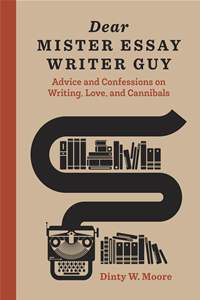
Dear Mister Essay Writer Guy: Advice and Confessions on Writing, Love, and Cannibals by Dinty W. Moore

Finely crafted short essays masquerading as self-effacing jokes about writers and writing, in q&a form.

dear mister essay writer guy

Dinty W. Moore (Between Panic and Desire), the editor of Brevity, solicited respected contemporary essayists for questions regarding the form, so he could answer them in Dear Mister Essay Writer Guy: Advice and Confessions on Writing, Love, and Cannibals. An essay riffing on the question at hand accompanies each q&a. The resulting collection of self-deprecating humor includes bits of writing advice as a bonus.

Cheryl Strayed has concerns about her predilection for the em dash: Moore assures her that “em dashes can replace commas, semicolons, colons, the large intestine, and parentheses.” Brenda Miller worries that Facebook “is like one big communal personal essay”; Moore answers with a selection of his status updates over a period of months, which are as sage and instructive as they are hilarious. Roxane Gay wonders about the value of writers writing about writing. Other seekers of wisdom include Judith Kitchen, Phillip Lopate, Brian Doyle and Lee Gutkind. Moore makes room to share a “found essay” left on his voicemail by Mike the Tree Guy, and to list the side effects of memoir, including “nausea, sleep problems, constipation, gas, and swelling of the navel.”

Moore is rarely serious and keeps his tongue in his cheek throughout, but the result is enlightening as well as entertaining. With fewer than 200 pages, Dear Mister Essay Writer Guy is a quick and enjoyable read, to be taken in pieces as small as the reader prefers. Its witty, modest tone belies the artistry of the essays contained, which are exemplars of the short form.


This review originally ran as a *starred review* in the August 28, 2015 issue of Shelf Awareness for Readers. To subscribe, click here, and you’ll receive two issues per week of book reviews and other bookish fun!


Rating: 7 polar bears, naturally.

The Fish Ladder: A Journey Upstream by Katharine Norbury

A pensive, meandering memoir of searching–for the source of both a river and the author’s life.

fish ladder

In The Fish Ladder: A Journey Upstream, a memoir of two concurrent paths, Katharine Norbury aims to find a river’s source and to discover her own. She is mourning a recent miscarriage and the loss of her father, taking solace with her mother and her daughter, Evie. Norbury was adopted, and all she knows of the woman who abandoned her at a convent is a name. Neil M. Gunn’s novel The Well at the World’s End inspires her to walk a waterway from the sea to the source, as does Gunn’s protagonist. But Norbury’s journey is clearly also metaphorical, a search for herself and her roots.

The route she chooses is not specific: with Evie, she walks parts of several waterways, eventually setting more precise goals along the way, and reaching for Gunn’s work when her plans falter. Her expedition to find her biological family proves to be more challenging, intersecting her pathway upriver, from the location she has discovered is her birthplace.

Norbury’s seeking is set in Britain, and The Fish Ladder doubles as an amateur naturalist study of the country’s flora and fauna. She shares her insecurities and questions alongside Celtic folk tales about salmon traveling upriver to the places of their birth. Her story wanders, but in the end makes emotional and profound ventures into landscape, the importance of place and the very real connections between physical and interior voyages.


This review originally ran in the August 25, 2015 issue of Shelf Awareness for Readers. To subscribe, click here, and you’ll receive two issues per week of book reviews and other bookish fun!


Rating: 5 pieces of chocolate.