The Tender Bar by J.R. Moehringer

tender barI loved this one.

The Tender Bar is a memoir of one man’s life in a bar. JR was a little boy surrounded by women and girls: he lived with his mother, grandmother, aunt and four girl cousins (and a grandfather, uncle and a boy cousin, but still). He felt drawn to men: in his hindsight telling, he felt the lack of a father, and sought male attentions and teachings, and a model for becoming a man. He found this in his uncle, but even more so, in the hallowed space just 142 steps away, where his uncle tended bar.

This is both a bildungsroman and the story of a bar. By some extension, it is thirdly the story of a place: Manhasset, Long Island, a town historically fixated on drinking and comfortable, sociable places to do it in. We see JR’s childhood – deeply chaotic and troubled in his home life, but bolstered by a beloved and mostly stable (if chaotic in their own way) group of men from the bar. We see him grow up, learn about himself and the world, and experiment with concepts of what he owes to his world and what he’ll do with himself. There is always the bar, at the center of these concepts. Eventually, JR becomes an adult, and the bar ages alongside him. Losses come with age, culminating in the losses of September 11, 2001, which were widespread for a town that commuted into the City and into the World Trade Centers.

I loved many things about this book. I loved the format, which begins with some (presumably research-based) backstory about Manhasset, and with some musings on bars and life. (See my book beginning.) I loved Moehringer’s tone: of immense and frequent humor, often self-deprecating, but also of sober reckoning. He made me laugh out loud until I had to put the book down and hold my belly. I liked the perspective he took, the places where his adult’s wisdom did and did not inform his telling of the child’s experience. I felt drawn to the family, the bar community, and JR’s difficulties with differences in class (when he goes off, of all places, to Yale) and geography (moving at one point to Arizona, where his accent stands out). Despite being totally foreign to me, the Manhasset setting made sense, came alive in this telling. (And not for the first time: Manhasset is the model for the setting of The Great Gatsby.) And of course as much as anything I loved this bar: I loved his love for the bar, and sympathized with it, and I loved the place itself. I recognize and feel affection for a place with playfully rude, unhurried service, a divey atmosphere but with professional cocktail construction. It is a literary place, named Dickens in Moehring’s youth and later changed to Publicans but keeping its nod to culture, song and theatre, and especially words. JR tried for years to write about the place while in the place – the concept that the reader knows would eventually become The Tender Bar.

In this place he meets men (and some women) from all walks of life, professors and police officers and bookies and poets and more. He compares the bar to the Iliad (sure to either win my heart or offend me; here, the former):

In fact the bar and the poem complemented each other, like companion pieces. Each smacked of ageless verities about men.

And he goes on to identify the Ajax, the Hector, the Achilles he finds in Publicans.

I’m sure I give the impression that this is a book seeped in testosterone, and that’s not untrue, but it’s more nuanced than that. For years, JR looked for men to teach him what it meant to be a man. It was something of an obsession for this mostly-fatherless boy (although one wonders how much of that is inserted in hindsight). There are women in the story, too, of course: a girl cousin, a girlfriend, female friends, but centrally his mother, from whom he learns a lot. In the end, he acknowledges that she did a better job of many of the virtues he looked to men for, than did the men he found.

He offers nuggets about writing. As attributed to a priest he meets in the bar car of the train from the City back to Manhasset:

Do you know why God invented writers? Because He loves a good story. And He doesn’t give a damn about words. Words are the curtain we’ve hung between Him and our true selves. Try not to think about the words. Don’t strain for the perfect sentence. There’s no such thing. Writing is guesswork. Every sentence is an educated guess, the reader’s as much as yours. Think about that the next time you curl a piece of paper into your typewriter.

I could spend all day on this quotation alone, some of which I’d take issue with – I think words are very important, and I think the perfect sentence is to be sought – but there’s a lot to ponder and a lot of wisdom there.

I feel like I’ve gotten to know JR Moehringer by reading his story, and I like him. I acknowledge his flaws but would be his friend. That’s a fine outcome for a memoir, I think. This was an excellent book, in its stories, its characters, its format, the details of its writing, and its emotional tone. It’s a little like The Liars’ Club in its best parts: funny, self-deprecating, sad, beautiful, brave, honorable, ironic. I raise my glass.


Rating: 9 pet mice.

book beginnings on Friday: The Tender Bar by J.R. Moehringer

Thanks to Rose City Reader for hosting this meme. To participate, share the first line or two of the book you are currently reading and, if you feel so moved, let us know what your first impressions were based on that first line.

It felt like a great and happy luxury to take time out of my professional reading to read this book just for me. (Actually it is referenced as a standard by a book I was hired to read, and you will see that one come up later. But I already had this one on my desk. So it counts.) I was struck immediately by the opening lines: how perfect.

tender bar

We went there for everything we needed. We went there when we were thirsty, of course, and when hungry, and when dead tired. We went there when happy, to celebrate, and when sad, to sulk. We went there after weddings and funerals, for something to settle our nerves, and always for a shot of courage just before. We went there when we didn’t know what we needed, hoping someone might tell us. We went there when looking for love, or sex, or trouble, or for someone who had gone missing, because sooner or later everyone turned up there. Most of all we went there when we needed to be found.

There is, of course, a certain special bar that I think of, where I have gone when happy and when sad. Miss y’all.

Just a few paragraphs later, another piece of profundity:

While I fear that we’re drawn to what abandons us, and to what seems most likely to abandon us, in the end I believe we’re defined by what embraces us.

I think this will be a good one, friends.

The Narrow Door by Paul Lisicky

The Narrow Door is literary, smart and poignant, an extended eulogy for a friend and a meditation on friendship.

narrow door

The Narrow Door is a striking memoir of love and loss by Paul Lisicky (Lawnboy; The Burning House). At its center are the life and death of Denise, Paul’s longtime best friend; in parallel, Paul and his husband slowly pull apart and finally break up. The ups and downs of these two relationships define the story Lisicky tells, but they also give him space to muse on larger questions: the craft of writing, competition among writers, the meaning of love and events in the larger world.

Paul met Denise in the early 1980s, when they were both teaching assistants at Rutgers. They became fast friends, talking on the phone for hours, sharing the pain and joy of writing. Denise becomes a published novelist first, but Paul’s later success threatens her. A tender passage about “Vincent” and Gauguin, about the painters’ competitive feelings and their wrecked friendship, helps Paul deal with his struggle with instincts leaning both toward and away from competition with Denise. This is only one example of the wide range of Lisicky’s subject: the Deepwater oil spill and the Haitian earthquake likewise influence his reactions to Denise’s cancer diagnosis and other immediate concerns. Paul and Denise are Joni Mitchell fans, and their story is guided by her music. When a hotel in Atlantic City is demolished, Lisicky writes, “It comes down as a person would…. I take it personally.” These disparate threads are tied together expertly, with tenderness, in careful prose.

Paul’s husband, identified simply as M, is a successful poet and has his own, weaker friendship with Denise. He supports Paul when she dies, but soon after, the couple begin their drift apart. The Narrow Door employs a disordered chronology, in sections headed by year: 1983, when Denise and Paul’s friendship is budding; 2008, when she dies; 2010, when Paul and M are at their rockiest; and times in between, as these relationships grow, change, climb and descend. When he fights with Denise, Lisicky considers losing a friend, as opposed to breaking up with a lover: “Sure, it might feel like rage, but aren’t rage and love part of the same water?”

This is an artistic work, poetic and layered and carefully structured. The tangled sequence of events emphasizes the ever-changing nature of relationships and emotional reactions. Lisicky’s tone is sometimes elegiac, sometimes gently humorous, and consistently introspective, questioning. The Narrow Door is not a long book; nonetheless, it requests the reader’s measured consideration of language, pitch, philosophy and emotion. This portrait of a friend in all her complexities is lyrical, intellectual and occasionally challenging. In an austere mood, Lisicky avoids the idea of comfort for its own sake but asks, “Couldn’t there be some rigor to comfort?” The Narrow Door answers with both, in a compelling package.


This review originally ran in the January 4, 2016 issue of Shelf Awareness for the Book Trade. To subscribe, click here.


Rating: 8 cups of coffee.

Life and Death in the Andes: On the Trail of Bandits, Heroes, and Revolutionaries by Kim MacQuarrie

This mesmerizing history of the Andes Mountains smoothly brings colorful characters and outrageous stories to general readers.

andes

Kim MacQuarrie (Last Days of the Incas) has long been fascinated by the vast region defined by the Andes Mountains. Having traveled and studied the length of these mountains, 4,500 miles of South America, he shares their stories in Life and Death in the Andes: On the Trail of Bandits, Heroes, and Revolutionaries.

Protagonists range over centuries and national borders, and include Pablo Escobar, the modern Colombian drug lord; Charles Darwin as an amateur naturalist in Ecuador’s Galápagos Islands; the 1980s Shining Path guerrilla movement in Peru; a teenaged girl sacrificed by the Incas in the 1400s; Che Guevara, making his final stand in Bolivia; and Butch Cassidy and the Sundance Kid, whose lives likewise end in Bolivia. MacQuarrie explores cultural conflicts with sensitivity, as in examining Hiram Bingham, the “discoverer” of the Machu Picchu ruins in Peru, who conveniently ignored earlier local knowledge of the site. Finally, MacQuarrie introduces the Yámana people of the southernmost points of Chile and Argentina, and meets with the last speaker of the Yámana language.

Life and Death in the Andes is captivating, its fascinating tales told with enthusiasm as well as careful research when dealing with relatively straightforward facts or with the story of “Juanita”–a young woman who lived in the 15th century–told as “an imaginative reconstruction based upon historical, ethnographic, forensic, and archaeological evidence.” This engaging history of dramatic stories and arresting characters is entertaining as well as informative, and its readability serves to recommend it widely.


This review originally ran in the December 22, 2015 issue of Shelf Awareness for Readers. To subscribe, click here, and you’ll receive two issues per week of book reviews and other bookish fun!


Rating: 8 coca leaves.

book beginnings on Friday: The Rarest Bird in the World: The Search for the Nechisar Nightjar by Vernon R. L. Head

Thanks to Rose City Reader for hosting this meme. To participate, share the first line or two of the book you are currently reading and, if you feel so moved, let us know what your first impressions were based on that first line.

Today, a fanciful and wondering story of birdwatching in our strange world. It begins:
rarest bird

Eyes are for searching, and sometimes the search is for eyes in the night. I blinked, turning my cheeks to the dusty mud. Shapes slid before me, slicing like the shadows from a tent, stealing bits of shine.

It was an elemental evening in Ethiopia.

Among other things, I have enjoyed encountering places in this book – like Galveston Island State Park (where I have played since I was a baby, and where a dear friend works as park interpreter today), and Haleakala, a mountain in Hawaii that I have ridden a bicycle down (but not up). Stay tuned…

This quotation comes from an uncorrected advance proof and is subject to change.

Alex Haley: And the Books That Changed a Nation by Robert J. Norrell

History and literary criticism enrich the first biography of Alex Haley, author of Roots and Malcolm X’s Autobiography.

alex haley

Alex Haley wrote The Autobiography of Malcolm X (as told to him), and Roots, the story of his family from Africa through slavery and the Civil War. Separately, these books had a profound impact on how the United States viewed race relations and its own history. Together, their influence could hardly be overstated, and that is what Robert J. Norrell argues in Alex Haley: And the Books That Changed a Nation, the first biography of Haley and a study of his two seminal works and the controversies they fostered.

Norrell covers Haley’s forebears and Tennessee childhood, his three marriages and a writing career growing from the Coast Guard (where ghost-writing personal letters led to public relations assignments) to magazine work, which led to his interviewing Malcolm X for Reader’s Digest and Playboy. The process for Malcolm’s Autobiography (1965) was dynamic, as Haley walked the fine line between Malcolm’s voice and Haley’s more moderate political position, and as Malcolm’s views on race relations evolved. The Pulitzer Prize-winning Roots (1976) was even harder won, as Haley drew a short book contract out over more than 11 years of research and travel. The effect of the book, and its accompanying television miniseries, was astounding. And yet the rest of his life and work would be shadowed by accusations of copyright infringements and invention in what Haley called a work of nonfiction.

With sensitivity and careful study, Norrell examines Haley’s embattled life and extraordinary achievements. His final conclusion about this “likeable narcissist” is that despite Haley’s imperfections, his influence was prodigious and deserves our respect and continued study today.


This review originally ran in the December 18, 2015 issue of Shelf Awareness for Readers. To subscribe, click here, and you’ll receive two issues per week of book reviews and other bookish fun!


Rating: 7 pieces of gossip.

guest review: The Warmth of Other Suns by Isabel Wilkerson, from Pops

More than three years ago, I listened to the audio version of this book, and reviewed it here. At that time, Pops commented:

You make a most important point – that this is essential American history, of which most white Americans are sadly unaware. Jim Crow discouraged personal initiative and disrupted families & communities – a loss for the South. The challenge for black Americans to recreate their lives in “foreign” parts of the country, and the consequences for those regions, is an important part of our collective & continuing history.

He has now gotten around to reading The Warmth of Other Suns himself, and posted a longer comment to that original review. I thought it deserved its own post here so that more readers would have a chance at his thoughts.

warmth

I finally picked this one up, overcame the weighty intimidation of 600 pages and fully appreciated what Wilkerson created. I will simply add to your good observations.

Like you, I enjoyed her written voice and how she allows herself to be part of the story. Her own family story, and its part in her motivation for writing, is important and contributes to the warmth of her people stories. She writes with open sympathy, if not empathy, for the migrants, and full appreciation for the courage & fortitude revealed in their experiences; and I found that appropriate. Just one example, from her earliest pages describing the magnitude of the migrants’ decisions: “it was the first big step the nation’s servant class ever took without asking.”

I am struck by the breadth of her story, much attributable to how she weaves in anecdote & nuance in the course of her narrative. Whole books can be written of the wide ranging cultural contributions in literature, music, sports (maybe even “root doctors” in medicine?) – from the early stages of slavery forward, but released in a torrent once the migration began escaping Jim Crow. She mentions this in passing, but we learn more as she accumulates anecdotes & chapter heading quotes.

The racism implicit in mainstream history & sociology accounts is due full treatment elsewhere, but she obliquely makes the point well with examples of contemporary “professional” accounts, including some that are uncomfortably recent.

And I’m glad she also observes the way the migrants changed the cities, not just the reverse; this is not a Black History Month episode – it’s an essential part of American history that has been ignored and misunderstood at our loss. Her treatment of the Jim Crow regime is a good example, as she describes the deliberate way it was constructed, one little ordinance or ambiguous social convention at a time, enforced by law but often also arbitrarily, in the shadows, hidden under literal cloaks as well as cloaks of darkness. The not-knowing was part of the terror; her analogy to the spread of Nazism is worthy. She describes the terrible impact on individuals, both physical & mental; but also the deep & insidious cultural impacts, including the scars on a white culture so pitifully dependent on the master/slave mentality.

Hers is a wonderful contribution to our history, and will no doubt guide my further reading as it has yours.

Thoughtful as ever. Thanks, Pops. For those that missed it, this is an exhortation to go get Wilkerson’s excellent book today! (My final editorial addition: I really do recommend the audio version.)

Merry Christmas, y’all.

Memento Mori: The Dead Among Us by Paul Koudounaris

Photographs of memento mori from around the world illustrate rich relationships with death.

memento mori

Paul Koudounaris (The Empire of Death) presents phenomenal photographs and a fascinating survey of death across cultures and history with Memento Mori: The Dead Among Us. His text is concise but effective, allowing his photography to take the lead. Images are gorgeously rendered in large format and across full spreads. They feature ossuaries, charnel houses and intricate, artistic arrangements of bones, mummies and decorated skeletons from various cultures.

Koudounaris portrays the Torajans of Indonesia, who place their dead in caves, and after the coffins disintegrate, arrange the bones decoratively; the Aymara Indians of Bolivia, who keep treasured skulls in their homes and ask them for advice; and the elaborate, even decadent, Catholic ossuaries created in response to Protestant reforms. Buddhists gilded certain mummies; Rwandans set up memorial vaults. Wrapped in a blue satin cover, with more than 500 illustrations, Memento Mori offers a striking tribute to many ways of remembering and honoring death and the dead.


This review originally ran in the November 27, 2015 issue of Shelf Awareness for Readers. To subscribe, click here, and you’ll receive two issues per week of book reviews and other bookish fun!


Rating: 7 perspectives.

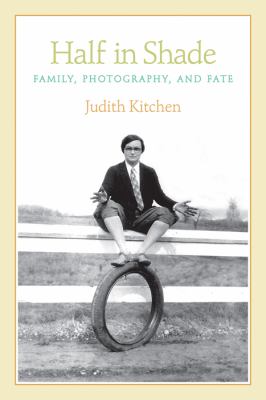
Half in Shade: Family, Photography and Fate by Judith Kitchen

This is a complex one. Judith Kitchen has inherited dusty boxes of old photographs, belonging to her family and stretching back over generations. Some of the black-and-white figures she finds there are labeled, or recognizable to her; but many are strangers. In a series of short pieces – meditations, essays, ramblings, experimental forms – she wonders over these photographs. Sometimes she uses her imagination to tell their stories; sometimes she uses research.

She is also being treated for cancer, and the narrative of surgery, chemotherapy, and radiation responds to the history she researches and creates. She plays with concepts. Every photograph has an unseen character, the one behind the camera; who was he or she, what did he or she see? In looking back into time, she can see both more and less than the characters in these pictures. They know one another, they know where they are, and oftentimes Kitchen does not. But she knows what Paris in 1939 has looming over it. She knows what will come.

My reactions to these pieces varied. Kitchen is a poet, and she wanders into a sort of free-form poetry that reminds me of abstract art: I understand that the people around me see and interpret a great deal that is hidden from me. I wonder if I’m not smart enough for the appreciation of this art. I like Kitchen best when she says what she means, playing with language a little along the way. The more abstract she gets, the less I comprehend. I don’t think my mind works the same way hers does.

But I like what she did with the idea of photography, the examination of light and exposure, the questions about how certain confounding photos (like the young woman surrounded by handled objects before a snowy lake) were posed, arranged, intended, carried out. I like what she did with history, and family history, and the uncertainties we have to accept. I love the artistry of this sentence:

The clapboard’s horizontal plane cuts through the outlines of their lives as they stand facing us across the intervening years, chance encounter that will fuse her rough pinked hem, his knot at ease, our own unbridled mysteries.

The homonym of knot, the rhyme of ease and mysteries.

Half in Shade is a complicated thing and contains many different opportunities to delve in. I’m not sure I’m up to it, at least not on my own. I think this is a class someone could teach for a whole semester. Recommended for people who understand and like Faulkner.


Rating: 7 second looks.

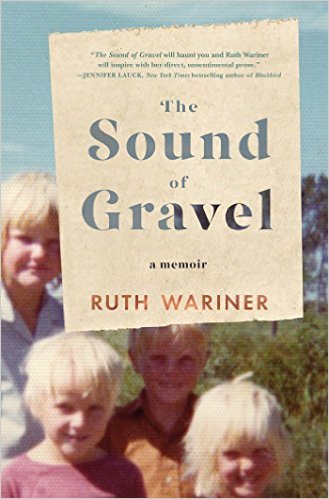
Maximum Shelf: The Sound of Gravel by Ruth Wariner

Maximum Shelf is the weekly Shelf Awareness feature focusing on an upcoming title we love and believe will be a great handselling opportunity for booksellers everywhere. The features are written by our editors and reviewers and the publisher has helped support the issue.

This review was published by Shelf Awareness on November 29, 2015.


sound of gravelIn The Sound of Gravel, Ruth Wariner tells of growing up in a Mormon polygamist colony in the state of Chihuahua, Mexico. Her childhood was filled with sad and shocking hardships, some painfully difficult to read. But Wariner’s tone is never self-pitying, and her love for her mother and siblings imbues a distressing memoir with nuance, and eventual relief.

Ruth’s mother, Kathy, became the fifth wife of Joel LeBaron when she was 17 years old. Joel’s father founded Colonia LeBaron in Mexico because the practice of plural marriage was better tolerated there than in the United States. Ruth was Kathy’s fourth child and Joel’s 39th. He died just three months after Ruth’s birth–murdered by his brother over a conflict about church authority. Kathy remarried a man named Lane and bore another six children with him. Ruth was the eldest nondisabled female child and, over the years, many domestic duties, including childcare, fell to her.

The Sound of Gravel begins with the family history of the LeBarons, whose status as church leaders impressed the young Ruth, and with Kathy’s personal history, as told to her daughter. The earliest scenes Ruth relates from her own memory find her at age five, and introduce her siblings: Audrey, the eldest, with a disability that remained undiagnosed for years and that led to occasional violence against the other children; Matt, a responsible boy; Luke, good-natured but developmentally delayed; and the baby, Aaron. Later the family grows as Meri, Micah, Leah, Elena and Holly are born. Lane, Ruth’s stepfather, promises to complete Kathy’s family’s dwelling and add a showerhead, electricity and other longed-for luxuries, but is slow to do so. Lane’s first wife and her children receive preference as to the basics, in the tradition of the LeBaron church. Ruth dislikes Lane early on, for his failure to support her mother as well as his harsh discipline. From an early age, Ruth sees her mother’s conflicts and jealousies with her sister wives, and worries that plural marriage looks more like misery than the holy state her church teaches it to be.

Ruth grows up quickly as the household swells in size. The family moves around: Kathy leaves Lane after he beats her, and moves to the United States where her parents live, but returns to him. Lane relocates his families as they seek work: they harvest and sell pine nuts in New Mexico, camp out in El Paso, and smuggle undocumented Mexican workers across the border under the children’s makeshift bed in a camper. But Kathy, Ruth and the other children always return to Colonia LeBaron because, Kathy says, “this is where you kids belong.”

The poverty and poor living conditions that come with Kathy’s choices are based on her religion, her devotion to and dependence on Lane, and a belief that the United States is a Babylon “standing between us and our connection to God.” Squeezing a living out of food stamps and Lane’s meager earnings–shared among four wives and an uncounted number of children–means mostly subsisting on beans and rice. The children are pulled out of school in their early teens–Ruth at age 14–because “Mom insisted that it was more important for me to be around to help her take care of the house and the kids.” But the most heartbreaking aspect of Ruth’s childhood is Lane’s sexual abuse, which continues for years even as Ruth repeatedly reports him to her mother. Kathy exhorts Ruth to forgive and move on; but even a town tribunal fails to stop the abuse. The community’s betrayal of its children is an especially disturbing phenomenon in a story filled with the tragedy and woes of day-to-day hardships of poverty, the absence of creature comforts, illness and accidental death.

However, through it all flows Ruth Wariner’s careful, loving portrait of her mother, a woman doing her best with limited options, believing that her church knows best. Despite her profound anger at her mother’s failure to protect her from Lane, Ruth understands that she is loved, and deeply loves her mother in return. “I realized how little she had asked of the world, and how even that had been too much for the world to give.” She reflects that “Mom couldn’t teach me that because she didn’t know herself. She couldn’t show me how to be happy, only how to barely survive.” These and other contemplations establish Ruth as a wise and thoughtful narrator.

The Sound of Gravel is straightforwardly told, in chronological order and with little lyrical adornment. Its power lies in the facts of the story, which is deeply affecting both in its horrors and in its redemptive conclusion. At the end, when Ruth saves herself and her sisters by escaping Colonia LeBaron, she has earned the reader’s sympathy and respect, and an identity beyond that of survivor.


Rating: 8 babies (and counting).

Come back on Monday for my interview with Wariner.