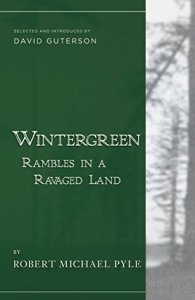
Wintergreen: Rambles in a Ravaged Land by Robert Michael Pyle

wintergreenAs I mentioned last week, I read Wintergreen in preparation for a class I am taking this very weekend from the author, Robert Michael Pyle. It was an intriguing read, and I’m looking forward to learning from the man himself.

The copy I read, borrowed from Pops, is a Pharos Edition, meaning that “one of today’s most exciting authors” hand-picked and introduced it in a reprint. Wintergreen was originally published in 1986 by Scribner; this 2015 edition is being called a 30-year anniversary, and David Guterson (The Other, Snow Falling on Cedars) brought it to Pharos.

In a word, Wintergreen is a book in defense of the ravaged land of the subtitle. That land is the Willapa Hills of southwest Washington (near where the Oregon line meets the coast), where Pyle settled after growing up in Colorado and studying in Seattle and at Yale, and some other stops along the way including Great Britain. This land is ravaged, of course, by logging; but Pyle argues that it is still beautiful, still deeply rich in natural wonders, and worth saving. Pyle is a biologist and a writer, and his style is both reverent and carefully descriptive and detailed. His tone can be occasionally irreverent and jokey; he is conversational, humble, and disarming, absolutely likable. I intend to like him, when I meet him.

In his own words,

This is the plan of the book: to describe the Willapa Hills and the wildlife they support, both native and alien; to examine the impact of intensive forestry upon the land and its life; and finally, to assay the ability of organisms (including ourselves) to survive in the aftermath of massive resource extraction. Throughout, questions of biogeography, ecology, and evolution in the wet, wintergreen world find their way into the text.

And four sections of four essays each do this work, as promised. It is kept from being overly square, in that structure, by Guterson’s intro, a Prologue, and an updated Afterword written for this 2015 edition.

I felt a great affinity for the sense of place that is so central to this work, especially because the place Pyle loves is an underdog, a humble and much-derided place. He writes,

In attending to these neglected hills I try to appreciate them for what they still are, without holding against them what they once were.

He takes his reader leisurely through what this place once was – the hugest of the huge old-growth Douglas firs et al, the ones whose stumps were repurposed as roomy homes for families – and what it is now – second-, third- and fourth-growth, and stump fields that however hold their own beauty, and remarkably biodiversity. He writes beautifully. There is undeniable poetry in the line,

The backs of old barns break and ancient boats and Studebakers deliquesce into the fundament.

Or, when introduced (and little-loved) nutria are quirkily described:

Wombatlike but generally black, they add a definite presence to an already-altered ecosystem, and they are somewhat more interesting than cows.

His audience is understood to be somewhat sympathetic to his feelings and beliefs: that the natural world deserves our protecting even while that is a rather arrogant concept; that old growth forests are special; that green is good. He takes some background knowledge for granted (first approaching the question, “what is old growth?” on page 198), but this is not much of a risk. He is right about the background his readers come to him with.

As he acknowledges in the newly-added Afterword, some of the specific details of politics, policy, and specific local conditions in the 1986 edition are a little dated now. But none are incorrect; and he brings us up to date in this Afterword. The questions I noted during my reading were well answered. Any period-specific feeling to the whole is enriching, if slightly distracting: it makes this text feel grounded in time as well as literal ground.

The pace of these 369 pages is not rushed, but indeed rambling. Patient readers, however, who love a certain level of detail and a good, rain-soaked, mature story, will be well rewarded.


Rating: 8 individually loved stumps.

book beginnings on Friday: Wintergreen: Rambles in a Ravaged Land by Robert Michael Pyle

Thanks to Rose City Reader for hosting this meme. To participate, share the first line or two of the book you are currently reading and, if you feel so moved, let us know what your first impressions were based on that first line.

wintergreen

I am reading this in preparation for the upcoming Chuckanut Writers Conference and a class I will be taking from Robert Michael Pyle himself. An introduction from David Guterson is intriguing, as is the Pharos Edition (same folks who brought Still Life With Insects back into print). It begins:

At any time of the year and in any weather, my bedroom window frames a green and pleasant country scene. Halfway open, it makes a Kodachrome slide of the bucolic valley below, bordered by white sashes and molding.

Lovely. And this setting is just a few hours south of where I live.

Everybody Behaves Badly: The True Story Behind Hemingway’s Masterpiece The Sun Also Rises by Lesley M. M. Blume

This study of the creation of The Sun Also Rises illuminates both the compelling story and Hemingway’s complex and not entirely likable personality and behavior.

everybody behaves badly

Many books have been written about Hemingway, but it seems there is still more to be learned. Lesley M.M. Blume’s Everybody Behaves Badly zooms in on the creation of The Sun Also Rises, Hemingway’s first novel and the one that firmly established his reputations, literary and otherwise. As her subtitle promises, Blume seeks the true story: in this case, the real men and women whose lives inspired Hemingway’s fiction, which some claimed was not really fiction at all.

Everybody Behaves Badly is not a biography of Hemingway; it skips his childhood to open with his marriage to Hadley Richardson, and the couple’s move to Paris in pursuit of cheap living and a storied expat community. Blume portrays a devilishly charismatic young writer, ambitious and confident, who easily collected mentors and admirers. She follows that young writer to Pamplona with a group of friends in 1925, and through the weeks after in which he wrote feverishly. Unflatteringly immortalized, one of the people Hemingway transformed into a character spoke of lives divided into B.S. and A.S.: before Sun, and after. Blume’s study concludes as Hemingway’s career expands, his first marriage ends and his second begins.

A biography of a novel, then, Everybody Behaves Badly is itself an engrossing and varied tale: raucous and dissipated, pitiable and serious. Blume’s research offers new detail to a well-studied story, and her narrative style is as entertaining as the original. Obviously required for Hemingway fans, this engaging work of nonfiction will also please a broad audience.


This review originally ran in the June 7, 2016 issue of Shelf Awareness for Readers. To subscribe, click here, and you’ll receive two issues per week of book reviews and other bookish news.


Rating: 8 slight changes.

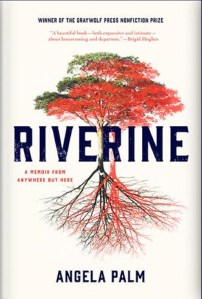
Teaser Tuesdays: Riverine: A Memoir from Anywhere but Here by Angela Palm

Teaser Tuesdays is a weekly bookish meme, hosted by MizB of Books and a Beat.

Teaser

riverine

I am observing a real trend in my reading, and in the reading I’m enjoying most, toward Graywolf Press and their Nonfiction Prize. That is only one of the promising aspects of this book.

I usually handpick teasers for you, but for this one I decided to open the book randomly to a page I haven’t yet read. And I am not disappointed.

The fields that surrounded my new home were laden with a history that I could not yet unpack. They were neither romantic nor scary.

But, it is implied, they became so? This one does tease.

This quotation comes from an uncorrected advance proof and is subject to change.

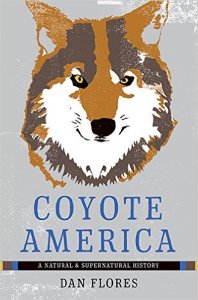
Coyote America: A Natural and Supernatural History by Dan Flores

This biography of the coyote in biological, political and historical terms illuminates a much-maligned North American original.

coyote america

Dan Flores (The Natural West) examines an iconic North American original in Coyote America: A Natural and Supernatural History. This small, clever, charismatic predator originally roamed the interior West, enjoying a mutual tolerance with the people who lived there. Some Native American tribes built creation myths around the coyote, “America’s universal deity.” After European colonization, coyotes became the enemy of ranchers and herders–undeservedly, as scientists would eventually show, as their prey is more bite-sized. Decades of extermination efforts only encouraged the diminutive canine, however, whose range now extends from Alaska and Canada into Central America, from coast to coast. Coyotes now live in every major city in the United States, which surprises many but, Flores argues, shouldn’t: they were there first.

Styled as a biography, Coyote America follows its protagonist through history, geography, human perceptions and millions of years of American canid evolution, with detailed accounts of governmental policies regarding predators. Flores sees the coyote as an avatar for humankind. Like us, the coyote is highly flexible, can be social or solitary, and adapts well to changing environments. Coyote mythology, well documented in other books, plays a minor role here, although Wile E. makes an appearance.

Flores has a tendency to use nine words where two would do, but his slight long-windedness is well offset by the endless fascinations of his subject. Nature lovers, students of U.S. natural resource policy and those charmed by the native American “song-dog” will be engrossed.


This review originally ran in the June 7, 2016 issue of Shelf Awareness for Readers. To subscribe, click here, and you’ll receive two issues per week of book reviews and other bookish news.


Rating: 7 words.

Joe Gould’s Teeth by Jill Lepore

This story of a missing manuscript and its darkly unhinged author has momentum and beauty.

joe gould's teeth

Joe Gould is best known through two profile pieces Joseph Mitchell wrote for the New Yorker. In 1942, Mitchell introduced a harmless eccentric engrossed in writing “The Oral History of Our Time”–at some nine million words, supposedly the longest unpublished work in history. In the second piece, in 1964, Gould (then deceased) is a dirty, sinister man, and Mitchell asserts that there had never been any such manuscript. Jill Lepore (a staff writer at the New Yorker and author of numerous works of nonfiction), like so many before her, was intrigued. Was there an oral history, or wasn’t there? Who was Gould, really?

Joe Gould’s Teeth is a biography of Gould, a study of the record he left behind and the story of Lepore’s search. Gould was a graphomaniac; his written legacy includes letters, diaries, essays, ramblings but rather little oral history. Lepore seeks the mythical manuscript, but finds the mystery of a man. She describes herself as stumbling, falling into the “chasm” of Gould, who claimed to be “left-handed in both hands” and whose thinking was “sticky” with details. She follows him through archives and memories, and into his obsession with African-American sculptor Augusta Savage. Savage, as a secondary character, is more sympathetic (and sane), and possibly more enigmatic than Gould.

Lepore’s contribution to this undeniably riveting story lies in her research, but even more in her wise, nuanced telling. Joe Gould was a genius, a madman, destitute, beloved of e.e. cummings and Ezra Pound, by turns likable and malicious. Joe Gould’s Teeth is an astonishing, wide-ranging and thoroughly enthralling work of history.


This review originally ran in the May 31, 2016 issue of Shelf Awareness for Readers. To subscribe, click here, and you’ll receive two issues per week of book reviews and other bookish news.


Rating: 9 notebooks.

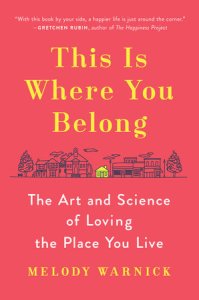
Teaser Tuesdays: This Is Where You Belong by Melody Warnick

Teaser Tuesdays is a weekly bookish meme, hosted by MizB of Books and a Beat.

Teaser

You might have noticed my interest in writing with a strong sense of place, or place-based writing. You might have also noticed that my family moved ~2,500 miles about 18 months ago. And so books like this one always catch my eye. Melody Warnick is a quirky, likeable narrator who makes a quite serious quantity of research easily manageable in her study of the “art and science” of place attachment.

this is where you belong
Here’s a meta-meta teaser to blow your mind today.

“Edmund Wilson once wrote that no two people ever read the same book, and I’ve come to believe that no two people ever live in the same city,” notes the writer Emily St. John Mandel. Our experience of the place where we live depends entirely on who we are, how we interact with it, and how we interpret what’s happening around us. We create our places every day by the way we choose to view them.

You will recall how I’ve enjoyed Emily St. John Mandel (here, here). This is Warnick quoting Mandel quoting (the critic) Wilson: whoa. And what a perfect sentiment. I’m all about this theory of infinite relativity, myself: that all our experiences are always relative, individual, and subjective. So no one who loves a place is ever “wrong”, and a person who hates a place is only “wrong” in that they’ve failed to leave room for someone else’s love.

Lots more place-relative wisdom on offer in This Is Where You Belong. Stay tuned.

This quotation comes from an uncorrected advance proof and is subject to change.

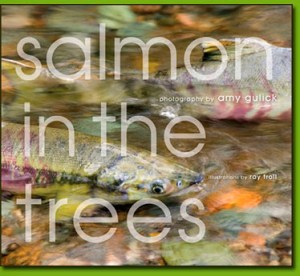
guest review: Salmon in the Trees by Amy Gulick, from Pops

salmon in the trees

I just finished reading Salmon in the Trees, recommended by a friend in response to my Edfro Creek “Fish in the Forest” essay, and this one belongs right up there with the other fish/forest books. Beginning with her own wonderful introductory essay, photographer Amy Gulick assembled a crew of nine contributors to help narrate the photo-format (with maps!) and it’s a masterful and lyrical collaboration, from writers Carl Safina and Richard Nelson to Alaska “writer laureate” John Straley, a couple of biologists and others. Its narrative focus: “Southeast” (Alaska), 80% of which is Tongass National Forest (largest in the US, 3 times the size of the next largest, 1/3 of Earth’s temperate rainforest but only 1/2 forest, 85% intact, more shoreline than 48 states, more than 5000 islands, more than 10,000 tribal population out of 70,000, approx. 1/2 of its old growth remaining); and the many ways it is special, yet largely overlooked by a US public that should champion its preservation in the face of continued threats. Along the way it depicts a world in itself, including three Salish tribes (Haida, Tlingit and Tsimshian) and their resilient white neighbors who together comprise

a vibrant, sensual brew… a place assembled of mystery & mistakes… wild & also messy… a place where people live with salmon in their streets and bears in their backyards… the big old trees still standing, the bugs, the fish, the bears, and the flawed & saintly people… the modern world has arrived and hasn’t yet broken the circle of life… [but] it may just be a matter of time.

I learned of the ANCSA (Alaska Native Claims Settlement Act) that partly restores land rights, including Sealaska, a tribal land corporation; the Haida tale that explains their recurring recessive gene for red hair; the special role of pockmarked sandstone karst in forest ecology; that alder as a nitrogen-fixer rivals salmon for forest nutrients; and yet more about bears & fish in the forest. Gulick does for this region what McAllister does in Great Bear Wild.

Who Shot Sports: A Photographic History, 1843 to the Present by Gail Buckland

Disclosure: I read an uncorrected advance proof sent to me as a review copy.

who shot sportsI’m sorry not to love this book. I love the concept: a coffee-table style art book of sports photography, beginning with the first known “sports photograph” in 1843 (a portrait of an unknown tennis player), and including nearly 300 images. In the final publication, 120 of these photographs will be printed in color. My galley copy has just a few pages of full color, but I can tell the end result will be visually impressive.

The pictures are great. And the history is fairly well done: there is some discussion of technological advances (geared toward the layperson, not the professional photographer), and trends and values. The text itself, however, is very uneven. It started to bother me at about halfway through, as it began to repeat itself: in particular, Dr. Harold Edgerton’s feat in pioneering stroboscopic photography is noted over and over again, at different points in the book but also repeatedly on the same page. Who Shot Sports is organized thematically, with chapters like “Fans and Followers” and “Vantage Point”; within these chapters are photos that fit into that theme, from different eras. The surrounding text profiles the photographers rather than the athletes, and one of the express goals of the book is to highlight those often still unknown men and women (but mostly they are men, even now). These bios vary widely in length and quality, and often feel more like lists of facts than composed or relevant narratives.

But the line that stopped me and wouldn’t let me go was, “Banning African Americans, who were such talented athletes, was especially cruel and malicious.”

This is a racial stereotype that has not served African Americans well historically, and anytime we assume something to be true of an entire population, we look silly and find ourselves in some cases wrong. I read another 20-30 pages past this point, but couldn’t move on in my mind.

I will point out again that I read an uncorrected proof, meaning that this book is likely to see another round of editing before publication. They may catch this line in time. But they also sent this copy out for review, and should expect to be held accountable for its contents. Typos and formatting problems are common issues with galleys; images may be missing or shown in poor resolution, with the understanding that the finished copy will include the real thing. But tone-deaf racial profiling I can’t help but note.

This will clearly be a beautiful volume of photography. I think the text might be worth, at best, skimming. Unless of course you are as bothered by that one line as I was.


Rating: 9 light sources for photos, 3 for text. Draw your own conclusions (always).

Teaser Tuesdays reprise: The Mindful Writer by Dinty W. Moore

Teaser Tuesdays is a weekly bookish meme, hosted by MizB of Books and a Beat.

Teaser

mindful writerI know, I know: we just had a teaser from this book last week. I couldn’t help myself. Anyway, these are not Dinty Moore’s words, precisely. They are words chosen by him.

If you are a poet, you will see clearly that there is a cloud floating in (every) sheet of paper. Without a cloud, there will be no rain; without rain, the trees cannot grow; and without trees, we cannot make paper. The cloud is essential for the paper to exist.

From Vietnamese monk Thich Nhat Hanh, as quoted by The Mindful Writer, in suggesting mindfulness and the awareness of connections, seeing past the surface of things. And a lovely image & concept to keep in mind, I think.

This quotation comes from an uncorrected advance proof and is subject to change.