World of Wonders: In Praise of Fireflies, Whale Sharks, and Other Astonishments by Aimee Nezhukumatathil, illustrated by Fumi Nakamura

World of Wonders is a lovely, thoughtful series of meditations, charmingly illustrated, with love and awe on every page but never shying away from the prickliness of life.

Poet Aimee Nezhukumatathil (Oceanic) stuns with her nonfiction debut, World of Wonders: In Praise of Fireflies, Whale Sharks, and Other Astonishments, delightfully illustrated by Fumi Nakamura. These essays explore the natural world and the human experience, finding parallels, meaning and beauty in the intersections.

“A catalpa can give two brown girls in western Kansas a green umbrella from the sun,” Nezhukumatathil begins. This is an apt and representative line: place-specific, beautifully phrased, with reference to some of the identities these essays will explore. They are mostly titled for the plants and creatures they center–peacock, comb jelly, narwhal, dancing frog–with a few exceptions, such as the expressively named “Questions While Searching for Birds with My Half-White Sons, Aged Six and Nine, National Audubon Bird Count Day in Oxford, MS.” The red-spotted newt and dragon fruit that title their respective essays receive Nezhukumatathil’s attentive study and yes, wonder, but the author’s own experience is always a second thread. She brings a poet’s ear for language and an eye for commonality and metaphor, both reverent of the natural world and specific in her personal story.

Fireflies, touch-me-nots and flamingoes offer her a way to talk about being a brown girl in a white man’s world, growing up in the era of Stranger Danger and feeling disjointed between continents. A young Aimee is asked to draw an animal for a class assignment in Phoenix, Ariz. She responds with a resplendent peacock, India’s national bird, but is chastised and asked for an American bird. Her bald eagle wins a prize but causes her shame. Fumi Nakamura’s accompanying illustrations are whimsical and warm–who doesn’t love an axolotl’s smile?–and sweetly complement Nezhukumatathil’s prose.

World of Wonders offers a series of brief naturalist lessons, but is perhaps at its best in drawing connections, as between the axolotl’s smile and what to do “if a white girl tries to tell you what your brown skin can and cannot wear for makeup.” When it goes boom, “the cassowary is still trying to tell us something.” “And just like the potoo, who is rewarded for her stillness by having her lunch practically fly right to her mouth–perhaps you could try a little tranquility, find a little tenderness in your quiet. Who knows what feathered gifts await?” Wisdom, wonder and beauty make this slim collection one to treasure.


This review originally ran in the August 11, 2020 issue of Shelf Awareness for the Book Trade. To subscribe, click here.


Rating: 9 pale berries growing in spite of the dark.

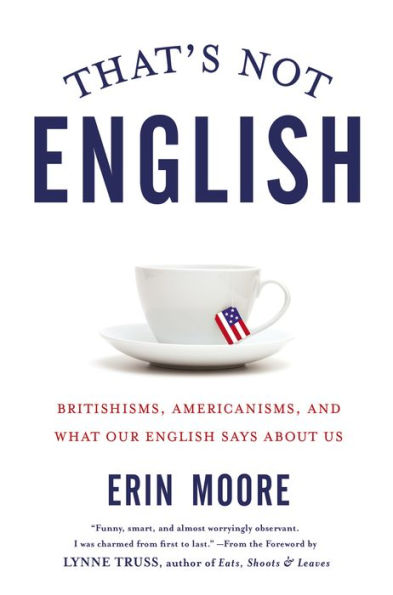
That’s Not English: Britishisms, Americanisms, and What Our English Says About Us by Erin Moore

Disclosure: I read an advanced reader’s copy of this book. (It was published in 2015 but I am just now getting to it. Sorry!)


Well, this was an interesting one. Maybe it’s a good time to post a quick reminder about the reviews that post here at the blog. These days they come in two types: reposts from Shelf Awareness, and blog originals. The former are written (in theory) objectively, with comments on what might be appealing about a given book, perhaps for a given audience or perhaps generally. The latter, the blog originals, are subjective and personal. This is one of the latter.

I struggled with this book from almost the first page. The subject matter is of interest to me; but the narrator’s tone and personality grated. I was motivated to keep reading because I appreciated the content, but I found myself often taking issue or silently arguing or feeling a little wrinkled. How much of this is about me and how much about the book? Generally a little of both. I found Moore’s narrative voice a little cute, trying for a humor that didn’t suit me personally, and sometimes too quick to make a jab that I didn’t feel was warranted. This may play more pleasingly to other ears, so as always, feel free to judge for yourself.

Part of my problem definitely came from the ease with which Moore feels comfortable making broad statements. “Many Americans consider peanut butter a perfectly reasonable breakfast food” – what?? “Surprisingly, the concept of the all-you-can-drink brunch was not invented by the English” – funny, I’m not the least bit surprised. It feels like a very American concept to me. “Americans often speak of exercise in terms that other cultures reserve for their spiritual practices,” including ‘guru’ for personal trainers, being ‘religious’ about exercise, and classes or instructors having ‘cultlike’ followings. I’d say all three of these terms get used for many nonreligious walks of life, including but by no means especially exercise. Americans avoid outdoor exercise because of our “extreme weather”? First of all, this is a HUGE country; generalizing about weather seems a losing battle. Secondly, what is the UK’s (stereotyped) weather famous for? Not pleasant to be outside in, right? So it must be something different – like the English attitude toward weather. (To be fair, Moore gets there. But that statement about “extreme weather” still made me squawk.) “You might struggle to find an American who hasn’t eaten pie for breakfast” surprised me as much as the peanut butter thing. Unless I’m forgetting, you’ve found one. I guess breakfast is a personal issue.

The problem with all of this, of course, is that I am not ‘Americans’ but one American, and you can’t please us all. Moore acknowledges in her introduction that it is difficult to generalize about a place as large and diverse as the United States or the United Kingdom. I might be a reader especially sensitive to this challenge, as I’ve spent so much of my own headspace and writing on just this issue: that a place like Houston or even a little town like Buckhannon, West Virginia is too diverse to sum up in a phrase. It’s sort of a tenet of my personal religion that you can’t generalize place. Again, Moore acknowledges this. But then she goes on to do it anyway – which, to be fair, you’d have to attempt to write a book about “Britishisms, Americanisms, and what English says about us.” I do think it might be more smoothly pulled off with different phrasing (perhaps people from the American South “tend to” assume rather than saying they just do), or with a little more recognition of exceptions. But these strategies would interfere with Moore’s jokey tone.

I am interested to note that this book feels surprisingly dated despite being published in early 2015 (written in 2014 – still refers to some late 2014 events as being in the future). But then, it’s been a momentous few years in the U.S. For one thing, Moore’s jokes about Donald Trump, he of The Apprentice and the Miss USA pageant? Not funny today. Certain remarks about the general financial wellbeing of the average American feel a little off now* (but that’s the trouble with “the average American”!). And Moore’s observation that ‘bespoke’ is not a commercial term on this side of the Atlantic I’m going to say is just no longer true, if indeed it was in 2014. I see advertisements for bespoke everything.

I’m curious as to when Moore – an American now living in England – made her move overseas. I feel like it matters, how long she’s been there. Her confusion about the way ‘partner’ is used over there – for romantic life partners of all genders, not just same-sex ones, and for married and nonmarried couples alike – is familiar to me (as someone who’s only lived in the U.S.), but I figured that one out in… late high school? in Texas, so I wonder if that was an issue of simple timing.

Approaching another personal pet peeve: Moore relies on the (U.S.) red states/blue states binary which I feel is misleading and outdated and unnecessarily divisive, when an urban/nonurban binary would make a little more sense, but in fact (did I mention) every place includes a little bit of everybody. In the 2016 presidential election, Texas’s electoral votes went for Trump. We showed up as a red state. But to throw the entire state under that bus is to disregard the 3,877,868 popular votes that were cast for Clinton in Texas (not to mention the other non-Trump ones – he won 52% of our popular vote). I’m a bit prickly on the red state/blue state myth, myself – it only works in the electoral college.

But here’s my favorite gripe of the whole book. Discussing sweet vs. unsweet tea (another U.S. regionalism),

a Southerner will find, to her horror, that Dixie Crystals do not melt in tea that is already cold, but sink forlornly to the bottom of the glass. For some Southerners, this is the extent of their science education.

As my friend Liz points out, the first statement is actually untrue; a spoon and a little stirring will melt that sugar for you. But that second sentence? Is a cheap shot, and pretty unfair; plays on unflattering stereotypes; shows the narrator to be rather mean-spirited; and serves as a fine example of the kind of humor that hopes to carry this book.

Even with all these critiques, I kept reading, and I appreciated learning a few things (particularly about food, knightings and whatnot, and a few terms – I had never heard ‘Crimbo’). Note that my complaints are about how Americans are portrayed – I don’t think of myself as a prideful nationalist by any stretch, but I bristle at any large group being pigeonholed, and I know Americans much better (being one myself) than I know the Brits or the English. I’m curious to know if a Brit would find themself equally prickled. I’ve sent the book on to a British friend, so here’s hoping he comes through with his own reactions – and we’ll see if I’ve been unreasonable by comparison! (I hope he’s not reading this so he keeps a fresh outlook.)

I wound up feeling like the work of That’s Not English was as much as about making sense of (drawing conclusions about) the differences between American and British cultures as it was about language. Language (and other habits) was used as an entry point (and as chapter headings), but the generalizations made were often much broader than which phrase we all use and what we mean by ‘quite.’ For example, the chapter ‘Fortnight’ recognizes that the Brits use that term and the Americans don’t. That’s the sum of its linguistic observation; the rest is about how differently we vacation. (Danger! Generalizing a nation’s vacation behaviors would seem to lump all socioeconomic classes together…) Perhaps that’s at the heart of my problem with the book. I can’t help but think of the excellent Talk on the Wild Side as a counterexample. That book’s scope was admittedly different, but I felt it was a lot more responsible in the conclusions it drew. I also remember fondly Eats, Shoots & Leaves, whose author wrote a foreword for this book. But I read that one quite a while ago and can’t write intelligently about it now.

There is definitely some good content here, and possibly a different reader (more lighthearted; happier with stereotype as humor) will love it. I seem to be taking things too seriously, although I’m not sure I should apologize for that. I’d be curious to hear an alternate opinion.


Rating: 5 misunderstandings.

*Final note to say that at least in my pre-pub copy, this book contains no footnotes, endnotes, or other record of sources used. There is a Selected Bibliography for further reading, but no citation for where Moore gets this or that fact. As I often questioned hers (and as I am that kind of reader – sorry), I regretted this omission. Maybe there were notes in the final copy, but they’re not mentioned here as TK.

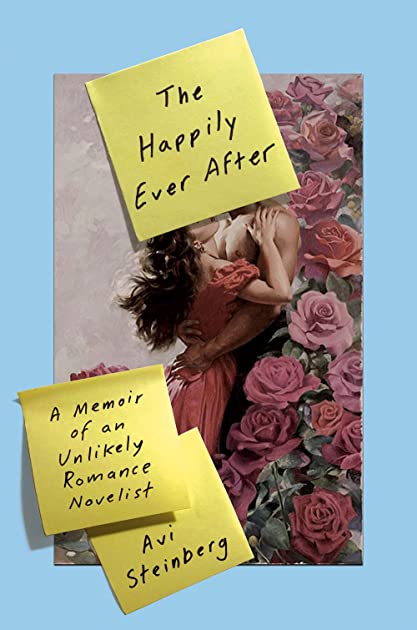
The Happily Ever After: A Memoir of an Unlikely Romance Novelist by Avi Steinberg

A romantically challenged writer treats the romance novel as career aspiration and life coach, with endearing and revealing results.

Following a divorce, Avi Steinberg (Running the Books; The Lost Book of Mormon) enters the realm of the romance novel, hoping to learn how to write a few commercially successful books and, perhaps more importantly, to solve his own real-life romantic challenges. In his quest, Steinberg hangs out with readers, authors, publishers and cover model CJ Hollenbach (so much more than “Ohio’s Response to Fabio”), attends conferences, joins a writing group and eventually lands a multibook contract under the pen name Dana Becker. These adventures he documents in The Happily Ever After: A Memoir of an Unlikely Romance Novelist.

Part personal memoir, part travelogue and part social and literary criticism, The Happily Ever After questions the societal tendency to look down on romance novels (and to apologize for reading them), examines romance’s domination of the commercial book market, reconsiders classics and the author’s own life through a romance lens, and explores the numerous subgenres of this much-loved and much-reviled field. Steinberg makes observations about gender roles and identities not only within romance novels but throughout American society. “The sentimental tropes of romance are so deeply embedded in our culture, we take them for granted,” making his comments relevant for everyone.

Entering as a romance newbie, Steinberg learns (and outlines for readers) the rules of the genre, including the necessity for “an emotionally satisfying and optimistic ending,” or Happily Ever After (HEA, in Romancelandia parlance). He concludes that “romance is America’s national literature: not because it is universally read or admired but because it is universally obsessed over,” and that Scheherazade was a romance author–bound to the whims of her audience, delivering rapidly and on demand.

Appropriately, Steinberg’s memoir has a generally upbeat cast, even during low points and through the narrator’s struggles with sincere emotions (“you go for a laugh when you could say something real,” one of his writing groupmates tells him; he calls himself “a depressed person who is an optimist at heart”). Also appropriately, the book concludes with the author’s own romance and bona fide HEA.

By no means is this memoir just for fans of the romance genre, although those readers will of course be tickled by his appreciative study. Steinberg’s personal story will suit any reader curious about the book industry, or who simply appreciates quirky personalities. Aspiring writers may find tips and tricks of special interest, but this is no how-to; rather, it’s an endearingly candid exploration of books, subculture and love itself.


This review originally ran in the July 24, 2020 issue of Shelf Awareness for the Book Trade. To subscribe, click here.


Rating: 7 aliases.

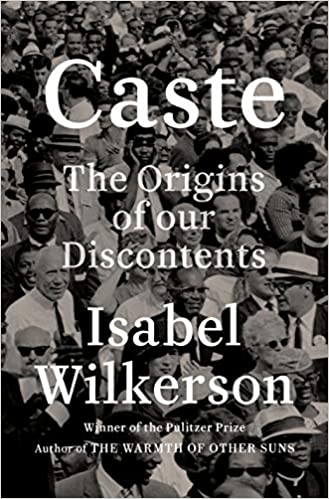
Caste: The Origins of Our Discontents by Isabel Wilkerson

In this meticulously researched and beautifully crafted book, Pulitzer Prize-winning journalist Isabel Wilkerson argues that the U.S. has a race-based caste system.

Pulitzer Prize-winning journalist Isabel Wilkerson (The Warmth of Other Suns) offers a singular and vital perspective on American society with Caste: The Origins of Our Discontents. This examination of caste and its consequences on every aspect of culture is unusual, eye-opening and of life-or-death importance. As in her previous work, which she continues and deepens here, Wilkerson lives up to the scope and significance of her subject matter, delivering a book that is deeply researched, clearly structured, well-written and moving.

The root of so many social ills in the United States, Wilkerson argues, is not precisely racism but casteism, which is closely linked to the concepts of race invented and reinforced since before the country’s founding. “Caste and race are neither synonymous nor mutually exclusive,” she writes, and then explicates and defines her terms precisely, with the support of exhaustive research. “Caste is insidious and therefore powerful because it is not hatred, it is not necessarily personal. It is the worn grooves of comforting routines and unthinking expectations, patterns of a social order that have been in place for so long that it looks like the natural order of things.”

Wilkerson interrogates and defines caste systems by comparing and contrasting three: those of Nazi Germany, India and the United States. The job of analyzing more than 400 years of American history, social structures on three continents and the complexities of sociology, psychology, history, anthropology, philosophy and more is an enormous one, but Wilkerson is more than capable. She lays out eight pillars of caste, including divine will, heritability, occupational hierarchy, and terror as enforcement. She puts to work a number of convincing metaphors to illustrate her points: infectious disease, the challenges of owning an old house, actors (mis)cast for a theater production, rungs on a ladder, the biblical concept of the scapegoat. She uses a new vocabulary to recast old problems, usually referring not to terms of race or class but of caste, and discusses recent electoral politics with descriptions rather than names, defamiliarizing the familiar and thereby offering her reader a fresh perspective.

Wilkerson’s understanding of caste proposes a nuanced take on the Trump election: many working-class white voters did not in fact vote against their interests, but rather prioritized one interest–upholding the caste system–over others, including access to health care, financial stability and clean air and water. She effectively argues that while “caste does not explain everything in American life… no aspect of American life can be fully understood without considering caste and embedded hierarchy,” and shows how it causes psychological and physical health damage to everyone living within this system.

Caste is a thorough, brilliant, incisive investigation of the often invisible workings of American society. Original, authoritative and exquisitely written, its significance cannot be overstated.


This review originally ran in the July 6, 2020 issue of Shelf Awareness for the Book Trade. To subscribe, click here.


Rating: 9 owners of old houses.

Memorial Drive: A Daughter’s Memoir by Natasha Trethewey

A former U.S. Poet Laureate remembers her mother, and wrestles with her brutal murder, in compelling and feeling style.

Natasha Trethewey, two-term United States Poet Laureate, forges a serious, poignant work of remembrance with Memorial Drive: A Daughter’s Memoir. Trethewey’s mother, Gwen, is the focus of this book: the daughter’s memories and what she’s forgotten, and, pointedly, the mother’s murder at the hands of her second ex-husband. The murder took place just off Memorial Drive in Atlanta, Ga.; the aptly named thoroughfare runs from downtown to Stone Mountain, monument to the Confederacy, “a lasting metaphor for the white mind of the South.”

Trethewey is the daughter of an African American mother and a white Canadian father. Their marriage was illegal; she was born just before the Loving v. Virginia Supreme Court case that struck down laws banning interracial marriage. Memorial Drive begins with her upbringing in Mississippi with her doting extended maternal family, necessarily recounting her early understanding of race and racism. This happy period ends abruptly with mother and daughter’s move to Atlanta, when Trethewey’s parents divorce. Atlanta has its strengths, such as a vibrant African American community, but very quickly, Gwen meets the man who will become her second husband. From the beginning, Joel is a sinister figure. Twelve years later, 19-year-old Trethewey returns to Atlanta from college to clean out her mother’s apartment after Joel brutally murders Gwen.

While this central event is harrowing, Memorial Drive does not focus only there. Trethewey ruminates on memory and forgetfulness, and recalls her developing love for and skill with metaphor, language, writing. Back home in Mississippi, her great-aunt “would appear each day at the back door, singing my name through the screen, her upturned palm holding out toward me three underripe figs… she was teaching me the figurative power of objects, their meaningful juxtapositions.” During the painful retelling of her stepfather’s physical abuse of her mother, Trethewey resorts to the second person, a whole chapter delivered to her younger herself. Concluding: “Look at you. Even now you think you can write yourself away from that girl you were, distance yourself in the second person, as if you weren’t the one to whom any of this happened.” Memories of her mother often appear as images, offering symbolic interpretations of the 12-year gap left by trauma. While Trethewey does pursue forensic exploration (transcripts of recorded phone calls between Gwen and Joel, as well as a visit to a psychic), this memoir is more introspection than true-crime investigation. And it is gracefully and gorgeously rendered, as befits a poet of Trethewey’s stature.

Trethewey declines to offer a neat conclusion, but she succeeds in making meaning from pain. Memorial Drive is loving and elegiac, disturbing and incisive.


This review originally ran in the June 18, 2020 issue of Shelf Awareness for the Book Trade. To subscribe, click here.


Rating: 7 lost records.

Curious Atoms: A History with Physics by Susanne Paola Antonetta

Full disclosure: the author was a professor and mentor of mine at Western Washington University.

Curious Atoms is an essay chapbook, 50-some pages in length, dealing with physics and the author’s own life experiences: part memoir and part science, told by a serious reader of physics but with no formal training in the hard sciences (as far as I can tell). “A History with Physics” feels like an apt subtitle.

There is a certain density to this subject matter. For one thing, admittedly I neither much understand nor much care about the theoretical physics discussed here; I had to let it go by, try to meet it where I found it and move on. But it didn’t hinder my appreciation for the writing, because a great writer can carry us through any subject. (Although I might have gotten more out of this had I been more comfortable with quantum whatnots.) The physics might challenge you as it did me. The personal material is heavy in a different way; Antonetta delves into her experience with bipolar disorder, with mental health and treatment, stigma, medication, and more. She’s also a deeply intelligent and well-read narrator, ranging widely. It’s not an easy read in a few ways, but a rewarding one. I love that wide-ranging headiness, and I loved feeling like I could hear the voice again of a woman I got to hear speak in a classroom a few days a week – that was a real privilege.

Here are a few lovely, thought-provoking, representative lines.

To bring to the lyric the mind and body that I have, and speak from the lyric soul, I cannot. I’m not sure what of mine can be called mine, body or mind; the lyric, with textbook definition of “the personal emotions and thoughts of a single speaker,” wants a warm hand, not mineral. I am not an individual, quite, but a chemo-dual.

That “our bodies of difference,” as Stephen Kuusisto writes, “offer crucial ways of knowing” I do believe. I can only give the cellular knowing of my chemical history, with the punctuation of what I suppose I really am, unmixed: hysteria under the bed, glitter. I can talk about 1970s psychiatry, the time I first encountered as a girl patients preyed on sexually, the awful, always visible electroshock machine, used as treatment and threat, its aftermath a gelled amnesia. I do not think, however, that such memoirizing would get to the question.

Gifted memoirist writes that memoirizing is not the solution. Note the interest in the idea of dualism or multiplicity, as in the multiverse, as in bipolar, as in the highs and lows of minds and lives.

Better still – I apologize that this review is half quoted text, but David Lazar’s brief introduction is too perfect to pass up. I think he describes the collection perfectly, and I couldn’t agree with his final statement more.

Susanne Paola Antonetta’s essays are full of erudition and stunning self-appraisals, hair-pin turns between metaphysics and splintered pieces of autobiography, dark energy and light asides, tossed off like hand grenades. These essays are sculpted – I’m tempted to say forged (so necessary is each sentence, even each word one feels). Yet in the midst of work so exorbitantly cooked, the raw springs of the felt occasion drive the essayist through her thought-projects. I loved being in the company of this mind.

You can view the entire chapbook here, and you really should.


Rating: 8 sides.

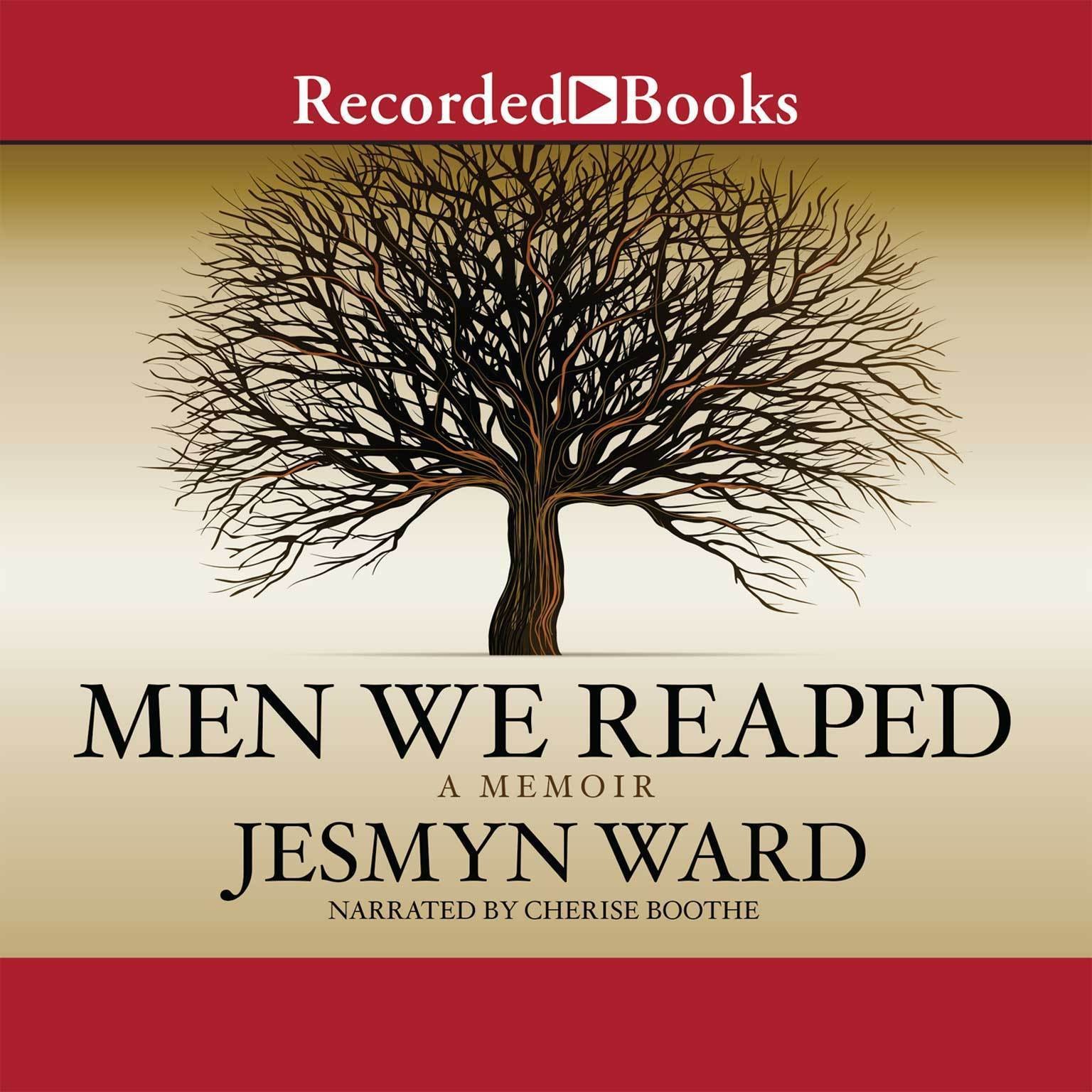
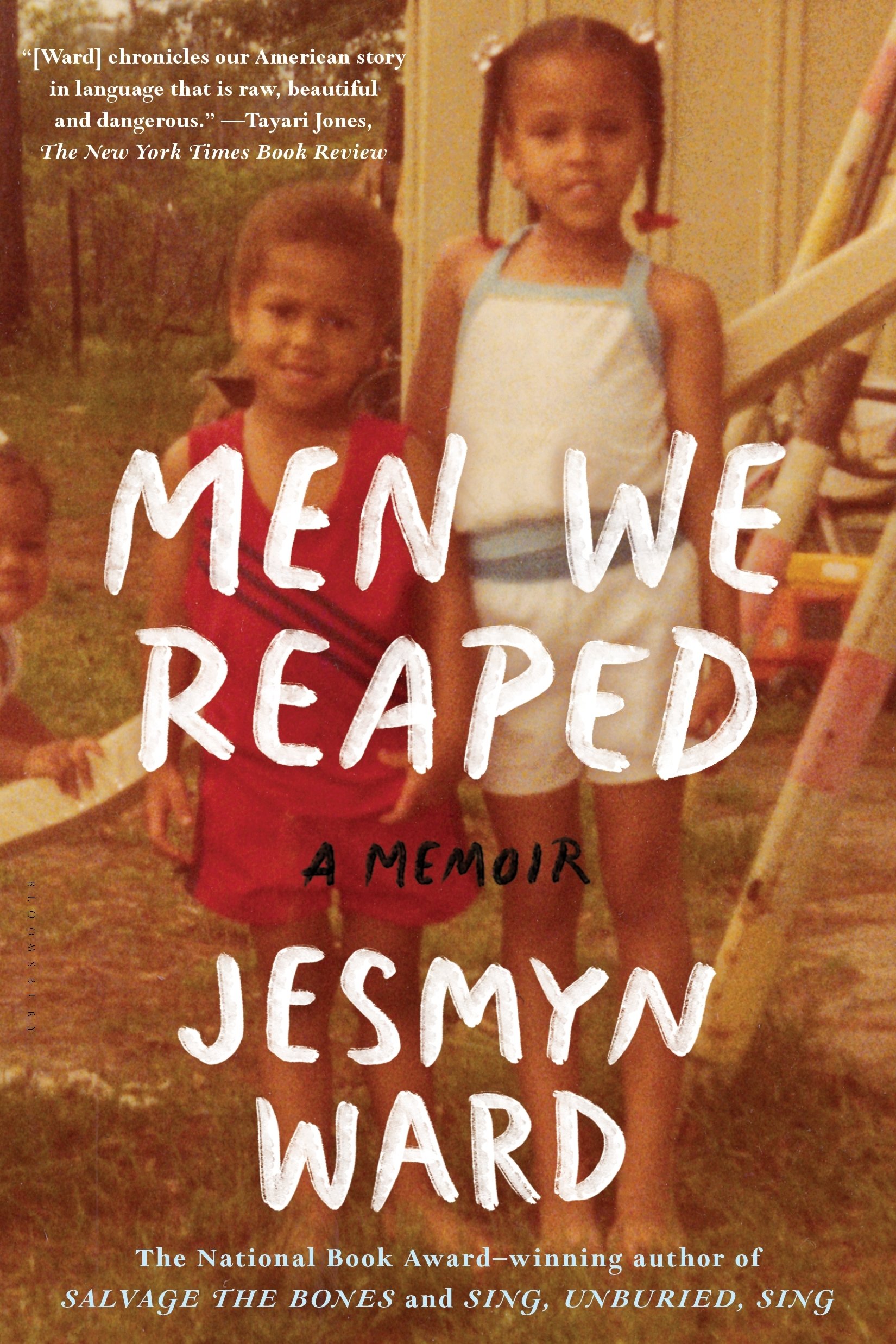
Men We Reaped by Jesmyn Ward (audio)

Jesmyn Ward’s Men We Reaped is lovely, painful, and important. It opens with three epigraphs, and the first, by Harriet Tubman, provides Ward’s title.

We saw the lightning and that was the guns; and then we heard the thunder and that was the big guns; and then we heard the rain falling and that was the blood falling; and when we came to get in the crops, it was dead men that we reaped.

This memoir focuses on the deaths of five young men, close friends and relatives of the author, including her brother. One suicide, one murder, two car wrecks, and one death by drugs. Roger, Demond, C.J., Ronald, Joshua. Ward profiles each, tracks a life and a death and the consequences for those who loved him. In shining her light on these five individuals, she also examines race and racism, gender, poverty, and the historical patterns that contribute to deaths like these. Most centrally, racism. (See footnote re: caste.)

Ward introduces her topic and the five young men, briefly, then handles them one by one in reverse death order, from Ronald back to her brother Joshua. In between, sections titled “We Are Born,” “We Are Wounded, “We Are Watching,” etc., track the experiences of Ward and her family, growing up the eldest of her mother’s four children, in chronological order. In this way, two threads of her story meet when the backwards-moving and forwards-moving chronologies intersect with Joshua’s death, hit by a drunk driver in a hit-and-run for which the driver – a white man – would receive a sentence of just five years.

Men We Reaped is a personal memoir of Ward’s own life, as well as a profile of five individuals and their social and family circles. It is also an examination and social critique of race, gender, and class, within the United States and within the historic Deep South. Ward was raised in and around DeLisle, Mississippi, near Gulfport-Biloxi. It’s a particular place, of the old Confederacy, divided by race even as its inhabitants recognize that this is a false division; poverty-stricken, it provides few opportunities for its young people, especially young black men. Ward offers her reader the history of this place as well as of her own family, hearkening to the town’s former name: “I want to impart something of its wild roots, its early savagery. Calling it Wolf Town hints at the wildness at the heart of it.” That this range of subjects is so neatly woven into Ward’s intriguing narrative structure – those forward- and backward-moving chronologies that meet in the middle – results in an extraordinary piece of literary work. Ward’s points about social structures and prejudice are intelligently made, her personal stories are deeply moving, and her craft is admirable. Her writing is lovely and expressive. I am deeply impressed.

This audio narration by Cherise Boothe felt right to me; I appreciated the pacing and weight and pronunciations of place names. (There are so many ways to say “New Orleans.”) As I’ve struggled to write this review – often more difficult the more I appreciate a book – I’ve missed having access to a text copy for reference, but the experience of the audiobook was excellent, so that format is recommended but having the print copy alongside would be ideal.

Everyone should read this book.


Rating: 8 holes in the ground.

I listened to this book while reading Isabel Wilkerson’s forthcoming Caste: The Origins of Our Discontent, also a stellar and deeply important book. As Wilkerson illustrates, these forces are the work of caste and casteism. I chose to stay with the term of racism for this review, as it’s the one Ward uses and I think it’s an accurate term, but please see also Wilkerson’s arguments.

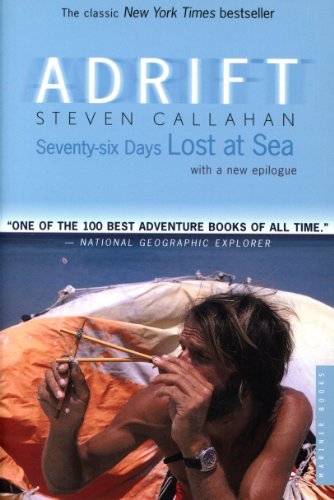
Adrift: Seventy-six Days Lost at Sea by Steven Callahan

This book came recommended by one of my favorite faithful readers here at the blog, so I’m sorry to say I’m not an unqualified fan.

Adrift is a memoir of survival. Steven Callahan is a lifelong sailor, and from boyhood had wanted to sail across the Atlantic, which he eventually managed to do in his late twenties in a 21-foot sailboat of his own design and build. Her name is Napoleon Solo, and with a friend, Callahan sails her from New England to old England. Here the friend flies home and Callahan putters south with another short-term crew member; they part at the Spanish island of Tenerife. Callahan sets out alone for Antigua, and it is in this second attempted Atlantic crossing that things go wrong. The subtitle gives the briefest summary. Callahan spends the 76 days in an inflatable raft with few and meager tools, whose accelerating failures require increasingly creative solutions, even as the man’s body and mind self-cannibalize and break down.

For one thing, this book is interesting in that it is both suspenseful and riveting, and spoiled from the beginning: that Callahan got to write the book (never mind that subtitle) gives away the ending. In fact, the subtitle’s specificity gives away yet more. As I read the log, I see we’re in day 41 and know we’re nowhere near done. I was nevertheless absorbed by the story. It’s hard to say to what extent I enjoyed this read; I was often frustrated, but always reluctant to close the book and walk away.

I think I might have been more able to enjoy the story if I’d better understood the practical aspects of it. Sometimes Callahan throws out terms or processes unconcernedly that are meaningless to me. Sometimes he tries to explain but entirely passes me by – which may be as much on me as it is on him; certainly I don’t know my way around a boat, and mechanical intelligence is not a strength of mine. He includes some diagrams and step-by-step explications that so entirely passed me by that I started skipping them, as trying and failing to understand only irritated me. That said, giving up on the details still left me able to follow the life-and-death struggle.

Callahan conceives of himself as operating in three parts: physical, emotional, and rational. Especially as he starts to really lose it (with fatigue, starvation and dehydration, frustration, sleep deprivation, and the general crazy-making of his situation), these parts become a chorus of arguing voices in his head. There is a philosophical, if not meta-physical, thread to the story: will to live versus peace with death, and how people suffer and work through experiences like this. I suspect such a story is one of the hardest things to write, to communicate such profundities… and so if I say he didn’t do an entirely convincing job of it, I mean that as mild criticism. Certainly I’ve never lived through anything like this, nor tried to write it, and I can’t imagine I’d do any better.

The story was undoubtedly compelling. I didn’t want to stop reading. And yet I felt a certain impatience, too. It’s strange to say, but the events of these 76 days, while they included much variation, were also much of the same over and over. Much minutia of patching holes and reconfiguring a speargun, but on the other hand, just the ocean: “that torn blue desert,” he calls it, with dorados and flying fish and triggerfish and calm weather or angry weather, hot days and cold nights. Possibly this could have been done in fewer than 238 pages to better effect. (That’s a major decision to be made with a book like this: degree of detail; pacing.) Maybe I’m not the ideal reader of this book, or not at the ideal time. When I think about survival-in-nature stories, I think of Krakauer first, of course; Into Thin Air remains the pinnacle for me, in memory, with Into the Wild a close second. (Both of these, apparently, pre-blog. And what would I think of them if I reread them now?) Stories this elemental must be among the hardest to get right. Isn’t this kind of survival narrative the definition of ineffable?

Interesting in its own ways, and demands to be finished (no question of a did-not-finish here), but not something I loved reading.


Rating: 7 eyes.

movie: The Booksellers (2019)

Thanks, Pops, for making sure I got the chance to see this documentary. The Booksellers is about, yes, booksellers – really, book dealers, those handling antiquarian and rare books and ephemera, rather than the clerk at your local. It therefore covers a handful of collectors as well as the rarefied worlds of New York and London book fairs and dealer circles.

Obviously as a librarian and book lover (and blogger, hello) I appreciate the appreciation for books, the excitement and fascination, the enthusiasm for this or that object; I love the visuals of books and of libraries. I roll my eyes again at predictions of the death of the book; but the film mostly rolls its eyes as well, pointing out why this will never happen. (Quintessential New Yorker Fran Lebowitz is a welcome breath of fresh air and sarcasm throughout: “The people that I see reading actual books on the subway are mostly in their 20s. This is one of the few encouraging things you will ever see in a subway.” Etc.) I guess I didn’t learn anything earth-shattering, but it was neat to get a closer view of what it looks like to really live and breathe books in a different way than I have ever known personally, even though you could say I live in books to a large degree – librarian, book reviewer, MFA student, English teacher. I confess that, while I’m committed to reading print books rather than e-books, the book-as-object is important to me only as a vehicle for the words it contains; I don’t often really geek out on the object itself. I get the appeal, though, and I dig what these folks are into, and I’m so glad they’re out there, documenting the history of print.

On the other hand, it’s a world of great privilege and funding (and the odd bit of nepotism, as frankly stated by one profiled bookseller), and it’s overwhelmingly white and male. Early on, there’s a quick flipping through of pictures of booksellers, as voiceover discusses the stereotype (old guy in tweed with pipe), to demonstrate that they’re actually not all old guys with pipes! – but they were all white. It looks to me like the documentary made an effort to showcase diversity, and good on them; I counted a whopping three people of color in the whole film, with women relatively well represented and with plenty of discussion of the women in the boys’ club situation. (All but one woman were white.) Race was not discussed until the 1:15 mark, by which point I was getting pretty frustrated with that silence. Only oblique reference was made to the fact that this stuff takes a lot of money. I guess I was left feeling a little disenchanted: cool old books and history are awesome, but very few people get invited to this party, and it’s a damn shame not to state that early and talk about it at the forefront.

We are all on our own personal journeys of woke-ness and of noticing what the world around us looks like. These days I’ve been noticing a lot of all-white or almost-all-white spaces.

Very cool documentary, lots of great visuals, and plenty of romance to appreciate about rare and antiquarian books, the quirky folks who deal with them for a living, and the histories we have yet to uncover. I am so glad there are professionals doing this work and continuing to uncover those histories. I love books, and I think I’d be tickled to get to hang out with one of these people in real life. It’s important that we recognize where money and resources keep this field pretty undemocratic, though. The hard work continues in all spheres, and radical book collections are no exception.

Still recommended.


Rating: 7 fabulous plates of fossil fish.

did not finish: Not a Gentleman’s Work: The Untold Story of a Gruesome Murder at Sea and the Long Road to Truth by Gerard Koeppel

I quit just over halfway through this work of history/investigative writing/true crime. In 1896, a small sailing ship left Boston headed for Argentina with a cargo of lumber. There were twelve people aboard: the captain and his wife, a paying passenger, and a small crew. Within the first week, three of the twelve had been hacked to death with an axe. One of the crew was convicted and served time and was later pardoned. Koeppel leans heavily toward the paying passenger as the true murderer: a silver-spoon Harvard dropout and drunk with some odd behaviors. But in the end, the ‘long road to truth’ remains unfinished; we don’t know what really happened on board the Herbert Fuller.

It sounded up my alley, but this slim history threw me in a couple of ways. Koeppel’s tone varies from the meticulously detailed chronology to the sensationalist crowing of what can only have been. Here is neither Erik Larson’s novelistic telling of well-documented histories, nor the measured and transparent speculations of literary writers like Kushner, Kupperman, Monroe, and Wood.

Koeppel’s standard of proof is not my own. For my money, he puts rather too much faith in the eyewitness accounts of discombobulated sailors, chicken-scratched down by their fellows, none of whom spoke English as a first language, and now viewed at a distance of more than a century. Eyewitness testimony is notoriously inaccurate in any case. To point to inconsistencies in records such as these and claim them as proof of dishonesty seems unreasonable. I was bemused by a preoccupation with who had children and whether they in turn had children: the continuing line of the key players seems important to Koeppel in a way I don’t comprehend.

As usual, your mileage may vary, but this is not for me.


No rating.