Teaser Tuesdays: Thunder & Lightning by Lauren Redniss

Teaser Tuesdays is a weekly bookish meme, hosted by MizB of Should Be Reading.

thunder lightning

This is a lovely, gorgeous art book, you guys, and isn’t weather fascinating? Clear win all around, and I can’t wait to share my review with you. For now, I couldn’t help but indulge in these lines, which cracked me up, in a men-Mars-women-Venus sort of way.

Look at men’s and women’s boots. The first chill in the air in September or October, women’s boot sales go right through the roof. Now, the weather’s still nice at that time of year in a lot of the U.S. Men’s boot sales don’t budge. Men’s boot sales move much later in the season, in late October or November when it’s really cold and really wet and men’s socks are getting wet.

(From a lengthy quotation by Frederick Fox, CEO of Planalytics.)

Even with intriguing and whimsical text, the visual art is the best part. Sign up for your copy now.

This quotation comes from an uncorrected advance proof and is subject to change.

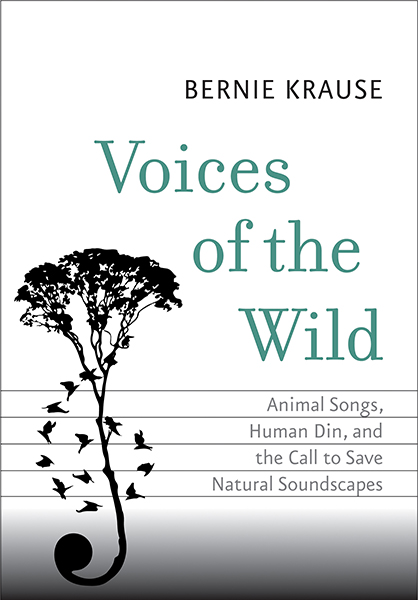
Voices of the Wild: Animal Songs, Human Din, and the Call to Save Natural Soundscapes by Bernie Krause

An engaging introduction to the science of soundscape ecology, from a pioneer of the field.

voices of the wild

With Voices of the Wild: Animal Songs, Human Din, and the Call to Save Natural Soundscapes, Bernie Krause shares his delight in the sounds of the natural world and makes an impassioned case for the importance of such acoustics.

Krause is a soundscape ecologist who’s been recording the noises of natural settings for nearly 50 years. As a pioneer in his field, he’s acquired his knowledge the hard way, beginning with the technological challenges of recording with equipment designed for indoor use, and has seen changes as the field has grown. For example, the scientific establishment’s emphasis on single-species recording is giving way to Krause’s preference for capturing an entire biome.

Voices of the Wild is designed to educate laypeople on the existence and significance of soundscapes, and how to undertake amateur recordings. Krause introduces the terms “geophony” (non-biological sounds, as of wind and water), “biophony” (non-human biological sounds, like bird- and whalesong) and “anthropophony” (human-created sounds, from speech to traffic). He makes predictions about the future of soundscape ecology, including technologies that will change the field and its impact on various disciplines, from architecture (interior soundscapes have implications on education and psychology) to biology (in which soundscapes inform our understanding of biodiversity), and many more. The field has enormous scientific and cultural relevance, for example in comparing the therapeutic value of biophonies to that of music: the former “may be more beneficial, perhaps because they are culture neutral.” Accompanied by recordings available online, Voices of the Wild offers a mildly academic but fascinating look at a little-known but potentially influential field.


This review originally ran in the September 4, 2015 issue of Shelf Awareness for Readers. To subscribe, click here, and you’ll receive two issues per week of book reviews and other bookish fun!


Rating: 6 orcas.

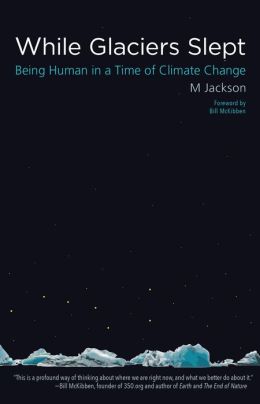
While Glaciers Slept: Being Human in a Time of Climate Change by M Jackson

A scientist’s personal reflections on climate change and personal loss.

while glaciers slept

“I cannot untangle in my mind the scientific study of climate change and the death of my parents.” M Jackson is a scientist, National Geographic Expert and glacier specialist, but her memoir While Glaciers Slept: Being Human in a Time of Climate Change rarely takes a scientific perspective and never claims objectivity. Rather, Jackson tells the story of losing both her parents when she was a young woman just embarking on life, and the trauma and extended grieving process that resulted.

Following a brief, lovely foreword by Bill McKibben, Jackson poetically conflates her loss with the slow and still mysterious effects of anthropogenic climate change. Her scientific background and explorations of fascinating places–Denali and Chena Hot Springs in Alaska, Zambia with the Peace Corps–inform her writing and yield striking images, as she runs on spongy Alaskan tundra or contemplates cryoconite holes atop glaciers. But it is the personal side of her narrative that allows Jackson to address society’s psychological difficulties with climate change.

Each chapter of While Glaciers Slept is a finely braided essay, considering an aspect of her parents’ lives or deaths alongside a facet of climate change’s challenges. Jackson mourns her mother with the help of Joan Didion’s writing; windmills offer possible “undulating answers” and comfort her on her drive home upon learning that her father is dying. She employs a disordered chronology that slightly disorients her reader, just as Jackson was disoriented. The effect is an evocative, lyrical work of musing and allegory rather than a scientific treatise.


This review originally ran in the September, 4, 2015 issue of Shelf Awareness for Readers. To subscribe, click here, and you’ll receive two issues per week of book reviews and other bookish fun!


Rating: 7 check marks in a dictionary.

Teaser Tuesdays: The Annihilation of Nature by Ceballos, Ehrlich and Ehrlich

Teaser Tuesdays is a weekly bookish meme, hosted by MizB of Should Be Reading.

Look out for a forthcoming Maximum Shelf issue on this beautiful coffee-table book about Earth’s sixth mass extinction event, which is human-caused and going on now.
annihilation of nature

The Tasmanian tiger, with its remarkable coloration and tiger-like stripes, was the largest predator marsupial. Females were unique in that their pouch opened to the rear and, interestingly, the males also had a pouch into which they could withdraw their scrotum. The last captive individual died in 1936.

If that is not fascinating stuff about this species, I don’t know what. And the tragedy of losing such singularities cannot be understated – and this book is full of it, I’m afraid.

This quotation comes from an uncorrected advance proof and is subject to change.

“Landspeak” by Robert Macfarlane

Here is another that I cannot improve upon by commenting. Words and places, beautifully composed? I am sold. I’ve heard a lot about Robert Macfarlane but this short piece is all of his writing that I’ve actually read. Clearly I’ll need to find more.

Please enjoy


The Mountain Can Wait by Sarah Leipciger

A hit-and-run fatality overshadows the life of a family and a community in the bush of British Columbia.

mountain

Sarah Leipciger’s debut novel, The Mountain Can Wait, centers on a family’s shared and separate struggles in the wilds of British Columbia. Tom’s wife left him when the kids were small. He hopes he can put in one last good year at work, sell his forest restoration company and provide for his children in his retirement. His son, Curtis, lives a few towns over, a young man on his own. Daughter Erin has begun to pull into herself, in typical teenage fashion. Around this nucleus are colorful characters like Tom’s mother-in-law, angry and estranged, living off the land in a tiny island village; Tom’s new girlfriend, a poet with an independent streak; and the tree planters and other employees of his company. Between hunting and foraging, idle drug use and countless cigarettes, this motley crew sharply evokes their environment in Leipciger’s spare but feeling prose.

The biggest crisis of all is out of sight for much of the story, but bookends everything else that transpires: a hit-and-run that kills a teenaged girl and haunts the driver, who is slow to seek redemption. “She was an instant, the sulfuric flare of a match…. And there was a dull slap.” This overarching tragedy shadows the rest of the action, as characters go on making their plans, unaware of how it will affect their lives.

In language that highlights natural beauty and the challenges of living in the bush, Leipciger explores what a sense of responsibility really entails, the finer points of family dynamics and the strong hold a place can have on a person, from Whistler to the tiny isles around Vancouver Island. Curtis struggles with the family tradition of hunting for their meat; he has trouble killing, even collecting tadpoles. But he will wreak havoc in just trying to survive, let alone impress his father. Tom is still troubled by the sordid details of his wife’s demise, some years after she left. He loves his children, but despairs at knowing them at all.

The Mountain Can Wait concentrates on the difficulties of properly caring for loved ones, and the meaning of community. Set within British Columbia’s stunning and intimidating back country, a mountain goat killed in one shot and a bear only wounded come to the forefront, too. As the title reflects, even the calamities Tom and his clan experience fade against such a backdrop.


This review originally ran in the May 14, 2015 issue of Shelf Awareness for the Book Trade. To subscribe, click here.


Rating: 7 cherries.

A Buzz in the Meadow: The Natural History of a French Farm by Dave Goulson

A celebration of biology and the joy of discovery–and a reminder to tread lightly.

buzz
Dave Goulson follows A Sting in the Tale, about his years studying bumblebees, with A Buzz in the Meadow: The Natural History of a French Farm. In 2003, Goulson purchased a 33-acre property with a decaying farmhouse and barn, and turned it into a private nature reserve; here he describes the multitude of wildlife he shares those acres with. His goal is to celebrate the wonder of the natural world–especially insects, which make up roughly two-thirds of known life on Earth.

Goulson charmingly depicts the mating practices of dance flies and the many butterfly species he sees on his daily run, and elucidates the habits of the famously cannibalistic female mantis with added knowledge gained through his own studies. A Buzz in the Meadow is both a descriptive work and a call to arms, a reminder that all species are precious and necessary, even the tiny ones. Goulson repeatedly states that conservationists should look beyond large and charismatic creatures like whales and tigers; he perhaps overstates that “the extinction of the giant panda… would not have any knock-on consequences. There would perhaps be a tiny bit more bamboo in a forest in China,” but his point is well taken–that insects make up the majority of life and play an outsized role in the interconnectivity of biological systems worldwide. Goulson’s tone is personal, even humorously self-effacing, but clearly expert. A Buzz in the Meadow accessibly presents natural science and gracefully offers an earnest wake-up call to conservation.


This review originally ran in the April 28, 2015 issue of Shelf Awareness for Readers. To subscribe, click here, and you’ll receive two issues per week of book reviews and other bookish fun!


Rating: 6 dormice.

Martin Marten by Brian Doyle

A lyrical ode to all the inhabitants of the world, fun-loving and deathly serious as nature.

marten

Fourteen-year-old Dave is one of the protagonists of Brian Doyle’s Martin Marten. He lives with his delightful, precocious six-year-old sister Maria and his wise, funny parents in a cabin on an Oregon mountain. Dave prefers to call the mountain Wy’east, which is the name given it by the people who lived there for thousands of years, rather than Hood, “which is what some guy from another country called it.”

Also in his adolescence on Wy’east in the same season that Dave enters high school and tries out for the cross-country team is Martin, who likewise is exploring his world, venturing farther from home and contemplating separation from his mother, and who will discover the females of his species around the same time that Dave does. A marten is a small, brownish mustelid with a diverse diet and a large territory, and Martin is as individual an example of his species as Dave is of his.

Doyle (Mink River) follows the coming-of-age of these two young males, and to varying degrees examines the lives and struggles of other inhabitants of Wy’east. These include the woman who runs the general store, Dave’s family and his best friend Moon, a schoolteacher and the dog who adopts him, a massive elk, an elderly bear and a retired horse, and each of their stories is deep and rich with humor and wisdom. The result is a lushly textured, loving, sensitive and whimsical symposium of trees, insects, birds and beasts.


This review originally ran in the April 14, 2015 issue of Shelf Awareness for Readers. To subscribe, click here, and you’ll receive two issues per week of book reviews and other bookish fun!


Rating: 10 tomatoes.

Teaser Tuesdays: A Buzz in the Meadow by Dave Goulson

Teaser Tuesdays is a weekly bookish meme, hosted by MizB of Should Be Reading.

buzz

My teaser today from A Buzz in the Meadow: The Natural History of a French Farm is actually a footnote, outside the main text; but I felt it was too profound not to share.

Sadly, funding for taxonomic work such as describing new species has shrivelled in recent decades, so such specialists are now hard to find. Soon there may be no experts left in many fields, so there will be no one to go to for help if you suspect you have discovered a species new to science.

It’s a sad world.

This quotation comes from an uncorrected advance proof and is subject to change.

Teaser Tuesdays: Martin Marten by Brian Doyle

Teaser Tuesdays is a weekly bookish meme, hosted by MizB of Should Be Reading.

This is one of those I fear to even say much about, because I might ruin its perfection. Best book of 2015 so far, for sure.

marten

I have one sentence for you today:

You could, as Dave many times had, just sit there in the sun with your back against a tree and watch and listen to the river sprint and thurble and trip and thumble; you had to invent words for the ways it raced and boiled and dashed and crashed, and indeed Dave had once spent an afternoon trying to write one long word that would catch something of the river’s song and story when it was full of itself like this, not yet the shy trickle it would be in summer and fall, before the Rains came on All Souls’ Day, and then the dim chamber of winter, when snow fell slowly all day every day for weeks at a time, and the woods were filled with soft slumps and sighs as trees shed their loads.

I love so much about this sentence: how it acknowledges what words cannot do, and then uses words to do so much; how its length mirrors the length of the failed word of the river’s song and story; how it encompasses four seasons; the lovely sounds of it. Are you convinced?

This quotation comes from an uncorrected advance proof and is subject to change.