reread: Pieces of White Shell by Terry Tempest Williams

This is one of a few rereads and re-reviews, as I work my way into this semester’s project: my critical essay about the use of material things in Mark Doty’s Still Life with Oysters and Lemons, Terry Tempest Williams’s Pieces of White Shell, and a handful of Scott Russell Sanders’s essays. Original review here.


The importance of this book to me can hardly be overstated, as I’ve read it many times since my childhood. It offers many possible annotation subjects: the dreamy quality of the stories Williams tells; the line between fact and fiction; the liberal use of other writers’ words to compile her own impressions; the interplay between Mormon and Navajo traditions; her study of storytelling as communication and education across generations. But here I am most interested in her use of objects as an organizing principle.

Williams’s chapters are organized by the items she keeps in a leather pouch on her desk at the Utah Museum of Natural History, where she works as museum curator. The prologue opens: “Out of my pouch falls a sprig of sage.” This prologue is different from the rest of the book in that it is set in Williams’s family home and tradition, while the rest of the book stays with the Navajo and her work life. Sage backgrounds her home. Chapter one, “Curator,” presents the pouch. Its first two paragraphs read,

I am a collector. On my desk sits a small leather pouch, weatherbeaten, full of mementos of the desert. I have carried it with me everywhere in Navajoland. It is my link with the Diné, as they call themselves. I am shy. The people are shy. The objects inside give us courage to speak.

I shake the objects out of their pouch and spread them across my desk. What stories they tell: a sprig of sage; rocks, sand, and seeds; turquoise, obsidian, coral; pieces of white shell; yucca; a bouquet of feathers bound by yarn; coyote fur; a bone from Black Mountain; deerskin; wool; a potshard and some corn pollen. Wait–something is missing. I shake the pouch four more times and from the bottom of the bag rolls out the Storyteller, a clay figurine from Jemez.

This list of objects forms the rest of the chapter titles. The prologue is subtitled “A Sprig of Sage,” and the rest following chapter 1, “Curator,” proceed: “Rocks, Sand, and Seeds,” “Turquoise, Obsidian, and Coral,” etc. down the list. “Storyteller” is followed by “Home,” and then an epilogue, acknowledgements, notes, and bibliography. With just a few exceptions, the pouch’s contents neatly form the table of contents. As a writer who has always struggled with titles, this neatness appeals to me.

Within each chapter, the object or objects offer entry into stories, folklore, natural history, and personal musings. The connections between object and story are often tenuous: they make sense to Williams, and she is content to leave them sketched. My first impression is that she follows her mind where it wanders without much explicit mapping of those wanderings for her reader. Let me look closer at how each chapter title describes its contents.

The sprig of sage is the Utah landscape that Williams and her family and her Mormon culture belong to; it leads her to family stories. The rocks, sand, and seeds are the geography of Navajoland (the Colorado Plateau), and this chapter lets her tell the story of that land both through the science of geography and through Navajo mythology. Turquoise, obsidian, and coral are colors: of the desert, and of Navajo mythology again. Pieces of white shell are vestiges of the ocean that once covered Navajoland, and this leads her to an old world and old traditions, again accessed in part through myth. Yucca is soap, tradition, and the traditional ceremony surrounding a Navajo woman’s first menses.

A bouquet of feathers bound by yarn is classic Terry Tempest Williams: her obsession with birds, and their place in the myth and culture and ecology of the region. Here she tells stories of communing with a great horned owl, and of attending a powwow. Coyote fur is also obvious, allowing a way in to Coyote/Trickster stories. A bone from Black Mountain is a storytelling opportunity: Williams picks up a bone and dreams, imagines herself shrinking to Flea and listening in on the storytelling of the animals on the mountain. The chapter ends with a lesson about the nature of storytelling.

Deerskin begins the reentry of Williams’s own family, as her father’s and brothers’ hunting traditions meet the Navajo Deerhunting Way. Wool is a connection to the Navajos’ sheepherding tradition. A potshard and some corn pollen lets Williams imagine her way into the ancient world of the Anasazi, the Navajos’ precursors in the region. The Storyteller reminds her of two women in particular that she’s known; the reader recognizes that Williams is herself a storyteller, as well, with all the ritual and roles associated. The outlier final chapter, “Home,” re-grounds Williams back in the present, in her office at the Utah Museum of Natural History.

I can see now that these objects each lead Williams into history, myth, place, and culture, associatively. In fact, it’s a more consistent, standard strategy than it immediately appeared to me–almost a formula, but with a feeling more intuitive and natural than that implies.

Within chapters there is an organization to admire, too. Many chapters both start and end with an image, or with the object itself, circular. This keeps the reader grounded in the objects and the images and associations they call up. It is part of what makes my overall impression of this book as both simple and profound: the pattern brings the reader back around, always, so that she remembers the objects that brought us here. Williams deals in concepts that ask her reader to stop and think, but she grounds them in easily grasped things. The chapter titled “A Bouquet of Feathers Bound by Yarn” begins with the word “birds” and ends with “birds burst into song”; the title phrase occurs in both the next-to-first and next-to-last sentences.

As a writer intimidated by both titles and the conclusion and tying-up of essays, this structure appeals to me very much as a strategy to make my own work easier to organize. I appreciate that the effect on me as reader was not of a formula but of an artful form. I think there may be a shortcut here for me. In my critical essay, there are several aspects of Pieces of White Shell that I hope to mine for my own work: overall organization of a collection, the theming of individual chapters or essays, and things standing in for stories or concepts, as ways in.


Rating: 9 coyotes return.

Yokainoshima: Island of Monsters by Charles Fréger

A rich collection of photography explores the Japanese mythology that both celebrates and protects longstanding traditions.

yokainoshima

Yokainoshima is a lushly beautiful collection by photographer Charles Fréger (Wilder Mann: The Image of the Savage), with commentary by experts on his Japanese subjects. Yōkai are “spirits, ghosts and other monsters,” or, literally, “bewitching apparitions.” On Yokainoshima, the “island of monsters,” and in Japanese culture, these gods and ghosts emphasize links to other worlds, in which humans are not the only inhabitants.

The bulk of Yokainoshima is filled with nearly 200 glossy color images of masked and costumed performers representing specific yōkai in grassy fields, beaches, forests and snowfields. Standing alone, these powerful, vibrant photographs offer stories and evoke emotions. Descriptions of the depicted characters, groups and customs (located at the back of the book) elucidate the mysteries offered by the images: seasonal rites requesting fertility, abundance and protection. Short essays portray a culture defined by its spirits, monsters and connections, enriching Fréger’s striking visual art.


This review originally ran in the November 22, 2016 issue of Shelf Awareness for Readers. To subscribe, click here, and you’ll receive two issues per week of book reviews and other bookish fun!


Rating: 8 pieces of straw.

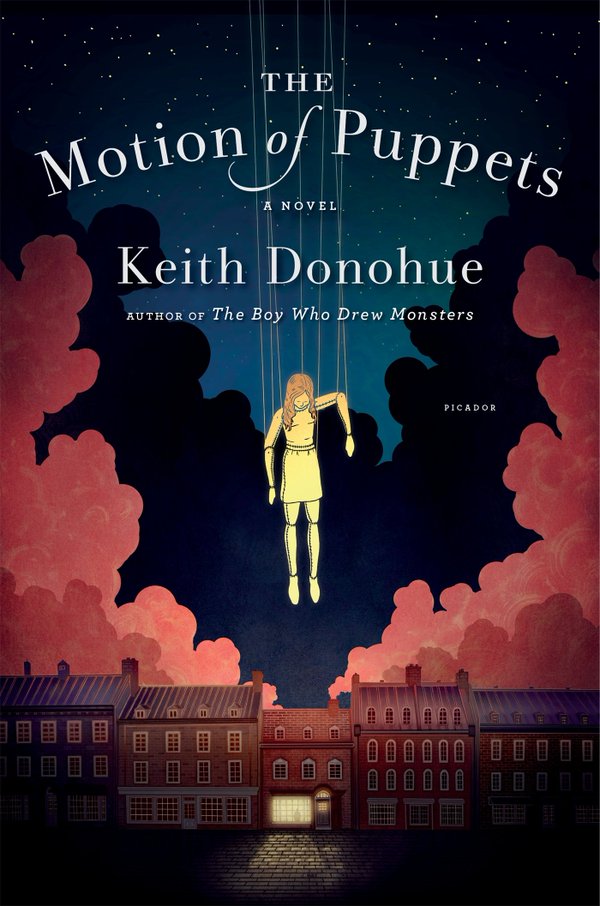
The Motion of Puppets by Keith Donohue

This reworking of the myth of Eurydice features a woman locked in a world of sentient puppets.

the motion of puppets

With The Motion of Puppets, Keith Donohue (The Boy Who Drew Monsters) evokes a bizarre underworld with an array of mythological references in a story of lovers seeking reunion. Newlyweds Kay and Theo Harper have come to Quebec for the summer, where she works as an acrobat in a cirque and he wrestles with a work in translation between semesters teaching French literature in New York City. The first line of the novel reads: “She fell in love with a puppet.” And this is where the trouble begins.

A puppet shop in Quebec’s Old City draws Kay’s attention daily, but the door is always locked, the lights off. One night, when returning from a party after midnight, she fears she is being followed and, finding the door unlocked for once, slips inside. Theo contacts the police when she does not return home, but no trace can be found of her. The rest of The Motion of Puppets alternates between their two experiences. Theo searches Quebec all summer for his wife, then returns to New York City and his work, distracted and mourning. Meanwhile, Kay adjusts to new circumstances: she has become a puppet. Along with the other puppets shut away in the shop she once admired, she is able to speak and move on her own only between midnight and dawn–once she learns how to move again in her new body. Eventually, she takes pleasure in performing (with the help of a puppeteer) for audiences, as she had in the cirque. And she makes new friends, especially with the one puppet who also remembers and yearns for her human form.

This dreamy, sinister novel alludes widely to history, literature and legend. Theo’s translation project is a biography of the photographer Eadweard Muybridge, whose work involved scientific knowledge of human and animal locomotion. Muybridge shot and killed his much younger wife’s lover, a story that preoccupies Theo, also an ardent–if not clingy–older husband. One of Theo’s colleagues is a professor of antiquities who is equally eager to find relationships between past and present. Most pointedly, however, Kay’s predicament is a reference to the myth of Orpheus and Eurydice, in which Orpheus misses his wife so terribly that Hades agrees to let her leave the underworld and return to life with him, under one diabolical condition. In Donohue’s novel, Theo’s ability to save Kay from her incarnation as a puppet relies on his ability to trust her. But first, she must make him recognize her in her new form.

An engrossing novel of love, fancy and enchantment, The Motion of Puppets offers a perfectly wrought moodiness, detailed settings and an unsettling plot. Kay and Theo are underdeveloped as characters, but serve the mythic proportions of the story well. Smart, eerie and moving, this puppet show holds the potential to transport its reader to another world.


This review originally ran in the August 30, 2016 issue of Shelf Awareness for the Book Trade. To subscribe, click here.


Rating: 7 hinges.

Ithaca: A Novel of Homer’s Odyssey by Patrick Dillon

This retelling of the Odyssey gives Telemachus more voice than ever before.

ithaca

Homer’s Odyssey recounts Odysseus’s 10-year journey home from the Trojan War, to where his wife and son await him. His adventures along the way take center stage. Ithaca, Patrick Dillon’s retelling, resets that center to the son. With substantially more insight into Telemachus than readers have had before, this version also offers a more fallible Odysseus, with all the drama and yearning of the original.

Dillon remains true to Homer’s setting, but the novel is told in Telemachus’s voice, and the weighty absence of a father he never met defines his existence. At 16, he worries over his role and responsibilities, and his inability to protect his mother: he has no one to teach him how to fight. These interior workings bring Odysseus’s iconic son to light as a nuanced and fully formed character. When the wise warrior Nestor assigns his daughter to be Telemachus’s traveling companion, the story gets an appealing twist: Polycaste is headstrong and capable, and her friendship has much to offer Telemachus. The gods are less present this time around; Telemachus is openly dubious. Veterans of the Trojan War roam Greece as bandits and vagabonds.

Though only slight details are changed, Ithaca is a vibrant and fresh revival; Telemachus’s struggles are illuminated through the use of his own voice. The well-loved classic is present: Penelope is beautiful, determined, fading; the suitors are shocking; Menelaus and Helen fight bitterly; the aging Nestor tries to guide Telemachus true. Dillon’s achievement is in characterization while retaining the heart and passion of Homer.


This review originally ran in the July 8, 2016 issue of Shelf Awareness for Readers. To subscribe, click here, and you’ll receive two issues per week of book reviews and other bookish news.


Rating: 8 arrows.

iDiOM Theater presents The Love of the Nightingale

nightingaleAnother perfectly lovely, intimate performance from iDiOM. (See an earlier one here.)

The Love of the Nightingale is a play by Timberlake Wertenbaker based on the Greek myth of Philomele. The iDiOM describes it as “a tale of sisterhood, betrayal, and revenge, in a poetic, beautiful, funny and modern retelling.” I’m not so sure about the modern part – it seems the play was written so that it could have been staged with or without modern dressings, but this version was fairly stripped down. There were a few moments of commentary on modern times by comparison to the tragedies of Philomele’s story. Essentially, it felt very Greek to me: deeply tragic, gory, inexorability revolving around a fatal flaw; willing and inevitable murdering of immediate family members. Wonderful stuff, if you’re in the mindset for a really dark storyline.

The acting was as wonderful as ever. These are extraordinary players, and I feel lucky to see them. Not that there weren’t a few faults: when the chorus speaks in unison (particularly the male chorus), they are not quite in unison, so their words are garbled; and the set’s steps and platforms, constructed of wood, squeaked and creaked loudly enough to obscure some of the actors’ speech. (Also, we found use of a ventriloquist-style dummy for the young child an odd choice. I think it would have been less distracting to just have an adult actor take the part.) As I’ve said before, though, these small imperfections just remind me that we are part of a small community watching incredibly talented but basically amateur performers do what they love.


Rating: 7 questions.

Arcadian Nights: The Greek Myths Reimagined by John Spurling

Classic Greek myths starring Herakles, Theseus and more are reborn in vivid, funny, fresh forms.

arcadian

From his home in a hillside Peloponnesian village, John Spurling (The Ten Thousand Things) charmingly retells some of Western literature’s best-known stories. He balances careful attention to the originals with his own humorous voice, honoring well-loved classics with a fresh eye.

Each section focuses on a hero: Perseus, Herakles, Apollo, Theseus and the ill-fated Agamemnon. Chapters begin and end with Spurling’s own Arcadian vista, on the Gulf of Argos, which inspires his imagination. Through these lenses, Arcadian Nights (re)familiarizes readers with the curse on the House of Atreus, the Twelve Labors and the complexly intertwining genealogies of mortals and immortals in a storied era somewhere between history and myth. Spurling notes commonalities with other cultures’ and religions’ fables, and infuses the established legends with added detail: imagined dialogue lends well-known characters extra personality, and Herakles gets a perfectly apt new piece of apparel. The occasional modernization enlivens the tales, as when the newly dead line up to cross the River Styx into Hades–it “was a little like going through security in an airport today”–but this is no clumsy 21st-century resetting of Aeschylus. Rather, Spurling’s gentle, clever wit complements the originals’ themes of heroism and romance, and their reminders of the importance of hospitality, humility and memory.

Spurling’s passion and enthusiasm and the best of Greek myth shine through this new version, equally appropriate to introduce new readers or reinvigorate the appetite of those who already honor such names as Zeus, Achilles, Athena, Poseidon and more.


This review originally ran in the February 16, 2016 issue of Shelf Awareness for Readers. To subscribe, click here, and you’ll receive two issues per week of book reviews and other bookish news.


Rating: 7 golden apples.

War Music: An Account of Homer’s Iliad by Christopher Logue

This epic retelling in verse of Homer’s Iliad is worthy of the classic.

war music

Upon his death, poet Christopher Logue left unfinished a full-length reimagining of Homer’s Iliad. His fellow poet and friend Christopher Reid applies a careful editorial hand to the papers Logue left behind to release War Music, which includes both previously published works and new material.

The result is as epic and evocative, as emotional and resounding as the original, yet also surprisingly novel. Logue employs memorable images, as when the two armies meet “like a forest making its way through a forest.” He is unafraid of wild anachronisms: “As many arrows on [Hector’s] posy shield/ As microphones on politicians’ stands”; “Blood like a car-wash.” But this is no attempt to modernize; the rage of Achilles, Helen’s beauty, capricious gods and customs of battle remain set in Homer’s Greece. Rather, it is an enrichment of a well-known and loved story, in swelling verse and with the same clever eye for tragedy and sly humor of its model.

Reid finds Logue’s “capacity for the grand conception dashingly and convincingly executed,” as near “pure Logue” as possible. His preface and comments in the appendix (where the manuscripts were roughest) offer insight for readers unfamiliar with Logue, who references Dostoyevsky, Shakespeare, Keats and Tennyson, as well as Homer. Expertise with the original is unnecessary to enjoy this version; although such knowledge will increase the impact, the grandeur of War Music is gripping and suspenseful regardless of the reader’s background. No fan of Homer will want to miss Logue’s contribution.


This review originally ran in the January 19, 2016 issue of Shelf Awareness for Readers. To subscribe, click here, and you’ll receive two issues per week of book reviews and other bookish news.


Rating: 8 topaz saucers heaped with nectarine jelly.

Atlas of Cursed Places by Olivier Le Carrer

Sailor Olivier Le Carrer guides readers on an enticing tour of frightening places around the world, with maps and pictures.

atlas cursed places

Olivier Le Carrer’s Atlas of Cursed Places: A Travel Guide to Dangerous and Frightful Destinations profiles 40 locations around the world, so that tourists may avoid risk and the adventurous may be satisfied that “many mysterious places remain to be explored and understood.” In his introduction, which recognizes Adam and Eve as the origination of curses, he describes these spots as falling into three categories: spiritual or paranormal curses; natural hazards; and human-caused threats. Le Carrer, a sailor, then sorts them by the oceans they lie nearest.

Historic religious conflicts qualify Gaza and Jerusalem: of the latter, Le Carrer writes that “mankind is capable of transforming even the most beautiful holy stories into a nightmare.” Other places are cursed by animal activity, as with Kasanka National Park in Zambia, where five million fruit bats descend annually, and Cape York in Queensland, Australia, where crocodiles reach 17 feet in length and live alongside eight of the 10 most dangerous snakes in the world. Le Carrer’s attitude toward his subjects varies, as he addresses the Bermuda Triangle rationally (“people navigate the area every day without incident, and there are often logical explanations for any incident”) but concludes mysteriously of Area 51 that “accursed nature strikes again.”

Le Carrer’s descriptions of place are designed to entertain and comfortably frighten his readers. His brief, playful evocations are accompanied by historical maps and period illustrations in this large-format book, which will please travelers and trivia fans alike.


This review originally ran in the – issue of Shelf Awareness for Readers. To subscribe, click here, and you’ll receive two issues per week of book reviews and other bookish fun!


Rating: 6 possible explanations.

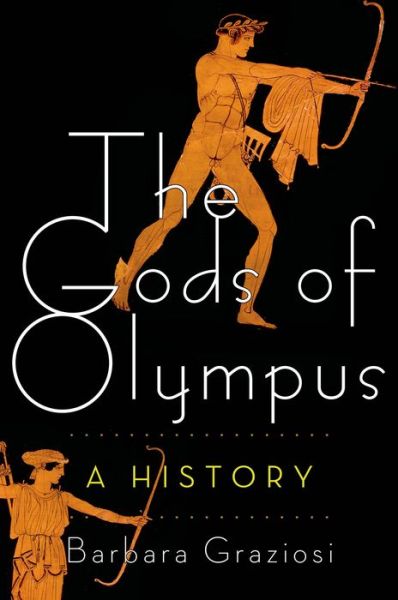
The Gods of Olympus by Barbara Graziosi

For novices and enthusiasts alike, a comprehensive and absorbing study of the gods of Olympus and how their cultural roles have changed over the centuries.

gods of olympus

From Homer and Hesiod, we know that Zeus has a large sexual appetite, that Athena is noble and warlike, that Aphrodite is the goddess of love and sexuality, that Hermes is a messenger with a sense of humor. But how did these myths and the personalities they depict survive to the present? Barbara Graziosi is a professor who’s written several academic works on the classics. In The Gods of Olympus, she directs her expertise to a more general audience for the first time, following the 12 gods and goddesses of the classical Greek pantheon from their first appearances in antiquity through our continuing modern awareness of them. Readers benefit immensely from her proficiency, which comes with a sense of humor: Graziosi occasionally appears in her own narrative, with an endearingly wry, self-deprecating tone.

The history of the immortal Olympians begins in Greece, where Graziosi explores their role in myth, ritual and cultural events. The Athens of Socrates, Plato and Aristotle reconsidered the value of the gods, in literature and in life, and when Alexander the Great expanded his empire toward the ends of the earth, he advertised his ability to travel even further than Dionysus. By gauging his own accomplishments against those of the gods, he sought to make himself like a god even as he reconfirmed the supreme importance of the deities.

Under Alexander’s rule, much of the “known world” was Hellenized, taking on Greek–and therefore Olympian–customs and culture. During the Roman Empire, the gods’ strong personalities were merged with the traditional Roman gods’ rule over matters of state, surviving in slightly different forms that best served those in power. As Graziosi demonstrates, this is the model through which they have come to us over millennia: the rise of Islam and Christianity likewise preserved the Olympians, though it transformed the gods into demons, allegories and cautionary figures. Their original worshippers are long gone, but the Olympic gods survive, flexible and changeable but continuing to inspire art and literature.

Graziosi’s knowledge is obvious, and easy to trust, accompanied by thorough notes and a helpful appendix to the original 12 gods and their corresponding Roman identities. Her writing is accessible and entertaining, her passion for her subject obvious; The Gods of Olympus will equally thrill longtime lovers of the classics, and appeal to readers seeking a friendly, engaging introduction.


This review originally ran in the March 10, 2014 issue of Shelf Awareness for the Book Trade. To subscribe, click here.


Rating: 8 centuries (just for starters).

Antigone by Sophocles, trans. by Dudley Fitts and Robert Fitzgerald

oedipusThis is the third play in a trilogy. Please see my write-ups of the first two: Oedipus Rex and Oedipus at Colonus.

I have studied Antigone in some depth before, also in Fitzgerald’s translation, and I enjoyed it immensely again. The action is this: brothers Eteocles and Polyneices have done battle for the kingship of Thebes, and both have been killed, Eteocles within the city walls and Polyneices, attacking from without. Now king again, Creon – uncle to Antigone, Ismene, Eteocles, and Polyneices – decrees that Eteocles will be buried with full honors but Polyneices will not, because he was a traitor who attacked his own city. You have no doubt noticed the great significance of the oracles I’ve named so far in these plays: the gods were a very real, very important part of life in the ancient Greece represented in these works. One of the deeply serious principles at play in their culture would have been honoring one’s family, and respectfully burying one’s dead. Therefore, Antigone doesn’t hesitate to defy Creon’s royal decree – on pain of death – and bury her brother. She is caught, captured, makes no denial, and is sentenced. Creon is too cowardly to order her death, so he orders her locked in an underground cell and fed; whether she lives or dies, he says, is no fault of his.

The real conflict here is between god’s man and man’s law. Antigone asked Ismene to assist her in burying their brother but Ismene refused, citing man’s law as dominant; Antigone takes it as a given that god’s law, regarding the burial of one’s dead relatives, is superior. When Antigone is caught, Ismene changes her opinion, begging to be put to death with her sister, but Antigone refuses her this honor: she didn’t earn it. Creon, for his own reasons, refuses to punish her: he has begun to dread the consequences of his stiff policy, in light of public sentiment sympathizing with Antigone’s cause. From being steadfast and confident in his decree in the beginning, Creon is increasingly worried that he may be wrong; but – in another theme of the play – he is too proud (or has too much hubris) to back down. His son Haimon is engaged to marry Antigone, and comes to Creon to ask for her pardon – not because he is “girlstruck,” but because he cares for his father’s fate. This is the first of several warnings that Creon should heed; the next comes in the form of the respected seer Teiresias. Ironically, Oedipus had failed to listen to Teiresias in Oedipus Rex, and Creon will make the same mistake here. The Chorus eventually convinces Creon to pardon Antigone and bury Polyneices, but this decision comes too late. When the party arrives at Antigone’s cell, she has killed herself; Creon is there just in time to see his son Haimon do the same. This is a classic tragedy, in terms of its fatal flaw – Creon’s hubris in thinking to rule against god’s law, and then in his reluctance to admit he was wrong and change his policy – resulting in the death of his family. Because, oh yes, his queen wife (Haimon’s mother) also kills herself when she hears the news. Whew.

To me this is by far the strongest of the three plays. I noted a number of iconic lines that I felt the need to share with you. In fact, these lines taken together serve somewhat to give a feel for the action of this play, which is most importantly internal action: Creon is stiff and unbending; Creon doubts himself; Creon reverses. It is a conflict between moral stances. Also, as you can see, there is a feminist undertone here as well – represented not least by Creon’s idiocy.

Ismene to Antigone when Antigone asks her to disobey Creon’s rule:

We are only women,
We cannot fight with men, Antigone!

Same scene, Ismene to Antigone again:

Impossible things should not be tried at all.

Creon, arrogantly scolding Antigone for what he ironically sees as her pride in disobeying him:

She has much to learn.
The inflexible heart breaks first, the toughest iron
Cracks first, and the wildest horses bend their necks
At the pull of the smallest curb.

Creon again, betraying the real reasons for his reluctance to reconsider his stance:

Who is the man here,
She or I, if this crime goes unpunished?

And even worse – still Creon:

Whoever is chosen to govern should be obeyed –
Must be obeyed, in all thing, great and small,
Just and unjust!

(Just and unjust? Did you really mean to say that, Creon?)

If we must lose,
Let’s lose to a man, at least! Is a woman stronger than we?

Haimon, giving his father good advice:

It is not reason never to yield to reason!

Just a few of my favorite lines. I hope they communicate the power and drama in this short but very moving play.


Rating: 8 birds of augury.