Elektra by Jennifer Saint (audio)

I made a 2,500 round-trip drive recently, so check out a few *audiobooks* for the first time in quite a while. I had a blast with them!

I’d been just recently telling a friend my paraphrased-from-memory version of the curse on the house of Atreus, so when I went looking for an audiobook, I was delighted to find Jennifer Saint’s Elektra, read for us by Beth Eyre, Jane Collingwood, and Julie Teal. (It looks like I put this one on a wish list based upon my interview with Claire North aka Catherine Webb.) I liked that this was a retelling with, if you will, a modern angle – told from the points of view of the women – but it is not a modern retelling; it’s still set in the ancient Greek and Trojan world. The three women who narrate their intersecting stories are Cassandra, Clytemnestra, and Elektra. The latter gives her name to the novel, perhaps, because she is the one who survives to its end.

I think this is the most in-depth telling I’ve encountered of Cassandra’s story, in which she, a princess of Troy, becomes a priestess in Apollo’s temple and undergoes the conflicting honor and agony of his gift of prophecy, and his curse that no one will ever believe her (always correct) prophecies. She then sees her city destroyed – sees it in advance and experiences it in real time – and is taken as a war prize by the Greek king-of-kings Agamemnon (who, in all tellings I’ve ever found, comes across as a consistently unlikeable man). Her life ends not long after his does, although with a little different nuance in this version.

[Here, an aside. These events, lying somewhere between myth and, in some cases, *possible* history, originate in an oral tradition. There are many versions, but all are translated at this point across both language and transcription; there are many retellings, but it seems there can be no single, original, authoritative one. I like how freeing this is: there is no reliably “correct” version of Cassandra’s story, or any of them, which I think offers a liberty to riff.]

Clytemnestra has always been a puzzler. She kills her husband (using some deceit, and after cheating on him); she has usurped power in a man’s world; many, especially the more traditional versions, paint her in an unsympathetic light. More modern perspectives point out that one of her greatest crimes may be that she holds power with confidence – she possesses traits that tend to read positively when they belong to men. And it’s not always remembered and pointed out that she kills her husband because he killed their firstborn daughter – sacrificed her to the gods for the fair winds needed to sail for Troy. That sacrifice, or murder, is in turn painted differently depending on whether the storyteller believes in the gods’ need for sacrifice (and the Greeks’ need to sail for Troy). What is one young woman’s life against glory in battle for all the greatest warriors ever, etc., etc. The same dual and dueling perspectives apply to Clytemnestra’s famous sister, Helen of Sparta / Helen of Troy. There the great question will forever be: did Paris abduct her? Or did she leave her husband and run away with another by choice? Victim, or whore? (A shocking number of ambiguities in Greek myth turn on the question of sexual consent.) Clytemnestra remains a difficult character in Jennifer Saint’s version of her story. Her grief over the loss of Iphigeneia is sympathetic; her desire for revenge feels righteous, if perhaps bloodthirsty. But because of the third point of view Saint gives us, we’re also aware of how fully she orphans her remaining three children in her singlemindedness about the one she’s lost.

Elektra is herself single-minded and bloodthirsty, and this is the essence of the curse on the house of Atreus: each killing, meant to set right the last, only sets the next one in motion. Clytemnestra means to avenge Iphigeneia by killing Agamemnon; Elektra feels it necessary to avenge Agamemnon by killing Clytemnestra. She has lived her life in father-worship, mostly in the absence of that father (and again, I’ve not read of anybody who spent time around Agamemnon and liked him). It’s notable to me that both Clytemnestra and Elektra show signs of finding some nuance, rather late in the game for it to make a difference. But I think that’s the curse again, inexorable.

I liked the choice, on audio, of three different readers for the three parts. I’m not sure I ever learned the voices well enough to tell from the first few syllables who we were with, but the changes always nudged me to listen for context clues (which take no time at all).

I always appreciate revisiting these stories that I’ve been taking in, in various forms, for most of my life. I love that they are both familiar and always new – every version offers a fresh perspective or a new take, and each encounter I have enriches the later ones; it’s such a genuine pleasure for me to spend time in this known but changing ancient world. ‘Pleasure’ is a strange word, of course: these stories are full of blood and death and rape (so much rape). But I seem to have a great appetite for the big themes, the continual question of predetermination and personal choice, these gods who are capricious and silly and lustful and jealous and awfully human, although immortal. It’s just always captured me. I loved Jennifer Saint’s contribution to my understanding of these stories.


Rating: 7 old dogs.

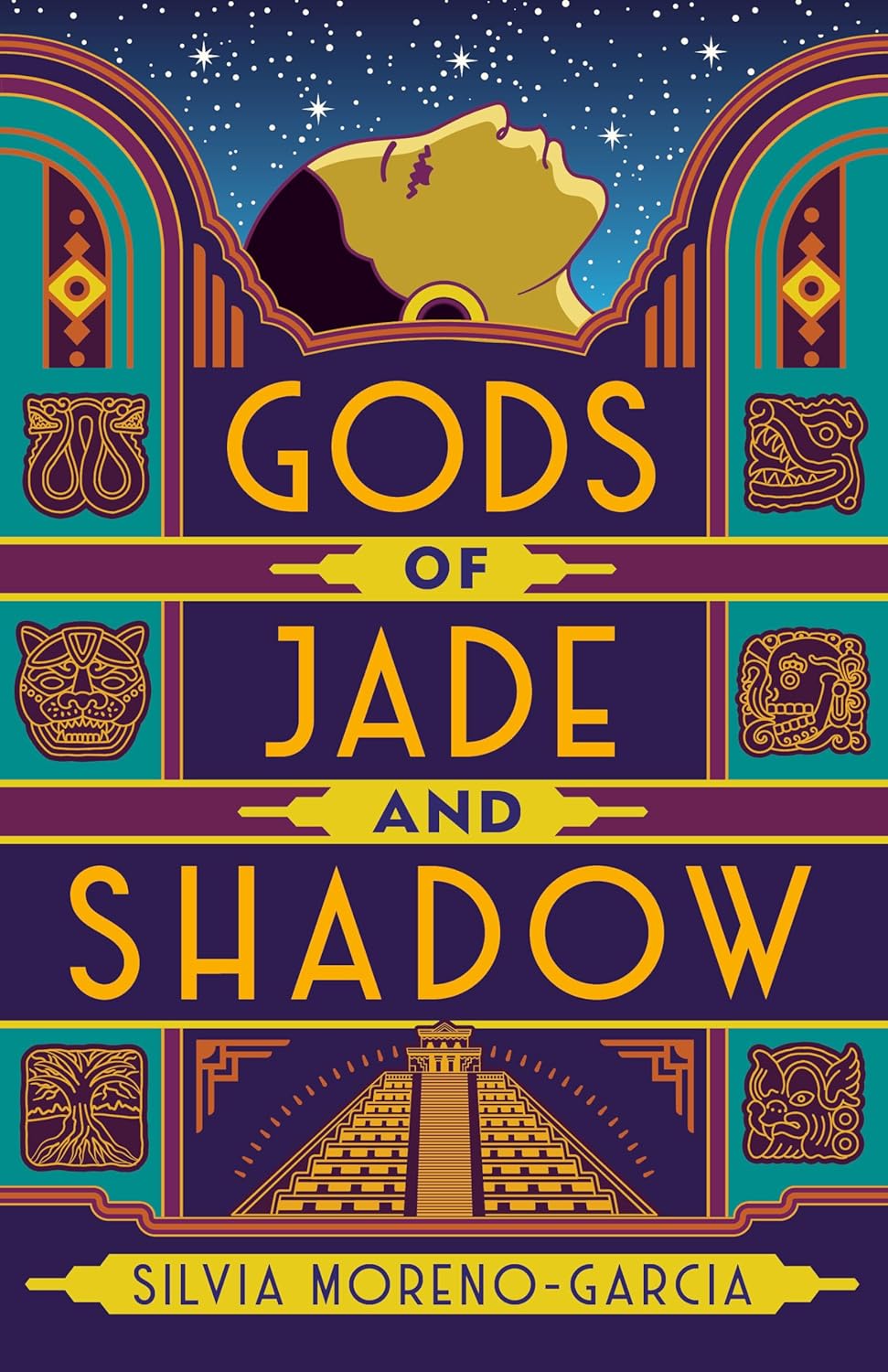
Gods of Jade and Shadow by Silvia Moreno-Garcia

A little bit of a fairy tale retold, relying more on Mayan mythology, recast in 1920s Mexico: culture, myth, and universal coming-of-age. I found it absorbing and will read more by this author (helped along by the teaser chapters at back of book from one of her other novels!).

We meet Casiopea when she is in her teens. She still thinks often of her father, a sensitive poet who taught her about the stars and named her for a constellation. Since his death, she and her mother have returned to her mother’s family home, where they are very much treated as poor relations, Casiopea doing a lot of scrubbing on her knees while harshly spoken to. Her grandfather is harsh, her aunts dismissive, but it is her cousin Martín who is cruelest. She is well aware of the Cinderella story and would prefer not to be framed this way–“she had decided it would be nonsense to configure herself into a tragic heroine”–but the reader sees it too. Instead, she resist self-pity, aims to never let her tormentors see her cry, and dreams secretly of escaping her small-minded small town and returning to her father’s city of Mérida.

She gets there by the most unexpected of paths: she accidentally releases a god of death, Hun-Kamé, who has been long imprisoned in a chest in her grandfather’s bedroom. With a fragment of his bone imbedded in her thumb, they are bound together. Hun-Kamé, dethroned and locked up by his twin brother, is missing a few key components–eye, ear, finger, and necklace–without which he cannot be. In his weakened state, Hun-Kamé needs the connection with Casiopea to move and live and make a bid for redemption, although this bond will make him increasingly mortal over time. And Casiopea will weaken and die if he does not remove the bone. But in the meantime, she gains a traveling companion, a meaningful quest, an adventure.

As a traveling companion, Hun-Kamé can be irksome; he has a tendency to boss her around, like everyone else in her world does, and servitude and submissiveness have never come easily to Casiopea. She is not afraid to work hard, but does not respond well to peremptory orders. She has to remind herself that this is a god–especially when traveling companion begins to feel like friend, something she’s really never had, and then even like something more. For his part, Hun-Kamé makes an effort to treat his traveling partner with respect. They have something, surprisingly, in common: both know the world mostly only at a remove, she from books, he from a distant deity’s omnipotence.

There is a lot to love about this story, several layers. Casiopea is a fun heroine: plucky, exasperated, curious about the world and yearning for fresh new experiences, yet concerned about breaking free of the rather conservative lessons she’s been taking in for a lifetime. The wider world is in flux: especially the cities she visits, like Mérida, Mexico City, and Tijuana, are full of music, fast dancing, and short-haired women in short dresses, all considered scandalous in the dusty village where Casiopea has spent her Cinderella years. In the company of a god who can pick up rocks off the ground and make them appear as coins, she suddenly has access to (for example) good things to eat, and I really enjoyed the repeated scenes where the mortal teenager is hungry and the god sort of sighs and patiently visits one café or restaurant after another even though food is not really his thing.

So we have a good-hearted, mature, responsible teenager–who is still a teenager–on a very important quest, the implications of which she and we learn only gradually, but also learning about the world, which is filled with cars, nice clothes, appealing snacks, flappers and ballrooms, and oh yes, a handsome god who is becoming part-mortal and therefore increasingly relatable. But also, because we’re drawing on Mayan myth, plenty of blood and monsters and decapitation and the highest of stakes. (Casiopea is as horrified as you are). Romance, mythology, violence, humor, dances and dresses, and family drama: in a fitting parallel, Hun-Kamé’s rival twin chooses as his own mortal champion the bumbling, cruel Martín, who is unlikeable but only human in his own struggles, to face off against Casiopea. It gets harder and harder to see how these characters will fight their way out of a pickle that involves fate and gods and a truly horrifying underworld, but read on til the end.

I love every bit of it, and got lost in this unique world. Can’t wait for more.


Rating: 7 waves.

Maximum Shelf: Fruit of the Dead by Rachel Lyon

Maximum Shelf is the weekly Shelf Awareness feature focusing on an upcoming title we love and believe will be a great handselling opportunity for booksellers everywhere. The features are written by our editors and reviewers and the publisher has helped support the issue.

This review was published by Shelf Awareness on November 28, 2023.


Rachel Lyon’s second novel, Fruit of the Dead, is a lushly detailed, mesmerizing retelling of the ancient Greek myth of Demeter and Persephone, set in modern times. This version retains original themes and subject matter, including power struggles, sexual assault, and cycles of growth and decay, while adding fresh commentary on addiction, class dynamics, and late-stage capitalism. Readers absolutely do not need familiarity with the myth to enjoy the novel, but such familiarity will be amply rewarded by Lyon’s subtle, clever references. The result is smart, disturbing, rich with opulent detail, and harrowing (there are several scenes of sexual assault).

The figure of Demeter, goddess of the harvest, appears as Emer Ansel, who runs an agricultural NGO. “We design, provide the seeds, outsource growth to farmers, and export to the hungry in Yemen, Syria, South Sudan, etcetera.” She is a woman of lofty principles but has sunk perhaps too comfortably into her professional role; a colleague accuses her of wearing “white savior drag.” Demeter had a beautiful daughter named Persephone, fathered by Zeus (god of the sky, king of the gods); Emer is single mother to Cory, who’s just turned 18, a wayward teen who has been accepted to zero colleges. Mother and daughter are at serious odds.

To escape the Manhattan apartment they share and forestall an uncertain future, Cory takes a job at her long-beloved summer camp, River Rocks. At a vulnerable moment (among other things, she is high), while caring for Spenser Picazo, a sensitive boy she’s befriended who’s also the summer’s youngest camper, she first encounters Spenser’s father. Rolo Picazo–the reimagined character of Hades, god of the underworld–is a self-made, superstar executive of a Fortune 500 pharmaceutical company. He has made his significant fortune on painkillers and now faces congressional hearings for his role in a pattern of destructive addictions.

Cory finds Rolo compelling, intimidating, by turns magnetic and repulsive. He is a massive man with a forceful personality. “His gaze is hard and hungry. It could consume her, she thinks, if she let it.” She finds herself spirited away in “a licorice melt of a Cabriolet,” accompanied by seven-year-old Spenser and his younger sister, Fern, figuring, “what killer would bring his kids along for the ride?” Rolo has her sign an NDA and transports her to a private island with no cell or wifi service, to serve as new nanny to his two young children. Cory is isolated, insecure. Rolo offers a lavish, seductive lifestyle, and literal intoxication. Emer descends into a wild panic over the disappearance of her barely-of-legal-age daughter, as Cory descends into the pleasurable fuzz of the ruby-colored pills Rolo provides.

Among Fruit of the Dead‘s themes is the specter of hazards faced by women and girls. Banishing frightening thoughts, Cory reminds herself dismissively, “occasional visits by violence are part of the cost of growing up female.” Rolo acts as if anything he desires is his for the taking: by charisma, by money, by force. His threat is looming and omnipresent, beyond its embodiment in one character. While these power struggles are central, Lyon excels at creating complex characters: Spenser and Fern are especially charming, well-rounded children.

In one of Lyon’s inspired storytelling choices, chapters alternate between the perspectives of Cory (in close third person) and Emer (first person), so that readers see Cory receive a text from her mother that she interprets as malicious, and later watch Emer send it with hopes of loving inspiration. These quietly tragic misunderstandings abound. Cory has moments of clarity, with misgivings about her disappearance into Rolo’s empire of painkillers and dissipation, but she loves her young charges. She mostly thinks her mom is a jerk, and what did Cory have going on, anyway? Emer quickly spirals, beset by calamities at work even as she searches for Cory. “How long have I spent hunting her down, daughter of evasion, daughter of evaporation, daughter of god help me.” The “daughter of” refrains lend this retelling an appropriately mythic tone. “Daughter of goofing, daughter of grief,…” “daughter of splendor, daughter of heartbreak, daughter of elusion,…” “daughter of warmth, daughter of sweetness, daughter of mine.” And “daughter of unwelcome surprises.”

Lyon (Self-Portrait with Boy) expertly leads readers to sympathize with both mother and daughter, even as their perspectives differ. This push/pull echoes the Greek myth’s focus on seasonal cycles: Persephone’s return to Demeter heralds springtime, her inevitable return to the underworld forcing growth to start over again. The best efforts of the protective mother can only delay the child’s foray into danger; every reawakening continues the struggle. Fruit of the Dead offers hope, but always with a seed of foreboding.

This compulsively enthralling novel recasts an ancient myth in familiar times to great effect. Disquieting, propulsive, wise, and frightening, Lyon’s imaginative second novel is hard to put down and harder to forget.


Rating: 8 succulents.

Come back Monday for my interview with Lyon.

“Hymn to Demeter” from The Homeric Hymns, trans. by Susan C. Shelmerdine

I got to read and review a book recently, and interview its author, for a Maximum Shelf. That column won’t be out til maybe next month, and the book – Fruit of the Dead, by Rachel Lyon – not until March. But it sent me back to search out a book I hadn’t opened in years. Lyon’s is a retelling of the Demeter and Persephone myth, and so here I am with the “Hymn to Demeter” from my high school? or college? studies in Susan Shelmerdine’s Homeric Hymns. The bookmark in it was a flyer for my 20th birthday party, and it’s filled with marginal notes in my handwriting.

I really appreciated having not only the hymn but Shelmerdine’s explanatory notes, in footnotes to the hymn itself but also in an introduction to the poem. Both sets of notes provide context in Greek mythology, and explain any places where the meaning may be unclear, or there may be subtext, or the text itself may be in question. As someone with some background in the myths but who’s rusty, I loved having those reminders.

For those who may also need some reminders, Demeter was the goddess of agriculture, who with Zeus had a beautiful daughter, Persephone. With Zeus’s help, Hades, god of the underworld, abducts Persephone to make her his bride. He takes her to the underworld, where Demeter can’t reach her beloved daughter; Demeter mourns, and the impact this has on agriculture means that humankind is in danger of starving. (The gods also lose, in terms of the sacrifices of grain they are owed by humans.) In response, Zeus and Hades make a deal that Persephone may return to her mother; but Hades is tricky and convinces (or forces?) Persephone (who, let us remember, is also a child – and his own niece – whom he has abducted and raped) to eat a pomegranate seed. (In various versions, this is three, or six, or seven seeds.) Because she has eaten in the underworld, she can only return to the land of gods and mortals for a part of the year, and must return to Hades for the other part. (Again, versions tell this variously as an even split of six months each way or of eight above and four below.) Persephone, goddess of the spring, is therefore closely linked to the harvest.

I think I find the tragedy of this story hits harder now that I’m a little older than when I first encountered it.

It’s story and it’s poetry, both lovely and strange, and I love placing it in the larger field of what I’ve learned about these myths from antiquity. It’s got me excited for Fruit all over again; look out for that review to come.


Rating: 7 seeds.

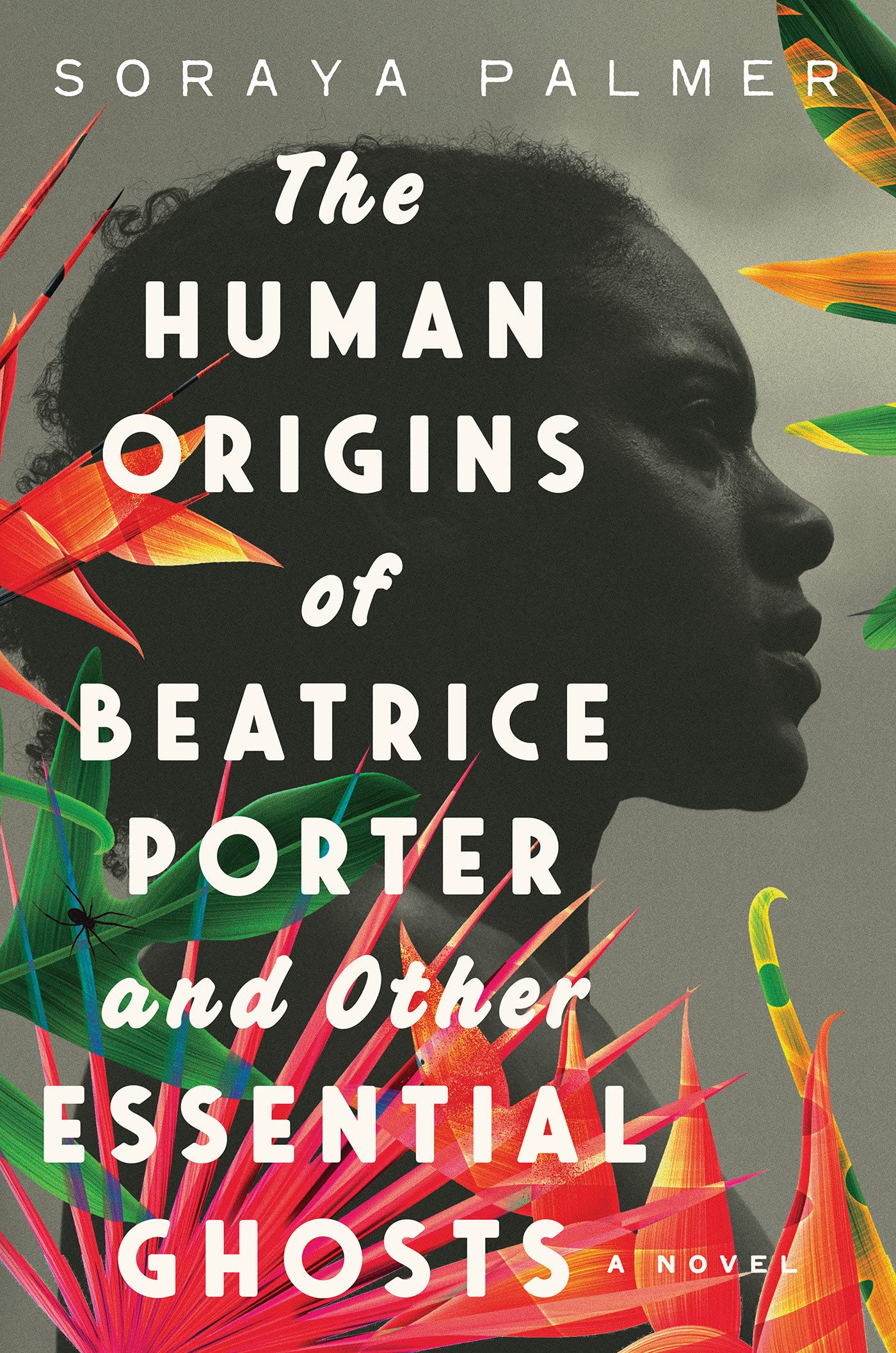
The Human Origins of Beatrice Porter and Other Essential Ghosts by Soraya Palmer

A fracturing family in Brooklyn with roots in Jamaica and Trinidad navigates love and loss in this debut novel influenced by Caribbean folktales and the power of stories.

The Human Origins of Beatrice Porter and Other Essential Ghosts is Soraya Palmer’s first novel, a phantasmagoric interweaving of family and folktale. Readers first meet two sisters, Sasha and Zora, when they are young girls in Brooklyn’s Flatbush, dealing with the household complexities of their father Nigel’s violence and infidelity and their mother Beatrice’s headaches and distance. Soon this timeline meanders to visit Nigel and Beatrice as children in Jamaica and Trinidad, respectively, and then as a young couple. These individual and family histories blend with folktales of Anansi (spider, god, man, woman, trickster storyteller), demons and exorcisms. The Rolling Calf haunts butchers, and Mama Dglo is the protector and mother of the ocean and “all things water,” among other mythical tales. The narrator of these time-jumping tales, with the repeating refrain “Let me tell you a story,” is mysterious, driven by motivations not always clear nor necessarily reliable–but always concerned with the power of storytelling itself: “You see I am what they call Your Faithful Narrator, found in places the West calls fairy tales, what men call gossip, what children call magic.” Small actions can be revolutionary: “They realize there is nothing more dangerous than a story with an owner that no one can touch.”

In the 1990s and 2000s, Sasha discovers chest binding as she navigates gender and sexuality. Zora studies her book of Anansi stories and hones her craft (that of her namesake) in her diary. As much as the sisters love each other, their respective self-explorations push them apart. In different ways, Nigel and Beatrice separate but remain intertwined. Caribbean and West African folktales continue to influence each of these threads until they come together again in Trinidad with a 106-year-old grandmother, several reunions, an ending and a new beginning. None of these characters is entirely innocent or faultless, but they are finely drawn with compassion and compelling, colorful pasts. Love and family contain both beauty and pain in this telling.

Palmer imbues her novel with both snappy pacing and deep feeling in a lovely prose voice with music and poetry behind it. The Human Origins of Beatrice Porter has big things to say about sisterhood and family; race, sexuality and class; life and death; and above all, the power of storytelling. “Why do we remember some stories more than others? And what happens to the ones that we forget? Let me tell you a story.” The result is wide-ranging and thought-provoking–but also an immersive and sumptuous read. Palmer shines.


This review originally ran in the March 3, 2023 issue of Shelf Awareness for the Book Trade. To subscribe, click here.


Rating: 7 Apple J’s.

Stone Blind by Natalie Haynes

Natalie Haynes splendidly showcases classical scholarship, witty humor and an appreciation for nuance in this reframing of the story of Medusa.

With Stone Blind, Natalie Haynes (A Thousand Ships; Pandora’s Jar) brings her authoritative expertise in Greek myths to bear on Medusa, whose story is fresh and surprising in this telling. Haynes is both a scholar of the classics and a stand-up comic, and that combination is brilliantly evident in this sardonic, darkly funny adaptation.

Stone Blind combines several threads familiar to fans of Greek mythology, although readers need no previous knowledge to follow along. Zeus, king of the gods on Olympus, philanders and bickers with his wife, Hera; this narrative will witness Athene’s birth and a battle between gods and giants, among other Olympian events. Medusa is delivered as an infant mortal to the two elder Gorgons who will be her sisters–in this version, they are monsters only in their unusual appearance, and they care for their fragile mortal sister with great tenderness. As a young woman, Medusa is raped by Poseidon in Athene’s temple. The goddess is so offended by this sacrilege that she punishes the victim, replacing Medusa’s hair with snakes and bestowing her most famous attribute: the ability to turn any living creature to stone by eye contact. In a third thread, the demigod Perseus comes of age as a bumbling incompetent: self-serving, lazy, whining, unnecessarily violent. And Andromeda, legendary beauty and princess of Ethiopia, is cursed to death by her mother Cassiope’s hubris.

These threads come together in complex ways when gods are offended and angered and play out their dramas with mortal pawns. Traditional storytelling has cast Perseus as a hero and Medusa as a monster, but Haynes does not concur: “The hero isn’t the one who’s kind or brave or loyal. Sometimes–not always, but sometimes–he is monstrous. And the monster? Who is she?”

“Who decides what is a monster?” Medusa’s sister asks. To which Medusa responds: “I don’t know…. Men, I suppose.”

Haynes’s genius lies not only in her subtle recasting of this story–with an emphasis on who assigns roles and draws conclusions–but in her dryly scathing humor. Her gods are (even more than usual) immature, selfish and often silly. Athene is “delighted with herself” for the simplest of observations about humanity; she burst forth from Zeus’s head fully formed, but not necessarily with the emotional maturity or world knowledge her physical perfection would imply. Poseidon’s bluster and Zeus’s carelessness of his children are exaggerated. Perseus is a dolt, impervious to learning the lessons of his (mis)adventures. Haynes writes in many voices: those of olive trees, Medusa’s snakes-for-hair, a crow, the gods and mortals that make up this twisting tale. A surprising ending caps off her truly delightful and novel version of a very old story.


This review originally ran in the January 6, 2023 issue of Shelf Awareness for the Book Trade. To subscribe, click here.


Rating: 8 birds.

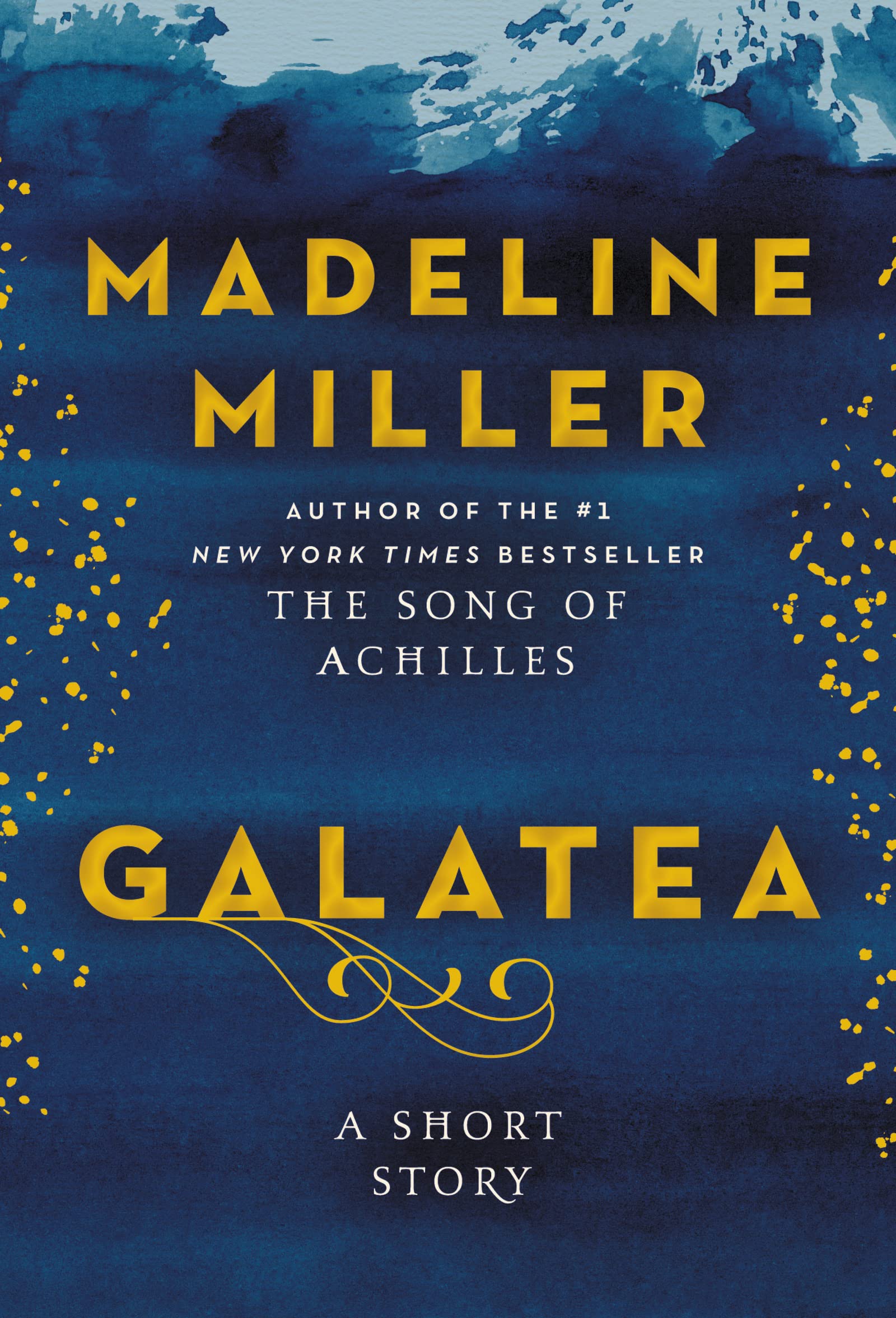
Galatea by Madeline Miller

Although I found Circe less mind-blowing than I did The Song of Achilles, I will still follow Madeline Miller anywhere. I was very excited about this new book, which is labeled as a short story, but packaged as a freestanding little hardback. The story is very short – just 50 pages plus an afterword.

50 little tiny pages

According to Wikipedia, “Galatea is a name popularly applied to the statue carved of ivory by Pygmalion of Cyprus, which then came to life in Greek mythology.” In Ovid’s version of the myth, in Metamorphoses (which Miller indicates is “almost solely” her source for this work), she does not have a name. Pygmalion is a sculptor so horrified by real, live women that he can only be happy with the ivory statue of one he creates for himself, in perfection and perfect, chaste silence; he prays to Venus for her to come alive, and she does, to bear him a child but (in Ovid’s telling) to remain silent and modest. (Delightfully, and disturbingly, in the poem “Pygmalion’s Bride” by Carol Ann Duffy in The World’s Wife, she defeats his sexual advances by pretending to reciprocate them.)

Here, Miller gives us Galatea’s first-person voice from the hospital room where she is institutionalized, imprisoned, on Pygmalion’s orders. He visits in order to fetishize and rape her. Having born him a daughter and seen how limited their child’s life will be with such a domineering, misogynistic father, Galatea has tried to escape him and save her daughter, but so far failed. When he tells her what his latest project is, however, she tries again.

In Miller’s writing, Galatea’s voice is lyrical and grim. “The door closed, and the room swelled around me like a bruise.” She handles her husband’s abuses with an impassive stoicism that reads as strength rather than stoniness, because she feels strongly toward her daughter (and hides well her disgust with Pygmalion). She is brave, clever, and grandly terrible, worth of Greek myth and the empowerment we want for her. This is a brief but powerful triumphant retelling of an upsetting myth. Miller is awesome and I will preorder anything she writes. Go read it now.


Rating: 8 cups of tea.

Maximum Shelf: Clytemnestra by Costanza Casati

Maximum Shelf is the weekly Shelf Awareness feature focusing on an upcoming title we love and believe will be a great handselling opportunity for booksellers everywhere. The features are written by our editors and reviewers and the publisher has helped support the issue.

This review was published by Shelf Awareness on November 15, 2022.


“Kings are brilliant / mighty / godlike // Queens are deadly / shameless / accursed.” Such has been the literary fate of Clytemnestra–adulteress, wife and murderer of Agamemnon in the Ancient Greek canon. Costanza Casati’s debut, Clytemnestra, is a dynamic retelling of the story of the much-maligned Spartan princess, sister of Helen, queen of Mycenae, mother of Iphigenia, Electra and Orestes (and others). Aeschylus, Homer and Euripides generally portray Clytemnestra in a negative light, but Casati’s reframing–from her title character’s point of view–emphasizes the difficult circumstances that challenged a strong-willed woman in a time and place that did not reward such a quality. Clytemnestra is a masterpiece of justified rage on the protagonist’s part, and a subtly subversive revision of a story many readers know from a different perspective. She will be called ruthless, merciless, “cruel queen and unfaithful wife,” but viewed from another angle, Clytemnestra fights honorably for her own well-being and for that of the people she loves.

The events of Clytemnestra’s life are not much rearranged here. As a princess in the Spartan court, she is trained as a warrior and huntress, surrounded by violence and death even in her privilege to sit in the megaron with her father, King Tyndareus, where they hear the villagers’ requests. This upbringing emphasizes martial training, physical skill, obedience and the ability to suffer. Her first marriage, to Tantalus, was for love and was a meeting of minds, but it ended in murder and betrayal, and with a forced second marriage to the Mycenaean king, Agamemnon, whose brother Menelaus in parallel marries Helen. Clytemnestra’s later lover, the traitor Aegisthus, is a complicated, enigmatic character in his own right. This proud queen, treated as a pawn in political power struggles, wrestles to keep her dignity in the Mycenaean court under the brutalities of her husband, but never loses her sense of herself as a warrior and a survivor. The events of this novel close where Aeschylus’s Agamemnon opens, thereby gifting a complex backstory to a woman often portrayed as villain.

Clytemnestra dips its toes as well into the stories of the queen’s famous family members: her brothers Castor and Polydeuces, boxers and horsebreakers; her sister, Helen, whose legendary beauty led to the Trojan War; her mother, Leda, who was seduced by Zeus in the form of a swan (or was she raped?). Her children include Tantalus’s unnamed infant son; Iphigenia, sacrificed at Aulis to summon wind for the Greek ships on their way to Troy; and Electra and Orestes, whose stories expand only after these pages close. This Clytemnestra is very close and loyal to her siblings; family ties for better and for worse shape her decisions all her life, even at great distances. For instance, meeting a new face, she thinks of her siblings: “Helen would have charmed him with her beauty and subtle cleverness, softening him until he opened like a peach. Castor would have mocked him, pricked him with words like needles, until he talked.” Clytemnestra’s cousin is Penelope, eventually famous as Odysseus’s queen and faithful wife, in marked contrast to the Clytemnestra in traditional representations; here, again, the reader sees a new and complex side of a familiar character, as she is courted by the cunning Ithacan king.

The gods in this version are mere myth, not actors in real events; Clytemnestra, like her mother, is skeptical, even scornful of the gods and their followers. She understands that kings and not queens rule in her world, but she continues to demand the respect she deserves even when it’s unlikely she will get it, and consistently calls out the rapes and attempted rapes that often go unmarked in the courts and villages of both Sparta and Mycenae. This retelling is a deepening of Clytemnestra’s story and her character. Helen, her beloved sister, likewise grows more multifaceted in Casati’s nuanced novel, but the beautiful one is not gifted with physical prowess or the confidence of the fierier Clytemnestra: “Clytemnestra dances for herself; Helen dances for others.” Timandra, one of their younger sisters, is fierce like Clytemnestra, but with a different burden in their strict society. These female leads are glittering, glowering, admirable and sympathetic, and the result will reignite (or ignite) readers’ interest in the stories of ancient Greece and emphasize their relevance in any time.

Clytemnestra is a stunning, standout contribution to the growing genre of modern treatments of the Greek myths. Casati brings both a solid grounding in the canon and imaginative venturing into the inner workings of a woman who has long been famous but little understood. Her writing is gorgeously descriptive and emotive: “She thinks of those white flowers blooming against the rocks of the Ceadas. For years she wondered how they survived down there, among the corpses and darkness. But maybe this is how broken people keep living…. Outside the light is golden. It shines on them as if they were gods.” Casati’s Clytemnestra is modern in her staunch demands for dignity and respect, but believably rooted in ancient times. This is a necessary novel for fans of mythology, strong women, the pushing of boundaries and epic dramas of family, power and love.


Rating: 8 cuts.

Come back Friday for my interview with Casati.

rerun: The Song of Achilles by Madeline Miller

Fun fact: I interviewed Miller for the podcast Critical Wit, and that interview posted on the same day (May 31, 2012) that she won the Orange Prize for this novel, which was a fun piece of synchronicity for all of us, I think. That interview can be heard here.

This review originally posted on May 17, 2012.

I read this book in a day, rapt and tearful and awed. Madeline Miller, I love you. Write more, please.

I expect that most people are at least vaguely familiar with the story of the Trojan War, even if you never read the Iliad, yes? The Greeks sail to Troy in pursuit of Helen, “the face that launched a thousand ships” (that’s these ships!), the most beautiful woman in the world, stolen from her king-husband Menelaus by the Trojan prince Paris. They fight at the gates of Troy for ten years before Odysseus’s characteristically clever notion of the big wooden horse (the Trojan horse of idiom) wins the war for the Greeks. Achilles is a hero of the war, on the Greeks’ side. He had been sitting the war out in protest against an offense to his pride when his close friend (and, most scholars agree, lover) Patroclus goes into battle and is killed. In the opening scene of the Iliad, Achilles is mad with grief and rage, about to rush into battle, kill Hector, and be killed by Paris.

That’s the background. Miller, a scholar of ancient languages (including Greek) and theatre has written a novel from Patroclus’s point of view. This gave her quite a bit of leeway, since Patroclus is not given much coverage in Homer or in ancient myth generally; she got to do what she wanted with him. Here, we see him grow up from a boy: he was a disappointment to his father, then was exiled in dishonor and sent away to be fostered in another kingdom, where Achilles is the prince and heir. The two boys form a decidedly unlikely friendship, with Patroclus the dishonored and weak following in the footsteps of Achilles, whose future is prophesied to be something enormous: he will be Aristos Achaion, the greatest of the Greeks.

Patroclus joins Achilles in his studies and their bond grows closer until they become lovers. They are not eager to join the Greeks and sail to Troy to fight for another king’s wife, but circumstances (and Odysseus, the crafty one) conspire to see them off. From there, you can revisit my synopsis of the Iliad, above – except that we keep Patroclus’s perspective, which actually made the Trojan War that I thought I knew so well spring fresh from the page.

And that is one of the several strengths of this book: that an ancient myth that is familiar to many readers, like me, becomes so real, new, crisp and juicy in Miller’s hands. It definitely made me want to go back and reread the Iliad, as well as other cited works. (Check out the Character Glossary, whether you think you need it or not, for background as well as mentions of other books you’ll want to go find.) The myth of the Trojan War comes alive with Patroclus as it hasn’t before.

Another great strength is the emotional impact Miller achieves. This book is moving, sweet, heartfelt, powerful, in its tragedies as in its loving moments – and the tragedies are plentiful. There is visceral wrath in Achilles’s mother Thetis and her hatred of all mortals and Patroclus in particular; that emotion comes through just as strongly as the love that makes Patroclus put aside jealousy and envy, makes him put Achilles’s needs before his own. I noticed that the first-person voice of Patroclus rarely uses the name Achilles, but just refers to his lover as “he” – thus emphasizing the extent to which Achilles is the center of his world.

As I said at the start of this review, I want more of this! It’s so well done. If you’re taking requests, Ms. Miller, I would like to read a book about what happened to the happy family of Odysseus, Penelope and Telemachus following the conclusion of the Odyssey: how does Odysseus manage to gracefully step down from power and transfer to Telemachus without sacrificing any of his machismo? Reading The Song of Achilles raised this question for me – how a king could step down and preserve his dignity and quality of life. I wonder, too, whether Penelope ever gets grumpy about all the philandering Odysseus did along his homeward journey, while she was standing strong against the suitors.

In a nutshell, this retelling of the Trojan War and the relationship between Achilles and Patroclus is lovely, loving, sweet and deeply emotional; it preserves the grand, sweeping scale and feeling of humanity and drama in the original, but brings it freshly alive in an appealingly different format. The Song of Achilles made me sigh and think and cry, and I wanted more when it was all gone. This may very well be the best book I’ve read in 2012.


Rating: a rare 10 loving caresses.

The White Hare by Jane Johnson

Love and mourning, betrayal and hope, ancient legends and modern conflicts come together in the atmospheric Cornish countryside in this engrossing novel.

Jane Johnson (The Sea Gate; The Tenth Gift) transports readers to rural Cornwall in the years just after World War II in The White Hare, a fanciful novel of family, village life, history, mythology and more.

In the opening pages, first-person narrator Mila, her daughter, Janey, and her mother, Magda, arrive at their new home, a grand but dilapidated Cornish seaside estate, in the summer of 1954. Timid Mila is fleeing an unnamed scandal in London; the irascible Magda has taken charge of their little troop. Janey, age five, is eager to explore her new surroundings, accompanied by Rabbit, her stuffed toy and best friend. The estate, purchased with unexplained but apparently significant funds, has a mysterious history; locals make foreboding remarks and then clam up. “Best not talk about unlucky things too much, or you may attract unwanted attention,” Mila is warned. Magda plans to refurbish and open a grand guest house, with Mila to cook and clean. Immediately and surprisingly latching on to their odd household is Jack Lord, a local who is (like all these characters) unforthcoming about his past, but handy with repairs and good with high-spirited, imaginative, clever Janey. Things go bump in the night, there are hints of ghosts and old crimes, and the vicar in town is inexplicably, aggressively sinister.

Mila and her parents immigrated from Poland just before the war, so she must deal with several layers of outsider status in this insular and remote setting. Janey and Rabbit are oddly at home in the natural world and its legends, while Mila struggles with local culture; her mother’s hostility is considerable, but Jack’s influence is calming, if enigmatic. The White Hare is jam-packed with slowly released secrets: those between mothers and daughters, those kept by the villagers, and those locked away within traumatized minds. It addresses class and war, mysticism and folklore, the persistent influence of history and bloodshed; it dabbles in romance, but remains centrally concerned with the relationships of family, community and place. With lush descriptions of fashion, food and especially nature, Johnson’s prose appeals to sentiment and expertly evokes an often-menacing mood. The intrepid, uncanny Janey and her Rabbit, however, joined by several wise women of the village, offer hope that Mila and her family can move into a happier future in the end. The White Hare is enthralling, as filled with secret passages as the stately home in which it’s set.


This review originally ran in the August 22, 2022 issue of Shelf Awareness for the Book Trade. To subscribe, click here.


Rating: 6 Latin phrases.