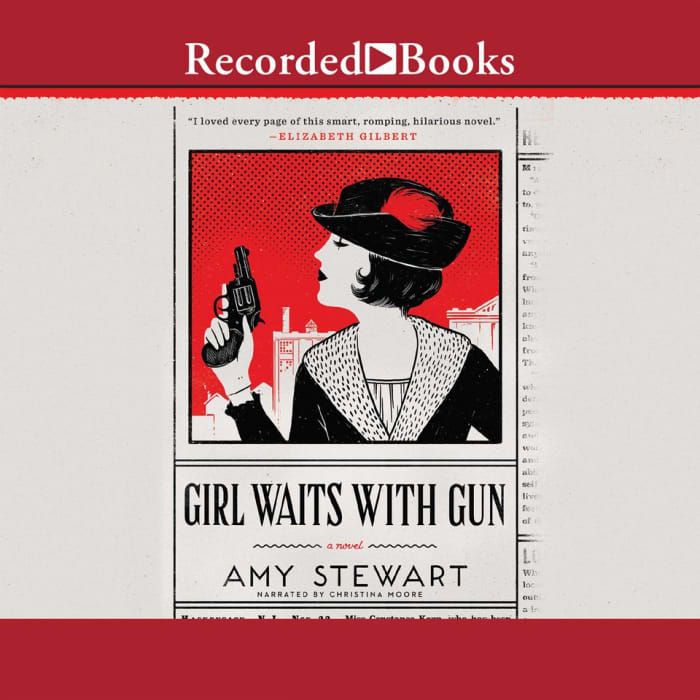
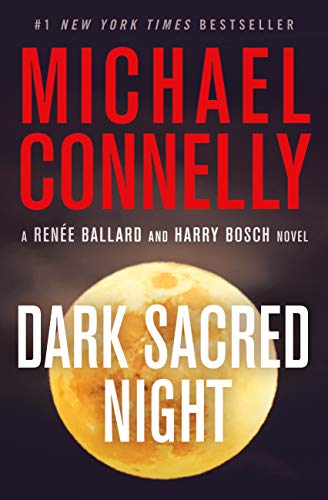
Shatter the Night by Emily Littlejohn

Note: I received an advanced copy for review. This book publishes on December 10, 2019.

Quickie review here. In a nutshell, dialogue and writing in general were very poor, but the suspense of the plot kept me going through to the end, which fact still surprises me.

This is the fourth in the Detective Gemma Monroe series, and the first I’ve tried. I won’t bother with any more in this series, not with the likes of Lee Child, Michael Connelly, James Lee Burke, and Tana French mysteries in the world. It took me just a few pages to laugh out loud at stilted dialogue (one of my pet peeves: two characters who know each other very well, discussing a third person they know very well, with first and last name and character’s background in dialogue – ugh!), and I continued to note less-than-credible police procedure and other basic factual matter all the way through this book. (Vampire bats in Colorado? A quick Google search says no.) These weaknesses – huge, glaring, obnoxious weaknesses – continued to annoy me from start to finish, and this is why I did not write a review for Shelf Awareness.

But I read the whole book! And you know I am quick to put down a book I don’t like and walk away forever. So, kudos to Littlejohn for a plot that kept me turning the pages (and probably a nod to the fact that I’m a bit stressed and it felt good to escape into something mindless). I enjoyed the mystery aspect itself, and there were enough goofy characters (possible suspects) that I didn’t guess the solution too far before Detective Monroe herself did. The ending, following the denouement, turned weak again: we took a hard left turn into sappy romance, even though the romance had itself looked a bit endangered earlier in the novel. Ah, well.

A far from perfect book, and one I might have put down at another time in my reading life, but credit for a plot that kept me til the end. Do I recommend this book? Not really.


Rating: 5 times the cops were shocked and called someone a ‘bastard.’

in a surprising departure: television

This post is long overdue, I guess, but it occurred to me rather late in the game to tell you about television series. During the van trip, strangely, I got into watching TV series that I could get through Amazon Prime.

This blog began, back in 2011, as a way for me to keep track of my reading for my own sake. I’m deeply grateful that other people read it and appreciate it, too. But on some level it remains a record I keep for myself, and so here we are. I wanted to remember what shows I’ve watched, and which ones I’ve especially liked.

Bones

The one that got me completely hooked is Bones, a mystery-per-episode (or often several) crime-solving drama series based in the fictional Jeffersonian Institute and starring a world-famous forensic anthropologist. It’s fairly silly, and relies too heavily on the sexual tension of a certain couple that we wait way too many seasons to see actually hook up. But I was thoroughly, entirely taken in; I watched all 246 episodes with relish and and someday, if laid up for months with nothing to do, I may watch them again. It’s goofy but I love it. (Based on the Temperance Brennan series of novels by Kathy Reichs, which I have not read, so there’s another project.)

Mystery series based on book series: you will note a theme. Also, lots of Brits.

I was quite impressed by Bosch, based on Michael Connelly‘s novels starring LAPD Detective Hieronymus “Harry” Bosch, which I have loved since I was a teenager. They’ve done a good job of capturing the title character, and the soundtrack (based on Harry’s love of jazz) is quite good. I’ll be on the lookout for future seasons; well done, Amazon.

Jackson Brodie of Case Histories

Case Histories is based on the novels of Kate Atkinson which star Jackson Brodie. Set and filmed in Edinburgh, this series features an excellent soundtrack of female country singer-songwriters (seriously, I would follow this show just for the music); Edinburgh itself is compelling and beautiful, but it’s also easy to fall for Jackson himself, who is a runner as well as a detective whose life is filled with ill-conceived sexual liaisons, a delightfully salty assistant, and the cutest, most precocious, wittiest young daughter imaginable, as well as interesting cases. Give me more Case Histories! And these are books I’ll need to read, obviously. (It’s always nice to get a two-for-one like that.)

Unforgotten is a modern London-set series which I appreciate for its two lead detectives, DCI Cassie Stuart and DI Sunny Khan. They are a likeable pair whose lives feel realistically imperfect, something not always true of our stars. Not everyone on this show is supermodel-beautiful, which again, is nice for reality’s sake. The narrative structure of each episode is interesting and a bit unusual: we switch around between the lives of various characters, including Cassie and Sunny but also including a number of others who at first have no apparent connection to the case at hand – although, of course, they will. I’ll keep watching this one.

Seattle PD’s Sarah Linden and Stephen Holder of The Killing

The Killing is based on a Danish series; this one is set in Seattle. It may seem formulaic at this point that there our two lead detectives are a man and a woman with perhaps a hint of sexual tension? but it still feels original here; I like these two and would continue with them, given the chance.

DCI Banks is another British mystery series, set in the more-or-less present, and one that kept me occupied for a time, but my rating would be only so-so. I found the characters I was meant to identify with only mildly appealing; I was often frustrated with them, and (slight spoiler) killing off one of them only served to engage me less. Meh. (Maybe it was just the one guy’s voice as he plaintively cries “Annie!” over and over that got to me.)

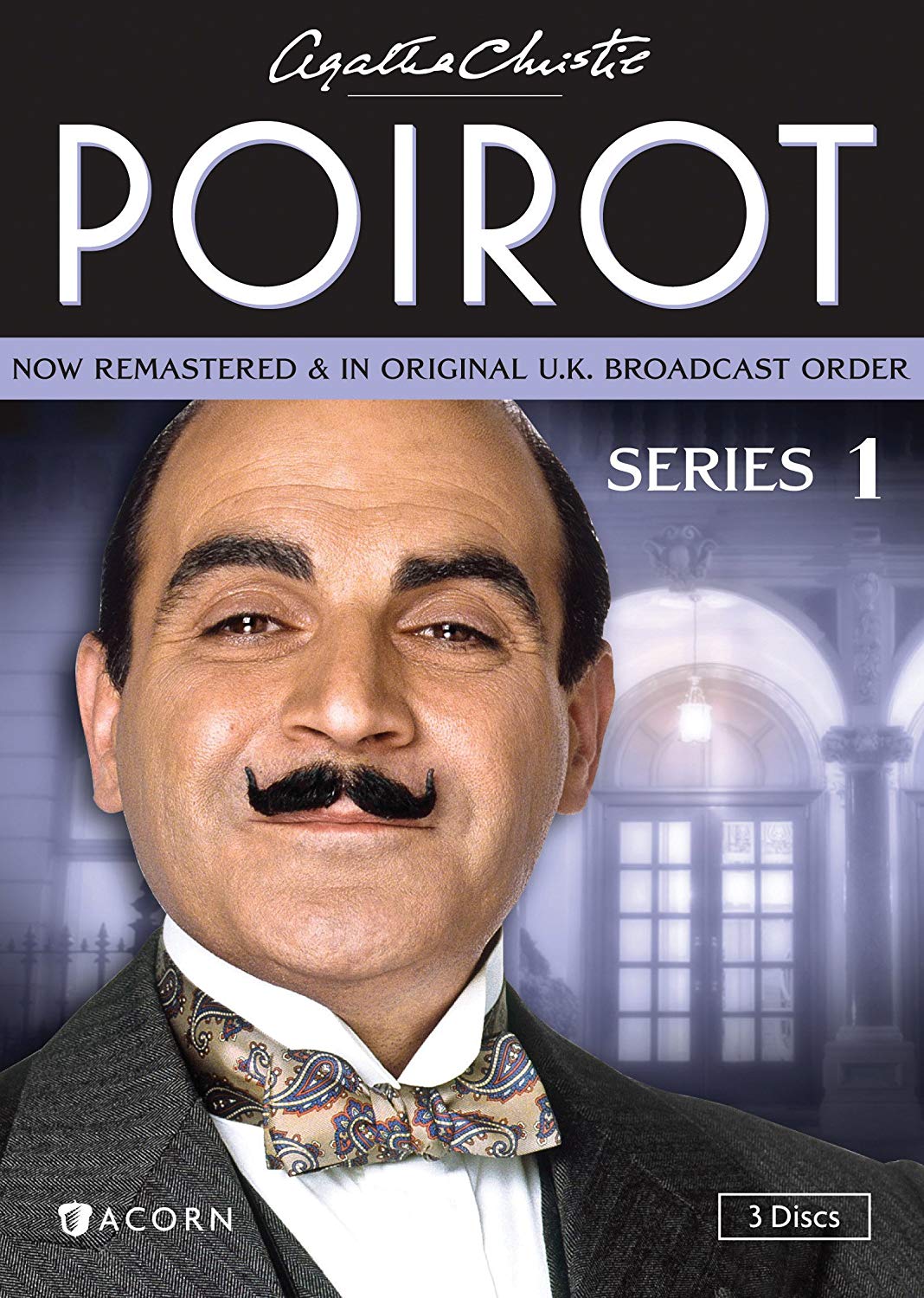
The ABC Murders is based on Agatha Christie’s novel of the same name, and stars John Malkovich as Hercule Poirot. I’m sure he did a fine job, but I was raised on David Suchet’s Poirot and it is too late for me to convert to a new version. While I suspect I would still enjoy reading Christie (a theory I should test!), this onscreen version dragged on. It felt dated by unusually slow pacing, but was made in 2018. Another series that was okay but not one I’m wild about.

DC Endeavor Morse and DCI Fred Thursday of Endeavor

Set in 1960s Oxford, Endeavor has my heart. I’m just in the middle of this one now, and I’m devoted to the title character, DC Morse (first name Endeavor. Which is weird, but not as weird as Hieronymus Bosch). This serves as a prequel to the long-running 1980s-90s series Inspector Morse; I have not seen that one. DC Morse is a prodigy within the department, but his odd methods, failure to bow to authority, and general nerdiness don’t play well with his superintendent. He does have a good relationship with DI Fred Thursday, and that relationship’s development seems to be part of the arc of the series overall. I’m having a good time with this one.

A few outliers are not mysteries.

Catastrophe is a comedy about a several-night stand between a visiting American businessman and an Irish primary school teacher living in London which results in a pregnancy and, surprisingly, marriage. A second child follows the first as the couple turns out to quite like each other, but (yes) catastrophes follow one upon another. Silly but good fun.

My Mother and Other Strangers caught me with its name, and this Masterpiece Theatre production has a charming, evocative, specific setting in a small Irish village during World War II. American soldiers are stationed in a village that does not appreciate their presence. The series is narrated (minimally) by an old man, years after the fact; he is the small son of the mother in question, and this is the story of his family (mom, dad, two kids) firstly, and of the village. I love the details of time and place, the sense of a small specific setting and its place in much larger historic events. The backward-looking perspective has elements of elegy and of nostalgia, and that mystery of the mother–she is present, but enigmatic–is compelling.

The Durrells in Corfu

And then The Durrells in Corfu, an absolutely addictive series based on three memoirs by Gerald Durrell: My Family and Other Animals, Birds, Beasts, and Relatives, and The Garden of the Gods. (More books to read! If they’re half as loveable as this series, I’m in.) British widow Louisa Durrell decides all of a sudden to move her four children from Bournemouth to the Greek island of Corfu, where the financially strained family will have a better chance of scraping by. Antics ensue. Corfu has no electricity, there are animals everywhere, and the Greeks vary in their willingness to accept strangers. But delightful characters abound. The four Durrell kids (ranging from teens to early twenties) are a hoot; the youngest (Gerald himself) adopts every creature he can put his hands on. I would follow this series anywhere.

Old news, but in the interest of completeness: I am up to date on The Walking Dead which I have long loved, although yes, they frustrate me more every season. I think I’m in to the end, but the producers seem determined to test the bounds of my love. And I’ve seen all of Breaking Bad, but had mixed feelings. I found Walter White a little less ambiguous than I think he was intended to be – I didn’t like him enough (even within the bounds of ambivalence, and I do love ambivalence) to be entirely patient with the extended length of his torture of the more-loveable Jesse.

What excellent series am I missing that would fit into this list?

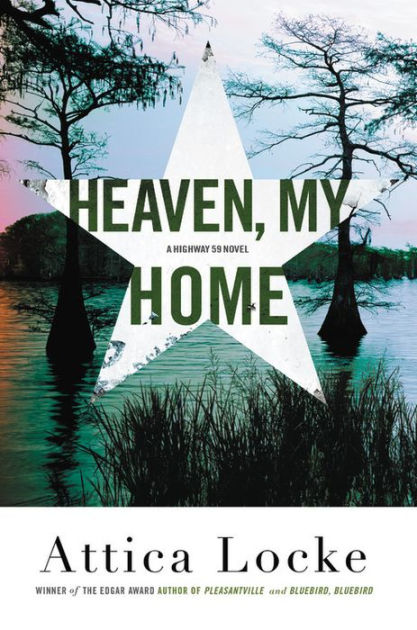
Heaven, My Home by Attica Locke

This scintillating murder mystery, set in Trump-era East Texas, with a black main cast and racial concerns, is gripping, gorgeously written and relevant.

Heaven, My Home is Attica Locke’s fifth novel, and the second starring Texas Ranger Darren Mathews (Bluebird Bluebird). In the time between Trump’s election and his inauguration, Darren has been assigned to look into the case of a missing child. In northeast Texas’s Hopetown, on Caddo Lake, Darren’s mission is not exactly to find the child, but to extract a confession–truthful or not–from a member of the Aryan Brotherhood of Texas (ABT) for the murder of another ABT member. Darren’s life is a mess: he’s only just patched things up with his wife, and his mother is low-key blackmailing him in regards to the same murder.

He’s conflicted in several ways. A nine-year-old boy is missing, and Darren should save him, but this is a nine-year-old racist-in-training, and that training is going well so far. Darren knows justice should be absolute and blind, but the ABT man he’s being asked to frame was acquitted of another murder–of a black man–that he certainly did commit. Among the recurring questions of this novel: How far should forgiveness stretch?

Heaven, My Home is a rich, complex puzzle, with layers of characters: Darren’s not-very-maternal mother, the two uncles who raised him (a law professor and a Ranger, respectively), his lawyer wife, the Rangers he associates with and those he doesn’t, his white FBI buddy who prosecutes a black man for a hate crime. And, of course, the ABT and ABT hangers-on squatting in Hopetown, historically a freedmen’s community and the last enclave of a small band of Caddo Indians. This sounds complicated, and it is, but Locke’s absorbing prose, in a third person very close to Darren, keeps the reader well abreast of all the crisscrossing loyalties and betrayals intrinsic to these East Texas woods. This is a world where white families still remember which black families “stole” themselves away. Spouses cheat; close relatives feud; Darren is a deeply good man, unsure of how to right all of history’s wrongs.

There is a warmth and intimacy to the portrayal of Darren’s many internal struggles. This is a protagonist to love and sympathize with, although he is far from perfect. Locke’s expression of very real and contemporary anxieties is nearly painfully spot-on. Her East Texas is redolent of fried hushpuppies and catfish. For Darren, “it was not his East Texas. It was zydeco where he wanted blues. It was boudin where he wanted hot links.” It is a richly expressed place, filled with racial tensions and a fear of Trump’s coming regime.

Both a fascinating, smartly plotted mystery and a pertinent picture of the contemporary United States, Heaven, My Home is refreshing, dour and thrilling all at once. Readers will be anxious for more of Ranger Darren Mathews.


This review originally ran in the September 24, 2019 issue of Shelf Awareness for the Book Trade. To subscribe, click here.


Rating: 8 fingers.

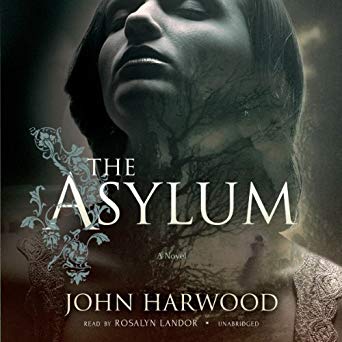
The Asylum by John Harwood (audio)

This is a Victorian gothic mystery/psych thriller, and how it ended up in my iPod is another mystery which I cannot explain. I hit ‘play’ on it on a whim, and listened to the tracks from disc 1 and then there were no more. I was involved enough that I then went and paid for the audiobook (which I never do), and now I’m left unsatisfied with my purchase.

Georgina Ferrars wakes up in an asylum (a madhouse, she surmises, although the doctor in charge demurs at the term), with no memory of the past several weeks. She’s told she checked in under the name Lucy Ashton; her L.A.-monogrammed valise supports that claim. When Dr. Straker telegrams her uncle, the reply comes immediately: Georgina Ferrars is here at home. Your patient is an imposter.

It’s an engaging enough opening, and what unfolds from here continues to intrigue. It seems Miss Ferrars has a double, a new friend (or long-lost something-or-other?) named Lucia Ardent (note the initials), and the two look just alike. The question now is which is whom? Miss Ferrars is missing her two prized possessions: a dragonfly brooch that was a gift from her father to her mother; and a writing case, with her journal inside. If that journal could only be found, we might learn what happened in the missing weeks…

Solid plot so far, then. I found it a little bit exasperating to listen to the distraught young lady who (how Victorian) is wont to become faint at every shock, but okay, it’s part of the period setting. When the diary is located, we start learning more about the Ferrars/Ardent/Ashton history; here connections and plot lines get increasingly twisted, and I’m afraid Harwood got his threads a little entangled. There is a major reveal that just did not follow for me – I didn’t see how we made the logical leap – and, because I was listening to the audiobook while driving, I wonder if it was my fault, if I just missed a crucial moment. But I did go back and re-listen to some parts. And, too, a number of other readers on Goodreads were left confused as well. I’m inclined to think that if a larger portion of your readership missed something, maybe it’s on the writer and not the readers. (I have experienced this as a writer – I put the fact in, but everybody missed it – and even though I put the fact in, if they all missed it, I didn’t do my job properly.)

At any rate, the final third or so of the book – the protracted denouement – was far less compelling, and less believable, than what came before. Our heroine is alternately the fainting Victorian weakly woman, and a surprisingly scrappy, clever one; these quick shifts back and forth and back again did not ring true. The quickly complicating plot threads got too incredible for me. The final action scene, followed by the final proposal and answer, topped out the ridiculousness; it was a major letdown. Oh, and – spoilers in white text here; highlight to read – there’s a lesbian incest thread, for good measure.

Full credit for that first disc’s worth of tracks pulling me in; and more than half the book kept me engaged. After that, I was just hanging on out of increasingly incredulous curiosity about how this silliness would wrap up. Not particularly recommended. As I learned on Goodreads, Harwood has his fans, and some of them loved this book; some would recommend others of his over this one. I won’t be trying him again, but you’re welcome to.


Rating: 6 windows.

The Darwin Affair by Tim Mason

Playwright Tim Mason’s first adult novel, a rousing mystery set in Victorian England, has it all: thrills, engrossing characters, taut pacing and historical interest.


Playwright Tim Mason’s first adult novel, The Darwin Affair, is a rousing mystery set in Victorian England. In 1859, the publication of Charles Darwin’s On the Origin of Species poses a menace to the powers that be, and some of society’s upper echelon want him squelched. Amid the conspiracy lurks a tall, shadowy man with deep-set eyes; death seems to follow wherever he goes. The dogged Chief Detective Inspector Charles Field is on the case, although his findings are not necessarily welcomed by all. Field tracks his suspect from meat market to tavern to the royal court, from England to Germany, and even to the high-profile Wilberforce-Huxley debate on evolution at Oxford. Scenes of crashing action and adventure include a racing carriage on a collision course with a speeding train. With cameos by Charles Darwin, Charles Dickens, Karl Marx and a variation on Typhoid Mary rounding out the peripheral cast, this is a wild tale that engulfs the reader from start to finish.

Satisfyingly plot-driven, then, The Darwin Affair also offers very engaging characters: approachable Albert, Prince Consort; Queen Victoria, haughty but not humorless; a comic Marx; and a gracious, gentle Darwin.

But Mason’s less famous hero definitely steals the show. Field has difficulties with authority that will be familiar to fans of contemporary fictional detectives like Harry Bosch and Dave Robicheaux. Mason’s playwriting skills are evident in realistic dialogue and well-constructed, easily envisioned scenes. Readers of historical fiction, murder mysteries, action/adventure and thrillers will be equally entertained and perhaps edified: beneath the excitement lie thought-provoking questions about class and order, the interplay of science and religion and intellectual curiosity. The Darwin Affair has it all: thrills, engrossing characters, taut pacing and historical interest.


This review originally ran in the June 21, 2019 issue of Shelf Awareness for Readers. To subscribe, click here, and you’ll receive two issues per week of book reviews and other bookish news.


Rating: 7 monkeys.

Girls Like Us by Cristina Alger

Heart-racing action and a twisty-turny plot star in this thriller of multigenerational cops and murders.

Cristina Alger (The Banker’s Wife, This Was Not the Plan) crafts a gripping story of suspense with Girls Like Us. Fans of murder mysteries packed with action and plot twists will be satisfied by this edge-of-the-seat adventure into seedy Suffolk County.

FBI Agent Nell Flynn has returned home to the unbeautiful end of Long Island to sprinkle her father’s ashes, close up his house and move on. It’s her first time back in 10 years. She’s on leave from the Bureau following a traumatic on-the-job shooting, recovering from injuries both physical and emotional. Her father, homicide detective Marty Flynn, had some good buddies on the force, and it’s nice to see them again, but Suffolk County doesn’t hold many pleasant memories. Then Marty’s last partner, Lee Davis, with whom Nell went to high school, asks for her help on one last case. Two young women have been murdered: “working girls,” the cops call them; one of them was undocumented. These are the kinds of lives the department doesn’t really value. In their details, though, these murders take Nell back to the murder of her mother when Nell was seven years old.

Is there a serial killer at work in Suffolk County? Is there a link to Nell’s past? What exactly was her father’s involvement? Was his death really an accident–and was she wrong to alibi him on the night of her mother’s death? As clues mount up and point in different directions, Nell is less and less sure of who she can trust. Her wounds are not at all well healed, but she may be the only one who can prevent more deaths.

Girls Like Us is a little weak on certain details–the way a deadbolt works, the difference between prostitution and pandering charges, how a field agent might tell a suspect was dead. But its plot drives with such momentum that these details may be overlooked. With violent action and split-second turns, this is not a book to put down easily: plan accordingly. Alger’s thriller is emphatically plot-driven, but her characters hold their own, from Lee, who doesn’t quite fit in on the force, to the guys Marty Flynn was closest to in the department and the retired cop who runs the local bar.

As an added complication, the new murders and that of Nell’s mother may be class-based, as the rich summer people of the Hamptons meet the working-class section of Long Island, where Nell and the Suffolk County Police Department guys are from. Nell is a quintessential damaged cop, even if she is FBI: ignoring her own injuries, pushing too hard, taking foolhardy risks, with a strong sense of right and wrong (as her father seemed to have). Her personality serves as backbone to the electric plot of Girls Like Us, and the reader trusts that she will follow through to the truth, no matter how much it hurts.


This review originally ran in the June 3, 2019 issue of Shelf Awareness for the Book Trade. To subscribe, click here.


Rating: 6 deadbolts.

movie: The Lovely Bones (2019)

And then there was The Lovely Bones, which I’ll call a sleeper: we didn’t pick this movie out like we did Extremely Wicked, and in fact missed the first half hour or so. But it turned out to be an impressive one.

I read the book, by Alice Sebold, but some time ago, clearly pre-blog; I don’t remember it very well, and don’t remember it impressing me terribly, but it came back as the movie unfolded. I do remember some talk when the movie came out, of the challenge of the first-person narration by (very minor spoiler here) the ghost of a murdered girl. I remember not being impressed by this challenge: don’t you just use voiceover narration? I guess that’s pretty obvious – maybe too obvious – but it’s how it is handled here. And I have no complaints.

Fourteen-year-old Susie Salmon is brutally murdered by a neighbor: this is the part of the movie I missed, but it sounds like it’s all off-screen and implied rather than shown. She spends the bulk of the film in an in-between zone, neither living nor ready to move on; she wants her murder solved, and she misses her family, and she regrets never having had a first kiss. The killer neighbor cleans up well, and the Salmon family struggles to cope: Susie’s father obsesses over the case, her mother eventually leaves, and her younger sister will take matters into her own hands. There are lovely, ethereal scenes in the in-between, magical and visually stunning – I was reminded of A Wrinkle in Time‘s visuals. The killer is an easy man to hate (the friend I watched this movie with commented that that actor’s now typecast for life). The Salmon father, played by Mark Wahlburg (I confess a weakness for Mark Wahlburg), is easy to sympathize with even as he makes some less than wise choices. And the ending is strangely happy, for a movie with such disturbing content.

I’m deeply impressed by the cinematography, the revelation of information, and the visuals. When I saw that Peter Jackson directed, I thought, oh, of course. That’s why it’s so beautiful, at least. I’m also reading that the plot diverged heavily from the novel in a few points; but my dim recollection of the book felt very familiar here. Maybe it’s better that I let so much time pass between reading and viewing, because I’m always prickly about the way movies mess up the books. But here, the general familiarity felt faithful enough, and the film version was stunning.

I do recommend; and suspect I recommend the book as well.


Rating: 8 bouncy balls.

reread: Never Go Back by Lee Child (audio)

In my defense, it’s been more than four years since I listened to this audiobook for the first time (and reviewed it here): I had forgotten what happened, and got to find it new again. I seem to have reached the stage of forgetfulness in which I can enjoy a thriller/murder mystery novel a second time, with the same fresh eyes. Hooray! That always looked like one of the best features of aging. (Perhaps my brain’s just saturated.)

I recently took a road trip with a friend, and he wanted to listen to a book, and I figured Reacher would work for him, so here we are with an unplanned reread. I’ll keep this brief, because I think my earlier comments remain true. I was deeply concerned this time around with the erroneous use of the 50/50 coin toss idea. Reacher (and therefore Child) is usually so smart! But the many scenarios where the coin toss idea is used here are all binary choices, having two options; rarely do they hold even odds. Ugh.

On the other hand, I still love the sexiness, the cleverness, and the depth of the Susan Turner character (Reacher’s romantic alliance in this episode). I still love the formula, and formula it most certainly is; but having acknowledged that, what’s the problem? It works for me every time.

The extent to which I’d forgotten this plot excites me. It’s got me thinking about all the Martha Grimes books I enjoyed in my teens and early 20s: those should all be new to me now, too!

On that note, Happy Friday, y’all. I hope you have a weekend as awesome as a Lee Child novel (but with less violence).


Rating: I’ll stick with those 7 cars.

The Wrong Side of Goodbye by Michael Connelly

My mistake is also my good fortune. Travel to West Virginia was supposed to go smoothly from the San Antonio airport, through Dulles, to Rochester; but of course I ended up delayed, rerouted through O’Hare, with a half-day to kill at the airport before ever leaving Texas. I had packed more books in my checked bag, but ended up running out of available-at-hand reading material in Chicago. So I bought a book at an airport newsstand. Bad news: long travel day. Bad news: so many books at home (and in that checked bag) that I wanted or needed to read. Good news: a delicious, un-looked-for chance to read a new-ish Harry Bosch mystery.

Remember when I got to read genre mysteries for fun? Whew, it’s been a while (a little over three years). The Wrong Side of Goodbye finds LAPD’s Detective Harry Bosch retired from the force–forced into retirement, in fact, under a dark cloud (which will surprise no one who knows his genre-typical troubles with authority, despite also being an authority). He’s got a PI license, and has been moonlighting–unpaid–with the small-town San Fernando police force, in an “island city” in the middle of LA. His job with the SFPD is to examine cold cases, which is right up his alley. In the opening pages, Bosch has just received a pair of assignments. A multi-billionaire octogenarian hires him, with the utmost secrecy and confidence, to track down an heir who may or may not exist. And San Fernando is plagued by a serial rapist who appears to be escalating. With the help of Mickey Haller (whose fame began with Connelly’s The Lincoln Lawyer), Bosch tracks both cases. The first will take him into his own memories and traumas of the Vietnam War, and the second will take him into grave danger. But Bosch hasn’t lost his touch, no matter what the LAPD may think.

Classic, and good for the fans. Bosch’s daughter Maddie has grown up and is attending college. Bosch and Haller have a solid working relationship and more. Bosch retains his old skills. This was a nostalgia read for me. I found the same old, good old hero I remember. As I reflect, I’m not sure he shows the evolution of age that perhaps he should at this point in the series. Maddie has grown up, but Bosch feels the same. His professional status has changed, but I don’t detect much of a nod to aging, physically or in terms of his outlook on the world. This may be an element of unrealism in a mostly realistic series. But this is escapist reading for me, too, so I’m unbothered. If I find Bosch just as I left him, that’s okay with me. This is the Bosch I missed.

The mystery part of the book is as good as ever. I love this stuff, and I’m so grateful to Michael Connelly and to that newsstand at O’Hare for bringing me this joy. It was a rare pleasure. And now back to my studies.


Rating: 7 pre-rolled joints.

guest review: Night School by Lee Child, from Mom

I’m so glad to have my mother around to review Lee Child along with me – or in this case, to review one I haven’t read yet! (For the moment, this is his newest, but I’m sure there’ll be another along shortly.) Night School follows my most recent Reacher read, Make Me, although the two are not chronological sequels. My mother sent this as an email to me, not intended as a formal review, but I appreciated it and she gave her permission to post.

Here’s Mom.
night-school

I really liked this book, especially compared to Make Me, which I finished afterwards. (And found excessively cruel and graphic, although well-plotted.) The story line carries us along beautifully. Another working of what’s up?, as in Make Me, where we don’t know quite what the deal is, but we have enough info to be looking hard at the details. And of course we get to tangle with some bad guys in number, and whip their fascist asses in entertaining variety.

Here Reacher is still in the army, which means a lot of structure and conflict built in from the bureaucracy. (In Make Me, he’s a bit of a drifter looking for adventure – and I know that’s a claim to fame for his fans.) So the Army sends him to Germany in this quest for the problem they need to solve. He bumps against the neo-nationalists so much you start to wonder if they are part of the plot. Hmmm.

So the plot is the thing, but Child’s writing is beautifully not present. I noted at first the short declarative sentences. After a 50-page warm-up, the story just flowed through. Some of the great stuff: He says to the German adversary, So why do you suppose you speak my language but I don’t speak yours? (Something to do with how important your language/country might be?) Or – the Germans thought they were uniting under one umbrella, but the West saw it as an arrangement of military bases with the people there efficiently manning the hotels and cafes.

I remember that Child is originally British, not to suggest he has an ax to grind. His character is man of integrity without a lot of allegiance to the system. His assistant in this is Neagley, the sergeant in War Games (the short story included at the end of Make Me). She’s perfect here, completely at his command (“adores him,” someone says), but has some complex that doesn’t allow any touch. So the sex interest is his boss, and of course the sex does not get in the way of the plot advances.

I could do some more page-turning like this, and I can’t help but like this impossible character.

Well said all around, in my opinion. I like what you said about the bureaucracy and the foil it provides. Cruel & graphic, yes: this is an important note for prospective new Reacher readers. Must have high threshold for blood. And the plot is indeed the thing. Lee Child excels at several things, I think: that invisibly expressive writing you mention, and action sequences (suspenseful fights I can really see), and a hell of a charismatic lead man. You said it: he’s an impossible character but we just can’t help but follow him. But the plots are nice and complex, filled with technical details and enough to challenge the experienced mystery/thriller reader. That is what I think you’re saying here, anyway.

About that “beautifully not present” writing, I find Reacher’s voice to be distinct and entertaining. Some of the books in this series are written in third person and some in first. And perhaps since I’ve listened to so many as audiobooks (and I highly recommend what narrator Dick Hill does with them!), I think that voice is a big part of the charisma. Those short, declarative, sarcastic, witty deliveries, even just inside his own head, really serve to characterize him.

Well done and thanks. I look forward to Night School and more of the page-turning and impossibilities.