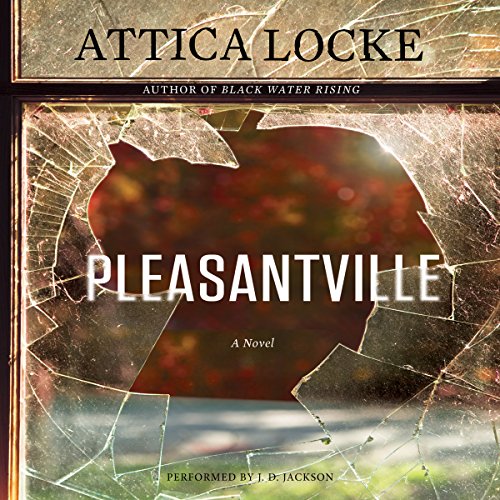
Pleasantville by Attica Locke (audio)

Attica Locke is a very strong mystery writer. I was utterly absorbed by her characters, who felt perfectly real to me, such that I worried about them when I stepped away from the book. It’s a fully-fledged world. I will say that I was a good reader for this one, too, because it’s set in my hometown of Houston, and Locke’s Houston is extremely detailed and true to the original. I loved this aspect of it as much as any other, and that won’t be quite such a nostalgic, moving experience for just any reader; but the strong sense of place and that level of detail will certainly work for anyone who appreciates those strengths.

The plot of Pleasantville is quite complex, again quite detailed, and operates at the intersection of crime, criminal and civil law, and politics, in a particular milieu. This is both a great strength and a potential liability: it asks of the reader a fair degree of attention. If you bring that to this book, you will be amply rewarded. I am still a bit reeling from it, and my admiration of Locke is solidified.

It’s 1996, and a hotly contested mayoral election in Houston is expected to hinge – as they often or always do – on the neighborhood of Pleasantville, an early-established haven for middle-class African Americans 50 years earlier and a continuing close-knit community. Then a teenaged girl disappears off the streets of Pleasantville on election night, and the criminal case clashes strangely with the political drama, and both threaten to swallow whole the man we meet on the first pages: lawyer Jay Porter, whose office has just been burglarized. Porter is still reeling from the loss of his wife to cancer a year earlier. His teenaged daughter and grade-school son are struggling in their own ways. His law practice is on its final legs. He specializes in class-action suits handling issues of environmental racism, like one at work in Pleasantville; he does not want a criminal defense case, but the most powerful players in Pleasantville have other ideas.

There are so many compelling characters in this story that my head almost spins, but it’s all woven together incredibly well, keeping me both engaged and on track (if I put in a bit of effort myself – and I’m happy to). I’m very much still thinking about Jay Porter and hoping his daughter Ellie comes through okay; I can’t wait to get more from Locke. Whew.


Rating: 8 blocks.

The Taken Ones by Jess Lourey

Disclosure: I was sent an advanced review copy of this book in exchange for my honest review.


The sun smiled violently overhead, causing the tar beneath Rue’s blue-striped Adidas to glisten and pulse.

The first in a new series from a prolific author of 20-something previous works, The Taken Ones offers mysteries within mysteries.

On a hot July day in 1980 three little girls walked into the woods in small-town Leech Lake, Minnesota. They were headed for a dip in the creek, but never made it. Instead, one girl, Rue, walked back out again, with no memory of what had traumatized her nearly to death. Her friend Amber (eight) and Rue’s little sister Lily (five) were gone.

More than forty years later, Agent Van Reed of the Minnesota Bureau of Criminal Apprehension strives to escape her own traumas. Forgetting is the best thing, she tells herself. Her childhood and teen years were newspaper-headline material, and she’d dedicated ten years of her life to the Minneapolis Police Department, only to be ostracized after the death of her beloved partner. When a woman is discovered dead after being buried alive, and Van is called in on the case, she pursues it avidly, partnered with the unbelievably dapper forensic scientist Harry Steinbeck. She wonders if this new partnership might represent a fresh start. As the recent victim is tied to the decades-old disappearance, though, Van may find wounds reopened and secrets bared that she can’t stomach.

Van’s trauma (and that of the surviving girl, Rue, now a profoundly troubled psych nurse) reads true, and while her story is a bit sensational (again, headline material), that stuff does happen in real life. (Being a law enforcement agent with that past is an absolutely believable plot element, and imagine how hard.) She’s not entirely well – nor would she be. Harry Steinbeck is loveable and mysterious, and definitely hiding something. Side characters who incline toward ‘good’ and ‘bad’ guys have their own complicating features, too. I loved many of the sentences and descriptions, and Lourey’s eye for place.

This is a plot with many twists and side paths as dark as those Minnesota woods. Lourey excels at short chapters and cliffhangers, keeping me up past my bedtime for a few nights in a row. This is an exciting one, abounding in surprise reveals, most of them unexpected even to this trope-sensitive, genre-attuned reader. There were also some intriguing threads begun that I hope will be followed in later books in the series. This is expert work. I’m really looking forward to more Steinbeck & Reed.


Rating: 8 glasses of sweet tea.

Vera Wong’s Unsolicited Advice for Murderers by Jesse Q. Sutanto

This is a very cute, sweet, pleasurable story: a cozy mystery, a loving family tale, with rom-com style matchups and a loveable amateur sleuth. Vera Wong is an older lady – in the world of this novel, she’s just sixty but also an ‘old lady,’ all things being relative, I guess. (Despite Vera’s starring role, the rest of the perspectives are decidedly youthful.) She’s widowed, and she misses her beloved husband, but it is in her personality (and, implied, part of her ‘Chinese mother’ culture) to soldier on. She has a small business she’s very proud of: Vera Wang’s World-Famous Teahouse, in San Francisco’s Chinatown. (Yes, she’s taking advantage of the more famous Vera Wang’s name recognition.) She lives upstairs, and wakes every morning precisely at four-thirty to start her day with a brisk walk and a text to her adult son, Tilly, who receives a number of these texts every daily, exhorting him to proper behaviors; he rarely responds. The voice of Vera’s chapters (in close third person) is resolute and cheerfully bossy; but we understand that she is very lonely. Despite its name, her teahouse is far from famous. She knows it will soon have to be shut down.

Then something terribly exciting happens: she comes downstairs one morning to find a dead body in the teahouse. Vera is thrilled! She calls the police, but they do not seem nearly as worked up about the possible murder as they should be, and they are not at all appreciative that she has helpfully outlined the body for them in Sharpie. “Vera knows they won’t do anything… but… nobody sniffs out wrongdoing quite like a suspicious Chinese mother with time on her hands, and what does Vera have but time?” And so the nosy, overbearing, but somehow magnetic Vera is on the case. If there is a case – the dead man, Marshall Chen, is originally ruled an accidental death. But Vera won’t let this stop her.

Soon other characters (suspects!) surface: there is Julia, Marshall’s widow, worn into submissive passivity by his years of verbal abuse, and her sweet toddler daughter, Emma. There’s Oliver, Marshall’s twin (who gives everyone a start when he first shows up on scene), long estranged from his bully of a brother. And then there are Sana and Riki, both of whom pose as reporters but who are each hiding a secret connection to the dead (murdered?) man. In her usual domineering manner, Vera takes each of these younger people under her wing, even charming the somewhat troubled Emma into calling her Grandma. It helps that Vera never stops cooking up wild, wonderful feasts of traditional Chinese food anytime they gather. Even as she’s befriending them and improving their lives (with a little insistent advice, not to say pushing), Vera is investigating each of the foursome as murder suspects. But as they come together to form an unusual little family of their own, she is less and less pleased at the thought of turning one of them into the police (incompetents!), especially as it is increasingly obvious that the late Marshall was not a nice man at all.

Vera Wong’s Unsolicited Advice for Murderers trades rather heavily on stereotypes about Chinese mothers, to an extent that I think would be problematic if the author did not herself come from that culture. She pokes fun in a loving manner. Does her in-group status excuse using stereotypes as the punchline? I don’t consider myself qualified to make a firm call on this, especially as I am not in-group; I’m cautiously okay with this case, but mine is not perhaps the final judgment that matters most. I will say the book is intended in good fun and comes off as such. Jesse Sutanto has published an impressive number of adult, young adult, and middle grade novels, and the writing style of this one leans toward the cute rather than the literary. Some constructions feel quickly slapped off. It’s fine for an easy, entertaining read, and this one hits the mark.


Rating: 7 bowls of congee.

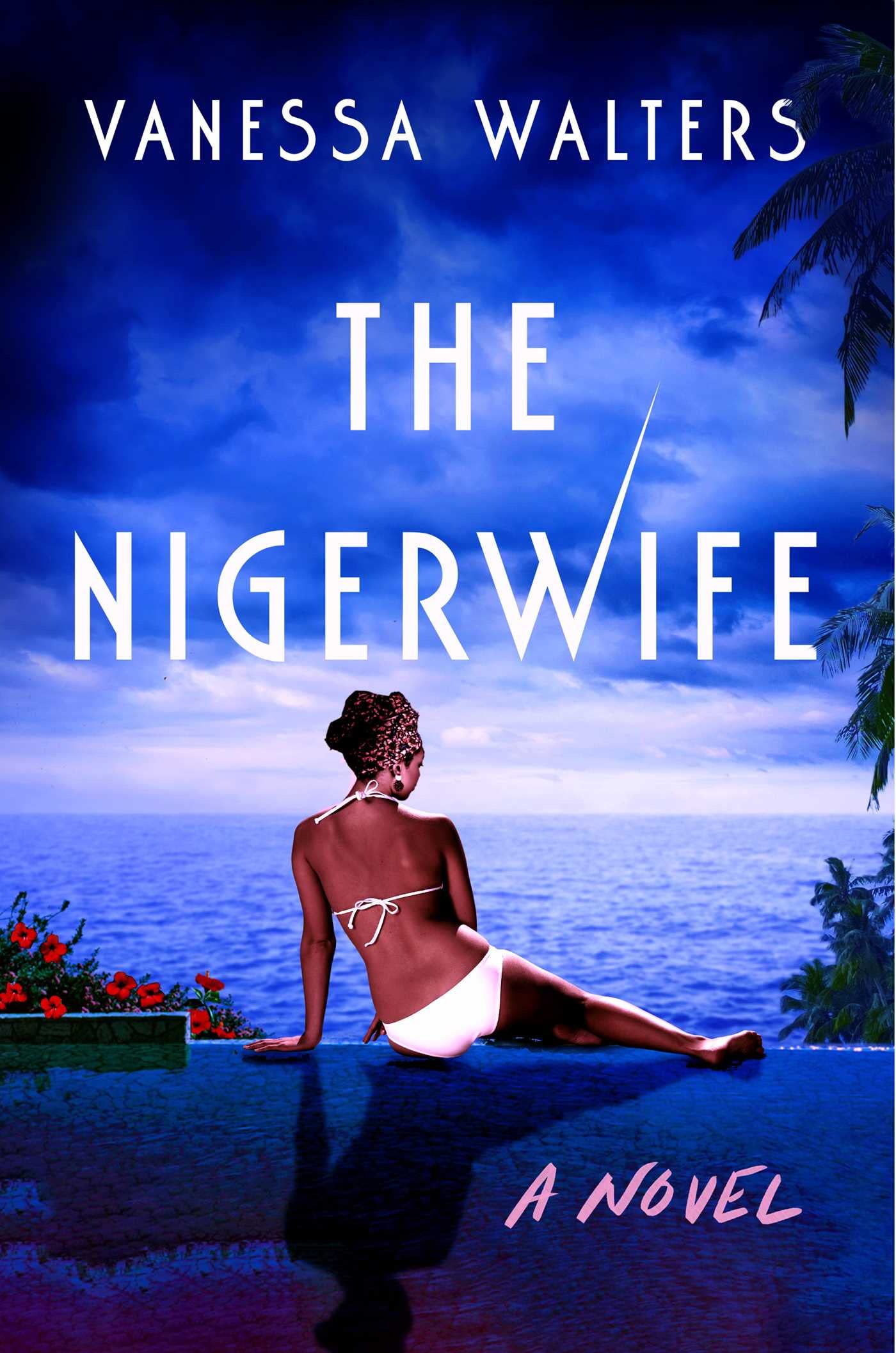
The Nigerwife by Vanessa Walters

In this riveting novel about a young woman’s disappearance, Lagos high society hides personal struggles and larger cultural concerns.

Vanessa Walters’s American debut, The Nigerwife, is a gripping work of suspense, a psychological puzzle, a mystery, and a critique of marriage and high society. The prologue begins: “Nicole often wondered what had happened to the body.” This foreshadowing line refers to a body floating in a trash-filled Lagos lagoon, viewed from the home of a young woman who had recently left London to join her Nigerian-born husband. This narrative perspective, “Nicole, Before,” defines every other chapter of the novel, interspersed with the viewpoint of “Claudine, After.” The pivotal event of these dual timelines is Nicole’s disappearance, which gives the prologue’s opening line new and sinister meaning.

Nicole spent years in Lagos with her husband, Tonye, and their two young sons. She ceased communication with her family in London and formed and dissolved friendships both in and out of a club called the Nigerwives. “The Nigerwives were so different, a pick ‘n’ mix of skin tones, hair textures, body shapes, and facial features, but their stories were one and the same. They had all defied the prides and prejudices of their families, sacrificed friendships and careers and independence, and followed heart and husband to Nigeria for what they believed would be an epic adventure.” For Nicole–and perhaps for other Nigerwives before her–that adventure would end badly. Between fancy dress and art openings, social posturing and boating parties, she struggled to keep her sanity and independence.

In the days after Nicole goes missing, the aunt who raised her travels to Lagos to look for answers. Claudine does not know Tonye’s family well and is dismayed to find how little the family or the police seem to be doing to find Nicole. “She could see [the household help had] been warned not to tell her anything, not even what time of day it was, though they were very respectful clams.” The more she attempts to unravel her estranged niece’s life, the greater her fear that she’s arrived too late. As their timelines progress, Claudine and Nicole each work separately to sort out the family issues that drove them apart, which will not be revealed to readers until the story’s end.

With a sense of foreboding, The Nigerwife considers overlapping loyalties and betrayals and the strict constraints of marriage, family, gender, and culture. Nigeria’s largest city is ruled by glamour, glitz and materialism; motivations for marriage include love, financial and political gain, and cultural compatibility. Various characters criticize Lagos and Nigeria, but this is not the novel’s aim. Rather, Walters’s inexorably paced plot examines institutions and the choices women face. “Nothing compensated for having family around to look out for you. But then, what kind of family?” This engrossing novel both entertains, with the mystery at its heart, and provokes questions that go far beyond Nicole’s personal story.


This review originally ran in the April 7, 2023 issue of Shelf Awareness for the Book Trade. To subscribe, click here.


Rating: 7 hidden knives.

Murder Your Employer: The McMasters Guide to Homicide by Rupert Holmes

So you’ve decided to commit a murder.

Congratulations.

Murder Your Employer is a genre mash-up, and great fun. It purports to be a how-to manual on how to commit a murder (the Conservatory prefers “deletion”) without getting caught – in this case, specifically the deletion of one’s employer, with future volumes promised. (Other popular deletions include work rivals, financial advisors and spouses.) The book’s narrator is Dean Harbinger Harrow – Dean being not a first name but a title, as he serves as Dean of the McMasters Conservatory for the Applied Arts, a top-secret institution that trains would-be deletists to remain successful and forever unknown. It contains narratives within, however: short on actual training-manual-style directives, instead the bulk is made up of examples in the form of the stories of three McMasters students, all majoring in employer deletions.

The central protagonist is Cliff Iverson, who botched his first attempt to murder the toxic, womanizing, belligerent boss at his aircraft manufacturing job. Instead of criminal charges, he faces involuntary admission to McMasters (for very mysterious reasons). We are treated to his journal throughout, as well as the Dean’s notes on the progress of Cliff and two fellow students: Gemma Lindley, who needs to get rid of her blackmailing boss, and a woman known at the school as Dulcie Mown, although everyone finds her dimly familiar (the reader knows why).

So we have a how-to-manual, framing an epistolary novel (journal entries and other documents), in an idyllic boarding school milieu, on the absurdist subject of ‘an education in murder,’ filled with wordplay, puns and humor, with a certain amount of suspense as our three students aim to successfully complete their theses (intended deletions), wrapped up in a mystery (who is responsible for Cliff’s enrollment at McMasters in the first place?). Oh and the setting is historical, in the 1950s, so bookies and bad guys have a certain style and type. It is a mad, beautiful mess of genres, and I found it enormous fun (despite a rather crabby review from Kirkus, who does not think it cute). Yes: it does require a fair amount of suspension of disbelief; I would think that would be obvious, since it’s a slightly unhinged promotion of the murderous arts. (Somewhat in their defense, McMasters does have some moral standards. Make sure your target is deserving and all other options have been exhausted; no innocent bystanders; certainly no serial killings or mass murders; etc.) It’s ridiculous and it knows it (think The Princess Bride).

The pacing is not snappy, but I thought it was nice to linger with each of our characters – Harrow rather silly, Cliff earnest and serious, Gemma haunted, Dulcie driven – and in the slightly cartoonish historical setting. The McMasters world itself is a sort of madcap Opposite Day, and the ‘real’ world features caricatures. Dean Harrow is a bit of a buffoon (and yes, pun-obsessed). It was fun and, I admit, relaxing. The whole conceit is ludicrous enough that it let me let go. I don’t think real life murders are cute, but this book surely is.


Rating: 7 MacArthur-style sunglasses.

Nine Liars by Maureen Johnson

The fifth Stevie Bell novel, and the last to date, although I saw that Johnson is writing more.

Stevie’s back at Ellingham, with most of her friends: Janelle, Vi and Nate are there as well, hard at work on their college applications, while David is away at school in London. Stevie is struggling: she lacks focus except when hyperfocused on a case, and right now there’s no case. “[Hers] was a good brain, but it had only two modes–fog and frenzy.” She’s not functioning well at ‘just’ going to school; she pines for David, and she’s unmotivated. She can’t wrap her head around the college stuff at all. (I begin to think that there’s something diagnosable about Stevie, between her unfocused/hyperfocused poles and her difficulties with social cues, but that’s not my job and she’s fictional. That’s Johnson’s job.) To save the day, a drunken late night call from David sets up a trip for Stevie and her friends to visit London: ostensibly for a little study abroad but mainly, obviously, for the couple.

There’s a cold case – Stevie’s specialty. It involves nine friends who called themselves ‘the Nine’ when they were college students back in the 1990s, and they are obviously counterparts to Stevie and her crew in some respects. There is also Stevie’s evolving relationship with David, her troubles relating to other humans in general, her detective mastermindedness, and everyone’s anxiety about college applications.

I had some frustrations about this novel. I’m disappointed in Stevie, and in David, and frankly, in Johnson as well. [Mild spoilers follow.] In this installment, Stevie makes a big error in her friendship with – well, with all of them, but particularly with Janelle. It is in line and in theme with the title, and the themes of the case she’s working on (which she points out to us herself, in case we’d missed it): the friend group who’ve experienced the murders (two in an old cold case and one present-day missing) are guilty of lying, and so is Stevie. Her crime against Janelle feels so serious to me, and I’m dreading Janelle busting her because I know Stevie’s life is going to change so profoundly when that friendship takes the blow. And then it just fizzles out, like, oh, everything is fine. I feel that Stevie doesn’t suffer consequences appropriate to her misstep. I was dreading the consequence; but when she gets to skip it, I feel that the author has let us down. I feel it was out of character for Janelle to respond the way she did.

And then comes David’s big bonehead move at the end. I guess it’s not entirely out of character, nor out of character for dumb teenagers. But I feel the let-down pretty hard. This one is less about inconsistency, at least, and more about my frustration with the character himself. My bigger gripe here (especially after it’s been a few days) is about the cliffhanger she’s left us on! (I think it was book two that also ended on a big one. But I was already holding book three! And book six doesn’t even exist yet!)

If anything, my frustrations are because I feel so much love for this series, so all is not lost yet. But I am now anxious for the next book in more ways than one.


Rating: 6 and a half slices of doner kebab.

The Box in the Woods by Maureen Johnson

The Stevie Bell series continues, but we’ve left Ellingham behind, Stevie having solved the Truly Devious murders (although the world only knows a bit of that story). At this novel’s start, she’s puttering around at home with her parents, selling deli meats and cheeses at the grocery store and cleaning up the salad bar by night. Then she gets an invitation to really go to work: as far as her parents know, she’ll be a counselor at Camp Sunny Pines, but she’s really there to investigate the Box in the Woods murders of 1978, from back when this was Camp Wonder Falls. The tech-bro who’s hired her says he’ll employ her friends, too, which means Nate and Janelle, because David is enjoying his voter registration work in a different (and I’m pretty sure unnamed) part of the country. Stevie’s a bit disappointed, but she respects his mission.

Camp Sunny Pines is an amusing setting. Massachusetts is warm and muggy in the summertime, and Stevie is more cerebral than outdoorsy. She buys into the idea of rugged go-everywhere detectiveship in theory, but she quickly runs out of signature black t-shirts because she has to change them so often – these are sweaty environs, and she’s also doing far more running and biking than she’d like. It’s kind of fun to see her challenged in these ways. Her tech-bro boss does not have a good bedside manner for engaging with the community; Stevie is better at this, but less adept with her personal relationships, and one in particular: David (now her actual boyfriend) finds a reason to come out after all, but Stevie’s responsibilities and preoccupation with the case mean she doesn’t engage all that well with him. He does some driving her around, and tries to have an important conversation, but she’s too checked out. In contrast to what I said about the last few books, I felt sorry for David, who tries to be a good boyfriend and friend, while Stevie’s a bit awkward and inattentive.

I remain baffled by her friendships: Janelle, the purported best friend, is totally rad but much less a day-to-day ride-or-die joined-at-the-hip BFF than Nate, who I feel doesn’t get enough credit.

One of the things that made Nate and Stevie such good friends was their mutual hatred of sharing emotional things. Somehow, they managed to have a deeper bond by staying on the surface–as if they were snorkeling their feelings, floating along side by side, observing all of nature’s wonders without getting close enough to be stung by something under a rock.

That Janelle gets the best friend label is a feature of Johnson’s writing that just confuses me.

But I still love Stevie herself, even in her bumbling. There was, again, a passage that I hold onto as emblematic of her loveable personality. She’s preparing to meet David, and considers fixing herself up a bit, and then just kind of gives up – I love this facet of her, that she’s aware she’s not quite meeting an external social measure of so-called beauty but can’t bring herself to entirely care. (And David doesn’t. It’s fine.) I relate to this entirely.

The mystery is compelling, and I appreciate the final scene, even if the solution is a bit awkward too… I’m really here for Stevie’s clever mind, her interactions with other humans (for better and for worse), and her dear strangeness. I enjoy Johnson’s use of the classic feature wherein the detective just talks it out with her friends and acquaintances, and lets her mind drop things into place. I’m definitely excited about book five.


Rating: 7 crafts.

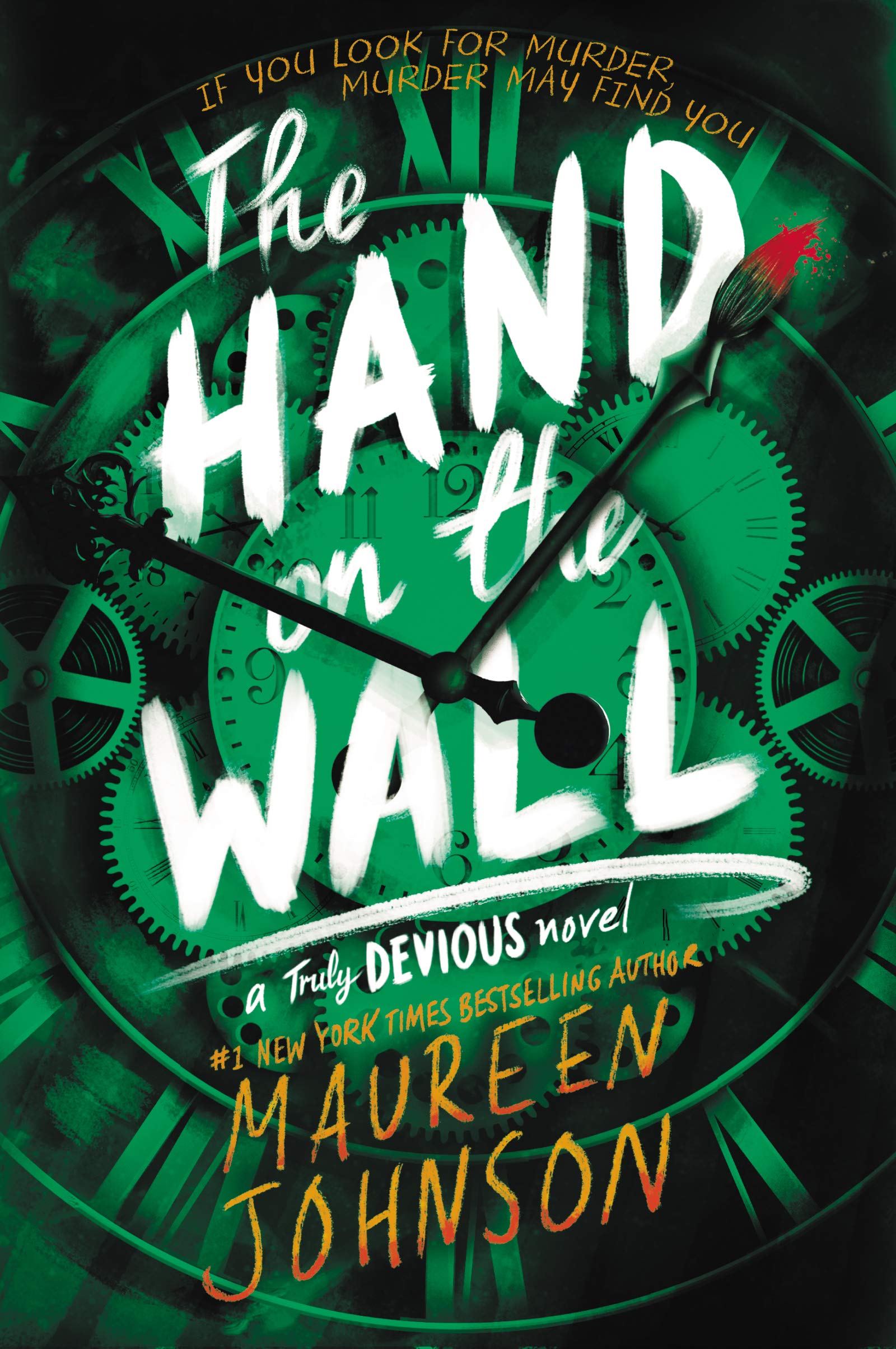
The Hand on the Wall by Maureen Johnson

On a day that I claimed to be overwhelmed with the student papers I had to grade, I also managed to wake up and immediately begin this book… and then stay up til midnight finishing its nearly 400 pages in the same day. I loved Truly Devious and was even more entranced by The Vanishing Stair, which annoyed me with a cliffhanger the night before and sent me directly into this one, book three. My main goal today is not to read a whole book by accident when I’m supposed to be working.

The Hand on the Wall is book three of three in the Truly Devious series – but the Stevie Bell series continues for two more books, a bit confusingly. The Truly Devious murders themselves (aka the crime of the century, the murder/kidnapping at Ellingham Academy in the 1930s) are wrapped up in this book, but newly minted detective hero Stevie apparently continues on. (I haven’t read book four yet! I’m staying strong.) This installment sees the advancing of Stevie’s investigations and her modest decline in terms of personal hygiene and nutrition; the beginning of real fears for her personal safety and/or that Ellingham may indeed be cursed; the continuing friendship and alliance with Security Larry (this is a relationship I have really enjoyed in two books now); and the bumpy evolution of Stevie’s match with the troubled David. I said in my last review that getting to know him a bit better would yield more sympathies, and we do get that here. I still find him a bit obnoxious and don’t appreciate his treatment of Stevie, but they’re making progress.

Stevie grows in her relationships with others. A bit weirdly, the amazing Janelle continues to be identified as Stevie’s best friend, but our hero actually spends more time talking with and confides more in Nate, a hilariously Eeyore-like blocked writer. Janelle is a great friend, but involved in her own love match (that’s going more smoothly than Stevie’s), and it’s actually Nate who ends up fulfilling a day-to-day best-friends role. We have a new friend as well, Mudge, who is loveable if a bit of a cariaciture: he’s here to exhibit exactly how drolly eccentric Ellingham students can be.

Mudge was Stevie Bell’s lab partner–a six-foot-something death-metalhead who wore purple-colored contacts with snake pupils and a black hoodie weighed down with fifty Disney pins, including some very rare ones that he would show off and explain to Stevie as they dissected cows’ eyes and other terrible things for the purposes of education. Mudge loved Disney more than anyone Stevie had ever met and had dreams of being an animatronic Imagineer. Ellingham Academy was the kind of place where Mudges were welcomed and understood.

Security Larry, mentioned above, is a former police detective and becomes a mentor to Stevie in her own work, both cautioning and trying to enforce the rules upon her and gradually, increasingly, viewing her as a peer. He’s great. Several other faculty members develop as well. I very much related to poor Dr. Quinn trying to convince her students to do the readings before class.

I love Stevie more and more. She “would rather eat bees than share her tender inner being with anyone else–she didn’t even want to share it with herself.” She undergoes an actual epiphany (pages 108-109) when she realizes that her weird, awkward self is just a perfectly fine version of a human, and that her own unique combination of qualities is precisely what’s gotten her where she is in life; this is a passage I would like to share with everyone I know, but especially young people and especially girls just making their way and finding themselves. I would follow this protagonist anywhere.

As befits the final book in a trilogy, this one ends on a note of triumph, closure, and hope – perhaps a bit neatly tied up, in fact, but I know there’s another Stevie Bell book to follow. Again, for the sake of my sleep I’m taking a day or two off, but expect more any time now. Maureen Johnson is my new favorite. Thanks again, Liz.


Rating: 9 moose.

The Vanishing Stair by Maureen Johnson

Book two of the Truly Devious series flew by. I stayed up late to finish this one and it ended on a serious cliffhanger, so look for my review of book three to follow this one immediately.

At the close of Truly Devious (for which there are mild-to-moderate spoilers here), The Vanishing Stair opens with Stevie glumly returned home to her parents’ house and her public high school. The gamechanger comes quickly in the form of the despicable Senator Edward King, her parents’ hero and employer and (surprise) the father of her love interest from Ellingham Academy. King has arranged everything for Stevie to return to Ellingham – funding the trip, heightening security following a student’s mysterious death, and convincing her parents of her safety. He wants Stevie, in return, to keep an eye on his wayward son David, with whom Stevie’s not on particularly good terms anyway. She’s thrilled to be back at the school where she feels stimulated: with her friends Nate and Janelle again, working on her life’s greatest passion, the solving of the 1930s Ellingham murders, and yea, David. Quickly a second body is added to the modern Ellingham count. Stevie gains a new advisor, an eccentric academic from the local (Burlington, Vermont) university with a drinking problem and a very nice nephew. David’s moods and attitude toward Stevie continue to swing wildly, hot to cold to nuclear.

The best thing about these books is Stevie herself. She’s socially awkward but mostly doesn’t care; she’s occasionally bothered by her inability to fit in back in the ‘normal’ world (of which Ellingham is not part), but only when she remembers. Despite sometimes showing signs of a standard teenager’s low self-esteem, she generally carries on as herself, unbothered. I like her. She’s an extremely focused detective – perhaps to the point of mild self-neglect, but that’s part of a long tradition of detective types in fiction (a fact she’s aware of). Johnson’s prose is downright funny: after camping out overnight in the school’s yoga studio, Stevie “felt a waffle pattern of yoga blanket on the right side of her face and the faint smell of lavender and patchouli permeating her being. It was like she had been run over by a boulder made of hippies.” Our young hero can be a little bumbling and dense – just like a teenager, no matter how smart. I have a little less patience for David’s antics, perhaps in part because he’s a rich boy? but mostly, I think, because we don’t have the close third person window into his interior self that we have into Stevie’s. He’s a suffering kid, too, and I think if we got inside his head it would be just as sympathetic as hers.

The mystery plot remains compelling: this book focuses in on the riddle that Albert Ellingham left behind on his final day, which the title of this book nods to. We’re learning things, about the historic murders as well as the modern suspicious deaths, but not the big final thing we want to know. Again: this one ends on a mad cliffhanger; I was actually a little peeved, and even more relieved that I already had book three ready and waiting. I recommend you do the same.

Liz was (as ever) 100% correct about this one. I’m pretty sure she said she ripped through the whole series, as I am clearly going to do as well.

These books are recognizably YA in a few ways: teenaged protagonists, a gentle handling of gore, violence, and sexual content, and humor. But the plotting is not too simplified for adult readers to enjoy, and a strong female lead who is still in her teens appeals to this reader at any age. I’m a fan.


Rating: 8 cats.

Truly Devious by Maureen Johnson

Yet another gem from Liz, Truly Devious is a positively delightful piece of fun (that also involves murder). It’s for young adults, but easily well-written enough, and sufficiently funny and clever on a few levels, to please adults (like Liz & me).

There are two timelines, although we spend the bulk of the book in one of them. First, in 1935, a teenaged genius is lucky enough to be plucked out of her New York City public school to attend a special new educational experiment in the mountains of Vermont: Albert Ellingham, major mogul, has established the Ellingham Academy to let kids like Dottie pursue the joys of learning in their own ways. Unluckily, a year later, Dottie is murdered at the idyllic Academy, apparently a bystander in a plot to kidnap for ransom Albert Ellingham’s wife and daughter. Readers get a glimpse of Dottie’s final moments, but her assailant is unnamed, undescribed, and genderless.

Much later, more or less in contemporary times (I didn’t notice a year for this timeline?), another teenaged girl is also delighted to be admitted to Ellingham, not despite but because of its murderous history. Stevie Bell, of Pittsburgh, is crime-obsessed: she hopes to become a detective, ideally for the FBI, and the Ellingham Academy murders are her dearest project. The remains of Iris Ellingham (Albert’s wife) were found as well as Dottie’s, but the body of young Alice Ellingham, aged four at the time of her disappearance, has never been found; technically Alice is Stevie’s host and educational benefactor in absentia. Socially awkward Stevie arrives at Ellingham determined to distance herself from her parents (who love her but do come off rather obnoxious, especially with their unfortunate political leanings), begin a new chapter in her life, maybe finally make some friends, and – most importantly – solve the biggest best crime she knows. Each of these goals will turn out to be ambitious, but Stevie is both smart and scrappy. She easily pairs up with Janelle (who hails from Chicago and excels at building machines and gadgets) and establishes a harder-won friendship with even more socially awkward Nate (a published and thoroughly writer’s-blocked novelist). Their dormmate Ellie is a free-wheeling artist who both impresses Stevie and makes her nervous; there is also a famous and spectacularly handsome filmmaker/actor (who however seems not very smart), and a mysterious boy named David who both attracts and repels Stevie.

While we check back in with 1936 (investigation, trial of an apparent straw man, Ellingham’s grief), the modern timeline dominates. Stevie is both a fine amateur detective (in a long literary tradition) and a teenaged girl, grappling with hormones, friendships, school, the sandpaper grip of her parents, and other challenges that will be familiar to all readers, not just those with true crime obsessions and unusual educational settings. By nature of having a female lead, Truly Devious involves some girl-empowerment messaging, but like its handling of nonbinary genders and queer characters, this messaging is simply built into the story, not A Point To Be Made.

Was this was pretty was?
Who knew. This was what a Stevie was, anyway.

Stevie and her friends are lovable above all; also smart, bumbling, funny, painfully awkward, and pleasingly eccentric. There is everything to enjoy.

I finished this book having just ordered book two but it wasn’t here yet and I felt a real sense of loss. I expect to burn right through books two through five, so look out for more Stevie Bell.


Rating: 8 poles.