reading weekend.

Without getting too personal, I’ll say that I’ve got a situation here that has derailed my weekend intentions and instead landed me a whole lotta reading time, which is the silver lining. I started Faithful Place last night, with enthusiasm but also with regret that it required putting down When Christ and His Saints Slept; I was really enjoying it. I’m also feeling the pull of Room and several others… but to get back on topic:

I’m now feeling the need to pause (come up for air) on page 262 at the start of chapter 17, realizing that my friends and fellow readers (Karma) probably have not been quite as full-time as have I in the last 24 hours. So.

I’m really enjoying this book! I was drawn very quickly into the romantic story of Frank and his childhood love with Rosie, who no-showed their elopement date and left him thinking she’d, well, left him. There’s an air of mystery about it from the first (let’s be fair, all the blurbs and the inside of the dust jacket agree that it wasn’t that simple, so no spoilers there) and I care about them right from the first, too. Frank is familiar to me. Am I projecting, are all detectives starting to look like Harry Bosch, or is Frank another loner-type, hard on the edges, who cares deeply about his job (see my last post: job is one of the things he’s die for), but has the very soft spot of a young daughter, complete with estranged baby-mama? I think he is. This is my type of detective. But he’s in the relatively new-to-me setting of modern Dublin, and I’m eating up all the local culture and dialog. (I ❤ Guinness.) There's an interesting interplay of class and culture between his family home and neighborhood, which he hasn't visited in 22 years, and his ex-wife's world of privilege. But I think the best part is the characters and the complications of their relationships. If Frank and his four siblings are types, it doesn't make me love them any less, or make them any less real.

It’s hard for me to go much further than this without revealing plot spoilers, which I’m determined not to do, because I want Karma and Valerie and the rest of you to be able to discuss with me in this blog even if you’re not keeping up with my pace in the book. (I think I’m going to switch back to Christ and His Saints now so as to allow some catch-up time.) So what I’m saying here is that the plot has some interesting twists and turns and surprises me, which of course I love. The revelation on page 205 kind of floored me, in fact. When you get there, let me know what you think.

Now, more than half way through the book, I’m starting to get a fatalistic feeling that perhaps I can see the end and the whodunit, and it’s awfully sad. Poor Frank… the guilt and distant love in this family… but you know, author French has me going, and I won’t be surprised if she has a few more surprises to throw at me in the next 140-odd pages.

For now, as a side story, let’s talk about the character Stephen. I like him! It would be very unlike the “type” that is Frank to make a new friend (and he is resisting it) but I’m pleased to meet this likeable guy. How do you feel about him?

I’m off to take a break now and give my other books some love, and hope that you’ll catch up with me a bit. We’ll get back to Frank & Rosie in a day or three. Thanks for joining me here and I hope your weekend allows for all the action and/or restful reading that you like.

book beginnings on Friday: Faithful Place

This meme is hosted by Katy at A Few More Pages.


I’m giving in to the temptation here, to give you two book beginnings to the same book: one from the prologue and one from the proper start of the book. I’m also sticking with my preferred quotation parameter of two sentences.

So, from the prologue of Faithful Place, by Tana French:

“In all your life, only a few moments matter. Mostly you never get a good look at them except in hindsight, long after they’ve zipped past you: the moment when you decided to talk to that girl, slow down on that blind bend, stop and find that condom.”

I find this outstanding. It makes me stop and think about which moments have mattered in my life, and have I recognized them in hindsight? I can think of a few. But these first two sentences of prologue really make me want to stop and meditate. I call that a strong beginning.

From chapter one:

“My father once told me that the most important thing every man should know is what he would die for. If you don’t know that, he said, what are you worth?

I’m still interested. I’ve heard good things about this book from several sources, and I have a readalong buddy for this one too, so I’m excited. Stay tuned.

several pots on the fire

So last night I found myself with some unexpected free time at home, and because it was *unexpected*, I had unfortunately left my current book, When Christ and His Saints Slept, at the library at work. Bummer. I’m already going to have several going at once when I start Faithful Place as planned tomorrow. So I picked up one of the many (many, many) lying around TBR, and started…

The Things They Carried, by Tim O’Brien. This is not a new book; it was originally published in 1990, and I became aware of it this year with the 20th anniversary republication and various discussions. It’s a collection of related short stories (or a novel, depending on who you ask) set in the Vietnam War, and based on O’Brien’s experiences there. I read only one story/chapter last night before bed; but I can see why this book has been so talked about. This story/chapter that I read is “The Things They Carried,” and I love how he uses those things to tell so much of a story. It’s sort of sparsely written, and using “things” rather than emotions, which to me makes for less telling and more showing. It’s beautiful and sad and evocative. I look forward to more.

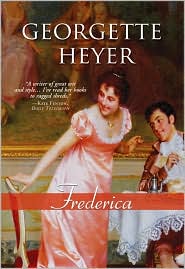
I was a little sorry to start another book while reading one and ready to start another tomorrow. But then I realized that I have several going at any one time, as it is… there’s Dust by Martha Grimes on the bedside table, and Frederica by Georgette Heyer in the bathroom, and This Book is Overdue! by Marilyn Johnson on the coffee table. What fun, when a person gets to live like this. Do you read several books at a time?

finished The Tin Roof Blowdown

Burke sure does know how to be poetic. Check the final paragraph of the epilogue, which I have decided to include here in its entirety (not really so much of a spoiler at all because it is Robicheaux’s *fantasy* ending):

“In my fantasy, I see Bertrand far out on the water, pulling on the oars, his arms pumped with his task, the ruined city of New Orleans becoming smaller and smaller in the distance, a great darkness spreading across the sky just after sunset. The blisters on his hands turn into wounds that stain the wood of the oars with his blood. As the wind rises and the water becomes even blacker, he sees hundreds if not thousands of lights swimming below the surface. Then he realizes the light are not lights at all. They have the shape of broken Communion wafers and the luminosity that radiates from them lies in the very fact they have been rejected and broken. But in a way he cannot understand, Bertrand knows that somehow all of them are safe now, including himself, inside a pewter vessel that is as big as the hand of God.”

I call that rhythmic, lyrical and hopeful, and even I, with my failure to grasp biblical allusions, can see the significance of blood staining the wooden oars.

I find it notable that Robicheaux deals somewhat sympathetically with a character who is a rapist. Some might be offended, I suppose (especially if you take my statement straightforwardly, which would be a mistake), but it’s not simple at all. Robicheaux is disgusted with this individual and the pain he’s caused. But in a very realistically, human, ambivalent way, he recognizes that we are all at least a little bit a product of our environments, and that perhaps everything is at least a little bit relative. The character in question makes some form of amends, at least within the structure of his own understanding. It’s complicated. I’m not particularly sympathetic with rapists myself (!!) but I appreciate that Burke portrays everything to do with human nature and sin and redemption as being complex and not black-and-white (no pun intended, in a book definitely charged with racial tension as all Burke’s books are – probably unavoidable considering the setting).

I confess that Cadillac Jukebox let me down just a bit, but The Tin Roof Blowdown has been so outstanding that I think I’m ready to make a James Lee Burke crusade like I did on Michael Connelly a few months back – and try and read everything he’s written.

But then again, there are so many good books in the world…

book beginnings on Friday on Tuesday

I’m behind the times and/or I’m a rebel – I just found this blog today and so I’m starting today and will hopefully keep up on *Fridays* from now on!

The idea is to share the first line or two of a book and my thoughts on it. Just my kind of thing.

From James Lee Burke’s The Tin Roof Blowdown:


“My worst dreams have always contained images of brown water and fields of elephant grass and the downdraft of helicopter blades. The dreams are in color but they contain no sound, not of drowned voices in the river or the explosions under the hooches in the village we burned or the thropping of the Jolly Green and the gunships coming low and flat across the canopy, like insects pasted against a molten sun.”

Maybe including two sentences was cheating this time, since they compose the whole first paragraph, but boy does Burke know how to set a scene, hm? I feel it’s fairly obvious that he’s talking about Vietnam, even if you were not familiar with protagonist Dave Robicheaux already, in which case you know he’s a vet. These first lines are atmospheric and set a tone. They make me feel at home with Burke who I love, and I’m ready to settle in for a new adventure with Robicheaux.

finished Running the Books and more Burke

Well it turns out that Running the Books gets a resounding endorsement. Author Avi Steinberg started a touch slow, but he grabbed me hard in the end. As our protagonist, Steinberg develops as a character and as a human being as the book unfolds, making some real personal discoveries. It’s a very human story, poignant and forgiving and realistically ambivalent in its eventual conclusions (or lack thereof) about the nature of prisons and criminals. I really enjoyed it.

(If you can’t tell in the image at left, his face is made up of lots of date stamps. Like due date stamps. It’s rather an interesting and clever piece of librarian-art if you care.)

I’m now well into another James Lee Burke, The Tin Roof Blowdown, that my mother gave me quite a while ago. That’s the Dave Robicheaux novel set in New Orleans and New Iberia in the aftermath of Hurricane Katrina, and boy, you want to talk about something stark and visceral… putting aside for a moment the beauty that is a Dave Robicheaux novel, the realistic descriptions of Katrina’s destruction are gut-wrenching. The death and suffering, the necessary decisions about who lives, who dies, who a person chooses to save, the morals and ethics involved, the widespread racism, the political neglect, and the gritty reality of the blood and guts and sewage… it’s very real, and those moral dilemmas are evoked expertly. (I expect nothing less of Burke.) This one is grabbing me a lot harder than Cadillac Jukebox did recently. I really like the character of Alafair, Dave’s adopted daughter, too. (Burke has an adopted daughter named Alafair, who like her fictional namesake is also a writer; one wonders where fact meets fiction.) The chasing of the bad guys by Dave and and perennially self-destructive Clete Purcel is as finely wrought as ever, but for me, what’s special about this book is the rawness and realism of Katrina’s destruction. Whew.

I am, as usual, swamped in fine reading material, and don’t think Burke will take me too long, so stay tuned for one of the three books I recently named as coming next! 😉

a few mysteries and more prison libraries

Well vacation was outstanding and too short as usual. Hope everyone enjoyed. With a total of 22 or so hours on planes and 8 or so hours on trains… I did some reading!

I started with Unhinged, by Sarah Graves, which is “A Home Repair is Homicide Mystery” – one of those specialist mysteries like the quilting or recipe-filled ones, or one of the book-related ones I binged on recently. Pretty interesting as such, but my fear with books of this sort is always that they’ll be sort of simplistic, or rely on their novelty status. This one didn’t do half bad; I was amused and interested and the characters were cute. It wasn’t terribly serious or literary and was definitely a cozy. I might pick up another with the same casual interest for an airplane ride, but it was unremarkable. I’m no home-repair buff, but the related details were light and unobtrusive. Of course if you were a home-repair buff, I’m not sure you’d be satisfied with those aspects.

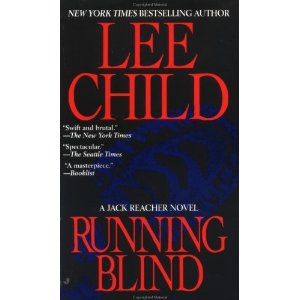
Next came another Lee Child, One Shot. I am decidedly a fan. I love the Jack Reacher character; those who told me he’d be a good character for me based on my love for Connelly’s Bosch were so right! The fast pace and strong sense of place are great; I stayed up late into the night to finish this one, and have recommended it to the Husband, who likes Connelly, couldn’t get into the more thoughtful pace of Raymond Chandler, and reads just a few pages at a time with long gaps in between, so fast pace is pretty important to him. He likes it so far. One Shot is set in small-town Indiana, which is not an environment I’m familiar with, but Child makes it seem plenty real. I just love the suspense and the loner aspects of Reacher; he has the Bosch characteristics of seeming intolerant of people trying to form relationships, while really being something of a softie inside, though he has trouble giving in to this impulse. Reacher is a little bit of a caricature Rambo-type, but I’m so into it that I don’t mind. I’ll definitely be pursuing this series – and good thing, since I’m all out of Connelly for now.

Finally I picked up the James Lee Burke I found to bring along, Cadillac Jukebox. Classic Burke with Robicheaux going it alone (despite being a member of law enforcement) in renegade cowboy fashion against massive injustice, including the racial and sexual kinds. Clete Purcel makes a few minor appearances, and New Iberia, New Orleans, and the surrounding environs are strongly evoked. Burke writes beautiful, poetic, prose with an appreciation for nature. These are great books. But, I’m noticing that the more time I spend with Connelly and Child, the slower Burke feels to me. His books aren’t slowly paced by any means, but they’re decidedly more leisurely than the other two. Robicheaux is also a bad-boy loner, also with soft spots (the wife in this book is Bootsie and daughter Alafair is present as well), but his self-destructive tendencies almost feel more pronounced to me. Where Reacher is fairly well outside society, completely outside law enforcement, has no ties, and is completely unstoppable in physical combat, Burke is more human and seems to have more to lose. Where Bosch has loyal compatriots in the force and a teflon-like mastery of department politics, Burke feels isolated and more vulnerable. Here in Cadillac Jukebox he gets wrongly accused of sexual assault and is threatened with the loss of his health insurance, both of which somehow feel unlikely with Bosch, who (in the course of the series) leaves and returns to the LAPD without significantly changing his relationship with crime investigation. At any rate, full marks for Burke as usual, but I’m starting to notice that he’s not the perfect counterpart to Connelly I once thought he was – that might be Child – while on the other hand, I just had a patron request Connelly and Burke in the same sentence, so clearly I’m not alone in my tastes!

I was without reading material for the flight home 😦 but I made it anyway, and am now back to Avi Steinberg’s Running the Books and ready to render a verdict on the questions I asked earlier. Not tiresome, but fascinating and engaging! It took long enough, but by halfway through, I’m hooked and anxious to get back into it. The separate story lines have converged, if minimally, but more so, they’re no longer anecdotes but continuing tales involving characters that I really care about. These are real people (literally, but they also feel real) and I mourn them when they die. (This is about prison; not everyone gets a happy ending; just past halfway, I’ve yet to find one happy ending, in fact.) Avi, the narrator, is emerging as a real person with some soulful stuff on the line, too; he gets involved with his inmate patrons and some of the larger issues as well. I enjoyed the tour he takes of past prison and jail buildings and his historical/social/philosophical/literary discussion of them (look for Sylvia Plath). What I called a clever and potentially pretentious writing style I have come to find engaging, contemplative, self-reflective, maybe even slightly poetic. I enjoy the part I’m reading now, about the difference between archivists and librarians, and which of them Avi will turn out to be – bearing in mind he didn’t have a library degree or any background when he took the job, so he’s learning as he goes. I’m giving this book an endorsement, in case you can’t tell.

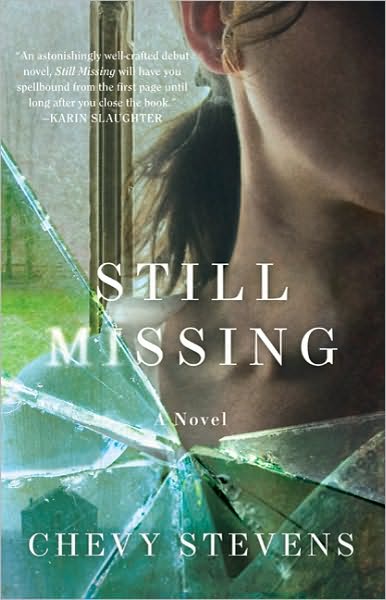
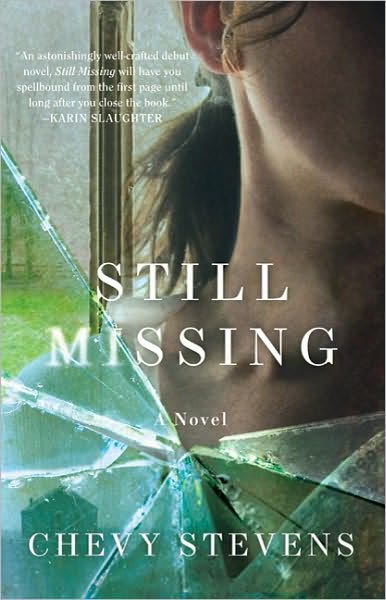
Stay tuned… next I’m trying to decide between Still Missing by Chevy Stevens, finally starting Larsson’s series with The Girl With the Dragon Tattoo, or getting into the fat Sharon Kay Penman I’ve got looking at me on my desk, When Christs and His Saints Slept. What are YOU reading?

briefly, paperbacks for the plane

Hello folks. Happy Thanksgiving! I hope you spend it in a way you enjoy.

I’m still working on Running the Books during my lunches, and I’m still enjoying it and staying involved, but only marginally. I guess because of the anecdotal structure, I’m going to leave it here at the library when I take off for my 5-day weekend. This is unusual and generally a sign that a book failed me on some level; I should want to finish once I’ve started. So I’m still failing to be swayed one way or the other about the worth of it; but at this rate I will eventually finish it. Not all bad.

I’ve been working on reading for the plane, and have chosen two paperbacks by authors I know I like: One Shot by Lee Child, and Cadillac Jukebox by James Lee Burke. I might need to supplement these with some paperbacks I have at the house as well.

Enjoy your holiday! I’ll let you know how the reading came out at the other end!

Lee Child’s Echo Burning, and some more nonfiction: The Spirit Catches You and You Fall Down

Sorry I’ve been absent for a bit. But I have been doing some good reading.

Last week, my workday reading was Lee Child’s Echo Burning. Child and his character, Reacher, were recommended to me in my RA class, and I picked up Echo Burning because it’s set in the vast west Texas desert, an area I’m a little bit familiar with.

Child’s series starring Jack Reacher was compared by my classmate and teacher to Connelly’s series starring Harry Bosch, of which you might have noticed I’m a fan. I really read Connelly to get more of Bosch, and Reacher does share some resemblance. Bosch, while an anti-authority loner type, does actually work for the authorities as a police detective, although he’s always at odds with his bosses and occasionally leaves the fold just to make things interesting. Reacher is a former military policeman (MP) turned rogue do-gooder, in a violent sort of way. Neither has a great deal of respect for authority or the rules that dictate the way they should go about solving crimes or problems, although Harry grudgingly plays along, most of the time, at least in the clues he leaves behind, because he has to present a prosecutable case to his DA.

Reacher doesn’t have a mission like Bosch does; in this book, and I get the impression in all, he’s merely drifting, moving through town, and gets caught up in problems he then goes about solving. Bosch has a job to do, and does it well and willingly; Reacher is just taking what comes up. Actually, in many ways the Reacher story reminds me of a western, especially with this setting; he’s the lone ranger rolling through town, taking care of business and moving along. He has an endearing, chivalrous care for the ladies, but he’s awfully rough around the edges, and starkly violent.

I loved it. It was just similar enough to Connelly to get me excited – the characters were similar but different, and would probably respect one another, although they wouldn’t stick around to get to be friends. I enjoyed the setting and recognized it, which is always fun (we all enjoy realistic settings in our own hometowns, right?). I guess it had a number of my requirements: strong sense of place; moody, gritty, dark tone; and a certain “type” of main character. I think I’ll be looking for Reacher again.

This weekend I got involved in another work of nonfiction, and I have to say, I find it remarkably similar to a recent read (but I’ll tell you about that another day, so as not to ruin it). I’m about two-thirds of the way through, now, with The Spirit Catches You and You Fall Down, by Anne Fadiman. (There’s an excellent chance I’ll finish tonight.)

This book is about a little girl and her family’s experience: Lia Lee is a Hmong child, born in Merced, CA to recent immigrants from the Hmong people’s extended journey through China and Laos. She has severe epilepsy, and the book centers around the conflict between her family and culture, and western medicine, in their two very different understandings of what her illness is, what causes it, and how it should be treated. In addressing Lia’s story, Fadiman gives us a brief history of the Hmong people’s culture and history. It is absolutely fascinating, and for me, the cultural aspects make this book special.

It’s an educational book because it provides lots of information and facts, properly cited, about medicine and epilepsy, as well as about the Hmong people in history (and the U.S. involvement in Vietnam and Laos), their immigration here, and the treatment of refugees by our welfare and other systems. But like I said, the cultural interactions are most interesting to me. The local hospital and medical system struggle to treat Lia and give her the best possible life; her parents likewise want her to be happy and healthy. But they have such fundamental differences… it’s not like two doctors debating two courses of treatment; we’re talking about two absolutely non-compatible, to the extent that they’re not really translatable, understandings of what’s wrong with her and the causes of her disease. Translation is almost not possible in the traditional sense because of cultural norms that don’t allow for direct translation. Californians and the Hmong have so recently met that there’s no precedent for much of a need for translation; there hasn’t been time for much bilingualism to develop, nor has their been much interest, on either side. (I should note this book is more than ten years old, so the current situation is a little different.)

I’m totally engrossed in the story of Lia and her family, but equally so in the story of the Hmong people in history. I’m also intrigued by the involvement of the author/narrator and her experience in researching the book. One lesson or concept that I’m coming away with is the ease with which we can condemn someone as having done the Wrong thing, and the difficulty with which we can come up with the Right thing. This is something that always occurs to me in politics. I can clearly see policies or politicians with whom I disagree because they’re Wrong; but in such a big, complicated, diverse world, with such intertwined goals, interrelated causes and effects, and various goals, I have an awfully hard time clearly seeing The Right Way. This is why I am not running for public office! Anyway – Lia’s story might well make you realize that nobody was entirely right or entirely wrong (certainly not wrong in their intentions and best efforts) and yet, Lia did not get optimal care. These cultural exchanges are, whew, hard.

I recommend this book and hope you’ll join me in enjoying it. If you haven’t already guessed what recent read I’m comparing it to, stay tuned. To me it’s just as obvious as anything but we’ll see. Feel free to post your guess here… Til soon, enjoy your week and your books.

weekend reading: a few mysteries

This weekend the Husband and I had a relaxing time at my parents’ weekend home in the country. I finished last week’s lunch book pretty quickly: that was The Sweetness at the Bottom of the Pie, and I guess I was ready for it to be over. It was cute, entertaining, and kept me guessing through the middle portion of the book, but its momentum flagged a bit for me toward the end. Once we knew for sure whodunit, author Bradley was just a little too relaxed in tying up all the loose ends, for my taste. But, I came to really appreciate our young hero Flavia, and look forward to meeting her again late in the series. The dual frames of chemistry/poisons (Flavia) and stamp-collecting (her father) were unique and intriguing even though I share neither interest. I’ll look for more of Flavia.

For a second book I had brought along two choices: Inkheart by Cornelia Funke, and Fantasy in Death by J.D. Robb. I read the backs of both aloud to the Husband and he chose for me, the latter. Inkheart is a children’s/young adult (YA) book about a girl named Meggie whose father, by reading aloud, can bring characters to life, including the bad guy Capricorn. I can’t tell you much more about it because I haven’t read it yet! But I intend to.

So I read Fantasy in Death yesterday (had to stay up a little bit later than intended, but ah well, I was so close!). J.D. Robb is Nora Roberts’s mystery-writing nom de plume. I have read exactly one Nora Roberts books (The Stanisklaski Sisters, thanks Gala) and don’t consider myself a reader of romance. Sometimes I find them mildly amusing (recently, Julia Quinn’s The Viscount Who Loved Me). But, I confess I did find Stanislaski a bit too fluffy, and I was concerned about the forcefulness with which the men pursued and conquered the women. Some of the scenes were not far off sexual assault, and the fact that the heroines were won over by force seemed to seriously confuse the issue of “no means no!”

Because of this past experience, I was a little bit leery, I confess, and I have no experience with the romance/mystery crossover genre, so what’s that about? A few things about this book surprised me. For one, are all of J.D. Robb’s books set in the future? This was romance/mystery with sci fi thrown in too! (Answering my question, according to my new favorite online resource NoveList, yes, Robb’s series does use the same future setting.) In Fantasy in Death, Lieutenant Eve Dallas is joined by her filthy-rich gaming-mogul husband Roarke in investigating the murder of a young gaming star-on-the rise. I give Robb full credit for keeping me engaged in the gaming and tech stuff even though I don’t care one bit about either. It wasn’t super complex, but Eve and Roarke were likeable and not flat characters, and I didn’t know whodunit til the very end, and I cared, so it worked fine for me. Fluffy, yes, but enjoyable. I may very well pick up another Robb.

There wasn’t a huge amount of sex, but what there was seemed out of place, gratuitous, and sort of awkward. Eve and her sidekick Peabody discussing penises while driving around on the case was forced. I guess this is where we get the romance crossover? Actually, the relationship between Eve and Roarke was pretty realistic and heartfelt, did not feel forced to me, and made me care more about both of them, so well done there. I’m not offended by sex in books, but for dog’s sake please make it naturally a part of things.

All in all it was a fine weekend of reading books, and the Husband did some reading, too. He’s following my lead into Raymond Chandler’s The Long Goodbye. I wish you all a week of reading and recommending good books 🙂 and I wish for myself, plenty of time for the same!