Two Wheels by Greg Moody

two wheelsAn unusual treat: I read this book all of my own choosing.

Two Wheels is the first in Greg Moody’s series of murder mysteries framed by the professional road bike racing world. Naturally, it is set in Europe, although the main characters are Americans. Jean-Pierre Colgan is the world’s best, and leader of the accomplished Haven team, sponsored by Haven Pharmaceuticals. He is a cocky and not entirely likeable character, which is a fine thing because he dies in the opening pages when his brand-new, high-tech American toaster explodes. In the first quirky turn, we then see Colgan enter heaven – or something like heaven – where he is greeted by Il Campionissimo, Fausto Coppi. Anquetil, on the other hand, won’t speak to him.

Next we meet the American Will Ross, a washed-up retired racer drinking himself stupid in Belgium, who inexplicably gets hired to replace Colgan on the Haven team. Will is as surprised as anyone, still more so when his ex-wife turns out to be part of the team’s management. With no love lost between them, her position only makes his hiring more confounding.

Cheryl is the team soigneur, also American and regretting the recent end of her own race career. She and Will get off to a rocky start, but she will turn out to be an ally. Tomas Delgado is team mechanic, and an old friend of Will’s: good news. The rest of the Haven squad is understandably unhappy to have Will join them, but he is just starting to get the hang of things again – find his legs, and his lost passion for the sport – when the body count begins to rise. Colgan’s death, of course, was no accident. Somebody seems to have it out for the Haven team, and Will finds himself attempting an awkward impromptu investigation, in the interest of saving his own skin. Oh yes, and there is French detective Godot, who reminds us of Columbo and seems to be imitating that American icon on purposes. There is a thread throughout the story of the tension between American and French culture: television, slang, American football versus professional cycling.

Two Wheels is not quite a cozy, as the murder weapon of choice is plastic explosives and the results are pretty bloody; but it fits into the sub-genre of mysteries defined by their framing elements. The plot of the mystery itself is enjoyable, if not especially remarkable unto itself. Will is a little slow on the uptake as investigator, and a big coincidence revealed late in the book falls a bit short of credible. As a mystery, then, Two Wheels is fine but not unique. The cycling motif is more distinctive, and adequately well done; the pain and love of the sport, the pavé of Paris-Roubaix and the climbs of La Ronde van Vlaanderen are convincing. Moody is at his best when he works with Will’s self-deprecating humor; for lyrical praise of the road I recommend Tim Krabbe’s The Rider instead; but the whole package is perfectly entertaining, often funny, and overall loveable. Obviously, Two Wheels will be most appreciated by those who share Moody’s and Will’s love for the sport. I think it could be the start of a promising series.


Rating: 6 kilometers.

book beginnings on Friday: Two Wheels by Greg Moody

Thanks to Rose City Reader for hosting this meme. To participate, share the first line or two of the book you are currently reading and, if you feel so moved, let us know what your first impressions were based on that first line.


two wheels

I am having a rare break between paid reviews, and undertaking a lighter read. Two Wheels is “a cycling murder mystery,” and a bit silly, but fun. It begins:

“It’s good to be king,” he thought. Jean-Pierre Colgan stood at the window, staring out over a dazzling Paris on a drizzling late January Sunday. Despite the rain and the gray overcast, it remained a dazzling Paris because it was a Paris that belonged to him.

I like the interplay of dazzling / drizzling.

It will not be a spoiler (because it happens in the first few pages, and is stated in the back-of-the-book blurb) to tell you that Colgan is killed in a bizarre explosion involving a high-tech American toaster. (The troubled relationship between French and American cultures – centrally in television and sports – is a theme.) So, not king for long.

Stay tuned.

A is for Arsenic: The Poisons of Agatha Christie by Kathryn Harkup

A comprehensible survey of poisons and a celebration of the Queen of Crime.

a is for arsenic

Chemist Kathryn Harkup combines her scientific expertise and love of a good mystery in her first book, A Is for Arsenic: The Poisons of Agatha Christie. B is for belladonna, and C is for cyanide, as Harkup works her way through 14 mysteries and 14 discrete poisons, with meticulous and informed explanations of the science behind each toxin’s effects (an appendix contains chemical structures). Each chapter also details famous real-life cases involving these deadly substances, including those that might have inspired–or been inspired by–Christie’s work, and analyses of how accurately the Queen of Crime represented the science within her stories. Generally the renowned writer does very well: as Harkup explains, Christie worked as a volunteer nurse in World War I and showed such aptitude that she was encouraged to continue her education and training as a pharmacist. By the Second World War, her work as a dispenser left her ample time to pursue her other profession, writing bestselling stories and novels.

Harkup’s writing style is accessible to the lay reader, although she does become technical when discussing poisons’ actions on the body, with full detail at the cellular level. She keeps these explanations short, however, and general readers will be able to follow along. For Christie fans, the review of famous mysteries is great fun, and the few spoilers come with ample warning. A Is for Arsenic is both informative science and a spur to read or reread the most popular mysteries ever written.


This review originally ran in the September 25, 2015 issue of Shelf Awareness for Readers. To subscribe, click here, and you’ll receive two issues per week of book reviews and other bookish fun!


Rating: 6 grains.

Last Ragged Breath by Julia Keller

last ragged breathThis is the fourth novel in Julia Keller’s detective series starring Bell Elkins, a lawyer with a high-powered degree who has returned to small-town West Virginia to work as a prosecutor there. I tried to read (or actually, listen to) the first, A Killing in the Hills, and found the characters a bit flat. In a nutshell, Last Ragged Breath was very enjoyable, but did not entirely solve that problem.

The Buffalo Creek Flood of 1972 is a true historical event in West Virginia history, in which a coal mining company’s irresponsibility and disregard for human life led to more than 100 deaths. In this novel, a childhood survivor of that tragedy, Royce Dillard, is now a grown man, a recluse living alone in the woods with a number of rescue dogs. A tourism development company looking to build a resort in the nearby hills has been bothering him to sell a small parcel of land; when the chief botherer turns up murdered on Royce’s land, he is arrested for the crime. Although the forensic evidence is overwhelming, something about this case doesn’t sit right with prosecutor Bell Elkins. Meanwhile, she struggles with sideplots: her best friend the sheriff has just retired, and she’s not done being angry and grieved about it; she is learning to work with his replacement; and a potential love interest offers distractions.

Bell Elkins is noted as a well-developed character by many, inspiring complimentary blurbs from the likes of Michael Connelly. Sadly, I continued to feel that a few aspects of her personality felt predictable. The teenaged daughter who bothered me so much in the first novel is now mostly removed, although I recognized the same awkward dialog between the two of them when she reappeared. Other characters (like the new sheriff, and the owner of the resort-building company) also felt just a bit too typed from time to time, and scenes sometimes get a bit overwrought. This is my only complaint with the book, though, and it is a minor one (and perhaps my sense of it was heightened by that earlier experience). Overall, the story is compelling, and carries significant momentum: I was happy to spend a day and a half doing almost nothing other than finishing the book. Its comments on corporate responsibility and the complexities of coal mining’s regional legacy were well done. The people of Acker’s Gap mostly recognize that coal is dirty, and mining is dirty work; but they also need work, and see that there’s nothing to fill the hole it would leave. Nothing is simple.

An intricate plot, neatly paced suspense, and yes, likeable (if not perfectly realized) characters make for not only an enjoyable and entertaining read, but one accompanied by commentary on our real world. I’ve made my peace with the Bell Elkins series. And stay tuned for my upcoming interview with the very gracious Julia Keller.


Rating: 6 kibbles.

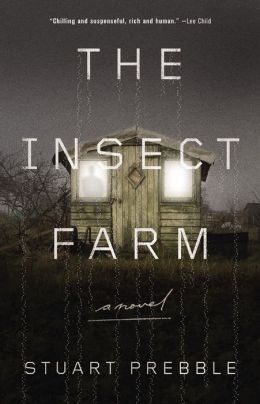
The Insect Farm by Stuart Prebble

A disquieting puzzle starring two odd but loving brothers with distinct fixations.

insect farm

Stuart Prebble’s U.S. debut, The Insect Farm, follows the lives of two devoted brothers, Jonathan and Roger. As boys, they were close, but as they enter adulthood they develop separate passions. Jonathan is obsessed with his stunning, brilliant wife, Harriet, and deeply, disturbingly jealous of the attentions she receives from other men. Roger is consumed with his intricate collection of insect tanks and habitats, housed in a garden shed, where he goes to lose himself for hours on end. Roger is mentally handicapped, and his ability in caring for the insect farm is much greater than his abilities in other areas of his life.

When their family circumstances change, Jonathan leaves university to care for Roger, putting Harriet at a physical distance since she stays in school. From this point, a series of misfortunes and accidents raises faint questions about the minds of each brother, as they age together in quiet companionship.

This unsettling story is told in Jonathan’s retrospective voice, as he looks back on the tragedies that have befallen his family. While each brother is a complex and subtly disconcerting character, this dubious point of view obscures them somewhat, and the reader’s suspicions accumulate.

Suspenseful and ominous, The Insect Farm sketches a world of unstable truths, while posing questions about memory, relationships, perception and intuition. Through Jonathan’s shifting narration, Prebble skillfully evokes an increasingly unnerving atmosphere, as it gradually becomes clear how little each brother really understands about the other–and about himself.


This review originally ran in the July 21, 2015 issue of Shelf Awareness for Readers. To subscribe, click here, and you’ll receive two issues per week of book reviews and other bookish fun!


Rating: 7 cockroaches.

Pretty Is by Maggie Mitchell

Trauma is reborn for the victims of a double abduction, nearly 20 years after their rescue.

pretty is

Two women in their 30s: Chloe is an almost-famous actor barely hanging on to her Hollywood career; Lois is a precocious junior professor with two book contracts. They share a past neither wants known. When they were 12, Lois and Chloe–then known as Carly May–were abducted and held in a hunting lodge in the Adirondacks for a summer before being rescued. This secret, the victimization they just want to forget, comes back to haunt them in Maggie Mitchell’s first novel, Pretty Is.

The action alternates between the present lives of Lois and the reinvented Chloe/Carly May, and flashbacks to the summer they spent with a man they called Zed. They’ve stuck by their story that he never touched or hurt them, not that anyone seems to believe that. Now, Lois’s latest project and a peculiarly disturbed student seem poised to intersect with Chloe’s struggling acting career. The question becomes not what Zed did nearly 20 years ago, but what agency do the adult women have in their own lives?

Suspenseful, quick-paced and action-driven, Pretty Is also wisely invests in character development. Carly May may have been a beauty queen, but she was an intelligent child, too; Lois was a spelling-bee champion and confirmed bookworm as well as pretty, and those lists of spelling words still serve as a mental aid. Mitchell’s greatest strength, however, is in the riveting, magnetic pull of her plot, as the stakes grow higher and Pretty Is rushes toward its finale.


This review originally ran in the July 17, 2015 issue of Shelf Awareness for Readers. To subscribe, click here, and you’ll receive two issues per week of book reviews and other bookish fun!


Rating: 6 text messages.

Forensics: What Bugs, Burns, Prints, DNA and More Tell Us About Crime by Val McDermid

The science of criminal detection from a writer with expertise and connections in the field.

forensics

Scottish crime writer Val McDermid (The Skeleton Road) expands on her considerable experience with Forensics: What Bugs, Burns, Prints, DNA and More Tell Us About Crime. In it, she studies the fields encompassed by forensic science and the large role that such detailed evidence plays in the modern judicial system.

In writing fiction, McDermid routinely consults professionals in law enforcement and scientific experts; here, she delves into their worlds to examine the history and challenges of their work. Chapters focus on crime and fire scenes, entomology, pathology, toxicology, forensic psychology and anthropology, the courtrooms and legal systems of various countries and more. McDermid visits with experts in each of these fields, exploring their personal and professional experiences, which can include trauma as well as deeply stimulating and important work. She also covers specific criminal cases, ranging from serial killings and rape to common burglary, that illustrate the science in question, and offers impressions of her own.

McDermid is not a perfectly impartial judge of the professions she considers; the tone of Forensics is more admiring than journalistic. She provides a great service in reducing complex science to a narrative easily understood by laypersons, and thereby allows fans of television crime drama and detective novels a heightened appreciation of the genre. Details are often predictably graphic, but never gratuitously so, and should be well within the tolerances of murder-mystery buffs. Forensics is an easy-reading introduction to the science behind criminal detection and a fine companion to fiction like McDermid’s.


This review originally ran in the July 17, 2015 issue of Shelf Awareness for Readers. To subscribe, click here, and you’ll receive two issues per week of book reviews and other bookish fun!


Rating: 6 pairs of gloves.

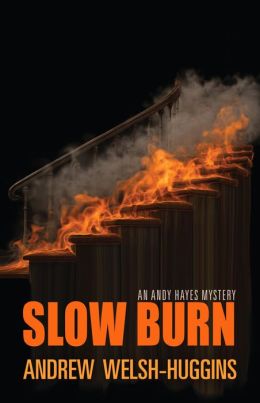
Slow Burn by Andrew Welsh-Huggins

Brisk pacing and a complex plot make this mystery novel a juicy, satisfying thriller.

slow burn

Slow Burn follows Fourth Down and Out as the second Andy Hayes mystery by Andrew Welsh-Huggins. Private Investigator Andy is struggling in both his personal and professional lives when the grandmother of a convicted arsonist/murderer contacts him with a request to clear her grandson, who confessed to the crime. The case looks like a loser, which makes it about right for Andy. This fast-paced, complex mystery will satisfy genre fans, while spotlighting its Columbus, Ohio setting.

…Click here to read the full review.


This review was published in the Summer 2015 issue of ForeWord Reviews.
IMG_4538


My rating: 7 book dedications.

The Savage Professor by Robert Roper

This dark thriller has an intelligent side, and pleases on several levels as the bodies pile up everywhere this professor goes.

savage

The Savage Professor, by Robert Roper, is a complex, scientifically minded whodunit. The professor is Anthony Landau, a formerly prominent epidemiologist settling into obscurity in the hills of Berkeley, California. He has enjoyed escapades and conquests over the years, both professional and in the bedroom. When a series of murdered women starts turning up awfully close to home, he is challenged in new ways.

…Click here to read the full review.


This review was published in the Summer 2015 issue of ForeWord Reviews.
IMG_4538


My rating: 7 balloons.

Hyacinth Girls by Lauren Frankel

A tricky, smart riddle in novel form about bullying and family secrets.

hyacinth girls

Lauren Frankel’s debut novel, Hyacinth Girls, opens when Rebecca puts Callie’s face, along with a provocative question, on a billboard near the high school. A lengthy flashback explains why, in a gradual uncovering of the past. Callie is not Rebecca’s daughter but the daughter of her late best friend, Joyce. The happenings and drama of Callie’s middle and high school years are more troubling than the average teen experience, and have led to some terrible events that call for a billboard. But what exactly happened, and who is the perpetrator and who the victim, and why? These are questions that take the whole book to unravel, with roles reversing throughout. Rebecca’s voice alternates with Callie’s, but not until late in the book, when the reader’s impressions are already formed. The mixing up of clues and the struggle to sort out loyalties results in an unreliable narrator or two.

The story of Callie and her social circle eventually becomes entangled with that of Joyce and Rebecca, when they were childhood best friends. New and old traumas slowly, coyly come out: bullying, suicide, simple mistakes and basic meanness. Betrayals and lies populate the experiences of both generations. In revealing a complex web of family and community secrets, schoolyard bullies and the nature of trust, Frankel nudges her reader to ask questions like the one Rebecca puts on the billboard: Do you know your children?

Hyacinth Girls is a compelling and powerfully evocative novel of friendship and love, deceit and duplicity, and the rough terrain of being a teenage girl.


This review originally ran in the May 26, 2015 issue of Shelf Awareness for Readers. To subscribe, click here, and you’ll receive two issues per week of book reviews and other bookish fun!


Rating: 6 tattoos.