The Gallagher Place by Julie Doar

In this moody debut novel, new and old crimes on her family’s estate in upstate New York force a quietly struggling woman to confront loyalties and conflicts among family and friends.

Julie Doar’s first novel, The Gallagher Place, investigates old and new mysteries within a compelling family drama set in a striking landscape.

Protagonist Marlowe Fisher is an illustrator living on the Upper West Side and a loner, even surrounded by her powerful family and their estate. When she and her two brothers, as adults, discover a body on their property, the case reopens old wounds. Decades earlier, Marlowe’s childhood best friend vanished without a trace. The freshly murdered man and the long-missing teenaged girl do not initially appear linked, but the surrounding community has long harbored suspicions about the wealthy Fishers. Marlowe has always yearned to know what happened to Nora, although that desire presents new conflicts, having come under investigation once again.

The Fishers have always used the Gray House in upstate New York as a weekend and holiday retreat, “a wholesome family sanctuary to escape the crowded city life and the bittersweet pain of growing up too fast. A haven, her father sometimes called it. If that was the case, why did bad things still happen?” And bad things do happen, especially the disappearance of Nora Miller. Marlowe has never had another relationship as meaningful as her friendship with Nora, a local girl and an honorary, if part-time, fourth Fisher sibling, who wished desperately to escape her rural roots. Marlowe feels strongly: “Nothing mattered as much as the two of us.” The loss of Nora has shadowed Marlowe’s life ever since, culminating in a carefully hidden drinking problem.

The recent murder, and accompanying investigation into Nora’s disappearance, is both galvanizing and disturbing. As Marlowe embarks on her own inquiries, more thoroughly than ever before, she not only refreshes old pains but discovers new risks. To search for Nora means to interrogate her own memory, to learn uncomfortable truths about herself and her family, to confront class differences, privilege, and inheritances. This discomfiting process takes place in two timelines, against the backdrop of Dutchess County, N.Y., in the summers of the 1990s (when Nora and Marlowe were teenagers) and in the present winter of 2018. The Fisher property defines Marlowe’s greatest trauma and coming of age; she remains devoted to “the spirit of landscape” that inspires her art. A strong sense of place is central to this chilling novel about old secrets and what one might choose to uncover or keep hidden. The Gallagher Place is dramatically atmospheric, expertly paced, and haunting.


This review originally ran in the October 10, 2025 issue of Shelf Awareness for the Book Trade. To subscribe, click here.


Rating: 7 gifts.

Even Though I Knew the End by C. L. Polk

I’m a big fan of C. L. Polk.

Even Though I Knew the End is romance amid magic and determinism wrapped in a PI novella. (It’s actually a bit of a much-less-dark cousin to last week’s Harmattan Season.) When we meet Helen Brandt, she’s in a Chicago alley attempting an augury, for which she’ll be paid a whopping $50, which she can add to the nest egg she’ll leave her beloved, Edith, on this their last weekend together. The murder she’s meant to investigate turns out much uglier than originally understood, and besides, her augury is interrupted by two members of the Brotherhood of the Compass, a sort of magical professional society from which she’s been barred. Oh and one of them is her long-lost brother (literal). Same-sex love in 1941 Chicago is a challenge unto itself (Helen has friends who have disappeared into insane asylums, for example), as is being a woman in that same setting. Add to that mix angels, demons, souls sold and stolen and earned back.

I loved the historical setting (but plus magic), and the queer speakeasy and community; I loved the femme fatale / gorgeous-but-dangerous-dame sort of character, and found Edith’s religious devotion an unexpected twist. Again (and in such a short time span for this reader) I met some classic or traditional elements of a noir tale, mixed up with new ones. I heard echoes of Chuck Wendig’s Miriam Black. But where Harmattan Season was grim, Polk offers hope – however bittersweet and limited – for a happier ending. As smoke-shadowed as this world is, Even Though I Knew the End is also deeply sweet in its romantic element.

I felt that those Polk shorts I read recently offered varied degrees of success with the shorter format – meaning, some felt a bit more complete or fully realized than others. Many writers, I’d venture, get trained in the novel-length form, and/or have the most reading experience in that length; masters of the short story seem fewer than masters at the novel. (Am I reaching? Do you agree?) I don’t know if that shorter form is harder, or just a place where we tend to get less experience. At any rate. If Polk was experimenting with highly enjoyable but imperfect success in those shorts, here I feel they have achieved something pretty perfect, fully realized, in these 133 pages. Which is not to say I don’t want more of Helen (and Edith) – I very much do. But Helen’s days were always numbered; maybe this is all we get.

Plenty gritty but still sweet, masterfully complete in a small package, with period detail and imaginative flair–I love this story and will follow Polk wherever they may lead next.


Rating: 9 perfect cups of coffee.

Harmattan Season by Tochi Onyebuchi

My first Onyebuchi is an interesting one to characterize as to genre. Harmattan Season is a PI story with some classic noir elements: protagonist Boubacar is down on his luck, a little self-sabotaging, unsure of what he’s working toward, fighting some old demons and secrets. It’s historical fiction, set in a West African nation under French colonial rule in a not-quite-modern timeline. It’s fantasy, or speculative fiction: there is magic afoot. One could argue it’s dystopian, but the colonial rule bit kind of covers that already.

Onyebuchi has a firm grasp of pacing and suspense, and Bouba is a compelling central character. He’s mixed race, or deux fois (“two times”), half French and half indigenous, and struggles with that identity: does it mean he gets part of each of two worlds? Or none of either? Does he fit in a little bit everywhere, or nowhere at all? The reader will learn slowly that his in-between status is further indicated morally by some of his past actions.

“Fortune always left whatever room I walked into, which is why I don’t leave my place much these days.” In the opening scene, Bouba is awakened in the middle of the night by banging on his front door. A woman stumbles in, holding a bleeding abdominal wound. She asks him to hide her; he does, as the police arrive next. One of them, it turns out, is an old associate of Bouba’s – you might even say a friend, or the closest thing he has. They leave. The woman has vanished. Unpaid, Bouba spend most of the rest of the novel trying to solve the mystery of the bleeding woman: who she was, what happened to her. He will uncover many layers of intrigue, wrongdoing, and attempted corrections, in spheres both political and personal.

I think a better grasp of West African history and politics would have given me a deeper understanding of some plot elements – and some linguistic background might have helped as well. There were a few unfamiliar words, some of which I got from French (like deux fois), some of which seem to belong to Onyebuchi’s fictional world (dugulenw), but some of which are not his invention (like the title’s harmattan, a dry seasonal West African wind). How many of the latter, or how many slight variations or references, did I miss? This is a good example of how reading ‘the other’ can be a bit more challenging but also why it’s important to do it. I’m just noting where I might have missed some nuance. Partly, I think, for this reason, I had a slow time getting engaged with the momentum of the plot, but we got there, and I wound up feeling involved with Bouba’s wellbeing and that of the community he gradually decided he belonged to.

I think Onyebuchi is a skilled writer with a fascinating and fresh take on genre intersections, and I’m curious about what else he’s done.


Rating: 7 apples.

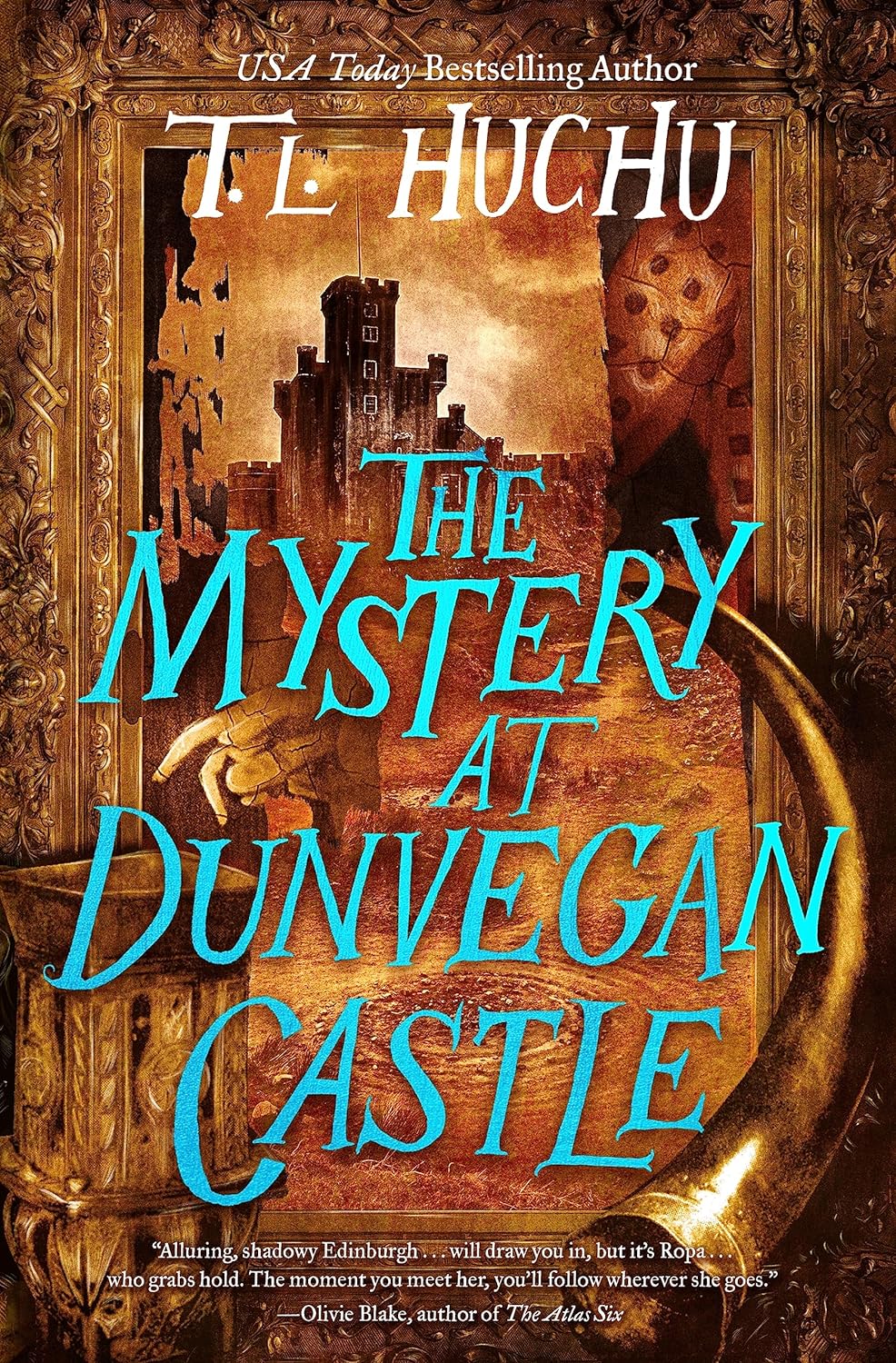
The Mystery at Dunvegan Castle by T.L. Huchu

Book three of Edinburgh Nights (The Library of the Dead; Our Lady of Mysterious Ailments) might be the best yet. Ropa is still pushing on in her unpaid internship for the Society of Sceptical Enquirers (or rather, its secretary, her patron, Sir Ian Callander), and at this book’s start, she finds herself at Dunvegan Castle on the Scottish Isle of Skye, assisting with the biennual conference. This should be low-level drudgery, but Callander is good about keeping Ropa handy; and anyway, events quickly take a turn for the unusual, necessitating Ropa’s special skills in solving mysteries. A prestigious Ethiopian magician comes to visit, a priceless ancient scroll (valued both as an antiquity and for the secrets it contains) is stolen, and a librarian – Ropa’s favorite, in fact – is murdered. And our young hero is on deck to save the day. But where she has some experience solving crimes and battling magicians, here at Dunvegan she might just be outclassed. Everybody on site except Ropa, it seems, is a professionally trained magician. Academia and the Society have turned out much less virtuous than she’d imagined. With the written advice of Niccolò Machiavelli running through her mind, Ropa decides she can trust no one. Even her heroes are suspects.

This might be the saddest in the series, as Ropa becomes disillusioned with the society and the Society she had been so keen to join. We continue to admire her for her own strong morals, even if standing on principle sometimes gets her in arguably unnecessary trouble. But her ideals are shaken as she finds out that the people she’d looked up to are fallible.

That said, it’s a great story, expertly paced and compelling, with characters we care about. And I was thinking this was a trilogy, but this book ends on a hell of a cliffhanger, and I’m glad to see there are four published books in the series with a fifth due in December! So I’m pleased to be hooked by Huchu’s singular and unforgettable young ghostalker-turned-investigator. Get on board.


Rating: 8 servings of cranachan.

Our Lady of Mysterious Ailments by T.L. Huchu

At the start of book 2 of the Edinburgh Nights series, young Ropa Moyo thinks she’s got a big break with an apprenticeship at the Society of Sceptical Enquirers, working directly with Sir Callander, Scotland’s top magician. But in the opening scene, her apprenticeship is downgraded to an unpaid internship. The big shots who work highly regarded “scientific magic” in this culture see this as a role with honor and opportunity–Callander has not taken an intern in many years–but Ropa is not exactly a member of that rank of society. She and her Gran and little sister Izwi live in a slum, in poverty, and Ropa is their sole wage earner. She cannot afford “unpaid.” (Race is not a very ‘forward’ issue in these books, but Ropa’s family is originally from Zimbabwe, and those roots influence the style of magic she’s learned from her Gran and which puts her a bit at odds with the establishment.)

Luckily, her buddy Priya has the lead on a side job: figuring out the nature of illness for a young patient at Our Lady of Mysterious Ailments. And, because Ropa is resourceful and always hustling, another mystery presents itself as well, one that might actually come with a serious paycheck. (Our protagonist is always worried about medications and medical care for Gran, and schooling for the precocious Izwi.) Chasing one puzzle and another, trying to impress the society and keep her family afloat, hard-working Ropa alternates between hopefulness and despair. Interestingly – and in a departure, as far as my memory serves, from The Library of the Dead – the case(s) here are tangled up with Scottish history and old wrongs.

Ropa’s unmistakable, unforgettable narrative voice is a big part of the charm to these novels. She offers a mix of a sort of classic, hard-boiled detective’s cynicism with a teenaged variety of same, and a youthful (not quite naïve) optimism, with both sardonic wit and earnest love for her family and friends. There is significant slang to season that combination to boot. I’d recognize Ropa anywhere, and although I have to look up the odd word, I’m always stimulated, intrigued, and entertained.

I hope it goes without saying that I’m all in for book 3 of this trilogy.


Rating: 7 movie posters.

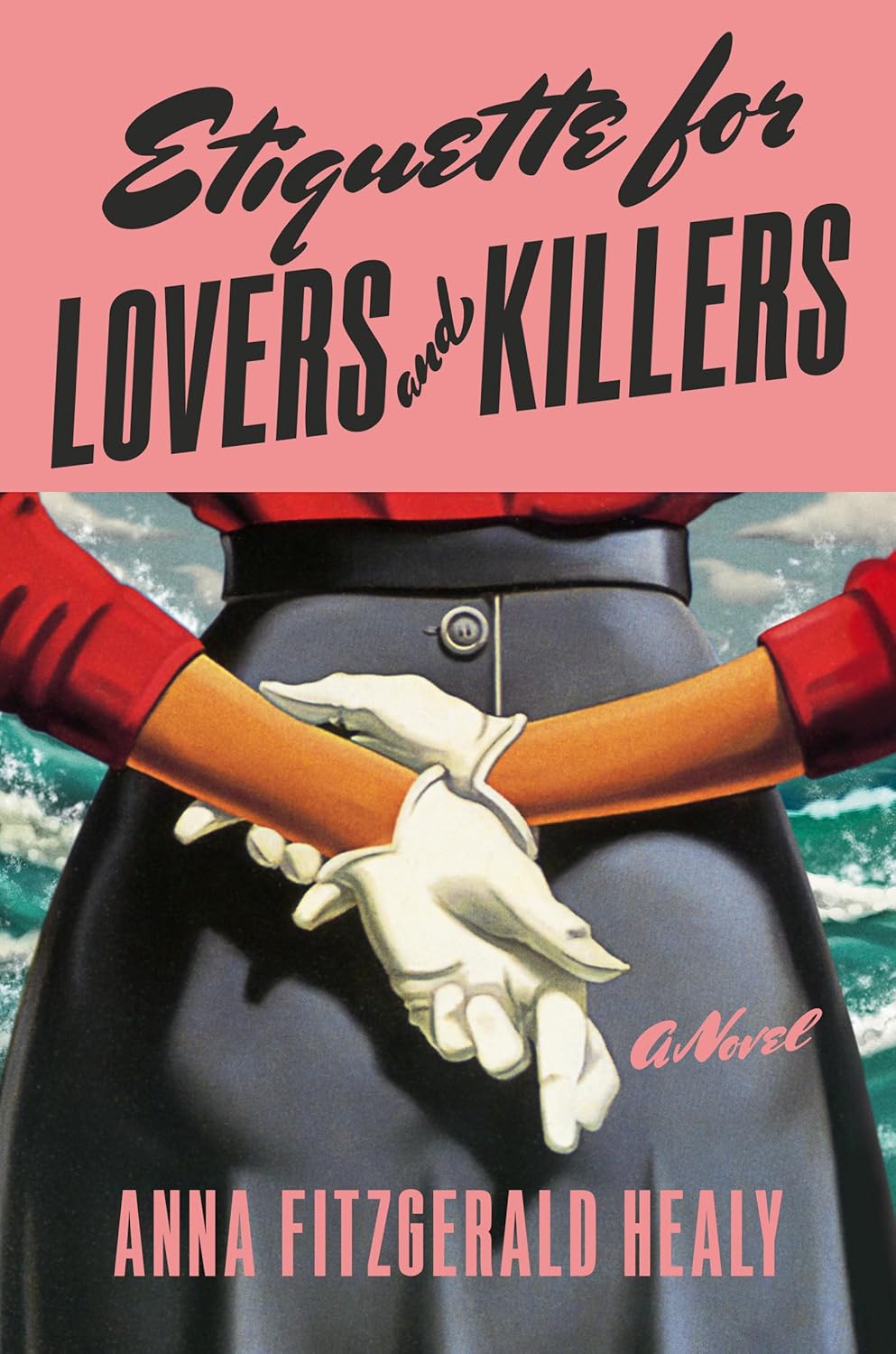
Etiquette for Lovers and Killers by Anna Fitzgerald Healy

A bored townie in 1960s Down East Maine comes into her own when both romance and a series of murders enter her orbit.

Anna Fitzgerald Healy’s debut novel, Etiquette for Lovers and Killers, is a darkly humorous, lighthearted romp of a mystery set in mid-1960s Down East Maine with an unusual heroine. Billie McCadie is a townie in Eastport, on Passamaquoddy Bay, where “fishermen squatting in trailers” abut “Vanderbilts languishing in mansions.” She’s never felt at home with the other locals, who fail to appreciate her sarcasm or her ambition to study linguistics and work in a museum. “I’ve grown up listening to their sock-hop hopes and Tupperware-party dreams, but my aspirations don’t fit in a casserole dish.” Since the tragic death of her parents, Billie, a “twenty-six-year-old virgin,” lives with her grandparents and works as a seamstress at Primp and Ribbon Alterations. Her great thrill, aside from the novels, dictionaries, and etiquette manuals she loves, is checking her post office box for rejection letters responding to her many employment applications to museums around the country.

But then comes the fateful summer when Avery Webster notices her. Billie receives an envelope containing a love letter to an unknown Gertrude, along with an engagement ring. She is invited to a solstice party at the fabulously wealthy Webster family’s estate, where she discovers a freshly murdered corpse–Gertrude. Avery has the potential to be Billie’s first taste of romance, but the strange communications pile up, along with the bodies, in sleepy, previously crime-free Eastport. And Billie leaps into all of it, because “Who needs a life when you’re busy investigating a murder?”

Billie’s wry narration of these events is peppered with wordplay and the occasional footnote commenting (still in Billie’s voice) upon the etymology of “home,” “love,” and “tuxedo.” Chapters are prefaced with relevant quotations from the book of etiquette that belonged to Billie’s mother, which emphasize that even amid a murder case, a sex scandal, and a budding romance, in 1960s Eastport, one must be mindful of appearances and manners. Billie’s never been in such danger, but she’s also never had as much fun, finally coming into herself, gaining confidence, and learning what she might want from life aside from a museum job: “So what if I’ve ended up in a Highsmith rather than an Austen? I’m the main character, and I need to start acting like it.”

Stylish, playful, and more than a little tongue-in-cheek, Etiquette for Lovers and Killers blends intrigue and romance into a perfect cocktail. Billie herself offers a delightful combination of bookishness, wit, and questionable decision-making that will keep readers on edge until the final pages. Healy’s debut is good, not-so-clean fun.


This review originally ran in the May 19, 2025 issue of Shelf Awareness for the Book Trade. To subscribe, click here.


Rating: 6 stilettos.

The Library of the Dead by T.L. Huchu

I forget where I came across this first in a series, but I’m glad I gave it a go. Set in a magical post-apocalyptic Edinburgh, The Library of the Dead stars Ropa, a teenaged ghosttalker: she is licensed to visit with the dead, a rare skill, and carry their messages back to the living, for a fee. She can also help (or force) ghosts to move along to “the place with long grass,” where we’re all headed once we find the peace to go. Ropa considers herself unsentimental: this is all about earning a living, which she uses to support not just herself but her younger sister Izwi and her beloved Gran, a more powerful magical practitioner but who these days is mostly reduced to knitting in their cara (caravan, or what we’d call in the US a trailer). Their existence is tenuous, which is why Ropa at first refuses when she meets a ghost who asks for her help but cannot pay.

At Gran’s insistence, Ropa eventually agrees to help Nicola (dead) solve the mystery of her missing young son Oliver (not dead, yet). As she takes a break from paying work to investigate, she’s glad to have the reluctant help of her old friend Jomo, who now works at a library that he doesn’t want to talk about. Jomo is from a better-off family: he’s been able to stay in school, for one thing. Ropa is a serious autodidact, listening to audiobooks as she makes her rounds; she is forever exclaiming that school doesn’t matter and she’s not the least bit sorry, but the reader can tell how much she feels the lack. We also observe what a clever self-study she is, however, as she repeatedly quotes Sun Tzu and summarizes and meditates upon the philosophies of magic she gains new access to…

…because Jomo’s secret new workplace is the library of the dead. When he sneaks Ropa in and they get caught, the consequences are dire – she is initially sentenced to hang from the neck until she is dead, but (in a whirlwind scene) instead gets drafted as a scholar, with the privilege of book borrowing. That, and she makes a new friend, Priya, a far more advanced student of magic. With two friends behind her now, but still very much with her own life (and livelihood) on the line, Ropa follows the cold trail of Oliver’s disappearance to some surprising and disturbing intrigues and evils.

Ropa is a certain kind of heroine: actually quite caring, although she wouldn’t want you to know it, and deeply committed to her family and friends, she rides a bicycle (when it’s not been stolen) and plays the tough, but really just wants to snuggle up on her berth with Izwi and Gran and watch some good telly. She carries a katty (or slingshot – I finally figured out that this is short for catapult!) and a dagger, has a pet fox named River, and she can take a punch. Priya is a delightful addition to her crew who I hope we’ll hear more from. Jomo is perhaps a bit bumbling, but very loyal. Their world is a bit mysterious: they have electrical power, but not running water or sewage; they have cell phones (and can talk to ghosts!) and television, but not climate control. They are ruled by a king. It sounds like there was an event that broke the world, leaving us with a before and an after, but we haven’t yet learned what that was.

The worldbuilding may be less thoroughly detailed than some in some fantasies; but maybe I just haven’t gotten there yet. At any rate, I’m engaged by the strongly-felt characters and their values, the magic, and Gran’s knitting. This is book 1 of 4 and I am ready for more.


Rating: 7 desiccated ears.

The Case of the Missing Maid by Rob Osler

I thought this one was good fun, with a perfect ratio of good values blended in. It’s an amateur-sleuth sort of mystery: in 1898 Chicago, Harriet Morrow seeks to improve her lot in life (earning potential and freedom, both) by applying to work as a detective at the Prescott Detective Agency. Female detectives are quite rare, but the Pinkertons had one recently, and why not Harriet? With her unadorned clothing style and men’s hat and shoes, Harriet already turns heads; she may as well pursue a path that feels more natural than the secretarial pool. And she has a household to support: since the death of their parents and Harriet’s coming of age, she cares for her sixteen-year-old brother as well as herself at just twenty-one years.

The Prescott Detective Agency takes her on, but no one seems exactly to expect her to succeed. The case she’s given first is a bit of a dud: her boss doesn’t believe it for a minute, but his elderly next-door neighbor claims her maid has gone missing, and to mollify his wife (who loves the old woman) he asks Harriet to look into it. Surely the maid has merely taken an extra day off, or the old neighbor lady is senile to begin with. But Mrs. Pearl Bartlett turns out to be a firecracker: unconventional, perhaps a bit like Harriet herself, not a bit dim, and very sure of Agnes Wozniak’s disappearance. She also has misheard our protagonist, and misread her large stout frame and men’s hat: she calls Harriet Harry, and the nascent detective finds she likes it.

Unfortunately for Agnes, but rather fortunately for Harriet, the maid does indeed appear to be missing, and quite possibly in real danger. Harriet has herself a case, and a chance to prove herself, although she is very much learning on the job; she has lots of moxie, and a certain amount of natural instinct, but there is much about the work of detection that she’ll need to figure out. Luckily, the Prescott Detective Agency offers one friendly face: Matthew McCabe seems willing to help. Armed with a mentor (and eventually, properly armed), Harriet will learn her new profession, hopefully find the missing maid, earn a proper living for herself… and maybe learn a bit about underground queer Chicago along the way.

The historical aspects to this novel were great fun, even when frustrating, from Harriet’s clothing conundrums (she does not like women’s styles. but doesn’t really want to impersonate a man. but their options are just so practical, comfortable, and natural feeling…) to the infuriating dismissals she faces from pretty much everyone around her. I was especially delighted to lean into not only a historical inner city Chicago, populated by immigrants and the working class, but a queer underground, including their nightclubs and practices and (nearly literal) secret handshakes. I really appreciated Osler’s Author’s Note, where I felt he did a good job of clarifying what came from research and what was just fun to invent. Terminology, for example, can be difficult: folks we might recognize as queer or as lesbian today would have been less likely to use those terms in 1898. A nightclub that hosted both drag queens and drag kings for the same event is perhaps a bit of a stretch, but it works so beautifully here, both for plot and for fun.

I loved the mystery story itself, and absolutely fell for Harriet, the awkward but admirably strong woman at the lead. I loved the history and the queer framing, and especially that intersection. Just a hell of a tale all around; I can’t wait for more Harriet Morrow. Could hardly put it down; nonstop fun; do recommend.


Rating: 8 silver bells.

Mask of the Deer Woman by Laurie L. Dove

A disgraced police detective takes a job as tribal marshal to pursue the mystery of a series of missing women, but has trouble seeing beyond her own lost daughter.

Laurie L. Dove’s atmospheric, frequently grim, and emotionally charged debut, Mask of the Deer Woman, features a former police detective trying to outrun her old life by taking a job as tribal marshal on an Oklahoma reservation. Carrie Starr is half Indigenous, but out of touch with that part of her personal history. Tasked with solving the cold cases of a growing number of missing Indigenous women and girls, she is inclined to focus instead on her own lost daughter.

Marshal Starr is the novel’s protagonist, but Mask of the Deer Woman‘s chapters shift among various characters, beginning with Chenoa Cloud, a college student from the rez who is determined to prove the presence of an endangered beetle on her tribal grounds. Documenting an endangered species promises to earn her funding and a job–a way off the rez for good, and not like the others “who left and never came back, or who couldn’t come back.” Chenoa’s disappearance into the Saliquaw Nation’s backcountry sets the stage for Starr’s arrival. The Bureau of Indian Affairs job is a last resort for Starr, and not one she relishes, but her daughter’s murder and the man she subsequently gunned down ended her career as detective. Trading on her late father’s Saliquaw identity earns her a poorly appointed cinder-block office, a BIA-issued, broken-down Ford Bronco, and the locals’ distrust. She carries a bottle of Jameson in her backpack and under the Bronco’s front seat, and a joint in her shirt pocket. Each missing young woman blurs into her daughter, and she flinches away from “the terrain she’d have to cover in the process. The dark space of whatever was out there. Caves. Old mines. Her own mind.”

Beyond the intoxicants she takes to escape her pain, Starr is knocked off-balance by tales of the Deer Woman. Part monster, part avenging angel, part capricious force of nature, this legend seems to follow the disoriented marshal, although the boundaries between magic, hallucination, and self-medicated grief are unclear. To boot, the rez is at odds with the nearest town, and the tribal council must field a controversial proposal to frack for oil, with associated infrastructure. Political and commercial machinations accompany the missing women and the struggling tribal marshal in a novel of grief, violence, community, empowerment, and pain.

This dark mystery will thrill readers and immerse them in a powerfully portrayed world of great losses and high stakes.


This review originally ran in the October 25, 2024 issue of Shelf Awareness for the Book Trade. To subscribe, click here.


Rating: 6 blue jay feathers.

The Greatest Lie of All by Jillian Cantor

A young actress takes on the role of a glamorous romance author and gets more mystery–and romance–than she’d reckoned for.


The Greatest Lie of All by Jillian Cantor (Half Life; The Hours Count; Margot; The Lost Letter) is a propulsively paced story of intrigue, romance, and suspense starring two women a generation apart navigating family, love, secrets, and art. In one of their several parallels, each uses a professional pseudonym, so that four names delineate these two character arcs.

Readers meet the young, up-and-coming actress Amelia Grant just after the death of her beloved mother, and in the moment when she discovers her actor boyfriend in bed with his costar. At this low, Amelia is primed to accept her biggest role yet: to play the fabulously successful romance author Gloria Diamond in a biopic. Gloria had been Amelia’s mother’s favorite; it feels like a sign and a way to be close to the mother she’s lost, the only person who had called her by her birth name, Annie.

Heartbroken but determined, Amelia travels from Los Angeles to Gloria’s remote Seattle-area home to get to know her subject before filming begins. But “the Gloria Diamond” is distinctly unfriendly, cold, and dismissive. Even as Amelia finds a tentative friendship with Gloria’s son, Will (“cute, in an academic kind of way”), she despairs at ever understanding what makes the older woman tick. Gloria’s career was built on her famous, brief romance with her late husband, Will’s father. But the more Amelia learns, the less convincing that story is. She embarks on an informal investigation fueled by shadowy motives: her desire to play a “true” Gloria Diamond; her curiosity about the nature of love, especially as her mother so appreciated it in Diamond’s fiction; and Will’s reluctant desire to understand his mother. As she pursues the history of the author once known as Mary Forrester–Mare to her friends–Amelia begins to wonder about her own role in the drama unfolding before her.

In chapters that shift between Amelia’s perspective and that of the young Mare, The Greatest Lie of All shines in its plot twists and surprises, and, most of all, its pacing, which accelerates from a slow burn to a heart-thumping momentum. The tension increases, stakes rising as Gloria/Mare and Amelia/Annie must reckon with their pasts to chart their shared present. Danger accompanies every possibility of romance, and family history matters more than it originally appears. Cantor’s experienced hand shows in this classically crafted thriller, which will keep its readers tautly engaged to the final scene.


This review originally ran in the September 24, 2024 issue of Shelf Awareness for the Book Trade. To subscribe, click here.


Rating: 6 glasses of wine.