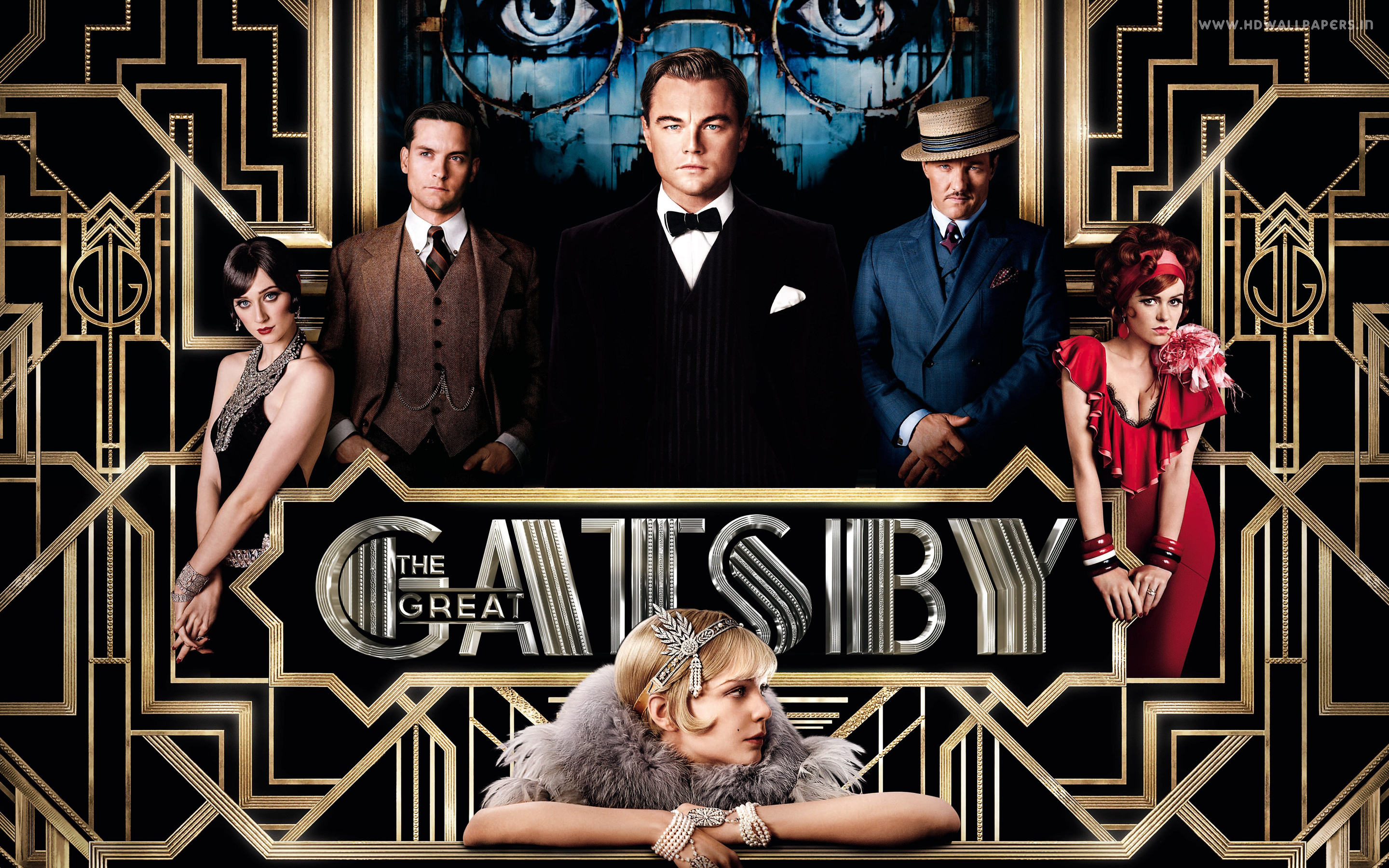
movie: The Great Gatsby (2013)

Well, we finally got around to it! Sadly, my friend Justin and I missed this one in theaters; I think it would have been oustanding on the big screen, but Justin has a large-ish screen at home too, so we did okay.

My first comment on this movie is that it is wildly visually pleasing, and impressive, and extravagant – much like the Roaring 20’s.

photo credit (click to enlarge)

photo credit
(click to enlarge)


The spirit of Gatsby’s parties, the lavish lifestyle, is well evoked. Actually, I am impressed with the faithfulness to the book in story, too; it’s been years since I’ve read it, so I may be missing the minor details, but the feel was right. Perfectly rendered are the beautiful women in outrageous costumes, with a tendency to turn their heads just so to catch their lovely profiles; Gatsby’s larger-than-life personality and biography, and his arresting discomfort in the shadow of Daisy’s presence; and Nick’s own retiring persona. There is a framing element added to the movie that was not present in the book; it’s a little unsettling for us book-purists, but minimally so, and I think I can understand how it felt necessary, to explain Nick’s narration.

And oh, did I mention the visual appeal? The women, the clothing, and the outrageous parties – not to mention Leonardo DiCaprio himself as Gatsby – are positively eye candy. Leo is at his best, exhibiting the boyish, almost childlike charm we knew him for in earlier years (singularly in the scene involving the shirts – “they’re such beautiful shirts”), an older man’s brooding, and all the rest of his handsome faces. It was easy to get lost in some of the scenes and scenery. The film is clearly color-enhanced; I’m no expert and can’t explain this, but the color is clearly doctored. This adds to a fairy-tale-like feeling throughout, which is not faithful to the book, but somehow works. In this different medium, the larger-than-life effect feels like the proper analogy to Fitzgerald’s book. Towards the sad ending, the movie transitions to the disaffected tone of the book with perhaps some abruptness. But really, it’s a damn fine job – and gorgeous.


Rating: 8 beads.

movie: Pedal-Driven: A Bikeumentary (2011)

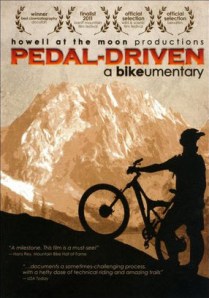
pedaldrivenI can’t remember who told me I needed to see this film. Thank you, whoever you are.

Pedal-Driven is a documentary about the relationship between mountain bikers and the US Forest Service, regarding the former’s right or privilege to recreate on public lands. The conflict is fairly well summed up early on: public lands are our lands, so we want access to do what we like on them; but on the other hand, we (mountain bikers or mtbers) are not the only user group in “the public,” and even beyond present-day users, the USFS (Parks services, etc.) feel a responsibility to a future public as well. Therefore the needs/wants of today’s users (mtbers and others) are balanced against a need for conservation and preservation.

The USFS doesn’t want to be entirely anti-mtber, but they can’t condone the practice of building trails on public land without permission; this is illegal. But what is a mtber to do? To go through the proper channels is a 5, 10, or even 15 year process; at some point, we’re building trails for our kids to ride, which is nice for them, but who knows if we will get to ride those trails at all. Then again, builders of illegal trails risk having their work torn down at any moment.

While I’m not particularly on the side of illegal activities – and illegal building of anything on public land rubs me the wrong way – I sympathize with the mtbers, obviously, as I am one myself and understand the desire for trail to ride. Without trail, we can’t be mountain bikers. As I summarized them in my first paragraph, all those user groups indeed deserve their rights and their voices being heard. It’s a sad quandary. This film was in danger of just depressing me, early on, with the stalemates portrayed (centrally in Leavenworth, Washington, not far from where my parents have recently settled; also in the loss of trail systems in Montana). But it does circle back around to success stories like those in Oregon; hope is not lost.

I will say that, for me, one weakness in this film is in its specificity to freeriders. Freeride is mountain biking that involves jumps, tricks and stunts; it generally requires what we call “structures” (bridges, dirt jumps, big constructed berms, skinnies, teeter-totters), and structures are a good part of the USFS’s problem with illegal builders. Don’t get me wrong; they wouldn’t let you build natural-surface trail, either, but I think it would be less offensive than the construction in question. To give you some idea:

freeride(photo credit)

freeride, from the film (photo credit)


bridge work (photo credit)

bridge work (photo credit)


wooden berm (photo credit)

wooden berm (photo credit)


Talking about building freeride-style trail with structures, then, is a certain kind of conversation. And it has left out the even larger group of cross-country (XC) mountain bikers: this activity is performed generally on natural-surface trails (bridges thrown in for function – to cross a stream or gulley – rather than for the chance to catch air), and keeps the rider mostly on the ground or close to it. XC riders look different from free-riders: no full-face helmets, different bikes, even sometimes brightly-colored spandex. These are generalizations, and there are exceptions, and there’s crossover between the two groups; but the point I’m trying to make is that as an XC rider, myself, I felt a little left out of the story that this film tells. And that’s a shame; because really, we face the same challenges in using public land, in trail construction and access and our relationship to the public and the government. I would have appreciated a little more inclusive story being told here. On the other hand, maybe there isn’t such a story about XC riders – maybe our conflicts haven’t been played out so dramatically or on such a scale, or such a stage. I’m honestly not sure. And I haven’t been deeply involved in advocacy battles as of yet (except on a local scale where I’ve done some volunteer trail work), so I want to be clear, I’m not criticizing the fine folks portrayed in this movie. Their work can only benefit my kind of rider, too. And you never know, I may find myself in a full-face helmet high up in the air one of these days too! Who knows what the future holds?

As a film, I found Pedal-Driven to be very well put together and visually impressive. I had a few minor gripes with the soundtrack (some of it was great!), but you can’t please them all in that respect! I enjoyed seeing the riding, and I ended up on the hopeful side regarding access and advocacy issues. Most of all, I’m super glad that these issues are being discussed. So thank you, Howell at the Moon, for this movie! It makes me want to ride my bike!


Rating: 7 feet of air, of course.

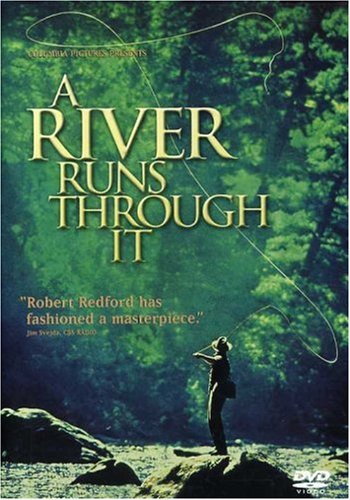
movie: A River Runs Through It (1992)

rivermovieI was pleased when Husband found this movie for me the other night. I enjoyed the book by Maclean so much, and I had heard good things about the movie. Robert Redford’s involvement speaks well, too.

First of all, this film is very visually pleasing; the scenery is lovely (IMDB says it was shot in Montana and Wyoming – not onsite in Missoula, but convincingly nearby), the fishing scenes are appropriately peaceful, and the actors are attractive. Thank you, Hollywood, for a typical, unrealistic portrayal! Although Paul Maclean in particular was supposed to be a very good-looking young man; and whatever your feelings about Brad Pitt, I don’t think you can argue that his role as Paul is less than gorgeous. (See below.) Also pleasing are the glimpses of 1920’s flapperdom, particularly in the character of Jessie Burns (later Maclean’s wife), who is charmingly represented.

young Brad Pitt

young Brad Pitt

The film opens and closes with Norman Maclean as an old man, fly-fishing, accompanied by a voiceover (by Robert Redford) quoting from the book. This is appropriate, and effective. Otherwise, the film’s connection to the book comes and goes. The Maclean family onscreen is quite faithful to the Maclean family of the novella (although I found the Reverend a little friendlier in the book than in the movie), but the action diverges often. I missed the couple that happen upon Paul’s masterful fishing in the book, but at least the scene is represented in the film. I was perhaps most thrown by the scene in which the Maclean brothers take a daring whitewater trip in a “borrowed” boat; I could feel how disconnected this section was from Maclean’s own writing, and indeed, it felt out of character with the brothers as I knew them from the page. Coming early in the movie as it did, it was even more disjointed for me. When the fishing trips (two of them) with Jessie’s brother take place in the book, Norman and Jessie are already married; in the movie, they’ve just begun dating, and there’s only one scene. It is, however, well represented with both humor and outrage.

As of course is standard in book-to-movie adaptations, we get less in the film than we did on the page. Naturally I missed the parts we lost, because I loved the book so. This is to be expected. Part of what I missed was the immersion (no pun intended) in the world of fly-fishing that Maclean brings so fully to life, in such an interesting manner even to those of us who don’t care much for fishing. The depth of all the characters also naturally loses some development in a 2-hour movie. All things considered, this was an enjoyable movie – for its natural landscapes, peaceful yet tortured tone, and familiarity with the Maclean family of whom I cannot get enough. It doesn’t do the book justice, but no movie could, so I won’t hold much of a grudge for that.


Rating: 6 trout.

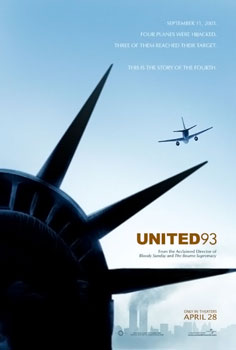
movie: United 93 (2006)

I hesitated to contemplate before writing this movie review. 9/11 remains a charged, sensitive, and controversial subject in the United States; I believe the same is true worldwide, although presumably in a different sense and perhaps to a lesser degree. I can only speak for myself and, less so, for the country where I live; less still for the rest of the world. I’ll do my best here.

United 93 was released in 2006 and tells the story of United flight 93, the 4th hijacked airplane on 9/11, which was taken down by the passengers in a field in Pennsylvania. It shows the first three planes go down, and then follows UA93 in real time up to the finish. As Rotten Tomatoes notes, it’s “even more gut-wrenching because the outcome is already known.” If nothing else, a far less impressive movie than this one would be emotionally harrowing for anyone who can remember that day, I think, regardless of your politics or complicated reactions to the unfolding and varied understandings of what’s happening in our world and why; I believe a basic human reaction is horror.

I’ll say in a nutshell: I think the movie is well done. There are qualifications coming, but to start, it is a moving experience, the acting is convincing, and the drama is fully wrought.

My greatest concern while watching this movie – about which I knew nothing; I wasn’t even aware it existed until Husband put it on – was the level of respect given to surviving families, and the faithfulness to the real people involved. My brief research after viewing* indicates that director Paul Greengrass (great name) put in some effort to authenticate his characters, working out clothing and reading material and giving actors opportunities to study their characters’ lives and habits. This is good; this is what I was looking for. It won’t be perfect, of course. This being Hollywood, all the people are more or less beautiful (they don’t seem to produce a great many ugly actors), which I doubt (with all respect) was true of the real passengers on that plane. And Wikipedia states that ” there are some notable exceptions” to the victims’ families’ cooperation with the film; however, the source cited for that line of text says that “filmmakers said ‘Flight 93’ had the cooperation of all the families of the passengers who died on the flight.” So, I’m confused. Who cooperated and who didn’t? I don’t know and I’m not trying to make this into a research project; I’m simply pointing out some ambiguity. Further, there’s the controversy over the German passenger’s portrayal: read about it here.

Another chief concern is the commercialism: this movie was made to turn a profit, right? IMDB notes in its trivia section that “the filmmakers donated a percentage of the opening weekend proceeds to the Flight 93 memorial near Shanksville, Pennsylvania. The actual amount donated turned out to be $1.15 million.” However, I would bet that somebody still made a buck; and that obviously leads us to some concern. On the other hand, what’s more American than making a profit from every last thing that happens to us or anybody else?

What I’m getting at is this: to make a movie about 9/11 is a wildly challenging, potentially dangerous undertaking, bound for controversy. I find it a curious phenomenon. A number of movies have been made; this is the only one I’ve seen. (I’m going to read Extremely Loud and Incredibly Close one of these days, though.) I’d like to go back to my nutshell statement that this is a moving and well-done movie, not without some concerns, and owing much of its moving nature to its subject; but it earns the “well-done” part itself. I would recommend it with some reservations to someone interested in watching a movie about 9/11, but not everyone will be. I am about as removed from this tragedy as an American can be – I didn’t lose anyone I knew; I don’t even think anyone I know lost anyone – and I still found it pretty painful. So, exercise caution.

Finally, and I think this is obvious, this movie assumes that Americans are good and the passengers that wrestled the plane to the ground were heroes. The second assumption is pretty firmly rooted; the first offers room for debate. Within the United States, we’re so numb to these assumptions that we hardly notice them; but the comments on IMDB, for example, make clear that different parts of the world quite naturally react differently to 9/11 and to this movie. Noted. The world is a complicated place and very few things are cut’n’day or black’n’white. You can take it from there, I think.


Rating: 7 audio transmissions.

*Rotten Tomatoes, IMDB, Wikipedia, The New York Times, Atlantic Review

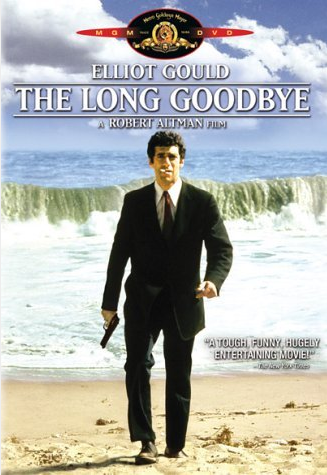
movie: The Long Goodbye (1973)

longgoodbyeThis 1973 film is based on the 1953 book by Raymond Chandler, which I read so long ago (and apparently pre-blog) that I don’t entirely trust my recollections. I’m pretty sure there are significant divergences in movie form from the plot of the book – what else is new.

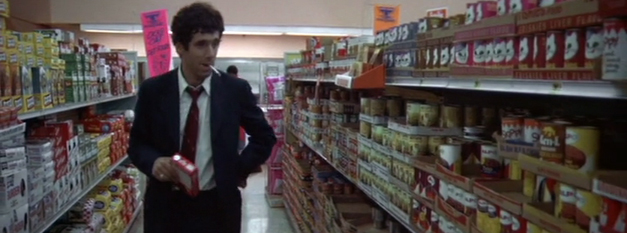
Raymond Chandler’s 1940’s-50’s private detective hero, Philip Marlowe, has been updated here to fit into 1970’s Hollywood. In the opening scene, Marlowe is awakened by his cat, who insists on being fed at 3 in the morning; upon awakening, the first thing Marlowe does is light up a cigarette, an action we will see repeated ad nauseam. (Husband and I guesstimate that at least 50 cigarettes are smoked in this movie by Marlowe alone. The only times he’s not smoking are when he’s lighting up or in police custody.) He then heads to the 24-hour store for cat food. Still smoking.

and brownie mix, for the hippie neighbor girls

and brownie mix, for the hippie neighbor girls

Marlowe’s friend Lennox asks for a ride into Tijuana following some trouble with his wife; after performing this favor, the cops show up to inform Marlowe that Lennox had just killed his wife, an accusation that Marlowe does not believe. Likewise Lennox’s apparent suicide in Mexico a few days later. Meanwhile, Marlowe takes a case from a ritzy blonde wife of a temporarily missing alcoholic writer who is so Hemingway:
hem
This couple, the Wades, turn out to be tied up with the now-dead Lennoxes. Marlowe’s old-fashioned loyalty to his friend is poorly rewarded. He loses his cat. It’s a sad story.

Despite numerous plot changes from the novel (Wikipedia agrees), and the notable reset to 1970’s California, including violent gangsters and a young Arnold Schwarzenegger I had trouble recognizing, I thought this movie did faithfully reflect the iconic character of Philip Marlowe. I liked the humorous addition of the hippie neighbor girls (topless, with the candles and their yoga, a great distraction to Marlowe’s male visitors) and the (less humorous) gangsters, too. The ending in Mexico was the greatest divergence from the novel but I can appreciate it. Overall, a real win: this film keeps the spirit of the original and updates it somewhat, and great visuals and Marlowe’s pulpy, rough demeanor appropriately take center stage.


Rating: 8 portraits of James Madison.

movie: Strangers on a Train (1951)

I recently corralled Husband for a movie and found this one, which has been on my list. You will recall that I quite enjoyed the book, by Patricia Highsmith. And the film has a pedigree: besides Highsmith’s novel as inspiration, the screenplay was written by Raymond Chandler, and it’s directed by Alfred Hitchcock. Farley Granger is Guy Haines; Ruth Roman is Anne Morton; and Robert Walker is Bruno Anthony.

Bruno and Guy, on the train

Bruno and Guy, on the train

The mood of the novel is preserved here. Bruno is creepy, all the more so because he has an upbeat patter in his first meeting with Guy that belies his insanity; Guy doesn’t even notice what he has “agreed” to in Bruno’s good spirits, although Guy clearly does see that there’s something a little wrong with his new acquaintance.

There were – as there always are – many changes from novel to screen. I enjoyed the character of Anne’s little sister, who was not present in the book; she added something to the plot and was a likeable divergence. Bruno becomes more genteel and Guy becomes a tennis player rather than an architect; these changes worked just fine for me. I was a little more nonplussed at the major plot variation involving the second murder – I’ll say no more, in case there are innocents among my readers today who may still want to enjoy book, movie, or both. But the movie still worked, and my upset was not so great that it ruined it for me (as it sometimes does!) so I guess I can be forgiving.

My main criticism would be in the final scene involving a merry-go-round. Maybe it worked better at the time of the film’s release, in 1951; but in 2013, Husband and I laughed and laughed at a scene that should have had us biting our fingernails. It was ridiculous. Again, I’ll leave it at that.

For atmosphere, this movie nails it, both as an adaptation of Patricia Highsmith’s novel and as a standalone. For plot and engaging the viewer, it works quite well until the final laughable action scene. I’m not sorry I spent an hour and 40 minutes on it.


Rating: 5 lighters.

I confess, I’m jumping on board: The Great Gatsby, the movie.

I do have some reservations; but I am cautiously excited about the new Gatsby movie.

I bought a second paperback copy of the novel and gave it to my movie buddy Justin to read before we go. (Husband doesn’t do movies.) I had to buy Justin a copy because it turns out that my copy, which dates from high school, is hideously marked up: one of my high school English teachers had us turn in our books to be graded on how entirely we had defaced them with highlighter and margin notes. I got a 100 on The Great Gatsby, which means it’s entirely unacceptable for me to hand over to a first-time reader. I’m just glad I noticed before he took it home with him. [I’ve discussed marginalia here before. In a nutshell, I’m not a big fan.]

So, Justin has a copy of the book, and we will be seeing the movie. I’ve read that it’s not a perfect match – and when is a movie ever a perfect match to the book? The right strategy, I think, is to know and accept that going in. Hopefully we can do this, and enjoy Leonardo DiCaprio and all the glitz and glamour.

gatsby

It does look very pretty.

As an added bonus, Shelf Awareness published a fun piece the other day, in honor of BookExpo America: Gatsby’s New York. Great fun there.

So stay tuned for a movie review to come! Ideally I would have found time to reread the book myself. But I’ll just have to go on the strength of multiple rereadings of years ago – and Justin’s recent experience.

Anybody else excited about this one?

movie: The First Time (2012)

More airplane movie-watching here, and I’m a little embarrassed, because it’s “just” a teeny-bopper romantic comedy. But I am here to report to you on my reading & movie-watching, and I am faithfully reporting.

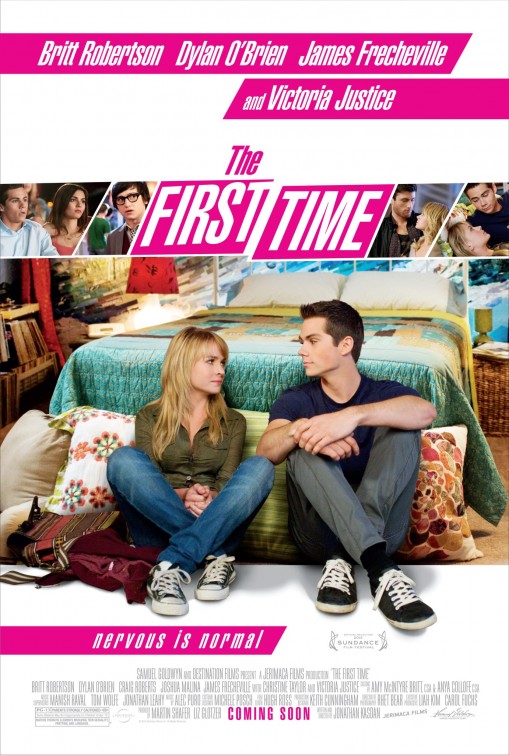
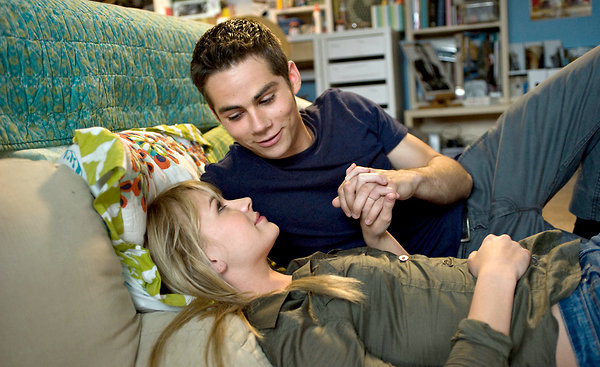
firsttimeThe First Time is a new (2012) movie about two teens. Dave has been pining for his “just a friend” Jane, and is working on getting up the courage to say something to her, but viewers will note that he is firmly in the friend zone with her and things don’t look good. Aubrey has an older (out of high school) boyfriend, but he’s a self-centered, immature jerk who doesn’t seem to notice her creative side. They meet at a party and are clearly drawn to each other. They do some dating. And they have sex. For the first time.

It’s rather pat, and mostly something I’ve seen before, but it’s very sweet. And its teenage interactions are pretty accurate, actually. I couldn’t decide if the philosophizing was accurately teenaged in its grandiosity, or just overdone, but I suspect it might have been fairly authentic, too. I doubt I have any teen readers who will let me know. 🙂 It was only airplane fodder, but I have to admit, I enjoyed it. And I found myself thinking about those cute kids a day or two later, so touché, teeny-bopper romantic comedy, you have gotten inside my head.


Finally, I can definitely understand the kids getting excited over those two darling actors! This is exactly the kind of thing that would have captured my heart in middle school – I would have crushed on that actor (his name is Dylan O’Brien, as it turns out). Better than it might have been.


Rating: 5 nervous glances.

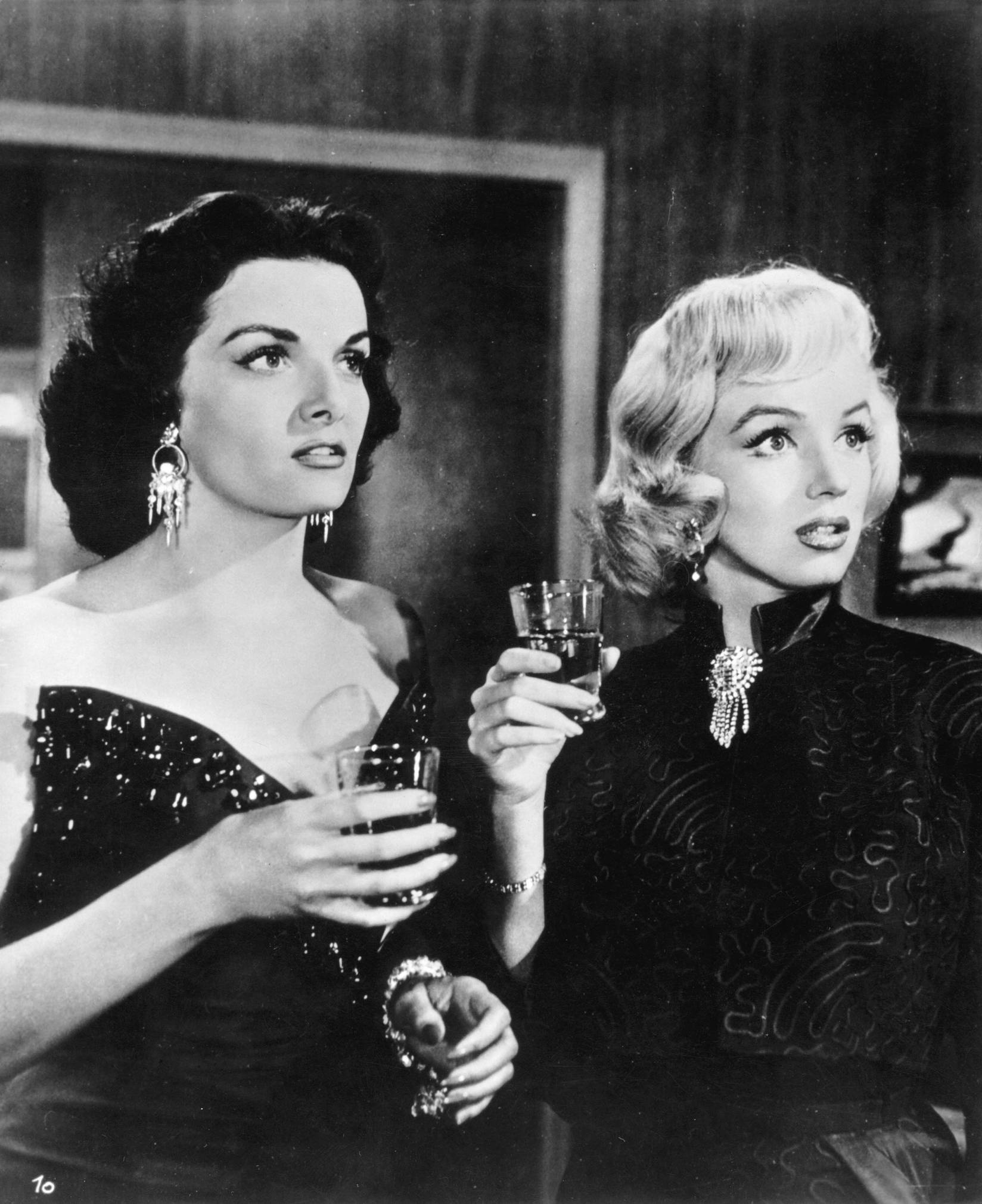
movie: Gentlemen Prefer Blondes (1953)

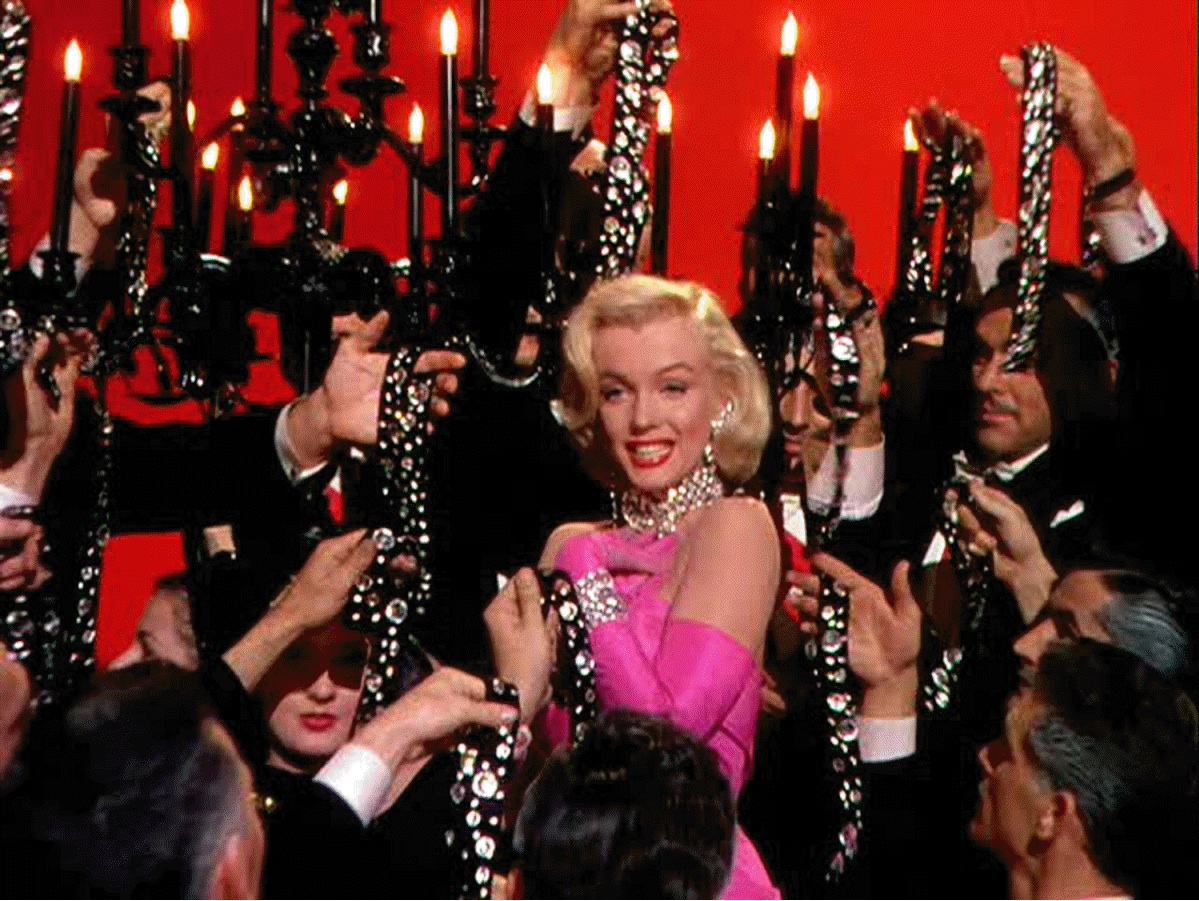
Another classic for you that I found on the airplane: Gentlemen Prefer Blondes, starring Marilyn Monroe and Jane Russell! I had never seen either in a movie before (isn’t that shameful?). And aren’t they both fabulous. I confess, though, I came in rooting for Jane, as the title made her the underdog from the start. [Full disclosure: I was born a blonde and am gradually darkening towards brunette as I age. Does that make me neutral?]

I almost don’t want to bother with a plot synopsis here, as I felt the plot really wasn’t the point, but okay. Jane & Marilyn (I have lost track of their characters’ names) are showgirls. Marilyn is quite a ditzy blonde, and concerned with marrying a man with lots and lots of money. Jane likes to have a good time and wants a man who wants the same, money be damned. Marilyn has a fiancé who is requisitely wealthy, and they intend to marry in France, but his father prevents him from sailing, because he objects to the gold-digging Marilyn; thus Marilyn & Jane sail together. The action of the movie takes place on the ship, where Jane meets a man she might be able to settle down with, and Marilyn meets the owner of a diamond mine and goes bonkers over that possibility. (Enter the song, “Diamonds are a Girl’s Best Friend.” I am rather offended.) From there on it’s all spoilers. But again, the plot isn’t important.


There is mischief and chicanery. This is a comedy, as it turns out, not only an exhibition of the fabulous Jane and the fabulous Marilyn – who do rock every scene in classic, visual splendor. The high-jinks are fun and the slapstick is quite charming. And it’s a musical as well, although there is far less singing than there might be. I was surprised and pleased to note that there is some objectification of the men – how progressive! And they are some nice looking men, too.

I found this film to be more of a fun visual spectacle with great slapstick than such a great story. But there’s no question it was enjoyable – and classic.


Rating: 6 glittery diamonds (naturally).

movie: A Streetcar Named Desire (1951)

On my recent very very long overseas flight, I watched several movies. Thanks Husband for spotting this classic for me! As you may know, A Streetcar Named Desire was a play by Tennessee Williams, published in 1947. I have not read the play, although I studied his Glass Menagerie in high school and appreciated it. Now that I’ve seen the movie, I want very much to read the original, and I would love to see one of TW’s plays performed one day. This film was released in 1951, directed by Elia Kazan, and stars Vivien Leigh and Marlon Brando – wow! [Also in high school, I studied Kazan’s On the Waterfront, alongside Arthur Miller’s The Crucible. Guess what the connection there was.]

You can get a plot synopsis anywhere, so I’ll be brief and spoiler-free. Blanche DuBois shows up at her sister Stella’s apartment in New Orleans from the plantation back in Laurel, Mississippi. She tells Stella that the plantation has been lost and she needs to stay a while. While Blanche is a delicate, swooning southern belle, and Stella a tougher urban woman, Stella’s husband Stanley is all muscle and sensuality. He has no patience with Blanche’s needy weakness, and her presence throws the small household out of balance, just as Stella is expecting a child. There is conflict. I’m stopping there.


This is a masterfully put together film. I positively adored the black and white French Quarter setting: although more than 50 years old now, it was instantly recognizable. I could almost smell the booze and feel the humid heat. Vivian Leigh, Marlon Brando, and Kim Hunter (Stella) are all so perfect, picturesque, and work as archetypes of the characters they play. Kazan is a master of the use of light and dark. Blanche undergoes a metamorphosis of sorts when moving from shadow to light – there is a dramatic scene dealing with the issue. And while I’m on dramatic scenes, the style here is highly melodramatic, with Blanche being the perfect example of what that means: fluttering hands, shrieks and gasps and exclamations, “OH! I just don’t know how I can take it…”, all of which are perfect for her damaged-southern-belle role. And perhaps this adds to the melodrama, but clothes sure do tear easy in this movie. I gave up counting the clothing that got ripped in the action.

Here’s a quick discussion with spoilers. Highlight the following white text to read: I was a little maddened by not knowing whether Stanley raped Blanche in that fade-to-black scene. So I looked it up. Wikipedia tells me that it is indeed only “implied” in Williams’s original. They certainly carried the implication into the film. I think he did rape her. I also learned from Wikipedia that Blanche’s husband had a homosexual affair prior to his suicide, which I had not gathered from the movie; and sure enough, it is later stated in the article that this detail is left out of the film, because of the Hays code. This is unsurprising in context, as I recall from high school that Kazan was a good, government-compliant filmmaker.

Tennessee Williams is absolutely recognizable to me from The Glass Menagerie: he likes his damaged and increasingly crazy southern belles, and their gentlemen callers, doesn’t he? I felt I’d seen Vivien Leigh deliver her closing line before: “I have always depended on the kindness of strangers.” But I’m sure I hadn’t. Maybe it’s just that famous.


As a piece of excellent directing and acting by all three leads (and isn’t Brando smoking hot), and as a fine production of a very fine play, I give this one a near-perfect rating and recommend it as a classic film.


Rating: 9 fluttering eyelids.