The White Hot by Quiara Alegría Hudes

Delightful, unpredictable, and often harrowing, this mother-daughter tale of growing and learning will keep any reader riveted.

With The White Hot, Quiara Alegría Hudes (My Broken Language; Pulitzer Prize-winner for the play Water by the Spoonful) offers an expansive, surprising coming-of-age story about both a mother and a daughter. The novel opens on Noelle’s 18th birthday, when she receives an envelope. “It wasn’t the handwriting that dinged memory’s bell so much as the pen’s feral indentations.” Since she was 10, when her mother disappeared, Noelle has lived with her father, stepmother, and two half-brothers in New Jersey. Readers have just met the teenager when the voice shifts. “Dear Noelle… I am not going to send this,” the letter begins. What at first masquerades as an interlude quickly takes over the book. Breathlessly, alongside Noelle, readers take in April Soto’s story.

“That awful day began with your classroom art show.” At age 26, April is weary. Her 10-year-old daughter is precocious, an artistic and academic genius, and disturbingly observant of her mother’s shortcomings. Their household comprises four generations of Soto women: Abuela Omara (who emigrated from Puerto Rico), Mamá Suset, April, and Noelle, “not a speck of dust–or man–in sight.” April is undone by her child’s gimlet eye, her own unrealized potential, her lack of options, and daily drudgery, and in the wake of a scene at the dinner table, she simply walks away from their Philadelphia home.

What follows is an epic and astonishing journey of self-discovery. April muses on the influence of Hermann Hesse, Charles Mingus, sex as revelation, violences witnessed and perpetrated; she undertakes a wilderness trek (profoundly unprepared in sandals and sequins), and experiences painful, blissful realizations via blisters and hunger. She tells her child she knows her leaving was a betrayal, but hopes she has also offered choice. By book’s end, the briefest return to Noelle’s own 20s presents a full-circle perspective of the parallels in these two lives, and the significant differences.

April’s narrative is astounding and vibrant. In her best and worst moments, she describes being cracked open, experiencing epiphanies: “She felt an un-looming, a separation into threads, some of which rose and drifted through nearby windows whose unseen inhabitants shimmered inside her, too.” These, as well as the mundane, yield stunning, lightning-bolt prose: “Within this deluge, the frog and the oak, the tuba and congregants were not discrete phenomena but native to each other, and I to them. That I of all creatures should be tapped for a glimpse? A bewilderment.” The White Hot is wide-ranging, thought-provoking, tender, and raw–unforgettable.


This review originally ran in the September 23, 2025 issue of Shelf Awareness for the Book Trade. To subscribe, click here.


Rating: 7 olives.

Old Flame by Molly Prentiss

A young modern woman explores and redefines her roles as advertising copywriter, creative writer, friend, daughter, lover, partner and mother in this exquisitely detailed rendering.

Following Tuesday Nights in 1980, Molly Prentiss presents another ambitious and brilliant novel. Old Flame stars a young woman seeking connection in busy New York City and picturesque Bologna, while wrestling with its many permutations.

Emily is performing a life. She’s about 30 years old, has graduated from bartending to a “real job” writing advertising copy for an iconic department store. She has a boyfriend and “a shitty but workable basement apartment in Williamsburg that, because of my real-job salary, I did not have to share.” She steals time at work to read poems and even do a little writing, but her lofty artistic goals aren’t coming together in the gaps between witty headlines about bras and descriptions of leather satchels. She perpetually feels the absence of her mother, who died in childbirth, and the shortcomings of her rigid, distant adoptive mother.

As the novel opens, Emily’s creative department is finalizing the Women’s Book, a biannual catalogue, and Emily is moving from just-work-friends to real-friends status with Megan, a graphic designer. Megan sends Emily a drawing, Emily responds with a short story, and the two are off and running on a truly creative project: The Other Women’s Book, Emily proposes, and Megan responds: YES. In quick succession, a troubled affair, a layoff and a wedding invitation both cement the women’s friendship and upend their circumstances. More or less spontaneously they travel together to Italy, where Emily spent an important year abroad when she was about 20. And in Italy, an unplanned pregnancy and a devastating fight with Megan shatter Emily’s tenuously structured life.

Old Flame considers the particular challenges of being a young artist in New York, balancing the kind of work that pays (“the magnet was capitalism, but I couldn’t see that then”) with the kind that inspires. It considers feminism and appearances, how people see themselves versus how others see them: in literal terms, Emily’s boyfriend is a photographer, and she questions the pictures he takes of her and the ones he displays in his studio; figuratively, of course, the possibilities multiply. Prentiss is a master of detailed descriptions, character studies, highly specific lists and meaningful settings. New York is hectic, fast-changing and inspirational; Bologna is romantic and somehow simultaneously disorienting and comforting. Emily’s deepest struggle is in navigating personal relationships: as a romantic partner, a daughter, a friend, a mother. By novel’s end, she will have learned a little about what these roles mean.

With Old Flame, Prentiss offers a sensitive story, gorgeously detailed and painfully realistic, about the lives and ordeals of women and artists, and what it means to seek and shape connection in the modern world. Filled with both snark and wisdom, this novel is a gift of love and forgiveness.


This review originally ran in the March 17, 2023 issue of Shelf Awareness for the Book Trade. To subscribe, click here.


Rating: 7 pajama shirts.

Mother Country by Jacinda Townsend

To crib a disclosure I found over at Tor.com: “The author is a friend, but if I didn’t like her book, I just wouldn’t review it here.”


And what, after all, to make of a choice?

Shannon is an American woman traveling, for the second time, in Morocco with her husband Vladimir, “a man she felt she could never know from Adam.” They have their troubles: Shannon suffers severe chronic pain following a serious car wreck; she is hiding substantial student and medical debt from her husband, who is wealthy, distant and not terribly likeable. They are unable to get pregnant (for layers of reasons and with layers of results, including Shannon’s increasing baby fever). Shannon is privileged but more or less miserable, between the pain, her marijuana habit (hidden from Vladimir), the traumas of her own upbringing, and her desire for what she can’t have. She feels a bit lost, “but it was a nice lost, like being found was just around the corner in some dusty recess of the medina.”

Souria is a teenager from Mauritania, where she has been beset: her mother dead, she is kidnapped and enslaved; escapes, is enslaved again, escapes again; arrives in Marrakech friendless and pregnant, where the abuses persist until she escapes to begin a hard, simple life under her own power in Essaouira, “that frat boy of Moroccan cities” on the coast. She names her daughter Yumni, “good fortune. Success in this life,” and the child is happy and deeply loved.

To Shannon’s American eyes, however, she appears dirty and free-ranging on the sidewalks outside the shop where Souria works. And so the older, richer woman just… takes her. Vladimir’s money and their American passports transform Yumni to an American adopted daughter. The two women look remarkably alike; the child looks like her adoptive mother, such that the other parents in Louisville assume she is Shannon’s own.

I love this novel for its use of repeated lines and concepts, and questions about the nature of choice. The two threads, which eventually meet, are mostly told in the close third person perspectives of Shannon and Souria, although we get brief glimpses of Vladimir and of Yumni (later Mardi). These two main characters are well developed, but I judge them not equally sympathetic: Shannon’s life has certainly been difficult, but I judge her more harshly in the end than I do Souria, who’s had fewer options. There are parallels, though, and both women have the complexity of being neither martyr nor villain. The stories are well told, and the plot is heartbreaking, but the novel is character driven in the end, as well as being about those choices we are cued to in the first line. Secondary characters are delightfully drawn as well, which I always appreciate.

The title teases us, at first, to think about the Black American couple traveling to Africa, but it’s also a hint to themes about motherhood. The child at center winds up with something like two mothers, although a little short on fathers – her biological father is more or less a rapist and more or less unknown, and Vladimir is neither cut out for nor in love with the role. Shannon’s mother is not a benevolent force, and the loss of Souria’s mother when she was young is directly linked to what happens to her from then on. The country of Morocco is important as setting, as cultural backdrop, as a place where Shannon and Vladimir can take what they want. (I also happen to know it’s an important place in the life of the novelist, which maybe doesn’t figure in the novel, except that this writer knows her subject well.)

There are capital-I Issues here, like trafficking, colorism, American privilege, and meditations on motherhood. I don’t find the ethical question to be terribly puzzling – I think kidnapping is wrong whether it’s Souria or her daughter being taken. White Americans adopting African babies creates a problematic picture that’s too easy; I appreciate Shannon’s more complicated role as Black American, and with her own traumas and challenges. The male-female relationships are both beautifully drawn and upsetting in how universally problematic they are.

Jacinda Townsend has perhaps topped her lovely, musical Saint Monkey. This is a beauty, and timely, wise, and real.


Rating: 8 bears.

Elsewhere by Alexis Schaitkin

Set in a village where mothers vanish, this atmospheric novel encourages contemplation of differences and commonalities, and thinking bigger than the boundaries into which one is born.

Alexis Schaitkin creates a chilling, mesmeric world in Elsewhere, a novel that questions motherhood, community ties and individual agency. The village at its heart and the options of a larger world will stick with readers long after the final page.

“We lived high above the rest of the world. Our town sat in the narrow aperture between mountains, the mountains forested, the forests impenetrable.” Vera has grown up in this setting, in a town with unknown origins (“Our streets and park and river carried names in a language we did not speak”) but strict rules. No one goes out after dark, when the ubiquitous clouds descend. Girls form friendships in threesomes, not pairs. And every girl lives in anticipation of becoming a mother, which carries the greatest risk and reward the village knows, because some mothers will stay and some mothers disappear. “One minute she was here, as solid and real as any of us, the next her body faded, faded, until she vanished into the clouds. Gone.”

Vera’s mother went when she was a small child, and she spends her youth wondering what kind of mother she might possibly be without a mother of her own to guide her, if it’s possible that she can be a mother at all. Her obsession echoes that of all the townspeople, who thrill at guessing which mother will be next, and what makes the difference between one who stays and one who goes. “Impossible to predict, what motherhood would bring out of a woman, what it would show her about herself, the end to which it would carry her.” Vera has always known this as blessing as much as curse. “Our affliction opened us to pain, yes, but also to heights of beauty, and of love, that people elsewhere would never know, because they did not know what it was to love in the shadow of our affliction, our love deepened and made wild by the threat that hovered over it. Our affliction was terrible, but it was not as terrible as living without it.” But when motherhood indeed comes for Vera, and she finds herself fully in the unimaginable thrall of her child, the town’s affliction haunts her in a new way.

The village is profoundly insular: “What could the stories and histories of lives elsewhere offer us?” But it turns out that “elsewhere” is a place as well. Elsewhere is unsettling, thought-provoking and lushly detailed, a memorable inquiry about attachments to place and to family, and what happens when a person has to choose between her family and herself.


This review originally ran in the April 29, 2022 issue of Shelf Awareness for the Book Trade. To subscribe, click here.


Rating: 9 crystal pendants.

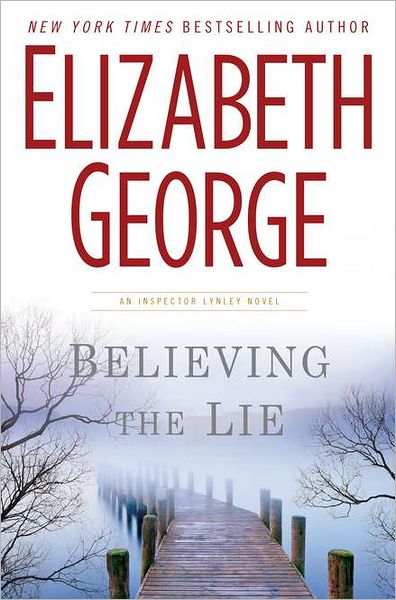
Believing the Lie by Elizabeth George

The latest gruesome, yet touching, mystery starring Inspector Thomas Lynley and his friends.


Elizabeth George’s long-awaited 18th installment in the Inspector Thomas Lynley mystery series sees our Tommy back at New Scotland Yard, having returned from wandering the English countryside mourning his murdered wife. His new illicit relationship with a superior officer is interrupted by a mysterious secret assignment–to look into a drowning that has already been ruled accidental. A powerful patriarch (like Lynley, a peer of the realm) requests further investigation into his own family–most obviously, the recovering drug addict prodigal son. But as Lynley, with the assistance of the reliable Deborah and Simon St. James, delves deeper into this family’s history and entanglements, he uncovers myriad lies, betrayals, deceptive identities and plenty of cause for scandal.

Fans of the series will rejoice in rejoining Lynley, the St. Jameses and Sergeant Barbara Havers, who unwillingly undergoes a makeover in this book. George also delivers the fully wrought, sympathetic, very human minor characters her readers have come to expect. Longtime fans may find Deborah’s increasingly obsessive distress over her failure to conceive beginning to wear thin; the subject becomes a full-fledged plot thread here. But George’s strengths–character development, plot twists and shocking tragedy–continue to shine.

While Believing the Lie can stand alone, series readers will find a deeper appreciation of the complex relationships at play. Look out for a serious cliffhanger at the end, which will leave George’s fans panting for the next Lynley episode.


This review originally ran in the January 13, 2012 issue of Shelf Awareness for Readers. To subscribe, click here, and you’ll receive two issues per week of book reviews and other bookish fun!

the theme of maternity: trendy?

I finally decided that I’ve mentioned this, in passing, so many times that I felt it deserved a post of its own.

The gist is, I’ve formed a growing observation over the last 6-8 months or so (ahem, that would be about how long I’ve had this blog) that I’ve read a lot of books that deal with women’s feelings about their children, feelings about maternity, motherhood, family, and mother-child bonds. I have not sought these books out; I don’t read much in the way of “women & relationships” or romance, and I read very lightly in the realm of pop fiction. Where have all these books come from? My favorite genre is murder mysteries, and the bulk of the books I’m referring to come from this genre; including some quite gory, graphic thrillers. I’m pretty sure this thematic trend is new; mysteries have not always been mommy-oriented! What’s up with that? Let’s take a look. I have written about…

Still Missing by Chevy Stevens
Her Fearful Symmetry by Audrey Niffenegger
Look Again by Lisa Scottoline
Love You More by Lisa Gardner
These Things Hidden by Heather Gudenkauf
I’d Know You Anywhere by Laura Lippman
My Sister’s Keeper by Jodi Picoult

And I’ve also so far avoided Emma Donoghue’s Room, despite being tempted, because I fear more of the same.

There are mothers in mysteries in general. I know a certain woman in my life has had a growing frustration with Elizabeth George’s series of Inspector Lynley mysteries, due to Deborah St. James’s ongoing guilt, one might even say obsession, with an abortion she had that seems to have effected her ability to have children. This is a thread and a theme within the series – not a major one, but one that helps develop the characters who we get to know so well over the many books, which I feel is one of their strengths. Lynley, Helen, Deborah, St. James, Havers, and a whole cast of characters have extraordinary depth over the course of the series. But, my friend is bothered by the politics; she fears that George is making a political statement about abortion. This led me to this website on which George states her politics on the issue, if rather obliquely. Sorry, I have digressed. My point was, there are mothers in mysteries. Always have been. There are mothers in life, otherwise how would we all get here?

But my observation here is of mysteries that are themed heavily around maternal feelings and mother-child bonds. All of the books I listed above treat this theme as central to the plot. I think it’s a current trend in popular fiction, which probably reflects a current trend in our public consciousness. Babies and how to make them are on a lot of minds these days; the related medical industry is doing fairly well I do believe. I think trends in fiction & literature reflect cultural trends. For example, We Need to Talk About Kevin (by Lionel Shriver) and Nineteen Minutes (by Jodi Picoult), both fictionalized stories about school shootings, seemed to come from headlines in the years 2005-2008 or thereabouts. Several novels about autistic children have come out in the last 5 years or so too, as autism awareness has become a growing cause. No coincidence, right?

It makes sense to me that fiction reflects our culture; art follows life, yes? But I get a little bit frustrated with this theme. This theme in particular, or just the repetition of a theme? Well, I can get a little impatient with this particular theme in life (the real world); I’m not anxious to be a parent and fail to empathize with that (seemingly, majority) portion of the world that is. So I’m impatient with it in my reading life, too. But repetition is annoying as well. It’s getting to the point where I feel I need to avoid it when picking out reading material, just to get out of a rut.

What do you think? Am I nuts? Is there no trend? (Insert Freudian remark about my biological clock here?) Or is there a trend, and if so how do you feel about it?

Politico-disclaimer: I’ve tried not to make this a rant of my own opinions on “the issues.” If you’re interested in my rant 🙂 I’ve provided it for you, as briefly as possible, below. If you’d rather avoid (most of) the political angle on this post… stop here.


Briefly (if possible), and in the interest of satisfying your curiosity or confusion on my stances:

I am vehemently pro-choice. The folks who call themselves “pro-life” are not, in my opinion, pro-life at all; they are anti-choice. Lots of people have written very intelligent defenses of this position, so I don’t feel the need to spend a lot of time on this. It’s self-evident to me that women should have control over their bodies and reproductive futures, and to deny them that right is unjust.

I don’t want to have children. I think there are far too many people on this earth; if we don’t cause it to implode and kill every living thing on it, including ourselves, it will be miraculous. There are lots of unwanted babies on the planet; if you want to raise one, please do, but please don’t make more. I think reproduction in today’s world is a politically and socially irresponsible act, and it affects all of us, not just the two parents or extended family.

That said, I have lots of friends who are having babies (some of them at great effort and expense), and I’m not personally angry with any of them. I can’t really get my head around their desire to reproduce, but they’re my friends. I’m happy when they’re happy; when they’re happy to reproduce, I’m happy for them, but from a few steps away.

These Things Hidden by Heather Gudenkauf

This book drew me in (and presumably I was not the only one!) with its blurbs all over the interwebs referencing abundant vagueness: teenaged Allison has just been released from prison; the former perfect princess committed some unspecified, horrendous crime. Brynn, her invisible sister, struggles to move on from her sister’s mistake. And two unrelated women angst over Allison’s presence, while a little boy’s fate is held in the balance. All this vagueness, and promises of suspense, got me excited; but I found myself disappointed in the end.

For one thing, The Big Question of what Allison did is answered very early on, which I found rather anticlimactic; the questions that remained for the rest of the book felt a touch wanting in suspense after the blurbs built me up. Perhaps most frustrating was the continued and continuing obsession with maternity and motherhood that I’ve repeatedly observed in today’s pop fiction. That’s a personal beef; it’s just not my fave; but it’s worth noting that this book seems to follow a trend.

I didn’t find any one character really sympathetic. Each of them was mildly likeable; but none got me really deeply rooting for them. Also, there was almost no male role at all in the whole book. Again, this is a personal gripe, since I like my worlds a little more gender-diverse. In the end the most likeable character I found was the grandmother, but she was pretty minor; I don’t think she even had a name.

It’s not all bad. I did sit up and read this book all the way through in one sitting; I stayed up past my bedtime to finish it (not much, just 1/2 an hour, maybe an hour); I wanted to get to the end. But, it wasn’t the most burning need-to-finish; and I wouldn’t have stayed up much later. It was a fine book that suited me for an evening. It was an easy read: enjoyable, superficial and superficially enjoyable. Not a bad thing for a plane trip or bus ride. But nothing especially sparkled. I give it a “meh” and am disappointed because I had hoped for more.

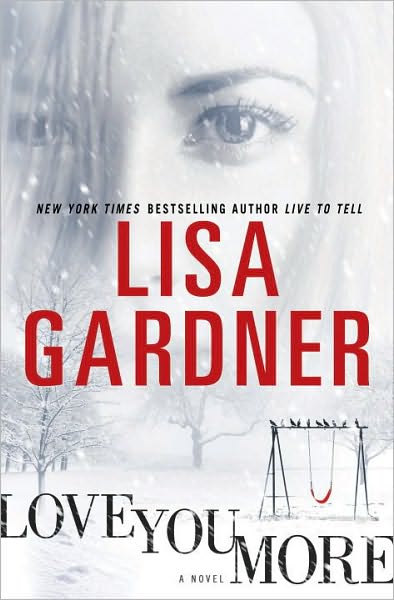
Love You More by Lisa Gardner

My first experience with Lisa Gardner was an overwhelmingly positive one. I’d been attracted by reviews and descriptions of this recent release for weeks, and was excited to find it available to me right before leaving for our road trip to Arkansas at the beginning of the month.

A few key elements:

  • female detective with personal life. Detective D.D. Warren’s former boyfriend is also her former work-partner, and in this book she has to work with him once again. Her current boyfriend is largely off-screen. She’s pregnant and in denial about it.
  • female state trooper has apparently shot her husband who has apparently been beating her. Tessa’s six-year-old daughter is missing. Tessa is well acquainted with processes of criminal investigation, etc., and therefore very able to assist, or thwart, D.D.’s efforts to figure out why the husband is dead, why Tessa shot him (she did shoot him, right?) and most importantly, where’s little Sophie?
  • suspense!! edge-of-my-seat, staying-up-too-late-on-Thursday-and-Friday-nights-before-my-big-race-on-Sunday (thank goodness I finished it before Saturday night), thrilling, adrenaline-junkie suspense.
  • police procedural with all the details, including interdepartmental pissing contest.
  • strong sense of place. I’m not real familiar with Boston but the details felt authentic to me; neighborhoods, social strata, housing trends and home values are discussed. This was very much a real place.

These are some elements that make me very, very happy about genre fiction. This is some of my favorite stuff. As I’ve mentioned repeatedly in this blog, I have a theory that the current trend in fiction (apparently even in my beloved bloody-violent genre) is themes of maternity and family, and it tends to annoy me a bit. These themes were present here: D.D. is panicking over her unwanted pregnancy and the idea of reconciling it with a career in law enforcement; Tessa provides a perfect example of how wrong this combination can go. The two women’s situations are clearly not only entwined but allegorical. This didn’t bother me a bit. D.D. is all business, no mushiness, no sentiment. Tessa loves her daughter very much, but it’s not mushy for her either. They’re both strong women, and I was fine with the maternal angles in this case.

This was a murder mystery that had everything I ask for, including wild plot twists (I was so caught off guard! repeatedly!) and surprises, and a wild build-up of action and violence to the finish. And yea, okay, some of the final crescendo of action and gore was a bit unrealistic but come on, I don’t read this kind of book because it’s realistic in its minutia. It was well within my ability to comfortably suspend disbelief.

All the thumbs are up. I shall be seeking out more Lisa Gardner. Well done!

book beginnings on Friday: options

Thanks to Katy at A Few More Pages for hosting this meme. To participate: Share the first line (or two) of the book you are currently reading on your blog or in the comments. Include the title and the author so we know what you’re reading. Then, if you feel so moved, let us know what your first impressions were based on that first line, and let us know if you liked or did not like the sentence. (You might also consider visiting the original post where you can link to your own book beginning.)

I’m breaking the rules again. I’m not sure what I’m going to read next. I will hopefully finish both Main Street and Dethroning the King this weekend (and will likely not post at all over the weekend, which is my usual habit). But I did want to share a few books that have recently been published that I’m interested in reading. Perhaps you can help me choose!

First of all, Heather Gudenkauf’s These Things Hidden begins:

I stand when I see Devin Kineally walking toward me, dressed as usual in her lawyer-gray suit, her high heels clicking against the tiled floor. I take a big breath and pick up my small bag filled with my few possessions.

To me, this indicates that the narrator has seen this Kineally woman before, knows her “usual” suit color, and is not feeling so hot about the action to come. I have read the blurbs (and a review or two) of this book and am excited about what sounds like a thrilling and intriguing, um, thriller.

And then there’s Lisa Gardner’s Love You More. From the Prologue:

Who do you love? It’s a question anyone should be able to answer. A question that defines a life, creates a future, guides most minutes of one’s days. Simple, elegant, encompassing.

This is a bit general and philosophical for my tastes, and not such a grabber, for me at least, but chapter one does me better:

Sergeant Detective D.D. Warren prided herself on her excellent investigative skills. Having served over a dozen years with the Boston PD, she believed working a homicide scene wasn’t simply a matter of walking the walk or talking the talk, but rather of total sensory immersion.

Now that will grab me. I like a good detective and a good crime scene; this is my favorite kind of light reading. I’ve read some about this book, too – I’ve never read Lisa Gardner before, but this one sounds wonderful, and I can’t wait to get into it. Although again I’m noticing a sort of emotional theme of maternity, parenting, mother-child bonding, family, etc. I’ve mentioned this before and it bothers me somewhat. I wonder if this is a recent theme in publishing? Or just the ones I’m stumbling across? Any thoughts?

Anywho, sorry, got distracted. Either of these books appeal to me for a next read – or it could always be something off my TBR bookcase at home. 🙂 Do you have a vote? What shall I tackle next? (Perhaps the next one of these two to be returned to my library, hmm…)

catching up: Niffenegger weekend

Hello there. Sorry I’m slow to cover my weekend’s reading for you. Here I am now!

This was a fun weekend because the Husband did a marathon mountain bike race while I watched and supported for a change. He did much better than he had hoped, and seemed to do it pretty easily too, so I’m very proud. I had a good time watching a number of friends do very well, in fact.

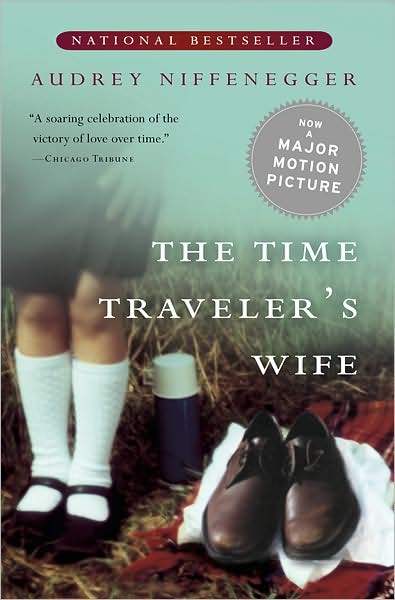
I also managed to finish Audrey Niffenegger’s The Time Traveler’s Wife and then Her Fearful Symmetry (finished today at lunch), so it’s been a Niffenegger-heavy weekend. I didn’t intend to read two of hers in row, but was already reading and enjoying Time Traveler when a library patron brought me her personal (autographed) copy of Symmetry, to borrow – thereby making me feel like I should read it next…
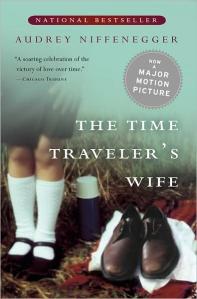
So first things first. The Time Traveler’s Wife was very enjoyable! I felt like it had a little lighter feel to it earlier in the book, then gets a little more thoughtful, dark, contemplative, and frightening later in the book. This is actually appropriate, for Clare’s point of view, since she takes her time-traveling husband lightly when she’s younger, only realizing risks & dangers as she grows older. When she is an adult and understands all the implications, things become very frightening indeed. I found all the emotions and reactions pretty human, and was very absorbed in the characters. I also found the novel’s implied questions, about fate, sequence, causality, responsibility, forgiveness, and other issues of humanity, to be compelling. The time-travel construct worked well for me. I was impressed by a beautiful, romantic story with believable characters. I was also impressed with some of the emotional scenes Niffenegger managed to “paint” for us, like the dream sequences on pages 373-4.

And, I found myself crying. Again! Something strange must be happening to me. At least I can say it’s NOT my biological clock 🙂 because I continue to be just a little impatient with all the maternal stuff in several books I’ve been reading over the last several months: The Time Traveler’s Wife, Audrey Niffenegger; Still Missing, Chevy Stevens; Look Again, Lisa Scottoline; I’d Know You Anywhere, Laura Lippman; My Sister’s Keeper, Jodi Picoult – just off the top of my head. I’m a bit fed-up with motherhood and maternity as themes, and have decided to purposefully avoid (in the near future at least) Emma Donoghue’s Room, which I’ve been interested in for months now, because it sits pretty squarely on those themes.

I give this one a strong rating and am glad I finally picked it up.

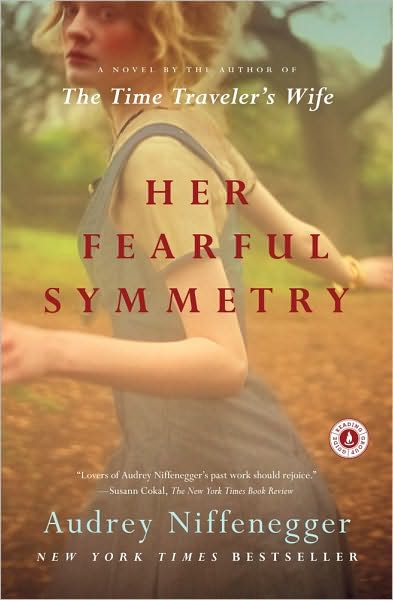
With some hesitation, then, I picked up Niffenegger’s Her Fearful Symmetry as my next read. I hesitated because I rarely read the same author, or even theme or style or subject matter, back-to-back. I don’t even think I can remember reading back-to-back in a series. I guess I just feel like my brain likes a break, a palate-cleanser if you will. So with slight trepidation I began the next book; and I think I was right to be a bit nervous, because the first book ends with a death and a partner mourning, and the second book begins with a death and a partner mourning, and really never gets much happier than that. No, they’re not serial, just continue a similar tone.

Plot synopsis: Twins Valentina and Julia do not know their mother’s twin sister Elspeth until they inherit Elspeth’s London flat. There are two conditions: they must inhabit the flat for a year before they can sell; and their parents cannot set foot in it. Upon arriving in London, these ethereal, deeply attached young girls meet their interesting neighbors: Martin is an endearing but very sick obsessive-compulsive; and Robert was Elspeth’s lover, and is having quite a bit of trouble “letting go” her memory. They also get to know their mysterious aunt.

The melancholic, obsessive grief that starts this book doesn’t really let up. Perhaps I simply wasn’t in the mood to be made to feel this way, but I didn’t *love* this book as much as I did Time Traveler. I think it was almost every bit as well-crafted, and the emotions (while disturbing) still rang true; but it was just a bit too creepy. I won’t go any further for fear of spoiling, but this was a creepy book. To be fair, I had trouble putting it down; I think it was well done. But it didn’t feel as good. I think The Time Traveler’s Wife accomplished a feat: it took me through a range of emotions and life stages and, if it didn’t tie things up in a happy cozy way, at least it tied things up in a way that felt very complete. Her Fearful Symmetry, on the other hand, explored dark emotions rather deeply without a great deal of light. The paranormal aspects in the first book were a quirky vehicle through which to experience emotions and relationships and ask interesting questions. The latter read more like a ghost story (more and more so as the story develops), with an ending that was a little Poe-like in its creepiness.

I preferred the first, obviously, although if you were a bit more open to the ghost-story aspect, you might like the second better than I did. I believe even objectively, though, the first was a greater achievement. Or maybe I just shouldn’t overindulge in Niffenegger, hm?

I’ve heard a fair amount about her recent graphic novel, The Night Bookmobile, as well. Librarians and libraries and books play an important role in Niffenegger’s work in general (Henry from The Time Traveler’s Wife is a librarian; Elspeth from Her Fearful Symmetry is a bookseller), and the starring role in this latest. But the consensus amongst the library groups I hear from seems to be that her treatment of the librarian in The Night Bookmobile is downright and absolutely creepy. They don’t seem to like it. Again, maybe we just need to be looking for a ghost story? Or is there really something “wrong” with these stories? Presumably there are readers out there who love them. Any thoughts?