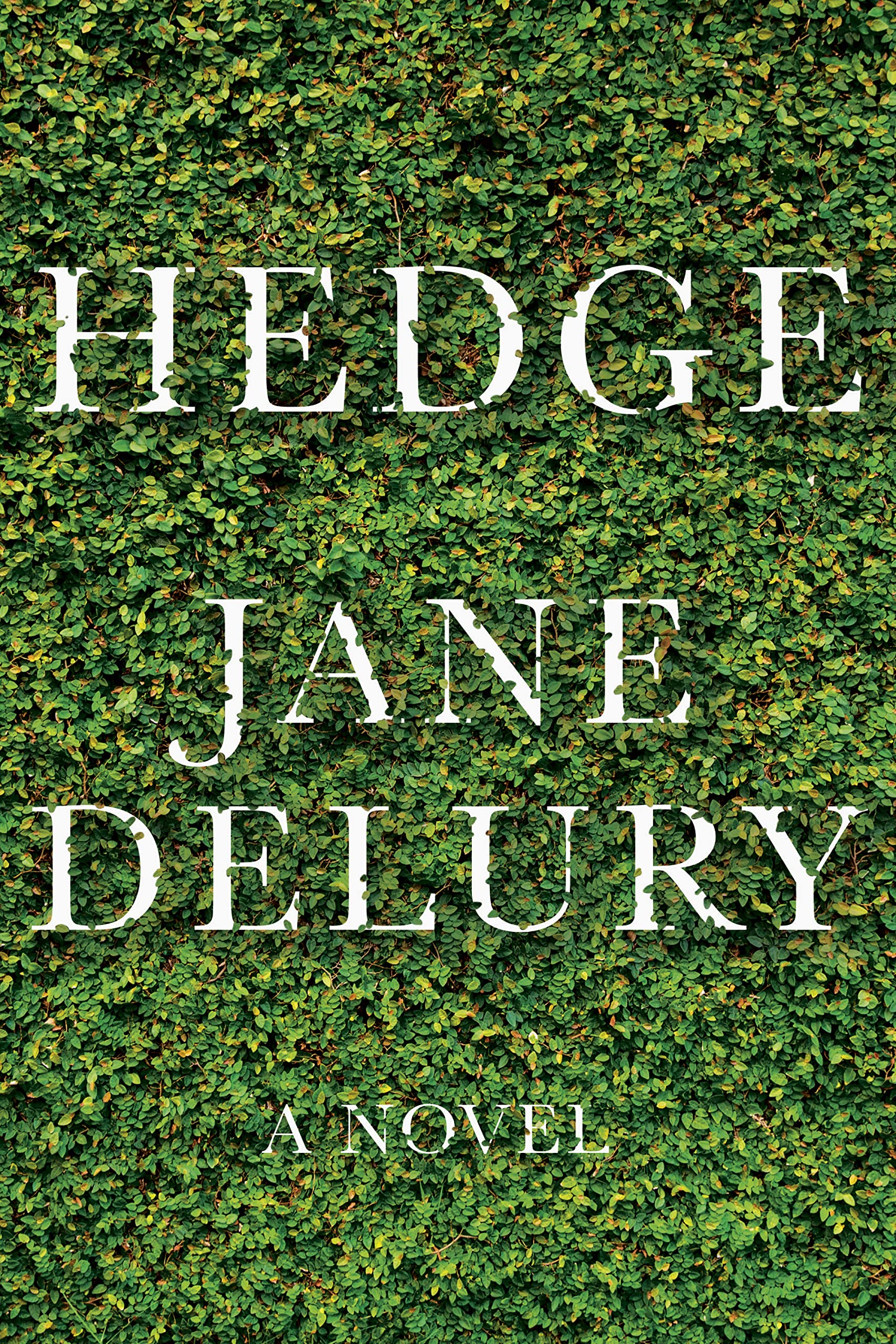
Hedge by Jane Delury

In this profound novel about love, loss, and choices, a summer’s exciting work and exhilarating affair will reverberate through the lives of a deeply likeable protagonist and her family for years.

Hedge by Jane Delury (The Balcony) is a roller coaster of a novel about family, creation, love, and shifting priorities, lush with detail and delicately rendered. Readers will be thinking of Delury’s protagonist long after these pages close.

Maud is a garden historian, “with her odd mix of botany, archaeology, history, and practical gardening skills,” and she loves her work. Originally from California, she was well suited to England, both London (where she finished her education) and the countryside, but reluctantly returned to the United States for her husband Peter’s career. When Hedge opens, Maud is at work on a restoration project in New York’s Hudson Valley. It is beautiful, stimulating work, and she is likewise stimulated by the company of Gabriel, a handsome, intriguing archeologist at work on the same site. Her two daughters, Ella and Louise, are about to join her for the rest of the summer. Peter remains in California: the couple has separated “both geographically and maritally,” and Maud plans to make this separation permanent and legal, but their girls don’t know this yet. On the cusp of an affair with Gabriel, she feels enlivened, awakened by his attention, her own physicality, the thrill of discovering flower beds from the Civil War era and the turning of the earth. She allows herself to dream of what a new life could look like for her as well as for the scotch roses, lilac, clematis, and honeysuckle she plants. But when the girls arrive from California, 13-year-old Ella suffers a trauma that snowballs into life-changing events for all involved.

The idyll in New York ends suddenly, and Maud’s next months and years are spent dealing with hard choices between undesirable outcomes. She wrestles to balance meaningful work and practicalities; lustful, soulful connection, and the mundane compromises of marriage; her own needs and those of her children. “You could comfort yourself with statistics, tell yourself that a twenty-year relationship was a good run. After all, when marriage was invented, no one lived this long. But it was still a jagged gash through your life, even if it was what you wanted.” Delury’s prose is finely detailed, saturated with color and feeling; Maud’s passion for her work is as substantial and sympathetic as her love for her daughters. Both a quiet domestic tale and a novel of surprising suspense, Hedge cycles from hopeful to harrowing and back again. Maud is nurturing and steely, riveting and unforgettable.


This review originally ran in the May 8, 2023 issue of Shelf Awareness for the Book Trade. To subscribe, click here.


Rating: 7 slices of pepperoni.

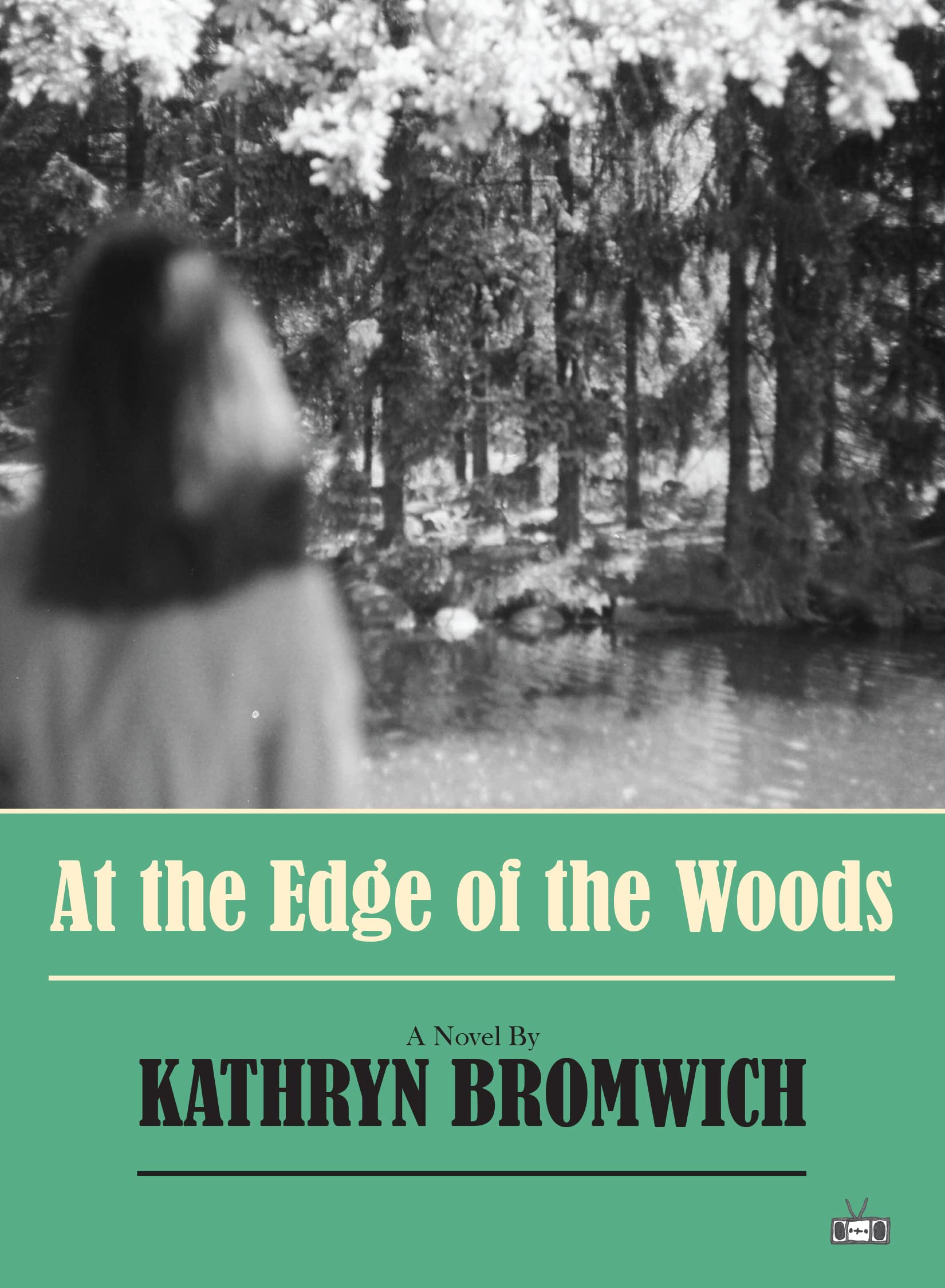
At the Edge of the Woods by Kathryn Bromwich

A woman reinvents herself in solitude but finds the tension with humanity remains in this finely textured novel set in the Italian Alps.

Kathryn Bromwich’s first novel, At the Edge of the Woods, both chills and charms with its fable-like story of a woman beginning a new life alone in a cabin outside a small Italian village.

“In the mornings, when my thoughts have not yet arranged themselves into their familiar malevolent shapes and the day is still unformed, I wake up before dawn… and walk deep into the woods while my eyes adjust to the velvety darkness.” First-person narrator Laura Mantovani is determined to simplify and forget: she revels in her close attention to her daily walks, her observations of nature, her humble fare, and austere human contacts. She supports her modest lifestyle with translations of medical texts for the village apothecary and tutoring a few well-off children; in the evenings, she reads widely. She briefly takes a lover, before retreating into still deeper solitude and communion with the natural world. Readers wonder what she has escaped from–until a contact from her past life turns up on the doorstep. Glimpses of another life are revealed in flashbacks, before Laura’s narrative returns to the deceptive quiet of the Italian mountaintop woods.

Bromwich’s prose is sedately paced, erudite, and textured in its observations of nature. Laura has a sly sense of humor and a deep distrust of humankind. As her story advances, her relationship to reality shifts and slides. She has visions. “The woods seem to have taken on unusual colors–not just deeper but slightly off. Certain tree trunks appear a lurid purple; tangerine and teal leaves wave in the breeze.” She sinks into the nonhuman world in ways that strengthen her and give her confidence: “I seem to have passed over into–somewhere I am no longer beholden to the chains and responsibilities of man, but to the perfect harmony of the natural world, where everything has its place, and no rock or broken twig is without purpose.” The village down the mountain from her, where she treks for supplies–with decreasing frequency, as the forest provides all she needs–shifts as well, from a point of support to something rather more sinister. The villagers call her strega (witch), because an independent woman alone is otherwise too much to grasp. Laura has created a new life for herself, a world in which her needs make sense in new ways, but human society still looms. “If you are there, in front of their eyes–fading, yes, but not invisible, not quite yet–it is more difficult for them to turn you into a monster with their words after you are gone.” In the end, she may find herself in as much danger as ever.

At the Edge of the Woods is wise, ethereal, haunting, filled with both beauty and horror. Brief but thoughtful, lush in its descriptions, this is a novel of introspection.


This review originally ran in the May 5, 2023 issue of Shelf Awareness for the Book Trade. To subscribe, click here.


Rating: 7 rude jokes for potatoes.

Maximum Shelf: My Name Is Iris by Brando Skyhorse

Maximum Shelf is the weekly Shelf Awareness feature focusing on an upcoming title we love and believe will be a great handselling opportunity for booksellers everywhere. The features are written by our editors and reviewers and the publisher has helped support the issue.

This review was published by Shelf Awareness on May 10, 2023.


My Name Is Iris by Brando Skyhorse (The Madonnas of Echo Park; Take This Man) is a chilling near-reality dystopian novel, set in an unnamed state that resembles California (and is called the “Golden State”). Protagonist Iris Prince is a second-generation Mexican American whose parents view her birthright as a gift and use the refrain “you were born here” to shame her whenever they feel her bad behavior shows a lack of gratitude. (“I am a second-generation Mexican-American daughter of Mexican immigrants, meaning that of course I was ungrateful.”) Born Inés Soto, she was glad to have her first name simplified by white schoolteachers, and then to take her husband’s last name. Iris is proud to be a rule follower, her highest ambition to blend in.

When the novel opens, Iris Prince has just left Alex, her husband of 16 years, and is determined to finally build the sanitized, magazine-cover life she’s dreamed of: a new house in a suburban neighborhood on a cul-de-sac, a new school for her nine-year-old daughter, Melanie. She has shunned her parents’ low-income home in a Spanish-speaking neighborhood (where her younger sister still lives, annoying Iris with her activism) and avoids Alex’s overtures at co-parenting or getting back together. Iris feels that her real life–coffee clubs, gardening, and white picket fences–is about to begin.

Then one morning, she looks out of her lovely new bay window to find that a wall has sprung up in her front yard. It seems permanently fixed, and no one but Iris and Melanie can see it. Her realtor and contractors claim the wall must have been there all along, until gaslit Iris wonders, “Who was I to say otherwise?” And, impossible as it is, the wall seems to be growing.

Meanwhile, a new piece of wrist-wearable tech called “the band” is sweeping across the state. Iris herself voted in favor of the proposition that established this technology as a paper-saving, easy identification to “facilitate paying for and receiving state and public services, act as a drivers’ license,… help users regulate a household’s water usage and garbage output, serve as proof of residency for your child’s enrollment in school, and potentially save the state millions of dollars.” But it turns out that, regardless of citizenship, one must have a parent born in the United States to qualify for a band. Iris’s confidence in her place in society is shaken. “Wear your bands and prove you belong here,” says the propaganda. Hatred, bigotry and intolerance quickly swell into violence. “Somehow, in an overnight or two, my social contract had been renegotiated. Politeness vanished.” Iris’s loyalties are challenged: she has long associated herself with law and order and the establishment, but those forces have turned against her, despite all her rule-following. Each morning she drops her daughter off at school, the band’s seductive glow encircling Mel’s slim wrist–due to Alex’s birthright, Mel qualifies for the privileges of the band. But Iris fears for her home and her job; her mother has been fired for her bandless status, and the family is in jeopardy. Under these pressures, Iris will have to consider just what she’ll risk to protect her hard-won sense of identity.

Skyhorse seeds his text with plenty of Spanish-language dialogue, especially with Iris’s parents and sister; non-Spanish-speaking readers will easily use context clues. In addition to this lovely linguistic texture, Skyhorse imbues his all-too-lifelike novel with fine details–Iris’s anti-nostalgia for a defunct supermarket, her love for bland ritual–and judicious use of highly impactful notes of the mysterious or the surreal. These twists of magical realism include a ghost from a childhood trauma who haunts Iris in her vulnerable moments, and of course the wall itself, which grows and morphs overnight. The wall is ever-present, at one point “almost like a co-parent,” even as it literally deprives her home of the sun’s light and heat, as well as her sense of security: “Later, when I would dream, I dreamed of walls.”

My Name Is Iris is terrifying with its proximity to reality. Iris is perhaps preoccupied with labels and appearances (as the book’s title forecasts), and not the most likable protagonist, initially; but her flaw is simply in seeking the American dream as it’s been advertised. Despite her obedience–teaching her child to always trust the police, adhering strictly to HOA rules–the world she’s trusted has turned on her. What can one woman do to fight a state security regime or a magically self-constructing wall?

This gripping dystopia poses difficult but important questions about the world as we know it and the few small steps it takes to slide into horror. Intolerance and xenophobia lurk in the most seemingly benign corners. My Name Is Iris is part social commentary and part thoughtful consideration of themes that include family, identity, transitions, perspectives, and hope. In addition to being an engrossing, discomfiting tale, this will make an excellent book club selection and fuel for tough conversations.


Rating: 6 chanclas.

Come back Monday for my interview with Skyhorse.

The World We Make by N.K. Jemisin

It’s been nearly three years since I read The City We Became, and I wish I’d spent a few minutes reviewing that one first. I still felt close to the avatars of New York’s boroughs, but New York himself (he goes by Neek, as in NYC if you pronounce the Y like ‘ee’) felt less familiar, and I’d lost track of some of the rules of Jemisin’s carefully constructed world. For slightly better results, you might want to keep book 1 a little handier than I did here, but it was still a hell of a ride.

Highlights include the personalities themselves, their relationships, and the final action scene(s). I remembered loving Manny (Manhattan), Brooklyn and Bronco (the Bronx); I feel like we get to know Padmini (Queens) better here, and I really enjoyed that. I applaud Jemisin’s work with Aislyn, the bigoted Karen-in-training avatar for Staten Island; she is unlikeable but complicated enough that the reader grudgingly sympathizes, which is a feat (and an exercise in patience and empathy that some might have excused the author for not engaging in). These avatars have had time since the last book’s action to settle in to relationships among themselves in ways that are pleasing; the characters were strong to begin with but they perform best when they play off each other (true of all characters, probably). Then there are the avatars of other cities around the world: I imagine it must have been so fun to build characters for places like London, Tokyo, Istanbul, Paris, Budapest, Kinshasa, and Amsterdam… because this novel ends up in a massive showdown. In its course, we (and our avatars) learn more about the rules of the world of living cities and their great Enemy. The threat, as threats do, grows larger and then imminent, and a major brawl ensues. This series was originally billed as a trilogy, and actually I still thought it so at book’s end; it was only in Jemisin’s acknowledgments that I learned we’re done here. I do think the ending allows room for more if she finds her energies refilled, but I understand the effects of the pandemic and Trump’s evil on her intended storytelling, and (not that she needed my permission) I can grant her this ending, too.

Three years ago, when I read The City We Became, Jemisin was new to me. Now I return to this series having since read every novel Jemisin has ever written.* With this perspective, the Great Cities duology feels both familiar and very different from her other work. This one is set in the most recognizable of her fictional worlds, closest to our own real one. The characters are modern, urban, fresh and real-world-adjacent, while the characters in her other outstanding works are realistic but recognizably otherworldly. I don’t think I have a preference, but it’s a different effect. I guess for readers more reluctant to venture into proper sci fi/fantasy, this urban version might feel friendlier.


*I have not yet read How Long ’til Black Future Month?, her short story collection, which I erroneously thought comprised works by other authors that she’d collected and edited. I would have gotten around to that eventually. But it is in fact all her own work, which means I need to get there soon.


I love the action and attitude of these living cities, and Jemisin is an important figure in my lifetime of reading. Can’t wait for more – whatever she does.


Rating: 8 sticky toffee puddings.

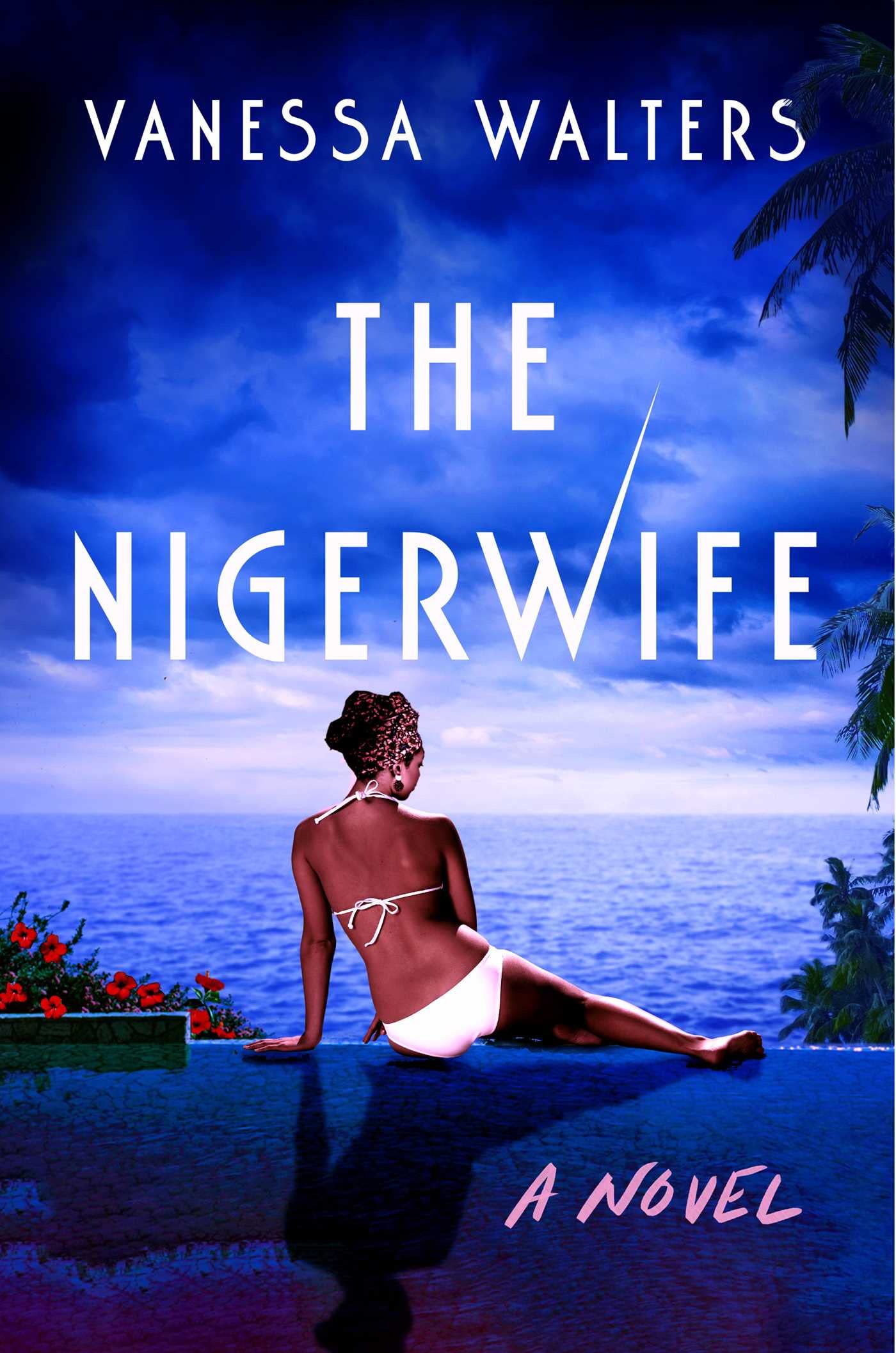
The Nigerwife by Vanessa Walters

In this riveting novel about a young woman’s disappearance, Lagos high society hides personal struggles and larger cultural concerns.

Vanessa Walters’s American debut, The Nigerwife, is a gripping work of suspense, a psychological puzzle, a mystery, and a critique of marriage and high society. The prologue begins: “Nicole often wondered what had happened to the body.” This foreshadowing line refers to a body floating in a trash-filled Lagos lagoon, viewed from the home of a young woman who had recently left London to join her Nigerian-born husband. This narrative perspective, “Nicole, Before,” defines every other chapter of the novel, interspersed with the viewpoint of “Claudine, After.” The pivotal event of these dual timelines is Nicole’s disappearance, which gives the prologue’s opening line new and sinister meaning.

Nicole spent years in Lagos with her husband, Tonye, and their two young sons. She ceased communication with her family in London and formed and dissolved friendships both in and out of a club called the Nigerwives. “The Nigerwives were so different, a pick ‘n’ mix of skin tones, hair textures, body shapes, and facial features, but their stories were one and the same. They had all defied the prides and prejudices of their families, sacrificed friendships and careers and independence, and followed heart and husband to Nigeria for what they believed would be an epic adventure.” For Nicole–and perhaps for other Nigerwives before her–that adventure would end badly. Between fancy dress and art openings, social posturing and boating parties, she struggled to keep her sanity and independence.

In the days after Nicole goes missing, the aunt who raised her travels to Lagos to look for answers. Claudine does not know Tonye’s family well and is dismayed to find how little the family or the police seem to be doing to find Nicole. “She could see [the household help had] been warned not to tell her anything, not even what time of day it was, though they were very respectful clams.” The more she attempts to unravel her estranged niece’s life, the greater her fear that she’s arrived too late. As their timelines progress, Claudine and Nicole each work separately to sort out the family issues that drove them apart, which will not be revealed to readers until the story’s end.

With a sense of foreboding, The Nigerwife considers overlapping loyalties and betrayals and the strict constraints of marriage, family, gender, and culture. Nigeria’s largest city is ruled by glamour, glitz and materialism; motivations for marriage include love, financial and political gain, and cultural compatibility. Various characters criticize Lagos and Nigeria, but this is not the novel’s aim. Rather, Walters’s inexorably paced plot examines institutions and the choices women face. “Nothing compensated for having family around to look out for you. But then, what kind of family?” This engrossing novel both entertains, with the mystery at its heart, and provokes questions that go far beyond Nicole’s personal story.


This review originally ran in the April 7, 2023 issue of Shelf Awareness for the Book Trade. To subscribe, click here.


Rating: 7 hidden knives.

The Very Secret Society of Irregular Witches by Sangu Mandanna

I no longer remember where I got this recommendation, but it was a *great* one.

In the opening pages we meet Mika Moon, a young Indian-born witch living in modern-day England. She was raised by a quickly-turning-over series of tutors and nannies, who were in turn employed by an elder witch named Primrose. Primrose is the keeper of the Rules for witches: in a nutshell, witches live in secret and in minimal contact with one another, because witches together mean too much magical dangerously combining in small spaces. Mika is lonely. As a relief valve for her enthusiasm for witchiness, she releases videos on her YouTube channel in which she brews potions and casts spells: it’s not meant to be taken seriously, of course. So she’s alarmed to be caught out by a strange offer to tutor three young witches at a mysterious estate called Nowhere House.

Mika struggles to balance her own strong desire for companionship, community, even family, and her passion for her work, with her grudging respect for Primrose’s Rules. Three little witches in one space should be very dangerous indeed, especially because (like young skunks!) they’re not yet in full control of their powers. Nowhere House turns out to be magical in many ways for Mika, though. She is just beginning to find the kind of kinship she feared would never be an option for someone like her – someone different – when it turns out there are still more layers of secrets than she’d realized.

The Very Secret Society of Irregular Witches is a lovely book. With themes involving outsiderness and the search for belonging, the risks of relating to other people, built families, passion for one’s calling, and every kind of love, it’s a beautiful, affirming study in humanity. Central characters show a nice diversity in age, ethnicity and sexuality. Especially with its realistic, fully-formed child characters, it feels like it wants to be friendly to young adults (such positive messages!), and I was going to classify it as such for nearly 300 pages – at which point there occurred a pretty heavy sex scene, so keep that in mind.

I’d recommend this to anyone – even kids if you’re ready to expose them to sex! – and am anxious to see more from Mandanna. I am so charmed.


Rating: 9 star fragments.

The Storied Life of A. J. Fikry by Gabrielle Zevin

Another winner from Liz. It felt for a split second like it was going to be a bit too easy a meet-cute, but things got immediately complicated for the better.

The first thing the reader sees at the start of Part I is a brief annotation to Roald Dahl’s story “Lamb to the Slaughter,” by an A.J.F. (we assume, the title character). These annotations begin each chapter, but it takes a while to discern their intended destination or use.

Next is a chapter starring Amelia Loman, whom we meet painting her nails yellow on a ferry ride from Hyannis to Alice Island. She has a mild hangover but still feels upbeat about the appointment she’s ferrying toward: she’s a new publishing sales rep going to call on A.J. Fikry, proprietor of Island Books. Amelia is a likeable character, but A.J. – first encountered through her eyes – is prickly. I was surprised to learn that he is just thirty-nine years old, because my first impression was of a crusty old curmudgeon of a shopkeeper (a ‘type’ I recognize from bike shops, but bookstores will do just as well). He certainly fits the type, just younger than I’d originally guessed. And after that first chapter, Zevin wisely takes us from Amelia’s focus (in the close third person) to A.J.’s. I love a jerk whose bad behavior is suddenly complicated and made sympathetic by backstory.

A.J. has suffered a major loss, and he is a jerk – or at least he’s coping poorly – but then the unexpected strikes. It’s not Amelia, as I’d originally thought. It’s something a little different, and my synopsis stops here.

The Storied Life of A.J. Fikry is delightful. It has grumpy but endearing book nerdiness; earnest, messy human emotion; the complications of grief and loss and family; whimsy and mishaps; and yes, a little romance. Also, a bookshop in a small town, with all the social drama and love and support that that can entail. It’s definitely on the sweet side, approaching precious, but never saccharine; I’m pretty sure when Liz recommended it she acknowledged that it would be best read in a mood for something sweet and light-ish, but it’s not the least bit fluffy, and even involves a sequence about the line between fiction and memoir and does it even matter? I read it in a single day and wish it had lasted longer. I could sink into the world of A.J. et al much further. I am off to see what else Zevin has written. Do recommend.


Rating: 8 vampires.

Murder Your Employer: The McMasters Guide to Homicide by Rupert Holmes

So you’ve decided to commit a murder.

Congratulations.

Murder Your Employer is a genre mash-up, and great fun. It purports to be a how-to manual on how to commit a murder (the Conservatory prefers “deletion”) without getting caught – in this case, specifically the deletion of one’s employer, with future volumes promised. (Other popular deletions include work rivals, financial advisors and spouses.) The book’s narrator is Dean Harbinger Harrow – Dean being not a first name but a title, as he serves as Dean of the McMasters Conservatory for the Applied Arts, a top-secret institution that trains would-be deletists to remain successful and forever unknown. It contains narratives within, however: short on actual training-manual-style directives, instead the bulk is made up of examples in the form of the stories of three McMasters students, all majoring in employer deletions.

The central protagonist is Cliff Iverson, who botched his first attempt to murder the toxic, womanizing, belligerent boss at his aircraft manufacturing job. Instead of criminal charges, he faces involuntary admission to McMasters (for very mysterious reasons). We are treated to his journal throughout, as well as the Dean’s notes on the progress of Cliff and two fellow students: Gemma Lindley, who needs to get rid of her blackmailing boss, and a woman known at the school as Dulcie Mown, although everyone finds her dimly familiar (the reader knows why).

So we have a how-to-manual, framing an epistolary novel (journal entries and other documents), in an idyllic boarding school milieu, on the absurdist subject of ‘an education in murder,’ filled with wordplay, puns and humor, with a certain amount of suspense as our three students aim to successfully complete their theses (intended deletions), wrapped up in a mystery (who is responsible for Cliff’s enrollment at McMasters in the first place?). Oh and the setting is historical, in the 1950s, so bookies and bad guys have a certain style and type. It is a mad, beautiful mess of genres, and I found it enormous fun (despite a rather crabby review from Kirkus, who does not think it cute). Yes: it does require a fair amount of suspension of disbelief; I would think that would be obvious, since it’s a slightly unhinged promotion of the murderous arts. (Somewhat in their defense, McMasters does have some moral standards. Make sure your target is deserving and all other options have been exhausted; no innocent bystanders; certainly no serial killings or mass murders; etc.) It’s ridiculous and it knows it (think The Princess Bride).

The pacing is not snappy, but I thought it was nice to linger with each of our characters – Harrow rather silly, Cliff earnest and serious, Gemma haunted, Dulcie driven – and in the slightly cartoonish historical setting. The McMasters world itself is a sort of madcap Opposite Day, and the ‘real’ world features caricatures. Dean Harrow is a bit of a buffoon (and yes, pun-obsessed). It was fun and, I admit, relaxing. The whole conceit is ludicrous enough that it let me let go. I don’t think real life murders are cute, but this book surely is.


Rating: 7 MacArthur-style sunglasses.

Juno Loves Legs by Karl Geary

In this bittersweet coming-of-age story, scrappy childhood friends from Dublin’s outskirts grow tenuously into young adults with only one another for support.

Juno Loves Legs is a sensitive, scarred coming-of-age story by Karl Geary (Montpelier Parade) set in a troubled housing estate and nearby Dublin in the 1980s. Amid poverty, a harsh and judgmental Catholicism, family dysfunction and personal torment, preteens Juno and Seán form an unlikely but sturdy friendship that will carry them through trauma and violence and–if they’re lucky–into a wider, freer life.

Juno’s harried mother takes in sewing alterations for the neighbors, who look down on her family’s poverty and cheat her out of her meager pay. Her father drinks his days away. “Mam shouted up at him; he shouted down at her. They were two mouths and I was their ear.” Her older sister is absent following her own particularly awful childhood. Catholic school is a trial for a girl as headstrong and underprivileged as Juno. “We were beaten. A sour-smelling odour emerged from Father before he was done. And even Sister’s hands were crimson.” Then she meets Seán, who is shockingly clean but whose home life is equally, if differently, disturbed. For his awkward height she dubs him Legs, and they form an alliance, until an extraordinary act of violence tears everything apart. Years later in Dublin, with new troubles, the young adult versions of these childhood friends attempt a beautiful, possibly doomed, second start.

Juno’s first-person voice is angry, indignant, righteous, both jaded and pitifully innocent: at 12 she sets out to save the family by calling in the small debts owed her mother by their neighbors, but in her temper botches the job. She blusters to hide her vulnerability, where Legs leaves his tender side open and allows the blows to land. Not only the world at large–strangers, predatory adults, a grimly punishing Catholic church, the big city–but their own families are hopelessly cruel to these misfit children: Juno for her poverty, Legs for his sexuality. (A kind librarian provides an appealing single point of light.) They are stronger together, and their bond is artless, crude and true. This is in part a story about the families we build for ourselves: an ode to friendship in which the friends may still not survive. Geary’s young protagonists will face shocking pains before the ending, which glimmers with a touch of hope.

Juno Loves Legs is tender and heartbreaking. Young friendship takes on all the world’s challenges–love, art, family, the simple and overwhelming task of survival–with tragic, poignant results. Readers will find Juno’s bravado and Legs’s persistent sweetness unforgettable.


This review originally ran in the March 23, 2023 issue of Shelf Awareness for the Book Trade. To subscribe, click here.


Rating: 7 small debts.

Maureen by Rachel Joyce

Following The Unlikely Pilgrimage of Harold Fry (2012) and The Love Song of Miss Queenie Hennessy (2014), the recently released Maureen completes a trilogy of novels about pain, loss, forgiveness, self-discovery, and kindness. [This review contains spoilers for the previous two books.] I love, among other things, that these books explore self-knowledge later in life, that it’s not just the young people who grow and find themselves.

This is a slim novel, just beyond novella length. The events of Pilgrimage and Love Song are past – that is, Queenie’s illness and death, and Harold’s surprising (to everyone including himself) walk across England to visit her at the end of her life. Harold and his wife Maureen are living quietly again. He found some peace on his walk, but Maureen not so much. The absence of their son David, whose suicide at age 20 is now fully thirty years past, is still a daily haunting for her. (We don’t get access to Harold’s interior here; this story is told in close third person in Maureen’s perspective. In her eyes, however, he lives a simple, happy life, playing drafts with neighbor Rex and birdwatching.) It has come to Maureen’s attention, via a postcard from Kate (Harold’s friend from his walk), that Queenie had a garden, that her garden was famous, and that she had a monument to David in it. This information has bothered Maureen enough that Harold has finally told her to just go on and make the trip. Maureen opens with her hitting the road – she will drive, not walk, thank you – while fretting about Harold’s ability to use the dishwasher or find a mug.

This is therefore Maureen’s own version of Harold’s big journey. Hers is shorter but in some ways she’s less well-equipped, being a less intrinsically nice person. Not to say she’s entirely unlikeable; our access to her interior means we can appreciate how difficult all of this is for her, and her own painful knowledge that she’s doing the wrong thing (the not-nice thing, frequently) even as she’s doing it. She’s a prickly person, but she feels a lot of pain, and knowing this goes a long way.

I won’t give away too much about Maureen’s travels. It’s a hard time. She’s not great at asking for help, and she does run into some difficulties. (Rex, offscreen, remains deeply loveable. Is there a Rex book??!) But she makes efforts, and they are terribly rewarding for her readers and rather for her, too. In the end, I think we see that she gains from the experience.

The Harold trilogy (if you will) are quiet, British stories, about older people suffering life’s small and large injustices, troubles and traumas. Even Maureen, easily the most challenging of the three, tugs hard at my feelings. These are very feeling books.


Rating: 8 sandwiches.