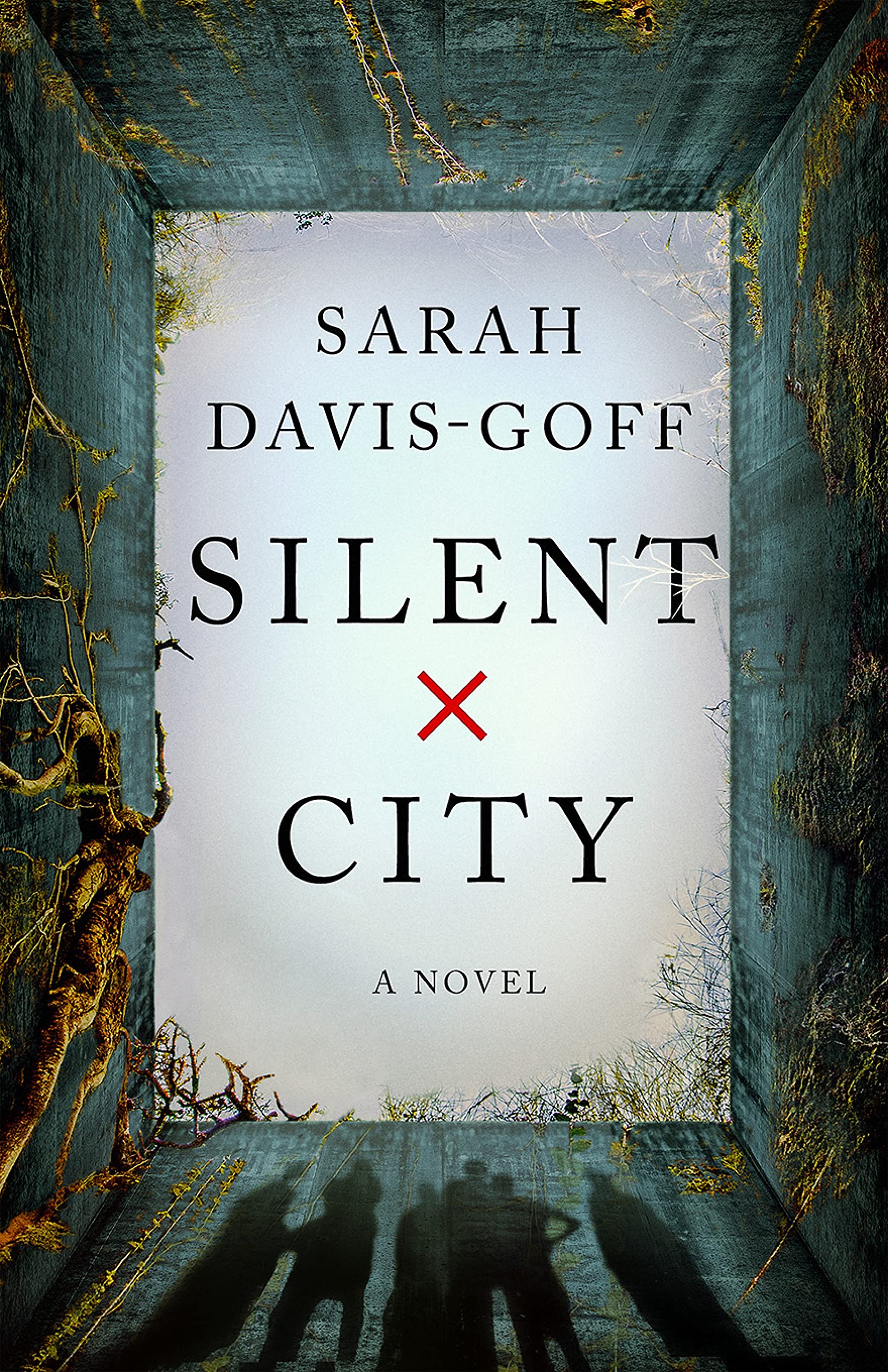
Silent City by Sarah Davis-Goff

In this darkly atmospheric novel set in a futuristic Dublin, a young woman fights for justice in an oppressive society ruled by fear during a zombie-like apocalypse.

Sarah Davis-Goff’s Silent City centers on a young woman faced with impossible choices in a post-apocalyptic version of Dublin. “To me, banshees are heroes. I saw images of banshees growing up at home on the island, women dressed in black, warriors. The ones who fight the skrake. HERE TO PROTECT, the grimy posters said.” Orpen was raised by her two mothers on an island devoid of other humans and, crucially, of skrake: monsters that bite, infect, and kill. The skrake “takes up your body and uses it like a puppet. Fast, vicious, strong, with long sharp teeth, the skrake is like a child’s bad dream.” Following the death of her mothers, Orpen ventures into a world she knows nothing about. She is bent on survival in this terrifying landscape of zombie-like beasts.

In the dystopian city that was once Dublin, she becomes a banshee, a member of the entirely female troops of paramilitary security forces ostensibly meant to protect, but actually used by “management” (entirely male, sinister, self-serving) to forage for supplies and keep other lowly citizens in check. Wallers work night and day, repairing and rebuilding the city’s walls against the skrake; the roles of farmers and breeders are equally humble. Banshees work in pairs: Orpen has found a surreal closeness and loyalty with her partner: “I never saw a woman who wasn’t sometimes beautiful, but Agata always is.”

The zombie apocalypse represents a possibly overdone subgenre, but Davis-Goff (Last Ones Left Alive) takes her readers into fresh territory here. Orpen’s struggles are not merely survivalist; raised with only two human companions and little context for other relationships, she must learn to chart new loyalties, friendships, and partnerships against existential questions of right and wrong. The city claims to provide protection and sustenance but, in fact, uses the banshees to commit atrocities and to exercise control over a subdued population, frightened into total silence lest they excite the skrake. Orpen and the women she serves alongside–all guilty of cruelties under orders–must balance loyalty against justice. “Those who can still feel for another, we feel it. I have to believe we do. I have to believe there are enough of us to change the world.”

Silent City is grim but hopeful, tackling questions of risk, trust, courage, morality, and sacrifice. Davis-Goff’s prose is stark but lovely. A strong feminist voice, austere circumstances, and a resolute sense of integrity make this dystopia memorable and inspiring.


This review originally ran in the August 25, 2023 issue of Shelf Awareness for the Book Trade. To subscribe, click here.


Rating: 7 dreams.

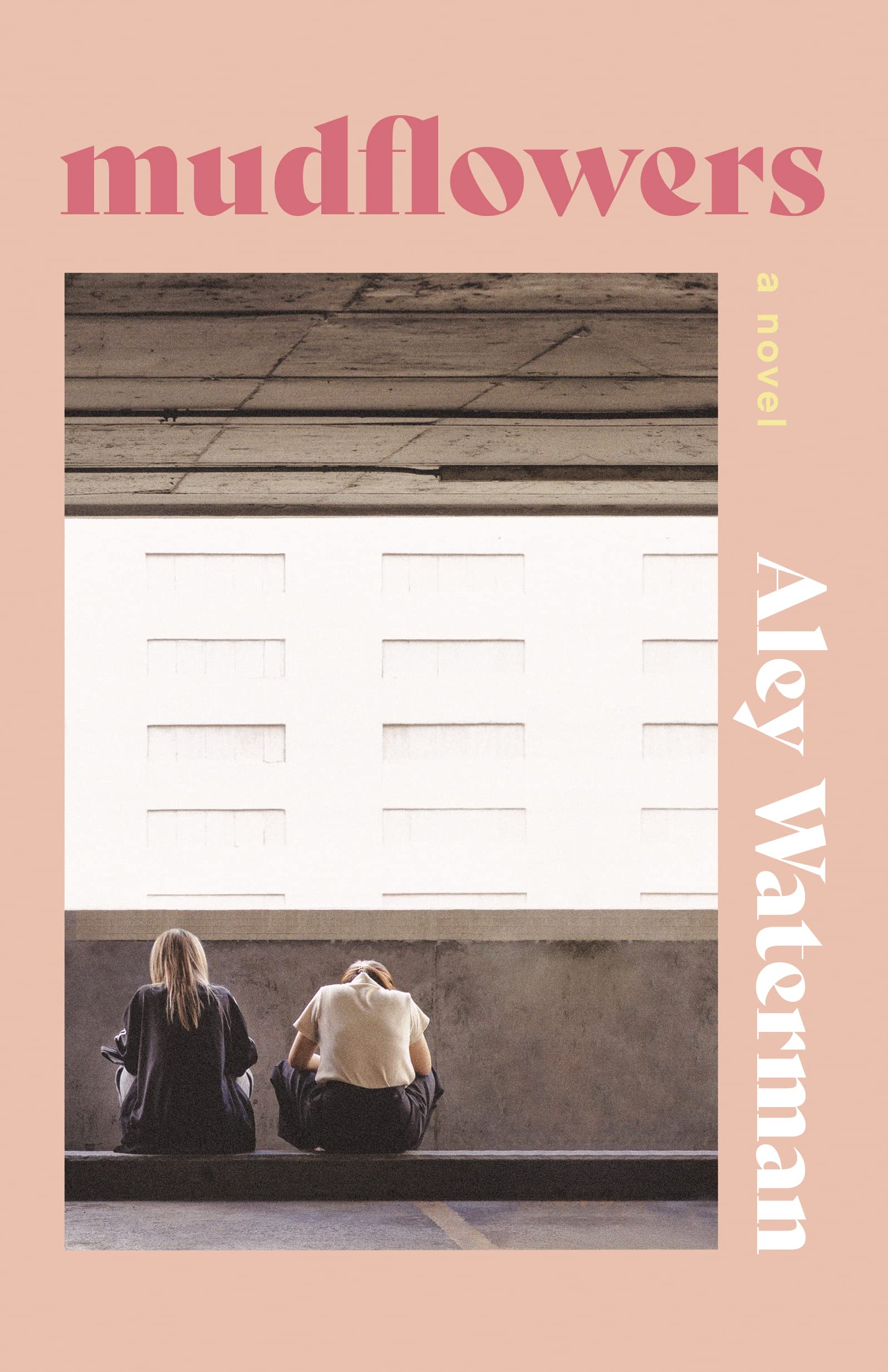
Mudflowers by Aley Waterman

In this reflective debut, young artists in Toronto form a love triangle with both transcendent and painful results for all.

Aley Waterman’s sensitive first novel, Mudflowers, follows a young woman exploring intimacy, biological and built families, and art. A love triangle twists and reshapes itself, with both trauma and revelation. “I wanted so badly to love in a good way,” says Sophie, the protagonist and narrator, 27 years old and a Newfoundland native who recently moved to Toronto, where she lives with a misogynistic writer and her best friend since childhood. He is a beautiful man named Alex who is also her on-and-off lover. Sophie sees Maggie reading her poetry at an event and is immediately swept away. Maggie is talented and enigmatic, “with big eyes full of wide highways.” The two become close friends and, sometimes, lovers.

Sophie creates glass mosaics for wealthy patrons, Maggie writes, and Alex works on indie films. They are young artists scraping together livings in a big city, taking drugs amid art events and the bar scene. They slide frankly and openly in and out of sexual relationships. Sophie obsesses over her mother’s death. Alex’s mother left when he was 12, their parallel losses an unspoken understanding. The addition of Maggie to their close relationship, forming a trio, acts as a magnetic force that both imbalances and strengthens the bond. Secrets surface, and the balance shifts again.

Mudflowers follows Sophie to an artist colony at a castle in France and eventually home to Newfoundland. Place is important to this thoughtful protagonist, who is given to contorted philosophic musings. Newfoundland is “the only place I had been to where there is enough space and isolation and distance from the world for people to really be themselves without even thinking about what that meant.” Earlier, she notes that “in cities so many lives are wildly proximate to each other, just divided by a wall here or a door there, but each wall determined some sort of fate, keeping us organized and away from one another.” She wonders: “What if the people who should be most important in life were just separated by a wall, and what if that wall meant those people never met!” Sophie has met the people most important to her, but keeping them together will be another feat.

Sophie’s physical travels are dwarfed by the scale of her cerebral and emotional movements, as she tortuously navigates desire and fear. She is preoccupied with art, how to love, and purposeful attention. “[W]as it how beauty was directed or how it was received that was most important?” she ponders. “How are you supposed to be a real person when you’re also supposed to be the woman inside of someone else’s mind?” She also often considers mothers and their absences: “Maybe we all need more mothers than we have,” she thinks. “Maybe we all need as many mothers as we can get.” Mudflowers is thought-provoking, expansive, and raw.


This review originally ran in the August 22, 2023 issue of Shelf Awareness for the Book Trade. To subscribe, click here.


Rating: 7 birds.

The Last Language by Jennifer duBois

A Harvard-trained linguist enters into an intimate relationship with a nonverbal man in this riveting riddle of a novel.

The Last Language by Jennifer duBois (A Partial History of Lost Causes; Cartwheel; The Spectators) is an utterly compelling puzzle of linguistics, perspective, and some version of love. Angela is 27 years old when her husband dies suddenly; she is four months pregnant (a pregnancy she will lose, “because of the stress, possibly”) and has a four-year-old daughter. Just months later, she is kicked out of her Ph.D. program in linguistics at Harvard, following a nasty exchange with her “intellectual rival and personal archnemesis.” With her daughter, Angela moves in with her mother and takes a low-paying job running an experimental therapy for “facilitated communication” to help nonspeaking patients with motor impairments. This questionable opportunity will have profound consequences. Readers gradually become aware that Angela is writing her first-person narrative while incarcerated. She tells of her love affair with a young man who can communicate only through Angela herself. Or, if readers do not believe her account, she has taken egregious advantage of a seriously disabled man.

Angela’s background in linguistics gives her a complex, many-layered perspective on Sam O’Keefe’s ability to communicate and even to think: “if thinking was language, the linguistic determinist would argue, then there was nothing to discover within people who didn’t have it already.” Despite early reservations, she is quickly taken with Sam’s sardonic humor, the life behind his startling eyes, his wit and intelligence–at least according to her account. Angela is very smart and has a thoroughly expert grasp of languages and linguistic theory; she knows what this looks like, but she knows her love for Sam, and his for her, is real. Readers must decide for themselves. This question is at the deeply intriguing heart of The Last Language. Is Angela a deluded predator or among the most misunderstood lovers of all time? DuBois’s choice to give readers only her perspective on this story is critical to the contortions of this gripping psychological drama.

Angela is ardent. She makes poor decisions, but her love is pure. She sprinkles her narrative with linguistic trivia and philosophic musings: she anticipates the arguments of the prosecution in her case and those of the linguistic scholars who would say “a person cannot conceive of what he cannot name.” She writes to Sam, who will never read her account: “In a very real sense, there was no you.” Together, she and Sam read Nabokov: Pale Fire rather than Lolita, but the parallels present themselves. Backed by Angela’s academic scholarship and the philosophy of what constitutes humanity, The Last Language is a smart intellectual riddle and a mystery with the highest of stakes. Readers will find it unforgettable.


This review originally ran in the August 14, 2023 issue of Shelf Awareness for the Book Trade. To subscribe, click here.


Rating: 8 angles.

Ellie’s Story by W. Bruce Cameron

Another one from my young friend. I knew this was a risky book for me, because dogs are my kryptonite, or my Achilles’ heel, if you will. My young friend does not know this. I read the book anyway, but I knew it would hurt me, and it did.

It’s a good book, and I enjoyed it in some ways, but an important part of this review is to say that it hurt me.

Librarians I have known have a shorthand code for a way to talk about whether books will hurt us. We say, does the dog die? This is generally metaphoric – there may not even be a dog – but you get the idea; if ‘the dog dies,’ the story takes a tragic turn that might make readers cry. In this book, the dog does not literally die, but I did still cry. (Note that I am an especially messy reader on the topic of dogs. Your mileage as always may vary. But if you have a soft spot like I do, beware.)

The title dog Ellie narrates her story from birth. Cameron does a good job with this voice: not only a voice of innocence but a canine one, Ellie tells what she sees and hears around her, her comprehension gradually growing, but the reader mostly understands more than she does. (She is, in a strange turn, able to relate human dialog, which we understand but she does not.) A German shepherd puppy, she’s chosen by a police officer out of her litter, and trained to be a search-and-rescue dog. She bonds with this owner/handler, Jakob, but he is injured in a shooting and she’s reassigned to a new handler, Maya. Ellie is an especially talented search-and-rescue dog, and continues to do excellent work with Maya. Ellie’s Story entails several great, heroic events, culminating in one I’m going to call pretty unlikely; but it’s a very impactful tale, emotional and moving (obviously), and with some fun educational info about search-and-rescue dogs built sneakily in. I also like that this edition includes discussion questions and activities both for the family at home (warning: this book has your family signed up for some significant work!) and for the classroom. Solid.

A good book, but risky for some of us. I’ll steer clear of more like it, myself.


Rating: 7 socks.

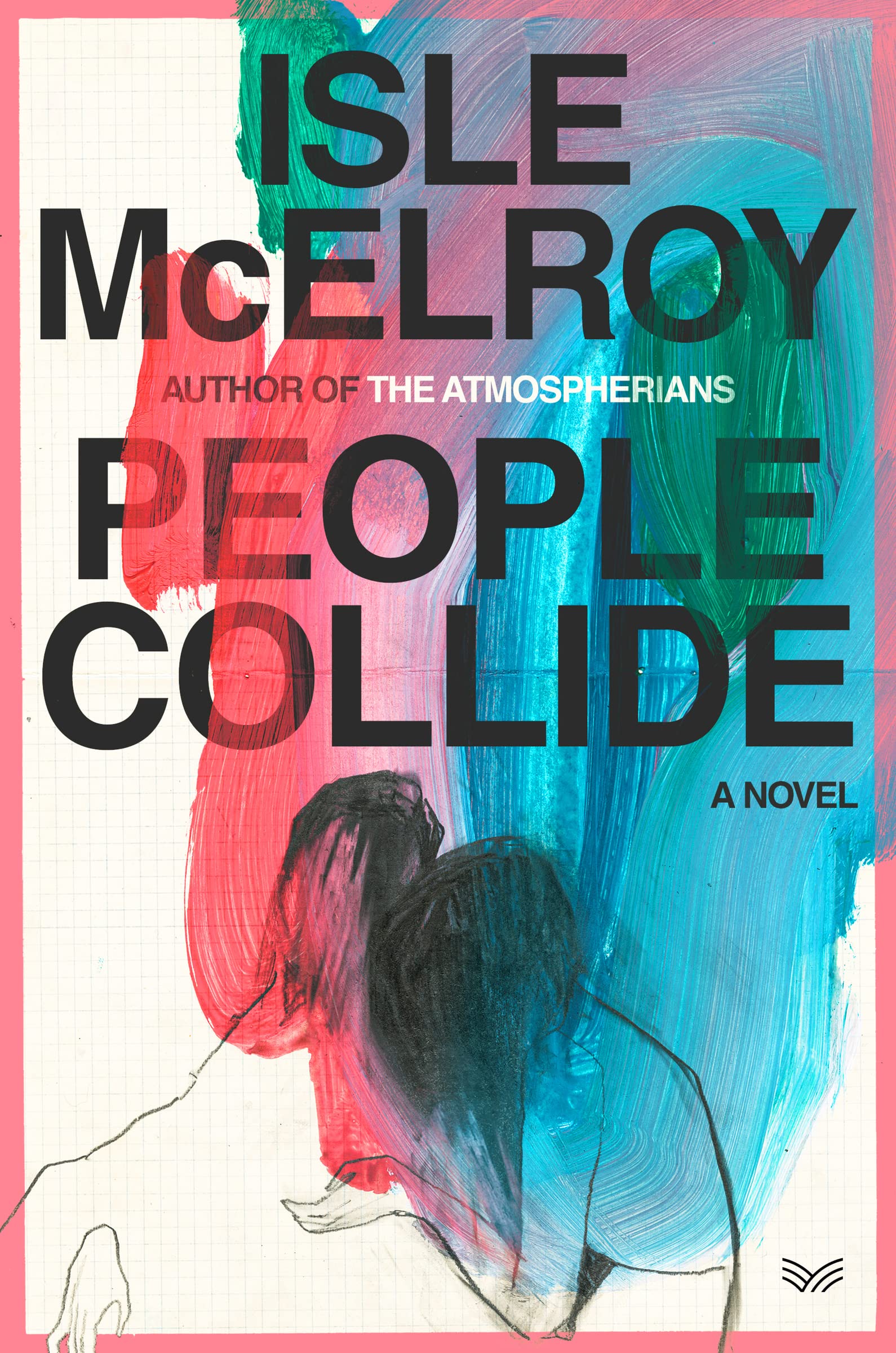
People Collide by Isle McElroy

In this smart, absorbing, thought-provoking novel, a husband and wife mysteriously swap bodies and experience widely varying impressions and reactions.

Isle McElroy (The Atmospherians) takes readers on a mind-bending journey of gender exploration and body politics with People Collide. Much of the novel is told from the perspective of Eli Harding, an American man living in Bulgaria with his wife, Elizabeth, a highly accomplished writer with a prestigious teaching fellowship. Eli is also a writer, but less successful–at everything–than his impressive spouse. In the novel’s opening pages, he discovers that he has woken up in Elizabeth’s body. Elizabeth herself has disappeared.

Eli first hides away in the couple’s apartment, waiting for Elizabeth–whom he assumes now occupies his body–to return, or for this mysterious “Incident” (as he thinks of it) to right itself. When he ventures out, he dresses Elizabeth’s body, applies makeup, and decides that she was right: a male friend was condescending to her all this time. Then both Eli’s mother and Elizabeth’s parents push for action: he is sent to Paris by his own mother (who believes he is Elizabeth) to search for her vanished son. He finds his wife–indeed, in his own body–and the surreality intensifies.

People Collide comments on gender and the roles that the larger world expects from people who present as men and as women. Elizabeth is an ambitious, dominant, talented, driven, no-nonsense individual; Eli is a hardworking writer but has mostly made his living as a restaurant server. He’s followed her to Bulgaria for her more prestigious work. They do not disagree that she is his superior: “‘I’m smarter than you, I’m kinder than you, I’m more talented and better looking. And you benefit from all of that. It’s exhausting. And I want to benefit. Things should be easy for me.’ It didn’t hurt to hear her say those things. I felt the same way.” Eli’s well-muscled body is six inches taller than Elizabeth’s, and she carries it “with a graceful confidence that I had never shown in my life.” He used to walk too quickly for her, which she found “frustrating and selfish.” In her body, he notes: “I never slowed down for her. Not until now, when I had no other choice.”

Beyond the gender binary and the public’s assumptions based upon appearances, McElroy’s insightful novel also examines class, privilege, the art world, and family relationships. Elizabeth’s parents are smugly satisfied with their money, connections, and community in a small, liberal, artsy town in Michigan; they look down upon Eli’s thrice-divorced mother. Everyone judges Eli harshly for abandoning his wife–an irony, because it was, in fact, Elizabeth who did the abandoning, in his body.

People Collide is sly, clever, funny, provocative, and compelling. It offers a world and a story to get lost in.


This review originally ran in the July 28, 2023 issue of Shelf Awareness for the Book Trade. To subscribe, click here.


Rating: 7 steps.

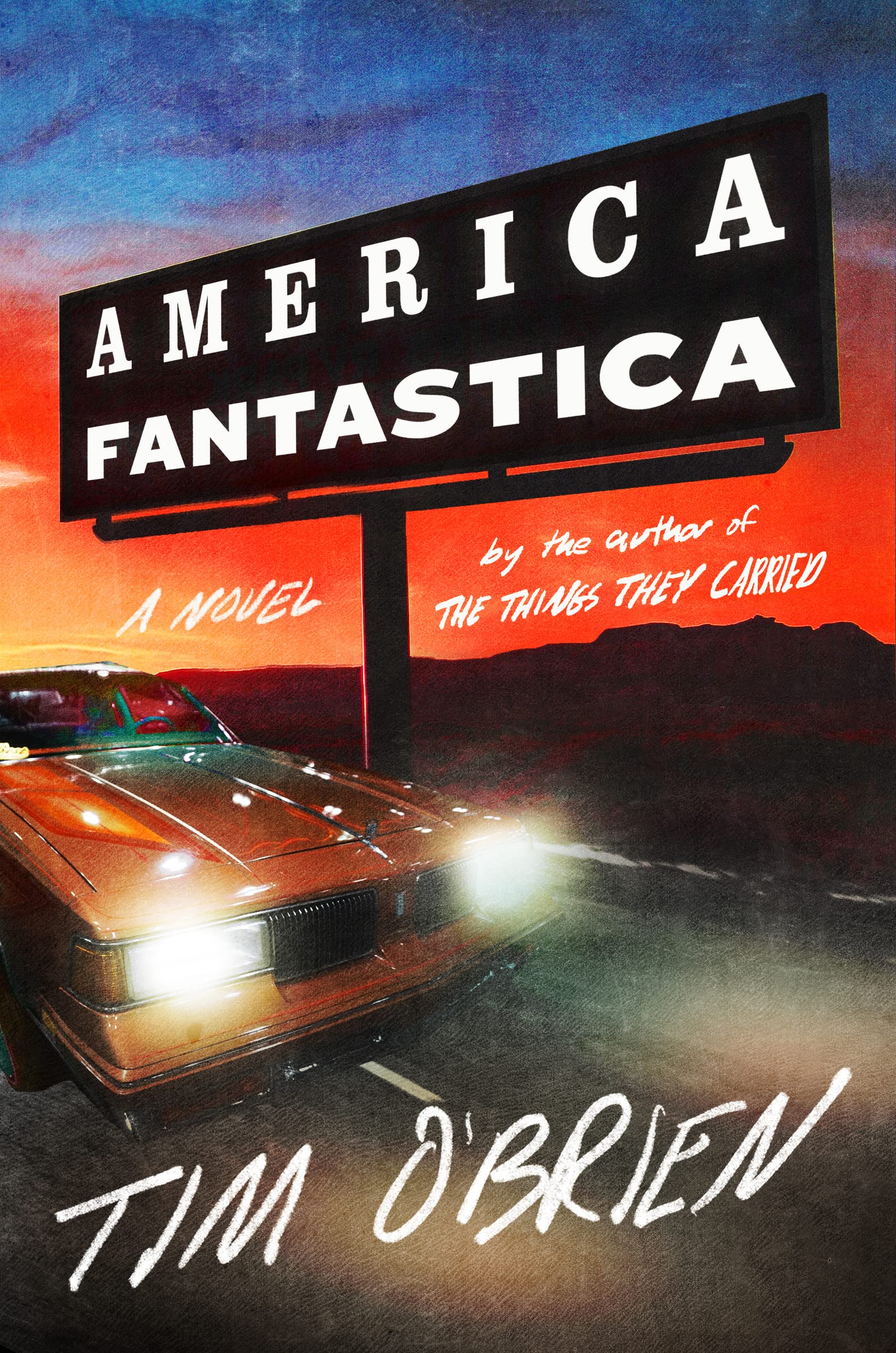
Maximum Shelf: America Fantastica by Tim O’Brien

Maximum Shelf is the weekly Shelf Awareness feature focusing on an upcoming title we love and believe will be a great handselling opportunity for booksellers everywhere. The features are written by our editors and reviewers and the publisher has helped support the issue.

This review was published by Shelf Awareness on July 27, 2023.


Set against the backdrop of an unnamed but recognizable American presidency, Tim O’Brien’s black comedy, America Fantastica, takes both the dark and the comic to epic proportions with simultaneous absurdism and poignancy. O’Brien (The Things They Carried; If I Die in a Combat Zone, Box Me Up and Ship Me Home) here offers his first novel in more than 20 years–a sprawling, madcap tale of road trips, crimes large and small, love, loss, and, most of all, lying. Like The Things They Carried, America Fantastica revels in detail and highly specific lists, so that the world it portrays feels robust and brimming.

Its opening lines set the tone, far-reaching and grandiose: “The contagion was as old as Africa, older than Babylon, wafting from century to century upon sunlight and moonbeams and the vibrations of wagging tongues. During the second decade of the twenty-first century, the contagion alighted in Fulda, California, riding aboard the bytes of a MacBook Air…. Reinvigorated by repeated utterance, fertilized by outrage, mythomania claimed its earliest victims among chat room patrons–the disappointed, the defeated, the disrespected, and the genetically suspicious…. The disease spread northward into Oregon, eastward into Idaho, arriving on Pennsylvania Avenue in January of 2017.”

Readers first meet O’Brien’s antihero in action. “On an afternoon in late August of the year 2019, after locking up the JCPenney store on South Spruce Street, Boyd Halverson strode out to his car, started the engine, sat without moving for several minutes, then blinked and wiped his eyes and resolved to make changes in his life. He had grown sick and tired of synthetics, rayon in particular.” He departs his Kiwanis brunch early to head to the bank, where he presents a gun and leaves with just under $81,000 and the teller, “a diminutive redhead named Angie Bing.” She is technically kidnapped, but Boyd will repeatedly try and fail to ditch her over the coming months. His name is not really Boyd Halverson and his entire résumé is a fiction. He had in fact been married, had a child, had an impressive career as a foreign correspondent and nearly won a Pulitzer Prize. But that life was built on lies, culminating when “at last he collided with the sudden, brutal, and well-earned catastrophe he’d been patiently anticipating for decades.”

Boyd and Angie hit the road, seeking first Boyd’s ex-wife, Evelyn, and then her father, Dooney, against whom Boyd holds a significant grudge. Their travels prompt movements by an increasingly colorful cast of bizarre characters. Dooney and his partner Calvin flee the possibly murderous Boyd from Port Aransas, Tex., to Bemidji, Minn., and onward. Randy, Angie’s boyfriend, an almost-laughably amoral electrician/rodeo cowboy/burglar, tracks Angie from Santa Rosalía, Mexico, to Santa Monica, Calif., and beyond. Along the way, he meets two ex-cons at a diner in Los Angeles who latch onto his interest in an unreported bank robbery. These characters set the tone of a novel dealing equally in ludicrous comedy, political commentary, and pathos. They will be joined in O’Brien’s imaginative, wide-ranging tale by a violent, egomaniacal CFO; a bank president and his wife, both with a gift and passion for fraud; a racist cop; an Amazonian CrossFit gym owner and amateur detective; a small-town sex worker with either an excellent act or multiple personalities. Events range from disturbing to ridiculous, often simultaneously, as when Boyd gets his toes broken with a monkey wrench by an unlikely pair of sidekicks. These characters and events, in a series of deftly drawn American locales, form a fantasmagoria, a version of reality that both bizarrely exaggerates and digs directly into the emotional truth of the real world.

O’Brien opens with a Yeats epigraph: “We had fed the heart on fantasies,/ The heart’s grown brutal from the fare.” His novel speaks of a nation that craves delusion and deception; O’Brien’s profile of the 2019 United States is savage, blending satire and realism. “Off with their heads! Climatologists? Chemists? Off with their tongues! Who needs reality when you have Venom? Who needs history when you can manufacture your own?” Is it plausible that Boyd, an esteemed investigative journalist, exposed as a liar, might in turn expose larger wrongs than his own?

America Fantastica showcases a broad emotional range, as Boyd Halverson (aka Otis Birdsong, aka Junior, et al.) turns out to harbor some very real trauma amid a fabricated personal history, and at least one complex personal relationship. It is a story chock-full of lies or fictions, a theme O’Brien has explored in earlier works as well. “[Boyd] had fervently believed every word, every unearned moment of an unlived life. Yes, he was a Princeton graduate. Yes, he had distinguished himself in the Hindu Kush, scaled Mount McKinley, survived brain cancer, scored near-perfect on his SATs. But so what? Why risk failure when a fib was always conveniently at hand?” By the novel’s end, readers will have learned–more or less, as far as we can tell–the “real” truth. This feels in some respects like a hopeful conclusion. But the truth itself is more grim than hopeful, which is perhaps the most realistic–truthful–possibility.

As in the earlier works for which he has long been recognized, O’Brien here demonstrates an electric combination of deadpan humor, vicious wit, and a masterful eye for detail in capturing a peculiarly American form of torment.


Rating: 7 wiggles.

Come back Monday for my interview with O’Brien.

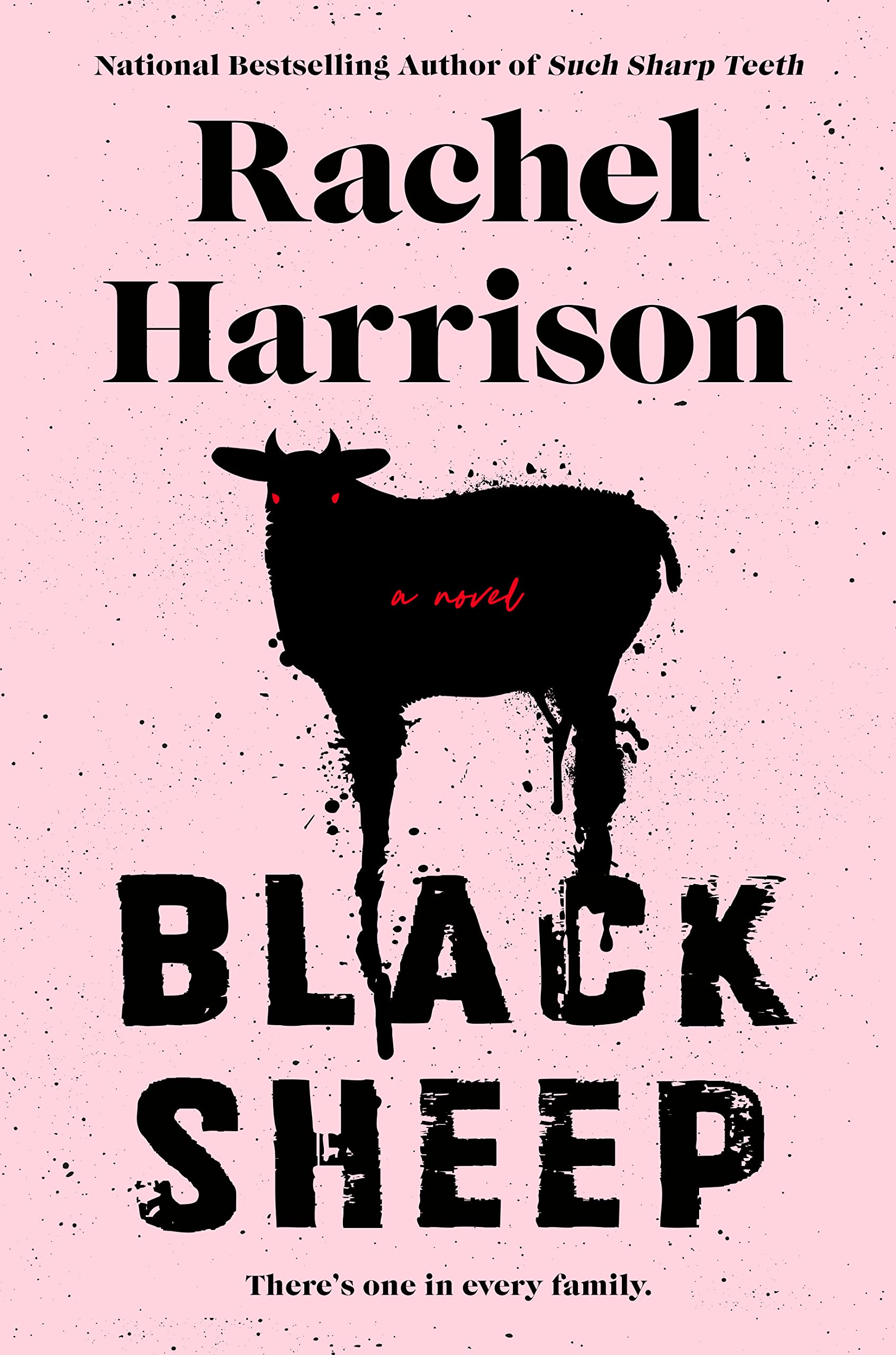
Black Sheep by Rachel Harrison

In this darkly comedic yet philosophical horror novel, an unhappy 20-something returns home to the insular community and church she’d left behind only to find frights worse than she’d remembered.

Black Sheep by Rachel Harrison (Such Sharp Teeth; Cackle; The Return) moves inexorably from the darkly absurd into terrifying horror. Readers follow apathetic, antisocial Vesper Wright as she returns home to her estranged family and learns that what she knew of her unorthodox upbringing was just the beginning.

Vesper is 23 years old, working as a server at a chain restaurant “in an unglamorous part of Westchester County, sporting a polo and serving plates of baby back ribs I was fairly certain were generated in a lab.” She’s unhappy but relieved to be free from the family, community, and church in which she was raised–until she receives an invitation to attend the wedding of her former best friend and her first boyfriend. Magnetically drawn to the place she misses, dreads, and still thinks of as home, Vesper reencounters not only the unusual church but her powerful mother, a horror movie megastar who never proved very maternal: “I’d only ever seen her emote on screen, her vulnerability behind glass. She was more human to me when she was pretending to be someone other than herself.” What she finds at home will blow Vesper’s world, and perhaps literally the entire world, wide open. She reconsiders her memories and “that our past is not the truth. It’s warped by time and emotion, inevitably muddied by love and resentment, joy and shame, hope and regret.” Eventually Vesper will have to rethink everything she thought she understood about her family, her church, and her past–and reexamine her loss of faith.

Early on, Black Sheep exhibits black humor and an accessible 20-something nihilistic angst. Details of Vesper’s former church are darkly comic. As the stakes rise, however, Harrison’s imaginative plot turns gruesomely to true horror. Fans of the genre will find pleasure in both the playful and the ghastly aspects. Aside from the terror, Vesper’s story ruminates on themes that include nature vs. nurture, the legacy of family trauma, and the repercussions of organized religion in its various forms. “Nothing terrified me more than this. The notion that without a choice we inherit parts of us that we cannot change. Cannot cut out.” This subject matter elevates a horror novel to a study in philosophy, even as the bloodletting ramps up.

Black Sheep is can’t-look-away riveting in its best and most disturbing moments, gripping readers on both conceptual and visceral levels. Vesper’s discontent and wrestling with her own worst self, her former family’s creepy cultlike demeanor, and the final crescendo of action add up to an unforgettable adventure.


This review originally ran in the July 14, 2023 issue of Shelf Awareness for the Book Trade. To subscribe, click here.


Rating: 6 glasses of wine.

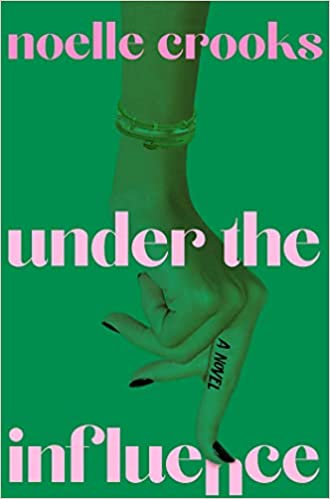
Under the Influence by Noelle Crooks

An aspiring writer goes to work for charismatic self-help guru in a propulsively paced, Stepford-like tale of workplace violations and the search for self-actualization.

Under the Influence, Noelle Crooks’s first novel, follows a young woman into a work opportunity that offers the chance for great success–or a total loss of self.

A few years ago, Harper Cruz moved from Poughkeepsie, N.Y., to the big city to make her way as a writer, and then slid into what she thought was a safer position working in publishing. Now, laid off, she’s been struggling to make rent, aided by a perfectly lovely best friend, Poppy. It’s Poppy who finds the listing for a “Visionary Support Strategist” to a social media sensation, influencer Charlotte Green. As soon as she’s applied, Harper finds herself whisked off to Nashville, Tenn., rushed through signing a contract for an unbelievable amount of money, and inducted into the work family at the Greenhouse, where tiny, magnetic, manipulative Charlotte rules a team of employees who are both in love with and terrified of her.

Harper is bookish; she couldn’t have named a single influencer before she worked for one; and her own Insta, according to a #GreenTeam colleague, is “sad.” She has off-and-on concerns about Charlotte’s self-help empire; her boss notes more than once how much integrity Harper has. But she falls under the spell of Charlotte’s charm and carefully meted compliments and soon embraces the long hours, absence of work-life balance, and cult-like branding that defines the Greenhouse. Mandatory dance parties, social media oversharing, and bottomless green juice should compensate for a few HR violations, right? Harper has a new best friend and possibly even a romantic interest, both at work. She sees herself losing touch with Poppy and her own parents, but Charlotte needs her–even at night, over the weekends, and on holidays. Charlotte warns her staff, of course, that their families won’t support their work: “Powerful people can be intimidating.” If Harper starts seeing her relationships break down, she figures, “I guess that’s just the price of success.”

Under the Influence is propulsive in its pacing, with the chipper tones of the Green Team and the emotional roller coaster that is Harper’s work (and only) life. That readers can see warning signs that Harper herself often fails to note makes the novel quietly terrifying, even in the upbeat spin so carefully crafted by Charlotte’s helpers. The result is disorienting, even mind-bending: Harper’s story is green-clad, photogenic, cheerful, and horrifying. Secondary characters at the Greenhouse are finely drawn and nuanced. After wrestling with workplace culture, female friendships, and the risks inherent in coming of age, Crooks’s debut ends on a hopeful note, blending horror into fantasy. Compulsively readable, frightening but addictive, Under the Influence perfectly captures some of the contradictions and challenges of modern work life.


This review originally ran in the June 12, 2023 issue of Shelf Awareness for the Book Trade. To subscribe, click here.


Rating: 5 red flags.

Walk the Darkness Down by Daniel Magariel

Grim but with a final upward turn, this novel of loss, grief, and strained bonds investigates human connections and disconnections.


In Walk the Darkness Down, Daniel Magariel (One of the Boys) introduces a couple separately torturing themselves through grief and eventually coming together again.

Marlene and Les, who live in a small, troubled town on the Atlantic coast of the United States, lost their young daughter years ago. In suffering, they mistreat each other. Les is a commercial fisherman on an offshore scalloping boat with a crew of other men; punishingly hard physical labor, camaraderie, and violence combine in a cocktail that helps distract him from his loss. Marlene drives the streets at night, mining memory, searching for the deep and searing pain that will help her remember. During his brief stays at their apartment, they repeat a pattern: Marlene breaks the bedroom door and Les fixes it. When Les is offshore, she picks up local sex workers and brings them home to clean them up and feed them. One of these encounters develops into something resembling friendship, just as Les’s crew fractures and the dangers of his work increase. Marlene clips newspaper articles about freak natural occurrences: mass deaths of red-winged blackbirds and horseshoe crabs; new migrations of American bullfrogs; wildfires, droughts, and the widening of tornado alley. As their two lives approach new crises, Marlene and Les must chart a course out of self-destruction.

Magariel’s prose is as quietly lovely and evocative as his subjects are bleak. “The woman settles into her chair, and Marlene proceeds to lay bare the details of her face. The worry lines of her forehead Marlene excavates with a pass over the brow.” His settings showcase realistic detail, and both beauty and damage: fecund coastlines and wetlands, the harsh sea, an old family home, and garishly decorated working-class bars. Marlene and Les treat one another with alternating callousness and tenderness; Les’s relationships, especially on the boat (with what Marlene calls his “other family”), reveal a memorable form of rough, ungentle love.

Relationships across great distances–physical and psychic–are a central concern of this novel, which is focused on how its characters handle pain. “You got to abide with your darkness as if it were a scared child that wakes up in the middle of the night and needs to be walked back down to bed,” Marlene’s newest acquaintance asserts, but each character wrestles with hurt in their own, often-wounding ways.

Stark and tragic, Walk the Darkness Down offers a harrowing view of individual and familial suffering–with empathy and, ultimately, with hope.


This review originally ran in the June 6, 2023 issue of Shelf Awareness for the Book Trade. To subscribe, click here.


Rating: 7 lobsters.

Clap When You Land by Elizabeth Acevedo

Clap When You Land is a novel in verse, in two alternating perspectives. Camino lives in a village in the Dominican Republic with her Tía, who has raised her since her mother died some years ago. Her father lives in New York, and comes to stay each summer for several months. Camino loves her father, and feels loved in return; he supports her and her Tía better than they could afford to do on their own, with the small funds raised by Tía’s doctoring duties. She’s a healer and midwife, skilled with herbs and prayer, and Camino wants to follow in her footsteps, but take it a step further: her dream is to study medicine at Columbia University. Meanwhile, Yahaira lives in New York City with her parents. She’s a former chess champion, but she’s given it up, which has put a rift between her and her father. The two girls are just two months apart in age, approaching 17. They have the same father, but they don’t know it until after he is killed in a plane crash, traveling from his home with Yahaira to spend the summer in the DR, as he does every year.

In their alternating chapters, we see two teenaged girls wrestle, first, with their futures: Camino is concerned about where to go with her life if her father doesn’t help her get to the States. Her options in the DR are few, and there is a predatory young man after her. Yahaira is upset because she’s discovered that her father had a secret – although it’s not the big one she’s about to learn, that she has a sister. Each girl has a best friend: Camino’s is about to give birth, and Yahaira’s is also her partner. We see them both struck by the loss of a father that each loved and admired. And then we see them hit by another shock: they’ve lost a father, but each has gained a sister. What will they do with that knowledge?

I like the questions raised by the twinning of the two girls, what each might have been under different circumstances, what is conveyed by certain advantages. (Camino’s household is better off than most in her village, but still much poorer than Yahaira’s unremarkable middle-class home in Morningside Heights.) At its heart, this is a story about family love, grief, and forgiveness. It’s lovely told in simple verse: easy to read but also contemplatively paced, dealing as much with emotions as events. As a YA novel, I think it would be well suited to thinking about loss for young people, or for any of us.

Papi’s two families, and his keeping the girls in the dark about each other’s very existence, isn’t much dealt with: the character is dead before we meet him, so we only see him in their memories, and he never gets to justify his choices. That’s rather more complicated.

Another thread involves the crashed airplane, which is based on the real American Airlines flight 587. Both the fictional and the real flights left New York headed for the DR filled with Dominican-Americans; the Dominican community in New York was badly shaken by its loss, and that’s a large part of what inspired Acevedo to write this novel (as described in her Author’s Note). That community-wide impact is well described here, which I think is a service.

Sad, thought-provoking, but also a beautiful honoring of a community.


Rating: 7 bachata songs.