The Greatest Lie of All by Jillian Cantor

A young actress takes on the role of a glamorous romance author and gets more mystery–and romance–than she’d reckoned for.


The Greatest Lie of All by Jillian Cantor (Half Life; The Hours Count; Margot; The Lost Letter) is a propulsively paced story of intrigue, romance, and suspense starring two women a generation apart navigating family, love, secrets, and art. In one of their several parallels, each uses a professional pseudonym, so that four names delineate these two character arcs.

Readers meet the young, up-and-coming actress Amelia Grant just after the death of her beloved mother, and in the moment when she discovers her actor boyfriend in bed with his costar. At this low, Amelia is primed to accept her biggest role yet: to play the fabulously successful romance author Gloria Diamond in a biopic. Gloria had been Amelia’s mother’s favorite; it feels like a sign and a way to be close to the mother she’s lost, the only person who had called her by her birth name, Annie.

Heartbroken but determined, Amelia travels from Los Angeles to Gloria’s remote Seattle-area home to get to know her subject before filming begins. But “the Gloria Diamond” is distinctly unfriendly, cold, and dismissive. Even as Amelia finds a tentative friendship with Gloria’s son, Will (“cute, in an academic kind of way”), she despairs at ever understanding what makes the older woman tick. Gloria’s career was built on her famous, brief romance with her late husband, Will’s father. But the more Amelia learns, the less convincing that story is. She embarks on an informal investigation fueled by shadowy motives: her desire to play a “true” Gloria Diamond; her curiosity about the nature of love, especially as her mother so appreciated it in Diamond’s fiction; and Will’s reluctant desire to understand his mother. As she pursues the history of the author once known as Mary Forrester–Mare to her friends–Amelia begins to wonder about her own role in the drama unfolding before her.

In chapters that shift between Amelia’s perspective and that of the young Mare, The Greatest Lie of All shines in its plot twists and surprises, and, most of all, its pacing, which accelerates from a slow burn to a heart-thumping momentum. The tension increases, stakes rising as Gloria/Mare and Amelia/Annie must reckon with their pasts to chart their shared present. Danger accompanies every possibility of romance, and family history matters more than it originally appears. Cantor’s experienced hand shows in this classically crafted thriller, which will keep its readers tautly engaged to the final scene.


This review originally ran in the September 24, 2024 issue of Shelf Awareness for the Book Trade. To subscribe, click here.


Rating: 6 glasses of wine.

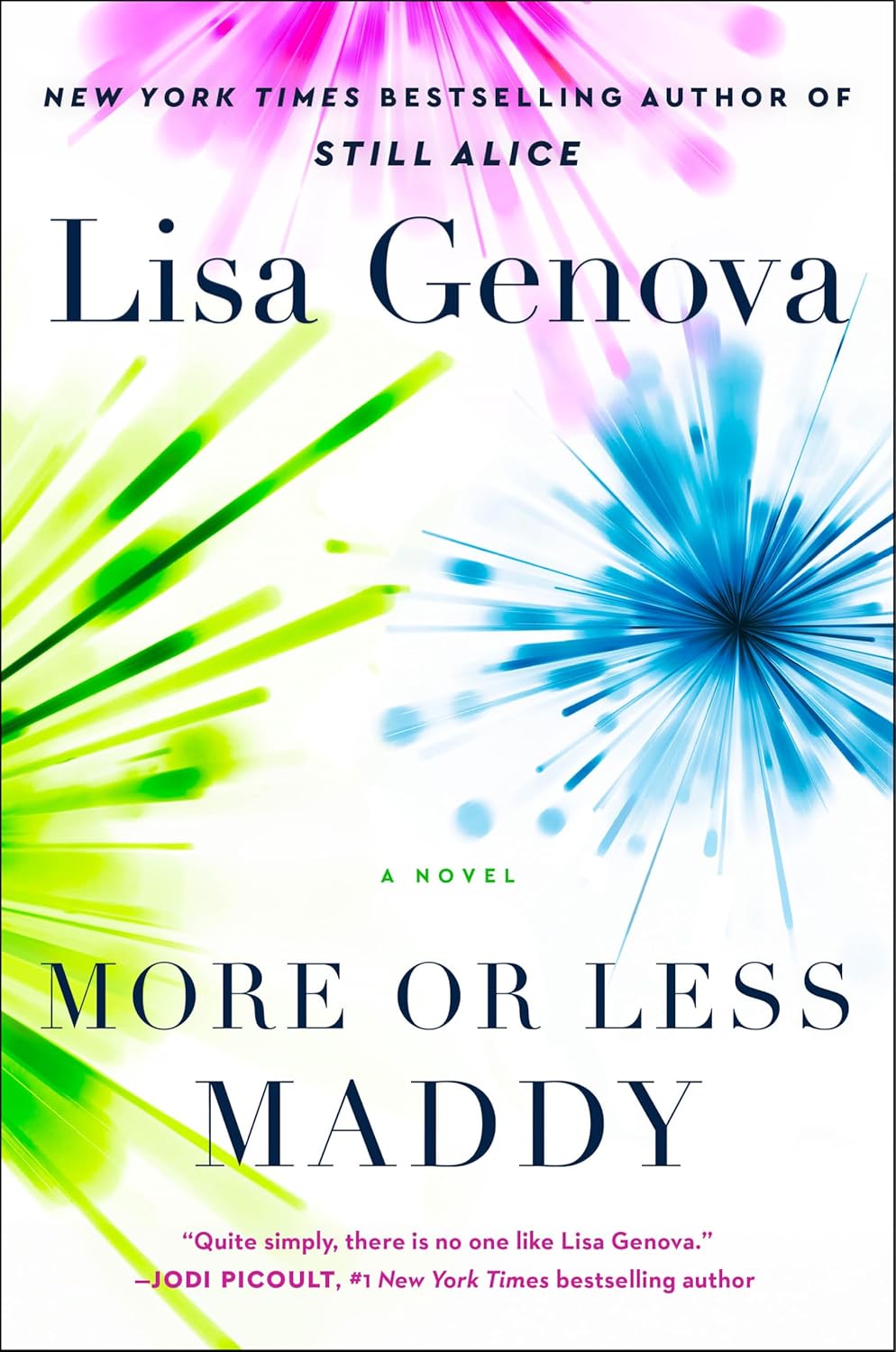
Maximum Shelf: More or Less Maddy by Lisa Genova

Maximum Shelf is the weekly Shelf Awareness feature focusing on an upcoming title we love and believe will be a great handselling opportunity for booksellers everywhere. The features are written by our editors and reviewers and the publisher has helped support the issue.

This review was published by Shelf Awareness on August 27, 2024.


Harvard-trained neuroscientist Lisa Genova debuted as a novelist with Still Alice (2007), about a woman who is diagnosed with early-onset Alzheimer’s disease. Genova’s later novels Left Neglected, Love Anthony, Inside the O’Briens, and Every Note Played feature characters with hemi-spatial neglect, autism, Huntington’s disease, and ALS, respectively. Her sixth novel, More or Less Maddy, follows a young woman with bipolar disorder. As ever, Genova brings both an expert understanding of the neuroscience and a masterful eye for compelling characters in an emotionally textured narrative. Maddy’s story is completely absorbing; it may keep readers up all night.

Maddy Banks has had a privileged upbringing in suburban Connecticut. There were some tough times in her early childhood, and her father is a shadowy figure. But since her mother, Amy, remarried, it’s been easy: dinners at the country club, a popular boyfriend, a highly successful older sister, and an easygoing jock of an older brother. In high school, “each day was laid out for her like a matching outfit on a bed, when both her inner and outer worlds felt organized, predictable, happy, and light. Life was handed to her like a potted succulent, small and tidy and requiring little effort to maintain.” But the transition to college has not been smooth: “She remembers herself then… and it’s as if she was a different girl in another lifetime. She can’t pinpoint exactly how, but she doesn’t feel like she used to feel.”

Her first year at NYU is a shock: “The impossible-to-keep-up-with workload, living with a roommate who drove her crazy, having no clue what to major in, still not finding her passion or her tribe, losing [her boyfriend] Adam. Twice.” In her sophomore year, Maddy’s diagnosed at the student health center with depression. The antidepressants she’s prescribed help to set off her first manic episode, a big splashy event that results in her first stay in a mental hospital. Maddy and her family–who are loving, if not always graceful with the challenges they face–are in for a roller coaster.

In her more stable moments, and especially during the hypomania that often precedes full mania, Maddy develops an interest in stand-up comedy. Along with her love for Taylor Swift–and delusions about their friendship, with a budding business and creative relationship–Maddy’s passion for comedy becomes a trigger for her mother: getting excited about comedy, Amy Banks believes, means a manic episode is imminent. But while Maddy does not in fact have a personal relationship with Taylor Swift, she does have a gift and a passion for comedy. In Amy’s country-club world, this is not a reasonable life path. But Maddy wants it to be. It is one of the tricks of bipolar disorder that “real” excitements can be mistaken for illness, making it difficult for Maddy to pursue her legitimate dreams.

Maddy, her family, and readers learn about bipolar disorder together, with accompanying denial, anger, grief, the ups and downs of sorting out medications and side effects, and relapses. It is heartrending to see Maddy’s anguished efforts to come to terms with her disorder and to dissect what is real and healthy from what is delusion. Readers are privy to her self-talk: “It’s okay to feel disappointed and sad.”; “It’s okay to be happy.”; “It’s okay to be giddy.” It is one of the greatest gifts of fiction to allow readers into experiences that are not their own, to find empathy. Genova’s descriptions of Maddy’s episodes are evocative, clear, and relatable: “Before her hypomania ripened to rotten, there was a delicious sweetness to her thoughts and life. She had a massive amount of unearned confidence in her ability to do anything that struck her fancy. She made big dick energy look flaccid by comparison.”

Secondary characters are equally convincing and essential. Amy is capable of actions that frustrate Maddy (and readers), but she also genuinely wants the best for her child. Maddy’s sister, Emily, is almost too perfect–life comes easily for her, and it’s the life of their mother–but she is goodhearted, and that seems to be the life she truly wants. Maddy’s high school boyfriend, Adam, is one example of the gradual realization that things are not always as they appear. He had the right markers–basketball star, handsome, popular–but readers, and Emily, see some red flags in his treatment of Maddy, who goes on to make other exemplary friends and meet other objectionable characters along her rocky path.

It is an important element of Maddy’s development that she chooses to embrace her own unique self–her sense of humor, her interests, her differences–rather than follow the cookie-cutter plan laid out by her upbringing. “When Maddy was growing up, being normal was always the unquestioned goal…. Normal was her default, unexamined way of life. It meant fitting in, blending with the colors, sounds, and shapes around her.” All young people are out to find themselves; Maddy must live her own version of that. She is not defined by her disease, but is rather a complex young woman navigating the expected tumult of coming-of-age with added complications. Her story is affecting, harrowing, beautiful, and enlightening, as well as a great pleasure to read.


Rating: 8 notebooks.

Come back Monday for my interview with Genova.

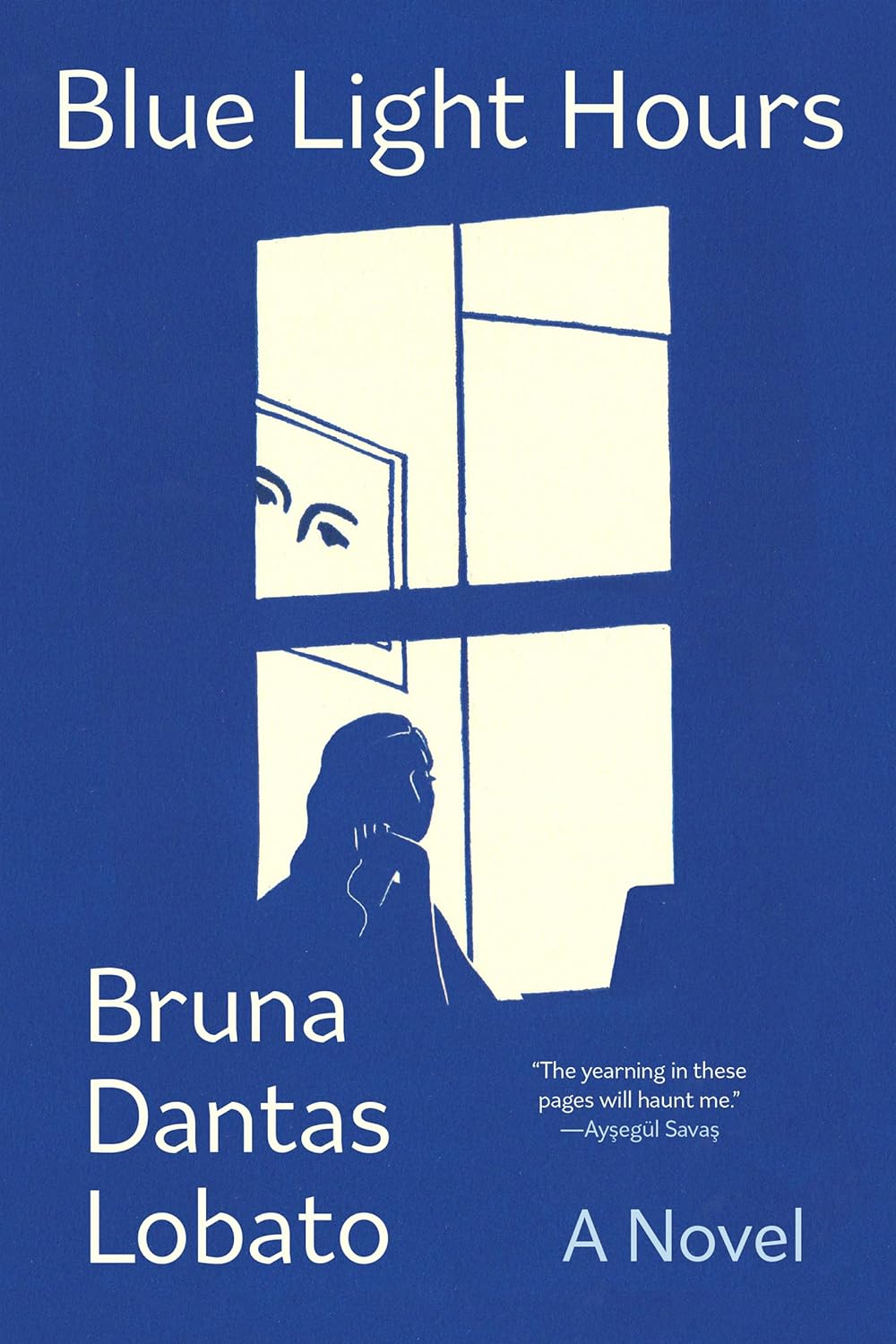
Blue Light Hours by Bruna Dantas Lobato

A mother and daughter separated by continents navigate distance and intimacy through the “miraculous blue light” of video calls in this haunting debut.

National Book Award-winning translator Bruna Dantas Lobato makes her authorial debut with Blue Light Hours, a subtle, contemplative story of a mother and daughter divided by 4,000 miles, who come together via screentime and memory. With love, care, quiet humor, and pervasive yearning, this thoughtful story explores the dilemmas of coming of age and leaving home, the tension between separation and connection.

On a full scholarship, the daughter departs her home in Natal, Brazil, “prepared to brave the world, even if it hurt me,” for a liberal arts college in a remote part of Vermont, leaving behind a mother who suffers from insomnia, migraines, and depression. The daughter navigates unfamiliar culture, food, and language, while the mother observes her first Christmas alone. The daughter feels guilt, torn between two very different lives. “I stared into my green tea, wishing someone… had warned me about how hard it would be to leave, how hard to stay.” Both women rely on their Skype calls: “On the shiny blue screen, there was my mother, my friend, the only person who always knew me.”

This story is told in three sections, “Daughter,” “Mother,” and “Reunion,” but “Daughter” occupies the bulk of the book, so that readers see her loneliness and her striving to make a new life work, even as she worries about what she’s left behind. “Daughter” is also the only section told in first-person perspective, while “Mother” identifies that character only as “the mother,” although both protagonists remain nameless. In “Reunion,” the mother travels to New York City and they make Grandma’s chicken soup together, “dipping pieces of bread into their old lives.” A moving passage details the items in the daughter’s bathroom, all the gadgets and conveniences that are unfamiliar to the mother, and the mother’s brief wish for the simpler bathroom of home. “But when she turned the crystal knob on the bathroom door and saw her daughter at the end of the hallway, sifting powdered sugar on French toast with a wand, she couldn’t help but take the wish back. She couldn’t resist thinking that things were perfect just as they were, golden faucets and all, without any gleaming glass between them.”

Blue Light Hours documents with wisdom and tenderness what is gained and lost when one leaves a home to build another, and the less universal experience of putting a 27-hour flight between mother and child. It tells painful, beautiful truths: with independence comes loneliness as well as freedom, and raising a daughter also involves losing her. Dantas Lobato’s careful, lovely prose will linger long after these pages end.


This review originally ran in the August 15, 2024 issue of Shelf Awareness for the Book Trade. To subscribe, click here.


Rating: 7 electric toothbrushes.

The Devil in Silver by Victor LaValle

Victor LaValle: I loved The Changeling, couldn’t make it very far into The Ecstatic, did okay with The Ballad of Black Tom. I have found The Devil in Silver quite intriguing and absorbing; I don’t guess I loved it as much as The Changeling, but it sure did take me on a trip, and I’ll be thinking about it for some time.

We begin:

They brought the big man in on a winter night when the moon looked as hazy as the heart of an ice cube.

The big man will turn out to be Pepper, and he’s being brought into the New Hyde mental hospital in Queens by a trio of detectives who couldn’t be bothered to process him into the actual jail, and instead have defaulted to a simpler drop-off scenario. This will have long-lasting consequences for Pepper, however. One of the quickest questions to arise in the reader’s mind: who among us would countenance this involuntary commitment process without coming across a little unhinged? If I am perhaps a little drunk, indignant, and arguing my absolute sanity, will I read as sane, or…? Tiniest spoiler alert ever: Pepper is not immediately released from New Hyde. However reluctantly, he makes friends (of a sort), although his assumption that they don’t need psych meds any more than he does will be tested.

Pepper is no hero, no wronged but upstanding citizen. He’s rather average, maybe a little of an underachiever or a slob, deeply unremarkable, but that’s the point – none of these qualities should have him locked up, drugged against his will, restrained to a bed for inhumane days at a time. The methods of the doctors and nurses on staff (no heroes among them, but like Pepper, regular human beings capable of small graces and big messes) aren’t the worst of what New Hyde has to offer, though. There appears to be a veritable devil housed in a secure room just down the hall. But is this antagonist truly what it appears? Just how sane is anybody? (Questions of the un/reliable narrator may arise.)

There are deeply compelling characters here, and profound pathos, crimes and forgiveness and oh so many questions. The story is fairly explicit about questioning systems: the hospital has purchased a software program for its ancient computer that is supposed to allow staff to digitize patient charts. But it bought the wrong program, instead winding up with one that is supposed to help homeowners trying to avoid foreclosure. Except that program isn’t really supposed to help homeowners, but just get them lost in a maze of paperwork until, oops, the foreclosure has gone through. “Most systems barely work, but those same systems cover their asses much more successfully.”

Pepper is our protagonist, and most chapters feature his close-third-person perspective, but select few center other characters – his friends among the patients, or the staff – and even beyond that (one memorably checks in with an enormous lone rat, and the philosophies of rats). Stories apparently pulled from the news blur the line between Pepper’s fictional world and our real one (see also LaValle’s author’s note, which I loved). Vincent Van Gogh plays an important role. This is a novel about mental illness, societal ills and broken/working systems, with horror and realism tangled up together. It’s hard to look away from, even in its most disturbing moments. LaValle is strong.


Rating: 8 butts.

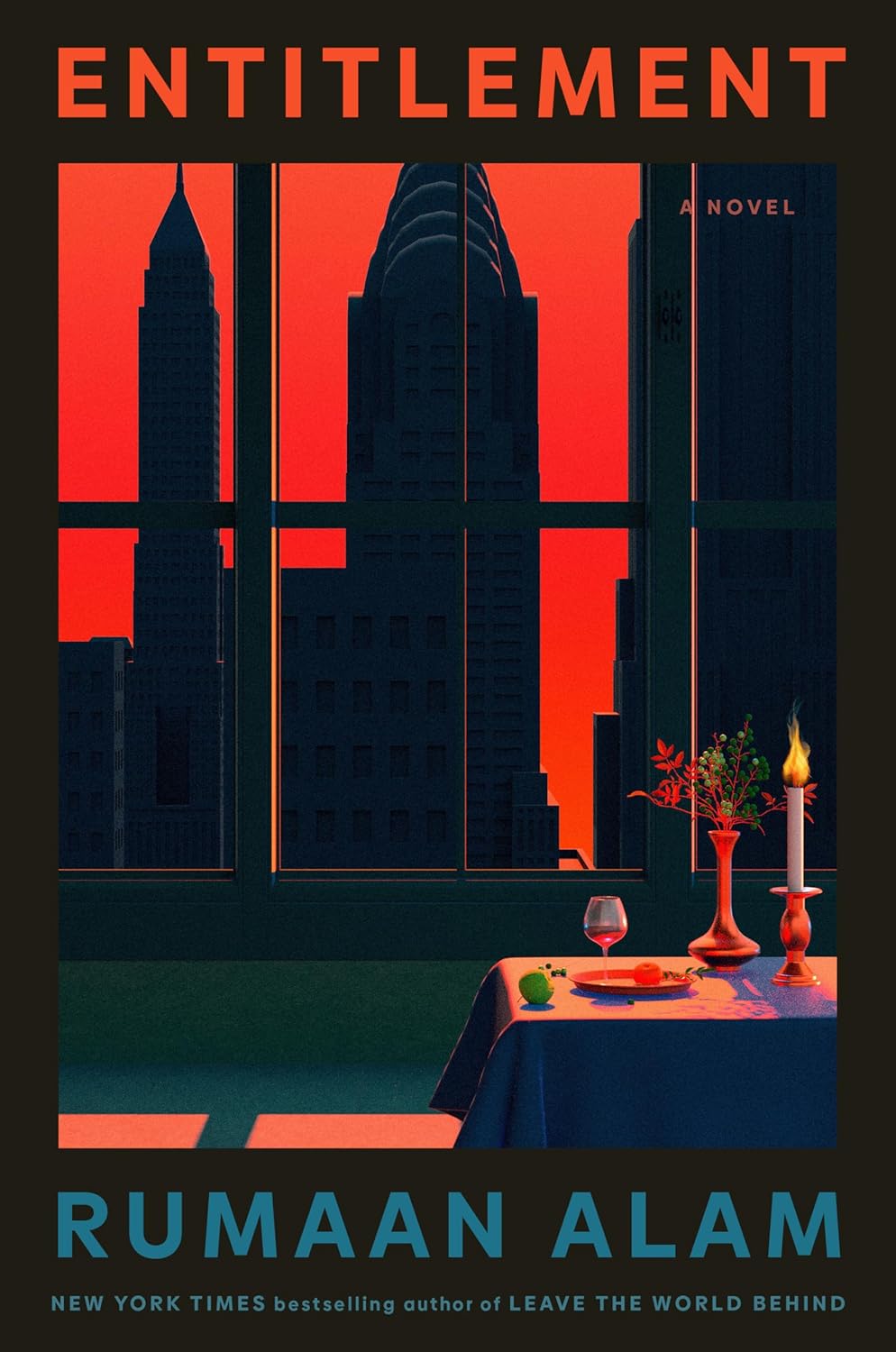
Entitlement by Rumaan Alam

With an atmosphere that is sexy, enchanting, and unsettling, Rumaan Alam’s expert fourth novel probes concepts of privilege, wealth, value, and morality.

Rumaan Alam (That Kind of Mother; Leave the World Behind) offers a slow-burning, insidiously creepy study of money and culture in his quietly distressing novel, Entitlement.

Native Manhattanite Brooke, at 33, feels hopeful about her new job at a charitable foundation, following nine unhappy years spent teaching at a charter school. “People heard the Bronx and thought lead paint, asthma, trucks, and whores at Hunts Point,” but it wasn’t funding that was the issue, exactly. She’s not professionally ambitious so much as she yearns for a little more than she has. The new job is initially just that–until she forms a special bond with the octogenarian billionaire, the famously self-made Asher Jaffee, whose money she disburses. Brooke embraces his advice to “Demand something from the world. Demand the best. Demand it.” As she sinks into the sumptuous life Asher invites her into, Brooke becomes increasingly confident in the demands she makes of the world, sure that she is doing good and doing well. With Alam’s signature tone of building foreboding, however, the reader becomes less and less sure.

Money is at the heart of Entitlement: what money can and cannot buy; how to give away Asher’s; where Brooke can find more for herself. Her financial status is, if not perfectly secure, not uncomfortable (even if nothing like her dear friend Kim, whose trust fund runs to the unspecified millions). Meanwhile, race is a more understated part of her story. Brooke, a Black woman with a white mother and a white brother (she’s adopted), “spent most of her time with white people, who never discussed the allegiance of race, because they did not need to.” Moreover, “Brooke didn’t care to defend the fact that she felt more loyalty to an old white man than a Black woman her age.”

Her difficulties with priorities and identity are most apparent in conversations with a robust cast of family and friends, and with the woman whose humble but humming community dance school Brooke would like to fund: the older Black woman is self-assured, yet resists Brooke’s help in a way she doesn’t comprehend. “Brooke didn’t know how to phrase it. Would the money not make them happier? Wasn’t that how money worked?”

Entitlement explores the difference between “wants” and “needs” through Brooke’s contrast to the dance school proprietor, who insists she does not need Asher Jaffee’s money. Alam is ever adept and incisive with the subtle examination of interpersonal as well as systemic issues: race, class, ambition, avarice. Entitlement provides a deceptively silky backdrop for the kinds of thrillingly uncomfortable questions at which Alam excels.


This review originally ran in the July 11, 2024 issue of Shelf Awareness for the Book Trade. To subscribe, click here.


Rating: 8 heels.

Jellyfish Have No Ears by Adèle Rosenfeld, trans. by Jeffrey Zuckerman

This engrossing first novel illuminates an experience of hearing loss that is both frightening and beautiful, filled with surprising imagery.

Adèle Rosenfeld’s Jellyfish Have No Ears is a strange, haunting story of sensory presence and absence, language and loss, relationships and choices. Translated from the French by Jeffrey Zuckerman, this first novel follows a young woman whose limited hearing has left her always straddling the experiences of the hearing and the deaf. Her progressive hearing loss eventually poses a choice between a cochlear implant and profound deafness. In a world she finds increasingly incomprehensible, Louise navigates work (in the French governmental bureaucracy, processing first birth and then death certificates), friendship (with the eccentric Anna, who views Louise’s deafness as poetic), and a romantic relationship with a hearing man. She is accompanied as well by a dog, a soldier, and a botanist who deals in “miraginary” plants; these three characters are hallucinations or creations of Louise’s imagination who offer valuable advice.

“When someone can’t make use of a particular sense anymore, the cortex reorganizes so that area of the brain is repurposed by the senses that person still has.” Because her world contains less and less sound, Louise’s vision is vibrant. Jellyfish is bursting with sensory descriptions, including sounds heard and missed, “the warmth of timbres, this soft sheen of wind, of color, of all sound’s snags and snarls.” Visual details are evocative and often surprising: “eyes as blank as an ice floe after an orca had gone by with a penguin in its mouth.” The effect of this unusual perspective is riveting.

Louise ponders large, philosophical questions of whether she will still be herself if she agrees to an implant. With an implant, she’s told, she won’t hear like she did before, but a psychologist also asserts, “Your brain will have forgotten what ‘before’ means.” She wonders if she needs sound to activate memory and whether “[s]ilence set free words and images held captive by language.” She investigates the experiences of those “uprooted from their language” and creates for herself a “sound herbarium.” In Zuckerman’s translation, Louise’s voice on the page is by turns stark, stoic, and dramatic. As those around her pressure her to take the implant or to embrace deafness, Louise reveals a strong personality: fiercely obstinate and attached to her vivid interior world.

A curious, thought-provoking, intensely mind-bending exploration of the loss of a sense and the potential richness as well as struggle of life with an invisible disability. Imaginative and spellbinding, Jellyfish Have No Ears is unforgettable.


This review originally ran in the May 24, 2024 issue of Shelf Awareness for the Book Trade. To subscribe, click here.


Rating: 7 poppies.

The Twilight Garden by Sara Nisha Adams

From the author of The Reading List comes a pleasingly similar, sweet novel of unexpected connections. In a shared garden in London, two sets of neighbors in two timelines (2018-19 and the 1970s and 80s) navigate conflict, build community, share love and struggles, and grow flowers, food, and strong bonds. It’s an optimistic story, which I perhaps don’t get enough of in my life.

I’m thinking of both this and Adams’ first novel as sort of meet-cute, enemies-to-friends stories, with rom-com sweetness but where the relationships that form are not romantic. Rather, neighbors and community members come together, across diversity in age, gender, sexuality, and race, and form deep and meaningful friendships and built families, caring for each other in profound but not romantic ways. There are romances among the cast of characters, but not in the relationships whose trajectory defines the novel. I’m thinking of these as non-romantic love stories, a genre I’ve not thought about before but am trying to define here.

We first meet two neighbors in contemporary London. Winston is a young Indian immigrant who has lived in his rental home for some years with his partner, Lewis, although their relationship seems to be drawing to a close. He’s lonely, disconnected, and a bit depressed, although his work in a nearby convenience store offers a wholesome and healthy dose of community connection. “He was always chatting to customers in the shop, but when it came to the neighbors on his road, he barely knew faces, let alone names.”

Bernice has just moved in next door, newly divorced, with her ten-year-old son Seb. She is white, well-off, privileged, uptight. Because chapters alternate between their perspectives, the reader knows that each is suffering their own private pains, but to one another, Winston and Bernice are each the nightmare neighbor. Their conflict centers around a shared garden, which Winston has treated as a private sanctuary and Bernice views as a death trap for her son. This garden, now in disrepair, transports readers back to the earlier timeline and two additional protagonists.

Maya first moved in (to what is now Winston’s home) with her husband Prem when they were newly arrived from India. They were soon joined by a daughter, Hiral. Next door (in what is now Bernice and Seb’s home) an older woman named Alma lived in the house she’d been raised in. Initially prickly, and permanently ornery, Alma becomes a dear friend to Maya’s family, a relationship that began in the garden. Alma is a very serious gardener and a bit of a control freak, but Maya encourages her to accept help from their community, and they wind up very much a neighborhood hub for food, fellowship, work, mutual support. In Winston and Bernice’s time, mysterious missives inspire the feuding neighbors to attempt reawakening the rich shared garden of years past, and the bonds of community come, slowly, along with it.

This story is deeply sweet, perhaps approaching what my mother would call ‘precious,’ but never getting there. There are no bad guys, although there are some bad behaviors; instead, these are humans who suffer and sometimes handle it poorly, but feel badly about it and try harder next time. The loves (familial, friendly, and romantic) are real and deep. I cried several times. It felt wholesome and good. There is tremendous diversity here in several senses, and closeness is possible across all those lines when humans reach out and make efforts, or when there is real need. It’s a lovely, hopeful version of the world, and I’m here for more of it.


Rating: 9 banana leaves.

Maximum Shelf: Creation Lake by Rachel Kushner

Maximum Shelf is the weekly Shelf Awareness feature focusing on an upcoming title we love and believe will be a great handselling opportunity for booksellers everywhere. The features are written by our editors and reviewers and the publisher has helped support the issue.

This review was published by Shelf Awareness on May 8, 2024.


Rachel Kushner (The Flamethrowers, The Mars Room) envelops her readers in an absorbing tale of espionage, philosophy, intrigue, and chaos with her noir fourth novel, Creation Lake.

An unnamed narrator opens these pages with extended quotations from the e-mails of a man named Bruno Lacombe, which she is reading without his knowledge. Bruno’s ideas will form an important thread throughout the novel, although he never appears in the flesh; the epistolary sections offer a perspective on events, a worldview, in juxtaposition to the narrator’s. She begins by reading his e-mails as part of her job, but their meaning will shift. And Bruno’s corporeal absence allows for some question as to his true form.

This narrator, presently using the alias Sadie Smith, is an American woman living in France. A former FBI spy, she was fired after a case she worked as an undercover agent did not bring the trial result the agency desired. Now she performs similar work for shadowy private interests: she takes on a character and infiltrates a group, instigating as well as observing its actions. In the Guyenne region of France, she is to penetrate an organization of anarchist environmental and anti-civilization activists called Le Moulin and learn of their involvement in a recent act of sabotage. The assignment to observe and investigate becomes an assignment to provoke further action, and she may yet be asked for more.

Creation Lake has layers. It is partly a spy novel. “Sadie” gains entry to the Moulinards through her fiancé, Lucien, a wealthy, privileged young man she easily seduced and moved in with following a carefully planned “cold bump” that Lucien thinks was an accidental encounter. She moves through the community she’s been assigned to, playing one character off the other, with readers privy to her inner commentary about both the assigned mission and the personalities of her new acquaintances. Along with her sexual relationship with Lucien (enacted with carefully concealed distaste), she carries on another affair that is more pleasurable but no more honest. She can be funny, cutting, and disarmingly self-critical. Despite holding all the cards–at least in her own view–“Sadie” is not precisely a highly organized personality.

Creation Lake is also in part an exploration of philosophies, as Bruno preaches the virtues and qualities of the Neanderthal and other early relatives and forebears of Homo sapiens. An enigmatic figure, he lives in a cave and extols the virtues of primitivism by e-mail. Kushner’s not-necessarily-reliable narrator brings a certain amount of mystery herself: amoral, even nihilistic, she seemingly cares not a bit about the principles at question in her work, but only about her paycheck and a few simple pleasures. Unmoored by the FBI, she has no leader or cause to follow, barely pausing at collateral violence. Importantly, her role with the Moulinards is that of a sympathetic outsider hired to translate their writings. Rather than a true convert, she is able to ask questions, showing curiosity and a friendly skepticism. This allows her to fully explore the Moulinards’ beliefs, although she is unimpressed by their devotion to principle.

None of these characters is heroic or even especially virtuous; the narrator points out the hypocrisy and self-serving nature of the activists. “Charisma does not originate inside the person called ‘charismatic.’ It comes from the need of others to believe that special people exist.” On the other hand, she may find herself more susceptible to the philosophies of the unseen Bruno than she was equipped for. Bruno apparently writes these e-mails for one audience–the Moulinards–but they will perhaps have their greatest effect on the audience he is apparently unaware of.

With punchy short chapters and bursts of action, the plot builds tension to a boiling point while resisting any convention or formula of the spy novel genre, which it reinvents as much as it inhabits. Kushner’s pacing is inexorable, ratcheting up tensions to propel readers to a surprising ending. Spare, even stark, Creation Lake considers the past and the future of humankind without sentiment, letting the narrator’s unblinking observations stand alone. She is hardworking and apathetic, drinking a bit too much and going through the motions of a job that she has no particularly strong feelings about.

If Kushner’s expansive plot considers no less than the very origin and fate of humanity, “Sadie” considers only her next destination. As focused as she can be on the job at hand, her approach to life is profoundly blurred. Gritty and hard-edged, this is a novel of both cynicism and belief, with a mysterious narrator at its center, adrift but anchoring its plot. There is something dark at work throughout, but Kushner keeps a sense of fun, pleasure, and unexpected humor as well. “Deep down, even if they lack the courage to admit it, inside each person, they know that the world is lawless and chaotic and random.” Taut and propulsive, Creation Lake leaves its readers with plenty to think about once its pages close.


Rating: 7 cans of warm beer.

Come back Friday for my interview with Kushner.

The Dallergut Dream Department Store by Miye Lee, trans. by Sandy Joosun Lee

Sleepers shop for dreams at a very special department store, where dreams may come true not only for customers but for employees as well.

With The Dallergut Dream Department Store, Miye Lee explores the nature and power of dreams, the possibilities created by choosing them, and human nature itself. Whimsical and sweet, this debut novel translated from Korean by Sandy Joosun Lee will leave any reader musing and looking forward to a good night’s rest.

“For centuries, Penny’s hometown has been famous for its sleep products. Now it has evolved into a metropolis…. The locals, including Penny, who grew up here, are used to seeing outsiders roaming around in sleepwear.” Penny is terribly excited to interview at the Dallergut Dream Department Store, the crown jewel in a town devoted to sleepers’ needs. She has studied the mythology and history, but meeting Dallergut himself is intimidating. However, he turns out to be nothing but nice, forgiving her learner’s errors and prioritizing the sale of the right dream to the right customer, even over profits. Penny fangirls over the greatest dreammakers, whom she gets to meet in her new job: Nicholas, who specializes in seasonal dreams; Babynap Rockabye, who creates conception dreams; Maxim, who does surprising work in a dark back-alley studio; and Bancho, who cares for animals.

Penny has so much to learn, from bank deposits to the Eyelid Scale, not to mention the power of precognitive dreams. Purchased dreams are paid for only after they have had an effect on the sleeper, and payments come in the form of emotions experienced, so no one pays in advance or for a dud. Dreammakers can get fabulously rich and famous, but their best reward is helping people (or animals). Nap dreams differ importantly from longer ones. “Bad” dreams may serve a purpose, too. And there is, perhaps unsurprisingly, an important link between dreams, in the sense of aspirations and ambitions, and dreams as in the images and sensations that visit sleepers.

Penny is an innocent, wide-eyed disciple of Dallergut and his good works, as well as the celebrity dreammakers. Through her perspective and her refreshing tone, readers encounter an appealing, absorbing, imaginative world with rules for who designs experiences for whom. In her translator’s note, Sandy Joosun Lee calls The Dallergut Dream Department Store “a story that is both fun and deep… unpretentious yet full of life,” and keeps Penny’s observations disarmingly enthusiastic and earnest. The pleasing tale, while simple on its surface, asks questions about self-determination and the mysterious power of nighttime imaginings to impact one’s daily, “real” life. With a Calm Cookie or a Deep Sleep Candy, or just the right dream, all things are possible in Lee’s captivating world.


This review originally ran in the April 19, 2024 issue of Shelf Awareness for the Book Trade. To subscribe, click here.


Rating: 7 cups of forest-scented tea.

Fire Exit by Morgan Talty

On the boundary of Maine’s Penobscot reservation, a solitary man wrestles with questions of truth, family history, and what is owed to the next generation.

Fire Exit by Morgan Talty (Night of the Living Rez) centers on one man navigating issues of family: the death of his father figure, his mother’s lifelong and worsening health conditions, the daughter he knows only from afar and who doesn’t know who he is. In hardscrabble circumstances, surrounded by poverty, alcoholism, and family violence, he wishes to give his daughter a meaningful gift: the truth. Stark and tender, Talty’s debut novel compassionately addresses tough choices in matters of family and love.

Charles Lamosway has grown up on the Penobscot reservation in Maine, but does not have Native American blood. Although very close to his Native stepfather, Frederick, whom he generally refers to as father, his biological parentage meant he had to move off the reservation when he came of age. Frederick purchased land and helped to build the house where Charles lives now, just across the river. Largely isolated with few friends, Charles watches from his porch the family on the other side: Mary, Roger, and their daughter, Elizabeth. Charles is Elizabeth’s biological father, a secret he has kept at Mary’s request. But as he ages, and as his mother Louise’s health worsens, he feels increasingly that Elizabeth, now an adult, must know the truth.

Charles insists, “Maybe her body and mind know something is missing.” This urge becomes a fixation, a bodily need. Elizabeth faces medical problems, and he is convinced she needs the truth–including Louise’s medical history–to survive: “I felt she should know her body was special, and she should know its history, especially the one it would not tell her and the one she could not see. And I decided to tell what I knew, because she deserved to know it.” But it is just possible that what Charles sees as necessary will have an entirely different outcome from what he intends.

Fire Exit is concerned with bodies, with visceral needs not only for food and shelter but for truth. Louise’s failing body and mind are wrapped up with unresolved questions about Frederick’s death. Talty’s tersely poetic, descriptive prose grounds this story in the physical: “Between the river’s flow and the summer breeze rippling hard-to-see leaves and the sound my scraping shoe made on the porch, I heard night silence. I heard the workings of my inner body, the pump of my heart and the expanding of my lungs.” In Maine’s harsh winters, Talty’s characters face elemental as well as human dangers.

This first novel grapples with family issues and hard choices about love and responsibility; blood, culture, and belonging. It is an utterly absorbing story, always firmly rooted in the corporeal; tough, honest, but not bitter.


This review originally ran in the March 28, 2024 issue of Shelf Awareness for the Book Trade. To subscribe, click here.


Rating: 7 loads of laundry.