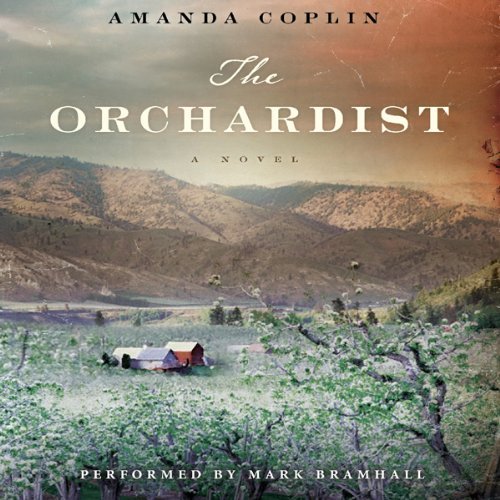
book beginnings on Friday: The Orchardist by Amanda Coplin

Thanks to Rose City Reader for hosting this meme. To participate, share the first line or two of the book you are currently reading and, if you feel so moved, let us know what your first impressions were based on that first line.

I already had this book on my list (already had it loaded on my player, in fact), but then Christine Byl recommended it and it raced to the top of the figurative stack.

orchardist

The Orchardist is a novel set in late-1800’s Washington state, and it begins with a description of the title character:

His face was as pitted as the moon. He was tall, broad-shouldered, and thick without being stocky, though one could see how he would pass into stockiness; he had already taken on the barrel-chested sturdiness of an old man.

I knew almost nothing about this book going in, except that I had heard good things; and I will tell you even less at this point about what’s inside the covers. I think this story is most enjoyable when you start it blind. So I’ll just say that so far, I’m mesmerized by the descriptions, the character-building, and the remarkable, quiet reflection of humanity. Do check it out. (I’m very much enjoying Mark Bramhall’s narration, too.) Happy Friday, friends.

Farewell, Dorothy Parker by Ellen Meister (audio)

farewellI “like” the Dorothy Parker facebook page, available here, which is run by Ellen Meister and posts Parker quotes and anecdotes regularly. This is how I became aware of Meister’s new book, a nod in novel form to the feisty one.

In wrapping up this audiobook experience I am a little conflicted. I was alternately spellbound and greatly entertained, and exasperated, with the novel’s protagonist, Violet Epps. Violet is a movie critic in present-day New York, and her verbal wit on the page is razor-sharp (as they say), in the spirit of her acknowledged hero, Dorothy Parker. But in real life, she’s petrified of everything, rarely finding the voice to ask for a seat at a restaurant; in the opening scenes (quite frustrating) she is trying to break up with a dirtbag loser boyfriend but can’t. And then she obtains a book signed by Dorothy Parker, and discovers – gasp – that she can summon the dead writer at will. This changes Violet’s life enormously.

Violet needs a helping hand in several areas of her life: dumping the boyfriend and fielding a new one; dealing with a horrible bratty new underling at work; and fighting a custody battle for her recently orphaned niece. Mrs. Parker (as she insists on being called) is a great help – or sometimes a great interferer – in these matters, giving Ms. Epps (as she insists on calling her) the backbone she needs. Sometimes this takes the form of encouragement (or even feeding her lines); but Mrs. Parker also has the ability to enter Violet and take charge of her body, which can be messy. There is always the questions of where to give credit (or blame) – how much is Violet in control of herself? She is apt to give Dorothy Parker the credit, but she’ll have to learn how to stand up for herself by herself in the end, of course. The satisfying flip side to Violet’s growth is that she has something to offer Mrs. Parker, as well.

On the one hand, Meister’s characters were well-developed and believable (with the possible exception of a rather ogre-ish grandmother), and I cared about them. Dorothy Parker was wonderful, everything you’d want her to be, realistic, heroic but humanly flawed. I was honestly desperate to get back to this audiobook when I had to shut it off. I needed to know what was going to happen next; I was excited or anxious for Violet, who I liked.

On the other hand, Violet’s behavior was often infuriating. She was so slow to learn, so allergic to speaking up for herself in even the most obvious of needs, that I wanted to shake her. We spent what felt like eons in situations where she should have just done something. Now, I’m not a person who typically struggles to speak up for herself; I don’t suffer from social anxiety except in the most exceptional of circumstances. Perhaps I should be tolerant of this portrayal because perhaps it is entirely realistic for people who truly fight these issues. [Although, the explanation for Violet’s social anxiety – a trauma involving her recently-deceased sister when they were small – I found rather trite.] But even if this was a realistic portrayal, I found it tiresome.

Similarly, perhaps I should give allowances for this part because I’m not a romance fan – but in the thread of this story that was a romance novel, there occurs that maddening trope wherein the woman wants the man but pushes him away, and it takes far too long for them to reconcile their totally obvious mutual desire. My patience was tested. But, romance fans, you should like that part.

I know I sound harsh here, but I point out again, the plot’s action had me riveted and I am going to miss Violet Epps (and Dorothy Parker!) very much now that this book is finished. I just want to communicate that I had conflicting moments throughout.

And in the end, I was silly putty in this book’s hands. I was so pleased for the happy endings and for all the characters that I forgot my earlier quibbles. Had I been I overreacting? Or did the later success of this novel simply wash away the memories of my frustration? Whatever it was, my patience with this book was rewarded and I’m won over. Three cheers for Violet and Dorothy, both.


Rating: 6 edits.

Teaser Tuesdays: The Other Typist by Suzanne Rindell

Teaser Tuesdays is a weekly bookish meme, hosted by MizB of Should Be Reading. The idea is to open your current read to a random page and share a few sentences. And try not to include spoilers!

typist

I have discovered an awesome new book on audio that I want you to know about. Set in 1920’s New York City, The Other Typist‘s first-person narrator is Rose Baker, an orphan employed as (yes) a typist at a precinct police department. She is entranced by a new hire named Odalie, who exerts a magnetic pull on everyone, it seems, but most especially Rose herself. Here’s your teaser:

She was never once rebuffed, and the man – I say man here generically, because there were several – invariably introduced himself and reached into his pocket to fish out a lighter and a replacement cigarette, while Odalie puffed on her pilfered prize and regarded the gentleman with a sly, delighted expression, as if to suggest nothing he could pull out of his pocket could sufficiently replace the unique and spectacular treasure she had just stolen.

I just love this line, read masterfully by Gretchen Mol, with its subtly suggestive reference to what a generic man might pull out of his pocket to impress Odalie. She, the other typist, is a classic, manipulative femme fatale; but then again, there are some unanswered questions to ask about our narrator Rose, too. And that’s the kind of set-up I like. Stay tuned…

Flight Behavior by Barbara Kingsolver (audio)

flightAnother beautiful, thought-provoking book from Kingsolver; and another outstanding narration by the author herself. Like The Lacuna, which I called one of the best books I read in 2012, this will be a standout. I fear this will be one of those longer reviews, as I have so much to say…

We open with a young mother of two in a less-than-thrilling marriage, named Dellarobia Turnbow, hiking up a mountain to meet a man for adulterous purposes. On her way there, she’s distracted by an amazing sight. The hills appear to be aflame, but there is no sound and no heat. She is amazed, and disturbed, and stands up her would-be lover and goes back home; it’s something like a religious experience, although she’s not particularly religious. She does, however, attend church – one of many compromises for the sake of her mother-in-law, who terrifies her.

Dellarobia lives on her in-laws’ sheep farm in Tennessee and rarely gets to leave the property. Her husband is kind but dull. She is frustrated. The strange thing happening up on the mountain, however, will expand her world: it has implications for climate change, and is variously interpreted as an event of an environmental as well as a religious nature.

The cool orange flame on the mountaintop is a mass migration of Monarch butterflies, pushed out of their normal overwintering site in Mexico by a mudslide that killed a village, caused in turn by clearcutting and climate change. Dellarobia doesn’t have the context to begin to comprehend such happenings, so she has to learn slowly; aiding her in this process is the amazing Dr. Ovid Byron, an entomologist who has written the book (many of them) on Monarchs who shows up to park his camper on the Turnbow farm and study their special mountain. Ovid is a striking figure – physically, as a black man, he is of such a minority in the rural mountains of Tennessee as to be exotic to Dellarobia; audibly, his accent (similar to Jamaican) is mellifluous and musical; and intellectually, he boggles Dellarobia’s mind and pushes her to new ways of thinking. This is a young woman who would have gone to college if she hadn’t gotten pregnant, and her thwarted ambitions are sparked by Ovid’s presence.

Meanwhile, the local religious community becomes convinced that Dellarobia prophesied the Monarchs’ arrival, that she had a vision; she is tentatively treated as a hero or religious figure, which doesn’t sit well with her feared mother-in-law, Hester. The media – local, and then national – blows things out of proportion, highlights the sensational, and alternately threatens to turn her into a sex symbol or accuses her of suicidal tendencies. Her marriage – which we learned in the opening scene was not strong or happy – is predictably strained by all the activity and attention. And perhaps most poignantly, her small son Preston is told by Ovid that he is a scientist, and begins a new way of thinking, himself.

As a family story or the story of one woman, alone, this would be an extraordinary masterpiece. Dellarobia is a remarkable woman, and I think she is probably representative of many young women who have greater abilities than they end up exploring, trapped (in Dellarobia’s case) in rural and familial circumstances that limit her. Just as in The Lacuna, one of Flight Behavior‘s greatest strengths is Dellarobia’s realness: her quirks, her frustrations, her fantansies, her day-to-day life and thoughts. We get to experience this story inside her head, and the inside of Dellarobia’s head, all by itself, would be a glorious gift for Kingsolver to bestow upon us. The other characters too, all of them, are fully realized, more real than the people I know in the real world; they’re complex, and even the initially unlikeable ones (I’m looking at you, Hester) are multi-faceted and deserving of our sympathy in the end.

But! That’s not all! There’s more to this story than Dellarobia and her family of wonderfully real, odd people. The Monarch butterflies, climate change, the complexities of farming in a changing world, the environmental movement, 350.org, and academia are all explored and examined in a wonderfully nuanced way. Idealistic young – and old – environmentalists show up on the scene as well, and there’s a lovely scene in which one of them quizzes Dellarobia on her commitment to leave a smaller carbon footprint. As it turns out, being rural and poor puts her in a pretty good place footprint-wise already, a fact which humbles (not to say embarrasses) her interlocutor.

Dellarobia turns out to be the perfect vehicle for teaching us all the science of Monarchs, of migration, of weather patterns and geography, of climate change, and of relationships among people and cultures. She’s ignorant, but not unintelligent, and once she learns how to open her mind, she is an inquisitive student; and Ovid Byron is a wonderful teacher, and let me add, his dreamy accent, so well performed in this audio edition, is to die for. [I do recommend listening rather than reading, upon which more in a moment.] However, this is never a polemic, and Dellarobia is far, far more than a vehicle; you remember I was terribly bothered by that issue in Sophie’s World, and a little bothered by it in Ishmael, but there is no trace of it here. As I wrote above, Dellarobia is very, very real. Instead, this is a moving, complex story, starring sympathetic, believable characters, that also handles some large, important questions: like, what are we doing with our world?

I have a quick note to make on the ending, mostly for my father. Pops has noted that where Derrick Jensen is brutally honest about our future, Bill McKibben tends to draw intelligent conclusions and then inexplicably end on what feels like an unrealistically optimistic note. Well, in the same vein, Kingsolver may end things a trifle more hopefully than is realistic – it feels good, you understand, but it’s a McKibben ending rather than a Jensen one, if you follow. And then she thanks McKibben in her Author’s Note, so that’s fitting.

The Author’s Note also includes a brief discussion of what in this story is true to life (and how she found it out), and what is fiction. This is a well-researched book, and I appreciate her delineating the boundary between fact and fiction, as I always do.

The audio narration by Kingsolver herself could not be improved upon. Dellarobia has an Appalachian twang and darling figures of speech. Her BFF Dovey is even cuter and mouthier; she collects jokey church billboard sayings, some of which Dellarobia is sure she makes up (“Moses was a basket case”). Dellarobia’s in-laws have their own audible personalities; her husband Cub is nothing in life if not sloooow in all respects including speech. And Ovid Byron! Oh, the accent. Swoon. Kingsolver does all these beautifully. If you have to read this book rather than listen to the author read it, then fine, but I pity you. Get the audiobook!! Do it!


Rating: without question a perfect 10 newborn lambs.

This book is so wonderful – particularly in Kingsolver’s masterful narration – that I wonder if I should go back and try some of her earlier work again. I remember being decidedly nonplussed by The Poisonwood Bible, and I know I’ve read The Bean Trees but have no impression of it (which is not a good sign); I can’t decide if I’ve read The Prodigal Summer or Animal Dreams or not (also not a good sign). But The Lacuna and this one are both so grand, I feel I should delve more deeply. Also, while I’m pondering past readings, I wonder why I keep getting Kingsolver crossed with Margaret Atwood in my mind? I wanted to attribute The Robber Bride (which I enjoyed) to Kingsolver. Maybe it’s that I’ve found them both a little hit-or-miss; I was less impressed with The Year of the Flood and ambivalent about Oryx and Crake and The Blind Assassin; have no impression from Surfacing; but loved The Penelopiad, and found The Edible Woman mindblowing.

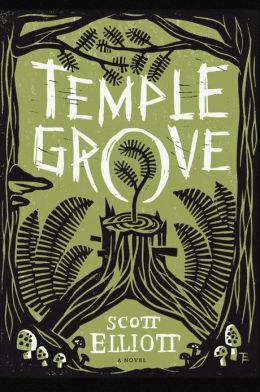
Temple Grove by Scott Elliot

A subtle, brooding novel of environmentalism and human complexities set in the Pacific Northwest.

templegrove

In Temple Grove, Scott Elliot (Coiled in the Heart) considers the Olympic Peninsula and its human and nonhuman inhabitants with nuance. A young Native American woman, ambivalent toward her two-month-old son, hikes along a lovely river. Eighteen years later, that son, Paul, hikes back into the woods to engage in what will be called eco-terrorism: spiking trees to discourage their being logged. Simultaneously, a man named Bill returns from a lengthy exile in Alaska, grateful to find work logging in the woods of his homeland. Parallel to these two men–who, like magnets, attract and repel one another–Paul’s mother, Trace, ruminates on her disconnection from her husband and her son.

Paul roams the Olympic forests with his mentor, an aging environmental activist, not entirely aware of why his connection to this place is so strong. Upon his homecoming, Bill remembers (and is disturbed by) past mistakes. The only flaw in this profound and sensitive novel is a potentially upsetting and controversial resolution to one of the plot’s surprises.

Human concerns are embedded within the rhythms of nature, and the traditions of Trace’s Makah tribe resonate within her and her son as in Elliot’s writing. Contemplative, secretive, a novel of the earth, its people and filial relationships, Temple Grove presents a surprisingly broad cast of ordinary men and women representing all walks of life, all sharing the fact of inner conflict.


This review originally ran in the July 9, 2013 issue of Shelf Awareness for Readers. To subscribe, click here, and you’ll receive two issues per week of book reviews and other bookish fun!


Rating: 7 ambivalences.

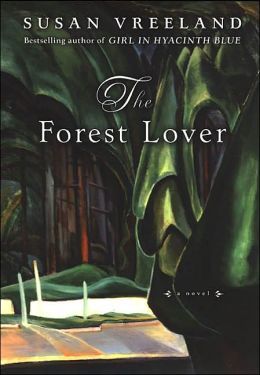
book beginnings on Friday: The Forest Lover by Susan Vreeland

Thanks to Rose City Reader for hosting this meme. To participate, share the first line or two of the book you are currently reading and, if you feel so moved, let us know what your first impressions were based on that first line.

forestlover

I was inspired to pick up The Forest Lover by a mention in the acknowledgements of Scott Elliot’s Temple Grove (review to come!), helped along by my admiration for Vreeland’s Girl in Hyacinth Blue and especially her Clara and Mr. Tiffany. In other words, I have high expectations; and the opening lines reinforce them.

Letting her cape snap in the wind, Emily gripped her carpetbag and wicker food hamper, and hiked up the beach, feasting her eyes on Hitats’uu spread wide beneath fine-spun vapor. Cedars elbowing firs and swinging their branches pushed against the village from behind.

In those sentences alone, I see several things. This is a book about a woman of another time; she “feasts her eyes” upon a natural setting; and there is a native, non-English presence. I think it will be lovely.

I can’t share the whole first page, because that’s not in the spirit of this meme and gets a little more tenuous regarding copyright; but Pops, if you read the first page of this book I suspect you might be convinced that it should go on your list. I’ll keep you up to date as I read on. (And for those interested in that whole first page – it’s freely available on Amazon and Barnes and Noble where you can “look inside” or “read instantly.”)

Looking good!

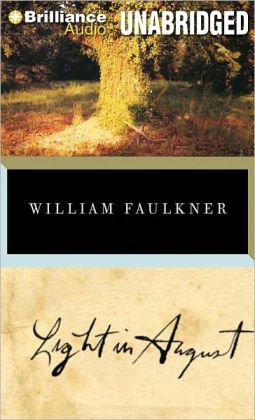
final review: Light in August by William Faulkner (audio)

augustI am challenged by Faulkner. I already began to share my frustrations in an earlier post that you might want to check out.

So then, the second half of the book. The short story is I still don’t understand what this book is about. It opens with a pregnant country woman, traveling on foot in pursuit of the missing father of her child. He left her when he found out she was pregnant, promising to send for her when he had a household set up; everyone Lena talks to, and I the reader, understand that he’s no good and this is a lie, but she is dogged. She succeeds in tracking him down, this man she knows as Lucas Birch, to all our surprise, and he is indeed no good (and also now goes by Joe Brown). And then the story shifts to that of a companion of Birch/Brown’s, a man named Joe Christmas. We learn his entire life story. He was an orphan, living mostly as a white boy/man but occasionally outed as being part black. (Note that there are lots of n-words in this book. Something to keep in mind in the audio format, if you’re driving around with your windows down.) There is also a Byron Bunch, who cares for Lena while she gets close to having her baby; and a man named Hightower, a former minister who advises Byron Bunch. We learn pieces of their stories, as well. We don’t learn terribly much about Birch/Brown himself, despite in some ways him being the hub around which these spokes rotate. And I’m torn between wishing we knew more about Lena, and being frustrated (and therefore satiated) by what I do know of her.

The bottom line is that I still do not understand what this book is about. On one hand, that makes it really a pretty good candidate for what I’m doing with it, which is listening to it to prepare to to listen to a lecture explaining to me what the heck it’s about and what Mr. Faulkner was trying to do with it. On the other hand, it has not aided my enjoyment of this book. I’m confused. Why do we care about these people? I never learned to care about these people. Are we concerned with Lena? Or are we concerned with Christmas? Are we concerned with Byron Bunch?

I found it strange that certain characters make very long, descriptive speeches, when they’re meant to be simple people. When they speak, I hear Faulkner, not Lena, or Mrs. Hines or whomever. I’m not a fan of the author speaking through the dialog of his characters.

My audio edition concluded with an interview – of all people – with James Lee Burke. This is strange because he’s one of my favorites (and stranger still because I just days ago finished his new book, Light of the World – sorry, the review won’t post til the book is published in late July). It turns out that he puts Faulkner right up there with his top four greatest writers of all time: Chaucer, Milton, Shakespeare and Keats. I am baffled. I won’t try to re-hash this interview for you, in which Burke touches on the gifts of Faulkner; suffice it to say it’s the first time I failed to “get” James Lee Burke. [If you’re interested, it’s the Brilliance Audio production of 2011, read by Will Patton. The interview with Burke is conducted by an awesomely-named James Atlas.]

I think that maybe Faulkner transmits on a frequency I don’t receive. I understand vaguely that this is a work of allegory. Perhaps the Yale University class lectures that I plan to listen to eventually (you can find them here on iTunes U) will illuminate things; possibly they will not. This is a non-review, I know. I’m sorry. I don’t get Faulkner.

Next up in my audio collection is The Sound and the Fury and I don’t think I’m brave enough. Jason’s recommendation of As I Lay Dying was encouraging, but I’m still a little gun-shy; plus my local library doesn’t have that one on audio. For now, I will take a break from Faulkner. Maybe I’ll even start with some of the Yale lectures and see if I’m inspired and educated.


Rating: requires discussion.

When trying to come up with a numbered rating for this book, I think: I did not like this book. But whose fault is that? Is it partly my fault? Do I share some blame for being unable to appreciate or follow? I give Light in August a 3 for my enjoyment level, but to acknowledge my complicity in our minds’ failure to meet, Faulkner’s and mine that is, I will assign a very generous 5 grumbles and hope for either better, or no, future Faulkner reads.

Teaser Tuesdays: Flight Behavior by Barbara Kingsolver

Teaser Tuesdays is a weekly bookish meme, hosted by MizB of Should Be Reading. The idea is to open your current read to a random page and share a few sentences. And try not to include spoilers!

flight

I’m only in the early chapters, but I think I may need to add this audiobook to the list I posted the other day of greatest narrations I’ve encountered. As with The Lacuna, Kingsolver’s voice really makes the story. She has a measured pace and a way of luxuriating in the words she’s written that makes this a very pleasurable experience, and brings her story to life. I like these lines:

He lived in a mobile home with his mother and spent weekends doing the things that interested males of that age, mixing beer and chain saws, beer and target shooting. There was no excuse for going off the deep end over someone who might or might not legally be buying his own six-packs.

Boys will be boys, yes?

an interim report on Light in August by William Faulkner (audio)

augustI am nearly halfway through Light in August, and I need to get some things off my chest.

The lack of physical descriptions in this book is bothering me. Race is clearly a major issue, and yet I am often left confused about who was of what race. In some stories that would be a strength – that neutrality – but considering that I suspect it is so darned important here, I would like to know who is who. Rarely do we get a physical description. And then, out of nowhere, I get this:

She was a waitress in a small, dingy, back street restaurant in town. Even a casual adult glance could tell that she would never see thirty again. But to Joe she probably did not look more than seventeen too, because of her smallness. She was not only not tall, she was slight, almost childlike. But the adult look saw that the smallness was not due to any natural slenderness but to some inner corruption of the spirit itself: a slenderness which had never been young, in not one of whose curves anything youthful had ever lived or lingered. Her hair was dark. Her face was prominently boned, always downlooking, as if her head were set so on her neck, a little out of line. Her eyes were like the button eyes of a toy animal: a quality beyond even hardness, without being hard.

This is both lovely and, in some ways, bothersome to me. I love that she was not short, but rather “not tall.” And then that “smallness… not due to any natural slenderness but to some inner corruption of the spirit” comes along and I wanted to sarcastically retort, “you mean like a cocaine addiction is an inner corruption of the spirit”? Her face “always downlooking, as if her head were set so on her neck” is quite amazing and evocative; it makes me pause to picture this. But I can’t quite tolerate the “quality beyond even hardness, without being hard.” Come off it, Faulkner.

My impatience with his writing makes me question myself. I am often a little scornful of what strikes me as pretentious Literaryness; but then I’m so often appreciative of lyrical writing, so where do I draw the line? Am I letting my prejudice against (or to be more honest, my fear of) Faulkner get in the way of an honest appraisal? How to account for taste – even my own? It remains a puzzle. As I’ve written before, I think we all should attempt – as I am trying to do – to own our own reactions and tastes, and not apologize for not liking those who are called literary greats (Henry James, T.S. Eliot, I’m looking at you). Why don’t I like Faulkner? Take in a sentence like this:

I do not know yet that in the instant of sleep the eyelid closing prisons within the eye’s self her face demure, pensive; tragic, sad, and young; waiting, colored with all the vague and formless magic of young desire.

I’m sorry, but this reminds me of the abstract art that us philistines can’t tell from a kindergartner’s work. Speaking of vague and formless – this reminds me of The Waste Land, or Gertrude Stein, for goodness’ sake. If I keep reading this, I may go crazy.

On the other hand, I took in Jason’s lovely, helpful comments on the book beginning I posted, and I am somewhat encouraged. Some of this will just turn out to be a matter of taste; Jason can have Faulkner and I can have Hemingway, who some people abhor and that is fine, etc. etc. But perhaps I can continue with Faulkner and find more to like, too. Jason, I’m still looking forward to As I Lay Dying. I am trying; don’t lose patience with me yet. 🙂

And for now, I continue, but wish me luck.

book beginnings on Friday: Light in August by William Faulkner

Thanks to Rose City Reader for hosting this meme. To participate, share the first line or two of the book you are currently reading and, if you feel so moved, let us know what your first impressions were based on that first line.

august

Friends, I have a confession: I fear Faulkner. I tried to read The Sound and the Fury once, and I was left feeling certain that either I’m an imbecile, or he is. The jury is still out. But I found this collection of audio lectures on iTunes University, from Yale, on Hemingway, Fitzgerald and Faulkner; and I already love two of those authors, and the three are often considered together; and I want to listen to these lectures and be able to follow along; so here I am again, attempting Faulkner. I’m told Light in August is a little easier than The Sound and the Fury. Wish me luck. It begins lucidly enough:

Sitting beside the road, watching the wagon mount the hill toward her, Lena thinks, ‘I have come from Alabama: a fur piece. All the way from Alabama a-walking. A fur piece.’ Thinking although I have not been quite a month on the road I am already in Mississippi, further from home than I have ever been before. I am now further from Doane’s Mill than I have been since I was twelve years old

[Regarding punctuation: I checked two print editions and both left off that final period, so I guess that was Faulkner’s work. I actually value punctuation, myself; trying not to let this make me nervous.]

Any Faulkner fans out there who can reassure me? I want to like this book!