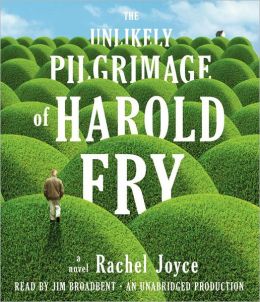
The Unlikely Pilgrimage of Harold Fry by Rachel Joyce (audio): second bit

haroldYou’ll recall that I did already review the first third or so of this audiobook, because I just couldn’t hold in my enthusiasm. Well, my good impression continues through the next third of the book, along with my need to share as I go.

I will give away less from here on out. Harold’s journey continues, and while his physical, geographical journey is the obvious plot line, there is a parallel arc of personal growth. At the beginning, he is almost unable to be in the same room with strangers; by the end he easily greets them everywhere he goes, and has learned to share his story and take on what is often the burden of other people’s stories. This is essentially a very human tale, incorporating all the strange, wonderful, and wonderfully, strangely normal lives of the people Harold meets along the way.

He met a tax inspector who was a druid and had not worn a pair of shoes in ten years.

There is also a sense of growing tension regarding one of the secrets I referred to in my earlier post; the un-referred-to past looms larger as we go on, and I have a guess I’m fairly confident about, but I will wait and see.

Harold gains followers as he continues walking, until there is a large group of “pilgrims” accompanying him on his journey. I was reminded a little bit of Forrest Gump, when he’s running, and finds a crowd running behind him. Unlike Forrest, Harold has a purpose, and his followers know it; and also unlike Forrest, these followers become a real burden. By this time, he has learned to take care of himself quite well; now he has newcomers to take care of too, and this takes up a lot of time and effort. Also, they’re not as fast as he is at the actual walking; but he tries to be patient, remembering how long it took him to build up stamina and get into a rhythm. I was, of course, infuriated at their selfishness in holding Harold back from something so important to him; but I can see how Harold could have done nothing less than help them along.

As I enter the final third (give or take) of this book, I am only sorry that it has to end.

book beginnings on Friday: The Falling Sky by Pippa Goldschmidt

Thanks to Rose City Reader for hosting this meme. To participate, share the first line or two of the book you are currently reading and, if you feel so moved, let us know what your first impressions were based on that first line.

falling sky

You will recall that my father also reviewed this book, here. What fun that I get a shot at it now, too. I have two beginnings to share with you; the first is part of the novel but comes before the first chapter; a preview or dream, perhaps.

Nothing is as certain as death.

And from the more concrete world of “Now”:

Jeanette may as well be invisible. She’s standing on the stage in the auditorium in front of about two hundred other astronomers, presenting the results of her PhD work at the annual British conference. But she can tell no one’s listening.

More pedestrian; but it quickly becomes an involving story, nevertheless. Stay tuned.

The Unlikely Pilgrimage of Harold Fry by Rachel Joyce (audio): first bit

haroldI can’t help but share with you my early reflections on this delightful tale – before I know everything. It will be interesting to see how my perspective or feelings change later on. Here, I’m about 1/3 of the way through.

What an oddly charming, quirky story. Harold Fry has retired from his 45-year career working quietly for a brewery (although he is a teetotaler) and now stays home with his wife Maureen. She cleans – constantly – and criticizes him, and he mows the lawn. He does not speak with their only son, David. One morning he gets a letter from an old friend, a former coworker named Queenie. She is writing from a hospice to say goodbye: she has cancer. Harold jots a quick note to say “sorry about that, old girl” or similar, and although he feels its insufficiency, sets off right then to post it from the box at the end of the road.

But when Harold gets to the end of the road, he can’t quite mail his letter, because it is of course a sadly inappropriate thing to do for Queenie; so he keeps walking. He tells himself he’ll mail it from the next postbox; and he does this at a great number of boxes, before he stops in at a garage for a snack. The girl there shows him how to heat up a hamburger in a microwave, which amazes him (“it even had gherkins!” he will later report to Maureen) and tells him the inspirational story of her aunt who had cancer: the girl willed her to get better, because if you believe (she tells Harold) you can do anything.

It is not too long after this conversation that Harold decides he will walk to visit Queenie at the hospice facility, and commands her to live until he gets there. It’s not clear how far this walk will be – someone he encounters guesses it might be 500 miles, but at any rate it’s very far, and he’s wearing his yacht shoes and as Maureen is quick to point out, he’s never walked further than to the car. He is, in fact, endeavoring to walk the length of England.

I hope you see what an endearingly strange story this is. Harold himself is poignantly, almost painfully shy and insecure; he’s not accustomed to being around people, and as he and Maureen each note separately in the opening pages, “it was not like Harold to make a snap decision.” There’s a lot we still don’t know. I suspect that there was an event in Harold and Maureen’s marriage where things soured suddenly, decisively; if I’m right, that information is clearly being withheld. Their son David won’t visit, and he and Harold don’t speak; if there is a reason other than general teenage impatience with his parents (and he is no longer a teen, so…) then likewise we haven’t learned it yet. And I can see plainly that Harold’s history with Queenie has a story to it – and presumably their parting of ways, and their failure to keep in touch? Oh – and I wonder if Harold has always been a non-drinker, or if there is some traumatic history that has led to his sobriety. There is a line in which Maureen worries about him being in a pub… I just wonder. These are the informational nuggets I am being teased with at present. Harold’s childhood is just beginning to unfold, so I think I can see Joyce’s strategy of allowing these things to be dragged out of her story sooo…. slooowly… and I like it.

Narrator Jim Broadbent has an excellent ear for Harold’s voice (sort of ponderous) and the pacing required for this humor to play properly; I approve heartily.

Stay tuned!

book beginnings on Friday: The Unlikely Pilgrimage of Harold Fry by Rachel Joyce

Thanks to Rose City Reader for hosting this meme. To participate, share the first line or two of the book you are currently reading and, if you feel so moved, let us know what your first impressions were based on that first line.

harold

The first few chapters of The Unlikely Pilgrimage of Harold Fry have charmed me. I heard just a little about this book a few years ago, but it was enough to put it on my list, and here we are; I’m going in almost entirely blind, which I often enjoy. Check out these first few lines:

The letter that would change everything arrived on a Tuesday. It was an ordinary morning in mid-April that smelled of clean washing and grass cuttings. Harold Fry sat at the breakfast table, freshly shaved, in a clean shirt and tie, with a slice of toast that he wasn’t eating.

I think this is a fine beginning, setting the scene as it does. Clean washing & grass cuttings are important, as are the fresh shave and the clean shirt and tie. A well-ordered life, clearly. Just wait & see what happens next…

book beginnings on Friday: Crossing to Safety by Wallace Stegner

Thanks to Rose City Reader for hosting this meme. To participate, share the first line or two of the book you are currently reading and, if you feel so moved, let us know what your first impressions were based on that first line.

crossing to safety

I heard enough about this book that I put myself on the wait list for it at my local library. And then I waited for a YEAR. So when it came to me, I knew I had to prioritize reading it – who knows when I’d get another chance! (At the library copy, at any rate.) I am opening this book knowing absolutely nothing about Stegner (other than a vaguely good reputation) or the story itself. I’m here on faith. It begins beautifully:

Floating upward through a confusion of dreams and memory, curving like a trout through the rings of previous risings, I surface. My eyes open. I am awake.

Poetry and beginnings in this beginning; I think it augurs well.

Out Stealing Horses by Per Petterson (audio), trans. by Anne Born

out stealing horsesYou may recall that Pops read and reviewed this book some time ago, and recommended it. I’m glad I finally got around to it.

Out Stealing Horses is just a short book, but in the end, it is bigger than it looks. I would like to commend my Pops for his spare review, leaving the plot mostly untouched and teasing us with rather coy praise; he convinced me to read this book (although it took me a while), and now that I have, I can see where his leaving the plot alone was the right move. I absolutely agree that

a summary may in itself sound spare and unremarkable – and spoil the real value here. What’s special is the way the story is told and how it is revealed, the author’s voice and the narrative structure he uses.

So, no summary for you, only setting: our elderly protagonist lives alone and isolated in a remote patch of Norwegian forest, as the twentieth century comes to a close. We alternate between his quiet dog walks and simple meals, and his memories of a brief time when he was a young boy-becoming-man. There are perhaps more questions raised than answers supplied; but we don’t mind, because of the lovely evocative moody writing and what we know of our protagonist by the end – which is far from everything.

Again, echoing my father, I was impressed by the translation; enough linguistic oddities remain to indicate translation, only slightly and very pleasantly, as with “very many thanks” (a sweet phrase but not one you hear often in English). I also appreciate Pops’s note about pacing, that it varies, ratcheting up and then calming back down. For all its thought-provoking and occasionally stressful subject matter, Out Stealing Horses is ultimately a rather soothing book. It should go without saying, then, that Richard Poe’s narration is also excellent, matching the tone, mood, atmosphere, pacing, and lyricism that I understand is present in print.

Quiet, contemplative, and understated, I think this is a fine work of art. I get the feeling that this is a book with many layers, and that multiple readings would yield returns, and to the extent that it is about aging, I confess I wonder if I got it all. This is also true of the war bits – I have questions – but I suspect we’re supposed to have questions.

I don’t think my review has done this book justice, but I do think my father’s did beautifully, so let me refer you back to it (again, here), and simply add my additional praise. Good book. Check it out.


Rating: 8 stolen horses.

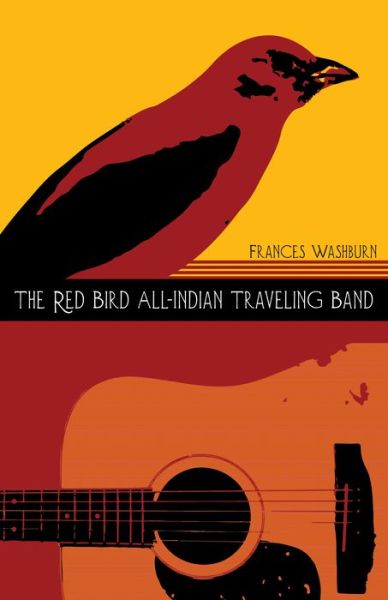
The Red Bird All-Indian Traveling Band by Frances Washburn

A slim, evocative, entertaining tale of strange happenings on an Indian reservation in South Dakota.

red bird

Sissy Roberts is the girl everyone tells their problems to, whether she likes it or not. But, as she tells the reader on the opening page of Frances Washburn’s The Red Bird All-Indian Traveling Band, “no one so far has confessed to me that they killed Buffalo Ames at the Scenic Fourth of July Rodeo.” The novel, despite being framed around Buffalo’s murder and the subsequent FBI investigation (which mostly consists of bothering Sissy for answers), is entirely Sissy’s story.

Though the FBI man sent to her corner of the reservation doesn’t believe in her ignorance, Sissy really doesn’t know who killed Buffalo that night–and she doesn’t know what she’s going to do to get out of this town and off the rez. Her interest in solving the murder is half-hearted; she is more concerned with solving the mystery of her own future and ducking lackluster marriage proposals from the shallow pool of men on the rez. But the two will prove to be interconnected.

The strengths of this slim, quirky novel are Sissy’s strange mix of tenderness and sass, and Washburn’s grasp of the rez and its sense of inertia. For all the frustration that Sissy and the other diverse, well-wrought characters experience, however, the final result is moderately uplifting, like the music Sissy delights in throughout.


This review originally ran in the March 7, 2014 issue of Shelf Awareness for Readers. To subscribe, click here, and you’ll receive two issues per week of book reviews and other bookish fun!


Rating: 8 beers.

guest review: The Falling Sky by Pippa Goldschmidt, from Pops

This review bears on some recent discussions: scientific fiction and scientific nonfiction.


Thanks to Kirk Smith at his blog, Fiction About Science, for both passing on a copy of this book to my Pops, and for publishing his review there. I am reposting it here, as originally published by Kirk Smith.

falling sky

The Falling Sky is about a “realistic scientist doing realistic science.” That is the hook that brought me to this special first novel written by a PhD astronomer, now a recognized writer in Edinburgh, Scotland. But it is so much more than that.

One could say this is the insightful story of a young woman finding her way from adolescence into a life of her own; or her personal contemporary tale of sexual awakening and relationships with other women; or a striking and remarkable exploration of how a scientist’s unique perspective can literally saturate the way she perceives and interacts with everything around her; or an emotionally wrenching journey with a family trying to make sense of a pointless and tragic death. It is really all of that.

That may seem to be quite a burden to place on an easy-reading first novel of only 264 pages; but Goldschmidt succeeds gracefully and does not overreach. Her story of Jeanette comfortably weaves modest measures of these elements together – and tempts the reader to fold closed the pages, finger inserted, while looking off into space to savor the author’s words and Jeanette’s thoughts. In that sense, this is not a “quick read.”

There is fuel here for artists, romantics, philosophers, mystics, feminists, photographers and scientists alike. Those familiar with Edinburgh are teased with pleasing glimpses.

But for one so inclined to the feast, it is possible to see the scientific perspective virtually everywhere in this story; in its language, metaphors, analogies, repetition of certain words and its oblique references to black holes, cosmology, time scales, anti-matter, entropy. Some may see excess or stridency in this; for those it should be accepted as essential immersion in Jeanette’s world, as setting and mood, and not as cause for anxiety or fear of missing something. There is more to savor.

Storytelling here is not linear, but not distracting: chapters alternate between “Now” and “Then” as the 3rd person narrative traces Jeanette’s young life as an astronomer while we gradually learn more of her adolescent past. She is smart & ambitious, yet confused. She is a talented and intelligent scientist whose rational lens often fails her in navigating the human world of relationships. She is an emotional creature like all of us, and it wrenches her life. The reader is drawn in as she searches.

For my money, this is a beautifully composed review, as well as describing what sounds like a quite attractive read. The book is in my hands now, so eventually you can expect me to weigh in. Thanks, Pops.

did not finish: The Borrower by Rebecca Makkai (audio)

borrowerI made it exactly 25 pages into this one (although via audio, which was about 30 minutes, give or take). I remember hearing about The Borrower ever since it came out in 2011, and it sounded real cute: children’s librarian befriends sweet little boy who might be gay and whose censorious, bigoted, ultra-religious parents are a drag; she ends up either liberating or kidnapping him, depending on your angle, and they have adventures together. Nice story, right? In fact, it opens with a story time reading of Roald Dahl’s Matilda, which drives home the fact that this plot has been done before. And that’s no complaint or criticism. As Makkai notes in the voice of her narrator, “you can always count on a librarian for a derivative prose style.” I can dig that little joke (and also fear it is too true).

But things went south quickly after that. Faced with the censorious mother, Lucy (the librarian/narrator) rails that she would never “defy the Constitution” by refusing to check out certain books to a ten-year-old boy at his mother’s request. Now, I sympathize with Lucy’s gut reaction and not with the nasty mother; but I think it’s only respectful to be clear on what the Constitution actually says. The First Amendment protects the right to speech, press and assembly; it most certainly does not protect the right to read anything one likes (unfortunately), and the rights of minors have been curtailed in our courts in favor of their parents’ right to decide for them, with abundant clarity. This use of the “defy the Constitution” argument was outrageous and left me reeling. From a librarian, no less!

Next Lucy notes that

I wasn’t at all concerned about (the boss) enforcing this, or even remembering it a month later. And if she tried to fire me because I’d checked out a book to a patron of the public library, I’d have so much free legal representation within ten minutes that her gin-soaked head would spin.

Well, that’s bold – and naive. If this librarian were fired for checking out a book to a ten-year-old that the child’s mother had expressing forbidden her to check out to him, I think her legal case would be in some doubt; and while it’s conceivable that the ACLU or a similar organization would take the case on, I wouldn’t bet my job on it. I’d put the chances pretty low, in fact. To think that every unjustly-fired, underpaid city employee gets “so much free legal representation within ten minutes” to make heads spin is… idealistic, at best.

And then Lucy snobs out on her profession of librarianship, except oops, it might not be fair to call her a professional because she’s non-degreed and thus in most work environments ineligible to be called a “librarian” at all (this is a subject on which there is some controversy within the field and I don’t want to enter into that now, but I think it does bear on the credibility of this novel): in reference to the cardigan she’s wearing,

I hated that I’d started to look like a librarian. This wasn’t right. In college, I’d smoked things. My first car had angry bumper stickers. I came from a long line of revolutionaries.

Now this made my head spin. Librarians are about as diverse as any other demographic group you’d care to examine, and certainly there are those cardigan-clad shh-ing grannies with buns; but there is also no dearth of tattooed, funny-looking, hipster, punk, revolutionary-as-hell librarians. And you know what? Some of us wear cardigans, too. Despite the disappointingly cartoonish view of librarians represented by these lines, they also made me wonder if Makkai realizes who her audience is for this book: I am assuming that at least in part those attracted by her basic plot would be librarians (I am one), and she just alienated us with her snobby narrator.

So. This review threatens to be as long as the tiny piece of this book that I read; I should stop. I think I’ve effectively communicated that I was disgusted by the 25 pages’ worth that I listened to, and very comfortable turning away towards greener pastures. In fact, I’m now starting a novel by Joe Hill, whose librarian character in NOS4A2 was possibly a little bit of a cariciature in the other direction – with her purple hair and all – but also closer to the librarians I know. So there.


I am not assigning this a number rating after such a brief read but clearly if I did, it would be a low number of my grumbles.

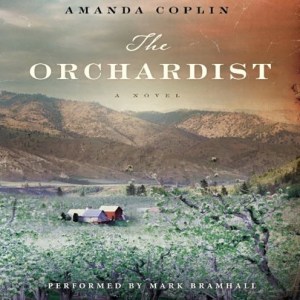
The Orchardist by Amanda Coplin (audio)

orchardistI read about this novel… somewhere… some time ago, and had it loaded on my iPod along with many others. And then Christine Byl (author of Dirt Work) praised it mightily on her facebook page, and it moved to the top of my list.

I will by sharing the plot outline as I vaguely understood it when I started this book: an old man manages an orchard in the hills, alone, as he has for many years, when a pregnant girl appears at the edge of a field and seems to need his help. He helps her.

That’s all I knew going in, and I’m a little tempted to leave it at that for you, too. I’ll tell you a little more, but I do want to leave a lot for you to discover on your own reading.

The old man, Talmadge, has indeed managed his expansive orchard property in Washington state for some 40 years, ever since he was 17 and his 16-year-old sister disappeared into the woods one day without warning. He has one friend from town, Caroline Middey, and a few friends among a group of Indian horse wranglers who seasonally stop by to help him pick his fruit; but he is mostly alone. And then the girls show up – two of them – and begin by stealing some apples from him on market day. He sets them out plates of food at his cabin and wanders off to let them eat; when he returns, they have cleaned the cabin of every scrap of food. They are both visibly pregnant, and look about 13 years old.

Talmadge does his best to care for these girls, who are consistently portrayed, early in the novel, with the imagery of wild animals. They stare, they watch him carefully and warily, they flinch away; they don’t talk. Their loyalty is towards each other; they have no more ability to trust Talmadge than a stray dog that’s been beaten. They are strongly identified with the wild. And somehow, in my early understanding of this book, I had thought that the story began and ended with the pregnant girl (or as it turned out, girls), but I was wrong. This novel spans a number of years – about 25 of them. Early on, it appears that the action is in essence Talmadge’s recovery of a family, lost when his mother died and his sister disappeared and now replaced by these young women and their children. But no, it’s not that simple. That does seem to be the momentum, the effort of at least some of the characters in question, but the world that Coplin portrays is too much the real world for anything to come out that easily, or for anyone’s dreams to be fulfilled so fully.

I enjoyed very much the simple depiction of central Washington state in the early 1900’s. Coplin, like her characters, doesn’t use flowery speech, but communicates nonetheless the gnarled beauty of a landscape of hills, canyons, and fruit trees, and the careful loving care Talmadge puts into the details of his orchard: it’s an art, really. Her writing evokes the feeling that this is another time, only a little related to our world today. It’s a beautifully written story, and beautifully read as well by Mark Bramhall.

The pace of this story is careful and measured. Talmadge is a contemplative man; seeing as how he’s past middle age and employed at growing trees, it should not surprise us that he takes his time in all things, which Coplin reflects in the rhythms of her writing. Bramhall follows suit in his reading, which is lovely and sedate. In the first, say, third of the book, the reader feels some tension about the two pregnant girls and their immediate fate: there are presumably labors and deliveries to come, at a schedule that cannot be denied, which gives the pace a little push. But in the middle third things slow considerably, and if one is going to get impatient with this book, this is when it will happen; I got a little impatient myself at the slower middle bit. Come to think of it, the story is sectioned off rather like a person’s life, which it resembles in several ways. In its youth, the plot leans forward into the future; in middle age it slows somewhat; and it regains a sense of urgency in its old age, when it feels its death coming – or the death of its characters. So, on pacing I have some mild criticisms, which can be alleviated by being a little patient because you enjoy the story so much, or by being a more patient reader than I am.

An overarching theme is clearly family, or relationship. The characters in this novel almost without exception lack family in the traditional sense of blood relatives; they make their own families outside those bonds – or fail to, and also relate strongly to the earth. There is a fine passage near the end about a young woman losing track of her physical self while doing physical work, feeling closer to the dirt than to her own body. In fact, women doing physical work is a thread throughout, which I also appreciated. (And now that I think of it, is another clear connection to Dirt Work.)

Overall, The Orchardist is a moving story, beautifully written, sad and exquisite and with some fine statements on human nature, and an underlying statement on our diminishing relationship with the land. Fine narration by Bramhall. Caveat for pacing, but that’s a matter of preference.


Rating: 7 Rhode Island Greenings.