short pieces: Walker, Tolkein, Stegner and more

Ah, the irony: I said just the other day that I was done with Faulkner, and yet here we are. In a continuation of going through those pages that have been piling up, I’ve read a few essays and short stories – including one by Faulkner.

A Rose for Emily” by William Faulkner: This may be the format for him & me, because I found him perfectly comprehensible and amusing in this short form. It seamlessly evokes a small Southern town with its prejudices and whisperings and feelings of rectitude; it has atmosphere. It also has an engrossing, entertaining, and fully-formed story in it. And I think this is a mark of the master of the short story: that it can feel complete. Those less adept at it leave us feeling like we missed out on something. Not so here. I won’t say any more about the story itself, except that yes, Faulkner can be enjoyable; and if you’ve balked before, as I have firmly balked, you might consider giving this one a try. If you hate it, it’s only six pages long.

An interview with Terry Tempest Williams from YES! magazine: “Survival Becomes a Spiritual Practice.” I still love Terry Tempest Williams. She is wise, even when she can be kind of gauzy and dreamy, as here. I like that this interview addresses two “places” that “we” are in just now: a state of the world, as well as her own geographical placement, moving back and forth between Vermont (where she teaches part of the year at Dartmouth) and her home in the Utah desert.

The Sense of Place” by Wallace Stegner: If I ever get my hands on an audio-cassette player, I have a whole collection of “sense of place” essays by Stegner, read aloud by the man himself, and I cannot wait to hear them. Send me a tape player, somebody.

This essay rounds out that inaccessible collection, as I understand it. Stegner describes us as being defined by place as well as defining place. He presents a possibly controversial idea, that

at least to human perception, a pace is not a place until people have been born in it, have grown up in it, lived in it, known it, died in it – have both experienced and shaped it, as individuals, families, neighborhoods, and communities, over more than one generation.

A few lines earlier:

The deep ecologists warn us not to be anthropocentric, but I know no way to look at the world, settled or wild, except through my own human eyes.

I like this honesty, because I acknowledge and respect the caution not to be anthropocentric; but Stegner makes a true point that we can only know the one perspective, really. (I guess I would counter that being less anthropocentric should simply involve acknowledging that there are other perspectives. I think Stegner gets that, though.) He gives equal airtime to those who have, perhaps, grown up nowhere, too.

If the rest of this essay collection continues on this path – of exploring what we mean to our places and vice versa, how we define one another – I need to hurry up and find that tape recorder.

Leaf by Niggle” by John Ronald Reuel Tolkien (because that is how his name is spelled out at this link. Funny, I never knew what J.R.R. stood for, I don’t guess). What an enchanting story! Niggle is a “little man… who had a long journey to make.” He doesn’t want to take his trip, but he knows he has to. He’d rather finishing this painting first: a painting of trees and countryside. He wants it to be perfect. But there are other pulls on his time, and he ends up being forced to go on his journey without perfecting his work. In fact, he’s so rushed he does not even pack a bag. I won’t tell you the rest…

I wondered throughout if this was a big beautiful allegory for art, for the making of art – Tolkien’s own writing, or any of ours. There are some lovely images and moments:

He had a number of pictures on hand; most of them were too large and ambitious for his skill. He was the sort of painter who can paint leaves better than trees.

And,

There was one picture in particular which bothered him. It had begun with a leaf caught in the wind, and it became a tree; and the tree grew, sending out innumerable branches, and thrusting out the most fantastic roots. Strange birds came and settled on the twigs and had to be attended to. Then all round the Tree, and behind it, through the gaps in the leaves and boughs, a country began to open out; and there were glimpses of a forest marching over the land, and of mountains tipped with snow. Niggle lost interest in his other pictures; or else he took them and tacked them on to the edges of his great picture. Soon the canvas became so large that he had to get a ladder…

Can’t you just see Middle Earth developing, demanding that Tolkien attend to it, in the same way?

“My picture!” exclaimed Niggle.

“I dare say it is,” said the Inspector. “But houses come first. That is the law.”

Ah, and there’s the rub.

This story can be said to comment on religion, the value of art, the question of what we owe our neighbors; it indicates some of Orwell’s 1984; there is a great deal in this short story (nine pages). Strange and fanciful and lovely, like all of Tolkien’s work.

My Father’s Country is the Poor” by Alice Walker, 1977, The New York Times. In a short two and a half pages, Alice Walker paints beautiful, heartbreaking pictures: of her father and her own life, of a visit to Cuba, of the difficulties of race, culture, class, and their inextricability. She tells us “what poverty engenders… what injustice means.” Only Alice Walker, and even in 1977, so much that we should attend to. I don’t want to comment too much on this; better that you go read her words, which are few and flawless.

The Winter Girl by Matt Marinovich

At a borrowed home in the Hamptons, a couple pulling away from one another are drawn toward the house next door–and its secrets.

winter girl

Matt Marinovich’s The Winter Girl is a brief, chilling story of boredom’s path to crime and secrets uncovered.

Scott and Elise have decamped from New York City to the Hamptons, where they are staying at Elise’s father Victor’s house in unaccustomed splendor while he dies in the hospital of cancer. Their lives have been put on hold as Elise spends her days visiting with Victor and Scott mopes around the house, drinking Victor’s liquor cabinet dry. His career as a photographer has fallen off, although he still takes his camera out to the lake some days. His marriage to Elise is failing, for reasons that are more a natural drift than explicitly detailed. As Scott tells it, “Slowly, we’ve stolen the best parts of each other, carted ourselves away.” It is winter; the backdrop to Scott’s malaise is stark.

In his boredom, Scott starts watching the house next door, which clearly has been emptied for the winter. Every night he watches the light switch off on its timer at 11 p.m. He grows a little obsessed, so the next move is clear: while Elise is at the hospital one day, he breaks in, just to have a look around. “I felt like a suburban astronaut, exploring an abandoned home in which the crew had gone missing.” This is exciting, thrillingly illicit, and he brings Elise in for the fun, which has the perhaps surprising effect of reviving their passion. It also starts a string of increasingly criminal and disturbing thoughts and actions, and begins to unravel a long-guarded tangle of secrets. Just as tension has begun to build, Victor announces he will return home to die. But he seems to be getting stronger, not weaker. Questions pile up. What is really happening to Victor? And what is in the house next door?

Told in Scott’s first-person perspective, The Winter Girl offers strengths in its unsettling tone and moody, atmospheric setting. The events Scott relates become a little surreal in his off-hand telling; the reader is challenged to buy into his perspective, or stand back and try to see matters in a calmer light. Marinovich (Strange Skies) offers an unnerving and entertaining story. However, as the revelations mount, their pacing feels a bit rushed: the stakes rise steeply enough as to be a little jarring. On the whole, though, the experience is exhilarating, if a little leeway is allowed for accelerating surprises. And the dramatic denouement leaves the reader eager for more.


This review originally ran in the December 22, 2016 issue of Shelf Awareness for the Book Trade. To subscribe, click here.


Rating: 6 times I felt a little rushed.

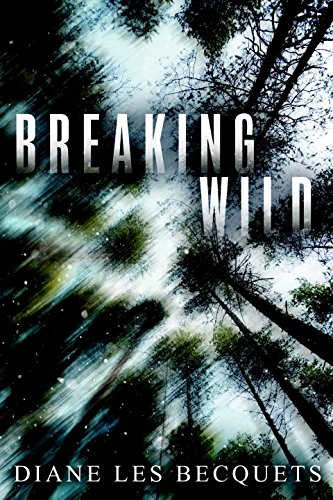
Maximum Shelf: Breaking Wild by Diane Les Becquets

Maximum Shelf is the weekly Shelf Awareness feature focusing on an upcoming title we love and believe will be a great handselling opportunity for booksellers everywhere. The features are written by our editors and reviewers and the publisher has helped support the issue.

This review was published by Shelf Awareness on December 9, 2015.


breaking wildBreaking Wild is the first adult novel by Diane Les Becquets, author of highly praised young adult novels including Season of Ice and The Stones of Mourning Creek. Carefully crafted characters and measured pacing define this tale of two women’s parallel personal journeys in the wilderness of northwestern Colorado.

Amy Raye Latour is a wife and mother, an accomplished outdoorswoman and a strong personality. She is on a camping and hunting trip with two male friends. The men have brought down elk with rifles, but Amy Raye hunts with a compound bow; she needs to get away from her companions to find the stillness and quiet required to get close enough to her prey. So she sneaks away from camp on their last morning, with only a light pack. When she doesn’t show up again that night, her friends call local authorities.

Pru Hathaway lives in the nearby town of Rio Mesa with her teenaged son, Joseph, and her dog, Kona. Pru is an archeological law enforcement ranger with the Bureau of Land Management; Kona is certified for search-and-rescue, including avalanche conditions. The sheriff, Colm McCormac, is a friend; when he gets the call about Amy Raye, he turns to Pru.

The personalities of the two women shape the novel: they are both more complicated than they seem on first meeting, and while they are very different, both have concealed and storied pasts. One of Les Becquets’s triumphs is the tantalizingly paced release of new information: about Pru’s personal history, about Amy Raye’s troubles and the tangled web of her life, any strand of which may be implicated in her disappearance. Similarly meticulous is the build-up to Pru and Amy Raye’s expected meeting. This is the story of a chase: Pru and Kona pursue Amy Raye through the backwoods, tracking her movements through drifting snow and rugged terrain, hoping to find her before she succumbs to a mountain lion or the harsh winter conditions. As one party makes a move, the other makes a corresponding move, and the pressure increases. Breaking Wild is not only a masterpiece of characterization, but a feat of taut anticipation and suspense.

Somewhat relieving this tension are flashback interludes to Pru’s and Amy Raye’s respective histories, and the personal dramas of the present timeline. Pru’s son, Joseph, although not entirely untroubled, is a sweet young man; he wonders if Pru and the sheriff–himself an intriguing minor character–should date. Amy Raye’s marriage is not without its cracks, a situation perhaps symbolized by the description of her hunting in the early pages: her husband prefers to shoot with a camera, and has asked her not to keep guns in the house. Thus she uses the compound bow instead, and it is this choice that causes her to leave camp alone in the first place.

Three sections–entitled “Bear,” “Cougar” and “Deer”–further shape the book; chapters within those sections alternate between Pru’s first-person perspective and a third-person view of Amy Raye’s experiences. This format is telling. The natural landscape of northwestern Colorado is a pivotal feature, the backdrop that sets the stakes for a spectacle of life and death, informing every detail, every decision made. Both Pru and Amy Raye repeatedly note the temperature and humidity level, the wind strength and direction, in judging where, when and if to travel. When Pru first tells Kona to “go find,” on page 36 of more than 300, the reader knows that Amy Raye will not be so easily located. From then on, animal life and nature’s rhythms are increasingly crucial to Amy Raye’s subsistence. Is she hunting, or being hunted? She has gone into the wild seeking something undefined: “In that moment she felt everything–life, death, the tangy sweet smell of pine, the freshness of the rain. It was the immensity of those feelings that drove her mad at times.”

While the niceties of backwoods survival are fully developed, the drama of the natural world is less central to the story than the human dramas. The travels of Amy Raye and Pru give them room to grow, and to ask and answer questions of how to love; what a healthy relationship looks like; the nature of addiction; and the meaning and forms of family and community. Indeed, part of what Amy Raye has gone into the woods to find is a connection to her past; Pru found solace in the outdoors when she suffered a personal tragedy. So the two threads of the story–family and community, natural wilderness–intertwine, just as the lives of two women do.

Les Becquets portrays a credible and compelling cast of characters, especially the two strong women at its center. Breaking Wild is a rare novel in its mastery of both plot and character, with deliberate rhythm, thrilling suspense and a striking backdrop. Its breathless momentum carries through to a dramatic conclusion.


Rating: 7 arrows.

Come back tomorrow for my interview with Les Becquets.

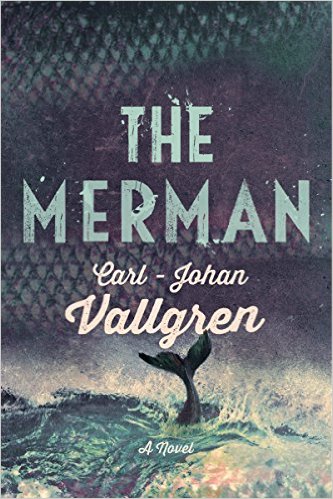
The Merman by Carl-Johan Vallgren, trans. by Ellen Flynn

In this grown-up fairy tale, a young women’s battles with poverty, violence and neglect are further complicated when a mystical creature enters her life.

merman

Carl-Johan Vallgren’s The Merman, translated from the Swedish by Ellen Flynn, concerns the realistic and heartbreaking circumstances of teenaged Nella and her little brother, Robert; at the same time, it is a dark fairy tale about a mythical creature from the deep and the possibility of resisting evil.

Nella and Robert’s parents are terribly incompetent, uncaring people, more focused on drinking and crime than their children’s welfare. Robert struggles with learning disabilities and is bullied at school; protecting him, getting him the glasses he needs, and his general well-being falls to his sister. Nella is hard-pressed to handle the responsibilities of the household, including cleaning up after her alcoholic mother, about whom she muses, “it was about as hard to judge her as it was to understand her.” This mature and nuanced observation is typical of a girl who, despite her own troubles, seems drawn to others who need her help, such as a disabled man who is one of her few friends.

When the neighborhood bullies begin to threaten Robert with violence, Nella turns to her only ally at school, a boy named Tommy. But contact with Tommy’s brothers presents a new difficulty. They have pulled a mystical being from the ocean, whose otherworldly nature and wordless communication will change everything Nella understands about her life. All at once, Nella struggles with the bullies’ extortion and Robert’s fear; their father is released from prison and brings criminals home with him to disrupt their fragile household; their mother threatens to leave; and the sea creature looks to Nella for help. A burdened but strong and compassionate young woman, she will learn and grow through these tests, and wins the reader’s heart by the time her story reaches the final, hard decisions.

Nella is a compelling protagonist, reminiscent of Roald Dahl’s Matilda in her miserable circumstances, but with a harder, more adult edge. Robert’s suffering is almost unbearable, but sadly realistic. In Ellen Flynn’s translation of Vallgren’s tale, dialogue can be a bit stiff and formal, especially in the children’s cases, but overall she establishes a tone appropriate to the balance of reality and mysticism in Nella’s story, and the stark ugliness of her life. Vallgren evokes his fantasy element with wonder and detail; The Merman is a singular story. Fans of adult fairy tales and bleak realism will be haunted and enthralled by this novel of human tragedies, and the mystery of what lies beyond.


This review originally ran in the November 5, 2015 issue of Shelf Awareness for the Book Trade. To subscribe, click here.


Rating: 7 cartons of cigarettes.

Worlds Between by Carl Nordgren

An engaging and sympathetic tale of families and cultures, and the choices that shape them.

worlds between

Carl Nordgren’s Worlds Between is the second in the River of Lakes series, which began with The 53rd Parallel. With dual settings in Ontario and Ireland and a diverse cast of characters, this moving story charts divided loyalties and dangers from all directions.

…Click here to read the full review.


This review was published on November 27, 2015 by ForeWord Reviews.

IMG_4538


My rating: 7 colors in refracted light.

The Darling by Lorraine M. López

A complex and disarming young woman follows her heart, lust, and taste for adventure in an unusual route to maturity and self-actualization.

darling

Lorraine M. López’s The Darling is a coming-of-age story in the time-honored tradition, a tribute to literary giants, and a fresh perspective on life and love. Its heroine challenges assumptions, and after a winding and bumpy journey, evokes a spirit of celebration.

…Click here to read the full review.


This review was published on November 27, 2015 by ForeWord Reviews.

IMG_4538


My rating: 7 items of marginalia.

Because She Never Asked by Enrique Vila-Matas, trans. by Valerie Miles

This enigmatic novella in translation asks if life imitates art or vice versa.

because she never asked

Enrique Vila-Matas (Illogic of Kassel; Dublinesque) experiments with form and his reader’s trust in Because She Never Asked, a novella about the circularity of art and life.

This twisting story is told in three parts. In the first, a young artist, Rita Malú, lives in Paris and obsesses over another artist, Sophie Calle. Rita “carrie[s] out a series of experiments with truth”; in one of these, she embarks on a journey to Portugal to search for an author she does not really want to find. In the second part, a narrator reveals that he has written Part 1 at Sophie’s request, as a work of art that she will then live out as written. Part 3 questions again what has come before it. This convoluted structure, almost a story told in reverse, discloses details and layers of artifice as the reader proceeds. At least two subtly distinct voices demand attention and credibility.

Valerie Miles’s translation from the Spanish preserves a roguish tone that feels apt in this playful and puzzling novel, whose brevity–under 100 pages–belies its complexity. The narrator labors with questions about the reality of life, its relationship to art and their relative worth. He invokes the dreaminess of Don Quixote and the inscrutability of Marcel Duchamp, and when he becomes frustrated in explaining the jealousy of lovers, commands his reader to “read Proust to understand it better.” Vila-Matas’s novella is about something different by its end than at its beginning: a carefully packaged riddle, intriguing and stylish.


This review originally ran in the November 24, 2015 issue of Shelf Awareness for Readers. To subscribe, click here, and you’ll receive two issues per week of book reviews and other bookish fun!


Rating: 6 moments of circular imagination.

Writers by Barry Gifford

Barry Gifford’s brief fictional scenes of celebrated authors are funny, tragic and insightful.

writers

The prolific and versatile Barry Gifford (Wild at Heart; The Lost Highway) has a little fun with a range of literary figures in Writers, a collection of dramatic scenes “intended to be read as stories as well as performed as plays.” Gifford begins with “Spring Training at the Finca Vigía,” in which Hemingway showcases his famous bluster and paranoia while hosting two Brooklyn Dodgers at his Cuban home; Martha Gellhorn also makes an appearance in this longest of Gifford’s imaginings. Most run around 10 pages in length, and are short and pithy.

The settings range from “relatively realistic” to “wholly imaginary,” Gifford warns, and include a conversation between the living Roberto Bolaño and the ghost of Jorge Luis Borges. Arthur Rimbaud tells his sister on his deathbed, “I have been bitten by life before and survived.” Marcel Proust’s final words are likewise recorded. Herman Melville laments the public’s reaction to Moby-Dick to a passing policeman, who worries that he is suicidal. Emily Dickinson questions her sister: “Why? I’m nobody. Who are you? Aren’t you nobody, too?”; James Joyce and Samuel Beckett exchange silences. Joining these cameos are Kerouac (with characteristic openness and affinity for drink), Albert Camus, Nelson Algren, Jane Bowles, Baudelaire and others.

Gifford’s imagined anecdotes occasionally reference the absurd, but overall tend to confirm readers’ impressions of large and troubled personalities. These famous artists appear surreal and often ugly, but by caricaturing them he also reasserts their humanity. The result is both entertaining and thought provoking.


This review originally ran in the November 24, 2015 issue of Shelf Awareness for Readers. To subscribe, click here, and you’ll receive two issues per week of book reviews and other bookish fun!


Rating: 6 sets based on my personal affinity.

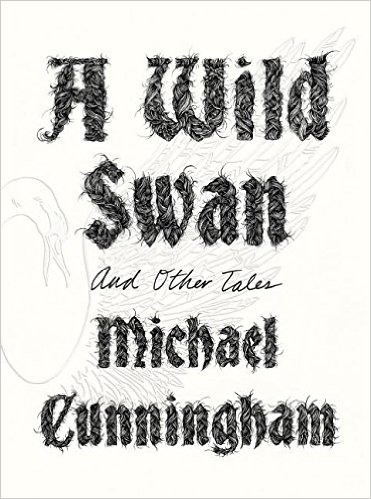
The Wild Swan: And Other Tales by Michael Cunningham, illustrated by Yuko Shimizu

Pulitzer Prize-winning novelist Michael Cunningham darkly reimagines classic fairy tales, with moodily appropriate illustrations.

wild swan

Michael Cunningham (Pulitzer Prize-winner for The Hours) takes a fresh and dark look at a selection of classic fairy tales with A Wild Swan: And Other Tales. His brief, richly imagined new stories, often based only loosely on their models, are accompanied by detailed, atmospheric black-and-white illustrations by Yuko Shimizu.

An introduction teases readers to acknowledge that they, too, enjoy seeing the fairy tales’ “manifestations of perfection”–those with “comeliness that startles the birds in the trees, coupled with grace, generosity, and charm”–cut low. Cunningham then proceeds to do just that with his versions of originals by the Brothers Grimm, Hans Christian Andersen and others.

Here readers will find the “crazy old lady” who lures Hansel and Gretel to her cottage of candy in the woods; but Hansel and Gretel are pierced and tattooed, and sexy “with their starved and foxy faces.” Snow White’s prince is obsessed with the beautiful deathly version of her he discovered in the coffin, and troublingly insists on replaying the scene over and over again. Rumpelstiltskin is surprisingly well intentioned–for the most part. Rapunzel’s life following the closure of the Grimms’ tale is revealed, and it’s a good thing she kept her severed braids. The Beast has grown to be a bad boy, even after Beauty gives him her love. He is “impeccably handsome” with “a lascivious, bestial smile; a rapacious and devouring smile,” the one who might catch your eye on the subway or at “the after-hours party your girlfriend has insisted on,” but you’ll come to regret it. And in the title story, the princess is successful in transforming all of her brothers but one back to their fully human forms.

Cunningham sometimes brings these stories into more or less modern times, but the point of this collection is not to recast the classics with smartphones and fast cars, and the setting of some remains unchanged. Rather, these are playful riffs on well-known stories, almost always with a still gloomier tone than even the Brothers Grimm applied. The mood of these tales of disturbing fetishes, murderous schemings and pedestrian human flaws such as hubris, laziness and jealousy is eventually relieved, however, by Cunningham’s final flourish, entitled “Ever/After.”

A Wild Swan works expert mischief with backstory, aftermath, interludes and retellings of well-known favorites. These tales are not always for the kids, of course, but will appeal to an intersection of dark humor and nostalgia for timeless stories, or anyone with an appreciation for a deliciously spooky imagination.


This review originally ran in the November 5, 2015 issue of Shelf Awareness for the Book Trade. To subscribe, click here.


Rating: 7 minutes under the lid.

Teaser Tuesdays: Uncontrolled Spin by Jerry Summers

Teaser Tuesdays is a weekly bookish meme, hosted by MizB of Should Be Reading.

I am meeting new characters today in the start of a new series, Uncontrolled Spin: The Power and Danger of Spin.

uncontrolled spin
My teaser comes off the first couple of pages:

He hears the door close, and when he turns around, he sees a stunning, jaw-dropping, gorgeous long-legged redhead. Her athletic frame is accentuated, yet only modestly revealed, by her simple black dress and high heels. She is adorned classically with fine but understated gold jewelry; her earrings are half-carat diamond posts.

I fear perfect people: they make less interesting characters than ambiguous, troubled ones. But it’s early yet. Stay tuned…