Chicago by Brian Doyle (audio)

On the last day of summer, in the year I graduated from college, I moved to Chicago, that rough and burly city in the middle of America, that middle knuckle in our national fist, and rented a small apartment on the north side of the city, on the lake.

This novel is everything I love best about Doyle: joy and celebration even where there is tragedy and pain; minutia and multitudes; exuberance and multiplicity… but where I am accustomed to seeing these elements applied to natural settings (even when peopled), here we have it in an urban setting, which I found surprising. But not disappointing: I’m originally a city girl (even if I have an affinity for greener spaces), and I really appreciated the celebration of the urban here. (Also, Chicago is a setting I have encountered in a lot of fiction lately, and I appreciated having it shown to me again from yet another angle. It’s beginning to feel familiar.)

I have a hard time saying anything new or intelligent about Doyle’s writing, which I love so much. This novel spans just a year and change, which is the length of our protagonist/narrator’s residence in the titular city, although he is clear – from a distance of years – that he’s never loved any other city so well. A good chunk of the action takes place in the apartment building where he lives, and all the significant characters live there. This is less our narrator’s story, in fact, than it is the story of the building’s occupants and of the city itself. Those occupants include: the man who’d invented children’s propeller hats; two young women from Arkansas who work in advertising; an Armenian librettist; two hermit brothers; four dapper businessmen; a retired movie actress; a man who had once raised cheetahs; a Trinidadian cricket player; Mrs. Manfredi, who makes transcendent empanadas; a Scottish tailor and a detective; and old Mr. McGinty, who never loses when he bets on the horses. Even more central are Mr. Pawlowsky, the loveable maintenance man (retired from the Navy and a great fan of Abraham Lincoln); an even bigger fan of Lincoln’s, the wise and knowing dog Edward (who lives with Mr. Pawlowsky although no one could say either “owned” the other); and Miss Elminides, Greek heiress and owner of the building, artistic and benevolent and mysterious. This list already has the flavor of Doyle in it: wide-ranging, delightfully detailed, wondrous, mostly real but a little bit magical.

In Third Coast Review, Susannah Pratt writes, “To the extent that Chicago is a three hundred-page love letter to the city… it is fair to ask whether the book is a worthwhile read for those without firsthand knowledge of it. I am the wrong person to ask…” (she’s from there), but here I am, the right person to ask! (I’ve been in Chicago just once, for a professional conference, and saw almost none of it.) I loved this book. It’s not especially plot-heavy. Events certainly happen, most importantly to the narrator, Mr. Pawlowsky, Edward, and Miss Elminides; but if I were to detail them as plot the book would feel a little thin. No, rather this is a series of character sketches, with the city of Chicago as important a character as any; and it is a list, in joyous Doyle fashion, of the kinds of people who are in the world and the kinds of things that happen to them, both surprising and everyday (which are often the same things), and it is a celebration that these things and people are in the world. I don’t know what else to tell you.

Here are some of my favorite lines and passages, because that’s the best way to know what Doyle is up to.

You cannot edit your life, and even if I was today offered the chance to never meet her, and so not leave the city I loved, I would decline, for life is a verb, life swerves and lurches no matter how cautious and careful your driving, and I would not be who I am, surrounded by those I love most in this world, had I not left Chicago when I did.

You cannot edit your life. We can’t go backwards, only forwards. Life is a verb? Well, it is decidedly a noun, whose verb form is to live, but I will accept this from Doyle (who likes to say that lots of words are verbs, actually).

I have wandered through and marveled at many cities since my years in Chicago–cities all over the world, from the ancient seethe of Rome to the glinting brio of Sydney; cities on the shoulders of mountains, cities by the lip of the sea; so very many cities astraddle rivers, or camped for centuries where two rivers meet; cities looming out of the flat plains like huge shards of light and glass, cities insisting on themselves amid inhospitable deserts, cities huddled defiant and disgruntled against endless ice and snow, cities wrapped like long urban shawls around the curving shores of bays; and each of these cities had a flavor and a character all its own, formed of more than merely locale and climate, and the accident of its original economic or military excuse.

What lover of cities could resist this long exultant sentence?

I decided not to reproduce a lovely bit where the detective calls a certain baseball game for a gathered group of neighbors, but it actually made me cry, around 100 pages in.

And then there is a poem which is read aloud by a teacher to her classroom of students. I have searched for this poem online and can’t find it in the world outside this novel, so I think it’s Doyle’s own work, although his fictional teacher character attributes it within that fictional world (to an unnamed poet) – if anyone knows differently, please correct me.

The day that I turned thirty was a wintry
Day with summer and apples and hawks
In it and I realized that every day was an
Epic birthday if you think about it so I’m
Thirty today and ten and ninety and love
Finds me and there is a mink in the creek
And everything is happening all the time
Including backwards and we had best be
Attentive which I will try to be every hour
Henceforth and you too and let us burble
To each other about what we see, cousins
And sisters and brothers as we all are yes

Summers and apples and hawks in it.

This audiobook is delightfully performed by Wayne Mitchell, and I love the voices he does – like Mr. Pawlowsky, whose S’s are generally Sh’s, so that the ‘city’ is always the ‘shitty,’ which never ceased to amuse me. I was lost in this novel the entire time. But that said, I need it in print form too, because there were too many wonderful lines that I didn’t grasp as well as I’d liked. This is one I’ll definitely read again.

I know I’m just raving. The brief version of this review is: it’s like everything Doyle writes, wonderful and whimsical, but about a city instead of a forest or an ocean or a town this time, which is also awesome. You should read it.


Rating: 9 rooftops.

Such a Fun Age by Kiley Reid

I picked this book up blind, not knowing what was inside, and it was a roller coaster. Often painful and uncomfortable, but often delightful and hilarious. I love the protagonist and her fierce best friend; I struggled with the difficult subject matter. I think it’s a very fine work of fiction, with the added appeal of social issues we need to be thinking about. I encourage you to stop reading now and go buy this book. If you need more convincing, keep reading.

Emira is a 25-year-old Black woman in Philadelphia. She’s part of a foursome of friends who take care of each other, and this is where the book opens, at Shaunie’s birthday party. Emira is also getting a little nervous about that big question of what she’s going to do with herself; with her life; for money. Soon she’ll get dropped by her parents’ health insurance, and she has a college degree but nothing that really calls to her in a professional career sort of way. (I am deeply empathetic. This was me at 25, and in some ways it’s me now.) She works part-time as a transcriptionist and part-time as a babysitter for a wealthy white family. She is completely crazy about the three-year-old daughter she cares for there, and she’s really good at her job.

The opening ‘inciting incident’ is this: Emira is pulled away from Shaunie’s birthday party when her employer, Mrs. Chamberlain, calls and asks her for help. It’s not exactly a babysitting time of night, but the cops are about to show up to the Chamberlains’ house (just a little disturbance), and they’d like the three-year-old, Briar, not to be there. Emira takes the child to a nearby grocery store to browse. She’s getting paid double, and Mrs. Chamberlain doesn’t mind at all that Emira’s not dressed for childcare. Well, can you guess? The store security questions why this young Black woman has a little white girl with her. They harass and eventually hold her until Mr. Chamberlain arrives. It’s a scene. Somebody films it, although Emira begs him not to share the video.

The evening ends with Emira walking away, ostensibly unharmed. “This was a video about racism that you could watch without seeing any blood or ruining the rest of your day.” But of course it has lasting repercussions for Emira, and for a few people in her circle.

I’ve only given away the first few pages of the novel. The rest of it shifts between the POVs of Emira and Mrs. Chamberlain, and Emira continues as Briar’s babysitter. Her distress over her place in the world – financially, professionally – grows. She gets a boyfriend, a situation that is both pleasing and a source of further angst (as boyfriends are). Her friends are awesome, but as they get promotions and better apartments, there’s a certain distance. Emira is still crazy about Briar, who is a frantic talker, a little nervous, not particularly girly or ladylike, and who adores Mira in turn. Mrs. Chamberlain is… a lot. It’s unflattering to describe her: hung up on appearances, insecure, adrift in a new place (recently moved to Philly from NYC, and she clearly feels that Philadelphia is NOT cool). She has a business and a brand, but she’s losing her grip on it. She’s not a likeable person; but she is a realistic one. I can’t like her, but I can sympathize, here and there. And then there’s a character from Mrs. Chamberlain’s past who complicates things considerably.

This is a story, on one level, about race. Emira’s just trying to live her life, and leave the night at the grocery store behind, but the world throws a lot of barriers at a young Black woman. A handful of ‘white saviors’ get in her way with their ostensibly well-meaning but thoroughly obnoxious interferences. It’s also about ‘the anxiety of affluence,’ and the intersections of race with class, and societal expectations. (A certain Black character plays a passable version of white savior, herself.) This is why I say the story is often painful and uncomfortable: these forces in our world are uncomfortable, and that’s why this book is important. But as a novel, make no mistake: this is not an earnest, humorless political take. It tackles serious subjects, but it also knows how to have a good time. I smiled as often as I squirmed.

Kiley Reid is a hell of a writer; the writing, as I sometimes say, disappears; I was right there with Mrs. Chamberlain and Emira in turn. Dialog is snappy. The nastiness and self-deception is too real. Mrs. Chamberlain (Alix) commits various microaggressions (as well as some regular macroaggressions), but to encounter them told through her own POV is extra creepy.

[Mrs. Chamberlain] knew Emira had gone to college. She knew Emira had majored in English. But sometimes… Alix was filled with feelings that went from confused and highly impressed to low and guilty in response to the first reaction. There was no reason for Emira to be unfamiliar with this word. And there was no reason for Alix to be impressed. Alix completely knew these things, but only when she reminded herself to stop thinking them in the first place.

A powerful, realistic story, and one we should be paying attention to, also crafted as a masterful work of fiction: this book is highly recommended and Kiley Reid is one to watch. I agree with the back-of-book blurb that calls Such a Fun Age “written so confidently it’s hard to believe it’s a first novel.”


Rating: 9 bags of groceries.

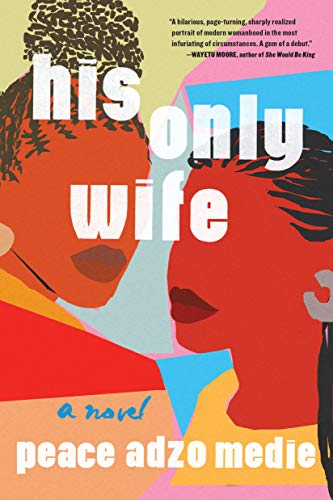
His Only Wife by Peace Adzo Medie

In this winning debut, an arranged marriage exposes a young woman to unimagined riches and a tantalizing taste of freedom, with unexpected consequences.

Afi lives in a humble home in the Ghanaian city of Ho with her mother. Since Afi’s father died, they are beholden to local businesswoman “Aunty” Ganyo for their jobs, their home and basic necessities like flour. So when Afi’s marriage is arranged to Aunty’s son Eli, she knows it is an honor, although she feels some trepidation at marrying a man she does not really know. “Elikem married me in absentia; he did not come to our wedding.” And so her new life begins inauspiciously in Peace Adzo Medie’s arresting first novel, His Only Wife.

Afi’s task, according to the powerful Ganyo family, is to win her new husband away from “the woman” with whom he’s already had a child, who is perceived to have stolen him away from his family. Afi resents being a pawn, but for her own reasons wishes to build a life of true love and commitment with Eli, whom she finds handsome and kind. She is out of her comfort zone, however, when she is installed in a luxury apartment in Accra, surrounded by food, clothing and modern conveniences she’s never known–with Eli still absent.

The young woman’s story unfolds in the first person, as Afi deals with an unfamiliar world and competing bids for her loyalty. Her mother and her new mother-in-law Aunty pressure her to appease and obey Eli. She makes a new friend, mistress to Eli’s brother, who recommends greater independence. While His Only Wife is on its surface the story of Afi and Eli’s marriage, at another level it’s more concerned with Afi’s development as an individual. Over time, in the big city and with more financial freedom, she will grow and learn more not only about her chosen career in fashion but about herself.

Medie gives Afi a voice that winningly combines insecurity, wisdom and dignity. Fashion and food contribute to a cultural backdrop. Accra is a cosmopolitan city, while Afi’s life in Ho was marked by privation and the importance of social and filial hierarchies. The dramas of Afi’s marriage and various family conflicts offer an entertaining plot rich with humor, but it is the story of the strong woman in a challenging and changing world that will capture readers’ hearts. His Only Wife is a memorable novel of personal growth and choosing one’s own destiny.


This review originally ran in the August 6, 2020 issue of Shelf Awareness for the Book Trade. To subscribe, click here.


Rating: 6 bowls of akple.

The Transmigration of Bodies by Yuri Herrera, trans. by Lisa Dillman

Vicky came to give him a kiss and, right as she was about to, turned to one side and sneezed into her elbow.

Maybe one day people wouldn’t even remember when everyone had started doing it like that, instead of covering their noses with their hands. It takes a serious scare for some gestures to take hold but then they end up like scars that seem to have been there all along.

So, the first headline about this book is its eerie relevance to our Covid present (original publication date 2013; in English: 2016).

The Transmigration of Bodies is part of a loose trilogy with Kingdom Cons and Signs Preceding the End of the World. I have read them years apart and a little out of order, so, grain of salt; but it seems their connections are about setting, theme and style, rather than serial characters. Each is absorbing, atmospheric and brief. Someday I’d love to read them again in publication order back-to-back, but that day will not come in the fall of 2020 (so help us all).

In an unnamed Mexican city, a plague has swept through. The streets are mostly empty but for military checkpoints. The mystery illness transmits through respiration; some people wear masks, others take a politicized (or macho) stance by not wearing them. (It was entirely creepy to randomly open this book in August of 2020, let me tell you.) Our protagonist is a man called the Redeemer – the story is told in close third person from his perspective. His job in this rather apocalyptic setting is to handle an exchange of bodies. A young man called Romeo Fonseca has apparently been kidnapped by the Castro family, while the Fonsecas in turn are holding Baby Girl Castro. Both Romeo and Baby Girl have died in the custody of the opposing family, but the Redeemer (with the help of his nurse friend, Vicky) finds that each died of the plague and not by violence. Still, the trading-back of the bodies is a fraught moment, what with the longstanding enmity between the Fonsecas and the Castros, complicated by grief and the general mistrust of the plague-times. (Along the way, the Redeemer will discover the origins of the families’ feud.)

At his home, in between his work for the Fonsecas, the Redeemer is involved in some sexual escapades with a neighbor. I found these interludes a little gratuitous; I’m not sure exactly what they add to the whole, although they’re consistent with the femme fatale of the hard-boiled detective genre.

More sobriquets are used in this story than names: the Redeemer, Dolphin, the Mennonite, Baby Girl, the Unruly, Three Times Blonde. Epithets lend the feeling of mythology, of these people being as much symbol as individual, although they are individuals. The emptied (and militarized) streets of a usually-busy city spook me, the reader, as much as they do the Redeemer. While there are plot twists, this feels like a novel of character studies and atmosphere more than a novel of plot. Backstory and development of individual characters – Vicky, Neeyanderthal, Romeo, the Unruly, and the Redeemer himself – and the Redeemer’s philosophies are the highlights, for me. Yuri Herrera’s writing is a place to get lost in, rather than a story.

I love the sentence-level writing style, for which credit is due both to Herrera and translator Lisa Dillman. She retains the rhythms and patterns, and some usages, of the Spanish language; she coins words and phrases (grimreapery, drunkaneers) which I assume mirror Herrera’s coinages. (I loved hearing him talk about Dillman’s translation work when he visited my MFA program a few years ago. Herrera speaks very serviceable English, but he appreciates Dillman’s different take on his work.)

In the other two books, I noted themes having to do with borders and transition. I found less of that here, although now that I go looking, it’s right there in the title: the transmigration, or crossing over into death. I felt this book was more about trust and distrust, and the transactional nature of trust, as when the two families must rely on their hired fixers to assess a need for revenge. Some similarities have been drawn to Romeo and Juliet. Although there is no romantic connection between the families’ children, they do share a longstanding feud that is perhaps somewhat resolved with shared grief.

Another fascinating novel from Yuri Herrera – who, I’ve just seen, has a new work of nonfiction out; I ordered it immediately. I think these novels are excellent studies in translated literature and in the novella form – worlds to get lost in.


Rating: 7 condoms.

The Prettiest Star by Carter Sickels

Disclosure: Carter Sickels (ed., Untangling the Knot) has taught at my MFA program in the past and we have some mutual friends. He was not there during my studies and we’ve never met.


A gorgeous, transcendent book, this novel just captured and held me. I read it in a single sitting; I couldn’t look away. I was drawn in. It was often painful, but often beautiful, and magnetic throughout. I am so grateful to have read two books in a row that received a rare rating of 10 here at my little blog.

The Prettiest Star is set in 1986. Brian is 24 years old when he decides to leave New York City, where he has lived for six years, and return home to small-town Chester, Ohio, in the Appalachian foothills. He is dying of AIDS; his partner has died, along with so many friends and loved ones, and he can no longer stand the city, filled with its reminders of the past. “Home” in Chester is not exactly a friendly place to return to. His father can scarcely acknowledge him, and will certainly not acknowledge that he is gay, let alone his HIV status. His mother feels only a small measure more tenderness, and responsibility, to her son. His sister Jess, now 14, was just eight when he left. No one has bothered to tell her anything about her brother, who she once worshiped but who is now a stranger. The extended family and the larger community don’t offer any better hope of tolerance, let alone support, with one exception: his paternal grandmother, Lettie.

The story is riveting, the characters beautifully nuanced and believable. I think it’s a victory for a novelist to write a character like Brian’s mother, Sharon: we recoil from her intolerance of her son, but we can also sympathize with her misunderstandings of the world. I don’t mean to be an apologist for bigotry. But Sickels is artist enough to show us that it’s not that black and white. (Also, 1986 was a different world.) I have a harder time feeling compassion for the father, Travis – but take note: Brian, Sharon, and Jess all get alternating chapters giving their points of view. Travis gets only one, at the very end of the book. The author’s choice not to let me into his head absolutely contributes to his being more enigmatic and less sympathetic.

Jess is a perfect teenager, conflicted about her body, boys, other girls, her place in the world; crazy (and very smart) about marine biology; rightfully (I feel) upset that the family doesn’t trust her enough to share certain facts about her brother. Each character felt perfectly wrought. I really responded to Brian’s struggles with memory and memorializing, with his own mortality (unimaginable), with his unasked for role(s) as gay and HIV-positive in a community’s gaze. He’s a regular guy, and an artist, and I enjoyed getting to know him.

Sickels’s choice to alternate chapters from the first-person perspectives of Brian, Sharon and Jess was a good one, I think; it let me triangulate a view of the household and get to know several very well-written characters, and feel empathies in tension with each other, which is life. Another layer to this storytelling method: Brian’s sections are the transcripts of the video he shoots, on cassette tapes, with a camcorder (because 1986). He’s documenting his life (and therefore his death). So where we get Sharon’s and Jess’s POVs in the usual novelistic style, as if we were sort of in their heads, we get Brian’s voice more intentionally: he knows he has an audience, although he’s not quite sure who that audience is. (He occasionally addresses his dear, fierce friend Annie, who comes to Ohio to enter the story at a few points.) He’s consciously recording his life, what he sees and thinks and feels, which makes for a different narrative voice than Sharon’s or Jess’s.

Now here I am. Alive, in Ohio, where we do not speak of the dead. Let us pretend. Where are all my beautiful men?

I love it – it contributes to a tone of elegy, of speaking from a beyond, of looking back in time, all of which feels appropriate to this story because of its subject matter, and because it was published in 2020 about 1986.

Let’s talk about that time for a minute. I saw Sickels read from this book and discuss it at a pandemic-distanced event alongside Paul Lisicky promoting Later. (I had planned to attend this event in person, but here we are.) That event prompted me to preorder the book. Sickels took a question about whether this novel is historical fiction, which I found interesting. I was taught in library school that historical fiction is defined as being set in a time period before the author‘s lifetime – meaning, it’s not about the timing of the reader’s experience of the book, but about whether the author mines a lived timeline or one that is historical to him. Without Googling Sickels’s age, I’d venture that he was alive, but young, in the 80s (like me). We are at an interesting distance from this time period: it was less than 40 years ago, easily in living memory of many of us who are alive now, but it also feels remote in a few ways. For one, technology is almost unrecognizably changed, and was a defining feature of that decade. There are lots of satisfying period details to this novel – clothing, food, music, technology. I think the (clunky, heavy) camcorder that Brian uses to document his life is a neat choice as an eye on this story, because it sets some of the stage props (if you will). Another defining element of the 80s is the AIDS crisis as epidemic and as a failure of social and political systems to support disenfranchised populations, like the gay community. In too many ways, we’re not doing beautifully at the same sorts of issues today, but we’ve come a long way too. To look back at the 80s feels like looking a long way back, although it’s not actually that far away, either. That weird contradiction feels important to me.

Bowie fans will recognize the book’s title, and the titles of chapters. Disclosure: I don’t know Bowie well, so I don’t know how deep the references go. (I have recommended this read to my buddy Dave, #1 fan.) For someone like me, it served as a little background flavor. Possibly the whole thing is filled with references I missed. At any rate, the smell of the 80s is here. The video documentary is an inspired choice, I think, as narrative device as well as for staging. The alternating chapters work beautifully. The characters are expertly done, and the plot moves at an irresistible pace and with such momentum – so feeling, powerful, important to me – that (again) I was never able to stop reading. I think it’s a near-perfect work of fiction.

The subject matter is well handled, I think. It’s important that we keep telling and hearing these stories. I thought Brian’s life was treated sensitively and not as a type, or a cause, or anything like that. Obviously I very highly recommend this book, but I know that some readers will find this material especially painful, even triggering – I guess I haven’t said it outright, but there’s plenty of nasty homophobia in the story. It’s hard stuff; I cried for at least 50 pages. But it’s also really beautiful, and I found it all worthwhile.

I’m so glad I read The Prettiest Star and it’s one of the best of the year for sure.


Rating: 10 photographs.

The City We Became by N.K. Jemisin

What a glorious book. N.K. Jemisin is a wonder.

I loved the fantasy/sci fi version of our world presented in The City We Became. When cities have achieved something like a critical mass of culture or soul, they sort of come to life in the form of a human avatar, a preexisting person who best possesses or encapsulates the qualities of that city. It takes a long time, a lot of history and life, for a city to become. There have only been a few in the Americas to get this far. New Orleans and Port-au-Prince were stillborn. Sao Paolo, as the newest city in the worldwide community, is on hand to help with the next birth to take place: that of New York.

New York is unique in that it has multiple souls, one for each of the boroughs as well as one for the city as a whole. Like London; except that something went wrong in London. So New York’s becoming is unprecedented and fraught. The novel opens with the perspective of the unnamed man who will, hopefully, be New York: “too slim, too young, and entirely too vulnerable,” Black, talented, homeless. His voice blew me away in these first pages, before I had any idea what was going on. (It also reminded me of the voice of a friend of mine, a talented young writer. You’re in good company, B.) Here’s the thing: in the birth moment of every city, the Enemy is near at hand, threatening. This is why some cities don’t come to life at all. It’s why some are killed: Pompeii, Tenochtitlán, Atlantis. Oh, yes: it’s not that Atlantis wasn’t real. It just isn’t real anymore.

Something is different about New York: the city’s main avatar may be precocious, but the Enemy (“squamous eldritch bullshit”) is much stronger here, too. The risk seems greater than ever. Luckily, New York (and his helper, Paolo) has the boroughs to rely on. Or does he? Manhattan has never set foot in the city before. He can’t remember his name–the name from before–or what he did, but he thinks it wasn’t good. Brooklyn grumbles that she is “too goddamn old to fight transdimensional rap battles in the middle of the night,” but she’ll do it anyway. The Bronx is always ready to rumble; her people have been here since before there was a New York. Queens would rather return to her studies (she hates financial engineering, “which of course is why she’s getting a master’s degree in it”). Staten Island is a real mess, downright antagonistic to her fellows. And what is Jersey City doing here?

As you may have realized, the idea of a place being personified in an individual is right up my alley; I bought into this concept immediately and whole-heartedly. I love the challenges it presents the author. To choose an individual means choosing a gender, a race, personality traits. It means committing: Brooklyn to be contained within one woman? If she’s a rapper, or a city councilwoman, that’s a commitment to one way of expressing all of Brooklyn: it sounds like a losing proposition from the start, but Jemisin knows her stuff. Here’s where I say that I know little of New York and the personalities of its boroughs; but I know how tricky it is to try and sum up a place, and I respect the complexities of The City We Became. (Also, I can attest that this story works even for the reader unfamiliar with New York.)

This book introduces a rich panoply of fascinating characters, with backstories, histories, cultural and ethnic heritages, professions, personalities, sexualities and gender expressions, to represent a richly varied New York. It is completely absorbing. The science and fantasy of the world in which cities become struck the right balance, for me, between sufficient explanation and satisfying mystery. (I don’t show up to sci fi for the science.) The whole thing is fully-fleshed, compelling, the kind of story to lose yourself in, both clearly related to the one I live in and weird enough to take me out of this one. Jemisin gives each character their own compelling voice, and plenty of sensory lushness to her settings–which are, pretty literally here, characters unto themselves. They are all, in their own ways, so smart. “There’s a lot to consider: particle-wave theory, meson decay processes, the ethics of quantum colonialism, and more.” Lovecraft is often present, “equal-opportunity hater” though he was. I had a fabulous time. And this is just the first in a trilogy! I’m so excited.

Unqualified recommendation: if you appreciate imagination, or a person’s connection to place, or cities, or cultures, or fine writing, get to know The City We Became.


Rating: 10 brigadeiro.

The Boy in the Field by Margot Livesey

A single discovery touches three siblings’ lives in surprising ways in this poignant, gleaming story.

The Boy in the Field is a stunning novel of tenderness, interconnectedness, cause and effect by Margot Livesey (The Flight of Gemma Hardy; Mercury). Matthew, Zoe and Duncan are walking home from school one day when they find him, in a field with cows, swallows, bluebottles: a beautiful young man, really just a boy, bloodied and unconscious. He speaks one word: “Cowrie,” Zoe reports to the police. “Cowslip,” says Duncan. “Coward,” says Matthew. With their discovery, they save his life.

The teenaged siblings are close, loving and very different from one another. Matthew, the eldest, is thoughtful. He hopes to become a detective one day, and becomes obsessed with solving the mystery of who hurt the boy in the field, and why. He puzzles over motivations. Zoe has “a gift for finding things: birds’ nests, their mother’s calculator, a missing book, a secret.” She worries over her parents’ relationship and explores her own first sexual experiences; she is drawn to the ways in which people come together and apart. Duncan, the youngest, is observant, almost preternaturally sensitive and a gifted painter. Finding the boy will start him toward a discovery about his own life that might be destructive.

The novel unfolds through alternating chapters from the perspectives of Matthew, Zoe and Duncan. Their parents, Betsy and Hal, are compelling characters as well, less known than the children but multi-faceted, imperfect and endearing. Livesey’s deceptively simple prose renders each sibling as both sweet and complicated. Their shared experience, finding the injured young man, begins for each of them a different kind of acceleration: into adulthood, out of innocence, into reconfigured connections. Matthew gets to know the police detective assigned to the case; his relationships with his girlfriend and his best friends irrevocably change; he notices for the first time that he’s drawing away from his younger siblings. Zoe has out-of-body experiences, breaks up with her boyfriend and meets a young philosopher, and it is Zoe who discovers the chink in their parents’ marriage. Duncan sinks into the paintings of Morandi, gets a new dog and launches an investigation of his own. By book’s end, the three will grow both closer and apart through this shared experience.

The Boy in the Field is a coming-of-age story, a mystery, a sharp-eyed examination of individual lives and relationships. Despite the violent crime related to its title and the insecurities that arise for various characters along the way, this brilliant novel offers a sense of beauty and safety in its quiet ruminations.


This review originally ran in the July 21, 2020 issue of Shelf Awareness for the Book Trade. To subscribe, click here.


Rating: 8 brushstrokes.

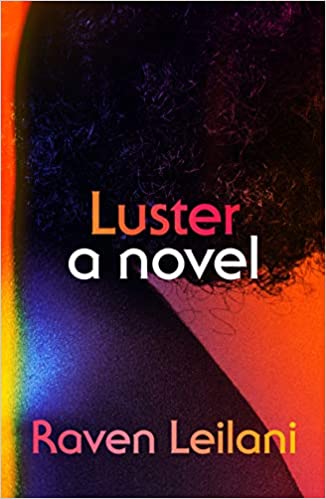
Luster by Raven Leilani

Race, sex, shifting social rules, art, inspiration and digestive troubles plague the compelling protagonist of this debut novel.

Raven Leilani’s first novel, Luster, is a rocket-paced, sensual fever dream of sex, trauma, relationships and conflicting perceptions.

Edie is in her 20s and struggling, with her crappy shared Bushwick apartment, her low-level position in children’s publishing, her uninspired sexual choices and her irritable bowel syndrome. Her parents are dead, but the psychic wounds they inflicted are not. Her painting is not going well, and she is a Black woman in New York City. “Racism is often so mundane it leaves your head spinning, the hand of the ordinary in your slow, psychic death so sly and absurd you begin to distrust your own eyes.” Early on, her affair with Eric seems different, refreshing, in spite of, or because of, the 23-year age gap. Then Edie gets fired and evicted, and she spirals, landing, weirdly, in the middle of someone else’s marriage. She knew from the start that Eric was in an open marriage–his wife set a lot of rules for his relationship with Edie. But suddenly she finds herself taken in, literally, by Rebecca, living in their guest room in New Jersey, asked to mentor this white couple’s adopted Black daughter, Akila. Surreality seems to be Edie’s default, but now the funhouse mirror tilts again.

Edie’s first-person narration is nearly stream-of-consciousness, long sentences overflowing with imaginative visual impressions and self-deprecation: “as the car is pulling away he is standing there on the porch in a floral silk robe that is clearly his wife’s, looking like he has not so much had an orgasm as experienced an arduous exorcism, and a cat is sitting at his feet, utterly bemused by the white clapboard and verdant lawn, which makes me hate this cat as the city rises around me in a bouquet of dust, industrial soot, and overripe squash, insisting upon its own enormity like some big-dick postmodernist fiction and still beautiful despite its knowledge of itself, even as the last merciless days of July leave large swaths of the city wilted and blank.” Edie’s particular blend of despair, panic and self-destruction is spellbinding. As she hesitatingly helps Akila with her hair and accompanies Rebecca to work (conducting autopsies at the VA) and to a midnight mosh pit, Edie begins to paint again. She is inspired by the minutiae of this family home: lightbulb, dinner plate, Rebecca’s body.

Luster is intoxicating and surprising, never letting readers settle into recognizable patterns. Leilani has crafted an unforgettable novel about a young woman making her own way.


This review originally ran in the July 20, 2020 issue of Shelf Awareness for the Book Trade. To subscribe, click here.


Rating: 7 Captain Planet mugs.

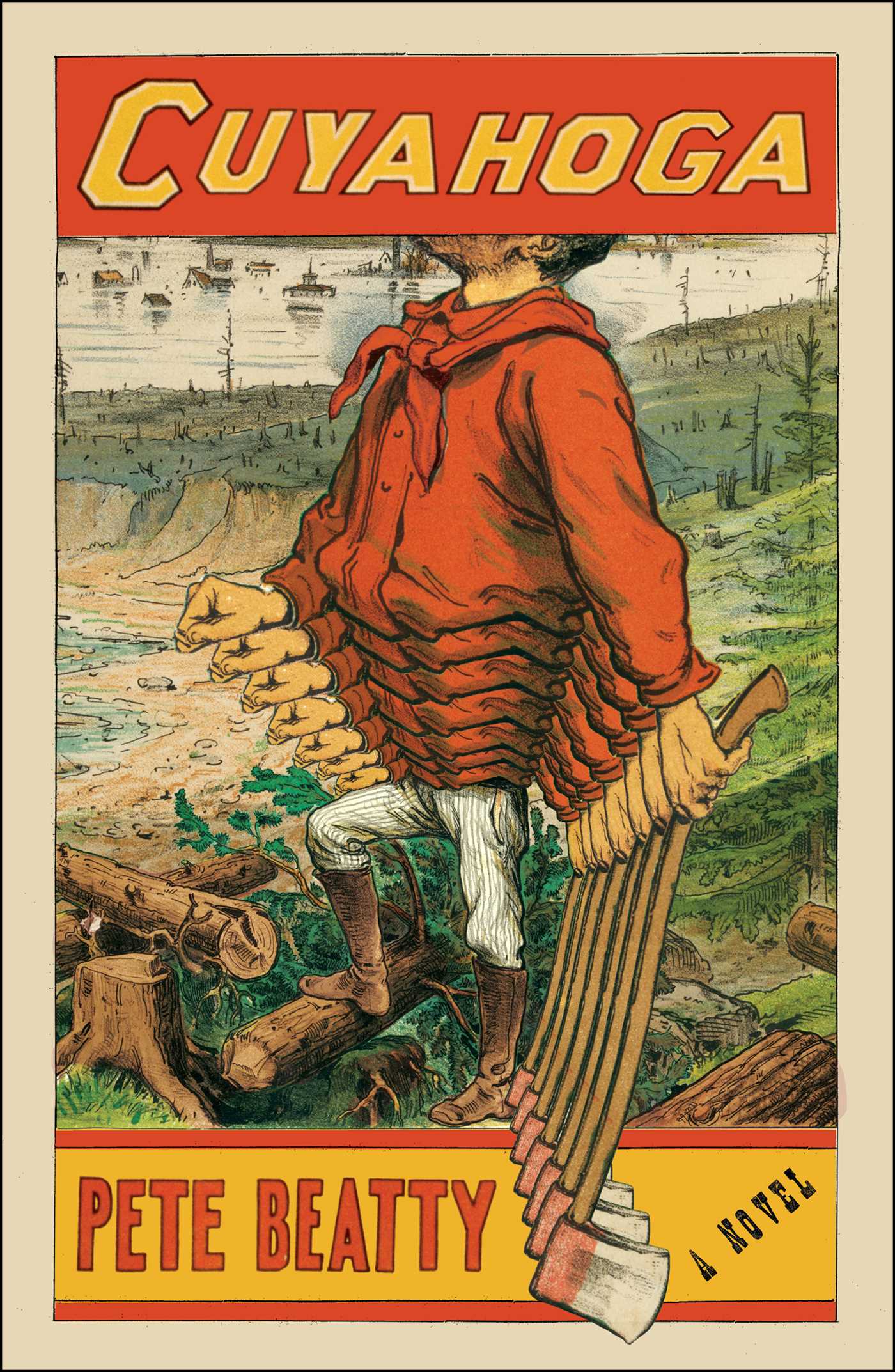
Maximum Shelf: Cuyahoga by Paul Beatty

Maximum Shelf is the weekly Shelf Awareness feature focusing on an upcoming title we love and believe will be a great handselling opportunity for booksellers everywhere. The features are written by our editors and reviewers and the publisher has helped support the issue.

This review was published by Shelf Awareness on May 13, 2020.


Pete Beatty’s Cuyahoga is a wild romp, a colorful tall tale and a tender-hearted revisionist history. In the early days of Ohio City and Cleveland, the two cities at the mouth of the Cuyahoga River struggle for primacy, peopled by larger-than-life heroes and classical fools.
The year is 1837, and the narrator of this farfetched story is Meed (short for Medium Son). He promises “wholesome tales, without too many fricasseed widows. True mostly–I will not lie any more than is wanted for decency.” His own protagonist is his brother, Big Son, part superhero and part town mascot, a “foremost spirit of the times,” with “shoulders wide as ox yokes… waist trim as a sleek lake schooner.” In the opening pages, Big must subdue a forest before Ohio City can be founded. “I imagine you are accustomed to meek and mild trees that do not want correcting,” Meed tells readers in a confidential tone, but “you do not know the manners of our trees.” Big’s feats are the stuff of legend, and the crafting of that legend is Meed’s work:

“Stories will go to rot without puttingup. You must salt them into Egyptian mummies, or drown them in lying sugar. Bury them in winter and freeze their blood.

But you would hide the honest stink, the moschito bites, the wounds, the living glory.

Let you and me do without salt and sugar. Taste matters true–even if the truth is half rotten.”

Cuyahoga often appears to be Big’s story, but like many of the best narrators, Meed must eventually step forward and reveal himself. Along the way he will profile the conjoined cities and a number of their livelier inhabitants. The fate of the brothers is inextricable from the drama of the towns’ rivalry.

Big’s problem, which launches this picaresque tale, is that his fabled feats inspire the admiration of the townspeople, but rarely pay in currency. He wishes to marry the beautiful, strong, quick-witted and thoroughly independent Cloe Inches, “somewhat-sister” to Meed and Big (all three are adopted). Readers understand early on that Cloe does not wish to marry at all, but the protest she makes over Big’s lack of funds is the message he hears most clearly. Much of Cuyahoga tracks his attempts to earn a living that will let him “make an honest man of myself,” as Big puts it, and win her hand.

Big’s attempts to better himself merge with Ohio City’s bid for greatness. The towns’ rivalry comes to a head with the question of a bridge across the Cuyahoga: Who will pay for it? Where will it be located (and therefore who will get the business of the tradespeople who use it)? When a location is chosen that puts Cleveland at an advantage, a chant rises up in Ohio City: “Two bridges or none.” This is the kernel of conflict that will put Big at odds with his town, unsettle Meed’s established loyalties and threaten the peace of the Cuyahoga’s twin cities.

Cuyahoga is seasoned liberally with other memorable characters: the prickly Cloe is joined by “Elijah Frewly, the worst rastler in Ohio, who wore black eyes regular as whiskers” and the grimly nurturing Mrs Tabitha, who “ambuscades” her children (adopted and natural) with corncakes each morning. (One of Meed’s poetic traits is the coining of words: “To ABSQUATULATE were a general term for departing with haste.”) Even among such a cast, grocer (read: barkeeper) August “Dog” Dogstadter stands out. Dog’s bar brims with uncouth characters and bristles with weaponry: “Hoes, plows, rakes, scythes. Mattocks and sledges. Pokers and tongs. Mammoth laundry spoons and rusted cleavers. Implements for encouraging people. Pikes, clubs, a spear….” Dog himself embodies and leads this menagerie, not necessarily a force for good. After the first attack on the hated bridge, Dog and his motley crew are immediate suspects. Meed is always on hand to record the drama, including horse and boat races, midnight graveyard hauntings, threatening nocturnal pigs and the finer points of the frontier coffin-making business.

For all its vivid spirits and outsize feats, Cuyahoga‘s greatest achievement is Meed’s unorthodox voice, unpolished but often piercingly wise, and peppered with surprising allusions. “FIVE DOLLARS SHERIFF’S FINE FOR ANY PIG TO WONDER IN THESE PREMISES,” the graveyard sign reads; “I believe the sign maker meant WANDER and only spelled badly. But the mistake had a poem to it.” Meed is given to poetry in his own cockeyed way. Early morning events take place “before dawn put a rosy finger on Ohio,” in reference to ancient Greek classics. His voice and perspective are by turns simple, philosophical, silly and serious. Readers are entirely on his side by the time the loveable, hapless Meed must eventually balance his devotion to his hero brother with his own desires, and ask: “If I were a spirit, how would I go?”

Zany Midwestern history, oddball superhero story, poignant tale of brotherhood and self-discovery: this is an utterly fresh debut novel. Cuyahoga is ever surprising.


Rating: 7 shinplasters.

Come back Wednesday for my interview with Beatty.

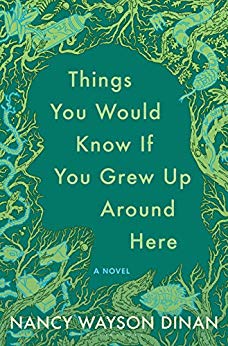
Things You Would Know If You Grew Up Around Here by Nancy Wayson Dinan

Forces of nature and preternatural human empathy come together in an extraordinary novel about relationships, love and place.

Set against the true events of Memorial Day weekend 2015 in central Texas, Things You Would Know if You Grew Up Around Here explores empathy, history, local lore, fantastical happenings and simple humanity. Amid catastrophic flooding, Nancy Wayson Dinan’s protagonist offers a compelling balance between the weird and the ordinary. Eighteen-year-old Boyd has always been unusually perceptive. Her best friend Isaac is the only one who never asked anything of her, in the unspoken way that people do. “Hurt children trailed Boyd… the forked stick of a dowser… tuned not to water, but to pain.”

It’s the fourth year of the drought, the beginning of summer, and Isaac is camped on the edge of the lake below Boyd’s house, panning for gold: “You can pay a semester of tuition at UT with a tiny sack of that gold dust.” After the first night’s rain, landscapes are rearranged, people scattered, and the rain still falls. Boyd can feel Isaac lost somewhere, “the copper fear in his mouth… the shivering of his chilled limbs.” Bridges out and all roads blocked, she sets out cross-country, on foot. “She had no doubt she could find Isaac; she was drawn to him like a magnetic pole, reading his distress like a Geiger counter.”

So begins a chain of events and searches: Isaac in mortal danger; Boyd following instinct alone into uncharted territories; her neighbor Carla, a retired hippie recluse from Austin, following her own instincts after Boyd. Boyd’s mother, Lucy Maud, accompanied by a motley crew of aging family members and Boyd’s father. Isaac’s father, also missing, gone treasure-hunting just as the rains began.

Dinan’s narrative shifts among these quests: Carla slipping through the mud in her yoga slides. Lucy Maud, alternately drawn to her estranged husband and annoyed by his ineptness. Isaac in one predicament after another. And Boyd, whose unlikely understanding has expanded until she must navigate both time and space, lost children and Texas history, wandering through the same sodden world where she looks for Isaac.

Things You Would Know If You Grew Up Around Here is fabulous and engrossing, both faithful to the real-world details of central Texas and wildly imaginative, peopled with treasure hunters, prehistoric beasts, distracted professors and one improbable young woman facing a momentous decision. Dinan’s storytelling flows as forcefully as a flash flood in this spellbinding first novel in which a handsome young man, refreshingly, awaits rescue by a powerful woman.


This review originally ran in the April 27, 2020 issue of Shelf Awareness for the Book Trade. To subscribe, click here.


Rating: 8 glyptodonts.