Dawn by Octavia Butler

I thought Kindred was good, but Dawn has blown me away. The former was an excellent and thought-provoking book but (at least at this distance of memory) not something I quite got lost in; this one offered a new level of world-building that took me away from my own life in a way I love. It’s still an outstanding work of craft, and offers plenty of serious issues (see the discussion questions at the back of my paperback edition), but it also captured my imagination and took me out of myself. Very special.

Lilith wakes up in a plain room devoid of color and objects, accompanied occasionally by disembodied voices, fed a bland stew or cereal in edible bowls, driven a little mad by isolation; and this happens over and over again. Eventually she passes enough tests to meet her captors, who turn out to be nonhuman alien “people” who inform her that she is not on Earth – Earth as we know it was destroyed in a nuclear war, which she remembers – but on a ship. And, long story short-ish, she is among the few human survivors who will eventually be sent to Earth to repopulate it. But there is a price: the alien people, the Oankali, want something in exchange for shepherding humans out of near-extinction.

Lilith is a special human. She’s been identified as having the right combination of qualities to lead and teach humans how to move forward. This role will come with its own frustrations and burdens. It is the Oankali’s belief that humans have “a mismatched pair of genetic characteristics,” which alone would have been advantages but together may doom humanity. These are intelligence and hierarchical thinking. Lilith’s troop of humans have these characteristics, of course. They are also traumatized by war, and the challenges of survivalism include some tendencies to violence, for one thing.

This is a story about the way humans behave, and about relationships, between humans and also across species with the Oankali. In some basic ways, it reduces to a story about people, which I appreciate. It also considers some more unusual questions, especially because the Oankali have some very novel qualities, skills and abilities, and ways of relating to each other. Sex and gender appear in new ways here, which is thought-provoking. Lilith is a Black woman, which has some implications for her place in a human society, because even post-nuclear-war we haven’t lost our societal issues and prejudices. Dawn deals with questions about agency and self-determination; love, sex and gender; and the persistence of old hangups. I was intrigued and engaged by the Issues, but I was most pleasurably lost in the story and the novel world and people.

Very much sold on this series – I’ve ordered books 2 and 3, and can’t wait.


Rating: 9 breadnuts.

Thrust by Lidia Yuknavitch

A remarkable girl moves through past and future timelines to connect disparate, marginalized characters in Lidia Yuknavitch’s imaginative otherworld.


Lidia Yuknavitch’s Thrust is a complex novel of great imagination, outside of time but very much concerned with it. At its center is Laisvė, also known as the Water Girl. In the late 21st century, she and her father hide away from what is left of society in a submerged New York City where only the tip of Lady Liberty’s torch is visible at low tide. Laisvė has a fascination with curious objects and an unusual set of skills. “She knew not to be afraid to go to water, because time slips and moves forward and backward, just as objects and stories do.” Laisvė is a carrier, who can move not only objects but people, through time as well as space. In Yuknavitch’s lovely, weird prose, Laisvė will eventually connect Frédéric, the French sculptor of the Statue of Liberty, and his captivating, beloved cousin Aurora; a violent, abused boy and the social worker–the daughter of a war criminal–who hopes to save him; and a tight-knit crew of three men and one woman who help build the Statue, and who represent “an ocean of laborers.”

Yuknavitch (Verge; The Chronology of Water) moves between worlds as her chapters follow different characters in turn. Some are labeled ethnographies, and form an ode to unrecognized workers, immigrants and misfits. “The story of workers is buried under the weight of every monument to progress or power. Our labor never reaches the height of the sacred. No one ever tells the story of how beautiful we were. How the body of us moved. How we lifted entire epochs.” Characters come from all over the world, speak a range of languages and concern themselves variously with history, the arts, social welfare and the body. Their stories are intertwined and connected by Laisvė’s travels. Laisvė “wants the words to rearrange, to locate differently, the way language itself could if you loosened it from human hubris and let it flow freely again as a sign system, as the land and water did, as species of plants and animals did, everything in existence suddenly again in flux, everything again possible.”

Yuknavitch’s writing style is recognizable to readers familiar with her lyricism, coined words, love of the downtrodden, and water as an emphatic theme. Thrust is many things: a speculative history of the United States, a recognition of forgotten classes, a fluid song about the power of love, a celebration of the power of language and storytelling. It is an intricate novel in its interconnections, plotlines twisting away and back together again, but readers’ attention will be well rewarded by profound, thought-provoking and deeply beautiful observations about humanity in an ever-changing world.


This review originally ran in the May 10, 2022 issue of Shelf Awareness for the Book Trade. To subscribe, click here.


Rating: 8 pennies.

Elsewhere by Alexis Schaitkin

Set in a village where mothers vanish, this atmospheric novel encourages contemplation of differences and commonalities, and thinking bigger than the boundaries into which one is born.

Alexis Schaitkin creates a chilling, mesmeric world in Elsewhere, a novel that questions motherhood, community ties and individual agency. The village at its heart and the options of a larger world will stick with readers long after the final page.

“We lived high above the rest of the world. Our town sat in the narrow aperture between mountains, the mountains forested, the forests impenetrable.” Vera has grown up in this setting, in a town with unknown origins (“Our streets and park and river carried names in a language we did not speak”) but strict rules. No one goes out after dark, when the ubiquitous clouds descend. Girls form friendships in threesomes, not pairs. And every girl lives in anticipation of becoming a mother, which carries the greatest risk and reward the village knows, because some mothers will stay and some mothers disappear. “One minute she was here, as solid and real as any of us, the next her body faded, faded, until she vanished into the clouds. Gone.”

Vera’s mother went when she was a small child, and she spends her youth wondering what kind of mother she might possibly be without a mother of her own to guide her, if it’s possible that she can be a mother at all. Her obsession echoes that of all the townspeople, who thrill at guessing which mother will be next, and what makes the difference between one who stays and one who goes. “Impossible to predict, what motherhood would bring out of a woman, what it would show her about herself, the end to which it would carry her.” Vera has always known this as blessing as much as curse. “Our affliction opened us to pain, yes, but also to heights of beauty, and of love, that people elsewhere would never know, because they did not know what it was to love in the shadow of our affliction, our love deepened and made wild by the threat that hovered over it. Our affliction was terrible, but it was not as terrible as living without it.” But when motherhood indeed comes for Vera, and she finds herself fully in the unimaginable thrall of her child, the town’s affliction haunts her in a new way.

The village is profoundly insular: “What could the stories and histories of lives elsewhere offer us?” But it turns out that “elsewhere” is a place as well. Elsewhere is unsettling, thought-provoking and lushly detailed, a memorable inquiry about attachments to place and to family, and what happens when a person has to choose between her family and herself.


This review originally ran in the April 29, 2022 issue of Shelf Awareness for the Book Trade. To subscribe, click here.


Rating: 9 crystal pendants.

Klara and the Sun by Kazuo Ishiguro

This is my first Ishiguro novel, and I found it magical. I usually avoid all writing about a book, even down to back-cover blurbs, once I’m committed to reading it, but in this case I’m glad I took a look at the back cover, where it refers to protagonist Klara as an Artificial Friend; in the book itself Klara and others like her are AFs, and I think it’s well into the book before that acronym gets clarified. (I was just telling a student that I need all acronyms spelled out in his paper!) So, armed with this knowledge…

We first meet Klara when she is living in a store, mostly in contact with her friend Rosa (another AF) and a woman known as Manager. Klara is deeply curious and observative, well above average in these ways, and Manager tries to help her and Rosa to be chosen (and promote the store) by placing them in the window, which is also an advantage because AFs are apparently solar powered. Klara refers to the Sun as if he is a higher power, sentient, a god of sorts; ‘he’ is not capitalized but it almost feels as if it should be. The reader doesn’t get any background information, but gradually understands that Klara is for sale, to serve as an Artificial Friend to a child who chooses her. There are a few hiccups in her path, but Klara does eventually go home with a girl named Josie, who is mysteriously and intermittently ill, and who treats Klara rather better – rather more as a real person – than most AFs can expect to be treated by the families that choose them. This is somewhat earned by Klara’s unique powers of observation and understanding. She follows not only human actions but also emotions closely, searching for the connections and causations in relationships. She doesn’t always read cues correctly, but her interest is genuine and… I’m going to say her empathy is genuine and innate.

For me, this is the crux of the story. It seems that this is not true of most AFs (although Klara’s is the only mind we get inside of, as she is the novel’s first-person narrator), but Klara definitely feels. She is puzzled by human feelings and relationships, which she must consciously learn and study, but she already – naturally – feels something for them. Josie matters to her from the beginning. Josie’s mother (“the Mother”) likewise draws her empathy, although she is slower to treat Klara like a real person. I’m reminded of The Robot in the Garden, a very different book but one that also addresses questions of humanity via nonhuman characters. It’s a neat trick. Additionally, the outsider’s perspective (here, a person who’s not quite human) allows for direct observation of the human experience that a human character couldn’t make in a work of fiction without it feeling weird and forced.

Other details of Klara and Josie’s world that we slowly puzzle together: Josie is “lifted,” or (in some unexplained way) genetically modified for higher academic/intellectual performance, which is an advantage that most children apparently receive – or most in her social milieu? This comes with some disadvantages, too, though, including social ones. Josie’s lifelong friendship with a neighbor – which they would like to develop into something more – is hindered by his not having been lifted. There’s plenty to explore here metaphorically, too, not only about what constitutes advantage (and at what cost), but also about relationships across societal boundaries. I find many parallels with the story I’ve just finished teaching this week: “Who Will Greet You At Home,” by Leslie Nneka Arimah, which also literalizes some metaphorical real-world truths to illustrate them more clearly. I am a fan of this technique.

It’s a beautiful, thoughtful book, clearly written by a master. Evocative, with lovely descriptions. Klara’s voice (again, in first person) has a formality to it that nods toward her extra-humanness, but also highlights the observations she can make that a human cannot. Her appreciation of simple vistas is sublime. I am charmed by her Sun-worship. There is something about her – vision? or her appreciation of sunlight? I’m still not sure what it is – that sometimes divides her view into grids, which I found fascinating; I wish I understood better what was going on there, and wonder what else I’m missing here.

I love it. I’m not sure I entirely understand it, but I love it: the magical wonder of Klara’s unique voice, the precocious sweetness of Josie’s relationship with her mother, the curious rules of this world. Definitely interested in more of Ishiguro’s work.


Rating: 8 alcoves.

South of the Big Four by Don Kurtz

I bought this book years ago because it was called by Haven Kimmel “simply the finest novel ever written about the Midwest” (on her blog), and I’m finally getting to it. It is a very fine, bleak novel, set in 1990s Indiana. Thirty-year-old Arthur has returned home from Michigan after work ran out up there; now he’s camped out in his family’s abandoned farmhouse, on the edge of their former farm. We meet him at this moment, as he rigs lighting and heat, reencounters his brother and sister-in-law, and takes a job as hired hand to Gerry Maars, successful farmer and local big man in some complicated ways. Arthur is taciturn and simple in his tastes. He seems as surprised as perhaps the reader is, that he is so contented to run Gerry’s big machinery for him up and down the wintry fields at all hours and fall into bed tired for short spells in between. He also finds himself in a few damaging love affairs (least damaging to Arthur himself).

At well over 300 pages, South of the Big Four is a quiet novel in terms of plot. There are a number of events, but the overall impression is that of rhythmic, nearly numb repetition: the tractors go up and down the field; their parts break and are repaired or replaced; corn and beans are planted and harvested and sold and planted again. Gerry Maars is a fascinating character. City councilman, large personality, workaholic, self-aggrandizing and insecure, he casts a huge shadow and takes Arthur in completely, in ways that Arthur never quite articulates. The portrayal of north central Indiana is stark and desolate, and feels real enough to me (not that this is a region I know well at all). Its people are chapped and stark as well. No one in this story is happy. Remembering his 4-H steer, Arthur muses, “the last time I saw Sunshine he was frolicking his way out across that wide slaughterhouse holding pen, cantering and capering, glad to just finally be free.” That about captures the tone.

With Arthur as first-person narrator and protagonist, this is very much a book about the male experience; women are sexual partners and helpmeets. The perspective felt limited to me. It’s certainly a beautifully written book, and one that kept pulling me back: I was magnetized by its hypnotic pulse, “back and forth across an empty winter field.” It holds wisdom. But also not much beauty, or hope, and nary a likeable character. Rather, what it offers is perseverence. “The better, it seemed, in an ever more impatient world, to venture on anyway–unheralded and unprofitable; mortal, but still unaccountably alive.” I was not left feeling uplifted – and that’s not something I generally require of a book, but I felt the absence here of… something. A very fine novel, indeed. If I figure out what I’m missing, I’ll let you know.


Rating: 7 farm magazines.

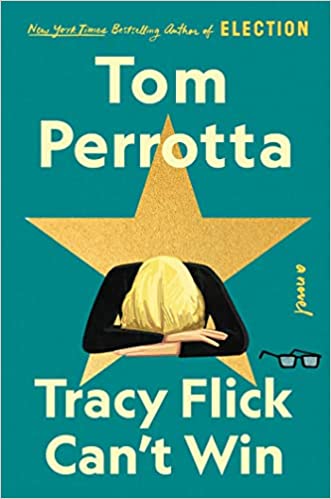
Maximum Shelf: Tracy Flick Can’t Win by Tom Perrotta

Maximum Shelf is the weekly Shelf Awareness feature focusing on an upcoming title we love and believe will be a great handselling opportunity for booksellers everywhere. The features are written by our editors and reviewers and the publisher has helped support the issue.

This review was published by Shelf Awareness on March 22, 2022.


Tracy Flick, the ambitious but unlucky protagonist of Tom Perrotta’s 1998 novel Election (and the 1999 movie adaptation starring Reese Witherspoon), is back and still striving in Tracy Flick Can’t Win. Familiarity with Election can’t hurt, but isn’t necessary to follow this next installment. Perrotta (The Leftovers; Little Children) serves up his signature black comedy and shrewd wit in an expertly paced novel of great cleverness and charm. The title character is now 40-ish and working as assistant principal at Green Meadow High School, in a shabby-idyllic New Jersey suburb. Life hasn’t turned out as Tracy had hoped. She left law school to care for her beloved mother, whose death 10 years ago still leaves a gaping hole. Instead of being a high-powered attorney on a rocket-like political trajectory, she serves as the hardworking second-in-command at an unremarkable public school whose football team disappoints everyone in town (except Tracy, who couldn’t care less). Then Principal Jack Weede announces his pending retirement, and it might finally be Tracy’s time to shine. But of course, nothing’s ever easy.

Kyle Dorfman, one of the town’s most successful alumni (he got rich off a virtual pet app) returns with the idea of putting together a Green Meadow High School Hall of Fame. He is also the new school board president, and therefore someone Tracy needs in her corner, but it’s not clear where his loyalties really lie (aside from with Kyle). The first meeting of the Hall of Fame selection committee immediately turns sour: the obvious candidate turns out to be a former star quarterback, and Tracy’s seen this routine before.

Tracy Flick Can’t Win is timely. It opens with a review of the #metoo era and headlines filled with “one powerful man after another toppled from his pedestal, exposed as a sexual predator,” which gives Tracy unpleasant memories of high school: “It was ancient history, a brief misguided affair–that’s the wrong word, I know, but it’s the one I’ve always used–with my sophomore English teacher, a few regrettable weeks of my teenage life.” Tracy sees the world changing around her but hasn’t entirely figured out her own version of it yet.

This adult Tracy Flick is vulnerable, socially awkward, frustrated and disillusioned. “My mother had been wrong: fame wasn’t a reward for your hard work. It was a lottery, pure dumb luck, and it didn’t matter anyway, not in the long run.” She’s still ambitious but worried it may be too late for her; she’s been passed over for promotions, and not completing law school still smarts. Her romantic life becomes needlessly complicated when her supposed catch of a surgeon boyfriend turns clingy. Baking a cake for her daughter’s 11th birthday gives her a chance to reflect on their mother-daughter relationship, which disappoints her, by contrast to her very close bond with her own late mother. The maturing Tracy has taken up a meditation practice for her blood pressure, and is working to navigate the nuances and challenges of a life less sparkly and more complicated than the one she’d intended to lead.

One of Perrotta’s talents is obviously forming character. Tracy is delightfully complex; Principal Weede has secrets of his own, and a touching vulnerability as well as some less admirable qualities. Kyle is not well liked, but his attempts to compensate offer comic opportunities. The aging star quarterback nominated for the Hall of Fame, Vito Falcone, is now a recovering alcoholic working on making amends, his process by turns pitiful and hilarious. And the high school’s much-loved, longtime front desk lady, Diane, is perhaps the novel’s most rewarding surprise.

Chapters shift in perspective, mainly between Tracy Flick, Jack Weede and Kyle Dorfman, whose first-person voices are joined by those of the two students who serve on the selection committee. (It’s déjà vu for Tracy when these are an overachieving but under-recognized girl and an affable but less impressive boy who’d beaten her out for Student Council president.) Third-person chapters feature a few other characters, like Vito Falcone and Front Desk Diane. In contrast to Tracy’s justified bitterness, we get other perspectives: “The truth is, we’re all prisoners of our historical context. Anybody who says morality is absolute, that right and wrong don’t change over time, you know what? They just haven’t lived long enough.” These points of view paint Green Meadow–and Tracy–in different lights, and allow Perrotta’s comedic zings to shine. Tracy Flick Can’t Win is many things: of-the-moment cultural criticism, a darkly comic drama of human relationships in suburbia, a moving sendup and a novel of racing momentum. By its end, Tracy is headed either for the triumph she’s been seeking since she was a high school student, or a meltdown the likes of which Green Meadow has never seen–or maybe both.

Perrotta’s classic combination of insight, humor and empathy is perhaps perfected in Tracy Flick Can’t Win. This novel has something for both the reader with a gimlet eye on the real world and the reader seeking an escape from it.


Rating: 7 bigger and better things.

Come back Friday for my interview with Perrotta.

Boys Come First by Aaron Foley

Three gay, Black, millennial men in Detroit face romantic, professional and existential challenges together in this deeply engaging novel about the importance of friendship.

With Boys Come First, Aaron Foley (How to Live in Detroit Without Being a Jackass) offers a delightful novel about romantic and career ambitions, friendship and the particular charms of and challenges faced by gay Black millennial men in Detroit. Chapters alternate perspectives among a lovable trio of friends.

Readers first meet Dominick as he departs New York City’s Hell’s Kitchen in a fluster: the start-up advertising firm he’d taken a chance on has just failed, immediately before he walked in on his boyfriend of eight years with another man. Dom flees home to Detroit to lick his wounds and reconnect with his old friend Troy. Troy teaches sixth grade at a charter school, eschewing his father’s considerable wealth in favor of giving back to the community, but he’s frustrated in his relationship with a domineering boyfriend, and the school’s charter is now under threat. Feeling a little stagnant, Troy has just picked up a mild-to-moderate cocaine habit. Meanwhile, Troy’s college friend Remy has styled himself as “Mr. Detroit,” a real estate prodigy and local celebrity: outwardly successful, but struggling to find meaningful connection with a partner who wants more than sex. (Remy oozes style, so it suits his character that his chapters are the only ones written in first person.) Remy likes sex, no mistake–each of the friends does, but each is also in search of something more meaningful.

Dom and Remy hit it off, and the boys’ club is complete. With group texts and happy hours around town, they support each other through messy hookups via dating app, professional disappointments and workplace microaggressions, heartbreaks and more. That is, until Remy’s latest development opportunity conflicts with Troy’s local advocacy. In Dom’s mind, “when you’re Black, gay, and thirtysomething, time always feels like it’s running out,” and these men feel both in-common and individual pressures to which any reader can relate.

Boys Come First is rich in flavor and detail, benefiting from Remy’s comprehensive knowledge of Motor City neighborhoods, Troy’s hyperlocal concerns for his school and Dom’s perspective as he returns from afar. The changing demographics of contemporary Detroit, by class but most pointedly by race, are front and center. Foley’s novel shows range, with its fun, silly and pathos-filled handling of the love-and-sex storylines, serious commentary on social issues and an endearing representation of sincere (if troubled) friendships. Unforgettable characters, madcap fun and mishaps converge in this sweet and, finally, aspirational story.


This review originally ran in the March 15, 2022 issue of Shelf Awareness for the Book Trade. To subscribe, click here.


Rating: 7 glasses of Lambrusco.

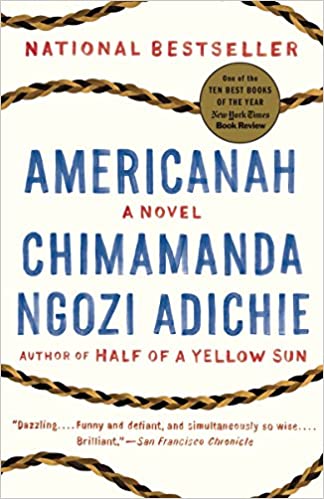
Americanah by Chimamanda Ngozi Adichie

I was blown away by this novel, which absorbed me totally in the life of Ifemelu, a Nigerian woman who lives in the United States for some years during and after college and then returns home to Lagos. It is large and sweeping in its considerations of cultural differences and personal relationships but also retains its focus on one life.

Ifemelu and her high school boyfriend Obinze have a deep and intense relationship, and no doubts about one another, but they both know – as everyone around them seems to know – that it is necessary to get out of Lagos and into the West, where there will be more opportunity to learn and study and earn money and build a life beyond the limitations of their home. Ifemelu is able to get to the United States to attend college in Philadelphia, where she struggles to scrape by, and to navigate a race and class system that is new to her. She has one strong family connection in the states, her aunt and younger cousin Dike. Her path is not easy but she eventually establishes a proper and “successful” life for herself, finally in New Haven, which is where we meet her in the opening chapter. Meanwhile, Obinze is unable to get papers to the United States, eventually traveling to London and overstaying his visa to live a hidden, undocumented life there. Each of them faces unique dangers, and after a particular trauma, they fall out of touch. The novel follows Ifemelu but occasionally checks in with her childhood sweetheart until the two eventually reconnect.

Americanah is first a story about people. It’s also about race and class in America, and about Nigerian and American cultures, and others (especially the multitude of “Non-American Black” cultures Ifemelu encounters in this country). While stateside, Ifemelu makes a career for herself as a blogger about race in America (she is clear that she wasn’t black till she got here). But it’s also just people, in the loveliest, messiest way, the ways in which we can be ugly and beautiful and complicated. There is some romance; but I take issue with the materials that describe this as a book about Ifemelu and Obinze, or an ‘intergenerational’ story. Although it’s true that Obinze is present for much of the book, and that there are multiple generations in it, I would say that this is a book firmly about Ifemelu, and the life she leads and everything it exposes about race and class and culture – Ifemelu as an individual, not a symbol or a device. This book is beautifully written and completely captivating; it’s the quickest nearly-600-pages I’ve taken in in a long time.

Ifemelu’s blog does provide Adichie with a mechanism for communicating pointed and explicit observations about race; but this is still far from polemic. Ifemelu mostly tells anecdotes from the world she encounters, which is a very approachable or accessible way to have these conversations (points to both Ifemelu and her creator). “…she began, over time, to feel like a vulture hacking into the carcasses of people’s stories for something she could use. Sometimes making fragile links to race. Sometimes not believing herself. The more she wrote, the less sure she became. Each post scraped off yet one more scale of self until she felt naked and false.” Now, look, I have no reason to conflate the character in these sentences with the writer Adichie, but I do think any time a writer writes about writing, we should consider that relationship. And I will certainly say that I relate to Ifemelu’s challenges here as a writer.

There is plenty of heaviness here, but it was also a pure delight to spend time with Ifemelu, a gorgeously self-assured, thoughtful character. While there is much here that is culturally foreign to my experiences, I always found it easy to sink into and to follow. I strongly recommend Americanah and admire Adichie.


Rating: 9 fried plantains.

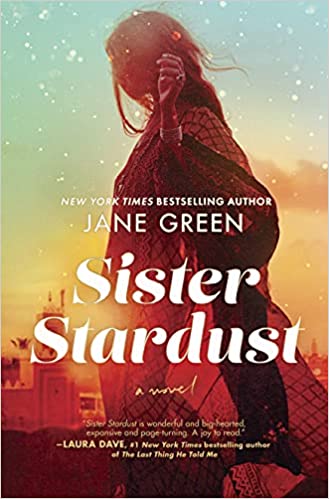
Sister Stardust by Jane Green

In this captivating coming-of-age novel, a teenager from the English countryside throws herself into life in 1960s Marrakech in a grand adventure that will color the rest of her life.

Sister Stardust is the captivating coming-of-age story of a shop girl from Dorset swept into 1960s Marrakech among the rich and famous. Jane Green (Summer Secrets; The Sunshine Sisters) dazzles readers with the brilliant adventures of Claire, who leaves behind a little Dorset village and a troubled relationship with her stepmother to journey to London. From there she is astonished to achieve a few girlhood dreams: losing baby fat, working in progressively hipper clothing stores and buying cooler clothes, finally meeting real, live rock stars and setting off on a spur-of-the-moment trip that will change her life forever. But even as she embarks on drugs, sex and cultural discoveries, Claire–by now calling herself Cece–finds that fabulous celebrities have their problems, too, and a tabloid-picture-perfect lifestyle is no guarantee of happiness.

This story takes the form of an extended flashback, as an elderly, widowed Claire goes through boxes in the attic and finally tells her daughter, Tally, what the colorful Moroccan artifacts were meant to remind her of. Still in her teens, Claire had jumped into a silver Bentley and been flown away to Marrakech, where she became the houseguest of 1960s icons Paul and Talitha Getty (true historical figures), running with a large group of famous musicians (of the fictional hit band the Wide-Eyed Boys) and an enigmatic chauffeur/bodyguard named Jimmy. The newly minted Cece experiments with hashish, opium, Quaaludes and orgies; she develops a passionate bond with Talitha, “this mysterious woman who lived in a palace and had managed to seduce the son of the richest man in the world,” and a close friendship with Paul, who introduces her to poetry, opera and more. However, a tragedy will change Cece’s course once again.

As a girl, Claire naively imagines that becoming skinny and flat-ironing her hair will be the answer to all her problems, as she dreams about pop stars and beautiful dresses. “Of course, I would have settled for Paul McCartney, but Dave Boland was my number one.” As a grandmother, telling these stories to her daughter, she draws different conclusions: the value of friendship, of self-actualization, of seizing the day. This dreamy narrative emphasizes life lessons and revels in the glitter and dazzle of 1960s free love and sex in more or less equal measure. Sister Stardust gathers momentum and achieves the kind of propulsive prose that brings immediacy to its joys and sorrows. Female friendships, the arts and the sensory joys of Morocco combine for a sparkling coming-of-age story of simple adventure and profound experiences.


This review originally ran in the February 8, 2022 issue of Shelf Awareness for the Book Trade. To subscribe, click here.


Rating: 6 babouches.

The Icarus Girl by Helen Oyeyemi

This one was more difficult for me than Gingerbread was. Still intriguing, but more mysterious, more opaque. When we meet her, Jessamy Harrison, age 8, lives in England with her white English father and her black Nigerian mother. She struggles socially and in school, and feels most secure hiding in the dark. When her family moves for a time to Nigeria, to live with her mother’s father and extended family there, she makes her first friend: a girl apparently her own age, hiding out on the premises of the family compound. TillyTilly is an enigma, and insists that Jess ask no questions. When Jess’s family returns to England, TillyTilly finds a way to follow, and this is when things get weird.

I’ve seen The Icarus Girl labelled as a horror novel, which makes a certain amount of sense, but it doesn’t feel like its primary goal is to frighten me – frightening though it is, by the end. Instead, it feels chiefly concerned with Jessamy’s identity and her difficulty finding a home in a world that doesn’t make sense to her. She is scared most of the time, but mostly without reason, and more or less knows this doesn’t make sense. She is bullied at school, and reacts in rages or tantrums. She’s never had a friend, and neither of her parents knows how to relate to her. Therefore she’s ripe for the affections of a (perhaps equally strange) friend – her first ever! – to hold great influence.

There’s a fair amount of Yoruba culture and language baked into the novel’s themes. There are a lot of pairings and contrasts, first in Jessamy’s dual English/Nigerian heritage and racial/ethnic makeup, and the story’s back-and-forth travel between the two locations. I don’t want to give anything else away, but doubles are important.

I found Gingerbread more accessible, and more easy to enjoy. Certainly, this one offered more horror, and significantly less whimsy and humor. It kept my attention, though, and I have the distinct impression that there’s more going on in its layers than I’m equipped to grasp. Impressive? Yes.

I’m super curious about Oyeyemi’s other work.


Rating: 7 books.