Old Flame by Molly Prentiss

A young modern woman explores and redefines her roles as advertising copywriter, creative writer, friend, daughter, lover, partner and mother in this exquisitely detailed rendering.

Following Tuesday Nights in 1980, Molly Prentiss presents another ambitious and brilliant novel. Old Flame stars a young woman seeking connection in busy New York City and picturesque Bologna, while wrestling with its many permutations.

Emily is performing a life. She’s about 30 years old, has graduated from bartending to a “real job” writing advertising copy for an iconic department store. She has a boyfriend and “a shitty but workable basement apartment in Williamsburg that, because of my real-job salary, I did not have to share.” She steals time at work to read poems and even do a little writing, but her lofty artistic goals aren’t coming together in the gaps between witty headlines about bras and descriptions of leather satchels. She perpetually feels the absence of her mother, who died in childbirth, and the shortcomings of her rigid, distant adoptive mother.

As the novel opens, Emily’s creative department is finalizing the Women’s Book, a biannual catalogue, and Emily is moving from just-work-friends to real-friends status with Megan, a graphic designer. Megan sends Emily a drawing, Emily responds with a short story, and the two are off and running on a truly creative project: The Other Women’s Book, Emily proposes, and Megan responds: YES. In quick succession, a troubled affair, a layoff and a wedding invitation both cement the women’s friendship and upend their circumstances. More or less spontaneously they travel together to Italy, where Emily spent an important year abroad when she was about 20. And in Italy, an unplanned pregnancy and a devastating fight with Megan shatter Emily’s tenuously structured life.

Old Flame considers the particular challenges of being a young artist in New York, balancing the kind of work that pays (“the magnet was capitalism, but I couldn’t see that then”) with the kind that inspires. It considers feminism and appearances, how people see themselves versus how others see them: in literal terms, Emily’s boyfriend is a photographer, and she questions the pictures he takes of her and the ones he displays in his studio; figuratively, of course, the possibilities multiply. Prentiss is a master of detailed descriptions, character studies, highly specific lists and meaningful settings. New York is hectic, fast-changing and inspirational; Bologna is romantic and somehow simultaneously disorienting and comforting. Emily’s deepest struggle is in navigating personal relationships: as a romantic partner, a daughter, a friend, a mother. By novel’s end, she will have learned a little about what these roles mean.

With Old Flame, Prentiss offers a sensitive story, gorgeously detailed and painfully realistic, about the lives and ordeals of women and artists, and what it means to seek and shape connection in the modern world. Filled with both snark and wisdom, this novel is a gift of love and forgiveness.


This review originally ran in the March 17, 2023 issue of Shelf Awareness for the Book Trade. To subscribe, click here.


Rating: 7 pajama shirts.

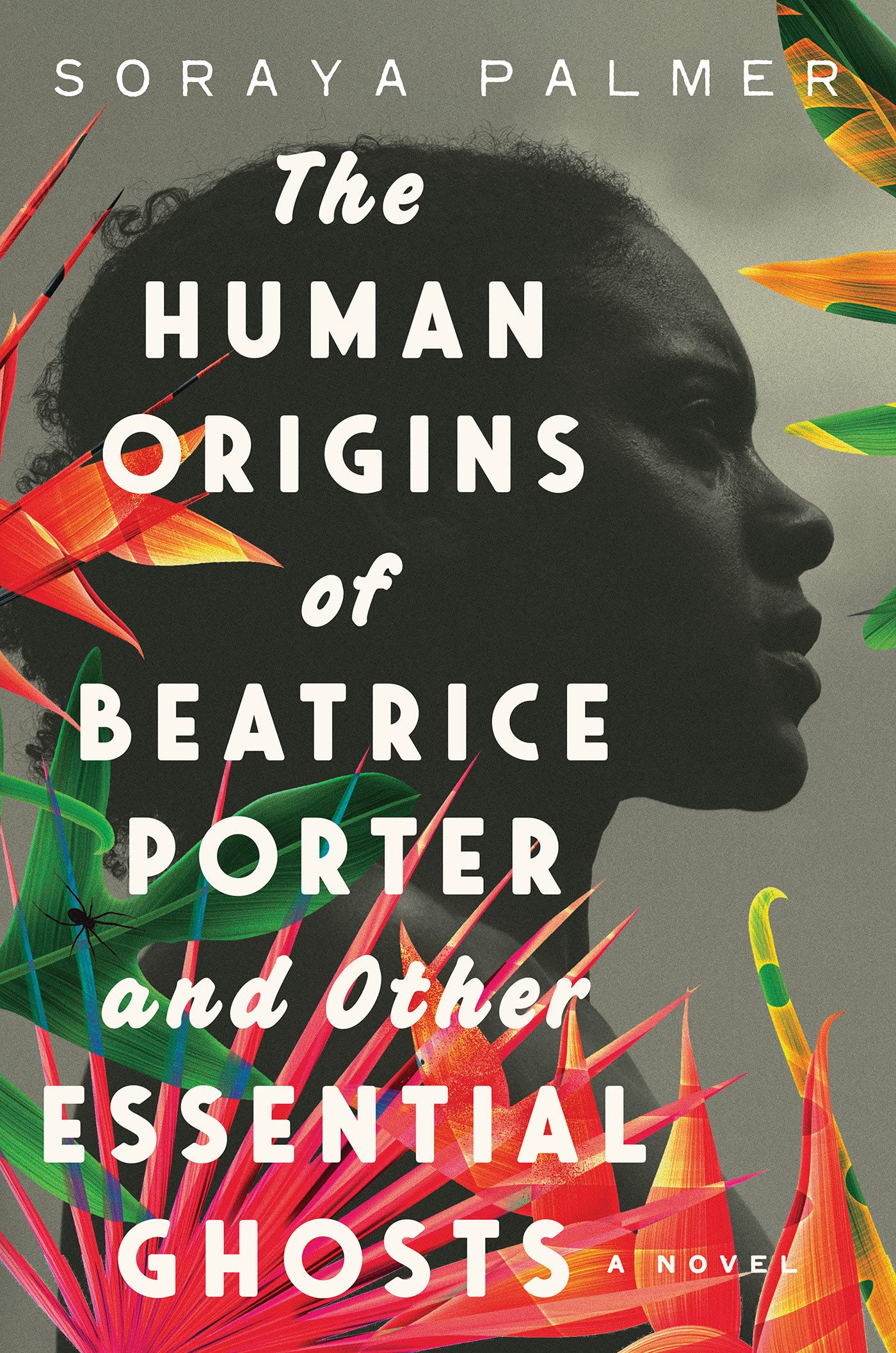
The Human Origins of Beatrice Porter and Other Essential Ghosts by Soraya Palmer

A fracturing family in Brooklyn with roots in Jamaica and Trinidad navigates love and loss in this debut novel influenced by Caribbean folktales and the power of stories.

The Human Origins of Beatrice Porter and Other Essential Ghosts is Soraya Palmer’s first novel, a phantasmagoric interweaving of family and folktale. Readers first meet two sisters, Sasha and Zora, when they are young girls in Brooklyn’s Flatbush, dealing with the household complexities of their father Nigel’s violence and infidelity and their mother Beatrice’s headaches and distance. Soon this timeline meanders to visit Nigel and Beatrice as children in Jamaica and Trinidad, respectively, and then as a young couple. These individual and family histories blend with folktales of Anansi (spider, god, man, woman, trickster storyteller), demons and exorcisms. The Rolling Calf haunts butchers, and Mama Dglo is the protector and mother of the ocean and “all things water,” among other mythical tales. The narrator of these time-jumping tales, with the repeating refrain “Let me tell you a story,” is mysterious, driven by motivations not always clear nor necessarily reliable–but always concerned with the power of storytelling itself: “You see I am what they call Your Faithful Narrator, found in places the West calls fairy tales, what men call gossip, what children call magic.” Small actions can be revolutionary: “They realize there is nothing more dangerous than a story with an owner that no one can touch.”

In the 1990s and 2000s, Sasha discovers chest binding as she navigates gender and sexuality. Zora studies her book of Anansi stories and hones her craft (that of her namesake) in her diary. As much as the sisters love each other, their respective self-explorations push them apart. In different ways, Nigel and Beatrice separate but remain intertwined. Caribbean and West African folktales continue to influence each of these threads until they come together again in Trinidad with a 106-year-old grandmother, several reunions, an ending and a new beginning. None of these characters is entirely innocent or faultless, but they are finely drawn with compassion and compelling, colorful pasts. Love and family contain both beauty and pain in this telling.

Palmer imbues her novel with both snappy pacing and deep feeling in a lovely prose voice with music and poetry behind it. The Human Origins of Beatrice Porter has big things to say about sisterhood and family; race, sexuality and class; life and death; and above all, the power of storytelling. “Why do we remember some stories more than others? And what happens to the ones that we forget? Let me tell you a story.” The result is wide-ranging and thought-provoking–but also an immersive and sumptuous read. Palmer shines.


This review originally ran in the March 3, 2023 issue of Shelf Awareness for the Book Trade. To subscribe, click here.


Rating: 7 Apple J’s.

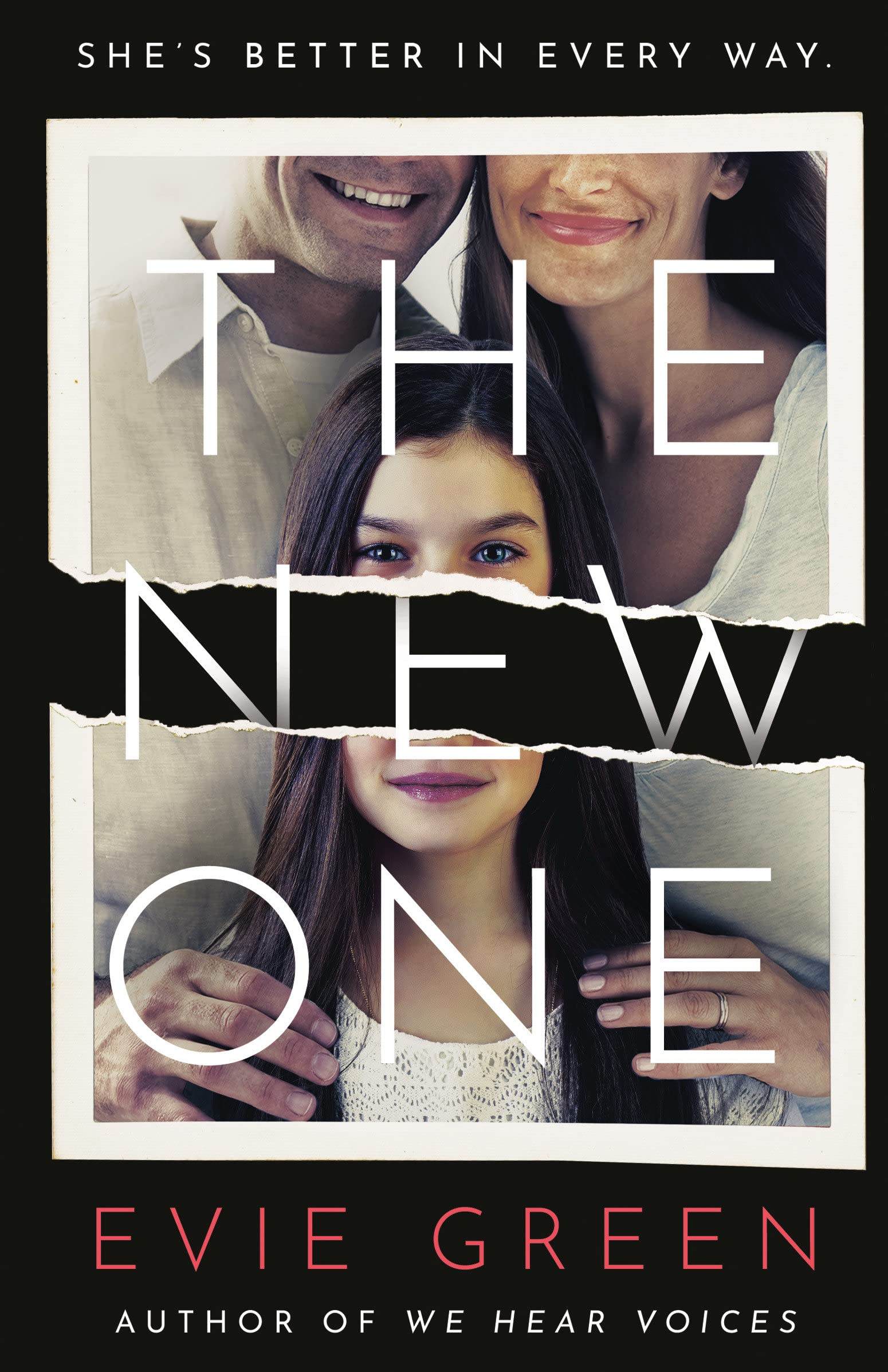
The New One by Evie Green

Artificial intelligence, family troubles, love and aspiration combine for a delightfully suspenseful novel of secrets and betrayal.

In The New One, Evie Green (We Hear Voices) takes readers on a propulsive journey through grief, loss and secrets kept by those we love. This compelling novel will have readers up all night, following the tribulations of a struggling family offered a great gift–or possibly a curse.

Scarlett, the Trelawneys’ daughter, was a perfect angel–brilliant, beautiful, sweet, gifted–until she turned 13. She then becomes a terror: lying, staying out late at night, neglecting her schoolwork. “They had become a shouty family,” Green writes. “They all yelled at one another every day, and [Tamsyn] had no idea how to stop.” In near-future Cornwall, Scarlett’s parents, Tamsyn and Ed, are barely surviving in their humble camper: Ed works nights, and Tamsyn is up early mornings, “a peasant working in fields.” They subsist on stolen cauliflowers and rarely speak to each other (without shouting). Then tragedy strikes: Scarlett is left lying in a hospital bed in a coma, and Tamsyn fears she’ll never see her daughter conscious again. Just as their insurance runs out, they receive an offer that seems a mix of magic, miracle and horror: while a company called VitaNova rebuilds their daughter, the comatose Scarlett will receive the finest medical care, and her parents will be granted a fully funded fresh start in Geneva, Switzerland. Scarlett, now named Sophie (her middle name), is part human clone and part AI. She shares Scarlett’s memories and gifts, although with the traumatic past year erased, and has been augmented with a better knowledge of French and physics–and a perfect, innocent love for her parents.

Most of the story is told from Tamsyn’s point of view, with brief ventures into the perspectives of the other members of her family. Tamsyn is unsure of her manufactured daughter: this new one is so like her darling Scarlett that she’s impossible not to love. But Tamsyn grasps what Ed seems not to: their real, true, original daughter still lies unconscious, and every bond with Sophie represents a small betrayal.

The New One‘s creepy Stepford atmosphere is not to be underestimated. Readers can see what even Tamsyn cannot: Sophie understands more than she seems to, and her best interests and Scarlett’s may not align. Ed is keeping secrets. Geneva is a bit too perfect. Green’s (aka British author Emily Barr) prose is compulsively readable, her characters disarming and capable of great mystery. The New One is deliciously disturbing, engrossing and surprising at its every turn. This not-to-be-missed novel of family dynamics and what it really means to be human and to love is both pleasurably escapist and thought-provoking.


This review originally ran in the February 23, 2023 issue of Shelf Awareness for the Book Trade. To subscribe, click here.


Rating: 8 DVDs.

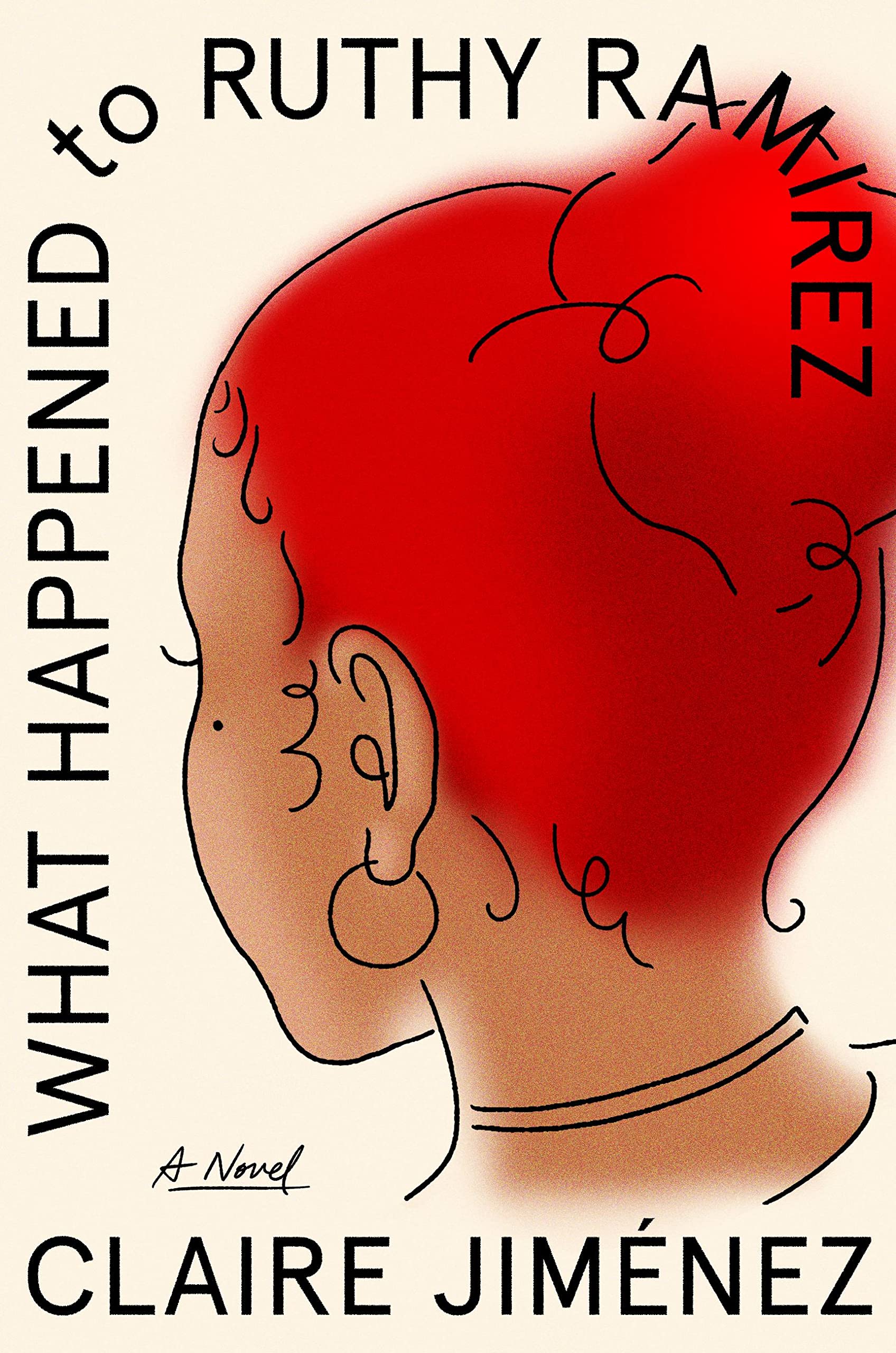
What Happened to Ruthy Ramirez by Claire Jimenez

This debut novel about a family still searching for a long-missing daughter and sister brims with voice, attitude and yearning.

Claire Jimenez’s first novel, What Happened to Ruthy Ramirez, brings to life a close but troubled Puerto Rican family in Staten Island, N.Y., carrying on but rocked by loss. “The five of us seem normal for a while, up until Ruthy turns thirteen and disappears…. Draw my mother sixty-two pounds later. Give her diabetes. Kill my dad. Cut a hole in the middle of the timeline. Eliminate the canvas. Destroy any type of logic. There is no such thing now as a map.” No one ever figured out what happened on the day Ruthy didn’t come home from track practice on the S48 bus as expected.

More than a decade later, Nina, the baby, is “blessed with the brilliant luck of graduating [from college] into the 2008 recession,” the first in her family to attend college but now returned home to live with her mother and work at the mall selling lingerie. Jessica, the eldest, lives with her boyfriend and their baby; she works as a patient care technician at the hospital, harried and tired but proud of her work. Their mother, Dolores, depends on her relationship with God and the church. What Happened to Ruthy Ramirez unfolds in alternating chapters, through the first-person perspectives of these four central characters: Nina, Jessica and Dolores in the late 2000s and the stormy, troubled 13-year-old Ruthy in 1996 when she disappeared. The latter is all attitude: You really want to know what happened to Ruthy Ramirez, she asks? Most people “think they got it all figured out, about who I am and what happened. Whatever, who cares? Not me, I promise you.” She describes the day it happened, the schoolgirl dramas and fights, whose pain appears superficial only from the outside. Years later, her sisters and mother struggle with everyday life and with moving on–until the day Jessica believes she sees Ruthy’s face on a sordid reality TV show: the woman shares the missing girl’s beauty mark, her laugh, the toss of her head, a couple of key phrases. And the remaining Ramirez family is off on a mission to recover their lost member.

One of Jimenez’s greatest achievements lies in the individual voices of her narrators, crackling with life, wit, humor, pain and personality. Jessica and Nina wrestle with the complicated love they feel for their family; Dolores rants in a well-meaning but frustrated one-sided conversation with her God; Ruthy oozes teenaged bravado and angst. Readers will be tugged by hope and despair alongside these true-to-life characters. In the end, What Happened to Ruthy Ramirez offers observations about race, class, family and the fate of missing girls beyond its title character.


This review originally ran in the February 7, 2023 issue of Shelf Awareness for the Book Trade. To subscribe, click here.


Rating: 7 grilled cheese sandwiches from the school cafeteria.

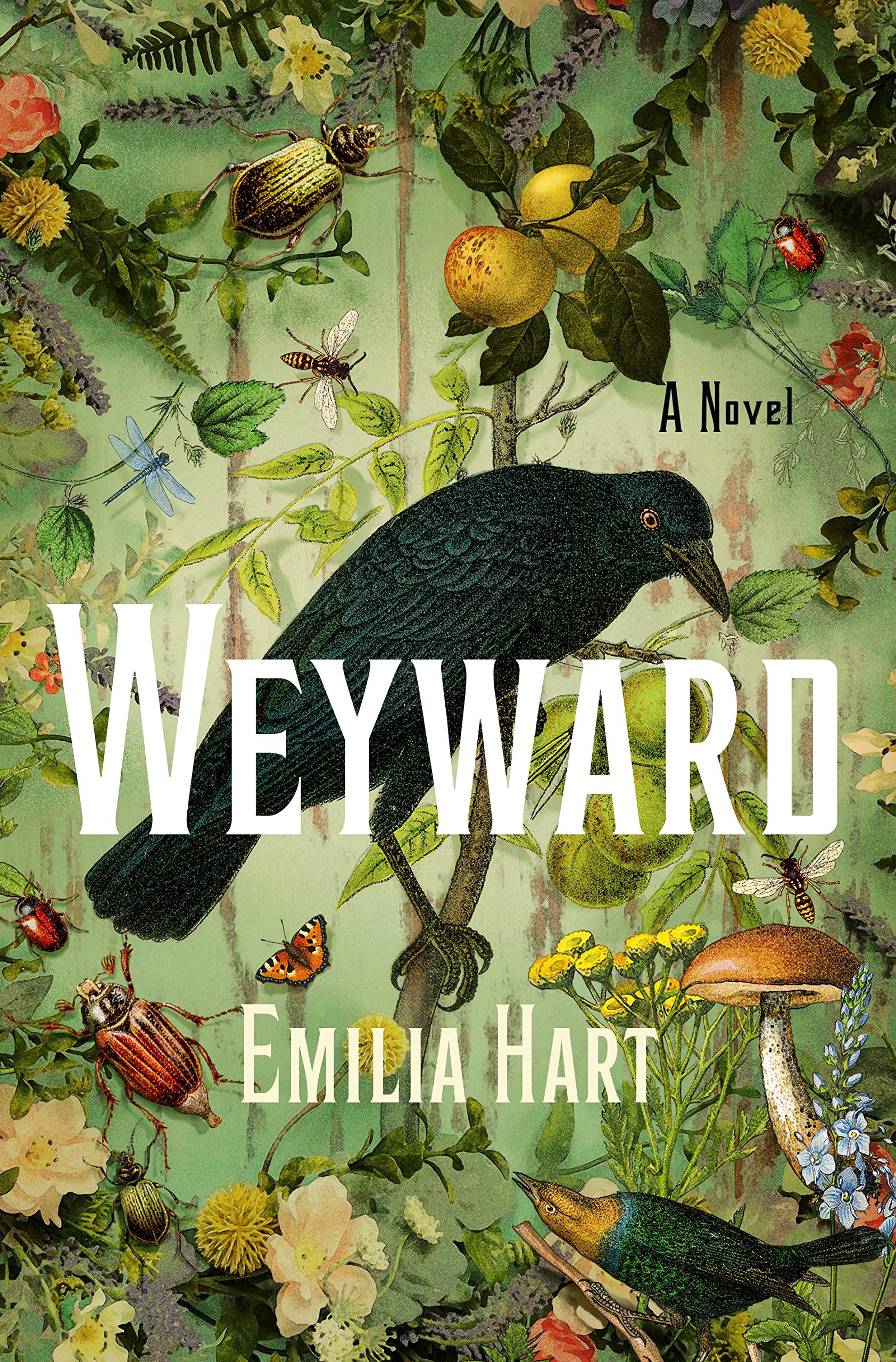
Weyward by Emilia Hart

The stories of three imperiled protagonists across centuries connect in this suspenseful, magical debut about the power of women and the natural world.

Emilia Hart’s first novel, Weyward, glows and glimmers with hidden powers, thrills and danger, a close connection with nature and between women across time. Three distinct stories eventually link to form a larger tale about strength, resilience and love.

Altha goes on trial for witchcraft in the English countryside in 1619. In 2019 London, Kate attempts to escape an abusive partner while harboring a significant secret. And at a grand estate in 1942, teenaged Violet struggles against the limitations of her father’s strict household rules, consumed by an unladylike love for trees, insects and other natural wonders. In alternating chapters, each of these stories deepens. Altha, the daughter of a healer, tries her best to follow in her beloved late mother’s footsteps, helping her neighbors and causing no harm, while dodging the increasingly avid witch-hunters of her time. Locked in a Lancaster dungeon, Altha does what she can to protect herself. Kate flees the city undetected, holing up in a cottage inherited from a great-aunt she hardly knew, but her safety there is tenuous as she plans for an uncertain future. Violet is a tenacious and spirited 16-year-old, but powerless as she is imprisoned in her father’s world; she dreams of becoming a biologist or an entomologist, but cannot even visit the local village. Men in the Weyward world, in all three timelines, are sources of power and abuse, not kindness, but Violet’s loyal brother forms a notable exception.

Each woman must learn about and come to terms with her powers and her connections to the natural world. Violet is passionately entwined with a particular beech tree, with damselflies and weasels, but no one will even tell her her mother’s name, let alone the family history that she senses casts a shadow on her life. Having lost her father at a young age in a curious accident, Kate lives in fear of the birds and insects that most call to her. Altha is reluctant to exercise her full powers, having promised her mother she would be careful. But, she says, “I had begun to suspect that nature, to us, was as much a life force as the very air we breathed.”

Hart expertly weaves together disparate but connected storylines, with leaves and butterfly cocoons and a mountain stream. Her protagonists are strong, but hard beset by the forces around them, even across centuries. Her prose sparkles with wonder and simmers with danger. Weyward‘s atmosphere is compelling, as each plot thread offers suspense. With a momentum of its own, this debut draws readers inexorably to a glorious conclusion that celebrates connectedness and the power of women and nature.


This review originally ran in the February 2, 2023 issue of Shelf Awareness for the Book Trade. To subscribe, click here.


Rating: 7 feathers.

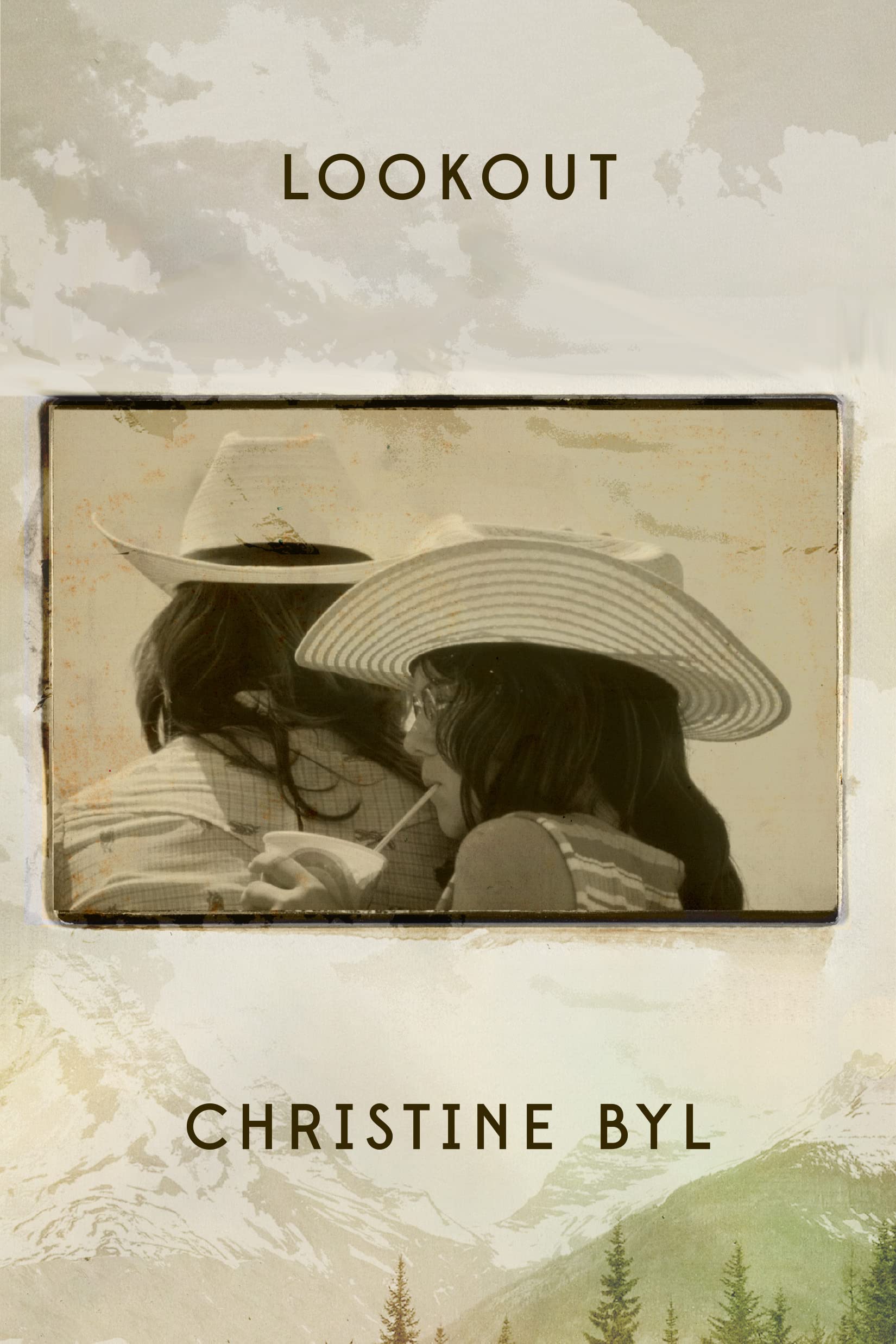
Lookout by Christine Byl

This astonishing novel of work, love, community and forgiveness in 20th-century rural Montana will leave readers forever changed for the better.

Christine Byl’s Lookout is an unforgettable novel, both stunning and subtle, written with nuance and compassion. With all the down-to-earth lyricism displayed in her memoir, Dirt Work: An Education in the Woods, Byl transports readers to rural Montana in the 1980s, ’90s and 2000s, where the Kinzler family lives, works and loves. These characters, whose bonds are gorgeously rendered and even inspirational in their imperfections, are deeply lovable.

Josiah Kinzler’s family history includes alcoholism and suicide; he is alone in the world before he is 20 but possesses land, skills, a work ethic and strong ties to his neighbors. He marries Margaret Blanchard. Together they eke out a living in her father’s hardware store and eventually through Josiah’s highly regarded furniture-making and woodworking. Their two daughters, Louisa and Cody, are remarkably different from one another but as fiercely loving as their parents. The family will grow into nontraditional shapes, but its members never lose their commitment to one another. Each is complicated, fully developed and sensitively drawn.

Chapters shift between a third-person perspective and the first-person voices of various characters–not only the central Kinzlers but also various members of their community. In this way, Byl offers triangulations on events and characters. These secondary characters’ perspectives enrich the story enormously, as when a neighbor who has known Josiah from childhood observes the latter’s marriage and fatherhood: “He loves those girls, and I can see his ease with them that I have not found with my own sons.” Montana in the 1980s and ’90s is not without its problems: gay characters struggle to find acceptance, and American Indians’ claims to the land are dismissed. Families and individuals struggle with mental illness and addiction. But Byl treats the people and their problems–even the shortsighted ones–with grace and frankness. Frequently, characters do the same for one another.

Lookout, which contains evocative expressions of love, is lush in its descriptions of relationships, the natural world and Josiah’s exquisite woodworking. Byl writes with an attention to the details of her characters and setting: “A heavy snow in early May buried pasqueflowers and daffodils and the barely rising shoots that would become the season’s crops, but by the end of the month, the sun lit up like a match.” Cody and her father are similarly laconic and watchful; they share a special bond, as displayed in a stunningly beautiful scene in which he proudly watches her run a chainsaw just as she was taught. Many of the relationships and family systems represented are unconventional–but sensitive and thoughtful. Lookout specializes in the quiet observation of transcendent truths about many facets of life.


This review originally ran in the January 26, 2023 issue of Shelf Awareness for the Book Trade. To subscribe, click here.


Rating: 10 dried pansy petals.

Maximum Shelf: House of Cotton by Monica Brashears

Maximum Shelf is the weekly Shelf Awareness feature focusing on an upcoming title we love and believe will be a great handselling opportunity for booksellers everywhere. The features are written by our editors and reviewers and the publisher has helped support the issue.

This review was published by Shelf Awareness on January 4, 2023.


Monica Brashears’s House of Cotton is an engrossing coming-of-age novel about ghosts, mothers and the struggle to survive. It is also a novel of the lingering challenges of race and class. Brashears’s prose style is sharp and incisive, and the entrancing, distinctive voice of her protagonist is by turns weary, sardonic and yearning. A haunting story and unusual perspective make this a memorable and thought-provoking debut.

Magnolia Brown is 19 years old when her grandmother, Mama Brown, dies. Her absent mother struggles with substance abuse and an abusive partner, so that leaves Magnolia more or less alone in the world, fending off a lecherous landlord (who is also deacon at her grandmother’s church) and struggling to get by. She works the night shift at a Knoxville, Tenn., gas station, where she tries to care for Cigarette Sammy, the muttering man who goes through the trash outside (“the only other Black person I see on this side of town”), between one-and-done encounters executed by her Tinder persona, Carolina Nettle. It’s a tenuous living, and she misses Mama Brown terribly. One night “a whistling man with blood-smeared hands” walks into the gas station. “Hearing a man whistle when he walks in a place he don’t own ain’t natural. Like finding a chipped tooth on concrete. An omen.” When he returns from the bathroom after cleaning his hands, she sees the man is polished, manicured, smooth-talking, wearing good cologne. Cotton offers Magnolia a modeling job, but she’s wary; Magnolia knows omens. But she’s also broke, and quite possibly pregnant.

At the address he gives her, Magnolia finds the Weeping Willow Parlor, a funeral home run by Cotton and his gleefully friendly, drunk Aunt Eden. The pair is eccentric: Cotton needs to constantly finger a piece of pocketed twine to remain calm; Eden is something of an alcoholic and firmly does not believe in ghosts. They are wealthy, and culturally foreign to Magnolia.

Cotton and Eden Productions offers Magnolia a most unusual modeling job: they provide families with lost or missing loved ones a final contact, a side business something like a séance. With Eden’s uncanny funeral-home makeup skills and Magnolia’s amateur acting, Magnolia will play the part of the dead. She’s used to pretending; it has long been her coping mechanism: “When I get this way, when I feel like kudzu is wrapped tight around my ribcage and I’m bleeding a bright heat, I like to slip inside my head.” She slides smoothly into Cotton and Eden’s world and their comfortable, decadent habits: cocktails at all hours, joyriding in the hearse. She moves into the funeral home, lets Eden apply pale body paint to allow her to become missing white women and men, and begins saving her money. The ghost of Mama Brown checks in with Magnolia: knowing, comforting, but judging as well. Reading a letter Mama Brown left her, Magnolia knows “[S]he ain’t left me. I ain’t seen her, but she sits by me. Unseen but real as humidity.” Soon the ghost will be seen as well.

Magnolia’s life becomes split. At the Weeping Willow, she lives in ease and has money to spare, but feels estranged from the very different world Cotton and Eden come from. The relationship is transactional, and she’s always acting, even when the makeup is off. And then there is Mama Brown’s home, where the garden (the place Magnolia still meets her Tinder dates) grows out of control. By tending the needs of the rich white folks who help support her, Magnolia has literally let her own house get out of order. Her caretaking of Cigarette Sammy has become disrupted. Cotton’s requests get weirder and weirder, and Mama Brown’s ghost expresses concerns about Magnolia’s choices, which have affected Mama Brown in the afterlife. The worldly and otherworldly pressures mount.

Set in the grand Weeping Willow Parlor, complete with secret passageways and haunted by Magnolia’s much-loved but literally disintegrating grandmother, House of Cotton pits traditional gothic elements (the haunted castle, women in distress, death and decay) against contemporary questions about race and class and the persistent legacy of slavery. It shares the genre’s sense of suspense and foreboding, but Magnolia’s struggles are very realistic. Her first-person narration brings an immediacy to the events, and an intimacy that’s advanced by her frank voice and turns of phrase. On its face, this is an intriguing ghost story with a compelling, beleaguered protagonist. In its layers, there is much more at stake.

“I am a tattered quilt of all the women before me. I am a broken puzzle,” Magnolia states, but she is clearly a survivor as well. Despite her many fears, she is somehow fearless in pursuing the truest version of herself. Brashears excels in strong characters and deeply felt emotions, and in a robust sense of place: Knoxville shines as both urban and cultural setting and in the details of its natural world. Brashears offers a fresh new perspective on Appalachia and the American South, and Magnolia’s rich voice will echo with readers long after the pages are closed.


Rating: 7 missing fingernails.

Come back Monday for my interview with Brashears.

Peaces by Helen Oyeyemi

For this review I created a new tag, Oyeyemi, to represent my continuing confusion about how to categorize her mysterious novels. I was tempted to call it ‘mystery’ but I’ll settle for ‘puzzle,’ with suspense and speculative elements, a contemporary/magical setting and absolutely its own set of rules. My enjoyment outweighed my bemusement – not that the latter prevents the former but it can make it a little harder. I am charmed and perplexed. I’ll do my best here.

Our narrator for most of the novel is Otto. He’s on a train with his partner Xavier. They are taking a honeymoon but not really because they are not married. They are traveling with their pet mongoose, Árpád XXX (as in the roman numerals), who is descended from a long line of mongooses called Árpád who have been companions to Otto’s family. The train is a former tea smuggling train with a most unusual full-time resident, its owner, Ava Kapoor, who receives copious hate mail for her family’s past crimes. She is an heiress set to inherit under unusual terms which have led her to live on her train, served by a staff consisting of her girlfriend and a sterner woman with more sinister outside employment… She also keeps a pet mongoose (naturally?!) and plays a theremin. So far I’m just listing weird elements, right? That’s part of the point. There are invisible people, or people who may or may not actually exist, and who may or may not be the same person. And it is on this weird train – whose most unusual cars possess (of course) strange traits – that the partnered Otto and Xavier discover they may have some history in common that they didn’t know about, not only with each other but with Ava Kapoor.

It was a raucous adventure and a puzzle whose solution I’m still not sure of. I enjoyed the locked-room aspect of the train as setting (very Agatha Christie), and the mongooses, and the eccentric old aunt character (who sends our non-honeymooners on their trip), and the questions about art and pursuing one’s creative processes. It is, I think, about that concept of “being seen.” I am all the way off balance about the whole thing but still intrigued by Helen Oyeyemi’s singular mind. I don’t know what to tell you at all; your mileage may vary.


Rating: 8 letters.

Brutes by Dizz Tate

A group of 13-year-old girls tries to deal with another teenager’s disappearance alongside their own coming-of-age in an unattractive Florida town beset by increasingly adult threats.

Dizz Tate’s first novel, Brutes, is set in Falls Landing, Fla., a small town formed of theme parks, mall food courts, gated communities and swampland. At its center is the mystery of a missing teenage girl, and the group of younger girls who adored her: the narrative voice is the unusual first-person plural “we,” which perfectly suits a girlhood of conformity and togetherness. The 13-year-old narrators yearn for individual recognition but also fear separation. Their collective voice slips into the singular only when the girls speak from their adult perspectives, looking back. This narrative “we” contributes greatly to the haunting atmosphere of a story about loss, secrets and the costs of growing up.

“Where is she?” the girls imagine Sammy’s parents asking the morning after her disappearance, and this question will echo. They worshipped, followed and watched Sammy on the nights when she climbed over the wall of her exclusive community to meet her boyfriend, Eddie; they share her love for Eddie and, after she’s gone, shift to attach themselves to Sammy’s best friend and rival, Mia. “We wanted to be like them, to become ever louder and brighter, but we could feel their futures slipping through our fingers, because we were not stupid.” Sammy and Mia had both been affiliated with Star Search, the local talent agency, and everyone in town wants to be selected, to be seen as special, to be given a business card or a plane ticket to L.A. “We squashed our faces against the glass of our own lives. Is this it? we asked. Are we having fun like they have fun? Are we in love like they are in love? We filled up our days following them, watching them, waiting to be invited in.” The girls come from the apartment towers of Falls Landing, not the desirable neighborhood behind the white walls that they watch obsessively. Their mothers are harshly portrayed with both love and derision by the daughters they call “brutes” for their childish cruelties.

Brutes offers stark and unlovely characterizations, but with moments of striking beauty. The girls (and their mothers) are grasping, even desperate, but capable of compassion. Tate’s Florida is steamy and thickly rank, with blinding sunlight and shadowy depths, not least in the lake that many residents believe houses a monster–maybe the monster that took Sammy, although the human monsters in this community are plenty sinister. This is a dark coming-of-age tale and meditation on childhood and the cusp of adolescence: authentic, often grim, but with glimmers of hope.


This review originally ran in the December 16, 2022 issue of Shelf Awareness for the Book Trade. To subscribe, click here.


Rating: 6 fire ants.

These Ghosts Are Family by Maisie Card

This was a fascinating journey. These Ghosts Are Family follows a family for generations, from slavery in Jamaica, through emancipation and decades of struggle with old class systems, immigration to London and New York, through permutations of relations, including a fresh start with a new identity (or, if you like, identity theft). The timeline jumps around and the focus and point of view shift, so that readers see this extended family at different times and from different perspectives. Issues of class, race and colorism and the relationships between privileged and less privileged classes, including but not limited to enslavement, will be obvious themes; we know that rape and issues of gender arise under these conditions too. The characters are infinitely fascinating. I was not so much expecting the question of supernatural elements: duppies or ghosts and Ol’ Hige, “a Caribbean version of a vampire story.” By the book’s end, I was left reeling with all the possibilities. There is plenty of heaviness: children abused, spouses failing to see eye to eye, parents and children letting each other down. But there are some quietly loving relationships scattered throughout. As I close the final pages, I’m a bit at a loss because there’s so much to consider. (And because we ended with a decidedly weird trio of spooky vampire children living in the woods.)

The book begins with a family tree, which I did refer to throughout. It presented me with a confusion that was answered on the first page. I’m going to spoil that one here because, again, first page of the novel (and it’s also given away on the back of the book and in most blurbs): the aged Stanford Solomon reveals, on his deathbed, that in fact he is (or was) also Abel Paisley, presumed dead some thirty-five years ago, at which point he took the identity of his friend Stanford. “Stanford” has both a wife and daughter and another daughter out of wedlock, all in New York; Abel left behind a wife and two children in Jamaica when he supposedly died. Stanford/Abel’s revelation obviously affects those around him. But I’m going to diverge from the blurbs here, and say that this is not the event around which the book revolves, and by its end, Stanford is by no means the central character. Rather, he is one branch on the family tree that is the book’s center. He’s just one link, and I don’t think he earns the role the blurb says he plays. Rather, I find the book more about larger patterns – slavery, class and race and colorism following slavery, migration and immigration, gender roles, the persistent damages of all these institutions and systems, trauma, and family dynamics. It’s about the multiple generations of this single family, for sure, but their combined story is very much about those larger patterns and systems. There’s nothing preachy or intentional-feeling about this, but the Paisley/Stanford family is inextricable from larger issues. I put Stanford/Abel at its center only in that he opens the book and occurs at the more-or-less center of the family tree as we find it here. The book ends somewhere very different, and that feels right.

In between, the story is told by numerous voices spanning some 200 years. That multiplicity of voices was a great choice for this story. (I have just said the same about a brilliant novel whose review is still forthcoming: Lookout by Christine Byl.) I love the kaleidoscopic or triangulated perspective on events offered by the different views. And for a novel whose focus is so broad – generations of a family across continents, countries, and centuries – it makes sense to move around like this. I guess such a big story told by one voice (with some kind of time-traveling power, I suppose) would be a different kind of accomplishment, and I can imagine it done beautifully, but Card’s choice feels just perfect here. The multiple voices also allow her to give us different dialects, which add to the texture and richness of the whole.

This adventure into these varied lives is expertly done, not always comfortable because of the subject matter, but engrossing and well worth the immersive experience. Card is a talent.


Rating: 7 names.