Is This a Cry for Help? by Emily Austin

As its protagonist wrestles with grief and challenges to intellectual freedom, this inspiring and very funny story showcases the power of love and libraries.

In the opening scene of Emily Austin’s fourth novel, a librarian named Darcy narrates her response to a patron watching porn in the library (mainly, per policy, to leave him be). From here, Darcy’s story unfolds to grapple with love, grief, mental health, the importance of libraries, and the navigation of personal, professional, and public relationships. Is This a Cry for Help? continues in the vein of Austin’s winsome work (Everyone in This Room Will Someday Be Dead; We Could Be Rats) with a disarmingly candid narrative voice, outrageous humor, and serious thinking on tough topics.

Darcy has a good life. At her public library, she gets to help a messy cross-section of humanity: not only the toddlers, book clubs, and precocious teens she originally imagined, but also people who lack stable housing or who struggle with substance abuse or mental illness, job seekers, immigrants, and people with opinions different from her own. She has a wonderful wife with whom she shares her authentic self, two cats, and a lovely home. But when Darcy learns of the death of her ex-boyfriend Ben, she is thrown off balance. The disruptions to her carefully organized life are often hysterically funny even as they are harrowing and tragic.

Darcy has just returned to work after a two-month leave of absence following a mental breakdown brought on by the news of Ben’s death. “Before this happened, if someone told me they were off work on stress leave, I might have been judgmental too. Now I understand that issues intensify when we smash them down into our boots.” She is not at her strongest for the new challenge of an alt-right self-appointed journalist harassing the library and Darcy for what he deems a series of moral infractions, including the porn-watching patron. Her community holds an array of political views and opinions on topics as personal as Darcy’s identity as a lesbian, and these values will be called into question by an attempted book ban.

Darcy’s first-person narration lets the reader see her puzzle through the motivations of those around her, parsing social cues and questioning her own choices. Since the breakdown, she’s been seeing a therapist (a process she finds “hokey,” but she’s making an honest effort), and she is well served by her earnest analysis of the actions and motivations of herself and everyone around her. “I’m not just thirty-three; I’m twenty-seven. I’m eighteen. I’m nine. I was just born. And I have to carry all of those versions of myself, the feelings they have, and the mistakes they’ve made, everywhere I go.” Thoughtful and self-aware, if often awkward, Darcy strives intentionally to live as best she can. Is This a Cry for Help? portrays a stressful period in her life, but one she ultimately inhabits with wisdom and grace. Hilarious, wrenching, endearingly odd, Darcy’s story is both enlightening and somehow comforting.


This review originally ran in the November 10, 2025 issue of Shelf Awareness for the Book Trade. To subscribe, click here.


Rating: 8 pigeons.

Forty Acres Deep by Michael Perry

A loan from a dear friend, from one of his favorite authors, and I can see why. This novella-length story was absolutely grim, but often funny, too, and deals with some serious messages. I don’t do this often, but let me give a big **content warning** for suicide.

It begins:

Harold had come to consider the accumulating weight of snow on the farmhouse roof as his life’s unfinished business. Daily the load grew… on his heart, his head, the creaking eaves.

A few paragraphs later:

She died a month ago, and he hadn’t plowed the driveway since.

That sets the stage pretty well for us, and all on page 1 (no spoilers). Harold has lived on the same farm all his life, inherited from his father, in a vague midwestern setting where they get a lot of snow. They were dairy farmers, but the economics of that lifestyle got increasingly hard, and then the barn burned – with the cattle in it – a trauma as well as a financial blow. He turned to beef cattle, although one hard winter, with he and the wife both down with the flu, he had to send them to market at the worst time of year, and thus got out of that business. He tried cash crops, but the prices dropped out of beans and corn, too. He leased the land to a farmer who never showed up in person; instead he sent “hired-hand agronomists with wands and laptops and satellite-guided monster machines.” There is a definite note of ‘things these days’ and ‘good old days,’ phrases against which Harold – to his own derision a part-time follower of philosopher and poetry – consciously rebels. He is an old, straight, white man, and he notes his own prejudices and old-fashioned attitudes, and actively interrogates them.

“She” was his wife, and when she dies, Harold wraps her in blankets and puts her out on the porch. He can’t bring himself to face the world. Instead he shovels the walk to the chicken coop, cares for the hens and eats their eggs with canned beans, almost his only remaining provision. He runs the kerosene-powered torpedo heaters, pointed up at the pole barns’ roofs, hoping to keep them from collapsing under the weight of the snow. He ruminates, contemplates, checks remembered quotations in his old philosophy texts. We see him visit town just a few times, where he has a minor but meaningful interaction with a barista whose context could hardly be more different from Harold’s. (It doesn’t take much interaction to hold significance for Harold, who mostly speaks only to his chickens, or himself.)

Harold is an interesting character. When he discovered Montaigne as a teenager: “instead of what he expected a French philosopher might write about, he found references to sex and farts. This was silly and appealed mostly to his dumb teen prurience, but it also implied that philosophy might be accessible and relevant even for a horny rube in barn boots.” He is both country farmer and philosophy student, both privileged old white guy and actively interested in the pronouns, the rainbow flag, and the new ways of thinking. He knows he’s not accomplishing anything big here, but I think you’ll join me in respecting his small curiosities.

Perry is a masterful writer. Harold’s story is almost unrelentingly, deeply depressing – that’s hardly a strong enough word. Nothing goes right, everyone he’s ever cared for is dead, there is nothing left to hope for. His story is also extremely funny: Harold possesses a remarkable sense of humor, and Perry renders it in prose that often surprises while commenting (cynically, of course) on the American condition. “Another yoga-panted woman was griping down at him from her Denali over how much he undercharged for digging her prairie restoration patch.” “After sundown the horizon to the west glowed with encroaching fitness center, brewpubs, and mitotic apartment complexes.” Even as the snow-buried landscape obscures, buries, kills, it is beautiful, and so is this book: both story and line-by-line writing. Harold has a hell of a vocabulary, too. He makes fun of himself for knowing how the meaning and spelling of ‘jejune’ but not how to pronounce it (me neither, Harold). Echolalia, misophonia, cotyledon, vermiculite, hyperacusis, exudation, popple whip.

One of Harold’s last backhoe jobs was for a wealthy architect who hired him to rearrange a set of decorative boulders amidst the shrubbery surrounding a cavernous riding stable. Afterward, when they were settling up, Harold said, “Nice pole barn.” He truly intended the compliment. The architect stared at him blankly for a beat, then, as if dictating from behind a lectern, declared, “It is a custom barndominium-slash-hippodrome.” Harold waited for the slow grin that would concede the absurdity of the extravagant jargon, but after an uncomfortable straight-faced silence, the man slipped an iPhone from his velveteen corduroys and said, “Do you accept Apple Pay?” Omnipresent, Harold thought, were the signs that contemporary culture was leaving him the dust. “Nope,” said Harold, and handed the man an invoice scribbled out on a carbon paper slip.

Lest you think this is overly crabby: Harold (and therefore, obviously, Perry) is aware of his own part in this caricature. At an entirely separate set of reflections, “You are being petulant, he thought. And grandiose.” He excels at the unwieldy, surprising, barking-laugh-out-loud list: “the world’s privileged hordes were content to skate along on… the secondhand grease of star-spangled draft-dodgers peddling hot water heaters, bald eagle throw rugs, and resentment.” Etc.

It’s not all this wordy. “At first light every tree branch, every blackberry cane, every stick and stem was a hoarfrost wand. The sky was clear, the air was still, and sunlight splintered every which way.” It can be as clean and smooth as snow-covered fields, where every tool or piece of garbage is softened over into something vague and beautiful.

This is a masterful piece of art. Extremely grim and dour, but beautiful.


Rating: 9 pictures.

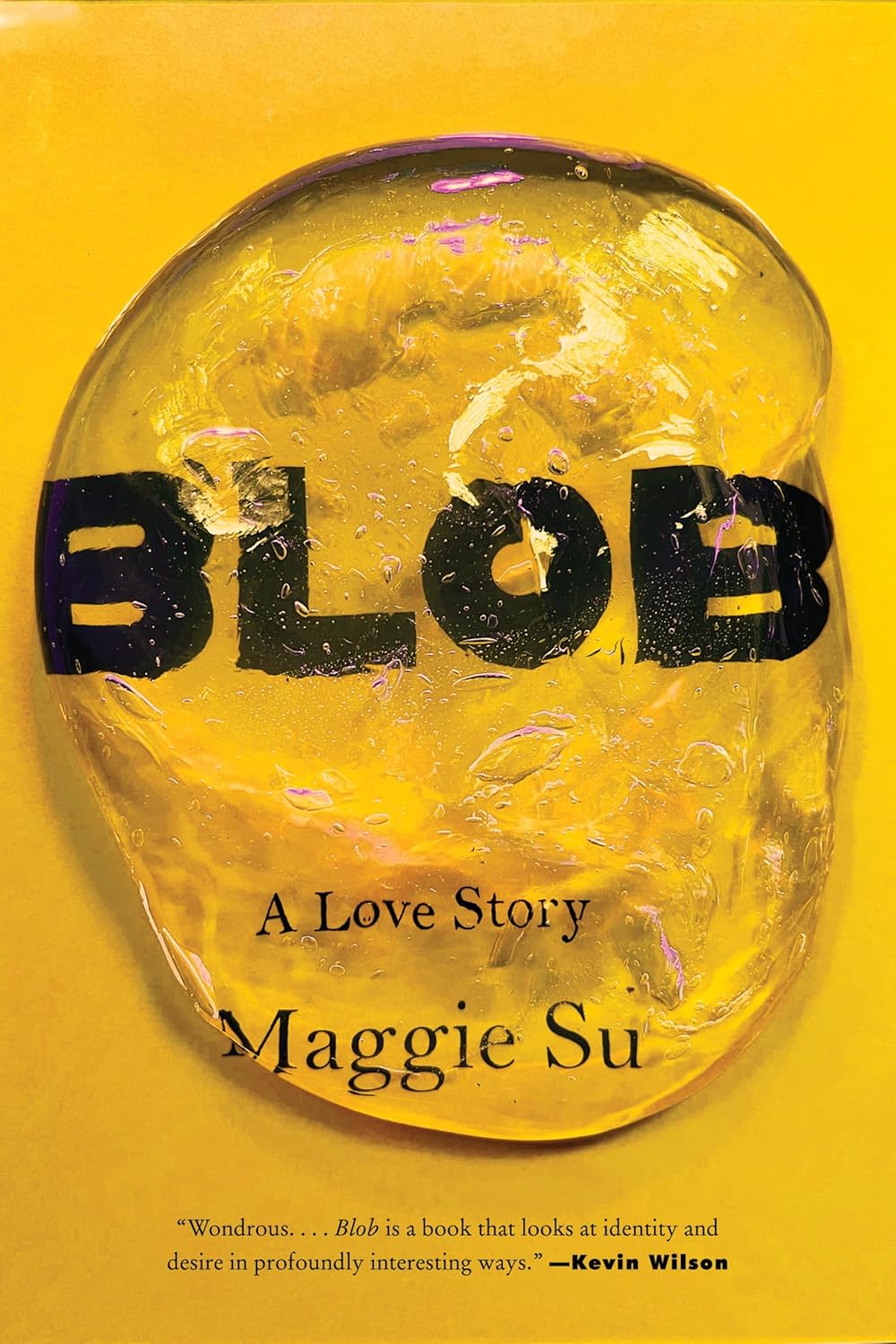
Blob: A Love Story by Maggie Su

This quirky, funny, pained novel considers the challenge, for any of us, of becoming fully human.

Maggie Su’s Blob: A Love Story is a funny and pathos-ridden tale of social awkwardness and self-realization; a modern, delayed coming-of-age. Su’s narrative voice is perfectly pitched for her inelegant but deeply sympathetic protagonist.

Vi is a 24-year-old townie and college dropout in a midwestern college town. She works a hotel chain’s front desk next to a too-perfect perky blonde named Rachel. Vi is still suffering from a breakup eight months ago, barely slogging through her days. Her Taiwanese father and white mother are well-meaning and supportive, but they have trouble connecting with Vi, who has always been a loner; her older brother can be a pain, but he cares, even when Vi struggles to. Then, on a night she ventures out for the rare social occasion, she stumbles upon something new in the alley behind a bar during a drag show: a shapeless blob with a mouth and two eyes. She carries it home and, under Vi’s yearning influence, it grows.

The evolving blob, which Vi will come to call Bob (it starts as a malapropism), is the only fantastical detail in a story otherwise rooted in a very familiar world, featuring the casual racism of Vi’s hometown and her awkwardness with social situations. Bob takes in lots of television (and Fruity Pebbles), and after examining the pictures Vi shows him of movie stars like young Hugh Grant and Ryan Gosling, fashions himself into a tall, stunningly handsome white man with a six-pack. Vi presents him as a hookup or boyfriend; the world has trouble assimilating their match. The pairing is, in fact, a strain. “For a while, he seemed happy enough to eat and breathe and exist–the perfect companion. I should’ve anticipated that molding him into a man would trigger something deeper, some sort of existential awakening. Now he’s just like everyone else. He has needs and desires beyond me…. He could leave without me ever knowing why.” The fear of being left, of course, is key to Vi’s difficulties in navigating the world.

What makes Blob special is its mix of heartrending conflict and silly, self-aware humor. Truly cringy scenes balance sweet ones. Rachel performs off and on as a friend–but Vi scarcely knows how to care for her own problems, let alone anyone else’s, and her past attempts at friendship have often ended in unintended cruelty. Su excels with characters who can be significantly flawed but stir the reader’s empathy. Even Bob, despite beginning his life as a blob, has a surprising amount of personality. In the end, discomfiting though it may be, Blob makes incisive observations about life for a 20-something trying to make it on her own. Blobs and humans alike may yet find home.


This review originally ran in the November 8, 2024 issue of Shelf Awareness for the Book Trade. To subscribe, click here.


Rating: 7 handfuls of cereal.

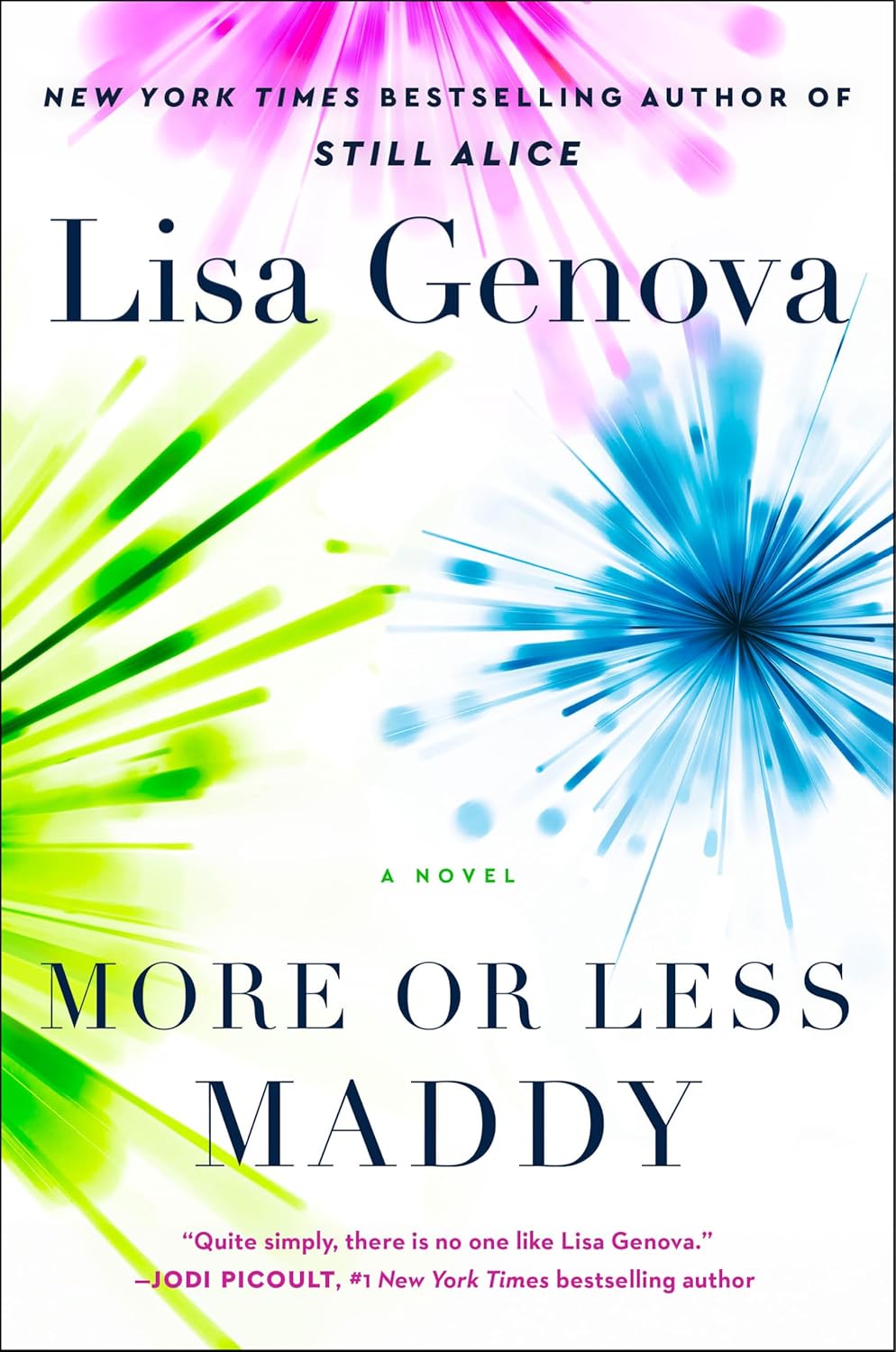
Maximum Shelf: More or Less Maddy by Lisa Genova

Maximum Shelf is the weekly Shelf Awareness feature focusing on an upcoming title we love and believe will be a great handselling opportunity for booksellers everywhere. The features are written by our editors and reviewers and the publisher has helped support the issue.

This review was published by Shelf Awareness on August 27, 2024.


Harvard-trained neuroscientist Lisa Genova debuted as a novelist with Still Alice (2007), about a woman who is diagnosed with early-onset Alzheimer’s disease. Genova’s later novels Left Neglected, Love Anthony, Inside the O’Briens, and Every Note Played feature characters with hemi-spatial neglect, autism, Huntington’s disease, and ALS, respectively. Her sixth novel, More or Less Maddy, follows a young woman with bipolar disorder. As ever, Genova brings both an expert understanding of the neuroscience and a masterful eye for compelling characters in an emotionally textured narrative. Maddy’s story is completely absorbing; it may keep readers up all night.

Maddy Banks has had a privileged upbringing in suburban Connecticut. There were some tough times in her early childhood, and her father is a shadowy figure. But since her mother, Amy, remarried, it’s been easy: dinners at the country club, a popular boyfriend, a highly successful older sister, and an easygoing jock of an older brother. In high school, “each day was laid out for her like a matching outfit on a bed, when both her inner and outer worlds felt organized, predictable, happy, and light. Life was handed to her like a potted succulent, small and tidy and requiring little effort to maintain.” But the transition to college has not been smooth: “She remembers herself then… and it’s as if she was a different girl in another lifetime. She can’t pinpoint exactly how, but she doesn’t feel like she used to feel.”

Her first year at NYU is a shock: “The impossible-to-keep-up-with workload, living with a roommate who drove her crazy, having no clue what to major in, still not finding her passion or her tribe, losing [her boyfriend] Adam. Twice.” In her sophomore year, Maddy’s diagnosed at the student health center with depression. The antidepressants she’s prescribed help to set off her first manic episode, a big splashy event that results in her first stay in a mental hospital. Maddy and her family–who are loving, if not always graceful with the challenges they face–are in for a roller coaster.

In her more stable moments, and especially during the hypomania that often precedes full mania, Maddy develops an interest in stand-up comedy. Along with her love for Taylor Swift–and delusions about their friendship, with a budding business and creative relationship–Maddy’s passion for comedy becomes a trigger for her mother: getting excited about comedy, Amy Banks believes, means a manic episode is imminent. But while Maddy does not in fact have a personal relationship with Taylor Swift, she does have a gift and a passion for comedy. In Amy’s country-club world, this is not a reasonable life path. But Maddy wants it to be. It is one of the tricks of bipolar disorder that “real” excitements can be mistaken for illness, making it difficult for Maddy to pursue her legitimate dreams.

Maddy, her family, and readers learn about bipolar disorder together, with accompanying denial, anger, grief, the ups and downs of sorting out medications and side effects, and relapses. It is heartrending to see Maddy’s anguished efforts to come to terms with her disorder and to dissect what is real and healthy from what is delusion. Readers are privy to her self-talk: “It’s okay to feel disappointed and sad.”; “It’s okay to be happy.”; “It’s okay to be giddy.” It is one of the greatest gifts of fiction to allow readers into experiences that are not their own, to find empathy. Genova’s descriptions of Maddy’s episodes are evocative, clear, and relatable: “Before her hypomania ripened to rotten, there was a delicious sweetness to her thoughts and life. She had a massive amount of unearned confidence in her ability to do anything that struck her fancy. She made big dick energy look flaccid by comparison.”

Secondary characters are equally convincing and essential. Amy is capable of actions that frustrate Maddy (and readers), but she also genuinely wants the best for her child. Maddy’s sister, Emily, is almost too perfect–life comes easily for her, and it’s the life of their mother–but she is goodhearted, and that seems to be the life she truly wants. Maddy’s high school boyfriend, Adam, is one example of the gradual realization that things are not always as they appear. He had the right markers–basketball star, handsome, popular–but readers, and Emily, see some red flags in his treatment of Maddy, who goes on to make other exemplary friends and meet other objectionable characters along her rocky path.

It is an important element of Maddy’s development that she chooses to embrace her own unique self–her sense of humor, her interests, her differences–rather than follow the cookie-cutter plan laid out by her upbringing. “When Maddy was growing up, being normal was always the unquestioned goal…. Normal was her default, unexamined way of life. It meant fitting in, blending with the colors, sounds, and shapes around her.” All young people are out to find themselves; Maddy must live her own version of that. She is not defined by her disease, but is rather a complex young woman navigating the expected tumult of coming-of-age with added complications. Her story is affecting, harrowing, beautiful, and enlightening, as well as a great pleasure to read.


Rating: 8 notebooks.

Come back Monday for my interview with Genova.

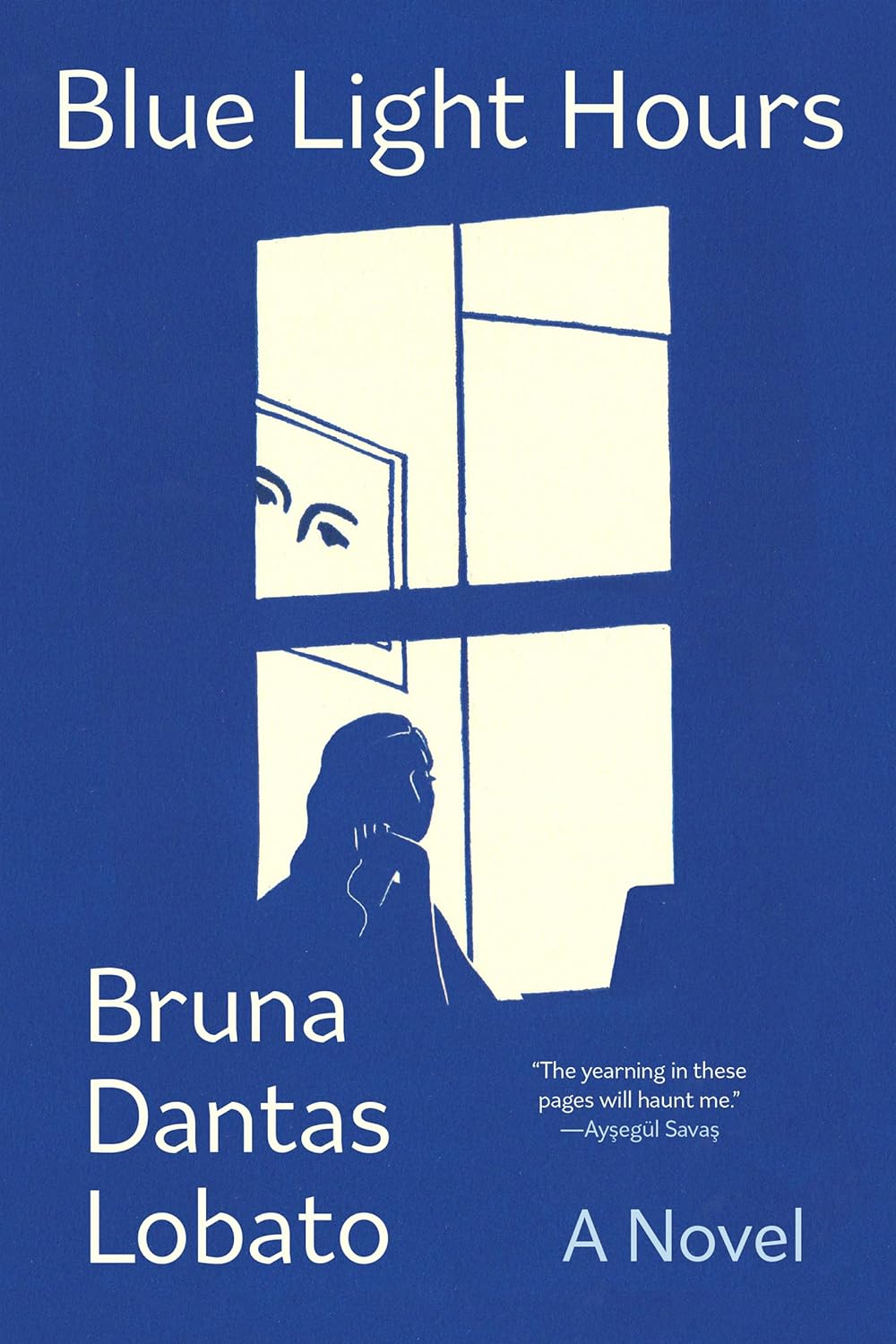
Blue Light Hours by Bruna Dantas Lobato

A mother and daughter separated by continents navigate distance and intimacy through the “miraculous blue light” of video calls in this haunting debut.

National Book Award-winning translator Bruna Dantas Lobato makes her authorial debut with Blue Light Hours, a subtle, contemplative story of a mother and daughter divided by 4,000 miles, who come together via screentime and memory. With love, care, quiet humor, and pervasive yearning, this thoughtful story explores the dilemmas of coming of age and leaving home, the tension between separation and connection.

On a full scholarship, the daughter departs her home in Natal, Brazil, “prepared to brave the world, even if it hurt me,” for a liberal arts college in a remote part of Vermont, leaving behind a mother who suffers from insomnia, migraines, and depression. The daughter navigates unfamiliar culture, food, and language, while the mother observes her first Christmas alone. The daughter feels guilt, torn between two very different lives. “I stared into my green tea, wishing someone… had warned me about how hard it would be to leave, how hard to stay.” Both women rely on their Skype calls: “On the shiny blue screen, there was my mother, my friend, the only person who always knew me.”

This story is told in three sections, “Daughter,” “Mother,” and “Reunion,” but “Daughter” occupies the bulk of the book, so that readers see her loneliness and her striving to make a new life work, even as she worries about what she’s left behind. “Daughter” is also the only section told in first-person perspective, while “Mother” identifies that character only as “the mother,” although both protagonists remain nameless. In “Reunion,” the mother travels to New York City and they make Grandma’s chicken soup together, “dipping pieces of bread into their old lives.” A moving passage details the items in the daughter’s bathroom, all the gadgets and conveniences that are unfamiliar to the mother, and the mother’s brief wish for the simpler bathroom of home. “But when she turned the crystal knob on the bathroom door and saw her daughter at the end of the hallway, sifting powdered sugar on French toast with a wand, she couldn’t help but take the wish back. She couldn’t resist thinking that things were perfect just as they were, golden faucets and all, without any gleaming glass between them.”

Blue Light Hours documents with wisdom and tenderness what is gained and lost when one leaves a home to build another, and the less universal experience of putting a 27-hour flight between mother and child. It tells painful, beautiful truths: with independence comes loneliness as well as freedom, and raising a daughter also involves losing her. Dantas Lobato’s careful, lovely prose will linger long after these pages end.


This review originally ran in the August 15, 2024 issue of Shelf Awareness for the Book Trade. To subscribe, click here.


Rating: 7 electric toothbrushes.

Something in the Woods Loves You by Jarod K. Anderson

A profoundly depressed poet takes to the woods and delivers a lovely, moving memoir of nature writing and mental illness.

In his 40s, poet Jarod K. Anderson (Field Guide to the Haunted Forest; Love Notes from the Hollow Tree) left his job in academia to try to survive the debilitating depression he’d mostly hidden for decades. Early on in his memoir, he describes taking a walk in the woods, quietly observing nature as he had not in some time. He communes with a great blue heron and finds that there may be solace in a place where he’d forgotten to look.

Something in the Woods Loves You describes the slow and difficult process of seeking help and getting better, in increments, and with relapses. Anderson’s journey to wellness is not and perhaps never will be complete, but he does progress, and with a poet’s sensibility and attention to language and detail, this memoir relates not only his story but also philosophies and outlooks that will be helpful to many readers. While its subject matter is undeniably heavy, Something in the Woods Loves You is frequently light and positive.

There are notes of advice, but they’re always couched within Anderson’s personal experience, which he acknowledges will not be universal. The result is a memoir of the slow passage toward improved mental health, a deeply beautiful work of nature writing, and a treatise on the underestimated connections between the human and “natural” worlds. The setting is solidly grounded in Anderson’s home landscapes in Ohio (and, briefly, Tacoma, Wash.).

Organized in a seasonal cycle, Something in the Woods Loves You opens in winter: “A white page. An elm scribbled on a snow hill. Empty space making each syllable of life more vital…. Winter is the deep breath before a song.” In that stark season, not without effort, Anderson decides to seek help. In spring (“a gentle calamity of warmth and color”), he obtains access to antidepressant medication and, after a false start, finds a good fit in a counselor trained in cognitive behavioral therapy. In summer, the depression begins to lift. Fall brings a relapse, and the lesson that life will involve ups and downs.

Something in the Woods Loves You is also structured around 20 species, which include sugar maple, morel, eastern bluebird, lightning bug, raccoon, and human. “Fieldmouse” considers toxic masculinity in Western culture, including the unwillingness to ask for help. “Crow” contemplates a balance between science and magic. These are joined by many shining, glinting details, rendered in a poet’s prose under a careful eye: great blue herons “are a mix of shaggy and angular, a blade of yellow stone dressed in flowing robes stitched from overcast skies.” With these and other scintillating observations, Something in the Woods Loves You is revelatory.


This review originally ran in the July 16, 2024 issue of Shelf Awareness for the Book Trade. To subscribe, click here.


Rating: 8 seeds.

The Devil in Silver by Victor LaValle

Victor LaValle: I loved The Changeling, couldn’t make it very far into The Ecstatic, did okay with The Ballad of Black Tom. I have found The Devil in Silver quite intriguing and absorbing; I don’t guess I loved it as much as The Changeling, but it sure did take me on a trip, and I’ll be thinking about it for some time.

We begin:

They brought the big man in on a winter night when the moon looked as hazy as the heart of an ice cube.

The big man will turn out to be Pepper, and he’s being brought into the New Hyde mental hospital in Queens by a trio of detectives who couldn’t be bothered to process him into the actual jail, and instead have defaulted to a simpler drop-off scenario. This will have long-lasting consequences for Pepper, however. One of the quickest questions to arise in the reader’s mind: who among us would countenance this involuntary commitment process without coming across a little unhinged? If I am perhaps a little drunk, indignant, and arguing my absolute sanity, will I read as sane, or…? Tiniest spoiler alert ever: Pepper is not immediately released from New Hyde. However reluctantly, he makes friends (of a sort), although his assumption that they don’t need psych meds any more than he does will be tested.

Pepper is no hero, no wronged but upstanding citizen. He’s rather average, maybe a little of an underachiever or a slob, deeply unremarkable, but that’s the point – none of these qualities should have him locked up, drugged against his will, restrained to a bed for inhumane days at a time. The methods of the doctors and nurses on staff (no heroes among them, but like Pepper, regular human beings capable of small graces and big messes) aren’t the worst of what New Hyde has to offer, though. There appears to be a veritable devil housed in a secure room just down the hall. But is this antagonist truly what it appears? Just how sane is anybody? (Questions of the un/reliable narrator may arise.)

There are deeply compelling characters here, and profound pathos, crimes and forgiveness and oh so many questions. The story is fairly explicit about questioning systems: the hospital has purchased a software program for its ancient computer that is supposed to allow staff to digitize patient charts. But it bought the wrong program, instead winding up with one that is supposed to help homeowners trying to avoid foreclosure. Except that program isn’t really supposed to help homeowners, but just get them lost in a maze of paperwork until, oops, the foreclosure has gone through. “Most systems barely work, but those same systems cover their asses much more successfully.”

Pepper is our protagonist, and most chapters feature his close-third-person perspective, but select few center other characters – his friends among the patients, or the staff – and even beyond that (one memorably checks in with an enormous lone rat, and the philosophies of rats). Stories apparently pulled from the news blur the line between Pepper’s fictional world and our real one (see also LaValle’s author’s note, which I loved). Vincent Van Gogh plays an important role. This is a novel about mental illness, societal ills and broken/working systems, with horror and realism tangled up together. It’s hard to look away from, even in its most disturbing moments. LaValle is strong.


Rating: 8 butts.

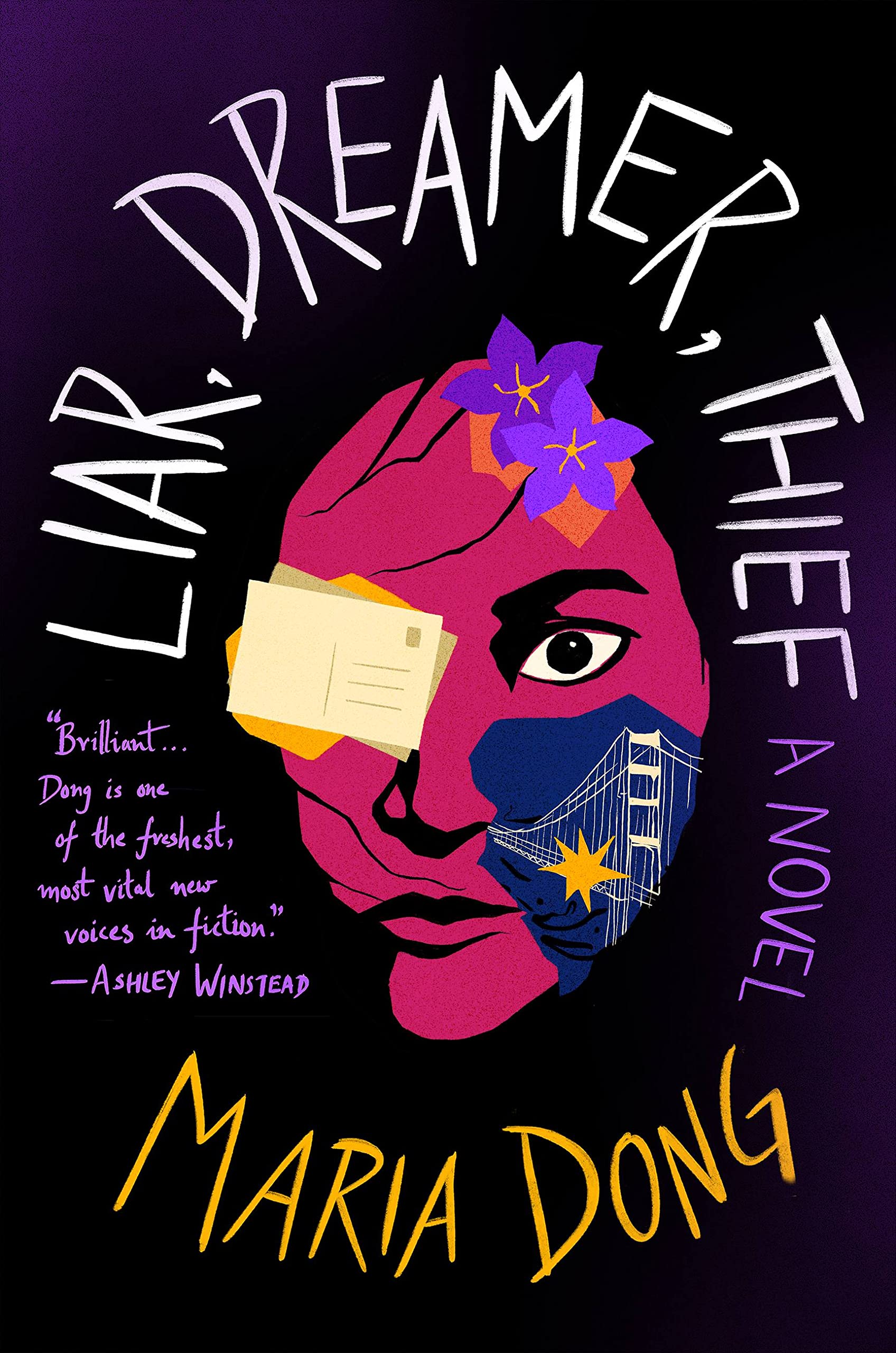
Liar, Dreamer, Thief by Maria Dong

A young woman relies on ritual and fantasy to navigate her daily life–until the real world turns as bizarre as her worst fears.

Maria Dong’s debut novel, Liar, Dreamer, Thief, is a masterfully harrowing adventure for both reader and narrator. Katrina Kim is 24 years old and struggling to keep it together. She’s not great at her temp job at an insurance company; she has no real friends other than her mostly absent roommate; she relies on rituals involving geometry and prime numbers to feel safe from her shapeless, apparently irrational fears; she frequently imagines herself into the magical world of her favorite children’s book or the classical works of music she once performed. She argues that she is not stalking her coworker Kurt, but readers will suspect this may be semantics. She has $45 in her bank account and her parents haven’t spoken to her in years. Readers may assume Katrina is struggling with an undiagnosed mental illness, drawing endekagrams (a star polygon with 11 points) to help her get through the days–until she happens to watch Kurt jump off her favorite bridge, while shouting that it is all her fault.

Liar, Dreamer, Thief is punctuated with geometry lessons (the four stellations of the endekagram) and passages from the fantasy book that provides Katrina with her other, safer-feeling life, emphasizing these coping mechanisms as she embarks on an amateur (and poorly funded) investigation into Kurt’s disappearance. Her barely functional life goes further to pieces. Just as readers begin to worry that this narrator is not only unreliable but completely unstable, the clues shift slightly, and suddenly it appears that some of Katrina’s nastiest and most fantastical fears may be all too real.

This is a completely absorbing novel, both a terrifying whodunit thriller and a heart-wrenching drama about mental health, family, loneliness and moral relativism. Dong’s pacing and revelation of secrets is expert; beware staying up late to finish Katrina’s story in one go (and, perhaps, beware nightmares of the Mirror Man). Katrina makes some cringe-worthy choices while facing challenges both existential and mundane (clocking in on time in the cubical farm); she is an imperfect protagonist but disturbingly accessible, and indomitable even in her lowest moments. Liar, Dreamer, Thief excels at empathy and conveying the frustration of one’s own limitations, as Katrina wonders, “Does everyone in my orbit have a secret tragedy, just crawling underneath the surface?” Its mysteries swell toward a denouement that feels simultaneously unwieldy and inevitable. Probing those secrets may be mortally dangerous–or may be Katrina’s salvation.

This exceptional debut novel showcases relentless momentum, horrors, compassion and an unforgettable protagonist: not to be missed.


This review originally ran in the November 11, 2022 issue of Shelf Awareness for the Book Trade. To subscribe, click here.


Rating: 8 minutes.

Motherthing by Ainslie Hogarth

Mothers and motherhood haunt this alarming, dark, weirdly funny novel of family ties and the power of just the right recipe to heal all wounds.

Ainslie Hogarth’s Motherthing is a grim, disturbing novel of family drama and mental illness, yet a bizarrely funny glimpse into one woman’s mind. In its opening pages, Abby, who narrates, and Ralph have recently moved in with Ralph’s mother, Laura, hoping to nurse her through her depression. But instead, Laura takes her life, Abby purloins Laura’s coveted opal ring and Ralph falls into despair. “Because even though he’d been strong when we’d moved in, strong enough to move in–equipped with resources he’d downloaded from a website called the Borderline Parent, and a swear-on-your-life promise from me that I could handle this temporary uprooting–being near her stirred rotten dangerous things inside him.”

Abby, very much in the throes of dealing with her own mother’s shortcomings and abuse, has identified Ralph as part mother, part god, the “Perfect Good” in her life and “the most genuinely good person in the entire world.” “Ralph would make eggs too, not specially because I was there, but because a person has eggs for breakfast. And soon, I remember thinking, clutching fistfuls of duvet to steady my overwhelming joy, I would be a person too.” In flashbacks to her childhood, she recalls a beloved couch she calls Couchy Motherthing, and constantly circles and ponders the ideal mother figure; she relies on a cookbook “for the mothers of good, happy, wholesome families, with lots of mouths to feed. And that’s the kind of mother I am too, even if I’m not yet”–because Abby desperately wants to have a child of her own, to embody the kind of mother that neither she nor Ralph got to have. She works at a nursing home where she considers her favorite resident her “baby” and, simultaneously, the perfect mother she never had. This fantasy is disrupted by the appearance of the woman’s real daughter, which might just push Abby over the edge. Because paired with her nurturing impulse, Abby secretly harbors intense rage, “murder so much more manageable right now than creating a whole entire family.” Her love verges on violence.

Hogarth (The Boy Meets Girl Massacre (Annotated)) rocks readers via Abby’s turmoil, her swings from devotion to fury, self-loathing to self-aggrandizement. Motherthing keeps readers as unstable as its narrator, struggling to manage the traumas and the waves of emotion. Abby copes with a focus on a few objects that she imbues with special significance: Laura’s ring (symbol of rejection, as Laura judged her daughter-in-law “more of a Kay Jewelers type than a vintage-family-heirloom type”), Abby’s cookbook and the recipes she hopes will save Ralph (an obsessed-over jellied salmon and an unusual iteration of Chicken à la King). The result of these roiling thoughts and images is a darkly comic, kaleidoscopic novel of unhealthy fixations, love, murder, the gifts and wounds that family can inflict and one woman’s fight to save herself.


This review originally ran in the August 4, 2022 issue of Shelf Awareness for the Book Trade. To subscribe, click here.


Rating: 6 little dogs next door.

Archival Quality by Ivy Noelle Weir and Steenz

This is a delightful graphic novel with a few threads that I enjoy: it takes place in a mysterious museum/library/archives setting; it’s a ghost story; it is concerned with mental illness and social justice; its cast departs from your run-of-the-mill beautiful straight white people; and it ends sweetly with an emphasis on friendship. I’m not sure where I got this recommendation, but it was a solid one.

Like most graphic novels, I found this one a quick read – I sped cover to cover in an evening. Celeste Walden has recently lost her library job after a depressive episode; she’s not doing so well, and her boyfriend Kyle is concerned, and she knows she has to get out of the house, but she really doesn’t want to work anywhere but a library again. That’s when she finds the Logan Museum, located in an old building that has also housed a hospital, an orphanage, and a sanitorium at different times. She’ll be an archivist, working nights, digitizing the museum’s images collection. And she is expected to live on premises, in a furnished apartment. Which of course involves things that go bump in the night. Kyle does not approve of this new job, but Cel is determined. Her new boss is disturbingly aloof, but the librarian who trains her is a lovely, supportive woman. And then the mysteries begin.

Cel’s mental illness is handled differently by different characters, including by herself, in ways that are true to life. The ghost story element is moving and involves some larger issues. Cel’s social circle – boyfriend, boss, librarian Holly, and Holly’s girlfriend – is small but impactful. I enjoyed the story, the characters, and the visual representations, which I felt communicated emotions and personalities nicely. I think this book would make a good choice for YA readers on up, and offers some excellent opportunities to discuss several topics that might appeal in middle school or high school classrooms or book clubs. I also enjoyed Weir’s afterword and Steenz’s “confidential files” at the end, which shed light on their friendship and process; the authors’ lives bear on the book, as is often the case. Definitely do recommend. Also, yay for libraries in literature.


Rating: 7 fruit baskets.