Maximum Shelf: Finding Freedom: A Cook’s Story: Remaking a Life From Scratch by Erin French

Maximum Shelf is the weekly Shelf Awareness feature focusing on an upcoming title we love and believe will be a great handselling opportunity for booksellers everywhere. The features are written by our editors and reviewers and the publisher has helped support the issue.

This review was published by Shelf Awareness on November 30, 2020.


Erin French grew up in rural Maine, in the outdoors and in her father’s diner, where she began helping out in the kitchen at age 12. After a few years at college, she returned home to Maine, and faced challenges including young single motherhood; a difficult marriage and more difficult divorce; opening and then losing her first small restaurant; addiction and recovery. Eventually French moved back to her hometown of Freedom, where she would start again with her wildly successful The Lost Kitchen. These travels, pitfalls and victories she recounts in Finding Freedom: A Cook’s Story; Remaking a Life from Scratch. Renovation and redemption–of spaces and of herself–are central to her story.

This memoir begins mid-scene, with the nine-months-pregnant narrator, age 21, on break from a 16-hour shift at the family diner. The opening showcases the detailed, richly sensory food writing that permeates these pages, then flashes back, to describe French first entering the diner at age five; observing her father’s love for his work, his drinking and his limited ability to show love for his family; working in the kitchen and dreaming of escape. Finding Freedom centers around food, from childhood in the diner to young motherhood, when French supported herself with a small business baking cakes, cookies and pies, working retail in a cooking supply store and for a catering company. French picks up skills and ideas along the way and builds confidence until she is able to open a supper club and then the first The Lost Kitchen on the Maine coast. By this time, she has also picked up a husband, Tom, who turns out to be a heavy drinker, controlling and eventually abusive. From her problems with depression and anxiety, and the excruciating hard work and long days of restaurant work, she picks up prescriptions for Xanax, Ambien, Klonopin and more. This chapter of French’s story ends in rehab, with Tom seizing custody of her child and shuttering The Lost Kitchen, including “every whisk, every spoon, every spatula, and knife.”

But the cook (French resists the title “chef,” having no culinary degree or formal training) is scrappy, hard-working and resourceful. She adopts a dog, moves into a cabin without electricity or running water, fights for custody of her son and gets back into the kitchen. She first converts a dilapidated Airstream into a food truck for roving outdoor fine dining events on farms, in orchards and fields. And then another opportunity shows itself: the old mill in Freedom is finally gutted and renovated into the perfect, romantic setting for a small but picturesque dining room. The Lost Kitchen is reborn. Within a few short seasons, its limited reservations must be filled by postal lottery, more than 20,000 postcards “pouring in as though it were the North Pole.”

The spaces French occupies are lovingly built and restored. The first The Lost Kitchen is housed in a former bank building, a three-story gothic flatiron she describes in tender, glowing terms: “One by one I folded back the old wooden shutters and flung open the tall windows, letting light into spaces that had been dark for so long…. The place was dripping with character, with its hardwood floors, high ceilings, thick period molding, and doors with frosted glass and heavy hardware.” Its owners choose to take a chance on renting to French after a personal meeting and homemade meal. This process repeats with The Lost Kitchen’s reincarnation in Freedom: “The quiet rumors had been spreading around town about the old mill’s restoration, the same way they had about me.” In between, French must clean out and redecorate the cabin she lives in post-rehab on her parents’ land, and the Airstream trailer she uses to get on her cooking feet again. As the book closes, she has just purchased an old fixer-upper farmhouse “the color of strawberries.”

French excels in describing her passion for cooking and for pleasing people via food; she’s at her best detailing the foods themselves, and her mouth-watering writing is the heart of this memoir: “Hard-boiled quail eggs as bar snacks that you could peel-n-eat and dunk in a dust of celery salt.” “Fresh-from-the-fryer nutmeg-laced doughnuts.” “Fried chicken. Served cold, crispy, and juicy…. We could just hold it up in the air as the boat screamed through the waves to catch a bit of salty breeze before devouring it to the bone.”

Cooking and baking, flower arranging, the fine art of plating and the writing of this memoir contribute to a profile of a woman driven to create beauty even out of pain. The narrator’s voice is vulnerable, her trauma is real and visceral but, by the end, this is a delicious, feel-good redemption tale.


Rating: 6 nasturtiums.

Come back Friday for my interview with French.

World of Wonders: In Praise of Fireflies, Whale Sharks, and Other Astonishments by Aimee Nezhukumatathil, illustrated by Fumi Nakamura

World of Wonders is a lovely, thoughtful series of meditations, charmingly illustrated, with love and awe on every page but never shying away from the prickliness of life.

Poet Aimee Nezhukumatathil (Oceanic) stuns with her nonfiction debut, World of Wonders: In Praise of Fireflies, Whale Sharks, and Other Astonishments, delightfully illustrated by Fumi Nakamura. These essays explore the natural world and the human experience, finding parallels, meaning and beauty in the intersections.

“A catalpa can give two brown girls in western Kansas a green umbrella from the sun,” Nezhukumatathil begins. This is an apt and representative line: place-specific, beautifully phrased, with reference to some of the identities these essays will explore. They are mostly titled for the plants and creatures they center–peacock, comb jelly, narwhal, dancing frog–with a few exceptions, such as the expressively named “Questions While Searching for Birds with My Half-White Sons, Aged Six and Nine, National Audubon Bird Count Day in Oxford, MS.” The red-spotted newt and dragon fruit that title their respective essays receive Nezhukumatathil’s attentive study and yes, wonder, but the author’s own experience is always a second thread. She brings a poet’s ear for language and an eye for commonality and metaphor, both reverent of the natural world and specific in her personal story.

Fireflies, touch-me-nots and flamingoes offer her a way to talk about being a brown girl in a white man’s world, growing up in the era of Stranger Danger and feeling disjointed between continents. A young Aimee is asked to draw an animal for a class assignment in Phoenix, Ariz. She responds with a resplendent peacock, India’s national bird, but is chastised and asked for an American bird. Her bald eagle wins a prize but causes her shame. Fumi Nakamura’s accompanying illustrations are whimsical and warm–who doesn’t love an axolotl’s smile?–and sweetly complement Nezhukumatathil’s prose.

World of Wonders offers a series of brief naturalist lessons, but is perhaps at its best in drawing connections, as between the axolotl’s smile and what to do “if a white girl tries to tell you what your brown skin can and cannot wear for makeup.” When it goes boom, “the cassowary is still trying to tell us something.” “And just like the potoo, who is rewarded for her stillness by having her lunch practically fly right to her mouth–perhaps you could try a little tranquility, find a little tenderness in your quiet. Who knows what feathered gifts await?” Wisdom, wonder and beauty make this slim collection one to treasure.


This review originally ran in the August 11, 2020 issue of Shelf Awareness for the Book Trade. To subscribe, click here.


Rating: 9 pale berries growing in spite of the dark.

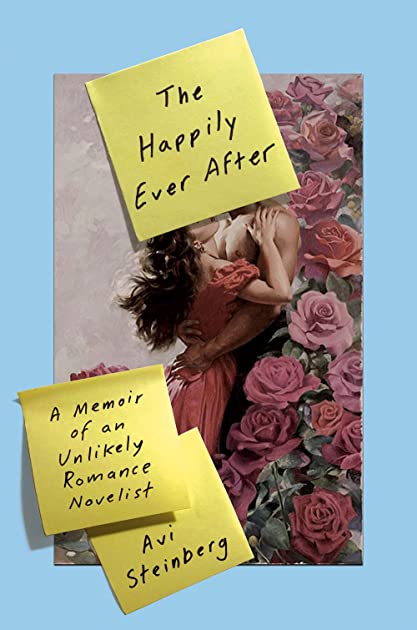
The Happily Ever After: A Memoir of an Unlikely Romance Novelist by Avi Steinberg

A romantically challenged writer treats the romance novel as career aspiration and life coach, with endearing and revealing results.

Following a divorce, Avi Steinberg (Running the Books; The Lost Book of Mormon) enters the realm of the romance novel, hoping to learn how to write a few commercially successful books and, perhaps more importantly, to solve his own real-life romantic challenges. In his quest, Steinberg hangs out with readers, authors, publishers and cover model CJ Hollenbach (so much more than “Ohio’s Response to Fabio”), attends conferences, joins a writing group and eventually lands a multibook contract under the pen name Dana Becker. These adventures he documents in The Happily Ever After: A Memoir of an Unlikely Romance Novelist.

Part personal memoir, part travelogue and part social and literary criticism, The Happily Ever After questions the societal tendency to look down on romance novels (and to apologize for reading them), examines romance’s domination of the commercial book market, reconsiders classics and the author’s own life through a romance lens, and explores the numerous subgenres of this much-loved and much-reviled field. Steinberg makes observations about gender roles and identities not only within romance novels but throughout American society. “The sentimental tropes of romance are so deeply embedded in our culture, we take them for granted,” making his comments relevant for everyone.

Entering as a romance newbie, Steinberg learns (and outlines for readers) the rules of the genre, including the necessity for “an emotionally satisfying and optimistic ending,” or Happily Ever After (HEA, in Romancelandia parlance). He concludes that “romance is America’s national literature: not because it is universally read or admired but because it is universally obsessed over,” and that Scheherazade was a romance author–bound to the whims of her audience, delivering rapidly and on demand.

Appropriately, Steinberg’s memoir has a generally upbeat cast, even during low points and through the narrator’s struggles with sincere emotions (“you go for a laugh when you could say something real,” one of his writing groupmates tells him; he calls himself “a depressed person who is an optimist at heart”). Also appropriately, the book concludes with the author’s own romance and bona fide HEA.

By no means is this memoir just for fans of the romance genre, although those readers will of course be tickled by his appreciative study. Steinberg’s personal story will suit any reader curious about the book industry, or who simply appreciates quirky personalities. Aspiring writers may find tips and tricks of special interest, but this is no how-to; rather, it’s an endearingly candid exploration of books, subculture and love itself.


This review originally ran in the July 24, 2020 issue of Shelf Awareness for the Book Trade. To subscribe, click here.


Rating: 7 aliases.

Memorial Drive: A Daughter’s Memoir by Natasha Trethewey

A former U.S. Poet Laureate remembers her mother, and wrestles with her brutal murder, in compelling and feeling style.

Natasha Trethewey, two-term United States Poet Laureate, forges a serious, poignant work of remembrance with Memorial Drive: A Daughter’s Memoir. Trethewey’s mother, Gwen, is the focus of this book: the daughter’s memories and what she’s forgotten, and, pointedly, the mother’s murder at the hands of her second ex-husband. The murder took place just off Memorial Drive in Atlanta, Ga.; the aptly named thoroughfare runs from downtown to Stone Mountain, monument to the Confederacy, “a lasting metaphor for the white mind of the South.”

Trethewey is the daughter of an African American mother and a white Canadian father. Their marriage was illegal; she was born just before the Loving v. Virginia Supreme Court case that struck down laws banning interracial marriage. Memorial Drive begins with her upbringing in Mississippi with her doting extended maternal family, necessarily recounting her early understanding of race and racism. This happy period ends abruptly with mother and daughter’s move to Atlanta, when Trethewey’s parents divorce. Atlanta has its strengths, such as a vibrant African American community, but very quickly, Gwen meets the man who will become her second husband. From the beginning, Joel is a sinister figure. Twelve years later, 19-year-old Trethewey returns to Atlanta from college to clean out her mother’s apartment after Joel brutally murders Gwen.

While this central event is harrowing, Memorial Drive does not focus only there. Trethewey ruminates on memory and forgetfulness, and recalls her developing love for and skill with metaphor, language, writing. Back home in Mississippi, her great-aunt “would appear each day at the back door, singing my name through the screen, her upturned palm holding out toward me three underripe figs… she was teaching me the figurative power of objects, their meaningful juxtapositions.” During the painful retelling of her stepfather’s physical abuse of her mother, Trethewey resorts to the second person, a whole chapter delivered to her younger herself. Concluding: “Look at you. Even now you think you can write yourself away from that girl you were, distance yourself in the second person, as if you weren’t the one to whom any of this happened.” Memories of her mother often appear as images, offering symbolic interpretations of the 12-year gap left by trauma. While Trethewey does pursue forensic exploration (transcripts of recorded phone calls between Gwen and Joel, as well as a visit to a psychic), this memoir is more introspection than true-crime investigation. And it is gracefully and gorgeously rendered, as befits a poet of Trethewey’s stature.

Trethewey declines to offer a neat conclusion, but she succeeds in making meaning from pain. Memorial Drive is loving and elegiac, disturbing and incisive.


This review originally ran in the June 18, 2020 issue of Shelf Awareness for the Book Trade. To subscribe, click here.


Rating: 7 lost records.

Curious Atoms: A History with Physics by Susanne Paola Antonetta

Full disclosure: the author was a professor and mentor of mine at Western Washington University.

Curious Atoms is an essay chapbook, 50-some pages in length, dealing with physics and the author’s own life experiences: part memoir and part science, told by a serious reader of physics but with no formal training in the hard sciences (as far as I can tell). “A History with Physics” feels like an apt subtitle.

There is a certain density to this subject matter. For one thing, admittedly I neither much understand nor much care about the theoretical physics discussed here; I had to let it go by, try to meet it where I found it and move on. But it didn’t hinder my appreciation for the writing, because a great writer can carry us through any subject. (Although I might have gotten more out of this had I been more comfortable with quantum whatnots.) The physics might challenge you as it did me. The personal material is heavy in a different way; Antonetta delves into her experience with bipolar disorder, with mental health and treatment, stigma, medication, and more. She’s also a deeply intelligent and well-read narrator, ranging widely. It’s not an easy read in a few ways, but a rewarding one. I love that wide-ranging headiness, and I loved feeling like I could hear the voice again of a woman I got to hear speak in a classroom a few days a week – that was a real privilege.

Here are a few lovely, thought-provoking, representative lines.

To bring to the lyric the mind and body that I have, and speak from the lyric soul, I cannot. I’m not sure what of mine can be called mine, body or mind; the lyric, with textbook definition of “the personal emotions and thoughts of a single speaker,” wants a warm hand, not mineral. I am not an individual, quite, but a chemo-dual.

That “our bodies of difference,” as Stephen Kuusisto writes, “offer crucial ways of knowing” I do believe. I can only give the cellular knowing of my chemical history, with the punctuation of what I suppose I really am, unmixed: hysteria under the bed, glitter. I can talk about 1970s psychiatry, the time I first encountered as a girl patients preyed on sexually, the awful, always visible electroshock machine, used as treatment and threat, its aftermath a gelled amnesia. I do not think, however, that such memoirizing would get to the question.

Gifted memoirist writes that memoirizing is not the solution. Note the interest in the idea of dualism or multiplicity, as in the multiverse, as in bipolar, as in the highs and lows of minds and lives.

Better still – I apologize that this review is half quoted text, but David Lazar’s brief introduction is too perfect to pass up. I think he describes the collection perfectly, and I couldn’t agree with his final statement more.

Susanne Paola Antonetta’s essays are full of erudition and stunning self-appraisals, hair-pin turns between metaphysics and splintered pieces of autobiography, dark energy and light asides, tossed off like hand grenades. These essays are sculpted – I’m tempted to say forged (so necessary is each sentence, even each word one feels). Yet in the midst of work so exorbitantly cooked, the raw springs of the felt occasion drive the essayist through her thought-projects. I loved being in the company of this mind.

You can view the entire chapbook here, and you really should.


Rating: 8 sides.

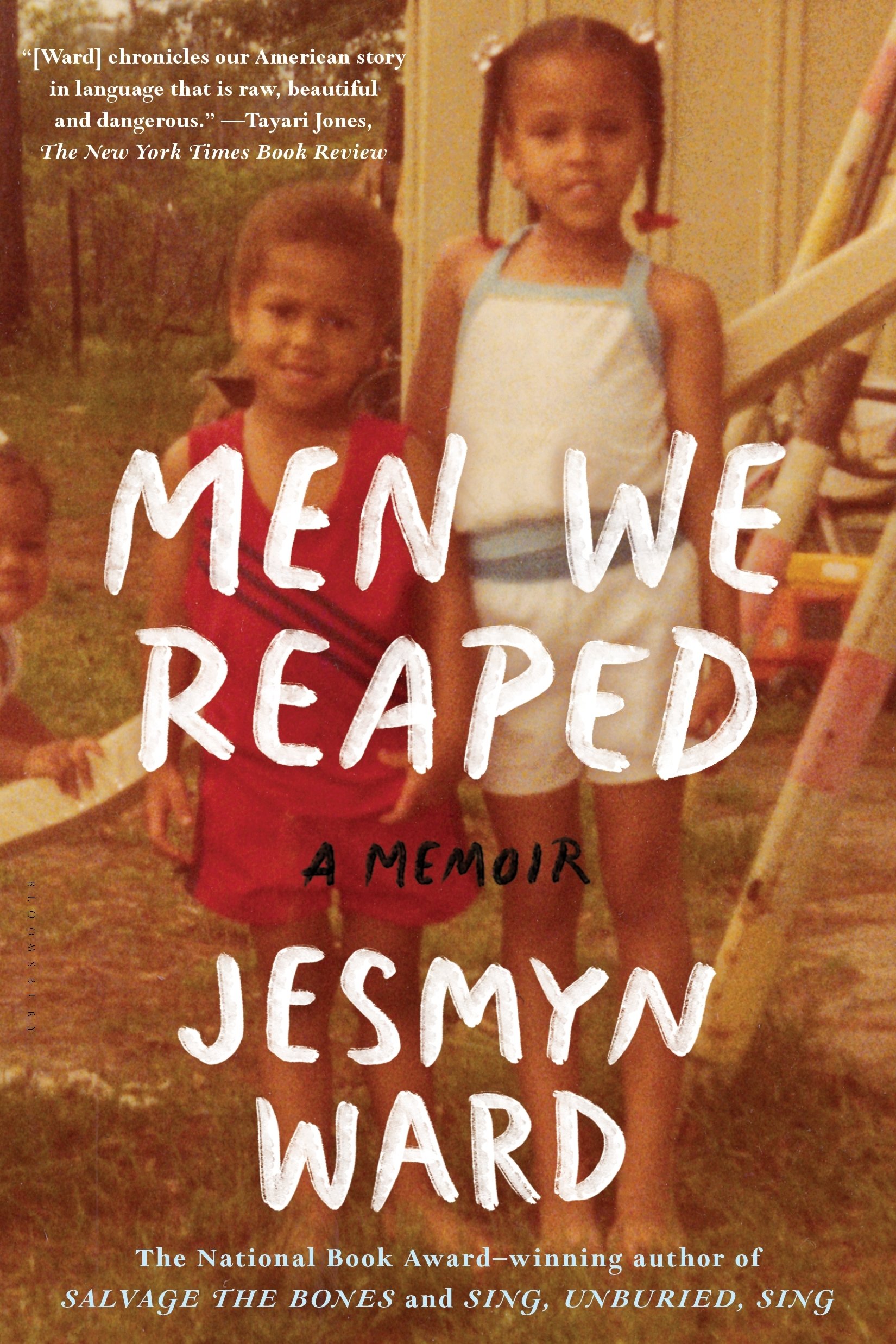
Men We Reaped by Jesmyn Ward (audio)

Jesmyn Ward’s Men We Reaped is lovely, painful, and important. It opens with three epigraphs, and the first, by Harriet Tubman, provides Ward’s title.

We saw the lightning and that was the guns; and then we heard the thunder and that was the big guns; and then we heard the rain falling and that was the blood falling; and when we came to get in the crops, it was dead men that we reaped.

This memoir focuses on the deaths of five young men, close friends and relatives of the author, including her brother. One suicide, one murder, two car wrecks, and one death by drugs. Roger, Demond, C.J., Ronald, Joshua. Ward profiles each, tracks a life and a death and the consequences for those who loved him. In shining her light on these five individuals, she also examines race and racism, gender, poverty, and the historical patterns that contribute to deaths like these. Most centrally, racism. (See footnote re: caste.)

Ward introduces her topic and the five young men, briefly, then handles them one by one in reverse death order, from Ronald back to her brother Joshua. In between, sections titled “We Are Born,” “We Are Wounded, “We Are Watching,” etc., track the experiences of Ward and her family, growing up the eldest of her mother’s four children, in chronological order. In this way, two threads of her story meet when the backwards-moving and forwards-moving chronologies intersect with Joshua’s death, hit by a drunk driver in a hit-and-run for which the driver – a white man – would receive a sentence of just five years.

Men We Reaped is a personal memoir of Ward’s own life, as well as a profile of five individuals and their social and family circles. It is also an examination and social critique of race, gender, and class, within the United States and within the historic Deep South. Ward was raised in and around DeLisle, Mississippi, near Gulfport-Biloxi. It’s a particular place, of the old Confederacy, divided by race even as its inhabitants recognize that this is a false division; poverty-stricken, it provides few opportunities for its young people, especially young black men. Ward offers her reader the history of this place as well as of her own family, hearkening to the town’s former name: “I want to impart something of its wild roots, its early savagery. Calling it Wolf Town hints at the wildness at the heart of it.” That this range of subjects is so neatly woven into Ward’s intriguing narrative structure – those forward- and backward-moving chronologies that meet in the middle – results in an extraordinary piece of literary work. Ward’s points about social structures and prejudice are intelligently made, her personal stories are deeply moving, and her craft is admirable. Her writing is lovely and expressive. I am deeply impressed.

This audio narration by Cherise Boothe felt right to me; I appreciated the pacing and weight and pronunciations of place names. (There are so many ways to say “New Orleans.”) As I’ve struggled to write this review – often more difficult the more I appreciate a book – I’ve missed having access to a text copy for reference, but the experience of the audiobook was excellent, so that format is recommended but having the print copy alongside would be ideal.

Everyone should read this book.


Rating: 8 holes in the ground.

I listened to this book while reading Isabel Wilkerson’s forthcoming Caste: The Origins of Our Discontent, also a stellar and deeply important book. As Wilkerson illustrates, these forces are the work of caste and casteism. I chose to stay with the term of racism for this review, as it’s the one Ward uses and I think it’s an accurate term, but please see also Wilkerson’s arguments.

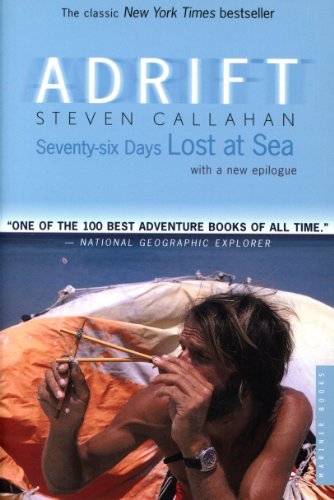
Adrift: Seventy-six Days Lost at Sea by Steven Callahan

This book came recommended by one of my favorite faithful readers here at the blog, so I’m sorry to say I’m not an unqualified fan.

Adrift is a memoir of survival. Steven Callahan is a lifelong sailor, and from boyhood had wanted to sail across the Atlantic, which he eventually managed to do in his late twenties in a 21-foot sailboat of his own design and build. Her name is Napoleon Solo, and with a friend, Callahan sails her from New England to old England. Here the friend flies home and Callahan putters south with another short-term crew member; they part at the Spanish island of Tenerife. Callahan sets out alone for Antigua, and it is in this second attempted Atlantic crossing that things go wrong. The subtitle gives the briefest summary. Callahan spends the 76 days in an inflatable raft with few and meager tools, whose accelerating failures require increasingly creative solutions, even as the man’s body and mind self-cannibalize and break down.

For one thing, this book is interesting in that it is both suspenseful and riveting, and spoiled from the beginning: that Callahan got to write the book (never mind that subtitle) gives away the ending. In fact, the subtitle’s specificity gives away yet more. As I read the log, I see we’re in day 41 and know we’re nowhere near done. I was nevertheless absorbed by the story. It’s hard to say to what extent I enjoyed this read; I was often frustrated, but always reluctant to close the book and walk away.

I think I might have been more able to enjoy the story if I’d better understood the practical aspects of it. Sometimes Callahan throws out terms or processes unconcernedly that are meaningless to me. Sometimes he tries to explain but entirely passes me by – which may be as much on me as it is on him; certainly I don’t know my way around a boat, and mechanical intelligence is not a strength of mine. He includes some diagrams and step-by-step explications that so entirely passed me by that I started skipping them, as trying and failing to understand only irritated me. That said, giving up on the details still left me able to follow the life-and-death struggle.

Callahan conceives of himself as operating in three parts: physical, emotional, and rational. Especially as he starts to really lose it (with fatigue, starvation and dehydration, frustration, sleep deprivation, and the general crazy-making of his situation), these parts become a chorus of arguing voices in his head. There is a philosophical, if not meta-physical, thread to the story: will to live versus peace with death, and how people suffer and work through experiences like this. I suspect such a story is one of the hardest things to write, to communicate such profundities… and so if I say he didn’t do an entirely convincing job of it, I mean that as mild criticism. Certainly I’ve never lived through anything like this, nor tried to write it, and I can’t imagine I’d do any better.

The story was undoubtedly compelling. I didn’t want to stop reading. And yet I felt a certain impatience, too. It’s strange to say, but the events of these 76 days, while they included much variation, were also much of the same over and over. Much minutia of patching holes and reconfiguring a speargun, but on the other hand, just the ocean: “that torn blue desert,” he calls it, with dorados and flying fish and triggerfish and calm weather or angry weather, hot days and cold nights. Possibly this could have been done in fewer than 238 pages to better effect. (That’s a major decision to be made with a book like this: degree of detail; pacing.) Maybe I’m not the ideal reader of this book, or not at the ideal time. When I think about survival-in-nature stories, I think of Krakauer first, of course; Into Thin Air remains the pinnacle for me, in memory, with Into the Wild a close second. (Both of these, apparently, pre-blog. And what would I think of them if I reread them now?) Stories this elemental must be among the hardest to get right. Isn’t this kind of survival narrative the definition of ineffable?

Interesting in its own ways, and demands to be finished (no question of a did-not-finish here), but not something I loved reading.


Rating: 7 eyes.

Dog Years by Mark Doty

Love for a wordless creatures, once it takes hold, is an enchantment… This is why I shouldn’t be writing anything to do with the two dogs who have been such presences for sixteen years of my life. How on earth could I stand at the requisite distance to say anything that might matter?

How indeed?

I love Doty, as you know, and this book is an excellent example of some of the qualities of his work that I love best. He is thoughtful, meandering, wise, self-deprecating, shows his thinking transparently on the page, and has the most precise and loving eye for beauty; he turns most every observation of the world into ekphrasis somehow, by which I mean that he turns the same active, joyful, inquisitive observation to the Massachusetts shoreline or a NYC sidewalk that he turns to a museum-quality painting.

This review is a trigger warning of sorts. I love Doty, and I love this book, and I’m glad I read it, but it was also painful as hell. Dog Years is about beloved pet dogs who die (as they do), and it’s about 9/11, and it’s about death and loss. It is also absolutely relevant that I read this during the pandemic of the spring of 2020, and everything feels a bit more raw these days, the angst a bit closer to the surface than usual; and I have in no way recovered from my dear Ritchey dying more than a year and a half ago now, and my dear Hops is not even 12 yet but he shows his age. This book was beautiful and transcendent and really hard on me. I mean it as a compliment – this book comes with a warning because it’s so well done.

Because, you know, a book about a beloved pet dog dying could easily be (and they usually are) insipid, overly sentimental, a cheap shot. And I think telling the story of 9/11 (or Katrina, I think about that one a lot too) is awfully hard to do in a way that’s not going to sound like anybody could have told it. (This is true of the pandemic of 2020, too. Who will tell that story well? Will it be Doty? I’d buy that book. See also Paul Lisicky’s excellent recent release, Later. A little awkward: Paul Lisicky appears in Dog Years as Doty’s husband, which is no longer the case.) In other words, Doty has undertaken an ambitious book, which aims to do a couple of things at once that look nearly impossible to do well, even individually. But of course he’s knocked it out of the park. (It is a sign of my faith in him that I undertook to read a book about dogs dying. Whew.)

The dogs in question are Arden, a black long-haired retriever, and Beau, a golden retriever(ish). They are very specific beasts, individuals, as dogs are. Arden belonged to Mark Doty and his partner, Wally, in Provincetown, Mass., where Wally sickened and eventually died of AIDS, but not before Mark brought home Beau to join the family as well. “My friends think I’ve lost my mind: You’re taking care of a man who can’t get out of bed and you’re adopting a golden retriever? They do have a point, but there’s a certain dimension of experience at which the addition of any other potential stress simply doesn’t matter anymore.” (That is a golden retriever puppy, I would add.) Widowed, Mark (and Arden and Beau) will eventually form a new family with Paul, and it is in this shape that they make their way to the end of both dogs’ lives, eventually, after much travel and moving around – including living in New York City in September of 2011… I have seen Doty handle grief and loss before (although I’ve not yet read Heaven’s Coast, so there is still that), most recently of course with What Is the Grass, where death forms one of the five sources of Whitman’s genius. And Doty’s, I’d say. The way that these strands are intertwined is lovely and perfect.

When the towers fall, the enormity of all that loss and death and threat to the world is too much to conceive. “With the world in such a state, isn’t it arrogance or blind self-absorption to write about your dogs?” But Doty knows that “we use the singular to approach the numberless,” and this echoes one of the lines I most obsess over in Still Life With Oysters and Lemon, about “the strangeness and singularity of things…” (There is again an echo of the thread in Still Life that is about reflection, in all its senses: “We know ourselves by how we’re known, our measure taken by the gaze of the outsider looking in.”) The singular losses of Arden and Beau offer Doty a way to write about 9/11 and about topics larger than them. The unique to communicate the universal, and the personal to illuminate the public.

For me, what is perhaps the crux of this book came early. “To attach, to attach passionately to the individual, which is always doomed to vanish–does that make one wise, or make one a fool?” This is a more personal review than usual, but here we are. This is something I’ve been wrestling with, the enormity of loving again after the pain of loss, and I can’t quite believe that either way, the yes or the no, is the right thing. But I always feel I’m in good hands with this writer. Maybe I’ll figure something out if I keep reading.

Of course you known as well that I love Doty’s detailed lists of things, his descriptions (ahem) and the simple fact of his attention turned to all the humble things… the soup Arden smells on that sidewalk. “Of Franco’s retail experiment, there remained for several years an odd little lamp beside his old shop door marked with a thirtiesish design that would have held no meaning if you didn’t know what it had illuminated–but now that’s gone, too.” Things and meaning and the spaces they held, left behind.

Oh! I nearly forgot to mention structure, which absolutely needs mentioning here. Longer, numbered (untitled) chapters do the work of memoir, of memory, not entirely chronological but at least following life in some form; some of them take the form more of essay than of strict narrative, like in chapter three, when he lists and details seven “aspects to our delight” in dogs. Between these are spliced shorter pieces headed Entr’acte (an interval between two acts of a play or opera; a piece of music or a dance performed during an entr’acte), titled and not numbered. These generally take the present tense, and range as widely in content and theme as the rest of the book… and wouldn’t you know, my MFA thesis took the same structure, longer memoiristic essays with short lyric pieces in between… There is also a good bit of Emily Dickinson in this book, and I think my new approach to poetry is just to let Mark Doty tell me about it.

This is a writer I return to for guidance, and this book is an exemplar of what I appreciate about him, but (if you love a dog) it may hurt you, too.

Rambling review brought to you by the pandemic and my difficulty focusing, and the pain that this beautiful book brought me.


Rating: 9 obstreperous things.

What Is the Grass: Walt Whitman in My Life by Mark Doty

What Is the Grass is literary criticism and explication, memoir and meditation, and the kind of fine, evocative, thoughtful prose that Mark Doty does best.


It was part of Walt Whitman’s extraordinary innovation with Leaves of Grass to close time and space, to bring his observations and a sense of intimacy to each reader who finds him. It feels perfectly natural that acclaimed poet and memoirist Mark Doty (Dog Years; Still Life with Oysters and Lemon; Deep Lane) chooses to receive, interpret and muse upon these transmissions with What Is the Grass: Walt Whitman in My Life.

Doty, like Whitman, is gifted with words, a lover of beauty and of men, a New Yorker. He feels haunted by the elder poet, sees and smells him in the museum of Whitman’s home, again encounters his ghost “above the shoulders of a bedmate on a winter afternoon early in the twenty-first century, in an apartment tower in Hell’s Kitchen.” What Is the Grass is a close reading of Whitman’s great work, but also of American poetry, same-sex love, the exuberance of the physical body, myriad cultural shifts and Doty’s own life.

As is his habit, Doty’s mind on the page wanders widely. Considering a “weird period piece of art porn,” he realizes that “even in the imagined paradise of limitless eros, there must be room for death.” Indeed, death is the fifth of five sources Doty identifies for Whitman’s genius, by which he organizes this book. First, “an experience… of transforming character, loosening the doors from their jambs,” some life-changing moment or moments in Whitman’s life. The second source, “The Unwriteable,” is vigorously, jubilantly celebrated queer sexuality; here and throughout, Doty considers his loves and lovers, relationships and travels.

Next the very city, the “great stream and pulse of life” that is Manhattan, and then language itself, the lovely trips and surprises and sensuous effects and all the multitudinous details to be found in the Crystal Palace exhibition, “at which examples of practically everything human endeavor had created up to 1853 were on display.” Add to this slang and regionalisms, and “these words splash onto the page in Whitman’s first edition, as if a dam holding back a flood of new speech had been dynamited, all at once, by the force of a single poem.”

The fifth source of Whitmanian genius is death, “that strong and delicious word,” which Doty as well must wrestle with. “I’ve seen a man I loved die, and it seemed to me a pure liberation.” But “time avails not, distance avails not,” as Whitman and Doty each repeat, and the latter helps navigate the former. Readers should be prepared to dig out a copy of Leaves of Grass (or find one: “there is a copy of the Leaves in every used bookstore, everywhere in the nation, count on it”) upon reading this book, which makes an indispensable companion and guide. Arriving finally at “the poet’s greatest glory, and the exegete’s inescapable defeat,” in the end, Doty reminds us that Whitman’s “words accomplish what words cannot,” and exits quietly.


This review originally ran in the March 20, 2020 issue of Shelf Awareness for the Book Trade. To subscribe, click here.


Rating: 8 lines I’d consider tattooing on my body.

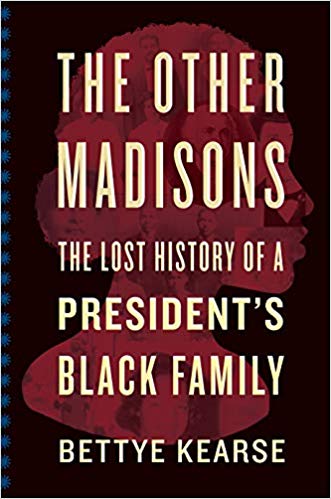
The Other Madisons: The Lost History of a President’s Black Family by Bettye Kearse

A descendant of enslaved Africans and a president tells her family’s story with pain and dignity.


Bettye Kearse grew up hearing a line of advice that had been handed down in her family through generations: “Always remember–you’re a Madison. You come from African slaves and a president.” In The Other Madisons: The Lost History of a President’s Black Family, she works to explore this statement and its implications for her life.

West African griots (masculine) and griottes (feminine) have, for many centuries, been caretakers of the oral traditions of their families and communities. It is a role that is passed down and serves an important function in, for example, enslaved families, where literacy was illegal and “even their pockets were not their own.” Bettye’s mother was the seventh griotte in her family, tracing back to a girl who was kidnapped from what is now Ghana and renamed Mandy on the shore of Virginia, where she would be treated as a possession of James Madison, Sr., and bear him a daughter. As this book opens, Bettye’s mother delivers to her the box of records and memorabilia that generations of “Other Madisons” have compiled. This spurs the author on her own path to become a griotte, to retell the story of her family.

The Other Madisons includes a family tree documenting Kearse’s links back to Mandy and to the Maddisons (with two Ds), then Madison, Sr., whose son James Madison, Jr. would be a U.S. president. Her family has long felt proud of the Madison name, but for Kearse, the connection is a reminder of rape.

Kearse’s research, and that of the griots who came before her, is impressive. In search of deep truths, she travels from her home in Boston to Ghana, Nigeria, Portugal, New York City and Madison’s plantation in Virginia, walking in her ancestors’ footprints and grasping ever more deeply the magnitude of the tragedy of slavery. While there is surprisingly solid evidence (slave records being notoriously poor) to support much of the lineage back to Mandy, Kearse is unable to prove a genetic link to James Madison. She accepts this, but it doesn’t change her sense of the relationship. For a family that relies on the griotte‘s oral history to know its own past, the oral history’s confirmation of the Madison connection is enough.

The Other Madisons, as a thorough history of one family, may offer answers for other descendants of enslaved people as well. It is part personal quest, as Kearse works to understand and reconcile her own origins, and a carefully researched and documented correction to the American historical record.


This review originally ran in the March 3, 2020 issue of Shelf Awareness for the Book Trade. To subscribe, click here.


Rating: 7 steps.