Maximum Shelf: The World’s Strongest Librarian by Josh Hanagarne

Maximum Shelf is the weekly Shelf Awareness feature focusing on an upcoming title we love and believe will be a great handselling opportunity for booksellers everywhere. The features are written by our editors and reviewers and the publisher has helped support the issue.

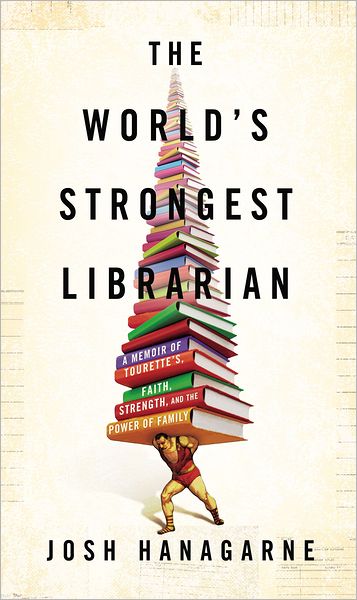
My editor recently asked me if I’d like to put together my first Maximum Shelf for them, and said she had just the book in mind for me: The World’s Strongest Librarian: A Memoir of Tourette’s, Faith, Strength, and the Power of Family, by Josh Hanagarne. (My father found this a hilarious expression of what my editor thinks of me. I’ll let you work that one out. I haven’t.) I was thrilled; and I loved the book. Because this would make for an extra long blog post, I’ve split the Max Shelf issue into two posts for you, so please enjoy my review today and my interview with the gracious & funny Josh tomorrow.

worldsstrongest

Josh Hanagarne, blogger at The World’s Strongest Librarian, “might be the only person whose first three-hundred-pound bench press was accompanied by the Recorded Books production of Don Quixote.” This is just one of his remarkable singularities. A gentle giant who tears phone books for fun, at 6’7″ he tends to catch the eye at the Salt Lake City Public Library, even when his Tourette Syndrome is not acting up. His memoir explores these contradictions and oddities, and his remarkable journey from idyllic childhood to painfully jerky young adulthood to a contented family and work life.

Hanagarne had a happy childhood, beloved by his mother, an incorrigible prankster and devout Mormon, and his devoted, irreverent bear of a father. He grew up in libraries, a passionate bookworm disturbed only by the tics that began in first grade but would go undiagnosed until high school (although his father suspected Tourette’s from the beginning). By young adulthood, they were not only embarrassing but violent and debilitating. He would eventually suffer a hernia from the force of his involuntary shouting tics, and his larger movements resulted in injury to himself and chaos in his immediate surroundings. After high school he spent years trying numerous cures, in and out of college, working various jobs and struggling with depression. Lifting weights at the gym stilled the tics somewhat, and for a while he got regular Botox injections in his vocal cords to quiet the shouts and whoops. During that time he met and married a lovely Mormon folklorist named Janette. For the first eight months of marriage, he couldn’t speak to her above a whisper.

Although deeply in love, the atmosphere of Josh and Janette’s story early in their marriage remains clouded. For years they try to get pregnant. Janette suffers two miscarriages and they are harshly rejected by the Mormon Church as adoptive parents. Josh continues to tussle with Tourette’s. For a short time, he finds a position as assistant special educator quite satisfying, not least because his tics become unremarkable in a room full of special needs. But he soon leaves that job, because he seeks challenge: crucially, he aspires to overcome Tourette’s, to beat his tics into submission. Pondering what might present the greatest challenge to a man who can’t keep quiet, Josh is drawn to the quietest place he knows, a place that has always offered succor and delight. He gets a job as a clerk in the library and begins a master’s program in library science. And a key piece of marital bliss is finally achieved when Janette delivers a healthy baby boy named Max.

Josh continues to battle Tourette’s in the gym, discovers kettlebell lifting along the way, and makes a new friend in Adam Glass, a former Air Force tech sergeant and strongman: he bends wrenches and horseshoes and tears decks of cards and phone books. Josh’s story takes an inspiring turn as the twitchy librarian and the foul-mouthed strongman gradually develop a friendship; as Adam helps Josh build strength, together they also begin to understand and subdue the tics. He finds Adam a little strange, and the explanation for his social awkwardness is also what makes him the perfect mentor for overcoming Tourette’s: Adam is autistic.

The adult Josh Hanagarne who relates his story is content and stable, happily married, thrilled to be a father to four-year-old Max, and working full-time at the Salt Lake City Public Library. As he relates his stranger-than-fiction story, he intersperses present-day anecdotes from a workplace that he wryly notes is rife with strange and occasionally smelly patrons and events. He muses eloquently and powerfully about the role of libraries in society, and their future possibilities. Throughout his life and this book, Josh struggles with his Mormon faith, as he sets off on the expected mission and faces myriad challenges in school, work, marriage and parenthood. In telling a story about family, church and Tourette Syndrome, he always circles back to libraries and to books, in many charming literary references. And always central to Josh’s story is his love of family. From his loving parents and exceptionally close siblings through the clear delight Josh finds in marriage and fatherhood, he stresses the inestimable gift of a loving family.

Josh’s memoir is thoughtful, heartfelt, often hilarious– and unsparingly honest. He is not proud of every moment in his own past, but he shares nonetheless. The image of the man today who wrote this book and who works in a large branch of a public library in a large city is that of a serious yet funny, mature, loving family man, and this image is only partly at odds with the earlier, less secure young man we come to know in these pages. The younger Josh was unsure and unstable, and the author is more comfortable in his own skin. But both have tics, and stories to tell.


This review originally ran on April 9, 2013 as a Shelf Awareness special issue. To subscribe, click here, and you’ll receive two issues per week of book reviews and other bookish fun!


Rating: 9 minutes of calm.

Tomorrow: I interview The World’s Strongest Librarian.

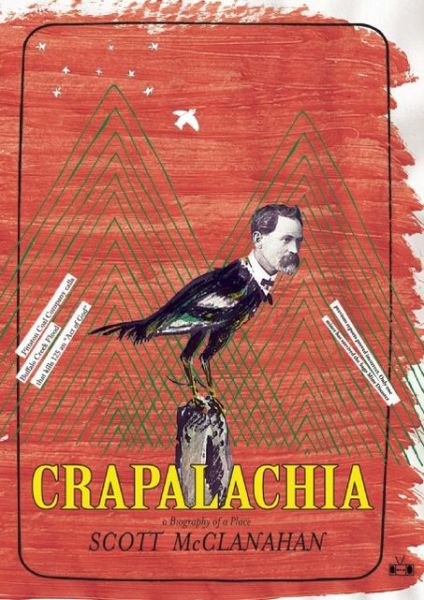
Crapalachia: A Biography of a Place by Scott McClanahan

The author of Stories and its followups, Stories II and Stories V!, shares a memoir of Appalachian boyhood filled with the requisite hardships but ultimately redemptive.

crapalachia

Scott McClanahan centers Crapalachia on two characters of his West Virginia youth who rule over much of the narrative–his Grandma Ruby, an ornery, fantastical mother of 13 (or so) children who also photographed dead people, and his uncle Nathan, who had cerebral palsy and enjoyed listening to the radio preacher and having six-packs of beer poured down his feeding tube. We also meet his schoolboy friends, like Little Bill, an eventual roommate with obsessive-compulsive disorder and a destructive crush on a girl down the street.

Crapalachia is an unusual story told in an unusual fashion, peppered with second-person references, advice to the reader on how to live, how to remember and forget. The attentive reader will also appreciate McClanahan’s “Appendix and Notes” for its revelation of where he’s twisted the truth (as he remembers it) to suit the story he wanted to tell. Like many memoirists, McClanahan is concerned with the nature of memory, its credibility and value. He sometimes gets mired in the unpleasant, cringeworthy details of life, then pans out for grand, loving, hopeful statements. This is a gritty look at life–in Appalachia, yes, but also in a universal sense. Historical detail turns what looked to be a memoir of childhood into the subtitle’s promised “biography of a place.” In the end, despite various tragedies, this poetic, rambling series of remembrances is surprisingly optimistic.


This review originally ran in the March 26, 2013 issue of Shelf Awareness for Readers. To subscribe, click here, and you’ll receive two issues per week of book reviews and other bookish fun!


Rating: 6 gallstones.

book beginnings on Friday: The World’s Strongest Librarian by Josh Hanagarne

Thanks to Rose City Reader for hosting this meme. To participate, share the first line or two of the book you are currently reading and, if you feel so moved, let us know what your first impressions were based on that first line.

worldsstrongest

I have discovered a strange and wonderful new book: a memoir by a Mormon strongman librarian with Tourette’s Syndrome.

Today the library was hot, humid, and smelly. It was like working inside a giant pair of glass underpants without any leg holes to escape through. The building moved. It breathed. It seethed with bodies and thoughts moving in and out of people’s heads. Mostly out.

To me, this beginning establishes the author’s voice, which will be evocative as well as irreverent. One of Hanagarne’s strengths is that he communicates often serious content with a wry twist that sometimes had me giggle out loud. Aside from which, the opening setting of this book is a library, and I am a sucker for that, as I bet are some of you.

I’m sorry to tell you that this book won’t be out until May! But be sure to look out for it then.

This quotation comes from an uncorrected advance proof and is subject to change.

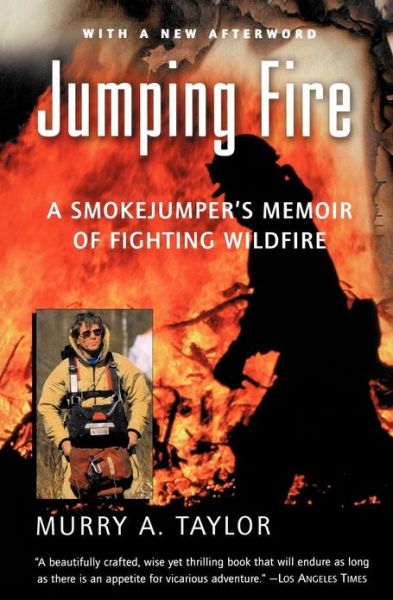
Jumping Fire: A Smokejumper’s Memoir of Fighting Wildfire by Murray A. Taylor

jumpingfire

I was not aware of smokejumping as a career until I read Phil Connors’s Fire Season a few years ago, but I was fascinated. Further, when I read Sebastian Junger’s The Perfect Storm in 2012, I learned (in the author’s interview at the end of my audio edition) that he had originally conceived a book that would contain chapters on each of a number of highly hazardous jobs. These were to include smokejumpers as well as the swordfishermen that ended up starring in his highly regarded book.

I believe it was my friend Don who recommended this book when I raved about Fire Season. [Thanks, Don!] Jumping Fire is a memoir by the oldest smokejumper ever to work the job (at least when this book is published – I cannot swear that his record still holds, but it seems to). As the name indicates, smokejumpers are wilderness firefighters who reach their dangerous destinations in dangerous fashion: parachuting out of aircraft adapted for the purpose. Taylor was 56 when he retired after an especially hot season in 2000.

I took one overwhelming early impression from this book: these smokejumpers are crazy! We’re talking about people jumping out of airplanes into forest fires! The ways in which they can die or be maimed are myriad on their way to the ground; and assuming they get there safely, they then have to fight a forest fire and, sometimes, hike back out again. Frequently they remain onsite for days, sometimes weeks, fighting fires around the clock on very little sleep and often with few rations (food & water have to be parachuted in, as well). They breathe smoke, suffer burns, dodge falling flaming trees, steer around rocks and trees and rivers upon their descents from the clouds. On the other hand, when not jumping or fighting fires, there’s a lot of waiting: “Bob Quillin [a fellow smokejumper] once described smokejumping as ‘prolonged periods of boredom punctuated by moments of stark terror.'” (I found that cute.) On top of which, the training is insane: “former marines who have become smokejumpers all agree that Alaska rookie training is tougher than anything they saw in boot camp.” So they have to really want to do this job. I am awed. I think they are nuts, without question. But it’s nice to know there are men (and women, too) out there willing to do such a crazy job. I can’t understand you, Taylor, but I take my hat off.

Taylor has rather many tales to relate of danger, injury, death and tragedy to relate; I had to close the book several times to stare into space and absorb the difficult moments. By all means, this lip-biting adrenaline rush is one of the admirable qualities of the book. But Taylor is also quite the romantic, and his love affair with a much younger woman occupies a number of pages, while his pining for her occupies still more. The firefighting/jumping remains at center stage, never fear; but there is a thread of wistful romance woven in. One is almost reminded of Abbey’s somewhat unfortunate Black Sun, although I hate to say such a thing. Taylor is rather more tasteful and less fantastic in his love affair, which is after all (if we believe him, and I have no reason not to) real. Page space is also devoted to a certain amount of (very natural) musing on human life and the wisdom of doing this hazardous work, when smokejumpers have wives and children at home who suffer when they are hurt or killed, and as Taylor ages and his knees complain about all those hard contacts with the ground. Or, on the challenges of the job:

Jumpers rarely speak openly about how they handle extreme fatigue, but when they do, they joke about it and claim to be the weakest in the bunch. At such times I just keep my mouth shut. For me, it’s always the same. Beyond the fatigue comes the sorrow and with the sorrow comes the loneliness. At the hour of my greatest exhaustion, I am lonely, emotionally frail, and at a loss to do much about it. No matter who claims to be the weakest, in the deep, dark pit of my soul, I know that it is me.

I found this a poignant consideration of his own weakness; but he also seems to acknowledge the universality of feeling inadequate, which is sort of a comment on humanity. And, of course, there’s no shortage of macho avoidance of such confessions.

Jumping Fire is the story of an absolutely fantastic, absolutely real occupation that very few of us will ever see face to face, and it is exhilarating and fascinating as such. But Taylor is also a fine writer, and contemplations of natural beauty and the tension between seeking comfort and seeking thrill and hardship are a great strength of this book, as well. I found it riveting, enjoyable, and thoughtful – recommended.


Rating: 8 racing hearts.

Real Man Adventures by T Cooper

A dryly witty journey from female to male, with musings on what it means to be a man.

T Cooper, the author of several successful novels (including The Beaufort Diaries and Lipshitz 6), is fascinated by masculinity, perhaps in part because he’s had to work a little harder than the average man to get there: he was born female. Yet even as he explores the essence of masculinity and his own experiences with gender in Real Man Adventures, he expresses some reluctance to delve into the personal.

There is definitely some autobiographical content, but Cooper takes his own privacy seriously, as well as that of his wife and daughters, and is less interested in hashing out the details of his own life than he is in exploring the meaning and role of masculinity in society and the difficulties facing transgender men and women. Real Man Adventures sidesteps the concept of a straightforward memoir, instead compiling a whimsical collection of miscellanea: letters, interviews, lists and original art all help Cooper and his readers explore together what makes a man. This structure works perfectly, and feels like a conversation with Cooper himself.

Deeply honest, even while guarding a few precious items of privacy, Real Man Adventures is a brave book. Cooper does a great service not only to transgender people whose paths might be made a little clearer, but also to their loved ones, neighbors and acquaintances, who should find it a little easier to navigate relationships and communications thanks to this frank discussion. And the irreverent, wry humor throughout keeps Cooper’s brash personality at center stage, where it belongs.


This review originally ran as a *starred review* in the Nov. 27, 2012 issue of Shelf Awareness for Readers. To subscribe, click here, and you’ll receive two issues per week of book reviews and other bookish fun!


Rating: 8 pronouns.

Let’s Pretend This Never Happened by Jenny Lawson (audio)

I was already a fan of The Bloggess, Jenny Lawson’s blog-alias. And her local connection (she’s Texas, with some time logged in a Houston suburb) didn’t hurt, either. Well, now having listened to her book as an audio read by the lovely Jenny herself, I can even more wholeheartedly recommend her to you.

Jenny has a quirky, crass sense of humor: she is fond of the word “vagina” and curses a fair amount. These things do not bother me, but fair warning. She combines that style, however, with an occasional earnestness that is endearing and captivating. This is her “mostly true memoir” (which I think is a great way to speak of memoir, in general! my impression is this one is as “true” as most), and therefore it’s the story of her childhood, growing up, marriage, and family life with husband Victor and daughter Hailey, including moving around the state. One emphasis is the crazy upbringing she experienced in a tiny tiny Texas town with an eccentric taxidermist father (whose idea of a loving welcome is tossing a baby bobcat at her new boyfriend) and long-suffering mother. Another is the mental illness Jenny suffers from, including generalized anxiety disorder and post-traumatic stress. (Disclaimer: I have no print version of this book at hand and am going by memory. But I am fairly confident in my memory.)

Her handling of these subjects is on the one hand hilarious, outlandish, and obscene, and on the other, as mentioned earlier, serious and thoughtful. For someone who suffers fairly debilitating bouts of depression and mental illness, Jenny is surprisingly positive in her interpretation of her own experiences. Presumably her feelings in the moment are often much less cheery; but in the format of this book, where she got to think it through and get it right, her philosophies are refreshing, graceful, helpful, optimistic. She comes across in the end as damaged, yes, but also hopeful, wise, and fun. I want to be her friend. In other words, I give Jenny, her book, and her website my ringing endorsement! Oh, and do check out the audio version if you can. She reads it herself (and sings all the chapter titles), there’s a blooper reel at the end (really just a bunch of off-color ramblings), and I always like to get things in the author’s own voice if possible – in a memoir most of all. In fact, I will pay her the compliment of putting Let’s Pretend This Never Happened up next to Tina Fey’s Bossypants, also read by the author and also hilarious. Go check out Jenny Lawson because she is unique and bizarre in the best possible way.


Rating: 8 self-reflections.

Teaser Tuesdays: Let’s Pretend This Never Happened by Jenny Lawson

Teaser Tuesdays is a weekly bookish meme, hosted by MizB of Should Be Reading. Anyone can play along! Just open your current read to a random page and share a few sentences. Be careful not to include spoilers!

So after quitting on Gold, I am enthused and relieved to be listening to Jenny Lawson’s “mostly true memoir” (probably a great, and safe, description of many memoirs), Let’s Pretend This Never Happened. You may know Jenny better as the Bloggess. She’s hilarious.

My father lifted the large bird off of the hood with more than a little exertion and tucked him under his arm, saying, with a surprising amount of dignity for a man with a turkey under his arm, “Sir, this bird is a quail, and his name is Jenkins.”

I confess I chose this teaser not only for its bizarre quality which so perfectly represents this book as a whole, but for the name Jenkins, which happens to be Husband’s name as well, making this whole chapter (entitled “Jenkins, You Motherf*ker”) extra funny to me personally.

I recommend Jenny’s work (blog and book) because although it’s bizarre and hilarious, it also has a serious message to impart. More to come in my review, soon.

book beginnings on Friday: Real Man Adventures by T Cooper

Thanks to Rose City Reader for hosting this meme. To participate, share the first line or two of the book you are currently reading and, if you feel so moved, let us know what your first impressions were based on that first line.

This book begins with an appropriate quotation, and I’m going to share that with you as well as the beginning of Cooper’s writing.

“It goes a long way back, some twenty years. All my life I had been looking for something, and everywhere I turned someone tried to tell me what it was. I accepted their answers too, thought they were often in contradiction and even self-contradictory.” –Ralph Ellison, Invisible Man

I am a visible man. By all appearances white, middle-class, heterosexual. Male.

I like the parallel drawn, and the contrast noted, to Ellison’s work. I haven’t read Invisible Man, but I’d like to. (It fits into a recent reading pattern of mine. And I’ve finally worked out Ellison’s Invisible Man vs. H.G. Wells’s, whew.) I think the essence of this book is well foreshadowed in those brief words of Cooper’s, too.

What are you reading this week?

This quotation comes from an uncorrected advance proof and is subject to change.

Before the Rain by Luisita Lopez Torregrosa

An impassioned memoir of love between two journalists, set amid travel and revolution.


Luisita López Torregrosa (The Noise of Infinite Longing) is a New York newspaper editor when Elizabeth comes aboard as a new reporter in the 1980s. Her quiet, self-contained, slightly mysterious air draws Luisita’s attention. When Elizabeth lands a sought-after position as foreign correspondent, she builds a home for herself in Manila. Luisita joins her there, and the two women throw themselves hesitatingly and then wholeheartedly into a passionate affair against the backdrop of the fall of Ferdinand Marcos.

As a love story, Before the Rain is spellbinding and heartwrenching, but Torregrosa’s highest feat is perhaps one of poetry. Her tone is haunting, lyrical and sensuous. Readers will feel the equatorial heat of the Philippines and the beat of the Manila Blues, smell the mangoes and squatters’ camps, taste the margaritas and then feel the biting cold of New York winters as the story returns to the United States.

Before the Rain is a memoir of revolution as well as love: the beauty, upheaval and political turmoil of the Philippines are handled sensitively and lovingly. Besides Manila, Luisita and Elizabeth live and travel in New York, Tokyo, Los Angeles, Miami, Rio and Washington, D.C.– and each of these places leaves its mark. But their relationship is always the book’s main focus. The two women travel, move, work various jobs (some rewarding, some soul-draining); and throughout, their ardor has a momentum all its own. Even in its painful finale, that love is this book’s most lovely evocation.


This review originally ran in the August 10, 2012 issue of Shelf Awareness for Readers. To subscribe, click here, and you’ll receive two issues per week of book reviews and other bookish fun!


Rating: 8 sheets of newsprint.

Racing Through the Dark by David Millar

The unexpectedly inspirational story of a pro cyclist’s “clean” return to the sport after doping.


David Millar was an avid bicycle road racer in his teens, and after he turned pro at age 22, he raced in all the big European events, including the Tour de France, where he wore the yellow leader’s jersey. He resisted doping for years, but not forever; he was eventually busted for the illegal use of performance-enhancing drugs. His story was, perhaps, not highly remarkable in a sport already ridden with doping scandals, but it became noteworthy when he spoke out about his experiences, took a strong anti-doping stand and returned to the sport as a high-profile–and still highly accomplished–“clean” racer. Racing Through the Dark is his story.

Millar’s memoir begins in childhood and follows through rocky years on the pro circuit, the painful decision to dope after abstaining for years, the details of his bust and the raging alcoholic haze of his ban before returning to the sport. It includes anecdotes featuring many of pro cycling’s biggest names, including Mark Cavendish, Stuart O’Grady and Lance Armstrong. Millar’s voice is appealingly open and artless. He takes full responsibility for his poor decisions even as he criticizes pro cycling’s traditional code of silence that overlooks or condones widespread use of illegal drugs. While Millar excoriates the culture of doping, he doesn’t use it as an excuse. He comes across in the end as a surprisingly honorable figure, whose continuing professional career offers a final theme of redemption.


This review originally ran in the July 3, 2012 issue of Shelf Awareness for Readers. To subscribe, click here, and you’ll receive two issues per week of book reviews and other bookish fun!


Rating: 5 skinny tires.