book beginnings on Friday: The Owl Who Liked Sitting on Caesar by Martin Windrow

Thanks to Rose City Reader for hosting this meme. To participate, share the first line or two of the book you are currently reading and, if you feel so moved, let us know what your first impressions were based on that first line.

owl

This book is as thoroughly delightful as the title implies. I’m only a few pages in, but I’m hooked. Check this out.

Shaving is tricky with an owl on your shoulder.

When I am working on the right side of my throat, Mumble tends to make darting, snake-like passes with her beak at the handle of the razor as it reaches the top of each stroke.

Windrow goes on to note that he has tried to shift Mumble to his left shoulder while he shaves his right side, but she is no more a morning person than he is; they are both reluctant to try new things at such an hour.

Subtitled “Living With a Tawny Owl,” The Owl Who Liked Sitting on Caesar (a bust of Caesar, that is) is absolutely charming so far. I think I’m going to recommend this one.

This quotation comes from an uncorrected advance proof and is subject to change.

Have You Seen Marie? by Sandra Cisneros (audio)

marieWhat a lovely, lovely book. Fans of Sandra Cisneros, don’t be put off by the sometimes-classification of this short fable as a children’s book. Cisneros says in an afterword that she certainly never thought of it that way; she intended it for adults, and I can confirm that it works that way, very well.

This is a short, dreamy, poetic tale of a woman, the narrator, who has just lost her mother; a visiting friend (“I was the only person Rosalind knew in all of Texas”) has lost her cat, Marie. Together, the two women go walking the streets of San Antonio, distributing fliers and asking folks the title question: Have you seen Marie?

The voice and rhythms and lyrical style that I remember from The House on Mango Street are vibrantly present here. The women ask dogs, cats and squirrels as well as people about the missing Marie, and their reactions are noted, and charmingly represented as being every bit as important as the people’s. On the surface, this is the story of searching for Marie; but it is also the story of Cisneros losing her beloved mother, feeling like an orphan in her own middle age, and gradually coming to understand that “love does not die.”

As I mentioned, Cisneros is careful to point out that this was not meant to be a story for children, but rather one for adults, with the idea of helping others like herself deal with experiences like hers: losing a parent, or a loved one. I am very (very) glad & relieved that I don’t seem to facing this experience now, or soon; but I imagine that this book would indeed help. I appreciate its soothing musical tone and gently loving, inspired advice and creative understanding of death, what it means, the grieving process. It is a tender tale. Cisneros is inventive and calming and this is a beautiful, moving story about family and friendship. I highly recommend it, for anyone.

This audio version is read by the author, and so beautifully; I love her lilt; it’s perfect. I want to very much recommend this version (in both English and Spanish in one edition – one cd of each). But then, the print copy is illustrated by Ester Hernandez, and Cisneros is clearly very pleased with that aspect. Hearing her speak about their collaborative efforts on the illustrations (Hernandez came to visit & tour Cisneros’s San Antonio; she calls it documentary-style) made me regret missing the print. So there you are. Both, perhaps?? I think I will go out and get myself a copy of the book, too.


Rating: 10 trees along the San Antonio River.

book beginnings on Friday: Have You Seen Marie? by Sandra Cisneros

Thanks to Rose City Reader for hosting this meme. To participate, share the first line or two of the book you are currently reading and, if you feel so moved, let us know what your first impressions were based on that first line.

marie

I cannot say enough nice things about this short piece of beauty by Sandra Cisneros. It begins:

The day Marie and Rosalind arrived on a visit from Tacoma was the day Marie ran off. It had taken three days of driving to get to San Antonio, and Marie had cried the whole way.

You will be captivated. Do check it out.

A Walk in the Woods by Bill Bryson (audio)

In A Walk in the Woods, Bill Bryson describes his experience on the Appalachian Trail. He and his family had just moved to New Hampshire and he discovered the trail almost literally in his back yard, and decided, what the heck? he’d try walking it. At the last minute, an old friend agrees to join him, to his relief (now he won’t be alone out there with the bears); this old friend turns out to be overweight, a smoker, recently sober, and in no shape for such a lengthy walk in the woods, but they set off nevertheless, beginning to walk the AT in Georgia and headed for Maine.

a walk in the woodsOh, Bill Bryson, you funny, infuriating man. I have had a love-hate relationship, as they say, with this book. Bryson is very amusing, and this is his strongest suit; at his best, he had me giggling aloud on the train during my commute, which I try not to do because that’s weird, right? But he can be downright annoying as well. I’m not sure what he conceives this book actually is; amusing memoir? (For which, grade B+, at least.) Nature tale? (C-, on which more in a moment.) Camping satire? (Please stop.) His ineptitude at the outdoorsiness might be funny to somebody, but I just find it obnoxious and …well, kind of stupid. On the other hand, he hiked the Appalachian Trail for months, you guys, completing nearly 900 miles of it, and I have to respect that, as I’ve never done any such thing. But with such an opportunity to tell us about the AT, he spends a great deal of time telling us what poorly prepared rookie campers he and his friend Katz are; the trail itself is often just background, if even that. The book was 1/3 through before he even mentions a view, let alone describes one; and precious few times from then on. In fact, I think I’ve answered my question: Bryson conceives of this book as an amusing memoir, and the fact that it takes place on the AT is mere coincidence and in no way important to the story he has to tell.

When he rails against our destruction of natural areas and our Park Service’s poor management of those lands, he does a fine job, and I both learned something and enjoyed the polemic; but then he pulls punches, as when writing about tree diseases:

A great tragedy, of course. But how lucky, when you think about it, that these diseases are are least species-specific. Instead of a chestnut blight, or Dutch elm disease, or dogwood anthracnose, what if there was just a tree blight? Something indiscriminate and unstoppable, that swept through whole forests? In fact, there is. It’s called… acid rain.

No, Bryson, it’s called people! Call a spade a spade! Sigh.

Later in the book, when Bryson and Katz (the brunt of all the best jokes) part company temporarily, Bryson shifts focus a bit toward the history of the AT and gets less jokey. I appreciate this content, but it lacks the sparkle of his more humorous writing. In other words, I felt that A Walk in the Woods struggled throughout with an identity crisis.

The audio edition is good, I’ll say that without qualification. William Roberts’s reading is hilarious, and suits Bryson’s writing voice well. The book is absolutely at its best when describing Bryson & Katz’s mishaps on the trail, and only mildly interesting (for those interested in such things) when it leaves their narrative to wander the AT on a more intellectual level. One final pet peeve: as far as I can understand, Katz and Bryson do a lot of littering. Katz repeatedly handles the frustration of his heavy pack by dumping gear, and I don’t think there are garbage cans out in the woods. (I hope not.) There are a cigarette pack and three butts discarded by Katz at an important point. This makes me ANGRY. Littering on the AT?!

Representative quotation:

I had come to realize that I didn’t have any feelings towards the AT that weren’t confused and contradictory.

Me too, Bryson.


Rating: 5 cream sodas.

I wasn’t sure whether to go with 4 or 5; but I did finish the book, so there’s that.

The Empathy Exams by Leslie Jamison

An essay collection that earnestly examines feelings–the author’s and the world’s.

empathy

Leslie Jamison follows her debut novel, The Gin Closet, with an essay collection that has earned her the Graywolf Press Nonfiction Prize. The Empathy Exams opens with Jamison’s experience as a medical actor. In this role, she is given a character, complete with props and not only symptoms, but behaviors: body language, failure to make eye contact, dishonesty. In portraying deception, or a pretended lack of self-knowledge, Jamison contemplates what it is to feel, how we communicate what we feel and what we do with these communications.

While all her essays are linked by the topic of empathy, their subjects range widely. One essay about incarceration deals with a man serving time for mortgage fraud who continues to declare his innocence; another covers the case of the West Memphis Three and the documentaries about them that so moved Jamison as a young woman. “Morphology of the Hit” studies Vladimir Propp’s Morphology of the Folktale, which Jamison calls “a map for storytelling,” and she uses that map to construct a narrative of the random act of violence she experienced in Nicaragua.

Within the context of pain, both injury and chronic illness receive repeated treatment. The Barkley Marathon, a grueling, almost unfinishable race through Frozen Head State Park in Tennessee, is presented both as a subcultural phenomenon and a subtext for pain. Jamison attends a conference for Morgellons patients–who believe they are infested with fibers and foreign matter crawling out of their skin–and the few doctors who will take them seriously; she finds herself responding with such empathy that she is in danger of catching the disease herself. She also leads readers on two “Pain Tours,” closing with the specter of female pain, and female guilt over pain–making the studied choice to apologize for neither.

Throughout these varied topics, Jamison makes references to many thinkers and influences, from Lucy Grealy (Autobiography of a Face), Susan Sontag and Frida Kahlo to her own friends. Her essays often dwell in the theoretical and the academic; she is interested in philosophies, and admits to difficulty experiencing, recognizing and sharing her own emotions–a difficulty that occasionally manifests in pedagogy. However, readers will finish with no doubt she is sincere in her quest to own, identify and comprehend empathy.


This review originally ran in the April 3, 2014 issue of Shelf Awareness for the Book Trade. To subscribe, click here.


Rating: 4 itchy patches.

Not a great rating, right? Reminder: when I write reviews for the Shelf I work to (mostly objectively) state what is of high quality about a book, and who might like it and why; if applicable, I mention who might want to steer clear. When I rate the books here, I am stating my personal reaction. I think Jamison did good research & does some good writing; but the academic & theoretical nature of these essays didn’t appeal to me. I was hoping for a more emotional reaction to the world; and specifically I was interested in the medical acting concept, which received relatively little play time. I wonder if *I* have an essay to write about empathy, based on my experiences working in a cancer hospital. I don’t know that I’m ready to write it right now; but if/when I do, it will be more emotional and less cerebral than these essays here. Not better or worse; but this is how my personal reaction – the personal appeal this book had for me – rates The Empathy Exams.

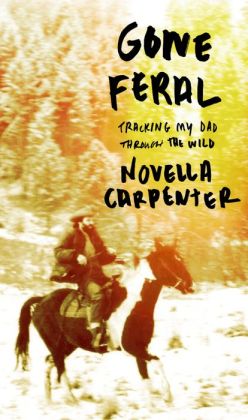
book beginnings on Friday: Gone Feral: Tracking My Dad Through the Wild by Novella Carpenter

Thanks to Rose City Reader for hosting this meme. To participate, share the first line or two of the book you are currently reading and, if you feel so moved, let us know what your first impressions were based on that first line.

gone feral

Novella Carpenter’s Gone Feral tells the story of seeking a relationship with her mostly-estranged father, who prefers the outdoors to the city. It begins:

My dad officially went missing on October 17, 2009.

The morning I found out, I woke up to the hum of traffic from Interstate 980 harmonizing with the nickering of milk goats at my back stairs.

She managed to sneak right in there her own preferred ratio of city-to-outdoors: she has an “urban farm” in Oakland. Not a bad beginning, I think.

This quotation comes from an uncorrected advance proof and is subject to change.

Teaser Tuesdays: A Walk in the Woods by Bill Bryson

Teaser Tuesdays is a weekly bookish meme, hosted by MizB of Should Be Reading.

a walk in the woods

My limited experience with Bill Bryson has been positive; he’s a funny man. And a story of hiking the Appalachian Trail sounds appealing. So here we are with Bryson’s A Walk in the Woods. I must say, though, he does go out unprepared! For example, on waking up his first morning out on the trail:

It seemed very strange, very novel, to be standing outdoors in long johns.

Please tell me he had CAMPED before setting out on this adventure?! He did an awful lot of reading & purchasing, both of which are fine things to do in preparation for a new adventure, but I would also have advised some hiking and camping beforehand as well… we shall see.

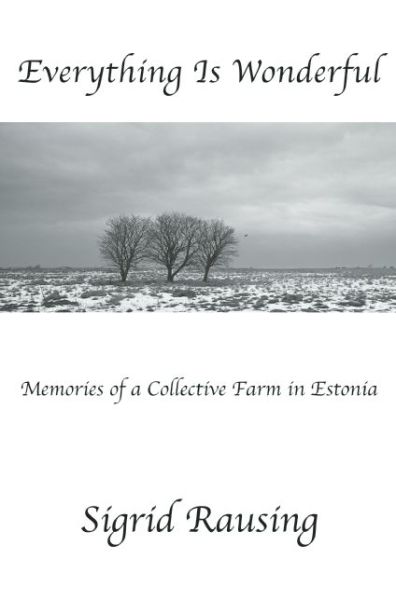
Everything is Wonderful: Memories of a Collective Farm in Estonia by Sigrid Rausing

The personal side of an anthropologist’s year in post-Soviet Estonia.

wonderful

Sigrid Rausing spent a year on a collective farm on the west coast of Estonia in the mid-1990s, doing fieldwork for her Ph.D. in social anthropology. Her time there yielded an academic book, History, Memory, and Identity in Post-Soviet Estonia: The End of a Collective Farm. “Much as [that book] excluded the personal,” she writes, “this book excludes the academic.” Everything Is Wonderful contains Rausing’s remembrances, after nearly 20 years, of time spent in an unusual cultural landscape and the questions that remain with her.

The tone of this slim memoir is quiet and unobtrusive; engaging in participation observation is the anthropologist’s aim. Rausing contemplates the legacies of the Soviet Union in Estonia as a country and a culture, and in the village she lived in. As a parallel, she considers her own cultural identity as a Swede living in England who finds herself at home in a place where Estonian Swedes once made up a sizable and powerful minority, before the Nazis sent them to Sweden in a “perhaps overly collaborative” evacuation.

Rausing’s subjects include the everyday tedium and alcoholism of a small village in a deeply depressed region; they include dream interpretations, and loving descriptions of natural settings, despite the monochromatic winter that occupies most of the year. Interactions with her neighbors and friends are rendered with an eye for irony. Yet for all its bleak detail, Rausing’s work resonates with nostalgia as well. “I was tired, and often hungry,” she recalls, “but even now, twenty years later, I miss those long quiet walks in that melancholy and restful landscape.”


This review originally ran in the March 7, 2014 issue of Shelf Awareness for Readers. To subscribe, click here, and you’ll receive two issues per week of book reviews and other bookish fun!


Rating: 7 “cocktails.”

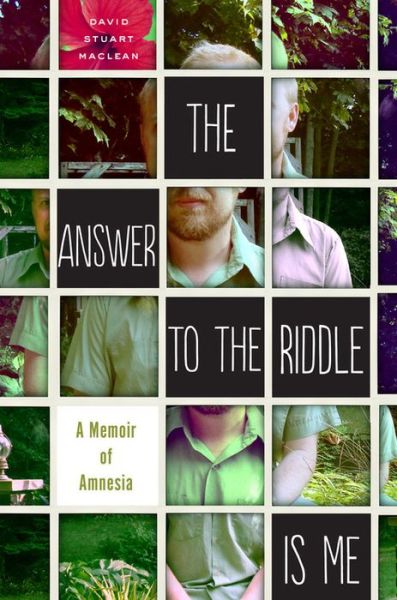
The Answer to the Riddle Is Me: A Memoir of Amnesia by David Stuart MacLean

A memoir from within the mind of an amnesiac, in full terrifying color.

riddle
In the opening scene of The Answer to the Riddle Is Me, David Stuart Maclean “wakes up” in a standing position, in a train station, in a place where English is clearly not the first language. He doesn’t know who he is, where he is or where he was going. A friendly policeman tells him that many tourists there do too many drugs and end up confused; Maclean concludes that he is a drug user and follows as he is told.

This scene is only the beginning of the enormous world of what Maclean can’t remember, and assumptions he’ll be led to make that will often turn out to be false. He was living alone in India on a government grant to aid his work as a novelist when an antimalarial drug he was taking overcame the blood-brain barrier and wreaked havoc. The Answer to the Riddle Is Me is Maclean’s story of amnesia and recovery, with all the false starts, depression, despair and small victories that come with such a trauma. Maclean often wishes himself back in a hospital where he’ll be spoon-fed and his decisions will be made for him, but he slowly, eventually resurfaces.

This heartfelt and painfully candid memoir tracks Maclean in real time, in fractured scenes and then in measured, purposeful steps, and comes with research into the medical issues involved. Readers will be mesmerized by the effort, and perhaps feel as rejuvenated in the end as Maclean does.


This review originally ran in the February 11, 2014 issue of Shelf Awareness for Readers. To subscribe, click here, and you’ll receive two issues per week of book reviews and other bookish fun!


Rating: 7 faces.

Teaser Tuesdays: Everything Is Wonderful by Sigrid Rausing

Teaser Tuesdays is a weekly bookish meme, hosted by MizB of Should Be Reading.

wonderful

Everything Is Wonderful is a most interesting slim memoir. From a distance of decades, Sigrid Rausing reviews the year she spent on a collective farm in Estonia, shortly after the Soviet Union pulled out of the country (in name, at least).

Rausing’s writing style is austere, quiet, contemplative, and poetic all at once.

I was tired, and often hungry, but even now, twenty years later, I miss those long quiet walks in that melancholy and restful landscape.

I am finding this quite a unique read.

This quotation comes from an uncorrected advance proof and is subject to change.