Alex Haley: And the Books That Changed a Nation by Robert J. Norrell

History and literary criticism enrich the first biography of Alex Haley, author of Roots and Malcolm X’s Autobiography.

alex haley

Alex Haley wrote The Autobiography of Malcolm X (as told to him), and Roots, the story of his family from Africa through slavery and the Civil War. Separately, these books had a profound impact on how the United States viewed race relations and its own history. Together, their influence could hardly be overstated, and that is what Robert J. Norrell argues in Alex Haley: And the Books That Changed a Nation, the first biography of Haley and a study of his two seminal works and the controversies they fostered.

Norrell covers Haley’s forebears and Tennessee childhood, his three marriages and a writing career growing from the Coast Guard (where ghost-writing personal letters led to public relations assignments) to magazine work, which led to his interviewing Malcolm X for Reader’s Digest and Playboy. The process for Malcolm’s Autobiography (1965) was dynamic, as Haley walked the fine line between Malcolm’s voice and Haley’s more moderate political position, and as Malcolm’s views on race relations evolved. The Pulitzer Prize-winning Roots (1976) was even harder won, as Haley drew a short book contract out over more than 11 years of research and travel. The effect of the book, and its accompanying television miniseries, was astounding. And yet the rest of his life and work would be shadowed by accusations of copyright infringements and invention in what Haley called a work of nonfiction.

With sensitivity and careful study, Norrell examines Haley’s embattled life and extraordinary achievements. His final conclusion about this “likeable narcissist” is that despite Haley’s imperfections, his influence was prodigious and deserves our respect and continued study today.


This review originally ran in the December 18, 2015 issue of Shelf Awareness for Readers. To subscribe, click here, and you’ll receive two issues per week of book reviews and other bookish fun!


Rating: 7 pieces of gossip.

Norman Maclean (American Author Series), edited by Ron McFarland and Hugh Nichols

norman macleanI believe Norman Maclean is the finest writer I know of. This book helped me to recall & develop that idea. It is one of the best books I’ve read this year, and highly recommended, but with one qualification: I advice any reader to start with Maclean’s masterpieces, A River Runs Through It and Other Stories and Young Men and Fire. This collection makes sense with those works as background, and most appeals to readers whose appreciation has been developed by enjoying them.

Norman Maclean includes 10 short pieces by Maclean himself (essays, and texts of talks given), two “interviews” (one really a profile piece), and 7 critical essays about his work. Maclean is as good as ever. As I said when I read The Norman Maclean Reader, “Retrievers Good and Bad” is still a delight. I liked his discussions of his own work, which a person might find slightly self-congratulatory if we weren’t talking about A River Runs Through It, a story entirely deserving of all praise. His comments about college students – how they seem to want to be coddled, but really need their professors to be tough with them – sound absolutely contemporary today. His favorite phrases begin to echo in refrain as I read (& sometimes reread) his collected works; but they do not lessen by repetition. As driven home in some of the writings about his writing, Maclean’s art was meticulous on every level, including (as he points out himself) in the rhythms of his language. “Teaching and Storytelling” is a real gem; I loved the extended metaphor coming from his youth, “playing games with garbage cans, although in the morning they have to be fished out of the creek.”

And then I got to the section of “essays in appreciation and criticism,” and confess I sighed a moment, because Maclean’s voice would now be silent and others would speak; but the first essay was by Wallace Stegner, and if someone has to follow Maclean it should be Stegner. Actually, that is to skip over Pete Dexter’s preceding essay, “The Old Man and the River,” which is the one I mentioned, listed under interviews but really more of a personal profile piece, and is lovely: it captures the feeling of admiration that I feel in a tone of some humor, and evokes Maclean perhaps more even than his own voice does. This is Maclean the man, which is often a little less visible when Maclean the writer is present, even though so much of his writing is autobiographical.

Some of the critical essays approach from the decidedly academic side, and these were sometimes a little dry and effortful reading, but they also enlightened me and expanded my appreciation. Both of these points are true, for example, of Harold P. Simonson’s essay “Norman Maclean’s Big Two-Hearted River”, which examines A River Runs Through It in theological terms – a very rational lens, and one invited by Maclean, but not one I was well-prepared for, so I had a lot to learn.

It occurred to me on this reading of Maclean that one thing that distinguishes him from other extraordinary writers like Hemingway is that he refuses to be cynical. He can be humorous, but not cynical; he retains a sense of wonder and awe that Hemingway, for example, did not always manage to retain. (Contrast the narrator of A River Runs Through It with Jake’s answer to Lady Brett Ashley, “Isn’t it pretty to think so.”) I have thought before, in other contexts, that we often confuse an absence of cynicism with a lack of sophistication, but that this is sometimes a mistake. There is much made throughout this lovely collection of the beautiful, the sublime, and of grace. Maclean writes of a “slowness of movement that turned out not to be slowness but the shortest distance between two points, which is one definition of grace.” For me, another definition will be his continuing sense of wonder.

Norman Maclean is a new favorite, and will certainly be one of the best of this year. Again, please take my recommendation with the understanding that you should read his two masterpieces first, before continuing to appreciate him here.


Rating: 10 timeless raindrops.

Teaser Tuesdays: Norman Maclean, edited by Ron McFarland and Hugh Nichols

Teaser Tuesdays is a weekly bookish meme, hosted by MizB of Should Be Reading.

Returning to Norman Maclean has been an epiphany, all over again: his writing may well be perfect. I’m not sure I’ve read anyone better.

norman maclean

This edition in the “American Author Series” includes essays by Maclean (some developed from talks he gave), two interviews with him, and essays in appreciation and criticism of his work. There are no sizable excerpts from A River Runs Through It or its accompanying stories, because as the editors rightfully point out, we already have access to those; their goal here (among others) is to bring us Maclean works that are less accessible.

Nevertheless, I had read some of these pieces before – I could not say where – but nevertheless they are so good I am boggled every time I read them.

Today’s teaser comes from “Retrievers Good and Bad”, which is among other things a catalog of duck dogs in Maclean’s family.

The Missouri is one of the main flyways for ducks in America, and when the autumn storms begin in the north, the ducks come whistling out of Canada, hit the Missouri River, follow it to the Mississippi and coast the rest of the way to Louisiana. When they go around those big bends on the upper Missouri, the air is left hurt and shaking, and if you are a duck hunter, the place to be is behind a rock on the cliffside of the bends, because the ducks’ speed on the turns almost drives them into the cliffs and into your bun barrel. That is just where my father and I were.

Of course “the air left hurt and shaking” is an extraordinary phrase, but there is a rhythm to the whole, and an awareness of scope and scale; and then it finishes with family and immediacy. To me, this simple couple of sentences is a fine example of what Maclean can do with words.

So We Read On: How The Great Gatsby Came to Be and Why It Endures by Maureen Corrigan

An impassioned guide to The Great Gatsby by a highly qualified and devoted fan.

so we read on

NPR’s Fresh Air book critic Maureen Corrigan (Leave Me Alone, I’m Reading) didn’t like The Great Gatsby the first time she read it for school when she was a teenager. But after teaching and lecturing about it for decades, her enthusiasm and ardent passion for F. Scott Fitzgerald’s classic novel infuse So We Read On (a title that spins off the novel’s famous closing line).

Corrigan argues that “if there is such an animal [as the Great American Novel], then The Great Gatsby is it.” She feels that many readers who encounter Gatsby for the first time in high school or even middle school are too young and inexperienced to appreciate it fully; many will unfortunately and unnecessarily form a dislike for a book that they might learn to love later in life. She also debunks a widespread interpretation of the novel as a grand, decadent celebration of materialistic American culture; it is, rather, an enormously subtle criticism of a class system that Fitzgerald felt had snubbed him.

In exploring these and other ideas, Corrigan undertakes a close reading of the text, examining language and punctuation and considering the context of the Roaring ’20s, the Lost Generation, Fitzgerald’s literary colleagues (including his “frenemy” Ernest Hemingway) and family (the famous or infamous Zelda). Despite her scholarly method, Corrigan’s work remains resolutely accessible to the everyday reader. Indeed, those who haven’t encountered Gatsby since high school are her intended audience. With humor and even the occasional pun, Corrigan offers the love of a classic novel to any and all.


This review originally ran in the September 9, 2014 issue of Shelf Awareness for Readers. To subscribe, click here, and you’ll receive two issues per week of book reviews and other bookish fun!


Rating: 9 dives.

Teaser Tuesdays: So We Read On by Maureen Corrigan

Teaser Tuesdays is a weekly bookish meme, hosted by MizB of Should Be Reading.

so we read on

I am quite over the moon for the latest book about The Great Gatsby, by NPR’s Fresh Air book critic, Maureen Corrigan. It’s called So We Read On. Please note that even the title of this book is a nod to the complexity of language. Presumably if we were to hear Corrigan speak about her book (as, since she works in radio, I hope we will), we would know what I am still wondering: does she say “so we read on,” rhymes with feed, current tense? or rhymes with head, past tense? I love this ambiguity.

But wait! There’s more. In the opening pages, Corrigan shows that she will have a sense of humor even while exhorting her audience about the importance of her topic:

When we make our first chain-gang shuffle into Gatsby, we spend so much time preparing for standard test prompts on the eyes of Dr. T.J. Eckleburg and the color of Gatsby’s car and – above all – the symbol of the green light at the end of Daisy’s dock that the larger point of the novel gets lost. It’s not the green light, stupid; it’s Gatsby’s reaching for it that’s the crucial all-American symbol of the novel.

One main premise of her book (which is very friendly and accessible, by the way) is that most of us, who read Gatsby for the first time in high school or even middle school, are too young or distracted to fully appreciate it on that first try. I rather liked it in high school (I was a pretty enthusiastic English student, believe it or not), but I am absolutely on board with her larger point.

Recommended! Stay tuned.

This quotation comes from an uncorrected advance proof and is subject to change.

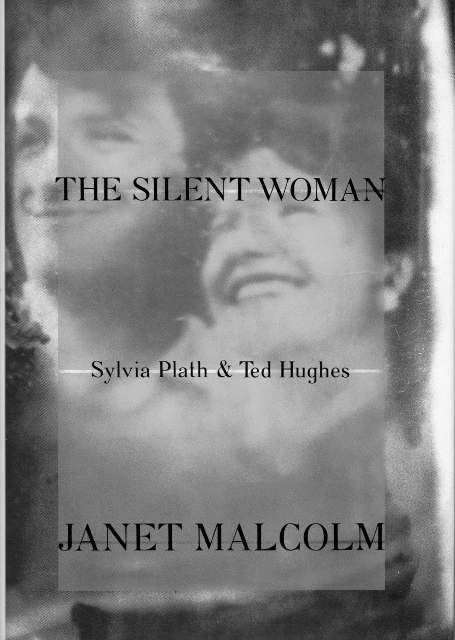
The Silent Woman: Sylvia Plath and Ted Hughes by Janet Malcolm

silentThis was a very interesting read, and not exactly what I’d expected; but it is in line with my own previous Janet Malcolm read, Iphigenia in Forest Hills. As I said on Tuesday, this is not a biography as I thought; it is rather an examination, if not an excoriation, of biographies generally. The life of Sylvia Plath is chosen as a vehicle for Malcolm’s argument, her journey and study toward developing that argument, and she does make an appropriate vehicle. She is a sensation, what with her suicide and all; she has living family members (notably her husband, sister–in-law, and her mother; she also has children, but they are only referred to by others, and don’t show their own faces) to be hurt by biographical portrayals which naturally handle their lives as well, often less than gently; and the biographies that have been written of her have tended to viscerally choose sides. Some are in the pro-Plath camp: she was a fine talent, tormented and abused by her evil husband Ted Hughes and her mother; others are pro-Hughes: he was a saint, she was a terror.

[Here is where I want to point out that this book was published in 1994, so the living relatives Malcolm writes about and that I’m referring to were living then. Plath’s mother Aurelia died in 1994; but in the present tense of this book, she is alive. Hughes died in 1998. I can’t confirm Olwyn Hughes’s status; I am therefore tempted to presume she is going strong.]

Very briefly: you know Sylvia Plath? Troubled poet, author of The Bell Jar? She was married to poet Ted Hughes, had two children, and was separated from him when she made her second suicide attempt, which was successful, by putting her head in an oven and gassing herself. Ted and his sister Olwyn have controlled her literary estate, with Olwyn playing the active role and ferociously defending his reputation.

Janet Malcolm traveled in 1991 to England to meet with Olwyn Hughes, and several Plath biographers, to talk about the Plath legacy and the ways in which it has been mismanaged. While the various parties differ on how, why, and when, I think they will all agree that it has been mismanaged. The biographical processes and products have been fraught with bitterness and poisonous resentments and failures of compassion, of put-yourself-in-someone-else’s-shoes. I am undecided as to what side I’m on, and Malcolm has something to say about this failure to choose sides.

The writer, like the murderer, needs a motive. Rose’s book is fuelled [sic] by a bracing hostility toward Ted and Olwyn Hughes. It derives its verve and forward thrust from the cool certainty with which… she presents her case against the Hugheses… If it had been impossible for Rose to take a side, her book would not have been written; it would not have been worth taking the trouble to write. Writing cannot be done in a state of desirelessness. The pose of fairmindedness, the charade of evenhandedness, the striking of an attitude of detachment can never be more than rhetorical ruses; if they were genuine, if the writer actually didn’t care one way or the other how things came out, he would not bestir himself to represent them.

(The male pronouns, present throughout, strike me as quite a shame. C’mon, Malcolm, you yourself are a writer who is not a “he” – can you not represent that possibility in your writing?)

Okay, so, point taken; but I didn’t get much of a feel for either Plath’s or Hughes’s point of view, honestly, from what I read in this book, and I’ve read none of the biographies. (Ironically, I was trusting to Malcolm to do that job for me; clearly that was a no-go, although what I received instead was worthwhile.)

Malcolm talks with the pro-Plath biographers and the Pro-Hughes biographers; they run a gamut from academic intellectuals through standers-by, friends and neighbors, and frankly (though Malcolm doesn’t use these words) some who strike me as tabloid-mongers. She reads letters and journals – the published ones, and the ones in archives. She reads manuscripts. She is most interested in the conflicts, the ethical questions, the difficulties – of biography generally (again see this week’s Teaser Tuesday for a perfect expression of this problem), and even more so, the difficulties of biography of a living person or one, like Plath, whose supporting cast is still living. (Or, again, was at the time of this book’s publication.)

It is all very interesting: Malcolm’s arguments, the people she meets – and her interview subjects get some excellent characterization. Considering The Silent Woman as a work of literature in itself, these characterizations are by far Malcolm’s strongest moments. I appreciate the criticisms she makes of biography, and of the delicate situation involved with still-living subjects; a person could almost be convinced that we should wait for everyone to have died before we write up their nasty secrets… but not quite.

Malcolm’s style is decidedly cerebral, classical, academic. She goes heavy on the allusions. This is not necessarily a compliment or a criticism, but read these lines:

The framework of deconstructive, psychoanalytic, and feminist ideology on which Rose has mounted her polemic against the Hugheses gives the work a high intellectual shimmer. There are close to eight hundred footnotes.

I’m afraid we have applied the wrong standard here! I certainly hope we’re not down to counting footnotes… of which, by the way, there are none in this book. There is nonetheless a great deal of theory, and it could get a little trying if that was not what you were there for. Just a head’s up.

Also, this:

In a work of nonfiction we almost never know the truth of what happened. The ideal of unmediated reporting is regularly achieved only in fiction, where the writer faithfully reports on what is going on in his imagination… We must always take the novelist’s and the playwright’s and the poet’s word, just as we are almost always free to doubt the biographer’s or the autobiographer’s or the historian’s or the journalist’s. In imaginative literature we are constrained from considering alternative scenarios – there are none. This is the way is is. Only in nonfiction does the question of what happened and how people thought and felt remain open.

This is off-topic and perhaps not highly relevant to the arguments we’re working on here, but I couldn’t let it pass by. Hello, unreliable narrators?? I guess Malcolm’s area of expertise lies in nonfiction, journalism, rather than literary criticism or *novels* – but really! I was surprised that she would make such a blanket statement that “fiction is true”. Just a few example of classic unreliable narrators that I have read might include Humbert Humbert of Lolita (she wanted it, right?), Chief Bromden in One Flew Over the Cuckoo’s Nest, Nick in The Great Gatsby, that guy from Fight Club, Lockwood from my old favorite Wuthering Heights, and (famously, recently, and for me, unreadably) the two narrators of Gone Girl.

I fear that I’ve been rambling. I find Janet Malcolm’s mind-workings fascinating and thought-provoking, and intelligent; I appreciate all the research she made me do in her vocabulary and allusions (you will see a vocabulary lessons post coming soon). Despite The Silent Woman not being what I’d expected, it was well worth my time; and it did take time, being rather dense. She is not a light read, be aware. I’m still on board for Two Lives, though.


Rating: 6 dictionaries.

Teaser Tuesdays: The Silent Woman: Sylvia Plath and Ted Hughes by Janet Malcolm

Teaser Tuesdays is a weekly bookish meme, hosted by MizB of Should Be Reading.

silent

Having been impressed by Janet Malcolm’s Iphigenia in Forest Hills, I knew I wanted to read what I thought was her biography of Sylvia Plath (and, secondarily, husband Ted Hughes). I am not a great scholar of Plath, but I’ve read The Bell Jar twice, and some of her poetry, and I thought the combination of subject and biographer sounded very promising.

I was wrong, though; this isn’t a biography of Plath, but rather an examination (even an exposé) of biography as a genre, using Plath as an example. How interesting! I was still on board, having been interested in some of the problems of biography (and autobiography, and especially, memoir) for some time. Also, I just finished Alison Bechdel’s Are You My Mother?, as you know, and she muses (and her mother muses) on some of the problems of memoir, too. So this is all welcome.

I’ll just share an example from Malcolm’s opening pages that struck me, and that helps to define her understanding of the problem.

The transgressive nature of biography is rarely acknowledged, but it is the only explanation for biography’s status as a popular genre. The reader’s amazing tolerance (which he would extend to no novel written half as badly as most biographies) makes sense only when seen as a kind of collusion between him and the biographer in an excitingly forbidden undertaking: tiptoeing down the corridor together, to stand in front of the bedroom door and try to peep through the keyhole.

Putting aside Malcolm’s use of the male pronoun (shame on you!)…

Part of me, of course, wants to protest on behalf of the Truly Good Biographies out there; but I know exactly what she means. So on the one hand: we read history for some lofty purposes, don’t we? And history includes biographying certain history characters, doesn’t it? Need we be voyeuristic to want to learn about Susan B. Anthony or Major Taylor? I say, no. But oh, then there was my reading of Jaycee Dugard’s book, which made me feel just dirty. And I get the point with someone like Plath, too: she is a literary figure, but admittedly, a certain part (probably a large part) of her fame relates to the lurid details of her failed marriage and her suicide. We’re fascinated with these things. And, as Malcolm will go on to outline, another defining aspect of Plath’s case – and what makes her different from Susan B. Anthony or Major Taylor (and like Jaycee Dugard) – is that the other players in her story are still alive (or were when this book was published). They are still vulnerable to injury from the conclusions a biographer might draw, about Who To Blame; and naturally conclusions of this sort will be drawn, in such a tale of suicide and woe. Point taken, then.

Stay tuned for what looks like a stimulating read.

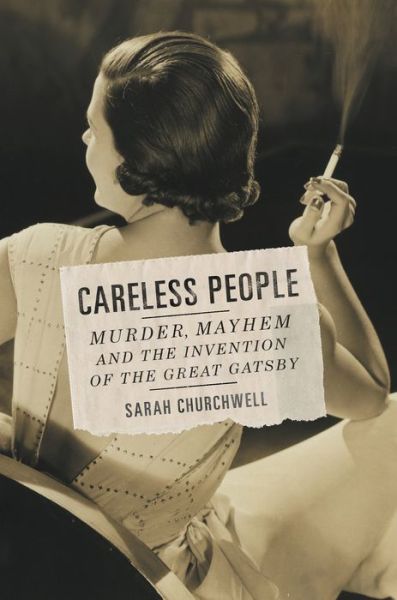
Careless People: Murder, Mayhem and the Invention of The Great Gatsby by Sarah Churchwell

New research and new angles on The Great Gatsby and its place in history.

carelesspeople

Sarah Churchwell (The Many Lives of Marilyn Monroe) takes on F. Scott Fitzgerald’s mythically proportioned masterpiece in Careless People, an expansive study of biography, history, literary criticism and cultural connections. Her inquiries focus on a double-murder involving a socially ambitious lower-class woman and a respected rector, both married but not to each other, found shot to death in each other’s arms. The case captured national attention in 1922, the year Scott and Zelda returned to New York–and the year in which The Great Gatsby is set.

With an appealing, freshly curious manner, original research and newly discovered resources, Churchwell explores the possible connections between Fitzgerald’s experiences in 1922 and what happened at the same time in his most highly regarded novel. She also compares the plot of The Great Gatsby to the real-world action of 1922. In the book, which alternates between the Fitzgeralds’ lives during the period The Great Gatsby came to life with the unfolding of media coverage of the murder case, Churchwell incorporates Fitzgerald’s correspondence, including delightful poems exchanged with Ring Lardner, and lists of slang (including some 70 ways to say “drunk”).

With elements of fun and tragedy–like the lives of its subjects–Churchwell’s study of the Fitzgeralds, The Great Gatsby and the world that birthed it presents new perspectives on a literary icon.


This review originally ran in the January 28, 2014 issue of Shelf Awareness for Readers. To subscribe, click here, and you’ll receive two issues per week of book reviews and other bookish fun!


Rating: 8 unattributed clippings.

The Trip to Echo Spring: On Writers and Drinking by Olivia Laing

Laing’s poetic ruminations on the alcoholism of six authors will charm readers of travel writing, biography and literary criticism.

echo spring
Olivia Laing’s The Trip to Echo Spring studies six authors whose lives meet at the juncture of creativity and alcoholism. While Laing (who walked along the river where Virginia Woolf killed herself for her previous book, To the River) acknowledges she had many alcoholic writers to choose from, the half dozen she selected justify and reward her nuanced attentions. Though F. Scott Fitzgerald, Ernest Hemingway and Tennessee Williams have been studied to the point of exhaustion, John Cheever, Raymond Carver and John Berryman have been less comprehensively examined.

Laing’s exploration of these extraordinary men’s lives has many facets. The Trip to Echo Spring, named for the bourbon favored by the maudlin Brick in Williams’ Cat on a Hot Tin Roof, is partly literary criticism–and no lightweight in that department, showing serious attention to her subjects’ works. Meanwhile, the level of biographical detail reveals Laing’s interest in their intersections with one another in life as well as literature. There are hints of travelogue as well, as Laing crisscrosses North America to visit the crucial locations in these writers’ lives, from Hemingway’s Key West to Fitzgerald and Berryman’s St. Paul, Minn., to Port Angeles, Wash., where Raymond Carver finished his life.

The common themes Laing finds in the cities and the bars where these men drank themselves into misery, death, and art include swimming, fluidity and the cleansing properties of sea and stream. She delves into the biology and psychology of of alcoholism, with several forays into Alcoholics Anonymous, and finally touches on her own upbringing as the child of alcoholics. While she focuses on the relationship between writing and drinking, another key part of her journey is personal–but her own history with drunks is only gradually revealed and never takes center stage.

These disparate elements come together elegantly in Laing’s quietly contemplative prose. She is sensitive to the struggles of these tortured men (among them several suicides) and deeply appreciative of their accomplishments, but also clear-headed about their shortcomings and their abusive treatment of others as well as themselves. A lovely piece of writing in its own right, The Trip to Echo Spring is a fine tribute to artists as well as a lament for their addiction.


This review originally ran in the November 20, 2013 issue of Shelf Awareness for the Book Trade. To subscribe, click here.


Rating: 8 bottles.

a few short pieces


“A Shirt Full of Bees” by Bill McKibben

My father sent me a copy of this essay, but it’s not shareable under copyright restrictions; and I couldn’t find a publicly accessible version I was happy with. I’m sorry. If you can track down this issue of Utne Reader, through your local library for example, you can read the article yourself.

How strange the way things come together. I’ve just recently been enjoying Annie Dillard’s Pilgrim at Tinker Creek; and my favorite parts of that book are her in-depth, lengthy examinations of parts of nature. One of those subjects she gets good and lost in is newts. And here is Bill McKibben, opening “A Shirt Full of Bees” with an episode starring Terry Tempest Williams (When Women Were Birds; I also loved her Pieces of White Shell) and a newt. Williams crouched on her haunches for half an hour examining the newt, “lost in the world of the newt” in McKibben’s words, and he found himself bored, restless, ready to keep walking, to reach the summit – something we do constantly, of course. And then, on another day, he steps on a yellow jacket nest, and as he erupts in hives and dashes down-mountain for medical aid – “My dog was the best dog I’ve ever had, but I doubted she was up to surgery” – McKibben sees more clearly the beauty around him. That’s the larger point in this short essay: we are always pushing for the summit, and too busy to examine the newts on our path. As I observed in Oil and Honey (the only one of his books I’ve read; but my father is rather an expert), McKibben is a gifted writer. He pulls together two anecdotes – his walk in the the woods with Williams and the newt; his walk in the woods with his dog and the yellow jackets – in a lovely, poignant, meaningful, beautifully written and well-structured essay of three pages. This is the goods, right here.


“Confessions of a Recovering Environmentalist” by Paul Kingsnorth

Pops reminds us that Kingsnorth was the author of “Dark Ecology” that I discussed back in January. This latest is available here.

Kingsnorth opens charmingly with recollections from his youth, ages 12, 19, and 22, in natural settings. These are the experiences that taught him to love “the other-than-human world.” He became an “environmentalist,” that radical thing. And now he laments what “environmentalism” has been bastardized into: a quest for zero-carbon emissions, for alternative energy sources, for sustainability – all good things, doubtless, except that “sustainability,” he argues, is code for finding a different way to do the same things we do now. In other words, we need to release less carbon, so we need to find another energy source so that I can still have my lights and electricity and drive my car and buy my cheaply made clothing at the mall. He points out that we seek a way to sustain our lifestyle – not to sustain the earth, which is sort of what we claim to be seeking. And of course there is the central, painful irony, that “the farmers are being edged out by south-country refugees like me, trying to escape but bringing with us the things we flee from.” He even addresses the touchy subject of “industrial wind power stations (which are usually referred to, in a nice Orwellian touch, as wind ‘farms’)” which McKibben has also struggled with. Are “wind farms” environmentalist?? There is an argument.

Kingsnorth is clever in his criticisms: “these days I tend to consider the entire bird with a kind of frustrated detachment” (that is, the oft-cited bird that has a left wing and a right wing), with which I certainly sympathize; “the colonization of the greens by the reds” characterizes all those myriad left-wingers (“disillusioned socialists, Trots, Marxists, and a ragbag of fellow travelers who could no longer believe in communism or the Labour Party or even George Galloway…”) who’ve taken over his movement. But don’t let his wittiness distract you from the fact that he is right. Again ironically, the problem seems to lie in the success of the “green movement”: save-the-planet is now a perfectly respectable, mainstream concept that you can now find on 3 out of 4 cereal boxes, and that bringing of Kingsnorth’s environmentalism into centrist politics has weakened it, watered it down, naturally, as centrism does.

Like the earlier Kingsnorth piece I read, this one gives quite a dark view in examining “environmentalism.” But like that other pessimistic-or-realistic writer, Derrick Jensen, I see his points, and I’m rather more inclined to follow him than I am to follow McKibben’s optimism.


“A Tough Flower Girl” by Phillip Connors

I am not yet done following Phil Connors. This is not a new piece, but one I’ve had to reread now that I am an affirmed follower of Norman Maclean. Connors’ article is available here.

Another fine piece of writing: Connors explores what we find so moving, timeless, and important in Maclean, but he also creates a piece of art in its own right. This short article is an excellent introduction to Maclean, in his best-known A River Runs Through It (and the two accompanying stories), in Young Men and Fire (better-loved, I think, by both Connors and myself), and in The Norman Maclean Reader (imperative for those of us left wanting more by the first two). It is an incisive piece of literary criticism and appreciation; but it also includes a personal story, as Connors opens by pointing out his biographical similarities to the great Maclean. If it is indeed “uncool to admit an enthusiasm based in part on biography”, call me uncool. Not that I share biographical parallels with my literary idols (ha), but I certainly consider their biographies integral to my appreciation. Funnily, I have just finished searching for a good Maclean biography, and am disappointed by the lack. Somebody please write this book. Phil?

Read this article because it says true things about an amazing writer, but also because it is in itself a sparkling, crystalline beauty.


“Smoke” by Phillip Connors

A new piece from Connors, available here.

I am reminded of how much I love Connors’ voice, that he isn’t afraid to have one, first of all, and that he is both intellectual and casual in it. He acknowledges that “self-quotation is a dishonorable habit, but it sounds a little smug to say I saw it coming and leave it at that,” and so he self-quotes from Fire Season, that book I loved so much, in which he predicts that “the big one” is coming. “If you live on a peak in fire-prone country, as I do every summer in the Black Range of New Mexico’s Gila National Forest, the big one will eventually come for you.” This very short piece is the story of that fire beginning, and beginning to be fought, and its victory: it burned over two hundred square miles, just this past summer of 2013. There is always a conflict in considering these events. Fire is nature, a natural part of a forest’s life cycle, healthy. But we the human influence have thrown that cycle off until the fires we finally earn and reap are less healthy for the world we’ve come to love, and that’s part of the tragedy that Connors has to share. He ends this piece, appropriately, on a conflicted, hopeful, tragic note. At least he has those memories.

I’m looking forward to the next book that he is reportedly working on now.