best of 2013: year’s end

My year-in-review post is coming, but first, as the year ends, let’s take a look at the very BEST books I read in 2013. Not necessarily published in 2013, you understand, although several were that, as well. Others were quite old. And while we’re at it, do check out Shelf Awareness’s best-of list, which has three books in common with mine. The Shelf and I, we continue simpatico.

Those that received a rating of 10:

Those that received a rating of 9:

There were lots of 8s, too – it’s been a great year. For example, late in the year I’ve discovered a love for Stephen King’s Dark Tower series, which hasn’t gotten a 9 on an individual book lately – but I wonder why, because I’m certainly enjoying the series that much! My, I’ve read so many books that it’s difficult to think back this far; but this list helps me remember the very best of my reading year.

What did YOU read this year that’s blown you away?

a compilation of lists

Whew! You all might know that I’m a sucker for book lists. It can get a little exhausting with everyone publishing their own “100 greatest books” etc. (you know I did!), and this is a highly subjective matter. But I’m still attracted.

But then I saw this list (through Shelf Awareness, naturally). It’s a chart compiled from all the books on 11 lists of 100 books. [One list says “American novels”, where the others seem to be international. Eight of the 11 say either “novels” or “literature,” and a glancing survey does seem to confirm that this is a fiction list. These rules are not entirely made clear.] There aren’t 1100 books, because there’s overlap: that’s the point of this chart. And what fun: statistical analysis! Three books make 10 of the 11 lists: Catch-22, Lolita, and The Great Gatsby. Four books make 9 lists; 4 make 8; and so on from there. I found it fascinating to see the semi-democratic selections between these lists. Of course, each of those 11 lists is just another subjective view; but it’s nice to the the intersections. The lists, if you’re curious, come from sources like bookriot.com; TIME magazine; Entertainment Weekly; Modern Library; Goodreads; and Reddit.

Naturally what I want to do now is show which ones I’ve read, plan to read, or don’t plan to read (hello, Faulkner and Ulysses). Let’s say bold are those I’ve read, italics are those I want to read, and underlined for those I’ve picked up and put back down or don’t intend to.

Please excuse my laziness in listing only titles and not authors. You will fairly easily figure it out yourself or find the author via The Google. A few of these titles, for the record, didn’t ring a bell to me at all. Some authors are available at the original link; others are not. I’m guessing this was a copy/paste in from the 11 lists themselves…

Made 10 lists:
Catch-22
*Lolita
*The Great Gatsby

Made 9 lists:
Invisible Man (Ralph Ellison, not H.G. Wells. I have read the one by Wells, actually.)
Slaughterhouse-5
The Catcher in the Rye
The Sound and the Fury

Made 8 lists:
*1984
Beloved
The Grapes of Wrath
To Kill a Mockingbird

Made 7 lists:
The Sun Also Rises

Made 6 lists:
An American Tragedy
Atlas Shrugged
Brave New World
Gone With the Wind
Midnight’s Children
My Antonia
*On the Road
* The Adventures of Huckleberry Finn
The Heart is a Lonely Hunter
The Hitchhiker’s Guide to the Galaxy
The Tropic of Cancer
Their Eyes Were Watching God
To the Lighthouse
Ulysses

Made 5 lists:
A Clockwork Orange
A Passage to India
All the King’s Men
Animal Farm
Brideshead Revisited
Crime & Punishment
Fahrenheit 451
Go Tell It On the Mountain
Heart of Darkness
Infinite Jest
Light in August
Lord of the Flies
Moby-Dick
Mrs. Dalloway
Native Son
One Hundred Years of Solitude
*Pride and Prejudice
The Age of Innocence
The Call of the Wild
* The Lord of the Rings
* The Old Man and the Sea
The Stand
The World According to Garp
Things Fall Apart
* Wuthering Heights

Made 4 lists:
*A Confederacy of Dunces
A House for Mr. Biswas
A Portrait of the Artist as a Young Man
Anna Karenina
Blood Meridian
Charlotte’s Web
Death Comes for the Archbishop
Don Quixote
Ender’s Game
Howards End
I, Claudius
Naked Lunch
Neuromancer
One Flew Over the Cuckoo’s Nest
Rabbit, Run
Ragtime
Sons and Lovers
Sophie’s Choice
The Adventures of Augie March
The Brothers Karamazov
The Color Purple
The Fountainhead
The Golden Bowl
The Handmaid’s Tale
*The Hobbit
The Maltese Falcon
The Moviegoer
The Sheltering Sky
Under the Volcano
War and Peace

And on.

I have added *asterisks* for the 11 that overlapped with MY list of 100: that was interesting to note. In such subjective measurements, I think that’s not a bad statistic. And some of the ones on this list that I’ve been looking forward to reading may well end up on my own list.

What are your reactions?

the books I’ve listened to that simply must be audio

It has taken me weeks to post this – sorry! But I did have some interest, in the comments on a past post, in those books I’ve listened to that I feel really must be experienced as audiobooks. Here’s a briefly annotated list.

  • Bossypants by Tina Fey, and read by the author: surely this will be obvious? Tina Fey is hilarious and you should let her tell you her story. Qualification: there are images in the book that you miss on the audio version.
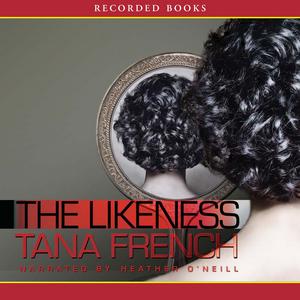
  • The Likeness by Tana French: I’ve enjoyed some of hers in print and in audio, but this is my favorite and I feel strongly about the audio. For one thing, they’re set in Dublin and the Irish accents are amazing. For another, the plot of this novel involves faking someone else’s identity, and to hear how her voice changes when she’s in character is really something. Well done, narrator Heather O’Neill.
  • The Lacuna by Barbara Kingsolver: also read by the author, and what an amazing feat, for her to be such an artist both of literature and of voice acting! Characters include Russians, Mexicans (of different social castes), a New York Jew, back-woods Appalachians, and a young man raised in between cultures; the importance of all those accents couldn’t be overstated, and Kingsolver executes them beautifully. It’s a magical audiobook and I wouldn’t let anybody I liked read this in print.
  • Let’s Pretend This Never Happened by Jenny Lawson: a memoir, read by the author, and she sings her chapter titles, operatically. That should be all I have to say.
  • The Wind Through the Keyhole by Stephen King: also read by the author, as it happens, and I enjoyed knowing that I was hearing King’s own impression of things. He does a great job. (If you’re noting how many on this list are author-read: I’m as surprised as you are.)
  • Ines of My Soul by Isabel Allende: this is a historical novel of the founding of Chile, and thus another one with accents done gorgeously by narrator Blair Brown.
  • all of the P.G. Wodehouse novels read by Jonathan Cecil: I love Cecil’s voices for the very very silly Bertie Wooster and all the rest; I now am opposed to the print versions, and wary of the non-Cecil-narrated audio version. What can I say, I’ve found the Wooster I like.
  • The Dorothy Parker Audio Collection: a collection of stories and articles read by a handful of different women, who more than narrate; they act out Parker’s caustic wit.
  • all the Lee Child books read by Dick Hill: I really like Hill’s expression of Jack Reacher. (He also narrates a few of Michael Connelly’s Harry Bosch books, which I also recommend. In other words, I like Dick Hill.)
  • bonus: I have it on good authority – although I have not listened yet (it’s in line!) – that the audio version of the new novel Z: A Novel of Zelda Fitzgerald is not to be missed, for the southern accents.

Further, I would recommend the following books in their audio format, although I would stop short of saying they must by heard rather than read.

  • Rules of Civility by Amor Towles: New York of the 1930’s and 40’s perfectly evoked via Rebecca Lowman’s lovely narration.
  • Crossing the Borders of Time by Leslie Maitland: the author reads this work of nonfiction herself, and because it’s the story of her own family, I think that’s important (and it is well done). Her voice is warm, she clearly cares for her subject, and she executes the French and German accents (and words) well.
  • The Warmth of Other Suns by Isabel Wilkerson: Robin Miles narrates this work of history in a beautiful, warm voice that I found helpful to the subject.
  • The Perfect Storm by Sebastian Junger: read by Richard M. Davidson, it has all the taut, tense action it needs without ever feeling over-dramatized. Bonus: at the end, it includes a recording of the author speaking about the making of the book, which was awesome.
  • Loving Frank by Nancy Horan: Joyce Bean’s narration immersed me in a time and place and helped me learn to care very much about the characters.
  • Touch by Alexi Zentner: a magical, otherworldly, immersive feel to this novel is helped along by Norman Dietz’s wondering performance.
  • Left Neglected by Lisa Genova: I felt intimately close to the female lead character in this story thanks to Sarah Paulson’s reading.

I’m sure there are more out there, and I can’t wait to discover them! Do share – are there any books you’ve listened to that you would say have to be heard?

What The World’s Strongest Librarian is Reading

Following up on my review of Josh Hanagarne’s new book, The World’s Strongest Librarian, and my interview of the man himself: this section didn’t get printed in Shelf Awareness but I thought my readers might be interested. I certainly was! For one thing, The Black Count is on my list.

So, from our interview conversation: What the World’ Strongest Librarian is Reading.


Josh says, “I read a book almost every day. Because I can’t sleep. It’s really hard for me to go to sleep with the tics, so that’s one of the silver linings, that I get to read so much. I shouldn’t say I read a book every day, but I finish a book almost every day. I read everything from juvenile books to big giant books that I’ll finish after eight days of reading.”

What good books have you read lately?

Truth in Advertising by John Kenney. It has never been this fun to be cynical. Kenney was an insider in advertising and copyrighting in New York, and it is just the most brutal look at the superficial world of advertising, and the storytelling – I really want everybody to go read it.

The Black Count: Glory, Revolution, Betrayal, and the Real Count of Monte Cristo by Tom Reiss is about Alexander Dumas’ father, who was the basis for The Count of Monte Cristo. He was a black man during the Napoleonic campaigns, and he rose to great power in a time when the world and the military were definitely ruled by whites. He winds up being imprisoned for something like 20 years, and the whole time he’s in prison his jailer is trying to poison him. Then it turns into this incredible story, if anything more swashbuckling and gigantic than The Three Musketeers or The Count of Monte Cristo. It’s a crash course in the Napoleonic campaigns that doesn’t feel like a history book. It’s just a wonderful book, the wildest adventure story.

I have been rereading Mark Twain, which I always am.

I just read a University Press book, Conversations with David Foster Wallace, that was quite good. Very theory-intensive, which I don’t enjoy so much anymore, but really good since I’m a fan of Wallace’s.

I just read The Liar’s Club by Mary Karr again.

And, The Twits by Roald Dahl. I just read that with Max. Max is finally old enough to want Roald Dahl. And that has made me happier than anything.”


See more of Josh’s book reviews and related and unrelated writings at his blog, The World’s Strongest Librarian.

books from Fil

I thought it was time for a feature post on my most frequent book gifter. He does an excellent job of selecting reading material for me; I’m sure you will recognize the themes from the list below. Nothing he’s given me (that I’ve read) has been less than great, yet. But I still have many of them to read.

I first met Fil at the bike shop where he works, and where I would later work alongside him. That would have been, oh, almost ten years ago. The first book gifts he got me were back when we were coworkers, for my birthday, I’m fairly sure; and those were bike themed. Since then, we have also shared interests in Mexico and in travel in general. I’ve made this list in vague alphabetical order, from memory, and I’m not completely sure that it’s exhaustive, but it’s a great start:

six days

Six Days of Madness by Ted Harper: a 1993 book about six-day racing in the United States in the “Golden Age” of cycling, the 1890’s. I read it, pre-blog, and LOVED it: track racing is obscure enough, but six-day racing is an extra-special, rare reading subject.

bicycle racing

Bicycle Racing in the Modern Era: a VeloNews production covering 25 years of pro cycling in multiple disciplines (road, track, mountain, cyclocross, BMX), and the beauty of it is that the 25 years covered are 1975-2000 – meaning that Lance Armstrong has only a bit part. In a totally Lance-saturated world, this was inexpressibly refreshing; and I learned a lot. I read it pre-blog.

londonderry

Around the World on Two Wheels: Annie Londonderry’s Extraordinary Ride by Peter Zheutlin: the story of Annie Londonderry’s bike ride (ostensibly) around the world incorporates adventure, women’s issues, world travel & cultures, as well as the Golden Age of cycling. There is even a thread running through it regarding women’s clothing and clothing reform – interesting stuff.

spokesongs

Spokesongs: Bicycle Adventures on Three Continents by Willie Weir: a series of anecdotes by a man who cycle-tours several continents. A focus on the developing world makes for some interesting cultural tidbits.

geese

I’ll Gather My Geese by Hallie Crawford Stillwell: the memoir of a woman who headed off into the unknown of far southwest Texas in the 1910’s to work as a schoolteacher and live on a ranch. Sounds good! I just haven’t gotten to it yet.
fromalaska

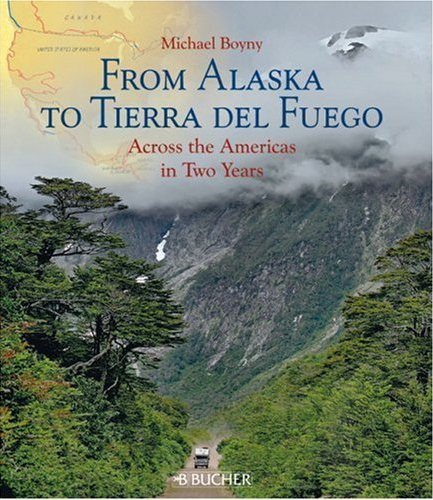
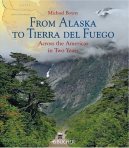
From Alaska to Tierra del Fuego: Across the Americas in Two Years by Michael Boyny: just looking at that gorgeous cover (click to enlarge) makes me anxious to get to this one, a coffee-table book, which I think was technically given to Husband but Husband does not read… It’s the story of a couple that traveled the length of the Americas in an old pick-up truck, and promises “superb pictures.”

mangostreet

The House on Mango Street by Sandra Cisneros: an exceptionally beautiful and powerful collection of short stories that might be poems. Not one to miss! And Fil had never read it; so I was able to recommend it back to him. Note that this edition is extra-special because of the lovely introduction (by Cisneros) that is included.

volume1volume2

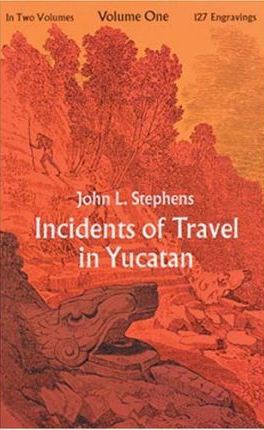
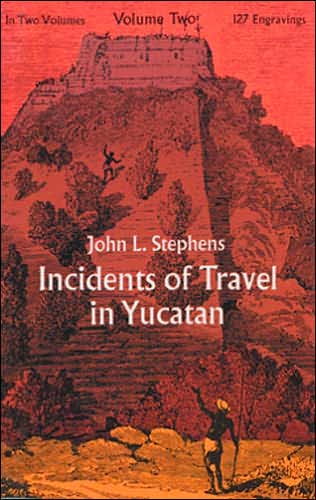
Incidents of Travel in Yucatan by John Lloyd Stephens, Volumes I & II: Barnes & Noble claims that “Edgar Allan Poe called it ‘perhaps the most interesting travel book ever published.'” That might do it for me, right there! Husband and I have a special fondness for Mexico’s Yucatan Peninsula, and an 1800’s-era travelogue with that kind of blurb definitely belongs on my book shelf.
cruisers

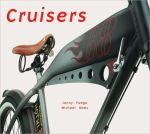
Cruisers by Jonny Fuego and Michael Ames: another given to Husband, and more of a coffee table book than a cover-to-cover, although I confess I haven’t looked at it much yet. Pictures of beautiful bicycles, of course, do belong on our coffee table. For a little context, here’s Husband on our wedding day on the bike I got him for a wedding present:
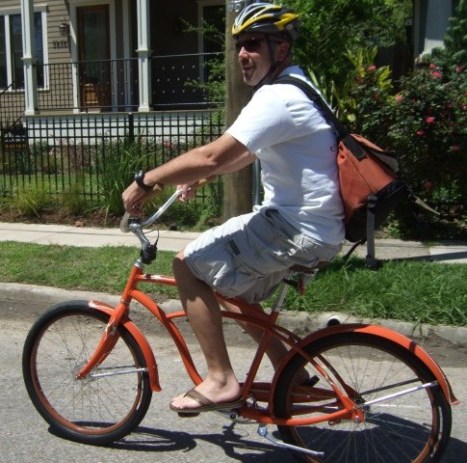
weddingbike
I brought Ritchey to the wedding on my cruiser:
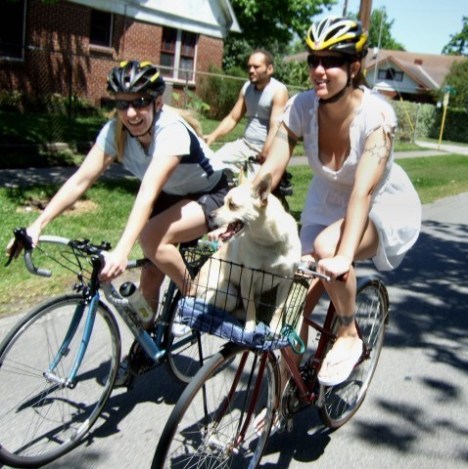
tattoopic
Sorry, I got distracted.

solace

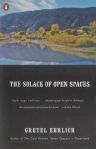
The Solace of Open Spaces by Gretel Ehrlich: reputed to be a fine, lyrical observation of the American West of the 1970’s. Hopefully – and I think this is Fil’s intention – it will fall in line with the tradition of Edward Abbey and Phil Connors; and more recently, Isabella Bird (see below). Bonus: just the other day, A.Word.A.Day featured Ehrlich for their “thought for the day”:

Walking is also an ambulation of mind.

Which is a lovely one.

noblest

The Noblest Invention from Bicycling Magazine: another coffee-table bike book, this one on the history of the bicycle, presumably a celebration of our relationship with two wheels and with lots of good pictures, as well as a well-advertised foreword by Lance Armstrong, who has been inescapable in cycling publications for years – maybe that will change now with his newfound ignominy?

wellville

The Road to Wellville by T.C. Boyle: I know nothing about this one, and I believe the same goes for Fil; I think it was purchased on the strength of Boyle’s reputation, which I know although I have read none of his yet. So, fair enough, Fil. A reading assignment. Okay.
justride

Just Ride: A Radically Practical Guide to Riding Your Bike by Grant Petersen: “radically practical” sounds like a quite fine way to describe Petersen himself, a personality I’m familiar with through the Rivendell Reader (an occasional serial publication from Rivendell Bicycle Works, Petersen’s company – you can see a few issues here). He is the definitive retro-grouch when it comes to bicycles, and my reaction to his philosophies is mixed: much of what he says makes sense (and I have a little retro-grouch, even a little Luddite, running through me), but some of it seems to be clearly grouchiness for its own sake. Fil had already become ambivalent about this book by the time he gifted it to me! And I haven’t looked at it yet; but I will. I have David Byrne’s Bicycle Diaries on my shelf, too (also a gift, from another friend), despite BikeSnob‘s relentless fun-making of him, and I may as well get all sides of this story! I suspect I will fall in line with the majority of Petersen’s directives, at least.

711

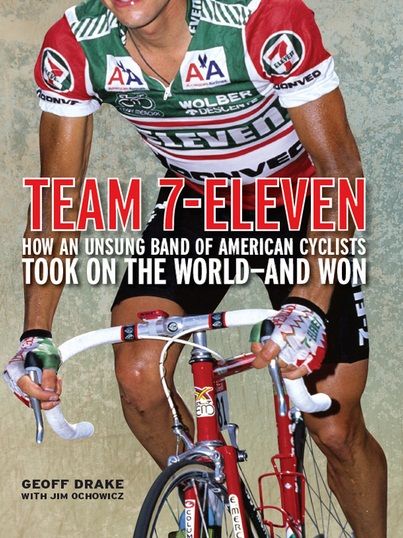
Team 7-Eleven: How an Unsung Band of American Cyclists Took on the World – and Won by Geoff Drake: the story of professional road racing in the pre-Lance era, back when all their gear was recognizable and Americans were new on the scene. I can read that.
adventures

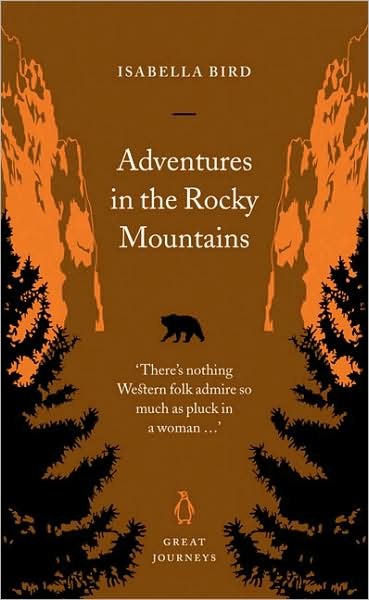
Adventures in the Rocky Mountains by Isabella Bird: just recently read, of course. I have an idea that this might make a fine comparison read next to The Solace of Open Spaces, above, which is similar in being a woman’s perspective on the natural beauty and benefits of the American West, but from precisely 100 years later. Perhaps that’s the next Fil-gifted read I shall look forward to. Hm. I am also most attracted (in making this list) by I’ll Gather My Geese, From Alaska to Tierra del Fuego, and Incidents of Travel in Yucatan (who can resist the Poe endorsement!). In other words, Fil is still doing well around here! Oh, and I feel I should get to the David Byrne book, too, and compare it to Bike Snob and Just Ride.

Which books on this list appeal to you especially? Do you have friends who consistently give you books, or consistently give really good gifts, or (lucky you!) both?

2012: A Year in Review

Everybody loves statistics, right? 🙂 This is my second year-in-review post (see 2011 here), so I’m able to make some comparisons, too. Of the 126 books I read in 2012…

  • 51% were nonfiction (up from 17% last year)
  • 32% were by female authors (46% last year)
  • of the novels I read, 31% were mysteries, 27% were historical fiction and 23% were classics. The rest were a smattering of short stories, drama, horror, humor, and “other.” Last year 60% were mysteries, 8% were historical fiction, 7% were classics, and the rest a mixture of short stories, drama, poetry, romance, fantasy, and “other.”
  • 25% were audiobooks. (22% last year)
  • 40% of the books I read came from the library, but see below* for why that’s changing. another 32% came were review copies, and 28% came from my personal collection; the rest were books I was loaned, books I purchased, or (those treasured few) books I was given as gifts. last year, 60% came from the library, 24% came from publishers for review, and only 13% were owned, borrowed, purchased or gifted.

For the very *best* books I’ve read this year, see yesterday’s post.

So, how have my reading habits changed? Well, most notably…

*I have kept this quiet here on pagesofjulia so far, because it hasn’t seemed all that relevant, but here’s a big piece of news for 2012: I got a new job! I am no longer working in a general/leisure reading library for patients of the hospital that employs me. Now, I’m in a library – in the same hospital – that serves patients, family members, and visitors with health and medical information regarding their conditions, treatment options, prognoses, etc. It’s more technical work, and more challenging and stimulating, and I enjoy it very much! (I’m also quite a bit busier. I hope this has not been too terribly evident around here…) What this means for my reading: I’m no longer tempted to pick up the latest and greatest new thing anymore. My new books overwhelmingly now come to me through Shelf Awareness and my gig reviewing books for them; otherwise, I’m trying to read from my shelves at home. I only have 3 full bookshelves of books waiting to be read! So I count this a good thing, mostly: I’m able to concentrate on those books I’ve brought home and housed because I really wanted to read them. Fewer distractions, if you will. On the other hand, I’m more likely to miss the next (for example) Song of Achilles – one of the best books I read all year – because I’m no longer paying attention to current bestsellers. There are always pros and cons to any change. But I’m very happy at work!

A few further changes I’ve noticed in my reading habits: I’m reading more and more nonfiction. See above: up from only 17% last year, fully half the books I read this year were nonfiction. That makes me happy. Far from being dry and boring, nonfiction is some of the best stuff I read (see again yesterday’s post about the best books of the year). Also, I hadn’t noticed this until I pulled this post together, but my fiction reading is getting more diverse: last year I read 60% mysteries, and this year only 31%. I think diversity is generally a good thing, so this makes me glad, too.

On the other hand, speaking of diversity, my reading of female authors is down. I know this makes me a bad feminist; but what can I say, I just read what appeals to me. My favorite authors are overwhelmingly male: Edward Abbey and Ernest Hemingway top the list, and they’re both misogynistic and/or womanizing, to boot! It just doesn’t feel right to choose books based on author gender, though, so I am shrugging this one off and carrying on.

Please tell me: had you noticed any changes here?? I think the biggest blog-related change in my life since I started the new job in September, is that I haven’t had the time to follow all the other great reading blogs I used to enjoy. I miss you all. :-/ So sorry – now you know it wasn’t you!

I am perhaps happiest about the trend towards reading more books off my own bookshelves. Here’s to more work on the TBR lists/shelves in 2013! I’m looking forward to a year filled with more great reading, exciting library work, and fewer knee injuries, please.

best of 2012: year’s end

My year-in-review post is coming, but first, let’s take a look at the very BEST books I read in 2012. Not published in 2012, you understand – although several were that, as well. I was able to narrow it down to a list of 14 books and 1 short story; and I’m hoping you’ll forgive me for such a long list because 1) I read 126 books in 2012, and 2) I’ve broken them out into categories for you. 🙂

Best print nonfiction of 2012:

Best print fiction of 2012:

Best audio nonfiction of 2012:

Best audio fiction of 2012:

Many thanks to my editor at Shelf Awareness who sent me 4 of the 5 books in that first category to review! You’re doing a great job, Marilyn! And, bonus: Shelf Awareness just the other day published an issue entirely devoted to the best books of 2012. Their list includes two of my best of the year; one I really wanted to read but didn’t get around to (Robert MacFarlane’s The Old Ways); one I reviewed; and one that I would totally rate a runner-up for audio nonfiction (Jenny Lawson’s Let’s Pretend This Never Happened). Not to mention, a whole bunch I never heard of, so there you are! Always more to read!

What did YOU read this year that’s blown you away?

best of 2012 to date: second quarter

As we enter the sixth month of the year, I want to share with you my favorite books of 2012 so far. Consider these my strong recommendations. I review a lot of books here at pagesofjulia (I’ve read 61 books so far this year! although some of those reviews are yet to come, they will all be reviewed), but I do not recommend all of them, as you know.

Two sections here: first, I have four books that I’ve loved and encourage you to check out. And then, some general notes about what I’m enjoying, in broad categories.

The four best books of 2012 so far come in an even mix. Two audiobooks, two in print; two brand-new, two a few years old. (None older than ten years here, but see the second section below.) Three fiction, one non. In the order I discovered them:

  • A Difficult Woman, a new (April 2012) biography of Lillian Hellman by Alice Kessler-Harris. Hellman was a controversial and contradictory figure, multi-faceted and fascinating, and I love Kessler-Harris’s handling of her complicated life, which touched upon so many areas of politics and art; K-H presents H as a sort of representation of the United States in the twentieth century. This book made me want to do huge amounts of further reading!
  • The Likeness (two-part review) was Tana French’s first novel, and my favorite of her three (though I enjoyed them all). Cassie Maddox, a Dublin detective, goes undercover as a dead girl, who was posing as a fictional person, one of Cassie’s earlier undercover personas, to try to catch this mystery girl’s killer. She infiltrates an incredibly close group of cohabitating students, almost a family, and fuses into their world alarmingly well. I listened to the audio version and adored all the accents.
  • The Lacuna I listened to as an audiobook, read by the author, Barbara Kingsolver, and I recommend this format as well as the book itself. It is the (fictional) story of a man who is raised back-and-forth between the United States (where his father lives) and Mexico (where his mother is from), spending his formative years in Mexico City employed by the household of Diego Rivera, Frida Kahlo, and for a time, Leon Trotsky. This is a fascinating book about people, some famous, some not, and the McCarthyist period in the US. Kingsolver performs the voices and accents beautifully.
  • The Song of Achilles is Madeline Miller’s first novel, and what a feat! This is the story of Patroclus, a minor character in Homer’s Iliad. Here he becomes protagonist and narrator, telling the story of his upbringing and lifelong close friendship with Achilles (eventually his lover), and the ten years they spend at Troy making war. Very moving.

EDIT: Check out last night’s announcement of this year’s Orange Prize winner: Madeline Miller, for The Song of Achilles! I have good taste. 🙂 If you look closely at past years’ winners, you will see another of my top four as well!


SECOND EDIT: Also check out my interview with Madeline Miller, which was such fun!


Section the second:

After choosing the above four individual books (no difficulty really, as each jumped out at me decisively), I wanted to share a few areas I’ve been reading in with great enjoyment. For one thing, you have probably noticed (if you follow me) that I’ve recently (re)discovered Edward Abbey and other nature writers. I can’t choose one book by Ed Abbey to especially recommend. So far in 2012, I have loved all of his that I’ve read, and the two “further reading” books he’s inspired. They are:

  • Fire on the Mountain, a lovely novel (based on history) by EA about an old man holding out when the government tries to take his ranch from him to use as a missile range, and the grandson who stays to fight it out with him.
  • The Journey Home is a collection of EA’s essays and journalism, every single one a gem, and similar to
  • Down the River, another collection, with a river theme.
  • The Monkey Wrench Gang is EA’s best-known novel, about a gang of social misfits practicing sabotage against industry & government when they threaten nature. Wild and wacky.
  • Edward Abbey: A Life is a biography of EA by James Cahalan, and I found it well-done, on top of the obvious attraction of its subject being totally engrossing.
  • Walking It Off is a memoir by Doug Peacock (EA’s close friend, and inspiration for the hero of The Monkey-Wrench Gang) of his life as a war veteran and untamed eco-defender, and as EA’s buddy.

Along these sames lines, I found Aldo Leopold’s A Sand County Almanac lovely, beautiful, inspirational, educational, and an important part of my study of Abbey and his ilk.

And finally, I have to mention my consistent favorite guy, Ernest Hemingway. In this case, the standout book is by his son Gregory. Papa: A Personal Memoir, is heartrending and sensitive, and a uniquely loving portrait of EH.

I have been long-winded as usual. In a nutshell: the four titles up top, and any Edward Abbey or Ernest Hemingway (or select related readings), deserve your attention this year!

What have YOU read so far in 2012 that has blown you away?

two literary lists for fun & discussion.

I just wanted to share some of those classically fun argument-inducers: lists. Thanks to Shelf Awareness for sharing.

First, The 50 Most Influential Books of the Last 50 (or so) Years. This is right up there with, you know, The 100 Best Books of All Time or 100 Great Classics or 100 Books Everyone Should Read. We’ve done this before. It’s not so much that I take major issue with the list as whole – there are lots of books I feel belong on the list that do show up there. But inevitably, I could nitpick here and there. I missed The Monkey Wrench Gang (or Desert Solitaire); and what about Barbara Ehrenreich’s Nickel and Dimed? On the other hand, I was glad to see The Autobiography of Malcolm X, Unsafe at Any Speed, To Kill a Mockingbird, Bury My Heart at Wounded Knee, Silent Spring, and The Feminine Mystique get well-deserved spots. I didn’t think Fast Food Nation or The Purpose Driven Life necessarily belonged on the list, but there’s room for personal opinion here. And there were a number of others that I either didn’t recognize at all or wasn’t so sure about, but that predate my literary awareness (or my birth) by enough that I dare not judge. What I want to know is, what are your impressions? What books are you glad to see on the list? Which ones do you see that you don’t think belong? And what’s missing?

On a more fun note (and hopefully fueling fewer disagreements), check out Literary Drinks: 10 Famous Fiction Writers and Their Cocktails. I was immediately gratified (though not surprised) to see Ernest Hemingway’s image at the top of the page. He’s an easy choice for a list like this, because he was famously a drinker, and also because of all authors and literary figures he has to have one of THE very most well-known faces. He is, without exaggeration, an icon. Perhaps equally unsurprising are F. Scott Fitzgerald and Raymond Chandler (the gimlet! I will abstain from telling my Chandler-inspired gimlet story; it didn’t end well; Husband stop laughing), Ian Fleming and Truman Capote, and Tennessee Williams. I’ve said too much; click the link for the rest, and tell me what they missed.

And finally, purely for grins, I give you Extremely Silly Photos of Extremely Serious Writers. Enjoy.

best of 2012 to date: first quarter

Hey friends, I just couldn’t resist sharing this with you, even though neither review is up yet (!) and one book isn’t even published yet (!!) – I have just finished reading two amazing books, one fiction, one nonfiction, and they’re definitely the best two of the year so far. You know how I know? When I can’t stop talking about them to anyone who will listen, even when they are suspected of being not interested. (Husband is so patient with me!) So what are they? …

Fiction choice of the first quarter of 2012:

Tana French’s The Likeness. I listened to the audio version, narrated by Heather O’Neill, and highly recommend it. My early review has actually posted already, here. The final review will come this week.

Nonfiction choice of the first quarter of 2012:

Alice Kessler-Harris’s A Difficult Woman: The Challenging Life and Times of Lillian Hellman. I read an advanced review copy; the publication date is April 24, so get ready! My review will be published just about then, at Shelf Awareness, and of course I’ll share it here when it is. It was a really engrossing biography of a truly fascinating, contradictory woman, who inspired a full continuum of strong reactions amongst everyone who knew her, and Kessler-Harris presents her so thoroughly with such full context that she had me enthralled – and looking for further reading.

That’s it: my two big recommendations of the year to date.

What have you read this year that’s amazing?