Is This a Cry for Help? by Emily Austin

As its protagonist wrestles with grief and challenges to intellectual freedom, this inspiring and very funny story showcases the power of love and libraries.

In the opening scene of Emily Austin’s fourth novel, a librarian named Darcy narrates her response to a patron watching porn in the library (mainly, per policy, to leave him be). From here, Darcy’s story unfolds to grapple with love, grief, mental health, the importance of libraries, and the navigation of personal, professional, and public relationships. Is This a Cry for Help? continues in the vein of Austin’s winsome work (Everyone in This Room Will Someday Be Dead; We Could Be Rats) with a disarmingly candid narrative voice, outrageous humor, and serious thinking on tough topics.

Darcy has a good life. At her public library, she gets to help a messy cross-section of humanity: not only the toddlers, book clubs, and precocious teens she originally imagined, but also people who lack stable housing or who struggle with substance abuse or mental illness, job seekers, immigrants, and people with opinions different from her own. She has a wonderful wife with whom she shares her authentic self, two cats, and a lovely home. But when Darcy learns of the death of her ex-boyfriend Ben, she is thrown off balance. The disruptions to her carefully organized life are often hysterically funny even as they are harrowing and tragic.

Darcy has just returned to work after a two-month leave of absence following a mental breakdown brought on by the news of Ben’s death. “Before this happened, if someone told me they were off work on stress leave, I might have been judgmental too. Now I understand that issues intensify when we smash them down into our boots.” She is not at her strongest for the new challenge of an alt-right self-appointed journalist harassing the library and Darcy for what he deems a series of moral infractions, including the porn-watching patron. Her community holds an array of political views and opinions on topics as personal as Darcy’s identity as a lesbian, and these values will be called into question by an attempted book ban.

Darcy’s first-person narration lets the reader see her puzzle through the motivations of those around her, parsing social cues and questioning her own choices. Since the breakdown, she’s been seeing a therapist (a process she finds “hokey,” but she’s making an honest effort), and she is well served by her earnest analysis of the actions and motivations of herself and everyone around her. “I’m not just thirty-three; I’m twenty-seven. I’m eighteen. I’m nine. I was just born. And I have to carry all of those versions of myself, the feelings they have, and the mistakes they’ve made, everywhere I go.” Thoughtful and self-aware, if often awkward, Darcy strives intentionally to live as best she can. Is This a Cry for Help? portrays a stressful period in her life, but one she ultimately inhabits with wisdom and grace. Hilarious, wrenching, endearingly odd, Darcy’s story is both enlightening and somehow comforting.


This review originally ran in the November 10, 2025 issue of Shelf Awareness for the Book Trade. To subscribe, click here.


Rating: 8 pigeons.

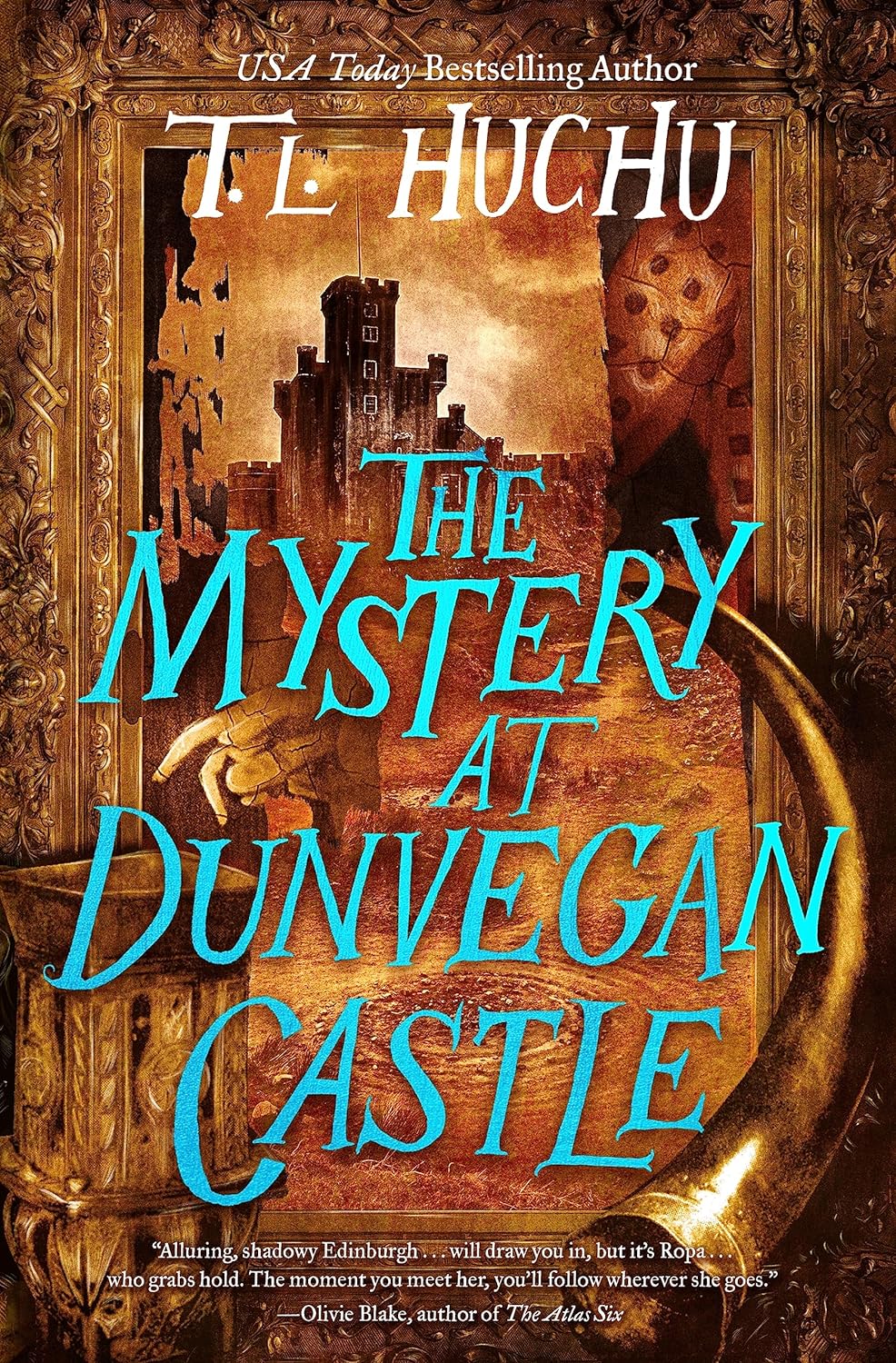
The Mystery at Dunvegan Castle by T.L. Huchu

Book three of Edinburgh Nights (The Library of the Dead; Our Lady of Mysterious Ailments) might be the best yet. Ropa is still pushing on in her unpaid internship for the Society of Sceptical Enquirers (or rather, its secretary, her patron, Sir Ian Callander), and at this book’s start, she finds herself at Dunvegan Castle on the Scottish Isle of Skye, assisting with the biennual conference. This should be low-level drudgery, but Callander is good about keeping Ropa handy; and anyway, events quickly take a turn for the unusual, necessitating Ropa’s special skills in solving mysteries. A prestigious Ethiopian magician comes to visit, a priceless ancient scroll (valued both as an antiquity and for the secrets it contains) is stolen, and a librarian – Ropa’s favorite, in fact – is murdered. And our young hero is on deck to save the day. But where she has some experience solving crimes and battling magicians, here at Dunvegan she might just be outclassed. Everybody on site except Ropa, it seems, is a professionally trained magician. Academia and the Society have turned out much less virtuous than she’d imagined. With the written advice of Niccolò Machiavelli running through her mind, Ropa decides she can trust no one. Even her heroes are suspects.

This might be the saddest in the series, as Ropa becomes disillusioned with the society and the Society she had been so keen to join. We continue to admire her for her own strong morals, even if standing on principle sometimes gets her in arguably unnecessary trouble. But her ideals are shaken as she finds out that the people she’d looked up to are fallible.

That said, it’s a great story, expertly paced and compelling, with characters we care about. And I was thinking this was a trilogy, but this book ends on a hell of a cliffhanger, and I’m glad to see there are four published books in the series with a fifth due in December! So I’m pleased to be hooked by Huchu’s singular and unforgettable young ghostalker-turned-investigator. Get on board.


Rating: 8 servings of cranachan.

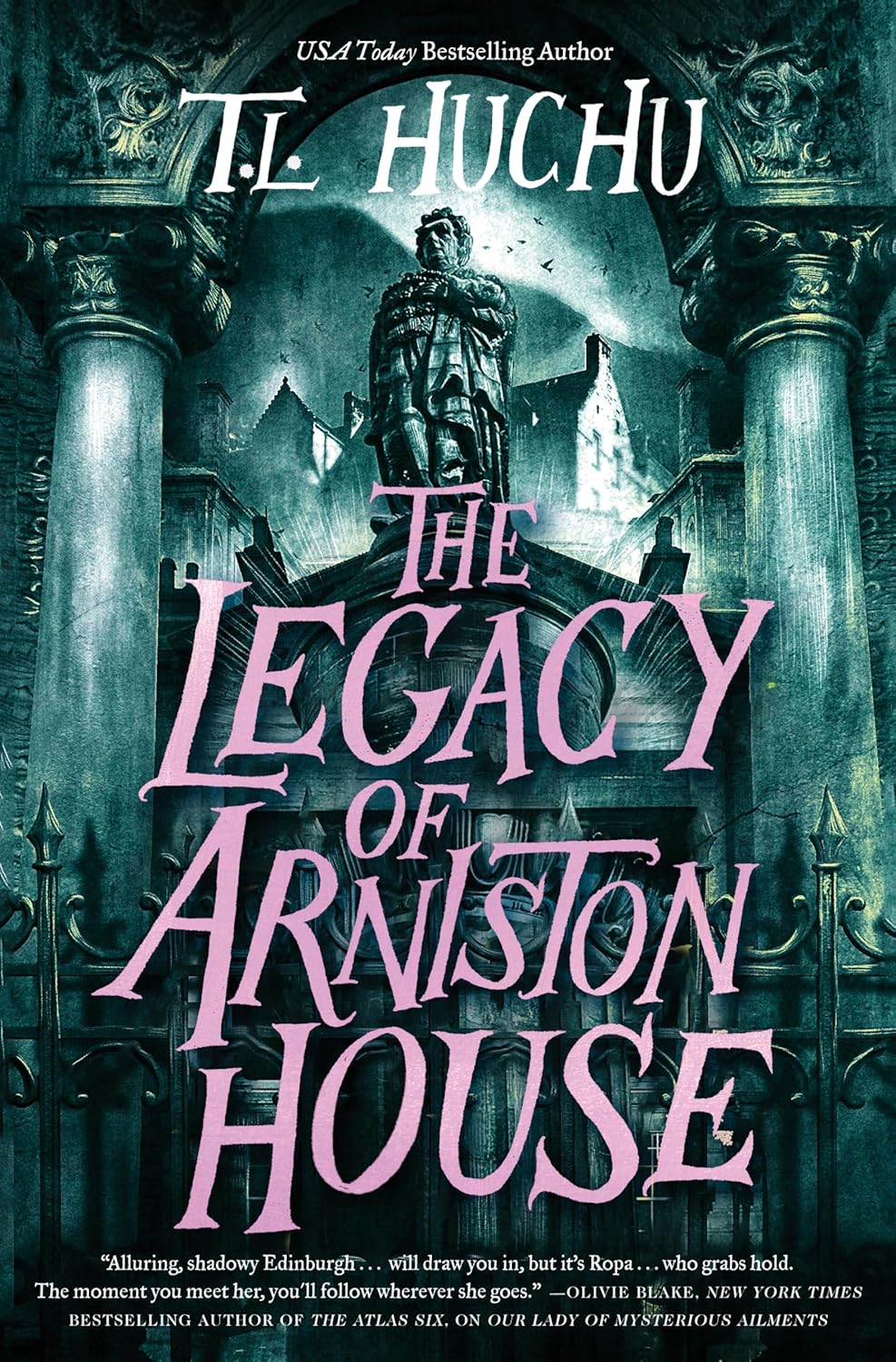
Our Lady of Mysterious Ailments by T.L. Huchu

At the start of book 2 of the Edinburgh Nights series, young Ropa Moyo thinks she’s got a big break with an apprenticeship at the Society of Sceptical Enquirers, working directly with Sir Callander, Scotland’s top magician. But in the opening scene, her apprenticeship is downgraded to an unpaid internship. The big shots who work highly regarded “scientific magic” in this culture see this as a role with honor and opportunity–Callander has not taken an intern in many years–but Ropa is not exactly a member of that rank of society. She and her Gran and little sister Izwi live in a slum, in poverty, and Ropa is their sole wage earner. She cannot afford “unpaid.” (Race is not a very ‘forward’ issue in these books, but Ropa’s family is originally from Zimbabwe, and those roots influence the style of magic she’s learned from her Gran and which puts her a bit at odds with the establishment.)

Luckily, her buddy Priya has the lead on a side job: figuring out the nature of illness for a young patient at Our Lady of Mysterious Ailments. And, because Ropa is resourceful and always hustling, another mystery presents itself as well, one that might actually come with a serious paycheck. (Our protagonist is always worried about medications and medical care for Gran, and schooling for the precocious Izwi.) Chasing one puzzle and another, trying to impress the society and keep her family afloat, hard-working Ropa alternates between hopefulness and despair. Interestingly – and in a departure, as far as my memory serves, from The Library of the Dead – the case(s) here are tangled up with Scottish history and old wrongs.

Ropa’s unmistakable, unforgettable narrative voice is a big part of the charm to these novels. She offers a mix of a sort of classic, hard-boiled detective’s cynicism with a teenaged variety of same, and a youthful (not quite naïve) optimism, with both sardonic wit and earnest love for her family and friends. There is significant slang to season that combination to boot. I’d recognize Ropa anywhere, and although I have to look up the odd word, I’m always stimulated, intrigued, and entertained.

I hope it goes without saying that I’m all in for book 3 of this trilogy.


Rating: 7 movie posters.

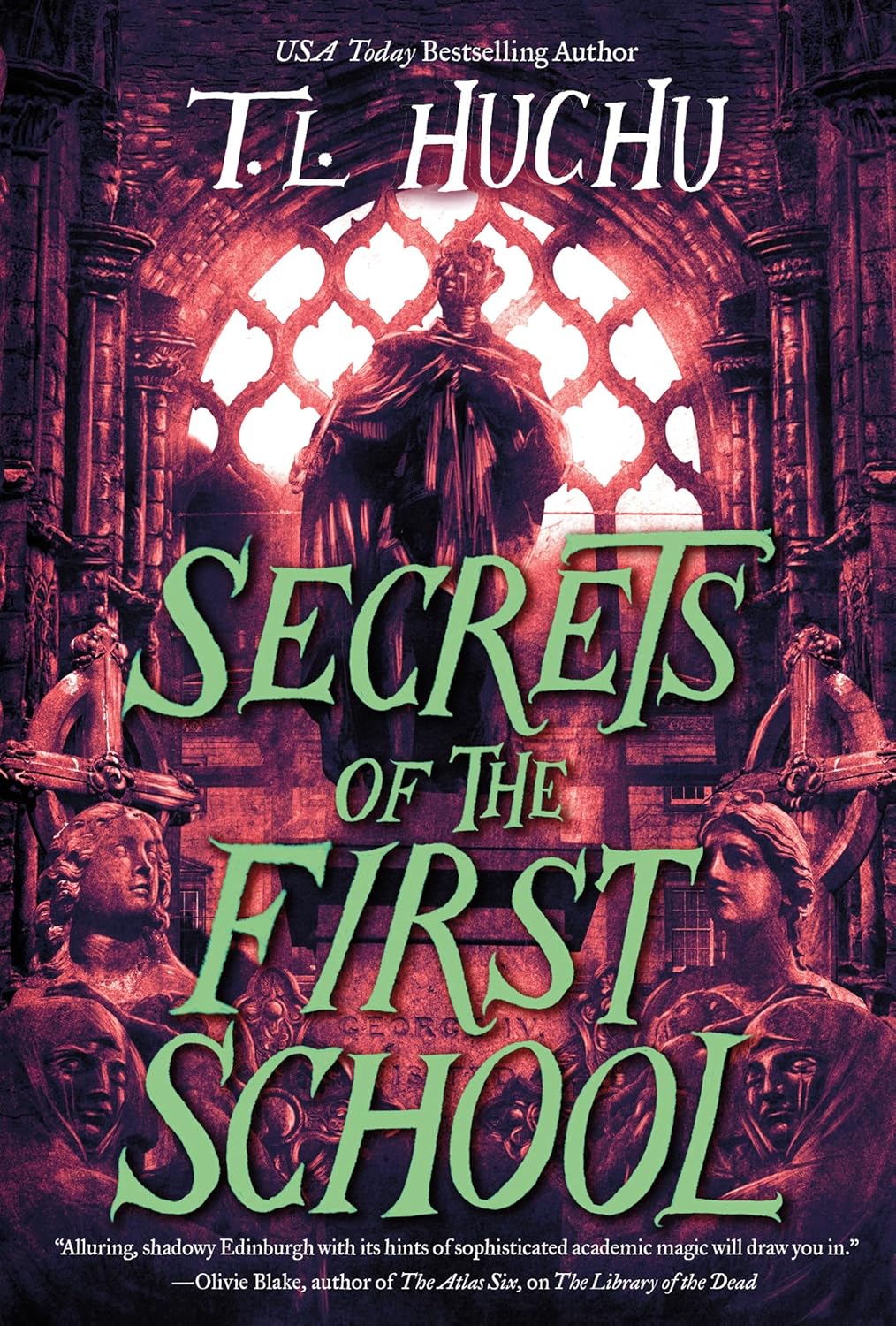
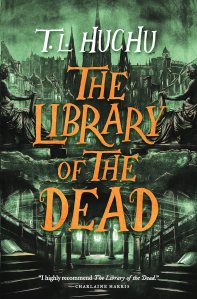
The Library of the Dead by T.L. Huchu

I forget where I came across this first in a series, but I’m glad I gave it a go. Set in a magical post-apocalyptic Edinburgh, The Library of the Dead stars Ropa, a teenaged ghosttalker: she is licensed to visit with the dead, a rare skill, and carry their messages back to the living, for a fee. She can also help (or force) ghosts to move along to “the place with long grass,” where we’re all headed once we find the peace to go. Ropa considers herself unsentimental: this is all about earning a living, which she uses to support not just herself but her younger sister Izwi and her beloved Gran, a more powerful magical practitioner but who these days is mostly reduced to knitting in their cara (caravan, or what we’d call in the US a trailer). Their existence is tenuous, which is why Ropa at first refuses when she meets a ghost who asks for her help but cannot pay.

At Gran’s insistence, Ropa eventually agrees to help Nicola (dead) solve the mystery of her missing young son Oliver (not dead, yet). As she takes a break from paying work to investigate, she’s glad to have the reluctant help of her old friend Jomo, who now works at a library that he doesn’t want to talk about. Jomo is from a better-off family: he’s been able to stay in school, for one thing. Ropa is a serious autodidact, listening to audiobooks as she makes her rounds; she is forever exclaiming that school doesn’t matter and she’s not the least bit sorry, but the reader can tell how much she feels the lack. We also observe what a clever self-study she is, however, as she repeatedly quotes Sun Tzu and summarizes and meditates upon the philosophies of magic she gains new access to…

…because Jomo’s secret new workplace is the library of the dead. When he sneaks Ropa in and they get caught, the consequences are dire – she is initially sentenced to hang from the neck until she is dead, but (in a whirlwind scene) instead gets drafted as a scholar, with the privilege of book borrowing. That, and she makes a new friend, Priya, a far more advanced student of magic. With two friends behind her now, but still very much with her own life (and livelihood) on the line, Ropa follows the cold trail of Oliver’s disappearance to some surprising and disturbing intrigues and evils.

Ropa is a certain kind of heroine: actually quite caring, although she wouldn’t want you to know it, and deeply committed to her family and friends, she rides a bicycle (when it’s not been stolen) and plays the tough, but really just wants to snuggle up on her berth with Izwi and Gran and watch some good telly. She carries a katty (or slingshot – I finally figured out that this is short for catapult!) and a dagger, has a pet fox named River, and she can take a punch. Priya is a delightful addition to her crew who I hope we’ll hear more from. Jomo is perhaps a bit bumbling, but very loyal. Their world is a bit mysterious: they have electrical power, but not running water or sewage; they have cell phones (and can talk to ghosts!) and television, but not climate control. They are ruled by a king. It sounds like there was an event that broke the world, leaving us with a before and an after, but we haven’t yet learned what that was.

The worldbuilding may be less thoroughly detailed than some in some fantasies; but maybe I just haven’t gotten there yet. At any rate, I’m engaged by the strongly-felt characters and their values, the magic, and Gran’s knitting. This is book 1 of 4 and I am ready for more.


Rating: 7 desiccated ears.

Junia, The Book Mule of Troublesome Creek by Kim Michele Richardson, illus. by David C. Gardner

Well, I was sure I’d been sold on this book by one of my talented colleagues at Shelf Awareness, but I cannot find that review. Somebody sold me on it, and I’d credit them if I could, because it was a solid recommendation.

Junia is an absolute delight. Aimed at readers aged 4-8, it’s a sweet picture book in simple but fun prose, starring the mule Junia that some readers will know from 2019’s successful novel The Book Woman of Troublesome Creek. Junia and her Book Woman travel the hills and hollers of eastern Kentucky during the Great Depression as part of that state’s Pack Horse Librarian project, under the WPA. (The books are fiction but strongly rooted in fact; Richardson is a recognized researcher of this unusual bit of history.) The book follows them for a single day of environmental and climactic hardships, including encounters with wildlife and a narrow miss when a bridge washes away. They visit diverse households and communities, delivering reading material and having amiable interactions with readers. The relationship between Junia and her Book Woman is loving; it’s an all-around wholesome story.

There is alliteration, fun onomatopoeia, and perfectly wonderful illustrations that reward a close look: note the identifiable rhododendron, the child with the paper airplane and a book called Flight, and a faraway fire tower that we’ll approach on later pages. The visual style is sort of soft-edged but quite detailed, with a bit of whimsy, and lots of personality for the starring mule. I love the regional, historical focus, and I feel it strikes a lovely balance between entertaining and readable, and educational. The book’s text is followed by an Author’s Note with “real” facts and historical photographs, so the young reader (perhaps with extra help in this section) can get a bit more enrichment out of it, and quite painlessly, I think.

I did buy this book with a particular reader in mind, who is eight years old, and I thought of her several times as I read: I know her dad will tickle her with his own “soft whiskered muzzle” as Junia does to her favorite little readers, and I know they’ll enjoy the farts. This quick read was really fun for me – I’m glad I stepped out of my usual zone to check it out. I guess I’ll try the Book Woman novel next!


Rating: 8 shiny red apples.

Upright Women Wanted by Sarah Gailey

My biggest question about this book is, is this the beginning of a series? Because it was so short and maybe a little bit rushed but also left us absolutely on the edge of a sequel, and I’m interested in finding out more.

Upright Women Wanted is under 200 pages, set in an alternative American Southwest under a totalitarian regime with strict control of information and vigilante troops of bandit-sheriffs running small towns. Esther has just run away from home to escape a forced marriage to the former fiancé of her best friend, following that best friend’s execution (by Esther’s father) for possession of resistance literature. The dead best friend was also her secret partner. Esther stows away in a Librarian’s book wagon, hoping the Librarians can straighten her out, in more ways than one, but they will instead open a wider and far more dangerous world than she’d previously imagined. And it might just be a good thing.

Some of the character development and romance goes by a bit more quickly than might have been most satisfying. If queer librarian resisters, spies, and assassins on horseback sound exciting, you should check this one out. That said, there might not be much more than you just saw in the preview. But again, it’s a short little novel, and pretty action packed, and I’m prepared to be excited about book two. Is there a book two??


Rating: 7 synth-pouches of wine.

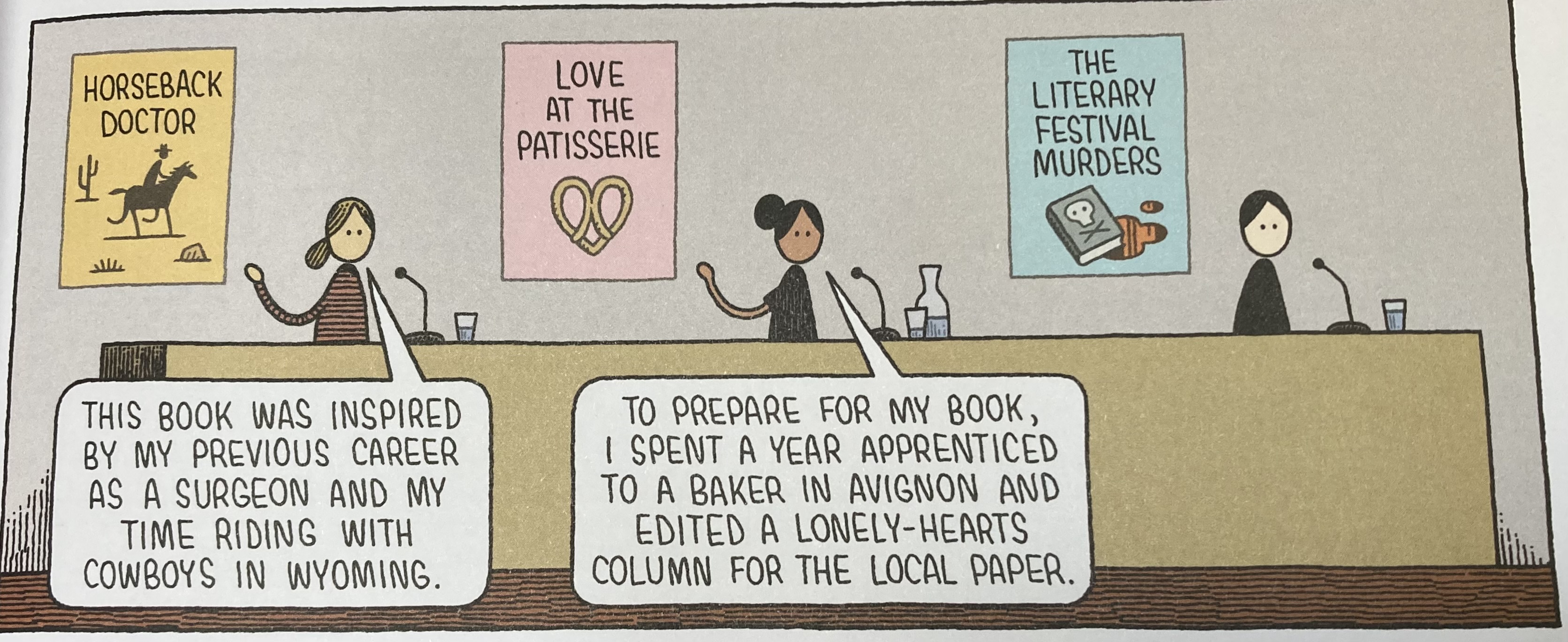
Revenge of the Librarians by Tom Gauld

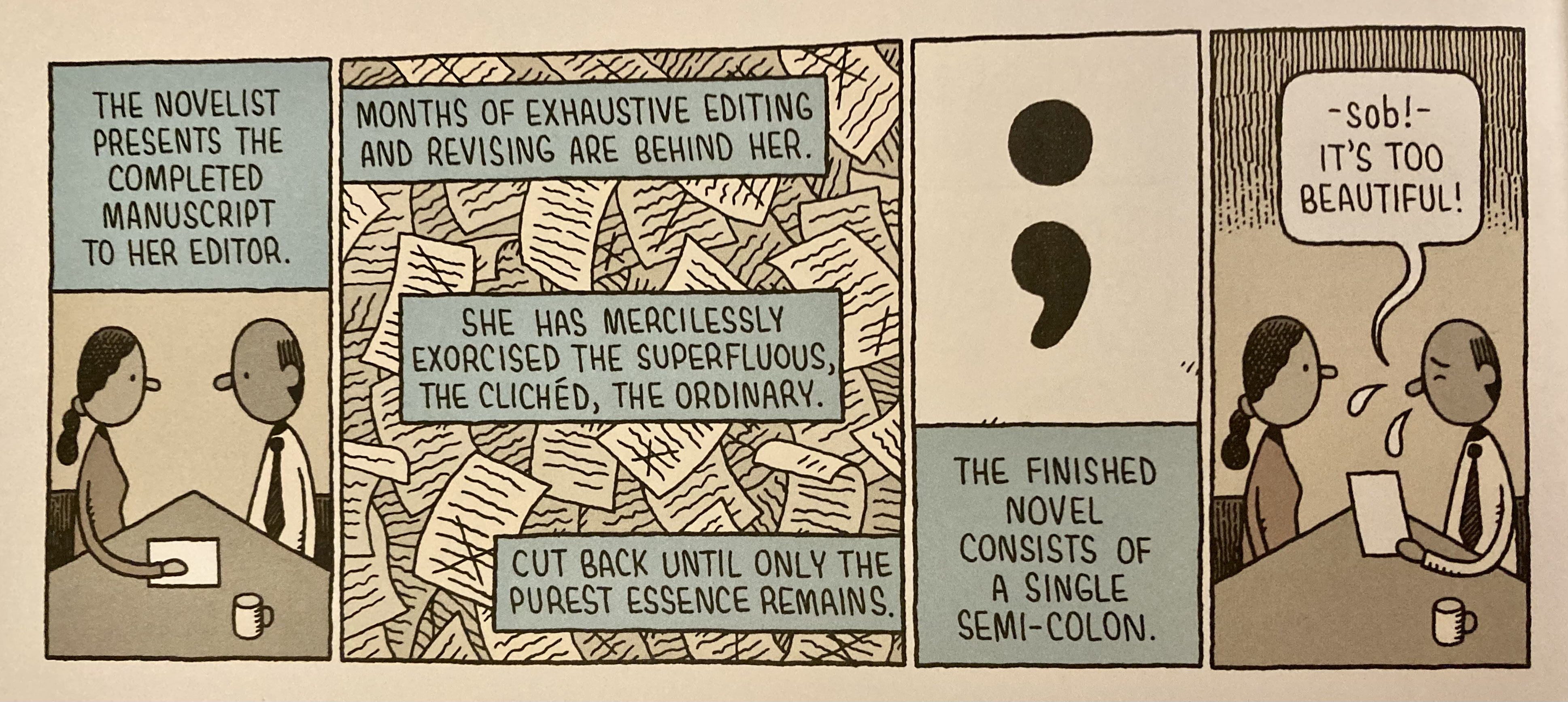
This is a completely delightful collection of cartoons by Tom Gauld, originally published in The Guardian. All have a literary theme and a dry sense of humor, poking fun mostly at bibliophiles, book collectors and writers, and exalting librarians (a safe move!). I am just absolutely charmed & won over, and inclined to just share a few of my favorite strips here in place of review…

At 180 pages, this is very much the sort of thing you can read cover to cover (I did in two sittings) or leave on a side table for joyful browsing in between other activities. For the book lover in your life? This is pretty much a must-have. Consider it for a holiday gift. I loved it.


Rating: 9 stacks.

Archival Quality by Ivy Noelle Weir and Steenz

This is a delightful graphic novel with a few threads that I enjoy: it takes place in a mysterious museum/library/archives setting; it’s a ghost story; it is concerned with mental illness and social justice; its cast departs from your run-of-the-mill beautiful straight white people; and it ends sweetly with an emphasis on friendship. I’m not sure where I got this recommendation, but it was a solid one.

Like most graphic novels, I found this one a quick read – I sped cover to cover in an evening. Celeste Walden has recently lost her library job after a depressive episode; she’s not doing so well, and her boyfriend Kyle is concerned, and she knows she has to get out of the house, but she really doesn’t want to work anywhere but a library again. That’s when she finds the Logan Museum, located in an old building that has also housed a hospital, an orphanage, and a sanitorium at different times. She’ll be an archivist, working nights, digitizing the museum’s images collection. And she is expected to live on premises, in a furnished apartment. Which of course involves things that go bump in the night. Kyle does not approve of this new job, but Cel is determined. Her new boss is disturbingly aloof, but the librarian who trains her is a lovely, supportive woman. And then the mysteries begin.

Cel’s mental illness is handled differently by different characters, including by herself, in ways that are true to life. The ghost story element is moving and involves some larger issues. Cel’s social circle – boyfriend, boss, librarian Holly, and Holly’s girlfriend – is small but impactful. I enjoyed the story, the characters, and the visual representations, which I felt communicated emotions and personalities nicely. I think this book would make a good choice for YA readers on up, and offers some excellent opportunities to discuss several topics that might appeal in middle school or high school classrooms or book clubs. I also enjoyed Weir’s afterword and Steenz’s “confidential files” at the end, which shed light on their friendship and process; the authors’ lives bear on the book, as is often the case. Definitely do recommend. Also, yay for libraries in literature.


Rating: 7 fruit baskets.

guest review: The Library Book by Susan Orlean, from Pops

Recommended for me from my father, with this nice write-up.

If you know a librarian, or you appreciate libraries, or you love books, this is a book for you; that’s what the title is telling us. There are thousands of books touching on this subject; Susan Orlean provides a compelling and approachable addition with this one.

In 31 short or long chapters, Orlean ranges widely with library history and librarian profiles; library trivia and book burning history; eccentric characters and stories stranger than fiction; and more, thus satisfying many interests without attempting to be an ‘all about…’ tome.

While this approach may still occasionally have the interest of a particular reader momentarily flagging, it would be only brief. The narrative thread woven throughout describes the Los Angeles Public Library; the disastrous Central Library fire of 1986; the mystery of its cause; and the many colorful, intertwining characters.

Along the way, we learn of libraries’ triumph over the ‘tech revolution’; the magical mix of personalities that make librarians and staff special, and the fire’s traumatic impact on them; the amazing and broadening social role of libraries, globally; historical library anecdotes spanning three centuries; L.A. Central Library architecture and rebuilding; book restoration; Fahrenheit 451 (and its author); the disturbing flaws in arson investigation; how AIDS touches this narrative; and more.

We get glimpses of the influential 1960s and 1970s through a library filter. And in brief interludes spend a ‘day in the life’ of the Children’s section, or the Music section, or the ‘InfoNow department.’ We peer into the possible future of libraries, and are reassured.

Yet this is also an openly personal story of a seasoned journalist seeking answers to mysteries – both public and private – while allowing her inner-researcher’s curiosity to wander down various rabbit trails that appear unexpectedly. This book, as with many, in part wrote itself. A veteran author, resolved to never again invest her life in creating a book, is compelled to write.

Her first-person voice is often present in describing interviews or other source material, but never distracts. While lending her journalist’s keen eye to details, she attempts little objective critique; she is a library booster.

We learn of her personal commitment to the subject in only a few brief episodes, doled out modestly, where endearing prose explains her devotion to the book’s purpose. Her library passion is rooted in early life experience nurtured by her mother; this becomes a touchstone rediscovered late in life, passed on to her son and brought to fruition in these pages. The book’s final two pages are lovely conclusion, returning to this personal story.


Postscript: an essay about a book about books, and about books from libraries, would be remiss without mentioning the physical book. This first-edition library binding is a bright orange, without jacket; the front and back cover text is imprinted into the nicely textured cover material. The orange leaps out boldly on the bookshelf. The front is bold text in bright shiny yellow, like polished gold against the orange. The back includes the usual blurbs (notably Erik Larson, among others) in white and yellow text.

Inside, both sides of the front endpaper display the summary typically appearing on a book jacket, here with a traditional-looking design.

The endpaper flyleaf has the usual author photo and brief bio; but the endpaper itself is special: an image of an old yellowed library lending-card sleeve, with a lending card that becomes personal dedication, connected to her personal story. The card shows four handwritten entries, for: Ray Bradbury, Orlean’s mother, Orlean herself, and her son. The image is so lifelike that a reader instinctively reaches to pull the card. I have tested this on others old enough to know; one cannot resist.

The volume is attractive to the eye and hand, with a pleasant heft. It’s a nice book; check it out from your local library!

That yellowed library card is a design feature in several places these days; lovely!

Thanks for sharing.

coffee helps me read and write

Realizing the obvious: as a creative person, I have good days and bad ones. When I get discouraged, I get very discouraged, and feel unable to do the writing & editing I know I need to do; I want to give it all up. As my friend Liz says, though, some days we just need to lie fallow (and give ourselves permission to do so).

I don’t want to dwell on that negative side today, though: I want to talk about the other days, the hyperproductive ones, when I can write 3 book reviews, do an author interview, schedule 4 blog posts and finish an essay I’d been working on. That happens sometimes, too! And you know what those productive days have in common? Coffee.

Shelf Awareness shared with me the other day an article called 12 Literary Coffee Mugs All Book Nerds Need in Their Lives. I am tickled by the concept, naturally. Go ahead, click the link, and see the bookish, readerly coffee mugs on offer there. I have made my own collection, though, and naturally think mine are a better set of choices: readerly and writerly as well.

a nod to the librarian stereotype

a nod to the librarian stereotype

a little humor - and truth

a little humor – and truth

a Sugar reference

a Sugar reference

often, but falsely, attributed to Hemingway: never mind, it sounds like him

a gift from my parents, from the Library of Congress

a gift from my parents, from the Library of Congress

What about you, dear readers? Coffee or tea? In what mug? Does it matter?