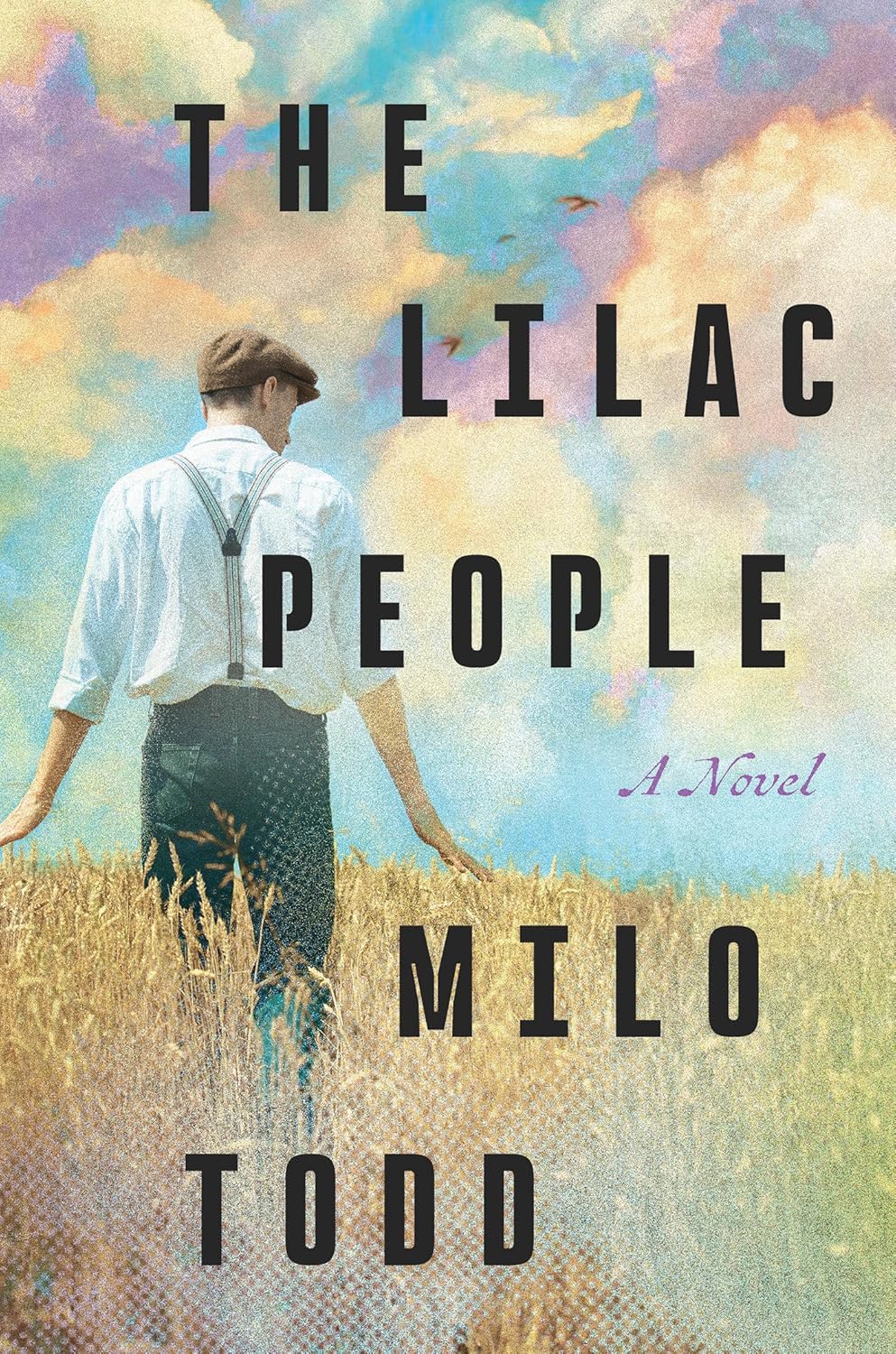
The Lilac People by Milo Todd

A trans man survives with a small chosen family, from Berlin’s lively queer scene in 1932 through the Holocaust and the Allies’ hostility, in this moving historical novel.

With The Lilac People, Milo Todd delves into the nearly lost history of trans people in the Holocaust. Integrating imagined characters with historical research, Todd brings humanity and specificity to atrocities that are still being uncovered. The heartbreaking result honors love and friendship, and ends with hope for one built family of survivors.

The opening pages find Bertie on the outskirts of the German city of Ulm in 1945. He has ridden out the war with his partner, Sofie, “on a little farm that was not theirs,” growing vegetables, raising chickens and one cow. It is an unadorned but not unpleasant life, and they know they are lucky. “The apple blossoms were beginning to show on their three trees at the far edge of their land, pollen spilling out as they blushed.” Then, weeks after the news that the Allies have freed camp prisoners, Bertie finds a body in the garden. Dressed in rags from the camp, the young man is alive, barely. “[The Allies] sent all the pink triangles to jail. And all the black triangles that qualified the same,” he tells Bertie. He wears a black triangle. He is a trans man–like Bertie. This changes everything for Sofie and Bertie, who will be greatly endangered by their choice to hide and protect Karl.

But Bertie finds that he must help, to confront his survivor’s guilt, his failure to protect his own community, and (as a hostile Allied lieutenant accuses) his complicity in Germany’s crimes. Karl’s appearance takes Bertie back to 1932 Berlin, where Bertie assists Dr. Magnus Hirschfeld at the Institute for Sexual Science and is a member of a vibrant queer and trans community, with a tight-knit group of friends that is lost on the Night of the Long Knives. Karl’s existence brings hope, guilt, and memory. To save Karl and themselves, Bertie and Sofie must leave the farm’s relative safety.

The Lilac People is filled with music, with an emphasis on the queer anthem “The Lilac Song.” Sofie is a pianist who gives Karl piano lessons alongside Bertie’s instruction in “how to transvest,” or pass as a cis man. The song is an important piece of history and means of accessing a pride in community that’s been all but destroyed. Notes from the author detail the research required for this writing, what is true history and what is fiction, and just how limited is the historical record on Germany’s queer and trans communities in this era.

The Lilac People is emotionally wrenching, but also lovely in its details, the humanity of its characters, and the resilience and hope at its end, when a fresh start seems possible. Todd has made an enormous contribution to historical fiction with his own research and this beautiful, touching narrative.


This review originally ran in the March 25, 2025 issue of Shelf Awareness for the Book Trade. To subscribe, click here.


Rating: 7 seeds.

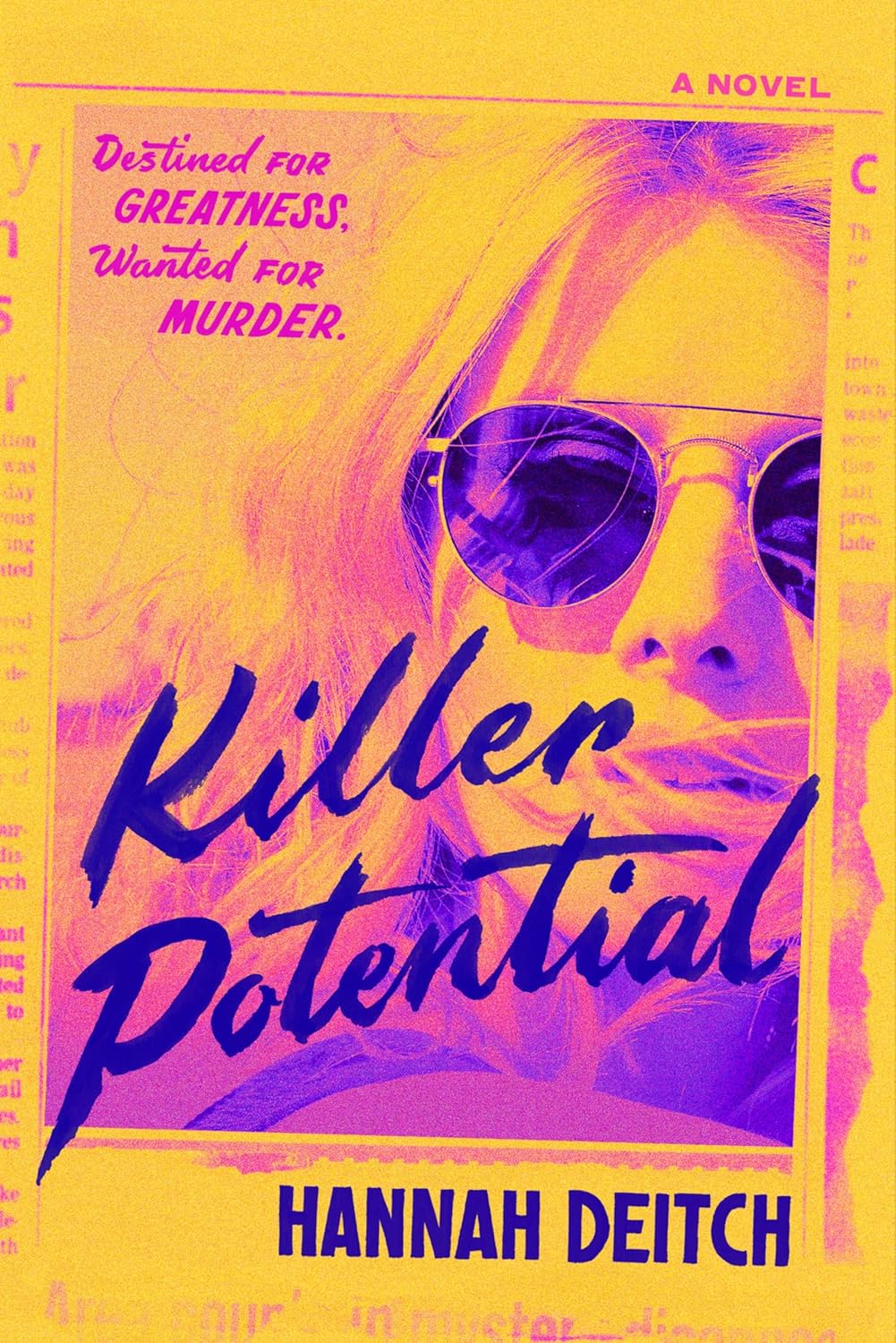
Killer Potential by Hannah Deitch

Two young women on the run offer mesmerizing complexity in this smart, propulsively paced, thought-provoking, and electrifying debut novel.

Hannah Deitch’s first novel, Killer Potential, is a bloody, class-conscious, suspenseful thriller starring two young women caught in a spiral of violence, blame, and bonding. This rocket-fueled debut is a deliciously dark, twisting, entertaining read, so beware the urge to stay up all night finishing it.

The novel’s primary narrator is Evie Gordon, who opens by saying, “I was once a famous murderess…. It isn’t true.” Labeled “Talented and Gifted” from the age of eight, Evie thrived on the simple, clearly outlined goals and rewards of formal education. As a graduate, she foundered and eventually landed in Los Angeles as an SAT tutor to the children of the rich and famous. On a Sunday afternoon, she appears at the Victor mansion as usual, only to find Peter and Dinah Victor very freshly and brutally murdered, and an emaciated, traumatized, and nearly mute woman tied up in a closet. In an adrenaline-fueled haze of terror and confusion, they flee the bloody scene together. The bulk of the novel follows Evie and the woman, Jae, as they go on the run, presumed to be the murderers of the Victors, and commit a series of crimes along the way.

Through Evie and Jae’s fragile, yearning, mistrustful bond, Deitch explores privilege and the divide between the haves and have-nots; sex and sexuality; trust and betrayal; what it means to be a “nice” or “good” person; and ambition and aimlessness. The interplay between them offers a taut psychological drama as backbone to a propulsive thriller of gruesome crime, exhilaration, and deception. Killer Potential is disturbing, fun, and unforgettable.


This review originally ran in the March 22, 2025 issue of Shelf Awareness for Readers. To subscribe, click here, and you’ll receive two issues per week of book reviews and other bookish news.


Rating: 7 powdered doughnuts.

No Names by Greg Hewett

This dazzling first novel applies poetry to the overawing power of art, friendship, and the ways in which many forms of love blend into one.

Following five books of poetry, Greg Hewett (Blindsight; darkacre) astonishes with a transcendent first novel about friendship, desire, music, loss, and love in its many forms. No Names is rough-edged, glittering, and brilliant as it spans decades and lives, traveling from a fictional American refinery town to Europe’s capitals, from Copenhagen to a place known simply as the Island, and back again.

Solitary teenager Mike’s world expands when he meets easy, outgoing Pete, with whom he shares a love of literature and especially music, and a nearly instant firm bond. Music, for Mike, is all bound up with sex and violence and epiphany: “It’s like I’m busting out of the prison of myself and giving to the world whatever part of me that’s worth anything.” The two guitarists form a punk band in the late 1970s, and with their two bandmates take off on a rocketing tour of the United States and then Europe that ends in enigma and tragedy.

In 1993, another angst-ridden teen from the same gritty, class-divided hometown discovers a dusty record in his mother’s attic and goes looking for a mostly forgotten punk band. Isaac will pursue the mystery of the No Names until he unearths Mike on a remote island in the Faroes, where the haunted older man has been living as a hermit since the band’s 1978 dissolution: “a mythical musician who, for a time, dwelt here and filled the place with songs.” Mike is supported by a Danish classical pianist named Daniel who had briefly been a friend to the band. On the island, Mike describes to Daniel “a state of ecstasy, or ekstasis–that is, becoming entranced, being brought out of oneself” by the aurora borealis, but these lines could as easily describe their relationship with music, or with one another. Mike, Pete, Daniel, and Isaac, among others, form permutations and re-combinations of friendship, affection, artistic inspiration, love, and desire.

Hewett brings a poet’s ear for language to a complexly layered story that treats sex, drugs, and rock & roll as simultaneously hard-grained and gorgeous. His evocations of music and the power of the muse are tantalizing and apt, as are his lines about the strain of finding oneself, of love and lust and pain. By the time No Names flashes forward to 2018, readers will be spellbound, and as much in love with the novel’s protagonists as they are variously entangled with one another. Hewett’s first novel is scintillating and absolutely unforgettable.


This review originally ran in the March 14, 2025 issue of Shelf Awareness for the Book Trade. To subscribe, click here.


Rating: 10 walnuts.

The Bones Beneath My Skin by TJ Klune

Just out from TJ Klune, The Bones Beneath My Skin is a standalone adult novel with loneliness, yearning, darkness, sweetness, queer love and sex, and discovery of new forms of family. There is a bit of a formula here in terms of the combination of those elements, but I don’t intend any of the negative connotation that often accompanies the idea of a formula. I appreciate that I can turn to Klune for a familiar blend of heartbreak and happy ending with characters who are messy but also the kinds of people I’d like to call friends.

In his Author’s Note, Klune calls this an ‘action movie in book form.’ A former publisher accused this manuscript of being different and weird: “but then, I’m the guy who made a socially anxious vacuum cleaner named Rambo into a main character” (check it out).

Nate Cartwright is on the road. The reader learns gradually: that he is driving the old truck recently inherited from his father, to the cabin recently inherited from his mother, both of whom just died of a murder-suicide after a lengthy estrangement from Nate, who they disowned when they discovered he was gay. He has lost his job and everything else that mattered to his old life in Washington, D.C. (not much); he’s headed to the cabin, lakeside in rural Oregon, without much of a plan but to unplug and regroup. But when he arrives at Herschel Lake, the cabin is not unoccupied. Instead, he finds a huge, intimidating man with a huge gun, accompanied by a tiny, lovely, friendly, extremely strange little girl. The man is Alex. The little girl is Art, short for Artemis Darth Vader. Nate tells her that’s not a real name. She corrects him.

This odd trio joins up. Art and Alex have already bonded firmly as allies, against long odds; Nate is late to the party, but fits in, as a lonely oddball with a tendency toward deeply felt loyalties. In a series of extremely unlikely events, Nate learns that his new… friends?… may not be all that they appear. But still he chooses to go all in.

With hints of Men in Black and ET, Nate, Alex, and Art go rocketing across the country, fleeing shadowy government forces and conspiracy theorists, harboring secrets beyond the theorists’ imagining, wanting only to be safe and together with those they love. Klune’s website calls it “a supernatural road-trip thriller featuring an extraordinary young girl and her two unlikely protectors on the run from cultists and the government.” I love Klune’s rather trademark focus on protecting kids as a central, undeniably wholesome focus, even amid some very adult concerns (and passions). As with other recent novels of his that I’ve enjoyed, this one left me looking for more featuring these flawed but loveable characters. I really loved the ending. Still following this author anywhere.


Rating: 8 slices of bacon.

The Case of the Missing Maid by Rob Osler

I thought this one was good fun, with a perfect ratio of good values blended in. It’s an amateur-sleuth sort of mystery: in 1898 Chicago, Harriet Morrow seeks to improve her lot in life (earning potential and freedom, both) by applying to work as a detective at the Prescott Detective Agency. Female detectives are quite rare, but the Pinkertons had one recently, and why not Harriet? With her unadorned clothing style and men’s hat and shoes, Harriet already turns heads; she may as well pursue a path that feels more natural than the secretarial pool. And she has a household to support: since the death of their parents and Harriet’s coming of age, she cares for her sixteen-year-old brother as well as herself at just twenty-one years.

The Prescott Detective Agency takes her on, but no one seems exactly to expect her to succeed. The case she’s given first is a bit of a dud: her boss doesn’t believe it for a minute, but his elderly next-door neighbor claims her maid has gone missing, and to mollify his wife (who loves the old woman) he asks Harriet to look into it. Surely the maid has merely taken an extra day off, or the old neighbor lady is senile to begin with. But Mrs. Pearl Bartlett turns out to be a firecracker: unconventional, perhaps a bit like Harriet herself, not a bit dim, and very sure of Agnes Wozniak’s disappearance. She also has misheard our protagonist, and misread her large stout frame and men’s hat: she calls Harriet Harry, and the nascent detective finds she likes it.

Unfortunately for Agnes, but rather fortunately for Harriet, the maid does indeed appear to be missing, and quite possibly in real danger. Harriet has herself a case, and a chance to prove herself, although she is very much learning on the job; she has lots of moxie, and a certain amount of natural instinct, but there is much about the work of detection that she’ll need to figure out. Luckily, the Prescott Detective Agency offers one friendly face: Matthew McCabe seems willing to help. Armed with a mentor (and eventually, properly armed), Harriet will learn her new profession, hopefully find the missing maid, earn a proper living for herself… and maybe learn a bit about underground queer Chicago along the way.

The historical aspects to this novel were great fun, even when frustrating, from Harriet’s clothing conundrums (she does not like women’s styles. but doesn’t really want to impersonate a man. but their options are just so practical, comfortable, and natural feeling…) to the infuriating dismissals she faces from pretty much everyone around her. I was especially delighted to lean into not only a historical inner city Chicago, populated by immigrants and the working class, but a queer underground, including their nightclubs and practices and (nearly literal) secret handshakes. I really appreciated Osler’s Author’s Note, where I felt he did a good job of clarifying what came from research and what was just fun to invent. Terminology, for example, can be difficult: folks we might recognize as queer or as lesbian today would have been less likely to use those terms in 1898. A nightclub that hosted both drag queens and drag kings for the same event is perhaps a bit of a stretch, but it works so beautifully here, both for plot and for fun.

I loved the mystery story itself, and absolutely fell for Harriet, the awkward but admirably strong woman at the lead. I loved the history and the queer framing, and especially that intersection. Just a hell of a tale all around; I can’t wait for more Harriet Morrow. Could hardly put it down; nonstop fun; do recommend.


Rating: 8 silver bells.

I Leave It Up to You by Jinwoo Chong

A young man wakes up from a coma and returns to the family, and the family sushi restaurant, that he’d left behind, with comical, heart-wrenching, hopeful results.

I Leave It Up to You by Jinwoo Chong (Flux) is a funny, bittersweet, heartwarming story about family, love, and making every minute count.

Readers first meet Jack Jr. in what he is slow to realize is a hospital room. He wakes up intubated and gagging. He’s confused about his whereabouts and circumstances, and he asks for his husband. His nurse is thrown into a full panic: Jack Jr. has been in a coma for 23 months and was not expected to regain consciousness.

No one will answer when he asks for his husband. Jack Jr. has missed his 30th birthday and the first 18 months or so of the Covid-19 pandemic. A few weeks into this remarkable recovery, he returns home, not to his Manhattan apartment, but to his father’s home in New Jersey. He goes back to the family business, a struggling Korean-Japanese sushi restaurant, which was once meant to be his life’s work and which he has not seen in 12 years. Jack Jr. has lost everything, and he finds himself in an unfamiliar, masked world. For much of the narrative, the old wounds he was avoiding–that he will now have to face–remain shrouded from the reader.

Jack Jr.’s kind and loving Appa (father) is a passionate sushi chef and workaholic; his Umma (mother) is private, reserved, and fiercely loyal; his especially estranged brother, James, is a recovering alcoholic with a dear wife and a new baby to join the teenaged nephew that Jack Jr. barely knows. Wise, gawky, 16-year-old Juno is perhaps the member of his family that Jack Jr. best connects with. And then there is Emil, formerly Jack Jr.’s nurse, and now potentially poised to become something more. Through these endearing characters, Jack Jr. considers that perhaps “there was more to loving something than smiling at it.”

In Jack Jr.’s first-person voice, these mysterious, painful new challenges are wrenching, but his love for his wacky family, and theirs for him, are unmistakable throughout. Alongside the flavors of carefully prepared nigiri, dak juk, soy, ponzu, and plenty of pork belly, humor and off-kilter love shine brightly in this tale of realizing what’s really important and making the most of one’s own time. The title of I Leave It Up to You refers to a translation of omakase, the Japanese dining tradition of asking for the chef’s choice, and also nods to the novel’s sweet attention to the care of self and others. While recovering from his physical injuries, Jack Jr. must also navigate old fractures with a family he hasn’t seen in years, let go of a relationship with no closure, and remain open to a surprisingly promising future. The story winds up delightfully warm and soothing, for all the bumps along the way.


This review originally ran in the January 31, 2025 issue of Shelf Awareness for the Book Trade. To subscribe, click here.


Rating: 8 bowls of juk.

Somewhere Beyond the Sea by TJ Klune

Here it is: the long-awaited sequel to The House in the Cerulean Sea, which I found lovely and transcendent. Somewhere Beyond the Sea continues in that vein in fine form. We pick up Arthur, Linus, and their endearingly and massively weird household with six magical children – originally an orphanage, but now building into a family and a home – more or less where we left them. Linus has left his employment with the Department in Charge of Magical Youth to be with Arthur, and the two men are working on adopting their six charges. Theodore, a wyvern with an obsession with buttons. Talia, a garden gnome, a lovely girl with a lovely beard and a way with plants. Phee, a forest sprite. Sal, the eldest, a shifter who spends some of his time as a Pomeranian and is developing strong leadership skills. Chauncey, a “biologically unique” green blob and bellhop. And Lucy, short for Lucifer, the seven-year-old son of devil, who has his murderous tendencies but also a pretty standard seven-year-old sense of mischief, and a good heart. These pages will add to the mix David, a teenaged yeti, who is slow to trust his new household but also inclined to fit right in. He’d like to submit that fear is not always a bad thing: humans watch scary movies for fun, right? What’s the harm in a little good-natured roar now and then?

Pitted against this evolving family, of course, is the government, in the form of the Departments in Charge of Magical Youth and Adults, who would like to see everyone involved put in their place, under lock and key and with what some less enlightened folks still feel is an appropriate amount of shame. Arthur, himself a former magical youth – he is a phoenix, possibly the last living one of his kind – has come a long way from his trauma at the hands of DICOMY and his defensive isolation with his six orphaned charges. With the love and support of Linus, their dear friend (and island sprite) Zoe, and Zoe’s girlfriend Helen, mayor of the nearby village, Arthur and the children now regularly venture into town and mingle with humans and magical folks there. And when the book opens, Arthur is set to testify before the government about the abuse he suffered as a child and his work with his own children; he is hoping to help build a better world, and through adoption, formalize his family. But the close-knit family is up against some truly formidable villains with all the power in the world.

Like Cerulean, this sequel plays in several registers. The antics of the kids are sweet, silly, hilarious; there is lots of good fun and humor and also wholesome good lessons about mutual love and support. The continuing romance between Arthur and Linus is equally wholesome and feel-good. In inviting David in to their family, the household faces some new challenges in how to build trust and honor the newcomer’s need for distance.

Trust, Arthur knew, was a treasure effortlessly stolen, often without rhyme or reason. And this particular treasure was a fragile thing, a piece of thin glass easily broken. But here was David, surrounded by strangers in an unfamiliar place, attempting to pick up his pieces and put them back into a recognizable shape. Whatever else he was, David’s bravery in the face of seemingly insurmountable odds proved yet again what Arthur had always believed: magic existed in many forms, some extraordinary, some simple acts of goodwill and trust, small though they might be.

I think this illustrates some of the book’s larger themes: trust, fragility, vulnerability, bravery, and how these elements can help form family and community. The concept that even those in power – in government or in families – need to have the ability to acknowledge when they have been or done wrong. Arthur must navigate a misstep when he encourages David to be whatever he wants to be, including a “monster”, while having told Lucy that he should be less monstrous. (David’s monstrosity is less threatening. But should Lucy’s right to self-realization be any less?) This is still and again about trust: how Lucy can trust a father whose rules change; how a father or fathers should trust their child’s judgment as they grow and mature. Change requires flexibility; growth can be painful. But this loving family is very strong, perhaps because they challenge each other. And the letting-in of the village has been a good move: under the influence of Arthur and Linus’s household, the human inhabitants have learned greater tolerance, and magical visitors (and their tourist dollars) have begun to transform what was a typically mistrustful community into a more welcoming one. It will take a whole village in the end to defend what’s right.

A beautiful novel about family, trust, community, recovery from abuse and trauma, and systemic ills, all leavened by mischievous humor and filial and romantic love. Same-sex couples abound in the book, and Klune’s Acknowledgements prioritize defending trans people’s rights, but I’d say the metaphor at work in this world – where magical people are hidden away, poorly understood, and discriminated against by a larger population which will benefit from their inclusion – works for any disadvantaged minority. It’s great reading, sweet and funny, with great messaging. I can’t wait for more like it from this fine author.


Rating: 9 fish named Frank.

Frighten the Horses by Oliver Radclyffe

Oliver Radclyffe’s memoir, Frighten the Horses, is an arrestingly forthright and open account of self-realization, a portrait of a transgender experience that is beautiful, honest, and raw.

After an absorbing, funny opening scene, Radclyffe rewinds to a less happy time. Readers accompany him on a difficult path as he spent the first four decades of his life trying to live up to expectations. His British upper-class childhood was privileged but disjointed. On brief occasions in boarding school, art school, and while riding motorcycles, he felt like one of the boys, but never felt he truly fit in. He became a housewife of status, then immigrated to the Connecticut suburbs and soon found himself raising four children and a golden retriever puppy. But something had always been off, and the memoir moves back and forth in time to portray Radclyffe’s anxiety and soul-searching. He eventually comes out as lesbian, divorces, and comes out as a transgender man.

These events and discoveries are presented in scenes with color, detail, and dialogue, and Radclyffe’s writing style is smooth, relatable, and effortless to read. With humor and compassion for himself and others, Radclyffe describes his own resistance to and acceptance of his gender and sexuality as he wrestles with the complexities of gender identity, sexual orientation, feminism, class, and family dynamics. This disarming, gorgeously written, and generously vulnerable memoir uses imagery to great effect. In sharing this individual narrative, Radclyffe expands and advances the way trans experiences are represented in literature. Smart and incisive, Frighten the Horses is unforgettable.


This review originally ran in the September 20, 2024 issue of Shelf Awareness for Readers. To subscribe, click here, and you’ll receive two issues per week of book reviews and other bookish news.


Rating: 9 steps.

Come back Friday for my interview with Oliver Radclyffe! I’m really excited about this one.

In the Vanishers’ Palace by Aliette de Bodard

This fantasy novel(la) comes billed as a reimagined, queer retelling of Beauty and the Beast. Perhaps I’m just working at a great distance from that original, but it didn’t recall it strongly for me. There is definitely a young girl kept captive in a palace by a being that’s understood to be a monster, and their relationship changes. The palace itself may have some powers. I see the parallels, but would never have thought of Beauty if I hadn’t been told to.

All of which is neither here nor there and has no bearing, for me, on enjoyment of the book. (Novella? At almost 200 pages, it might be pushing novella-length – these things are so tricky to define! – but it felt that contained, to me.)

Yên and her mother live in a somber village in a post-apocalyptic world, in which creatures called the Vanishers have (yes) vanished, but their legacy lingers: mysterious viruses, illnesses, and spirits, dangers lurking everywhere. Yên has failed as a scholar; her mother has value to the village as a healer, but as her mother’s just-mediocre assistant, Yên’s future is not assured. It does not surprise her to be sold away to pay off the village’s debts, to a frightening dragon: everyone expects she will be tortured to death by her new master, Vu Côn, but it turns out that Vu Côn (who can shape-shift between human and dragon forms) has other needs. She is the mother of intelligent, willful twins. And Yên, who had been teacher to her village’s children (apparently this was not judged a value??!), finds herself with new pupils.

Vu Côn and her children live in an abandoned Vanishers’ palace, a place of disconcerting, Escheresque, physically impossible dimensions and movements. The twins, Thông and Liên, possess powerful magic, and being nonhuman, as well as the children of her master, they give Yên different challenges than she’s faced with the village children. But they are children, nonetheless, clever and respectful of their new teacher (if headstrong), and she does care for them. Her feelings for Vu Côn are more complicated, blending desire with fear and resentment, and it appears this conflict is mutual.

The dragon’s eyes were a light grey, the color of storm clouds gathering. She was looking at Yên with an expression that was half-irritation, half-hunger, as if she would gobble Yên whole, given half a chance.

And what scared Yên most? This might, in the end, be just what she longed for.

Yên is dissatisfied living in the frightening Vanishers’ palace. She misses her mother and fears for her mother’s safety in their village; she misses home and knows it is unavailable to her, as the village elders who sold her away would never allow her return. She doesn’t know where to turn. And the readers understand before Yên does that there are deeper, darker secrets in the Vanishers’ palace than she’s yet discovered. But there are opportunities, too.

It’s a curious fantasy world, offering familiar elements (as they do) of our human desires and conflicts, but always with a twist – shape-shifting dragons, sure, but also, for example: Vu Côn has a magnetic sex appeal for our protagonist, but where I’m accustomed to seeing this expressed as heat, Yên experiences Vu Côn’s dragon-body as cold, wet, briny, and very sexy in these elements. That’s a new one for me, and I don’t find it easily accessible: “sea salt and cold, tight air, and a faint aftertaste like algae,” “wet cold creeping up her skin like fingers” – slimy, even! It’s an interesting twist, and one where I have to just trust in Yên’s tastes for Yên. But that’s what fiction asks of us, in different ways, right?

This was a fascinating adventure for me, in the ways that it did and did not fit into my expectations. And in the end, it calls upon some useful universals: big thinking about right and wrong, the way we relate to lover, friend, family, and community, the yearning for self-actualization and belonging. Dragons? Sure. I find Aliette de Bodard a lively imagination and I liked this punchy tale.


Rating: 7 strokes.

Gallows Drop by Mari Hannah

Back on the fence about this series, but I keep coming back for more. Hannah is doing something right.

Pros: page-turner. I stay riveted, engaged and invested. I was drawn in, in this book in particular, by the possibility that we were finally going to get into the heart of Kate’s biggest issue in her personal and private lives: her conflicted relationship with her own sexuality and her attempt to live a closeted life at work while maintaining a same-sex relationship with (no less) a colleague. That conflict feels like the shoe that’s been waiting to drop for this whole series, and the specter of resolving it was a major pull – as well as the mystery plot being a solid one. (I don’t think I’ve ever had beef with the mystery itself in any of these books.)

More ambivalent: the central conflict about Kate’s coming out, and the solidifying of her relationship with Jo, threatened to be a bit on the nose, especially in combination with the mystery plot and the potential relevance of gay identity in that storyline. “Suddenly she couldn’t differentiate between her own situation and that of —–. If she found out that his death was connected to his homosexuality it would open up a wound she’d been hiding for years. A bleeding open wound she’d been trying and failing to live with. The reason she’d thrown away all that was good in her life.” Not only on-the-nose, but awfully thoroughly spelled out for my tastes. Let the reader do a little work!

Cons: dialog and sentence-level writing continue to distract me. Speaking of thoroughly spelled out, would a cop really need to say, “I’ll call you later, if I can. Service is patchy here. Sometimes it works, sometimes not.” In the 2010s, you have to explain what patchy service means? Or in describing scraps of debris on the ground: “Some kind of confectionary wrapper… and what looks suspiciously like a cannabis joint.” No humor, no irony: “what looks suspiciously like a cannabis joint.” Nobody talks like that. There was also a continued emphasis on ‘stuff’ when ANY noun would do more and better.

The resolution of the plot puzzle felt a bit chaotic. Not quite a deus ex machina, but multiple (and unrelated) unhinged characters running roughshod. Upon finishing the book I was left a little muddled as to who did what to whom, because it all dissolved into mayhem. And fair enough, because that’s the way the world goes sometimes, but this was not Hannah’s cleanest finish. And speaking of the finish: literally the last line of this novel thrusts us upon the hugest cliffhanger I’ve seen in a while, and quite a fantastical one to boot. I don’t think I’m happy with this move.

Despite all this, my experience in reading was that I really enjoyed the book, in some mammoth sessions. And started the next one immediately. So, not sure where this leaves us. It’s not a love/hate relationship, but certainly a love/not-love relationship that I am in with the DCI Kate Daniels series.

Help.


Rating: 6 gobs of spit.

EDIT: The next book in this series, Without a Trace, was distressingly bad. I cannot review it here and am not sure where to turn next. Warning.