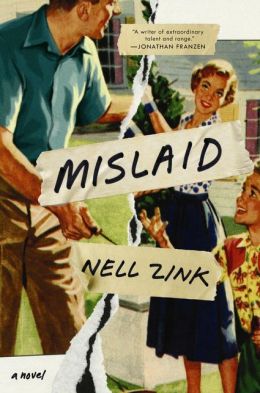
Mislaid by Nell Zink

A Southern comedy of errors starring a broken family stretched across social classes.

mislaid

At the start of Nell Zink’s delightfully odd first novel, Mislaid, Peggy is a lesbian teenager in 1960s Virginia heading off to Stillwater College, a remote women’s school, where she plans to sow her oats with all those other young ladies and become a famous playwright. Instead, she begins a strangely lusty affair with one of the few male faculty members, Lee Fleming, a famous poet hidden away at Stillwater by his wealthy and proper Virginia family because he is gay. Their misguided, mismatched affair quickly results in a pregnancy and marriage. After 10 years, Peggy finds herself miserable, acting as servant to Lee’s obnoxiously pretentious literary house guests while he engages in infidelities and general disrespect. She runs away, taking their three-year-old daughter and leaving their nine-year-old son, Byrdie.

Because Lee has also threatened to have her committed, Peggy goes into hiding. She conveniently acquires a birth certificate from a recently deceased African American child to rechristen her white-blonde daughter as Karen Brown, herself as Meg. They squat in a condemned house in abject poverty, making a new life, but the oddest part is that “Karen and Meg Brown” on their paperwork are black. “Maybe you have to be from the South to get your head around blond black people,” writes Zink, but Meg and Karen, white as they are, do pass.

A decade later, when Karen enters the University of Virginia on a minority scholarship as a freshman, Byrdie is a senior there and the two finally meet. The ensuing drama of confused identities drips of both tragedy and hilarity, as family dynamics and literary ambitions propel a broad cast of quirky, complex, lovable characters into odd scenarios. Meg has mixed herself up in some illegal dealings in her years as a single mom and met some interesting folks. Karen’s boyfriend and his family are equally zany and winning. Zink pulls no punches in portraying Virginia’s mores and peculiarities. Mislaid‘s pathos is charmingly funny, and a sentimental streak softens the sarcasm.

With its distinctively Southern setting and bizarre range of sincere men and women making their way in a weird world, Zink’s novel captivates from the very first page. Readers may be tempted to blaze through this slim book in a single sitting. Comic, sympathetic, heartbreaking and outrageous, Mislaid is a wonderful, raucous book with everything of life in it.


This review originally ran in the May 12, 2015 issue of Shelf Awareness for the Book Trade. To subscribe, click here.


Rating: 9 BLT’s.

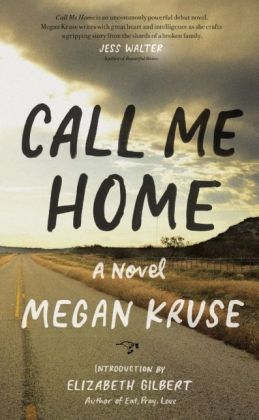
Call Me Home by Megan Kruse

A family story, in multiple voices, of pain and love and the journey to safety.

call me home

In her debut novel Call Me Home, Megan Kruse undertakes sprawling topics including guilt, sex, domestic violence and the complicated love of siblings, parents, children and lovers, in settings across the United States. These ambitious themes and clearly wrought characters are gorgeously rendered in feeling prose.

Amy moved from small-town Texas to small-town Washington state as an 18-year-old newlywed, before he began to beat her. The action of Call Me Home begins years later, alternatingly told in the third-person perspectives of Amy and her son Jackson, and first person by Jackson’s little sister Lydia. Amy tries to leave with her children, repeatedly, but to permanently escape her abusive husband she has to choose just one child to save. Eighteen-year-old Jackson finds himself on the streets of Portland, Oregon before taking work on a construction crew in Idaho. Amy and Lydia hide out at a shelter in New Mexico, then find their way to Amy’s hometown, where 13-year-old Lydia meets her grandmother for the first time. Flashbacks throughout the narrative also portray Amy’s marriage and abuse and the children’s early lives.

Call Me Home offers lovely descriptions of natural settings in Washington, Idaho and Texas, but central are the powerful themes and ugly realities of domestic violence, Jackson’s challenges as a gay teen navigating unfamiliar streets and country, and the shared and unique traumas of Amy, Lydia and Jackson. Kruse’s evocative, often lyrical language serves her subjects well, so that what results is not unleavened pain but painful beauty, even hope.


This review originally ran in the March 10, 2015 issue of Shelf Awareness for Readers. To subscribe, click here, and you’ll receive two issues per week of book reviews and other bookish fun!


Rating: 8 garbage bags.

Untangling the Knot: Queer Voices on Marriage, Relationships & Identity, edited by Carter Sickels

An incisive and enlightening examination of same-sex marriage within the wider context of LGBTQ needs.

untangling

Untangling the Knot: Queer Voices on Marriage, Relationships and Identity assembles pieces from diverse contributors, college professors and blue-collar workers, some established writers and some never before published. Edited by Carter Sickels (The Evening Hour), these extremely sharp essays offer a startling array of perspectives on the fight for same-sex marriage in the United States, rendering a deceptively simple concept–that the needs of the LGBTQ community range far beyond marriage–fully and feelingly. Published as the Supreme Court agrees to hear arguments about same-sex marriage on a nationwide level, Untangling the Knot is profoundly eye opening, even for readers well informed on the subject.

Essays cover the reasons why marriage is important to some members of LGBTQ communities, addressing questions of medical decision-making, finances and insurance, child rearing, equality. Others protest what Ben Anderson-Nathe calls a “rhetoric of sameness”: the argument for marriage rights based on the idea that queer families are just like straight ones. Jeanne Cordova illustrates why choosing a single issue is damning for a movement. Joseph Nicholas DeFilippis writes that the continuing assumption that marriage is the highest form of family does a disservice bigger than the queer community, affecting straight people as well. Several contributors argue against legal rights, benefits and protections being tied to marriage at all. Some suggest better uses for organizational resources: homelessness, health care, anti-discrimination, and aid to trans people, the poor and queer people of color.

With Sickels’s synthesizing introduction, these sympathetic, well-informed essays show that the fight for same-sex marriage is deeply complex and only one issue in the fight for inclusiveness and equality.


This review originally ran in the March 3, 2015 issue of Shelf Awareness for Readers. To subscribe, click here, and you’ll receive two issues per week of book reviews and other bookish fun!


Rating: 8 nontraditional arrangements.

book beginnings on Friday: Untangling the Knot, edited by Carter Sickels

Thanks to Rose City Reader for hosting this meme. To participate, share the first line or two of the book you are currently reading and, if you feel so moved, let us know what your first impressions were based on that first line.

untangling

This is an essay collection, Queer Voices on Marriage, Relationships and Gender. I found it quite eye-opening and recommend it highly. From the introduction by editor Carter Sickels, a beginning for you:

I’m writing this the day after Oregon has legalized gay marriage, and I can’t stop looking at the pictures of people lined up at the courthouse or listening to the interviews of couples who’ve been waiting for this moment for ten, twenty, thirty years. Today, Portland is a city of celebration.

There is a ‘but’ coming, though. Stick around: it is interesting and enlightening.

This quotation comes from an uncorrected advance proof and is subject to change.

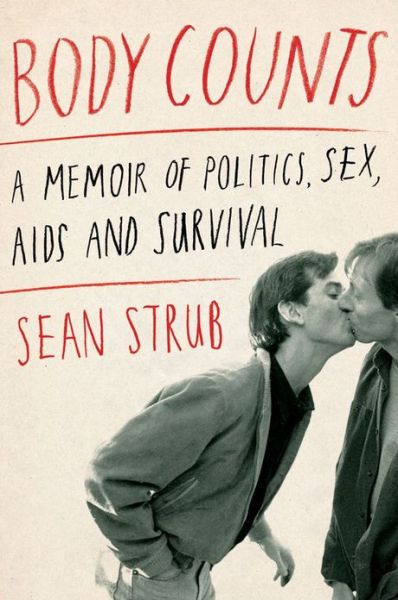
Body Counts: A Memoir of Politics, Sex, AIDS, and Survival by Sean Strub

Sean Strub’s earnest, evocative memoir of political activism, coming out and the AIDS epidemic will appeal to diverse readers.
bodycounts

Seventeen-year-old Sean Strub left Iowa City in 1976 to attend Georgetown University and–more importantly for his future–to become an elevator operator at the Capitol Building. He worked to meet as many powerful figures as possible, with his own political career in mind, yet he was haunted by a secret he feared would make him unelectable: he was attracted to men.

Three years later, the colorful, growing gay community of New York City encouraged the aspiring politico to begin to explore his own sexuality and acknowledge it as a permanent feature in his life. As an increasingly “out” gay man, he shifted his focus away from the idea of running for office and became a committed activist in the pursuit of gay rights. Strub’s second passion and skill was for entrepreneurship, and he eventually started up an impressive number of companies, including direct-mail ventures and publications that supported his causes.

In the early 1980s, “gay cancer,” eventually known as AIDS, was suddenly everywhere. Strub couldn’t attend every funeral and memorial service, he writes, but he always made sickbed visits; sometimes he walked the halls of a hospital without a specific friend in mind, reading names on rooms, sure he’d find people who needed him.

Strub had known he was HIV-positive since 1985, when he was given a prognosis of “maybe” two years, but his partner Michael died with no warning, not even getting sick first. The need for AIDS activism to push for quicker access to new drugs and fight discrimination naturally dominated Strub’s attention in the years following his diagnosis and Michael’s death.

In Body Counts, Strub relates the joys and struggles of learning self-love, political aspirations and disillusions, activism and relationships with countless men and women he loves, with cameo appearances by Tennessee Williams, Bobby Kennedy, Gore Vidal and Bill Clinton (among others). Body Counts is a powerfully moving personal memoir with the added value of a fine and feeling primer on the history of gay culture and AIDS in the United States. Strub’s subject matter could have been morbidly tragic, but he retains a sense of humor and celebration, honoring the dead with love and hope. Now an AIDS survivor for nearly 30 years, Strub notes that he is on his way to matching, in same-sex weddings, the number of funerals he attended in the 1980s and ’90s.


This review originally ran in the December 13, 2013 issue of Shelf Awareness for the Book Trade. To subscribe, click here.


Rating: 8 mailings.

Teaser Tuesdays: Body Counts by Sean Strub

Teaser Tuesdays is a weekly bookish meme, hosted by MizB of Should Be Reading.

bodycounts

Body Counts: A Memoir of Politics, Sex, AIDS and Survival is excellent both as a moving personal memoir and as a historical primer on the AIDS epidemic and cultural & political responses to it. I am impressed. As a teaser, let me share this line:

Hattoy was a larger-than-life character, politically astute, and outrageously witty, even for a gay man who had a college job working at Disneyland dressed as Donald Duck while tripping on acid.

…which highlights the humor still available to Strub as he relates some pretty sobering stories. This is, after all, his life, and a sense of fun is always appropriate in life. Review to come, but for now I can safely recommend it.

This quotation comes from an uncorrected advance proof and is subject to change.

Fairyland: A Memoir of My Father by Alysia Abbott

A daughter’s tender memoir of her father’s life as a single gay man in 1970s Haight-Ashbury.

9780393082524_p0_v2_s600

When Alysia Abbott was two years old, her mother was killed in a car accident. Her father, Steve, moved her across the country to raise her alone as a gay man and single father in 1970s San Francisco–a pioneer in several senses. Alysia’s childhood and teen years took place against the backdrop of a magical Haight-Ashbury district filled with creative, adventurous people like her father (a poet and political activist), recreational drugs and minimal supervision.

Their father-daughter relationship was loving but rocky. When Steve develops AIDS and his health begins to plummet, he calls 20-year-old Alysia home from her studies in Paris and New York City to nurse him, a full-circle caretaking demand that she resents at the time.

Fairyland is foremost a daughter’s memoir of a much-loved parent. She continues to become acquainted with him through her research, most notably in reading copious notebooks filled with his poetry and journal entries. She colorfully renders an iconic epoch in San Francisco, together with the city’s gay culture and politics, and the early days of the nationwide gay rights movement. Alongside beautiful characterizations (often morphing into eulogies), Alysia paints a stark image of the AIDS epidemic and the Reagan administration’s non-response to it. As a personal story and as a portrayal of an era, Fairyland is powerful, loving, authentic, and contains Steve’s artistic legacy in its lyricism. It acknowledges Steve’s impact on Alysia–and both their shortcomings–with gratitude and grace.


This review originally ran in the June 7, 2013 issue of Shelf Awareness for Readers. To subscribe, click here, and you’ll receive two issues per week of book reviews and other bookish fun!


Rating: 9 brightly colored t-shirts.

Harley Loco: A Memoir of Hard Living, Hair, and Post-Punk from the Middle East to the Lower East Side by Rayya Elias

A visceral exploration of sex and drugs in 1980s New York City.

harley

Rayya Elias was born in Syria in 1960 but fled with her family to Detroit at age seven. Too young to appreciate her family’s culture fully, she doesn’t fit into her new environment, either, and suffers a rocky youth in Detroit before escaping to New York City with her newfound passions: rock ‘n’ roll, hairstyling and drugs. The Lower East Side in the early 1980s was a sparkling playground for a young woman trying to find herself, and Elias becomes sought after both as a hairdresser and as a new wave musician.

It will take her years to identify as a lesbian, but the affairs with women that began back in Detroit blossom into full passion (and dysfunction) in New York–and, for a short time, in a shared London apartment with a married woman and her husband. Her drug abuse also blossoms into an addiction to cocaine and heroin, a problem that will take countless stints in rehab and detox facilities–and jail–to conquer. By the end of her story, Elias is clean, back in New York and pursuing healthy musical creativity.

Far from being just another story of addition and redemption, Harley Loco (a nickname the author earned in jail) is unusual in its rawness and feeling. Elias perfectly evokes New York City in the 1980s and ’90s, complete with sour odors and pain. Her personality–hard-edged and unrepentant, yet tender and vulnerable–is thoroughly bared and, in the end, irresistibly likable.


This review originally ran in the April 19, 2013 issue of Shelf Awareness for Readers. To subscribe, click here, and you’ll receive two issues per week of book reviews and other bookish fun!


Rating: 7 second chances.

Real Man Adventures by T Cooper

A dryly witty journey from female to male, with musings on what it means to be a man.

T Cooper, the author of several successful novels (including The Beaufort Diaries and Lipshitz 6), is fascinated by masculinity, perhaps in part because he’s had to work a little harder than the average man to get there: he was born female. Yet even as he explores the essence of masculinity and his own experiences with gender in Real Man Adventures, he expresses some reluctance to delve into the personal.

There is definitely some autobiographical content, but Cooper takes his own privacy seriously, as well as that of his wife and daughters, and is less interested in hashing out the details of his own life than he is in exploring the meaning and role of masculinity in society and the difficulties facing transgender men and women. Real Man Adventures sidesteps the concept of a straightforward memoir, instead compiling a whimsical collection of miscellanea: letters, interviews, lists and original art all help Cooper and his readers explore together what makes a man. This structure works perfectly, and feels like a conversation with Cooper himself.

Deeply honest, even while guarding a few precious items of privacy, Real Man Adventures is a brave book. Cooper does a great service not only to transgender people whose paths might be made a little clearer, but also to their loved ones, neighbors and acquaintances, who should find it a little easier to navigate relationships and communications thanks to this frank discussion. And the irreverent, wry humor throughout keeps Cooper’s brash personality at center stage, where it belongs.


This review originally ran as a *starred review* in the Nov. 27, 2012 issue of Shelf Awareness for Readers. To subscribe, click here, and you’ll receive two issues per week of book reviews and other bookish fun!


Rating: 8 pronouns.

Before the Rain by Luisita Lopez Torregrosa

An impassioned memoir of love between two journalists, set amid travel and revolution.


Luisita López Torregrosa (The Noise of Infinite Longing) is a New York newspaper editor when Elizabeth comes aboard as a new reporter in the 1980s. Her quiet, self-contained, slightly mysterious air draws Luisita’s attention. When Elizabeth lands a sought-after position as foreign correspondent, she builds a home for herself in Manila. Luisita joins her there, and the two women throw themselves hesitatingly and then wholeheartedly into a passionate affair against the backdrop of the fall of Ferdinand Marcos.

As a love story, Before the Rain is spellbinding and heartwrenching, but Torregrosa’s highest feat is perhaps one of poetry. Her tone is haunting, lyrical and sensuous. Readers will feel the equatorial heat of the Philippines and the beat of the Manila Blues, smell the mangoes and squatters’ camps, taste the margaritas and then feel the biting cold of New York winters as the story returns to the United States.

Before the Rain is a memoir of revolution as well as love: the beauty, upheaval and political turmoil of the Philippines are handled sensitively and lovingly. Besides Manila, Luisita and Elizabeth live and travel in New York, Tokyo, Los Angeles, Miami, Rio and Washington, D.C.– and each of these places leaves its mark. But their relationship is always the book’s main focus. The two women travel, move, work various jobs (some rewarding, some soul-draining); and throughout, their ardor has a momentum all its own. Even in its painful finale, that love is this book’s most lovely evocation.


This review originally ran in the August 10, 2012 issue of Shelf Awareness for Readers. To subscribe, click here, and you’ll receive two issues per week of book reviews and other bookish fun!


Rating: 8 sheets of newsprint.