Teaser Tuesdays: Body Counts by Sean Strub

Teaser Tuesdays is a weekly bookish meme, hosted by MizB of Should Be Reading.

bodycounts

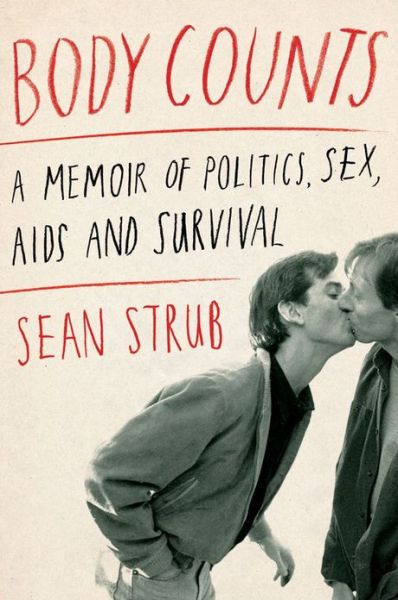
Body Counts: A Memoir of Politics, Sex, AIDS and Survival is excellent both as a moving personal memoir and as a historical primer on the AIDS epidemic and cultural & political responses to it. I am impressed. As a teaser, let me share this line:

Hattoy was a larger-than-life character, politically astute, and outrageously witty, even for a gay man who had a college job working at Disneyland dressed as Donald Duck while tripping on acid.

…which highlights the humor still available to Strub as he relates some pretty sobering stories. This is, after all, his life, and a sense of fun is always appropriate in life. Review to come, but for now I can safely recommend it.

This quotation comes from an uncorrected advance proof and is subject to change.

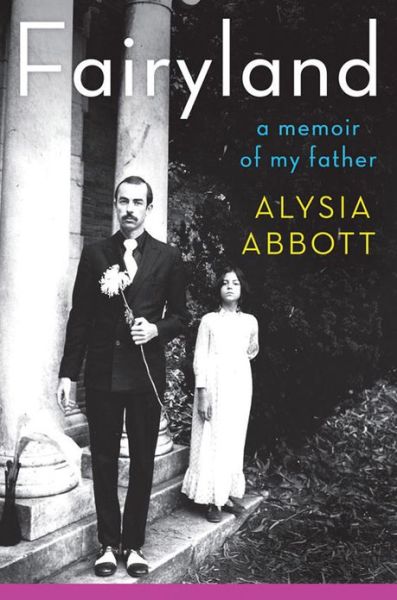
Fairyland: A Memoir of My Father by Alysia Abbott

A daughter’s tender memoir of her father’s life as a single gay man in 1970s Haight-Ashbury.

9780393082524_p0_v2_s600

When Alysia Abbott was two years old, her mother was killed in a car accident. Her father, Steve, moved her across the country to raise her alone as a gay man and single father in 1970s San Francisco–a pioneer in several senses. Alysia’s childhood and teen years took place against the backdrop of a magical Haight-Ashbury district filled with creative, adventurous people like her father (a poet and political activist), recreational drugs and minimal supervision.

Their father-daughter relationship was loving but rocky. When Steve develops AIDS and his health begins to plummet, he calls 20-year-old Alysia home from her studies in Paris and New York City to nurse him, a full-circle caretaking demand that she resents at the time.

Fairyland is foremost a daughter’s memoir of a much-loved parent. She continues to become acquainted with him through her research, most notably in reading copious notebooks filled with his poetry and journal entries. She colorfully renders an iconic epoch in San Francisco, together with the city’s gay culture and politics, and the early days of the nationwide gay rights movement. Alongside beautiful characterizations (often morphing into eulogies), Alysia paints a stark image of the AIDS epidemic and the Reagan administration’s non-response to it. As a personal story and as a portrayal of an era, Fairyland is powerful, loving, authentic, and contains Steve’s artistic legacy in its lyricism. It acknowledges Steve’s impact on Alysia–and both their shortcomings–with gratitude and grace.


This review originally ran in the June 7, 2013 issue of Shelf Awareness for Readers. To subscribe, click here, and you’ll receive two issues per week of book reviews and other bookish fun!


Rating: 9 brightly colored t-shirts.

Harley Loco: A Memoir of Hard Living, Hair, and Post-Punk from the Middle East to the Lower East Side by Rayya Elias

A visceral exploration of sex and drugs in 1980s New York City.

harley

Rayya Elias was born in Syria in 1960 but fled with her family to Detroit at age seven. Too young to appreciate her family’s culture fully, she doesn’t fit into her new environment, either, and suffers a rocky youth in Detroit before escaping to New York City with her newfound passions: rock ‘n’ roll, hairstyling and drugs. The Lower East Side in the early 1980s was a sparkling playground for a young woman trying to find herself, and Elias becomes sought after both as a hairdresser and as a new wave musician.

It will take her years to identify as a lesbian, but the affairs with women that began back in Detroit blossom into full passion (and dysfunction) in New York–and, for a short time, in a shared London apartment with a married woman and her husband. Her drug abuse also blossoms into an addiction to cocaine and heroin, a problem that will take countless stints in rehab and detox facilities–and jail–to conquer. By the end of her story, Elias is clean, back in New York and pursuing healthy musical creativity.

Far from being just another story of addition and redemption, Harley Loco (a nickname the author earned in jail) is unusual in its rawness and feeling. Elias perfectly evokes New York City in the 1980s and ’90s, complete with sour odors and pain. Her personality–hard-edged and unrepentant, yet tender and vulnerable–is thoroughly bared and, in the end, irresistibly likable.


This review originally ran in the April 19, 2013 issue of Shelf Awareness for Readers. To subscribe, click here, and you’ll receive two issues per week of book reviews and other bookish fun!


Rating: 7 second chances.

Real Man Adventures by T Cooper

A dryly witty journey from female to male, with musings on what it means to be a man.

T Cooper, the author of several successful novels (including The Beaufort Diaries and Lipshitz 6), is fascinated by masculinity, perhaps in part because he’s had to work a little harder than the average man to get there: he was born female. Yet even as he explores the essence of masculinity and his own experiences with gender in Real Man Adventures, he expresses some reluctance to delve into the personal.

There is definitely some autobiographical content, but Cooper takes his own privacy seriously, as well as that of his wife and daughters, and is less interested in hashing out the details of his own life than he is in exploring the meaning and role of masculinity in society and the difficulties facing transgender men and women. Real Man Adventures sidesteps the concept of a straightforward memoir, instead compiling a whimsical collection of miscellanea: letters, interviews, lists and original art all help Cooper and his readers explore together what makes a man. This structure works perfectly, and feels like a conversation with Cooper himself.

Deeply honest, even while guarding a few precious items of privacy, Real Man Adventures is a brave book. Cooper does a great service not only to transgender people whose paths might be made a little clearer, but also to their loved ones, neighbors and acquaintances, who should find it a little easier to navigate relationships and communications thanks to this frank discussion. And the irreverent, wry humor throughout keeps Cooper’s brash personality at center stage, where it belongs.


This review originally ran as a *starred review* in the Nov. 27, 2012 issue of Shelf Awareness for Readers. To subscribe, click here, and you’ll receive two issues per week of book reviews and other bookish fun!


Rating: 8 pronouns.

Before the Rain by Luisita Lopez Torregrosa

An impassioned memoir of love between two journalists, set amid travel and revolution.


Luisita López Torregrosa (The Noise of Infinite Longing) is a New York newspaper editor when Elizabeth comes aboard as a new reporter in the 1980s. Her quiet, self-contained, slightly mysterious air draws Luisita’s attention. When Elizabeth lands a sought-after position as foreign correspondent, she builds a home for herself in Manila. Luisita joins her there, and the two women throw themselves hesitatingly and then wholeheartedly into a passionate affair against the backdrop of the fall of Ferdinand Marcos.

As a love story, Before the Rain is spellbinding and heartwrenching, but Torregrosa’s highest feat is perhaps one of poetry. Her tone is haunting, lyrical and sensuous. Readers will feel the equatorial heat of the Philippines and the beat of the Manila Blues, smell the mangoes and squatters’ camps, taste the margaritas and then feel the biting cold of New York winters as the story returns to the United States.

Before the Rain is a memoir of revolution as well as love: the beauty, upheaval and political turmoil of the Philippines are handled sensitively and lovingly. Besides Manila, Luisita and Elizabeth live and travel in New York, Tokyo, Los Angeles, Miami, Rio and Washington, D.C.– and each of these places leaves its mark. But their relationship is always the book’s main focus. The two women travel, move, work various jobs (some rewarding, some soul-draining); and throughout, their ardor has a momentum all its own. Even in its painful finale, that love is this book’s most lovely evocation.


This review originally ran in the August 10, 2012 issue of Shelf Awareness for Readers. To subscribe, click here, and you’ll receive two issues per week of book reviews and other bookish fun!


Rating: 8 sheets of newsprint.

book beginnings on Friday: Before the Rain by Luisita Lopez Torregrosa

Thanks to Rose City Reader for hosting this meme. To participate, share the first line or two of the book you are currently reading and, if you feel so moved, let us know what your first impressions were based on that first line.

Before the Rain: A Memoir of Love and Revolution has one of the more impressive opening lines I’ve come across lately. I’m very glad to be able to share it with you!

In the years since that first letter came, postmarked NEW DELHI and written on pale lavender Claridge’s Hotel stationary, I have begun this story a hundred times, and each time I was afraid.

I find that lovely in that it says a great deal, piques the curiosity, and introduces the narrator, all at once; it also has a certain lyricism to it. I don’t know about you, but I now want very much to know what was in the letter and why it is a frightening story to tell. She next increases the suspense by taking two steps back in time and detailing scenes and characters unrelated to the lavender letter. I’m enjoying this one so far.

What are you reading this weekend?

This quotation comes from an uncorrected advance proof and is subject to change.

The Song of Achilles by Madeline Miller

I read this book in a day, rapt and tearful and awed. Madeline Miller, I love you. Write more, please.

I expect that most people are at least vaguely familiar with the story of the Trojan War, even if you never read the Iliad, yes? The Greeks sail to Troy in pursuit of Helen, “the face that launched a thousand ships” (that’s these ships!), the most beautiful woman in the world, stolen from her king-husband Menelaus by the Trojan prince Paris. They fight at the gates of Troy for ten years before Odysseus’s characteristically clever notion of the big wooden horse (the Trojan horse of idiom) wins the war for the Greeks. Achilles is a hero of the war, on the Greeks’ side. He had been sitting the war out in protest against an offense to his pride when his close friend (and, most scholars agree, lover) Patroclus goes into battle and is killed. In the opening scene of the Iliad, Achilles is mad with grief and rage, about to rush into battle, kill Hector, and be killed by Paris.

That’s the background. Miller, a scholar of ancient languages (including Greek) and theatre has written a novel from Patroclus’s point of view. This gave her quite a bit of leeway, since Patroclus is not given much coverage in Homer or in ancient myth generally; she got to do what she wanted with him. Here, we see him grow up from a boy: he was a disappointment to his father, then was exiled in dishonor and sent away to be fostered in another kingdom, where Achilles is the prince and heir. The two boys form a decidedly unlikely friendship, with Patroclus the dishonored and weak following in the footsteps of Achilles, whose future is prophesied to be something enormous: he will be Aristos Achaion, the greatest of the Greeks.

Patroclus joins Achilles in his studies and their bond grows closer until they become lovers. They are not eager to join the Greeks and sail to Troy to fight for another king’s wife, but circumstances (and Odysseus, the crafty one) conspire to see them off. From there, you can revisit my synopsis of the Iliad, above – except that we keep Patroclus’s perspective, which actually made the Trojan War that I thought I knew so well spring fresh from the page.

And that is one of the several strengths of this book: that an ancient myth that is familiar to many readers, like me, becomes so real, new, crisp & juicy in Miller’s hands. It definitely made me want to go back and reread the Iliad, as well as other cited works. (Check out the Character Glossary, whether you think you need it or not, for background as well as mentions of other books you’ll want to go find.) The myth of the Trojan War comes alive with Patroclus as it hasn’t before.

Another great strength is the emotional impact Miller achieves. This book is moving, sweet, heartfelt, powerful, in its tragedies as in its loving moments – and the tragedies are plentiful. There is visceral wrath in Achilles’s mother Thetis and her hatred of all mortals and Patroclus in particular; that emotion comes through just as strongly as the love that makes Patroclus put aside jealousy and envy, makes him put Achilles’s needs before his own. I noticed that the first-person voice of Patroclus rarely uses the name Achilles, but just refers to his lover as “he” – thus emphasizing the extent to which Achilles is the center of his world.

As I said at the start of this review, I want more of this! It’s so well done. If you’re taking requests, Ms. Miller, I would like to read a book about what happened to the happy family of Odysseus, Penelope and Telemachus following the conclusion of the Odyssey: how does Odysseus manage to gracefully step down from power and transfer to Telemachus without sacrificing any of his machismo? Reading The Song of Achilles raised this question for me – how a king could step down and preserve his dignity and quality of life. I wonder, too, whether Penelope ever gets grumpy about all the philandering Odysseus did along his homeward journey, while she was standing strong against the suitors.

In a nutshell, this retelling of the Trojan War and the relationship between Achilles and Patroclus is lovely, loving, sweet and deeply emotional; it preserves the grand, sweeping scale and feeling of humanity and drama in the original, but brings it freshly alive in an appealingly different format. The Song of Achilles made me sigh and think and cry, and I wanted more when it was all gone. This may very well be the best book I’ve read in 2012.


Rating: a rare 10 loving caresses.

A Queer and Pleasant Danger: The True Story of a Nice Jewish Boy who Joins the Church of Scientology and Leaves Twelve Years Later to Become the Lovely Lady She is Today by Kate Bornstein

A radical gender theorist and performance artist’s memoir makes its eye-catching subtitle look staid.


Kate Bornstein started life as Albert, a Jewish kid on the Jersey shore who knew when he was four and a half years old that he wasn’t a boy. Bornstein’s path was predictably complicated from there, but the lengthy list of problems she lists in her prologue astounds: she suffers from leukemia as well as anorexia, borderline personality disorder, post-traumatic stress syndrome and a history of cutting; she’s a sadomasochist, a transsexual and a former member of the Church of Scientology. Furthermore, A Queer and Pleasant Danger states from the outset its purpose of hopefully someday introducing Kate to her daughter and grandchildren, currently estranged.

If this list of disorders and minority statuses sounds alarming, never fear. Bornstein is funny, flippant, irreverent and witty. We follow Albert as a child in Jersey, a student at Brown, post-graduate studies in theater at Brandeis and the search for meaning that brought him to Scientology; then on his journey to become Kate, through a new life in San Francisco, Seattle and finally New York, with a series of relationships of every arrangement imaginable (and unimaginable). She generally has a good time, especially after becoming Kate, and her story ends on a positive note. Her tone is most serious in discussing the world of Scientology, which she presents as decidedly distressing and wacky, but her voice overall is impertinent and great fun. A Queer and Pleasant Danger is not for the faint-hearted, for reasons that become fairly evident (see: sadomasochism), but is ultimately uplifting, hopeful, even joyous–and always droll.


This review originally ran in the May 11, 2012 issue of Shelf Awareness for Readers. To subscribe, click here, and you’ll receive two issues per week of book reviews and other bookish fun!


Rating: 6 upheavals.

The Great Night by Chris Adrian

This book is billed as a modern-day retelling of Shakespeare’s A Midsummer Night’s Dream, which sounds fairly ambitious. The original classic is far too much to mess around with lightly. I find it beautiful, haunting, magical, and surprisingly accessible; I think anyone and everyone should be able to enjoy a production of this play, which might not be true of all the bard’s work, no matter how wonderful. But I have to give Adrian full credit: I feel that he created something new out of it, definitely a recognizable retelling, but something new and beautiful in its own way, very different and very wonderful too.

Three young people, Henry, Will, and Molly, are all (separately) lost in Buena Vista Park in San Francisco at dusk on midsummer night’s eve. All three were on their way to the same party which none really wanted to attend; all three are tenuously connected without actually knowing one another; and all three are quite neurotic in their own ways. Meanwhile, Titania is grief-stricken, having lost her Boy to leukemia (and being unfamiliar with the mortal concept of death), and then having lost Oberon, who left her when they quarreled in their shared grief. In despair and resignation, she releases Puck from his bond of servitude, and he rages as the Beast throughout the park. Also meanwhile, a troupe of homeless aspiring actors meet to rehearse a musical play, but are separated, as the fairies come out to frolic, or flee Puck, or make mischief.

Chapter by chapter we get inside the heads of the three mortal lovers, and sometimes of Titania too. The character development is exquisite; I loved learning more about the histories of Will, Molly, and Henry, and gradually putting together the clues and learning how they’re interconnected and where their respective neuroses might have come from. The depth of these complex, nuanced, disturbed characters might have been my most favorite part of this book.

Titania gets substantially more development, too. The lengthened and deepened relationship with the Boy, and his battle with cancer, allow for her to mature and look outside herself in ways that a fairy queen would not normally be called to do. Even Puck gets a more significant personality, and desires of his own.

Part fairy tale – of course – The Great Night has all the magic and all the lavish scenery that Shakespeare’s Titania & Oberon could have wanted, helped along by the alternately lush & misty San Francisco parkland. As in the play, there are disturbing moments; but these are fully fleshed out. I guess the great difference here is that this is a lengthy novel (~300 pages) with all the exposition that comes with this format, and there is simply less opportunity in a slim play for this kind of development. But Adrian’s work is darker, and more graphic. (There is Sex. Seriously.) The ending is not lighthearted and happy as it is in A Midsummer Night’s Dream. Among the mortal characters, we meet a tree doctor; men and women recovering from the suicides of loved ones; and the mess that OCD can make of a life; the lovers are gay and straight but always damaged. But the worlds are so fully realized… and the three youth are so fully developed, I ached for them. When every chapter closed, I regretted leaving that chapter’s focus character, but was happy to reunite with the next.

This was one of those books I was very sorry to see the end of. I wish there were more. Luckily, Adrian has written other books!

I recommend The Great Night. Certainly nothing is taken away from Shakespeare’s masterpiece; but this is a different realization of the same story-skeleton, in a different format, and it is absolutely an accomplishment all by itself.

Brokeback Mountain

Just read all 55 pages of Brokeback Mountain by Annie Proulx real quick. It’s been years since I saw the movie but from my memory, it stayed remarkably close to what I just read. Of course, it should be easy for a two-hour movie to include everything in a 55-page short story, but it’s Hollywood; you have to keep your eyes on them. At any rate, I hope I wasn’t too colored by having seen the movie first; I thought it was a remarkably evocative little book. In few words, Proulx gives us emotions without calling them that; she shows, doesn’t tell. It reminded me of Hemingway’s short stories that I love so much, like Up In Michigan in particular: coarsely sexual, quietly tragic, no-frills. I’m impressed.