Don Quixote by Cervantes, trans. by J.M. Cohen: The First Part

Thank goodness Cervantes gives us a “First Part” division right at the halfway mark of this big book, because I need it. I have a huge number of galleys to read for review, and the Gone with the Wind readalong going on as well. So Don Quixote is getting a break. But, I am enjoying it and will be picking it back up! So, eventually, expect a Second Part.

For a chunkster, this is surprisingly easy reading. Don Quixote and sidekick Sancho are just goofily traversing the Spanish countryside, having haphazard and silly adventures which they view in different terms. At the beginning, Sancho’s perspective is that of reality, more or less, with an ongoing desire to please his master and see things his master’s way, and Don Quixote’s perspective is entirely fantastical, based on the novels of chivalry he has read until his brain became mush. (The perils of novel-reading, children!) As they continue their adventures, though, Sancho buys into the fantasy – mostly. He retains a more cynical view that his master, who is completely off his rocker where errantry is concerned.

I was definitely intimidated by its bulk, but these 900+ pages of story are split into little episodes only 2-3 pages long in some cases. What I’m saying is, if you’re intimidated by the bulk of Don Quixote, don’t be! It’s remarkably easy, and entertaining, reading.

Don Quixote is a gentleman of leisure living in the countryside of La Mancha. (This is Spain in, erm, the 1600’s or 1500’s? Published in early 1600’s. I’m not too clear on the precise setting in time, 16th vs. 17th century Spain, and the niceties thereof, not being a strong point in my education to date.) He becomes so obsessed with his novels of chivalry and the knights errant and their lady loves and great deeds, etc., that his mind becomes confused. He outfits himself in a comical assortment of bits and pieces and substitute parts, thinking he is an elegant knight. He roams the countryside on his tired old horse, with a squire named Sancho on a mule, imagining that he achieves feats of gallant and courageous battle and strength, when in fact he (famously) does battle with windmills, releases dangerous criminals from the King’s custody, gets himself and Sancho beaten repeatedly, makes promises he clearly will not be able to keep, and generally makes a fool of himself.

The book, which was originally published in two volumes (thus, two parts!), follows a meandering story line; it is more a series of small adventures, the kind that might be published serially. Some of these adventures leave Don Quixote and Sancho sidelined while we meet other temporary protagonists. These are a welcome respite when Don Quixote’s ridiculous behavior becomes tiresome. I get most excited and engrossed in his adventures when there are plenty of other characters milling about; just Don Quixote and Sancho together can get a little bit repetitive. It is easy to get annoyed with Don Quixote because he is exasperating; but this is intended. He is a ridiculous character.

I am surprised at what an easy and quick read this is turning out to be, and at how often I giggled aloud. Don’t fear the chunky Classic of Literature, friends. Although setting the book aside for now, I look forward to returning to it. Part the Second to come.

Teaser Tuesdays: Don Quixote by Cervantes, trans. by J.M. Cohen

Teaser Tuesdays is a weekly bookish meme, hosted by MizB of Should Be Reading. Anyone can play along! Just open your current read to a random page and share a few sentences. Be careful not to include spoilers!

Here ’tis! The Classics Challenge continues.

My teaser today comes from Don Quixote by Cervantes, translated by J.M. Cohen. From page 158:

When Don Quixote realized that Sancho was making fun of him, he got so furiously angry that he lifted his lance and dealt him two blows which would have relieved the master of the duty of paying his squire’s wages, unless perhaps to his heirs, had they caught him on the head instead of on the shoulders. But when Sancho found himself so poorly rewarded for his joke, he was afraid that his master might carry the matter farther, and said to him with great humility: ‘Gently, your worship; I was only joking, I swear.’

I am just beginning this book (am not even to page 158 yet, and my edition runs over 900 pages!), but I already believe that this is a representative passage. There have been several instances of Don Quixote losing his temper and dealing blows; and this passage was chosen at random. I think the dealing of blows may be a theme.

I’m excited to be into such a formidable classic text. What are you reading these days?

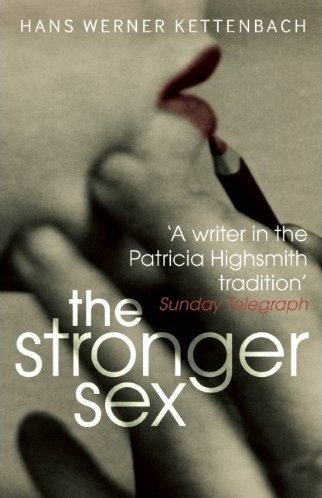
The Stronger Sex by Hans Werner Kettenbach, Anthea Bell

A quietly provocative novel that examines the psychology of sex and aging through the eyes of a nervous young lawyer in over his head.

The Stronger Sex is narrated by the young Dr. Alex Zabel, a lawyer saddled by his boss with the difficult task of defending an incorrigible elderly womanizer. He is immediately in over his head. The legal situation is thorny enough: Herr Klofft has fired his former mistress, an accomplished engineer, for taking sick time, and she has protested before the employment tribunal. Zabel’s real challenge, however, is in human relations: he has to deal with his client, Herr Klofft, with his ornery moods, ever-looming mortality and off-color humor; the surprisingly sexy and seductive Frau Klofft; and Zabel’s own prickly girlfriend. The plot is quiet and unhurried, proceeding sedately toward a resolution that is less important than the journey Kettenbach takes us on to get there. Anthea Bell translates from the German with great skill, with fewer awkward moments than many native-English writers.

This novel contemplates old age, sensuality and the relationship between the two. The advances (and retreats) between Zabel and Frau Klofft feel deathly serious in their implications. The young attorney is deeply embarrassed by Herr Klofft’s vulgarity as well as by his own attraction to the elderly Frau. He reacts almost as an adolescent to her worldly charms, struggling to fit the Kloffts’ eccentricities into his conservative world.

While the events that move the action in this book are muted, the layered, potentially uncomfortable questions resonate in the back of the reader’s head. Kettenbach has succeeded in writing a novel that demands reflection. It’s not a psychological thriller, but a psychological study with a legal background, filled with black humor to accompany Zabel’s slightly bizarre relationships. This meditative novel is mildly disturbing but massively thought-provoking.


This review originally ran in the May 19, 2011 issue of Shelf Awareness. To subscribe, click here, and you’ll receive two issues per week of book reviews and other bookish fun!

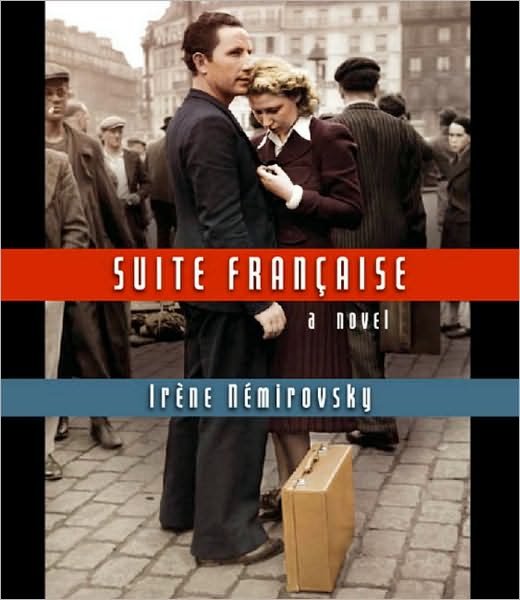
guest review: Suite Française by Irène Némirovsky (audio), trans. by Sandra Smith – from Pops

I have an exciting guest reviewer today: my father. He’s off for the season now – he leaves Houston for the hot months (must be nice to be retired!) and does all his favorite things: running, riding his bike, camping and hiking and visiting beautiful outdoor settings all over. Not to mention, visiting all the great craft beer and brewpubs he can find. He’ll settle for a few months at a time in some hip small town with the right combination of culture, outdoors, and beer; and he’ll move on for the next attraction. This summer I sent him off with a small collection of audiobooks for all that driving, and he has hesitatingly agreed to see about writing up his reactions to them for me to post here. Today he’s sharing with us his thoughts on Suite Française by Irène Némirovsky. Pops, you’re on.

This is not a major work, but is indeed unique, intriguing and noteworthy in a number of respects.

Synopsis: this is a work of fiction written contemporaneously with the author’s own experience during the 1940 German onslaught in France and the subsequent occupation and collaboration. Unlike many journal-type works from the period, this is stylishly written with a now-familiar formula using a cast of fictional, intertwining characters to personalize incidents and experiences amidst real-life events. (Among a number of intriguing questions raised by this work – was this formula at all established at the time?)

For me, this reading was reminiscent of Winds of War (Herman Wouk, 1971); while not nearly as ambitious in scope (actually, a strength), Suite Francaise was as engaging both for the characters as well as for revealing historical nuance. I thoroughly enjoyed it, spent time reflecting over it, and was left wishing for the narrative to continue.

So – what’s exceptional about it?

First, much of the impact derives from knowing the author’s own story and how the book came to life. Born 1903, she was a Russian Jewish immigrant to France (1918), converted to the Catholic Church (1939), published numerous works of renown before the war (including one brought to film), was denied French citizenship in 1938 due to Jewish heritage, and has since been criticized for being a self-hating Jew. She was in the course of writing this work as events unfolded, expecting to create a novel in 5 parts. She finished two parts, was denounced by French collaborators and deported to Auschwitz where she died within a month. Many more of her writings were published since the war. But her daughters retained this notebook manuscript, keeping it unread until 1990 due to anxiety over the expected pain of reading her wartime “journal” – only then, before donating the pages to an archive, did they realize what powerful words those pages held. Written 1940-42, it was published in 2004, acclaimed, translated and read internationally.

Reading with this background, there are numerous elements that may gain impact or raise questions either in the context of her own experience or a clear sightline to contemporary thinking of the time.

  • There are a number of musings by characters and narrator about the future during and after the war that raised chills for me knowing they were written so early in the war.
  • The story contrasts individuals’ different experiences of war, from common civilians feeling powerless and distant from the passions of aggression versus the anonymous, indistinct elites and politicians driving the conflict.
  • She sharply depicts still-thriving class contradictions that threaten to surmount the national conflict: aristocrats of mixed national heritage, communists, resistance fighters, the Church, city vs provinces, villagers vs farmers.
  • There is one passage that strongly evokes scenes from Lord of the Flies. This includes one of several “arbitrary” non war-related deaths in the story. I was left wondering about the origin and meaning of these.
  • Aristocrats and other characters tending to be collaborators make reference to their sympathies opposing the advance of Jews, communists and Freemasons (a triad central to Nazi propaganda). Freemasons?
  • How the French characters respond to the war depends greatly on whether they experienced the “first war” only 25 years (and one young generation) earlier, or the 1870 war (with Prussia, resulting in a victorious German Empire); for the entire society the immediacy of both was stunning.
  • As often occurs with translated works (and in this case the separation of 60+ years), numerous passages had me wondering about the author’s full meaning.

Well you’ve sold me on needing to read this book; and I certainly didn’t know any of that backstory, which does indeed enrich the experience. Thanks for the guest post! Please do give us more as you keep listening!

Teaser Tuesdays: The Stronger Sex by Hans Werner Kettenbach, trans. by Anthea Bell


Teaser Tuesdays is a weekly bookish meme, hosted by MizB of Should Be Reading. Anyone can play along! Just do the following:

* Grab your current read
* Open to a random page
* Share two (2) “teaser” sentences from somewhere on that page
* BE CAREFUL NOT TO INCLUDE SPOILERS! (make sure that what you share doesn’t give too much away! You don’t want to ruin the book for others!)
* Share the title & author, too, so that other TT participants can add the book to their TBR Lists if they like your teasers!

This is a fascinating book that I’m happy to be reading in order to write a review for Shelf Awareness. Quite at random, on page 97, I found a teaser snippet that pretty appropriately handles the themes of this book, including age, mortality, and sexuality.

I longed for smooth, flawless skin. For a dense mop of strong hair, no thin places in it. I longed for the fresh, clean smell of skin and hair like that, a smell owing nothing to any perfume and at the same time not arousing the slightest suspicion that there could be a touch of sprayed urine or the bad odour of wind in it.

It’s quite an interesting, unique read, skillfully translated from the German. I like it.