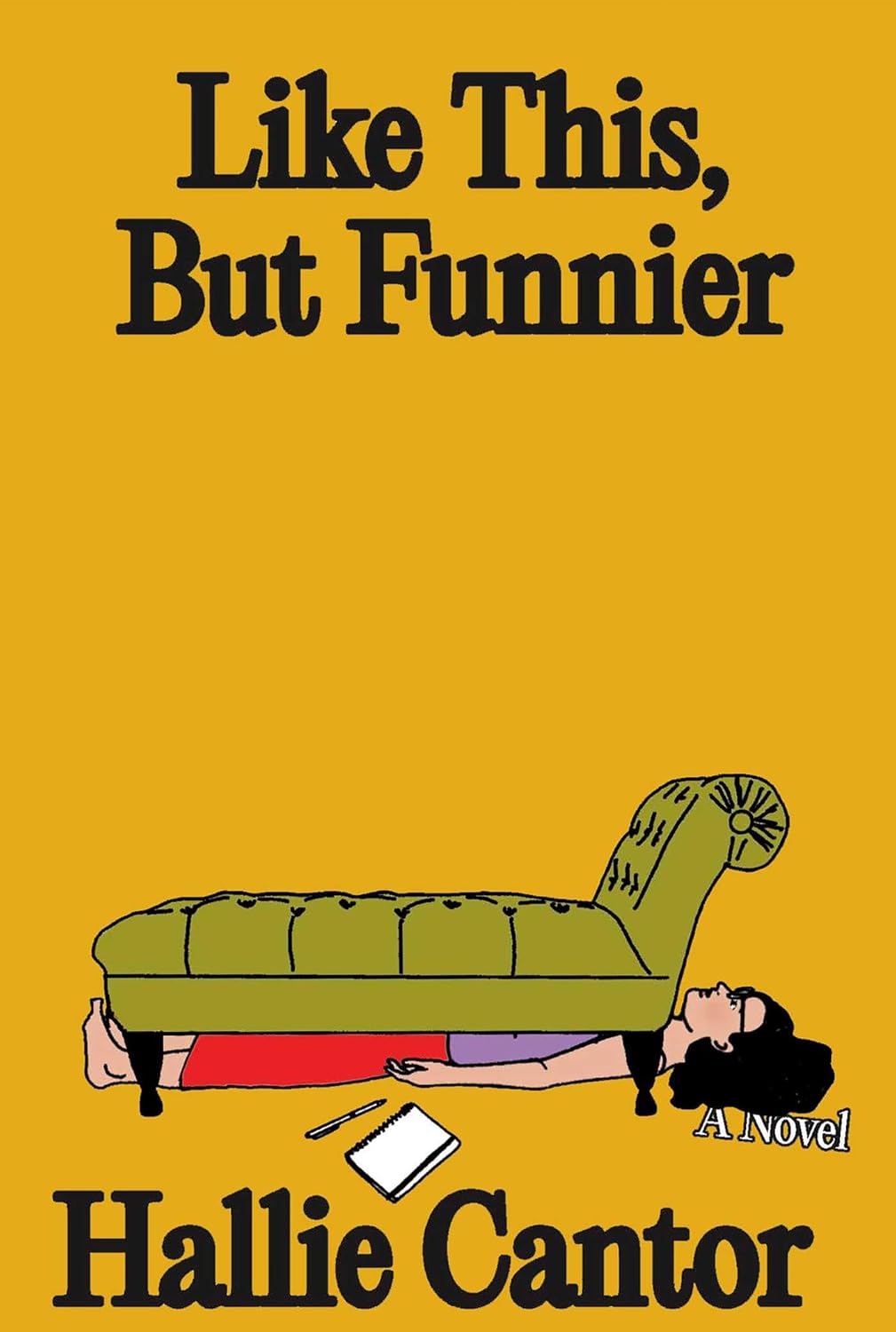
Is This a Cry for Help? by Emily Austin

As its protagonist wrestles with grief and challenges to intellectual freedom, this inspiring and very funny story showcases the power of love and libraries.

In the opening scene of Emily Austin’s fourth novel, a librarian named Darcy narrates her response to a patron watching porn in the library (mainly, per policy, to leave him be). From here, Darcy’s story unfolds to grapple with love, grief, mental health, the importance of libraries, and the navigation of personal, professional, and public relationships. Is This a Cry for Help? continues in the vein of Austin’s winsome work (Everyone in This Room Will Someday Be Dead; We Could Be Rats) with a disarmingly candid narrative voice, outrageous humor, and serious thinking on tough topics.

Darcy has a good life. At her public library, she gets to help a messy cross-section of humanity: not only the toddlers, book clubs, and precocious teens she originally imagined, but also people who lack stable housing or who struggle with substance abuse or mental illness, job seekers, immigrants, and people with opinions different from her own. She has a wonderful wife with whom she shares her authentic self, two cats, and a lovely home. But when Darcy learns of the death of her ex-boyfriend Ben, she is thrown off balance. The disruptions to her carefully organized life are often hysterically funny even as they are harrowing and tragic.

Darcy has just returned to work after a two-month leave of absence following a mental breakdown brought on by the news of Ben’s death. “Before this happened, if someone told me they were off work on stress leave, I might have been judgmental too. Now I understand that issues intensify when we smash them down into our boots.” She is not at her strongest for the new challenge of an alt-right self-appointed journalist harassing the library and Darcy for what he deems a series of moral infractions, including the porn-watching patron. Her community holds an array of political views and opinions on topics as personal as Darcy’s identity as a lesbian, and these values will be called into question by an attempted book ban.

Darcy’s first-person narration lets the reader see her puzzle through the motivations of those around her, parsing social cues and questioning her own choices. Since the breakdown, she’s been seeing a therapist (a process she finds “hokey,” but she’s making an honest effort), and she is well served by her earnest analysis of the actions and motivations of herself and everyone around her. “I’m not just thirty-three; I’m twenty-seven. I’m eighteen. I’m nine. I was just born. And I have to carry all of those versions of myself, the feelings they have, and the mistakes they’ve made, everywhere I go.” Thoughtful and self-aware, if often awkward, Darcy strives intentionally to live as best she can. Is This a Cry for Help? portrays a stressful period in her life, but one she ultimately inhabits with wisdom and grace. Hilarious, wrenching, endearingly odd, Darcy’s story is both enlightening and somehow comforting.


This review originally ran in the November 10, 2025 issue of Shelf Awareness for the Book Trade. To subscribe, click here.


Rating: 8 pigeons.

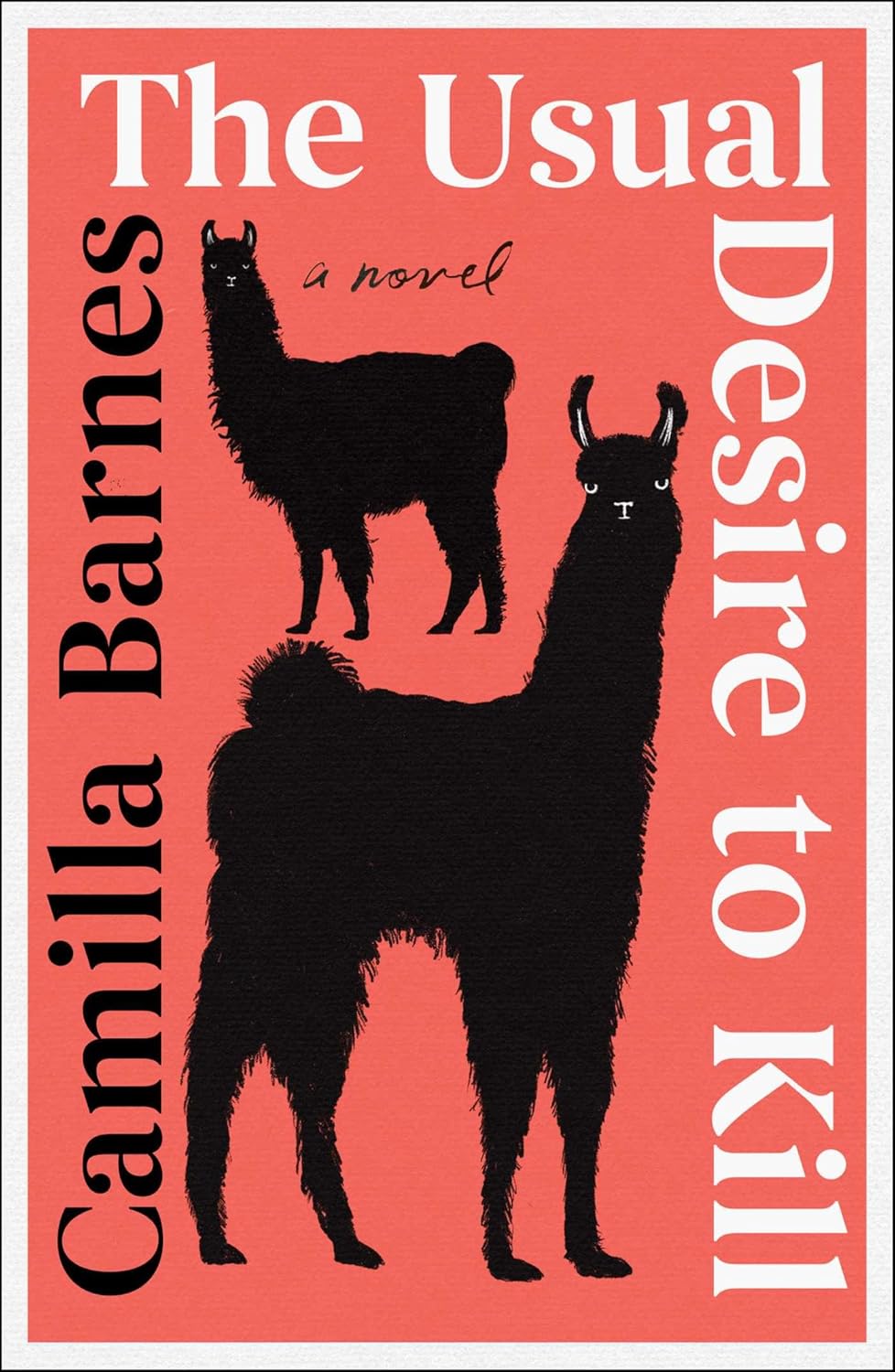
The Usual Desire to Kill by Camilla Barnes

A quick-witted, quintessentially English domestic comedy drama set in an old manor in rural France explores the baggage-laden relationship between two sisters and their elderly parents.

As I sometimes do, today I’m just going to repost the review that sold me this book, written by one of my colleagues at Shelf Awareness (Pro edition, March 11, 2025). I’ve added a few of my own notes at the end.

Set in a dilapidated old French country manor, The Usual Desire to Kill by Camilla Barnes is a quietly dazzling, sharp-witted generational drama featuring the family of an aging couple from Oxford, England, long settled in rural France. As families go, this one has more than its fair share of quirky personalities, which makes for a delightful story. Narrating it all is their daughter Miranda, a theater actress in Paris whose visits home leave her utterly exasperated.

Barnes is a British-French stage writer with a flair for superb dialogue and bitingly clever insight into the baggage-laden relationship between almost-50 Miranda, her sister, Charlotte, and their Mum and Dad. The parents, spectacularly ill-matched, spend much of their time talking at cross purposes. Human relationships are tricky for Dad; he much prefers animals, so Miranda’s visits invariably involve serving as translator and umpire between her parents. Yet no matter the state of Mum’s bad hip or whether Dad has his hearing aids in, they are always up for a game of tennis and are united in their fondness for wine and pudding.

Meanwhile, the siblings must contend with the nagging rivalries that pursued them into adulthood and their parents’ “insanely irritating” idiosyncrasies. They are also determined to uncover a potentially scandalous incident concerning Dad’s flamboyant American friend Barbara. The cast is rounded out by the Miranda’s daughter, Alice, and various animals who play supporting roles in the daily life of Miranda’s parents. The erratically furnished family residence, La Forgerie, houses two llamas, ducks, chickens, and a pair of entitled cats who dine alongside their masters in theatrically grand formality every evening.

The novel’s structure marks an entertaining departure from convention. Sprinkled in between e-mails from Miranda to Charlotte venting about her trips to La Forgerie are scenes that take the form of a play and old letters Mum started writing when she was an undergraduate student at Oxford. Miranda’s mother is clearly the star of Barnes’s debut, an intelligent matriarch with thwarted ambitions who doesn’t let logic, reality, or her husband’s maddeningly circular philosophical arguments get in the way of her agenda. And once Mum’s guard is down with the help of post-surgery wooziness, her secrets come tumbling out, each revelation a missing piece of the puzzle that is Miranda and Charlotte’s mother.

Relishing this quintessentially English domestic comedy, readers peeking below the surface will be astonished by the complex generational and emotional undercurrents guiding Barnes’s memorable characters.

–Shahina Piyarali

The tone of the book is frequently very funny, in a snarky, frustrated way, but overall quite sad. The adult daughters, Miranda and Charlotte, long for better connection. Alice wonders what it would be like to have a bit more family. Mum (who is nameless??) strikes us on the page as quite unlikeable, but her youthful letters reveal to the reader what the rest of her family cannot see: she has had, oh, such disappointments. It makes her significantly more sympathetic, if not likeable, and gives the whole thing a strong streak of tragedy. Dad (who does have a name: Peter) is certainly exasperating, with his reliance on logic and philosophy and staunch refusal to do people, but I found him amusing, even accidentally charming; I guess I’m guilty, like Miranda, in Charlotte’s eyes, of taking his side… (from the book itself this time:)

He only did things that he could do very well, and then did them brilliantly. If he couldn’t do something well enough, he simply didn’t try to do it. Other people was one of those things.

Dad is indeed most comfortable with his animals (or battling brambles), and I thought the llamas (et al) were another pleasing note. So: overall I found this book often funny, certainly insightful, apt, and even brilliant – but with a strong thread of sadness. Such is life.

Very good.


Rating: 7 numbered eggs.

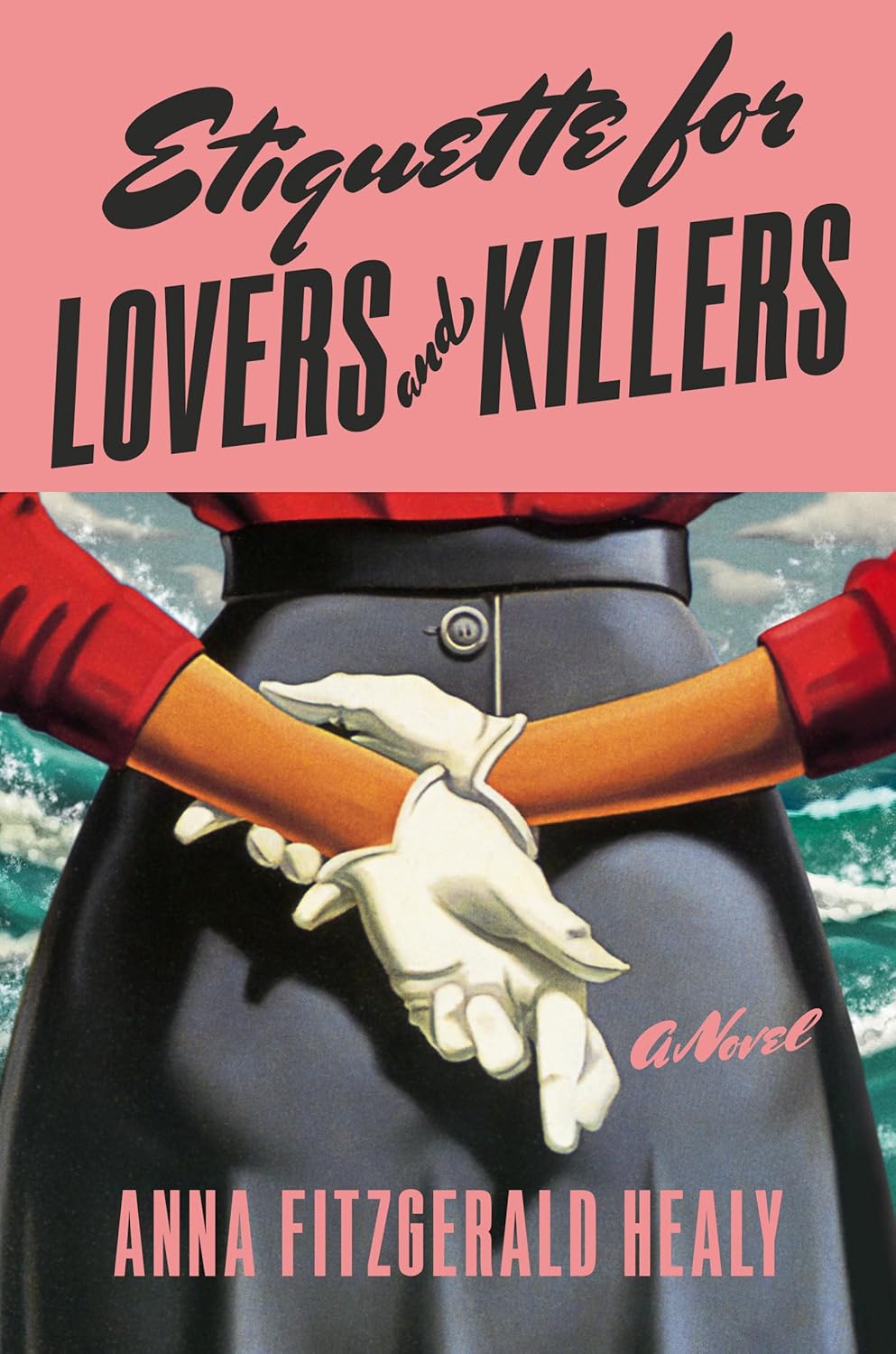
Etiquette for Lovers and Killers by Anna Fitzgerald Healy

A bored townie in 1960s Down East Maine comes into her own when both romance and a series of murders enter her orbit.

Anna Fitzgerald Healy’s debut novel, Etiquette for Lovers and Killers, is a darkly humorous, lighthearted romp of a mystery set in mid-1960s Down East Maine with an unusual heroine. Billie McCadie is a townie in Eastport, on Passamaquoddy Bay, where “fishermen squatting in trailers” abut “Vanderbilts languishing in mansions.” She’s never felt at home with the other locals, who fail to appreciate her sarcasm or her ambition to study linguistics and work in a museum. “I’ve grown up listening to their sock-hop hopes and Tupperware-party dreams, but my aspirations don’t fit in a casserole dish.” Since the tragic death of her parents, Billie, a “twenty-six-year-old virgin,” lives with her grandparents and works as a seamstress at Primp and Ribbon Alterations. Her great thrill, aside from the novels, dictionaries, and etiquette manuals she loves, is checking her post office box for rejection letters responding to her many employment applications to museums around the country.

But then comes the fateful summer when Avery Webster notices her. Billie receives an envelope containing a love letter to an unknown Gertrude, along with an engagement ring. She is invited to a solstice party at the fabulously wealthy Webster family’s estate, where she discovers a freshly murdered corpse–Gertrude. Avery has the potential to be Billie’s first taste of romance, but the strange communications pile up, along with the bodies, in sleepy, previously crime-free Eastport. And Billie leaps into all of it, because “Who needs a life when you’re busy investigating a murder?”

Billie’s wry narration of these events is peppered with wordplay and the occasional footnote commenting (still in Billie’s voice) upon the etymology of “home,” “love,” and “tuxedo.” Chapters are prefaced with relevant quotations from the book of etiquette that belonged to Billie’s mother, which emphasize that even amid a murder case, a sex scandal, and a budding romance, in 1960s Eastport, one must be mindful of appearances and manners. Billie’s never been in such danger, but she’s also never had as much fun, finally coming into herself, gaining confidence, and learning what she might want from life aside from a museum job: “So what if I’ve ended up in a Highsmith rather than an Austen? I’m the main character, and I need to start acting like it.”

Stylish, playful, and more than a little tongue-in-cheek, Etiquette for Lovers and Killers blends intrigue and romance into a perfect cocktail. Billie herself offers a delightful combination of bookishness, wit, and questionable decision-making that will keep readers on edge until the final pages. Healy’s debut is good, not-so-clean fun.


This review originally ran in the May 19, 2025 issue of Shelf Awareness for the Book Trade. To subscribe, click here.


Rating: 6 stilettos.

Margo’s Got Money Troubles by Rufi Thorpe

This book was an utter delight. I laughed and felt all the way through it and would follow Margo into her next chapters with enthusiasm.

Margo is a nineteen-year-old freshman at a junior college when we first meet her. She’s a bit directionless, studying English because she likes it, waitressing in her spare time. She’s been having an affair with her English professor, out of a sort of passive curiosity, not even because she particularly likes him (“this whole affair had seemed to be kind of his thing”), although she does like him praising her writing. When she finds out she’s pregnant, the professor (married with children) assumes she will have an abortion; so does her mother and her best friend from high school. Initially in contrarian reaction to those assumption, Margo refuses. She finds she wants her baby, and doesn’t care a bit that Mark (the professor, with whom she had sex just five times) doesn’t. After the birth of a son she names Bodhi, in short order, two of Margo’s three roommates move out, leaving her with a massive rent due, and she loses her job. Her mother refuses to babysit. She doesn’t know what to do. She leaves a voicemail for her father: formerly a pro wrestler, and since then a promoter/manager, married with five children, he’s been absent for much of Margo’s life, amiable and distantly loving but not much around (because work, and what Margo calls his real children). But in an unexpected turn, when she calls on him for help, Jinx shows up on Margo’s doorstep. Revealing that he is finally getting a divorce (something Margo’s mother wished and waited for for all these years–but now she’s recently engaged to a youth group leader…), Jinx moves in with Margo, helping to pay rent, caring for Bodhi like a pro, and quite by accident giving her an idea out of left field: Margo sets herself up an OnlyFans account. Things just get wackier from here.

This book is filled with characters. Jinx, the retired wrestler persona, is a study in contrasts: he fills his room with books, a ficus tree, and a sleeping bag, nothing else. He loves cleaning and cooking fancy meals. He is both inspired to violence and a calming, philosophical presence. Margo’s other remaining roommate, Suzie, is a LARP and cosplay enthusiast, and will turn out to be a great friend to Margo after a long stretch of cohabitating without getting to know each other. Everyone the reader meets could be a protagonist unto themselves.

But the reason Liz sent me to this book (with some hesitation) was the narrative voice, the set of points of view in which it’s written, and the literary references and styling. Margo was briefly an English student, remember? The novel is told in a really fun, tricky perspective: it moves between first and third person voices, but actually both are first person, because even when it’s in third person, Margo is there as the *writer* to say, I have to tell this in third person because I need the emotional distance, basically. So it’s a bit sneaky. Even better, there’s a scene from English class in which she makes the smart observation about a story they’ve read, in which the same tricky half-hidden first-posing-as-third-person voice is used. Meta, and clever, and probably not for every reader. I love it.

This is a story that surprises at every turn. It’s hilarious, it’s heartfelt, it’s deeply sweet, it can be upsetting; many of its details are sordid, but there remains a sense of stalwart pushing on. It’s a (perhaps) surprisingly wise story. Margo learns all kinds of big lessons: there are no heroes or villains; we’re all just muddling through; love may not conquer all but can do a lot. There’s no changing anyone; “they were like chess pieces: they moved how they moved. If you wanted to win, you couldn’t dwell on how you wished they’d move…” She grows. “I hadn’t expected infidelity to be about cuddling or drug addiction to be about eating Milky Ways.” Life throws what it throws, and these strong, wacky, loving characters carry on. It’s quite empowering, even if Margo’s predicament is not one we’d quite choose on purpose.

I loved every minute of this adventure. Thanks, Liz.


Rating: 8 tiny gossamer shreds of roast beef.

Hookers and Blow Save Christmas written & illus. by Munty C. Pepin

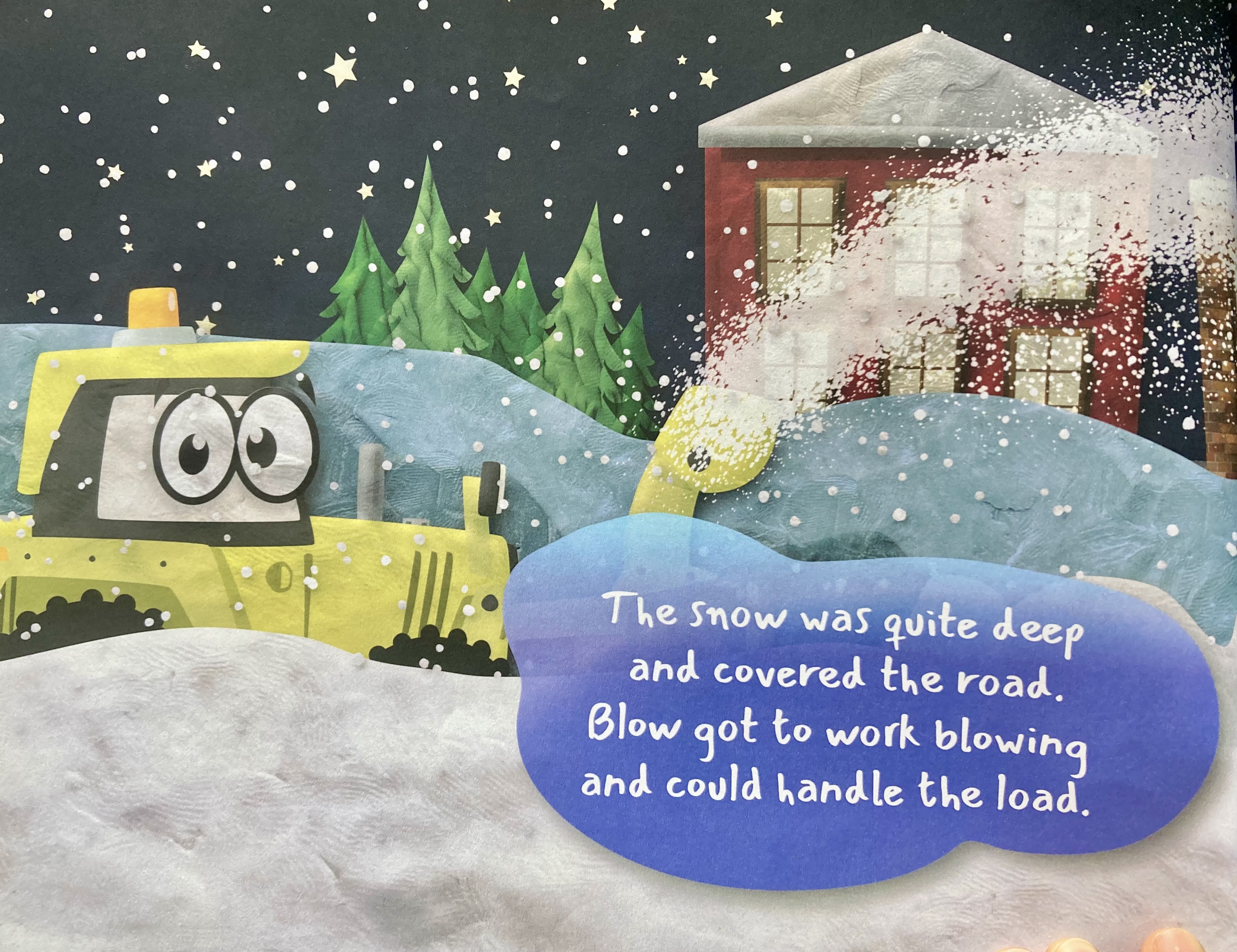
Tom Transport is stuck in a snowdrift with all the presents for the town Christmas party and it’s up to Hookers and Blow to save the day… and the party!

This is a super fun kids’ book. Bear with me. My friend JJ loaned me this for humor’s sake – he got it as a gift when his kids (probably just one at that point) were little. You have already noted the heavy irreverence. It’s actually not only great laughs for the grown-ups, but a perfectly sweet story for kids young enough to miss the joke that is obvious to the bigger kids among us. There are the odd off-color moments throughout –

but also a wholesome story about a snowblower and a wrecker pulling the 18-wheeler into town in time to save the community’s holiday event. All’s well that ends well. I had a fabulous time with this one, reading it aloud (even alone!) for the rhyme and meter, and we all had a great time at a bike shop Christmas party together too. Fun for later: if you’re into that sort of thing, search Amazon for Pepin’s name and you’ll find plenty of similar titles. I can’t speak for the wholesomeness of any of those, yet.

Happy holidays and thanks for the silly times, JJ.


Rating: 7 gifts.

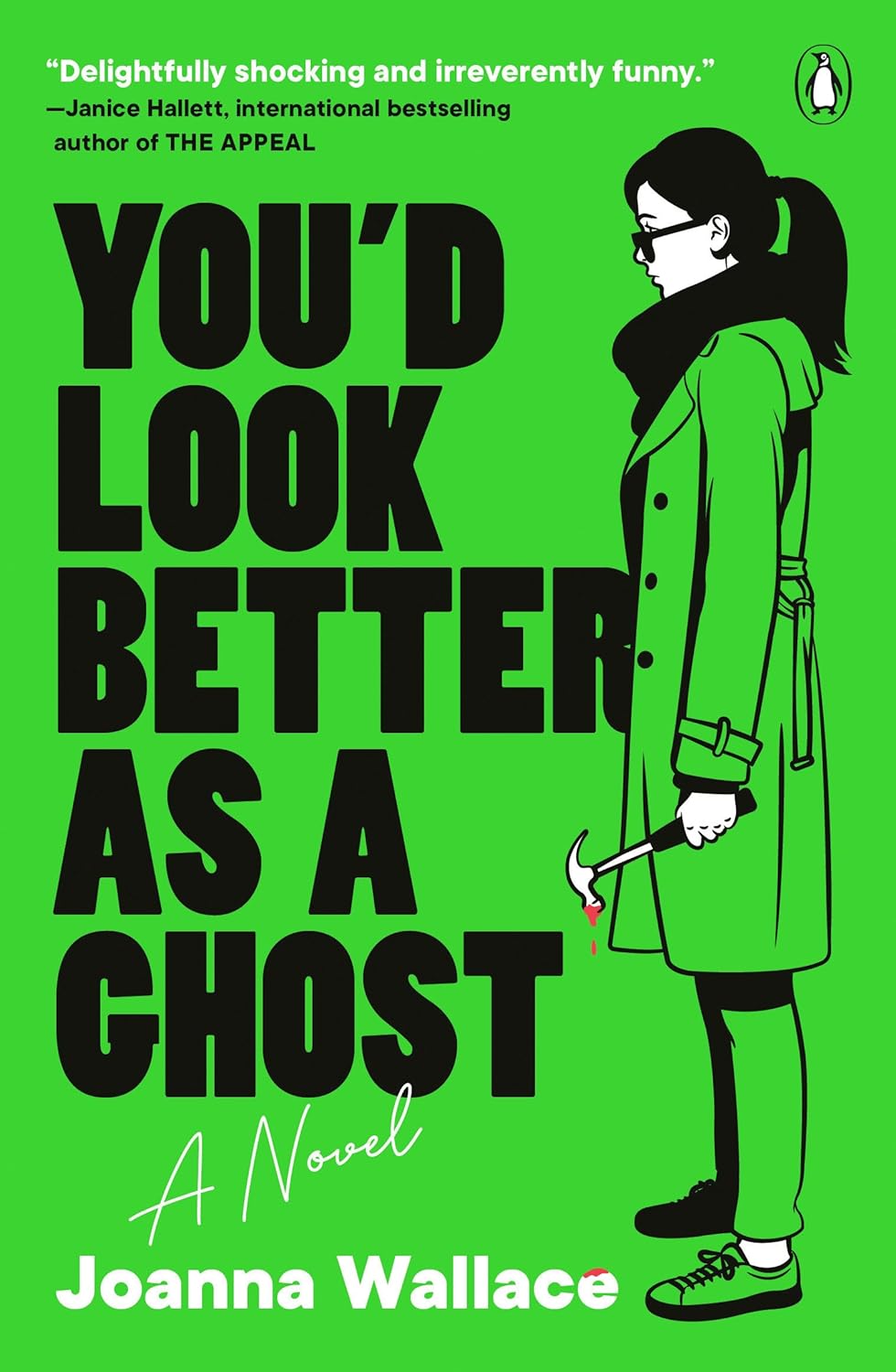
You’d Look Better as a Ghost by Joanna Wallace

Plot twists and a weirdly relatable serial killer offer readers a wild ride in this darkly comic thriller of grief and murder.

Joanna Wallace’s first novel, You’d Look Better as a Ghost, combines black humor and a realistic portrayal of grief with a serial killer, with whom readers are surprisingly inclined to empathize. This oddball story is both grim and unexpectedly entertaining.

When readers first meet narrator Claire, she is standing awkwardly at her father’s funeral, wondering at the strange behavior of the “serious-looking men in serious black suits… standing seriously too close and staring at me. Are they waiting for me to talk?” She assesses their comments, taking everything literally, contemplating human idiosyncrasies. She’s not all that good with people, and she’s also deeply grieving.

It’s not just grief. Claire has always struggled with the habits of those she calls “ordinary people,” a group she does not identify with. “Whenever I’m unsure of how I’m expected to respond, I use a cliché. Even if I’m not sure what it means, even if I use it incorrectly, no one ever seems to mind.” She lives alone outside of London, painting, running on her treadmill, and now wrestling with the loss of her father following a painful battle with early-onset dementia, psych wards, and abusive care homes. Her late father seems to be the one person she’s ever felt close to; flashbacks to childhood sketch a chilly if not disturbing portrait of her mother. Plagued by migraines, Claire gets a doctor’s referral to a bereavement counseling group. “I may not have cried, drunk to excess or wrung my hands in disbelief since Dad died but I’ve definitely become more reckless with my kills.”

Oh, yes: Claire is also a serial killer. She struggles with “ordinary people” to the extent that she often feels the need to end their lives, a process for which she enjoys taking her time. Her new bereavement group offers her potential outlets for her creativity, as well as new challenges.

In Claire’s witty, deadpan voice, You’d Look Better as a Ghost revels in dark humor. A new acquaintance “asks whether I want anything to eat. A slice of chocolate cake. That’s what I really want. But I’m mindful of the fact that I killed this woman’s sister fairly recently and the cake is ridiculously overpriced. So, I order a shortbread biscuit instead. Feels like the decent thing to do.” Claire has some very firm ideas of propriety; for example, pairing wellies with a kilt bothers her considerably more than dismemberment does. But the novel also deals seriously with the protracted grief of losing a loved one to dementia, and the potentially redemptive power of true friendship. Amid much irreverence, its themes are genuinely heartfelt and even sweet. This debut is fresh and unforgettable.


This review originally ran in the January 29, 2024 issue of Shelf Awareness for the Book Trade. To subscribe, click here.


Rating: 7 mugs of soup.

Vera Wong’s Unsolicited Advice for Murderers by Jesse Q. Sutanto

This is a very cute, sweet, pleasurable story: a cozy mystery, a loving family tale, with rom-com style matchups and a loveable amateur sleuth. Vera Wong is an older lady – in the world of this novel, she’s just sixty but also an ‘old lady,’ all things being relative, I guess. (Despite Vera’s starring role, the rest of the perspectives are decidedly youthful.) She’s widowed, and she misses her beloved husband, but it is in her personality (and, implied, part of her ‘Chinese mother’ culture) to soldier on. She has a small business she’s very proud of: Vera Wang’s World-Famous Teahouse, in San Francisco’s Chinatown. (Yes, she’s taking advantage of the more famous Vera Wang’s name recognition.) She lives upstairs, and wakes every morning precisely at four-thirty to start her day with a brisk walk and a text to her adult son, Tilly, who receives a number of these texts every daily, exhorting him to proper behaviors; he rarely responds. The voice of Vera’s chapters (in close third person) is resolute and cheerfully bossy; but we understand that she is very lonely. Despite its name, her teahouse is far from famous. She knows it will soon have to be shut down.

Then something terribly exciting happens: she comes downstairs one morning to find a dead body in the teahouse. Vera is thrilled! She calls the police, but they do not seem nearly as worked up about the possible murder as they should be, and they are not at all appreciative that she has helpfully outlined the body for them in Sharpie. “Vera knows they won’t do anything… but… nobody sniffs out wrongdoing quite like a suspicious Chinese mother with time on her hands, and what does Vera have but time?” And so the nosy, overbearing, but somehow magnetic Vera is on the case. If there is a case – the dead man, Marshall Chen, is originally ruled an accidental death. But Vera won’t let this stop her.

Soon other characters (suspects!) surface: there is Julia, Marshall’s widow, worn into submissive passivity by his years of verbal abuse, and her sweet toddler daughter, Emma. There’s Oliver, Marshall’s twin (who gives everyone a start when he first shows up on scene), long estranged from his bully of a brother. And then there are Sana and Riki, both of whom pose as reporters but who are each hiding a secret connection to the dead (murdered?) man. In her usual domineering manner, Vera takes each of these younger people under her wing, even charming the somewhat troubled Emma into calling her Grandma. It helps that Vera never stops cooking up wild, wonderful feasts of traditional Chinese food anytime they gather. Even as she’s befriending them and improving their lives (with a little insistent advice, not to say pushing), Vera is investigating each of the foursome as murder suspects. But as they come together to form an unusual little family of their own, she is less and less pleased at the thought of turning one of them into the police (incompetents!), especially as it is increasingly obvious that the late Marshall was not a nice man at all.

Vera Wong’s Unsolicited Advice for Murderers trades rather heavily on stereotypes about Chinese mothers, to an extent that I think would be problematic if the author did not herself come from that culture. She pokes fun in a loving manner. Does her in-group status excuse using stereotypes as the punchline? I don’t consider myself qualified to make a firm call on this, especially as I am not in-group; I’m cautiously okay with this case, but mine is not perhaps the final judgment that matters most. I will say the book is intended in good fun and comes off as such. Jesse Sutanto has published an impressive number of adult, young adult, and middle grade novels, and the writing style of this one leans toward the cute rather than the literary. Some constructions feel quickly slapped off. It’s fine for an easy, entertaining read, and this one hits the mark.


Rating: 7 bowls of congee.

Murder Your Employer: The McMasters Guide to Homicide by Rupert Holmes

So you’ve decided to commit a murder.

Congratulations.

Murder Your Employer is a genre mash-up, and great fun. It purports to be a how-to manual on how to commit a murder (the Conservatory prefers “deletion”) without getting caught – in this case, specifically the deletion of one’s employer, with future volumes promised. (Other popular deletions include work rivals, financial advisors and spouses.) The book’s narrator is Dean Harbinger Harrow – Dean being not a first name but a title, as he serves as Dean of the McMasters Conservatory for the Applied Arts, a top-secret institution that trains would-be deletists to remain successful and forever unknown. It contains narratives within, however: short on actual training-manual-style directives, instead the bulk is made up of examples in the form of the stories of three McMasters students, all majoring in employer deletions.

The central protagonist is Cliff Iverson, who botched his first attempt to murder the toxic, womanizing, belligerent boss at his aircraft manufacturing job. Instead of criminal charges, he faces involuntary admission to McMasters (for very mysterious reasons). We are treated to his journal throughout, as well as the Dean’s notes on the progress of Cliff and two fellow students: Gemma Lindley, who needs to get rid of her blackmailing boss, and a woman known at the school as Dulcie Mown, although everyone finds her dimly familiar (the reader knows why).

So we have a how-to-manual, framing an epistolary novel (journal entries and other documents), in an idyllic boarding school milieu, on the absurdist subject of ‘an education in murder,’ filled with wordplay, puns and humor, with a certain amount of suspense as our three students aim to successfully complete their theses (intended deletions), wrapped up in a mystery (who is responsible for Cliff’s enrollment at McMasters in the first place?). Oh and the setting is historical, in the 1950s, so bookies and bad guys have a certain style and type. It is a mad, beautiful mess of genres, and I found it enormous fun (despite a rather crabby review from Kirkus, who does not think it cute). Yes: it does require a fair amount of suspension of disbelief; I would think that would be obvious, since it’s a slightly unhinged promotion of the murderous arts. (Somewhat in their defense, McMasters does have some moral standards. Make sure your target is deserving and all other options have been exhausted; no innocent bystanders; certainly no serial killings or mass murders; etc.) It’s ridiculous and it knows it (think The Princess Bride).

The pacing is not snappy, but I thought it was nice to linger with each of our characters – Harrow rather silly, Cliff earnest and serious, Gemma haunted, Dulcie driven – and in the slightly cartoonish historical setting. The McMasters world itself is a sort of madcap Opposite Day, and the ‘real’ world features caricatures. Dean Harrow is a bit of a buffoon (and yes, pun-obsessed). It was fun and, I admit, relaxing. The whole conceit is ludicrous enough that it let me let go. I don’t think real life murders are cute, but this book surely is.


Rating: 7 MacArthur-style sunglasses.

Revenge of the Librarians by Tom Gauld

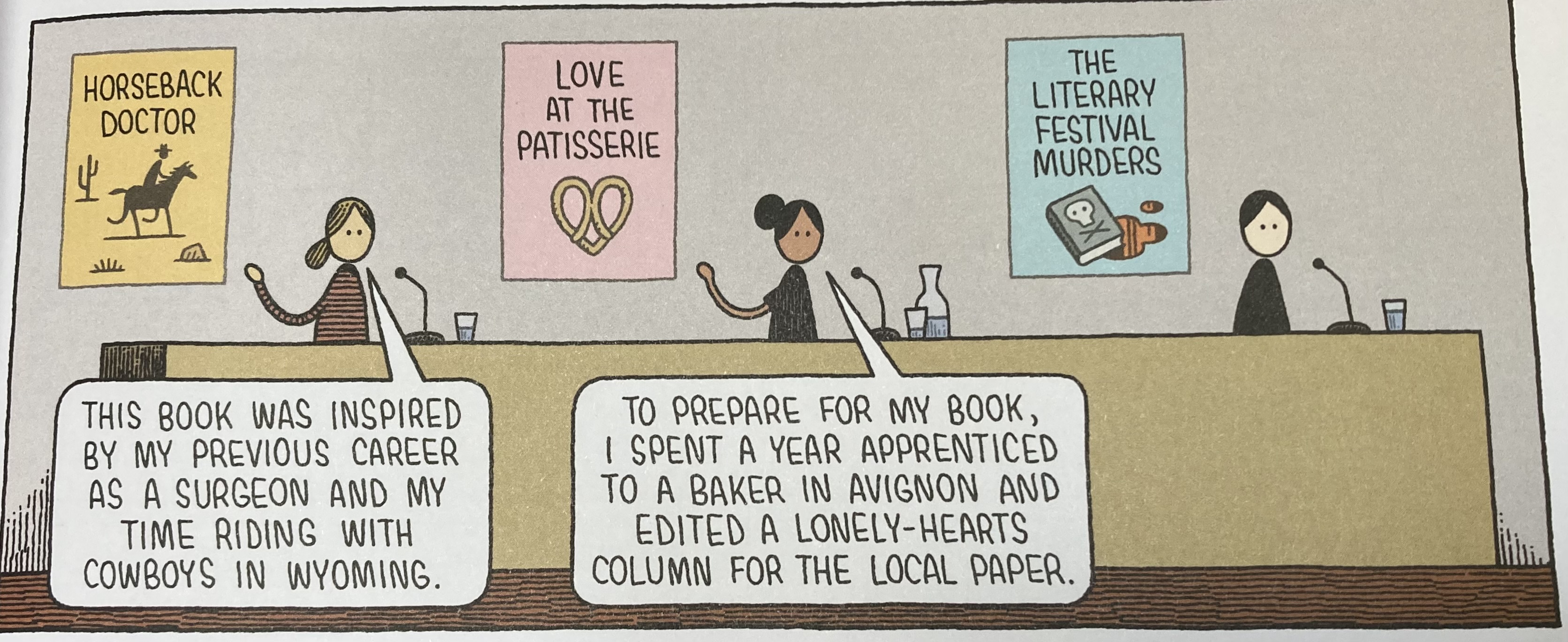
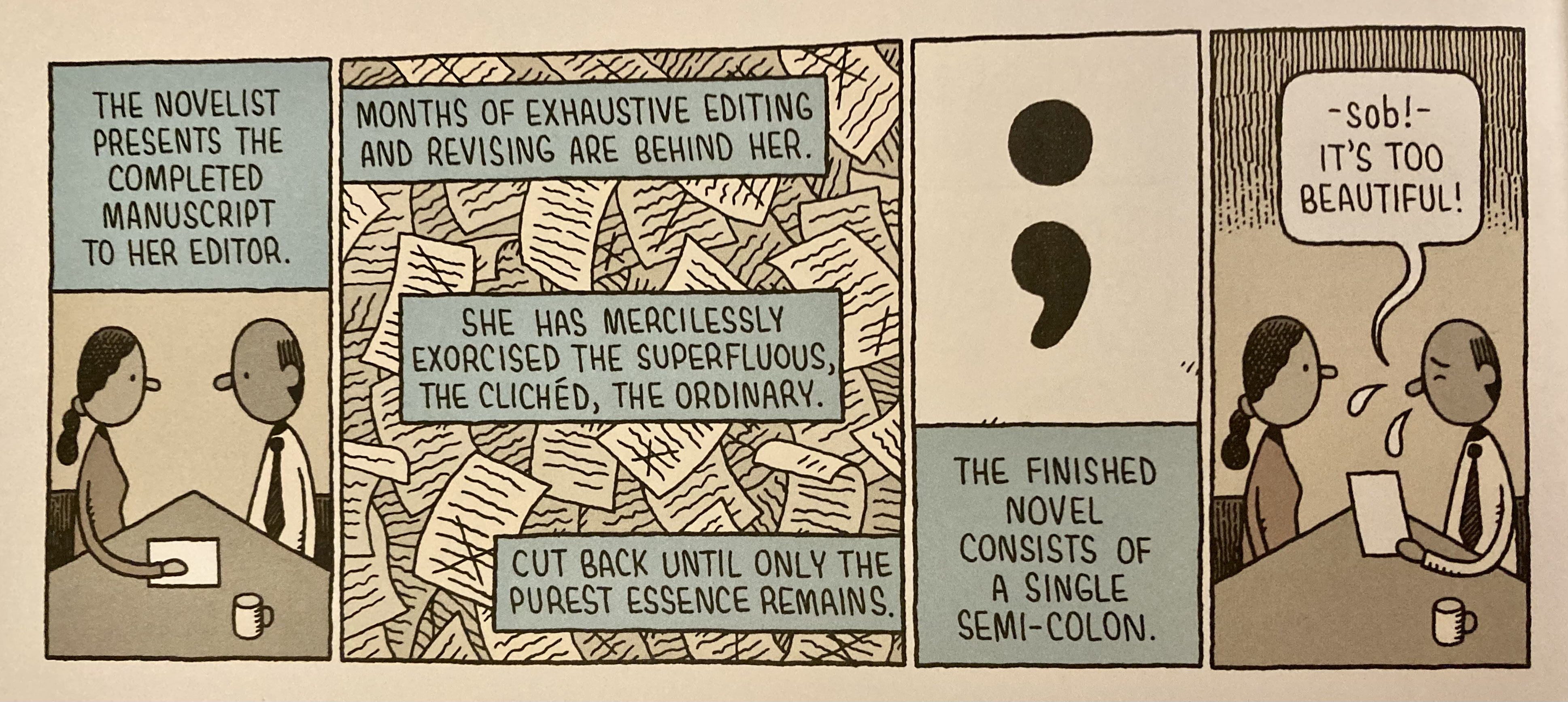
This is a completely delightful collection of cartoons by Tom Gauld, originally published in The Guardian. All have a literary theme and a dry sense of humor, poking fun mostly at bibliophiles, book collectors and writers, and exalting librarians (a safe move!). I am just absolutely charmed & won over, and inclined to just share a few of my favorite strips here in place of review…

At 180 pages, this is very much the sort of thing you can read cover to cover (I did in two sittings) or leave on a side table for joyful browsing in between other activities. For the book lover in your life? This is pretty much a must-have. Consider it for a holiday gift. I loved it.


Rating: 9 stacks.

Changing Places by David Lodge

This book was a gift to me from a family friend who has had a lengthy career in college-level teaching, when I was one semester in to that job, three years ago now. I’m sorry I waited so long; it was hysterical! I ate it up in just over a day. Thank you, David!

Further confession: I have been using this opening sentence for class writing prompts for a few semesters and never reading beyond it.

High, high above the North Pole, on the first day of 1969, two professors of English Literature approached each other at a combined velocity of 1200 miles per hour.

Changing Places is a bit of a situation comedy, in which two universities exchange professors, who then experience culture shock, joy, and eye-opening changes. The setting in time is significant: 1969 offers women’s liberation, the sexual revolution, experimentation with pot, and other fun. The settings in place are significant, too. Rummidge is a mid-sized, industrial, English city without much to recommend it, and the University of Rummidge is not particularly well-regarded. The American state of Euphoria is located on the west coast, between Northern and Southern California; this state, and the State University of Euphoria, are known to be gorgeous, scenic, climactically sublime, rarified, and filled with protests and strife in this spring of ’69. Similarly, Rummidge’s professor Philip Swallow is mild, retiring, unambitious, and a bit bumbling, while Euphoria’s Morris Zapp is accomplished, arrogant, and considers himself entitled to both accolades and undergraduates’ sexual favors. This last is why he’s willing to take the stepdown to Rummidge for six months: his wife, finally fed up, has asked him to vacate, and a posting to Europe (however disappointing a version thereof Rummidge may be) seems the least undignified option. Swallow, on the other hand, is honored, if uneasy about leaving his own wife and children behind for half a year. (His department chair wants him far away while a junior faculty member receives a promotion.)

There’s the situation, then. Zapp is taken down a peg, and nonplussed by the failures of England to make a big deal of him. (Also the lack of heat and entertainment.) He will eventually find opportunities in the absence of structure in Rummidge’s English department, however. Swallow is blown back by Euphoria’s gusto and apparently limitless, all-color chances to get into every kind of trouble (sex, drugs and political protests being just the beginning). He will eventually begin to ‘find himself’ therein. Even the unlikeable Zapp achieves growth and a note of redemption at some point (still unlikeable, though). The wives (and other women) are less central and less developed, but actually deep, complex, realistic character development isn’t the point here. And the women have some ass-kicking attitude that I appreciate. No, this is a novel of caricature and satire, poking fun at English departments, at academia, at the changing cultures of 1969, and at types – centrally, the mild-and-retiring professor and the arrogant, womanizing one, although there are certainly others. Originally published in 1975, this does not count as historical fiction but contemporary (in relation to its authorship), and one might fear stereotypes that would offend today’s readers, but I didn’t find it problematic in that way at all. Just good, solid fun.

We end with a scene (written as a screenplay, unlike the rest of the novel) in a New York hotel room, with both professors and their wives gathered to try and sort out their futures. Lodge finishes with a thorough cliffhanger, which I frankly appreciate, even if the lack of answers hurts a bit. This is the first in a trilogy, so there’s that.

David, solid gift. Thank you.


Rating: 7 chicken dinners.