The Boy Who Drew Monsters by Keith Donohue

A terrifying, enigmatic and ever-accelerating story about the power of imagination.

monsters

Jack Peter Keenan has always been an odd boy. Even before the accident three years ago, he was not exactly normal. Now almost 11 years old, he doesn’t go outside, ever. As Christmas approaches, there are strange happenings afoot: things that go bump in the night, apparitions in the snowy roadway, screams of people who aren’t there. Jack has begun drawing monsters. His parents, Holly and Tim, are increasingly worried.

Holly renews her relationship with the church; when she seeks answers, the local priest and his Japanese housekeeper pelt her with tales of shipwrecks and spirits. Tim resolves to work harder with his son. The parents of Jack’s one friend, Nick, take off for the holiday, leaving him to stay with the Keenans in their remote Maine beachside home, in the snow and bitter cold. As Jack’s drawings multiply and the howls outside grow louder, readers will wonder if he’s withdrawing, abandoning reality (and pulling Nick and the Keenans along with him), or if somehow his interior landscape is populating the outside world.

Multiple mysteries enliven the terror of The Boy Who Drew Monsters, which becomes ever more disturbing as the source of danger comes gradually into focus. In his sensitive, incisive treatment of Jack’s behavior and its effect on his family, Keith Donohue (The Stolen Child) explores the challenges of mental disorders, but suspense and a bright thread of terror evoke the very best of the horror genre. Just as a Maine winter chills the bones, this singular little boy provides a satisfyingly frightening story.


This review originally ran as a *starred review* in the October 10, 2014 issue of Shelf Awareness for Readers. To subscribe, click here, and you’ll receive two issues per week of book reviews and other bookish fun!


Rating: 7 steps outside.

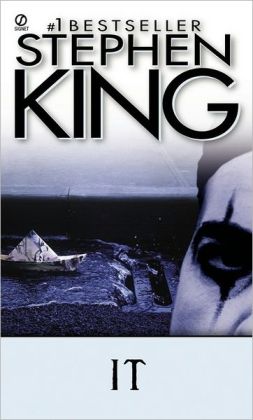
It by Stephen King: finished

This review contains mild spoilers – like, about how characters feel about each other, and about who dies in the first 100 pages or so. No major plot-wrap-up spoilers. Medium spoilers.

Please recall my much earlier review of the first third or so of this book.


itMy It-reading friend got in touch to say that she’d been reading away while I hadn’t been. (I had been reading, just not this book.) Luckily I was just then headed off on vacation! so I sped through the last 800 or so pages, and upon my return, met her at the bar to discuss.

What happens in Stephen King’s It? I needed reminding as well; and I give Danielle credit for finding & recommending Constant Readers, a blog devoted to King’s work. Two friends discuss It in five parts, in banter-y dialog; it’s great fun, and they’re fairly expert about SK, unsurprisingly. Enjoyable and thought-provoking – check them out. (Part 1, Part 2, Part 3, Part 4, Part 5.)

I won’t spend too much more time on plot summary; It is fairly well established in our cultural consciousness and 1,000 people have written about this before so you can get the plot easily enough from Google if you need it. Kids become adults; good vs. evil; scary, exciting, outrageous.

A few notes from my impressions and/or my discussions with Danielle (and a little bit with my buddy Jack, who was unable to make the bar date)…

  • This book gripped me from the start, when briefly-likeable little Georgie gets it; I loved all the characters and rooted for them all the way through, in both their kid and adult form. Jack and Danielle both found them most relateable and real as kids, but I identified better with the adults versions (I don’t seem to remember my childhood as well as some people do) – although clearly, the kids were deeply likeable.
  • King’s worldbuilding skills are alive and well.
  • I adore how Stephen King always has a hero librarian in his books! (& Joe Hill too.)
  • His highly believable characters are one of his greatest feats: we agreed that this book is clearly character driven, although the plot was well done and powerful as well; and let’s be clear on King’s world-building prowess, yet again.
  • The ending was satisfying for me because it felt like the right, the realistic solution; but of course we’d always like to know more. In this case, I hunger for a little more epilogue for each of our survivors. I would love to see a follow-up book starring one of our grown-ups in his or her new life.
  • King continues to be outrageously self-referential; as I told Danielle (for whom It was her first King read! how exciting!), things will make more and more sense, the more you read him. The Dark Tower series ties in all over the place, and are you kidding me? Dick Hallorann from The Shining makes a not-insignificant appearance as well.
  • The dog dies! plus all the animal torture – gah!! Truly horrifying, King.
  • WHERE THE HECK DOES HE COME UP WITH THIS STUFF? Specifically, 27 years in between events? What is that about? The imagination astounds me.
  • I was rarely actually frightened. (There were a few nights when I read late into the dark hours in an unfamiliar bed…) I guess I didn’t buy into the supernatural threats quite enough to scare myself silly. But I marvel at the world created!

Rate ’em: how did we like the characters? Richie is annoying but also loveable; I think his role is to be annoying to his friends, less so to the reader. (To me at least.) Stan is hard to love. Maybe because he dies so early that we know not to invest in him? Eddie is also a little exasperating but I found him sympathetic as well. Despite these three being difficult to like, I ended up rooting for them all. When Eddie and Stan really stepped up to the plate and gave it their all, they came further, you know? For Bill and Ben, heroism seemed to come more naturally. (For all that Ben is meant to be the archetype of fat loser kid, he always had a courageous hero sitting very near the surface; he didn’t have to come as far to get there.) I loved Bev, Danielle didn’t; and while Mike was maybe a little boring, he was the rock, or the tie that bound them all together (not to mention being an uber-capable librarian, which is always worth points). And Bill? Interestingly, the Constant Readers did not appreciate Bill. And I can understand the ways in which they found him boring, but I loved him all the same. As far as his being a foil for Ben & Bev’s romance, I say, not his fault; there will always be that guy (or girl), and he (or she) doesn’t always have control over that role. Fair game. In the end, I loved all seven of our kids, more or less equally – with Stan a half-step below, for not sticking around long enough to earn more love.

Favorite quotations from Constant Readers:

  • “In the Gunslinger world, they’d be a ka-tet.” Yes.
  • “This book is full of childhood sweetnesses without every getting mawkish or saccharine, which is a fucking feat.”
  • “I know you hate the Turtle, but I really like the image/concept of this lumbering creature that created the universe by puking, this really reflexive, disgusting bodily function, and now it’s dead because it puked in its own shell. I like the idea of the creator of all things being sort of witless. Or at least clumsy. I really believe that, man, if Something Made Us All, it was definitely not on purpose. A puking Space Turtle fits my ideology very well.”

On that last point: I totally agree. The turtle-as-creation-myth resonates deeply with me, and crosses over not only from the Dark Tower series, but from various native cultures from around the world (see Turtle Island). I am carrying forward this idea of the turtle that vomited up our world, and didn’t much care about it thereafter, as my new philosophy of life and its origins. Thank you, Stephen King.

He’s done it again. It is the Constant Readers’ favorite SK, and I’m pretty sure it’s Jack’s as well. I’m not sure I’m prepared to say that, but it’s definitely a great example of what he does best.


Rating: 9 newspaper boats (shiver).

It by Stephen King: first third (or so)

itI have inadvertently started a book club at the bar that I frequent. What can I say, it’s on the train line home from work, right at a station, and I love it.

I am trying to coordinate my reading of It with a certain bartender’s reading of It. We shall see how the pacing works out. But hey, it’s Stephen King! Who could resist? Happily, like my bartender/reading buddy Danielle, I have not seen the movie and had no cultural preconceptions about this book or story at all; I was vaguely aware that it was “the” scary story about the scary clown. And so we begin. I have paused at approximately 300 pages into approximately 1100 so that Danielle and I can talk about it.

My early impressions are that – naturally – this is a good, and scary, story. It opens with “Part 1: The Shadow Before.” In 1957, in the backwater town of Derry, Maine, a child is murdered during a flood, by a terrifying paranormal clown in a storm gutter. Then we flash forward to a hate crime in the same town at a festival in 1984, in which a gay man is killed. The clown finishes him off; but it was the local residents responsible in the first place. And in 1985, six individuals receive phone calls that frighten them badly and throw their established routines into upheaval: they are called back “home” to Derry.

Each of these vignettes is compelling. I was more disturbed by the hate crime than by the supernatural murder, probably because the hate crime is realistic, an example of something that really happens in our world. And I especially enjoyed meeting the six adults who take the six phone calls: each is a well developed, interesting character, living in a very real world, just briefly sketched. We see strong marriages – not without their troubles, but based upon real love; and we see damaged marriages and lives, whose problems also feel realistic. I think Stephen King has a gift for writing Real American Lives.

And then we begin “Part 2: June of 1958.” The child killed in the flood is still a recent memory; the town of Derry is concerned over the deaths of several more young people in that year, including one beaten to death by his step-father in a particularly gruesome scene involving a recoilless hammer (this tool was new to me, incidentally). We are working our way through the six adults who received the six phone calls, meeting them as Derry children, and friends. Also, we meet the man who makes the six phone calls, through a diary he keeps of the evils of Derry. He is, appropriately, a librarian and historian (King never fails to tip his hat to my fine profession. Thank you, sir). And it is here, almost through Part 2, that Danielle and I have stopped reading for now; so my synopsis will continue in a later post.

There have been memorable lines. I liked this one on the opening pages:

Water sprayed out from beneath his galoshes in muddy sheets. Their buckles made a jolly jingling as George Denbrough ran toward his strange death.

The juxtaposition of “jolly jingling” with the foreshadowing of a child’s “strange death” is very effective.

And Danielle pointed out the power of these lines, about a child making friends for the first time:

He liked the way his laughter sounded with theirs. It was a sound he had never heard before: not mingled laughter – he had heard that lots of times – but mingled laughter of which his own was a part.

Also very effective, a poignant way to indicate his profound loneliness.

There have been clever in-jokes for the Stephen King fan; he likes to reference his own work, and in one case, that of his son, novelist Joe Hill. I found references to the turtle (or the Turtle), which seems to be a King leitmotif, and the use of the phrase, being “on the beam” – both of which concepts figure in the Dark Tower series. And one kid is described as wearing a Judas Coyne t-shirt (see Heart-Shaped Box). I get a kick out of these self-referential grins.

There have been vocabulary lessons. I want to point out that although King has a reputation for being pulpy, a genre author, or less “serious,” he is well-written, even literary, and regularly sends me to the dictionary. For example, I had to look up “il mot juste,” “planchette,” “batrachian,” and “chitinous.”

And where are we headed with It? I remain in the dark about where the remaining 802 pages will take us; but it is clear that Derry, Maine is home to a great evil. Our librarian/historian friend has recorded that Bad Things were happening here from the beginning – about every 25-28 years all the way back in the town’s history, in fact, which suggests something generational going on, although I don’t have the answers yet. The clown is rather the embodiment of evil; Danielle points out that he is a shapeshifting clown, although I’m not sure yet that the Creature (big mean bird encountered by young Mike) is the same as the clown. I’m still very much in the dark so far, and that’s fine, because again, 802 pages to go!

This is a scary story, with evil lurking in unknown places and with unknown aims; but I’m not terrified of clowns just yet. Danielle and I also asked ourselves if this is the story that made clowns scary? But she thinks not: she thinks that King is tapping into a preexisting societal fear, although he can definitely be credited with confirming it! And I bet the movie was horrifying.

Stay tuned!

Atwood on King

Thank you Mom, again, for passing this on: a review of Stephen King’s latest, Doctor Sleep, by Margaret Atwood of all people. In other words, good writing about good writing! (I will refrain from the temptation to call this a guest post. Margaret Atwood, unfortunately, does not write for me. At least not specifically.)

From the New York Times Magazine: Shine On.

I think you’ll find that she and I draw a few conclusions in common (ahem, thank you), although she does it better. I especially like her assertion that King is proper, respectable literature – something I have suspected, increasingly, for some time. (I think I said it here.)

Well done, Atwood; thanks, Mom; the rest of you, go read this review and then the book in question.

NOS4A2 by Joe Hill (audio)

nos4a2Warning: here comes another rave review.

NOS4A2 is terrifying, enthralling, highly imaginative, and a deliciously entertaining wild ride. As much as I’m tempted to write a play-by-play plot synopsis, I shall resist, because discovering those twists and turns as told by Joe Hill is an excellent experience that I can’t match. So, a few brief sketches.

Victoria McQueen – known as Vic, or The Brat – rides a Raleigh Tuff Burner, a boy’s mountain bike that her dad bought her even though it’s really too big for her. We meet her at age 8, but follow her through several decades. Maggie Leigh is a small-town Iowa librarian with purple hair and an equal passion for Romance poetry and Henry Rollins. Lou Carmody is a fat man with a heart of gold who is passionate about superheroes, comics, fantasy, and his family. He works as a mechanic and is arguably the most loveable character in this story. There is a bad guy with a warped sense of “fun” and a love for little children; there is another bad guy who never really grew up and doesn’t want to. Settings range from the New Hampshire coast, to the Massachusetts woods, to the snowy mountains of Colorado, and of course that Iowa library.

NOS4A2 combines realism and a deft hand for family dynamics and truly touching, human, fully-wrought relationships with horror – and by horror I mean little children smiling sweetly while wielding chainsaws and singing Christmas carols by the light of an animate moon (and on from there). I came to love and care for Vic, Maggie Leigh, both Vic’s parents, Lou, Wayne, and all the rest: they are fully developed characters with all the quirks and back-stories a reader could ask for. The imagination employed to create these characters – not to mention the outrageous, chilling, perfectly explicated otherworld they have to deal with – is prodigious. I marvel at the mind that can create such things.

Spooky creepy world-building combined with all-American realism, horrifically menacing little children, and an expert sense of pacing and suspense put NOS4A2 in the highest class. Not to put too fine a point on it, then, Joe Hill has all the goods his daddy does. Full points as well to Kate Mulgrew for her narration, which ranges over numerous distinctive voices, including accents, genders, and terror. As Hill points out in the author interview at the end of this audiobook (on which more to come in a later post), a well-read audiobook is a uniquely awesome experience, and this is one. Fully absorbing, realistic and petrifying, NOS4A2 is a juicy good time, but not for the faint of heart. I’m on to find more of Joe Hill.


Rating: 10 Scrabble tiles.
(Final tip: DO listen to the audiobook!)

book beginnings on Friday: NOS4A2 by Joe Hill

Thanks to Rose City Reader for hosting this meme. To participate, share the first line or two of the book you are currently reading and, if you feel so moved, let us know what your first impressions were based on that first line.

nos4a2

Do we all know who Joe Hill is now? The secret is out, correct? I’m kidding; the secret’s been out for years. Joe Hill is Stephen King’s son. I’m a King fan, but it took this recent article to convince me to get some of Hill’s work. And I’m glad I did; this recent novel started out with a bang and had me excited right off the first page. It begins:

Nurse Thornton dropped into the long-term care ward a little before eight with a hot bag of blood for Charlie Manx.

She was coasting on autopilot, her thoughts not on her work.

Nothing crash-bang in those first two lines; but we do get our first reference to blood. And it only gets creepier from there, in the most delicious way.

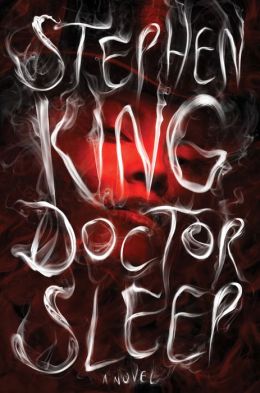
Doctor Sleep by Stephen King

It was over a year ago when I discovered a preview of this book, and I’ve been anxiously looking forward to it ever since. How lucky was I to get a review copy!!


The long-awaited sequel to The Shining lives up to its heritage.

king

As a sequel to 1977’s The Shining, Doctor Sleep has unspeakably large shoes to fill, but Stephen King is more than able to follow up on the thought-provoking and deliciously shivery thrills of that novel.

Several decades after the events of The Shining, Dan Torrance is haunted by the ghosts of his childhood and deep in the ugly throes of his father’s disease, alcoholism. He lands in the small town of Frazier, N.H., where he finds meaningful work, a few good friends and Alcoholics Anonymous. Finally his life seems to be on track–until a little girl named Abra is born, whose “shine” is astronomically brighter than his ever was. A community of not-quite-humans is zeroing in on Abra; to live, they need what she has, and they balk at nothing, including violence toward children, to get it. Thus, Dan is again embroiled with the monsters he couldn’t drink away, but thought he’d learned to store in a lockbox on a dusty shelf in his mind.

King continues to show a mastery that extends beyond genre. Doctor Sleep has The Shining‘s spooky intimate authenticity, 11/22/63‘s grasp of pop cultural references and sense of time and place, and Carrie‘s uncanny understanding of youth. Where The Shining took place in a single claustrophobic setting, Doctor Sleep roams wide both geographically and topically, through paranormal concepts and King’s prodigious imagination. Themes of family and personal struggle persist, but perhaps most enjoyable are the page-turning suspense and terror for which King is so deservedly famous.


This review originally ran in the October 4, 2013 issue of Shelf Awareness for Readers. To subscribe, click here, and you’ll receive two issues per week of book reviews and other bookish fun!


Rating: 8 screams.

movie: Carrie (1976)

You will recall that I recently read Stephen King’s Carrie, and was very impressed. I then made it a point to watch the classic 1976 movie starring Cissy Spacek.

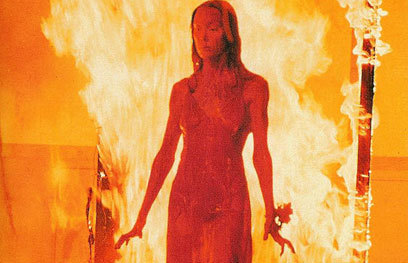
classic shot from the final scenes.

classic shot from the final scenes.

The movie is reasonably faithful to the book in terms of simple plot. Carrie gets her period, is abused by the girls at school, is asked to the prom by popular Tommy whose popular girlfriend Sue has put him up to it (for mostly altruistic motives), is abused at prom, goes red in the face and uses her recently discovered special powers to get hers back.

But the book lost a lot in its translation to film. For one thing, the structure of the book was part of what made the total package so striking; and we necessarily lost a huge majority of the interior thoughts shared in the original. We lost important pieces of Carrie’s family history (the stones falling on her house were left out entirely) and of Chris and Billy’s evil machinations. Also, wasn’t Margaret White entirely too pretty on screen??

I thought the movie did capture the creepiness factor fairly well, although I was not much frightened by the movie, maybe because I already knew everything that was going to happen and felt less a sense of dread than I would have if it had all come as a surprise. (Although I’m easily frightened by movies. So, maybe take a half point off for not frightening me.) I will say one thing, and this is a spoiler if you haven’t seen the film, so highlight the following white text if you want to read: the final scene, where Sue takes flowers to Carrie’s grave (or home site?) and Carrie reaches up and grabs her wrist “from beyond” – that wasn’t in the book and I swear I jumped a foot when that hand appeared. Holy smokes, I was frightened. But I don’t know where that even fits in the story crafted by Stephen King, so again, I’m not giving full points for this.

Final conclusion: a fine movie, entertaining, but hardly worthy of the book it was based on. What else is new?


Rating: 5 cruel high school girls.

Carrie by Stephen King

carrieHere’s a book-turned-movie we’ve probably all heard at least something about! And apparently it’s being made into a 2013 movie, although maybe for the film version I should start with the 1976 version with Sissy Spacek? I had the vaguest notion that I’d seen it already; but as I read the book I realized that this was definitely new material to me.

I am really glad that I picked up this collector’s edition at my local used bookstore. The introduction by Tabitha King, the author’s wife, was a great addition. She puts in perspective the creation and success of this, King’s first published novel, written while they were scraping out a living as parents of two small children, each working full-time on opposite schedules and hardly seeing each other. When this novel did well, then, it made the change of their lives, and started Stephen King on the path to become the huge name he is today. She also reveals that her own terrible PMS was (she is sure) the inspiration for Carrie’s menstrual difficulties, and muses on the strangeness of a novel centering around menstruation and the trauma of a girl’s first period, written by a man, in the 1970’s no less. I enjoyed this introduction.

And the book itself! Carrie is really something. I can appreciate (even with my very limited experience with Stephen King) how this book fits into his oeuvre: it’s a fine example of his ability to create atmosphere, and let us into the heads of his characters. Carrie herself is both tragic and terrifying. I can’t help but sympathize: she’s been abused by her mother from birth, and her completely bizarre upbringing has crippled any chance she might have had of fitting into her world. Now, as evidenced by Sue Snell’s inner conflict about her popularity, conformity is not necessarily a good thing; but Carrie is so far outside of her society that she’s handicapped by it. And to put it simply, kids can be so cruel, can’t they? But when Carrie begins to steer her own fate, I likewise can’t help but shiver.

Carrie comes into her telekinetic own after a trauma, when she gets her first period in very public fashion and is ridiculed (violently) for it; a double trauma, then, if you will (compounded by her total ignorance, at age sixteen, of menstruation). Whether her special powers are born of puberty or trauma is unclear; probably it’s both.

The novel is fairly short: at about 150 pages, it took me just two days to read (in the course of my normal, busy life). The structure is unique, partly epistolary, partly scrapbook-style: sometimes we look out from inside Carrie’s head, sometimes from the heads of other characters; interspersed are clippings from magazines, newspapers, news releases, and books. The effect is a little jarring and disjointed, in just the right way (and, you can bet, as King intended it). The final, climactic events are foreshadowed and referred to from the very beginning; this, and the building of the action, and the careful release of new pieces of information, combine to create the atmosphere and tension King is known for. And, as important as anything else about this book, he gets his adolescent female characters just right: they really are teenaged young women, and that’s no small accomplishment for any author, perhaps let alone a man.

I found Carrie terrific. There’s no question in my mind that this is a fine novel, quick to read but exquisitely crafted, definitely cinematic (want to see the movie now!) and classic. Perhaps it’s all hindsight, but I can see Stephen King’s rising star in this early work. And I want more than ever to read more of his!


Rating: 8 mind flexes.

movie: Rosemary’s Baby (1968)

I meant to watch Lonely Are the Brave, the movie based on the Ed Abbey novel The Brave Cowboy that I read recently. But I couldn’t find it on my neighbor’s Netflix. So we watched Rosemary’s Baby, instead. Also based on a book, but one I haven’t read, this is a 1968 horror movie directed by Roman Polanski and starring Mia Farrow.

Rosemary (Farrow) and her husband Guy move into an apartment in New York City with big rooms and a strange history; in fact the whole building is known for odd and eerie happenings, including the suicide of a young woman Rosemary meets once when she moves in. Rosemary is trying to become pregnant. Guy makes friends with the rather nosy, creepy older couple that lives down the hall, the Castevets. After a strange night when it seems that Rosemary has been drugged, she does become pregnant, and she’s thrilled; but the experience is mostly pain & suffering. The Castevets set her up with an obstetrician who prescribes herbal drinks mixed by Mrs. Castevet, and doesn’t take seriously Rosemary’s extreme pain. And when the baby is born… well. If you want the spoilers, they’re out there on the internet.

photo credit

Rosemary is frightened. (photo credit)


Despite its age, which sometimes weakens the effect of movies like this one which rely upon emotional impact (when they seem dated, silly, or have poor special effects), Rosemary’s Baby succeeded in freaking me out. It was noticeably dated, of course, in terms of Rosemary’s outfits, the decor of the apartment, and the somewhat revolting gender roles in Rosemary and Guy’s marriage. Funnily, it reminded me of The Shining, made fuller 12 years later in 1980: the opening scene has Rosemary & Guy being shown around the apartment they will rent, full of a sense of foreboding, and recalled the scene in The Shining when Jack Torrance and family are shown around the Overlook Hotel. This datedness was rather charming, though, and any connection I felt to The Shining could only do it good. And the creepy factor was fully there. Neighbor Gracie and I both wished they had shown a particular frightening item at the end of the movie, which we only see through Rosemary’s horrified reaction; but with the special effects available at the time it would have been poorly done, which is clearly why Polanski refrained, for the best.

A quick dip into a disturbing story, well done, even after 45 years.


Rating: 7 mystery herbs.